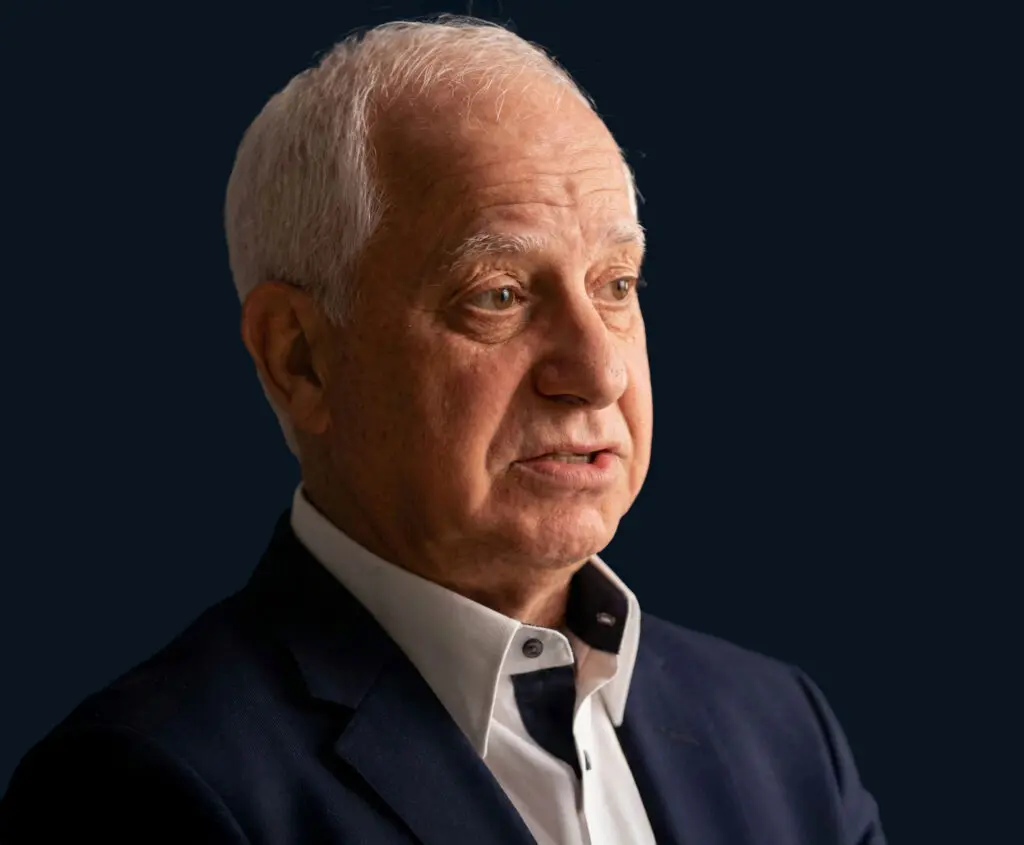
Jim Semivan is a retired CIA operations officer who stepped into public view as a co-founder of To The Stars Academy of Arts & Science and a steady, sober voice in the modern UAP conversation.
With a career that spanned clandestine service and senior leadership at the Central Intelligence Agency, followed by years training and advising the intelligence community, Semivan has used his credibility and access to help legitimize the study of UAP for mainstream audiences.
He has also been unusually candid about a personal close encounter, about the limits of government transparency, and about why the phenomenon challenges our models of mind, physics, and culture.
His biography, told through education and tradecraft, TTSA’s ascent, metamaterial controversies, late-career media work, and recurring themes in his claims and predictions, maps directly onto the arc of the post-2017 UAP era. (Coast to Coast AM)
Early life, education, and the road to Langley
Semivan completed both a B.S. and a B.A. at The Ohio State University, then earned an M.A. in English literature at San Francisco State University.
The unlikely pairing of scientific and literary training is a throughline in his later public work, where he refuses to reduce the UAP problem to engineering alone and often frames it as a problem in meaning, perception, and culture as much as technology.
After graduate study he entered the CIA, where he served as an operations officer domestically and overseas and ultimately rose into the CIA’s Senior Intelligence Service. (SEC)
Twenty-five years in clandestine operations
According to repeated biographical disclosures in SEC filings and radio network bios, Semivan spent 25 years in the CIA’s Directorate of Operations.
He later founded a consultancy, JimSem1, through which he continued to train intelligence community leaders, teach CIA tradecraft, and advise programs to counter weapons of mass destruction.
These documents are relevant because they are vetted corporate disclosures that describe his career, the seniority he attained, and the nature of his post-retirement work. (SEC)
The personal close encounter that reshaped his trajectory
Although Semivan kept his interest in anomalies private during government service, he has spoken publicly about a profound close encounter that he and his wife experienced in 1990.
He described beings that appeared in their bedroom and a period of subsequent poltergeist-like activity in their home. He emphasized that this was not a dream state and later recounted seeing a cloaked figure that felt like an omen linked to a friend’s death.
He also aligned himself with Colm Kelleher’s view that the phenomenon cannot be reduced to “nuts and bolts” but intersects with psychic and biological domains.
These statements were detailed on the January 30, 2022 “Coast to Coast AM” broadcast and summarized on the show page. (Coast to Coast AM)
Other longform interviews, including Whitley Strieber’s “Dreamland” and Jeffrey Mishlove’s “New Thinking Allowed,” have featured Semivan unpacking aspects of that experience and its implications for how disclosure should be handled.
The “Dreamland” program explicitly framed the conversation around his close encounter and its spiritual dimensions, while the Mishlove interview treated him as a rare former senior intelligence officer willing to discuss UAP and personal contact in public. (Unknown Country)
To The Stars Academy and the 2017–2020 inflection
Founding and purpose
In 2017, Semivan co-founded To The Stars Academy of Arts & Science with Tom DeLonge and physicist Hal Puthoff.
TTSA aimed to bring together entertainment, science, and aerospace research to surface UAP data, study unconventional materials, and push for government transparency.
Corporate and encyclopedic summaries identify Semivan as one of the three founders and note the company’s later rebranding to the simplified To The Stars. (SEC)
The Navy videos, “Unidentified,” and mainstreaming UAP
TTSA’s fingerprints are on several of the era’s key milestones. The team helped propel the Navy “FLIR1,” “Gimbal,” and “GoFast” videos into public awareness, and in September 2019 the U.S. Navy confirmed that the clips depicted “unidentified aerial phenomena.”
That confirmation helped destigmatize the topic inside the government and media.
The History Channel series “Unidentified: Inside America’s UFO Investigation,” executive-produced with TTSA involvement, carried that momentum into homes and policy circles. (Military.com)
The Pentagon later formally released the three Navy videos in April 2020, citing the need to clear up questions about authenticity and security. The chain of events cemented TTSA’s role in moving UAP from fringe to front-page. (WIRED)
ADAM metamaterials and the Army CRADA
TTSA announced its ADAM Research Project in 2019, describing the acquisition and study of “potentially exotic” metamaterial samples.
That same year, TTSA signed a Cooperative Research and Development Agreement with the U.S. Army’s Combat Capabilities Development Command to evaluate TTSA’s materials and concepts for potential application to ground vehicles. The executed CRADA is available in Army and SEC records, and TTSA and mainstream defense outlets reported on the deal. (To The Stars*)
The ADAM program generated both enthusiasm and criticism. VICE reported that TTSA spent $35,000 acquiring bismuth-magnesium-zinc layered samples previously stewarded by journalist Linda Moulton Howe, and raised the possibility that the material might be industrial slag rather than exotic.
VICE also published M. J. Banias’s interview with Howe explaining the provenance and chain of custody.
These dueling narratives are important to Semivan’s story because he has consistently endorsed rigorous testing and chain-of-custody documentation even while staying open to extraordinary results. (VICE)
Financial scrutiny and perception challenges
In 2018, VICE and Ars Technica highlighted a $37.4 million deficit on TTSA’s books, visible in SEC filings, and asked whether the company’s mix of entertainment, science, and fundraising was sustainable.
This scrutiny shadowed all TTSA principals, including Semivan, and became a recurrent talking point for detractors.
The episode illustrates a broader challenge for serious UAP work in the private sector: how to fund research responsibly while operating in a public environment primed to see hype. (VICE)
Books, forewords, and media contributions
Semivan has rarely published at length under his own name, but his fingerprints are on UAP literature and media.
- Foreword to “Sekret Machines: Chasing Shadows”. The 2017 paperback edition of DeLonge and A. J. Hartley’s technothriller lists a “Foreword by Jim Semivan,” placing his imprimatur on the broader Sekret Machines project that mixed fiction with real-world dossiers and interviews.
- Introduction to “UFO of God”. For experiencer Chris Bledsoe’s memoir, Semivan contributed the introduction and a blurb that situates Bledsoe’s case within a complex landscape of high strangeness and faith. The trade listing confirms his role. (Barnes & Noble)
- On-air and on-camera. Beyond his frequent podcast and radio appearances, Semivan appears among the participants in the 2025 documentary “The Age of Disclosure,” which premiered at SXSW. The Guardian’s festival coverage quotes him speaking about a “tradition of disbelief” inside the government that impedes transparency. (The Guardian)
- “Unidentified: Inside America’s UFO Investigation”. While the History series centered on Luis Elizondo and Christopher Mellon, it was driven by the TTSA cohort of which Semivan was a founding member, and it set the media template for sober, document-first treatment of the topic. (Wikipedia)
Government involvement after government service
Semivan’s post-retirement consultancy maintained classified clients across the intelligence community. Public bios and SEC documents place him in leadership training, tradecraft instruction, and WMD counterprogramming.
This background matters because it positions him at the seam between the clandestine world and the more open, civic-culture phase of UAP discourse after 2017. It also explains the care he takes when discussing sources and methods, and why he calibrates his public claims around what can be said lawfully and responsibly. (Coast to Coast AM)
The Army-TTSA CRADA underscored that the U.S. military was willing to test claims associated with TTSA’s materials and concepts under formal technical agreements.
The War Zone noted that the Army explicitly wanted to verify whether TTSA’s materials might be “game-changing,” while the Army’s public affairs and PR Newswire communications confirmed the collaboration and scope.
These documents illustrate one pathway Semivan has advocated: let qualified government labs test extraordinary materials and publish what can be shared. (The War Zone)
Known public connections and working circles
Semivan’s public UAP work has been collaborative from the start. Key associates include:
- Tom DeLonge, musician and TTSA founder who mobilized entertainment and policy to push UAP into mainstream view.
- Hal Puthoff, physicist and co-founder whose previous government-funded investigations into remote perception and exotic propulsion seeded TTSA’s science division.
- Luis Elizondo and Christopher Mellon, who fronted TTSA’s engagement with Congress and media, and anchored “Unidentified.” (HISTORY)
- Steve Justice, former Skunk Works program director who lent aerospace credibility to the materials and propulsion roadmap. (Wikipedia)
- John Ramirez, another CIA veteran who has appeared with Semivan on air to discuss UAP and historical CIA equities. (Coast to Coast AM)
- Peter Levenda and Chris Bledsoe, authors whose projects Semivan has endorsed or introduced, reflecting a willingness to interface with experiencer literature and the liminal side of the phenomenon. (Barnes & Noble)
Core ideas, claims, and predictions
“Story of the millennium”
In 2021 commentary surrounding the ODNI’s preliminary UAP assessment, Wired quoted Semivan stating that UAP is “the story of the millennium” and predicted it would reorder “our consensus reality.”
The article framed UAP as a cultural mirror while carrying Semivan’s message that the topic is epochal even if the first government reports seemed cautious. (WIRED)
Non-human intelligences and proximity
Semivan has publicly expressed the view that non-human intelligences are real and proximate to human life.
Various interviews and channel clips capture him describing the phenomenon as intimately entangled with human perception and culture.
The tone is not triumphalist. He repeatedly emphasizes uncertainty, the “trickster” quality of encounters, the potential for deception, and the need for psychological as well as scientific preparedness. (YouTube)
The “indigestible truth” and guarded disclosure
A recurring Semivan theme is that the most challenging aspects of UAP contact are not technology claims but the human consequences.
In multiple conversations he has warned that talking frankly about abductions or intrusive entity encounters can traumatize people and that any responsible transparency must account for that.
This idea, sometimes summarized online as “the indigestible truth,” reflects an ethic of caution gained from intelligence work and personal experience alike. (Coast to Coast AM)
Downed craft claims and caution
Semivan has hinted in interviews that he has seen photographs that allegedly depict downed non-human craft or government crash-retrieval programs, but he keeps a strict line between what he has directly handled and what he has been told.
Where such statements appear in public podcasts or clips, he presents them as claims in circulation rather than disclosures of documents in his possession. The responsible stance he takes is to encourage formal, classified-to-unclassified vetting rather than internet revelation. (YouTube)
Impact on the UAP community
Normalizing serious conversation
Two moves have had outsized impact. First, co-founding TTSA helped move UAP out of subcultures into respectable media and policy venues.
The Navy’s confirmation that the 2014–2015 cockpit videos depicted UAP turned an advocacy project into a national security topic that editors and committee chairs had to take seriously.
Second, Semivan’s willingness to speak about his own encounter while maintaining professional restraint offered a template for how seasoned national-security professionals can address personal aspects of the phenomenon without sensationalism. (Military.com)
Bridging intelligence culture and public curiosity
Semivan functions as a translator between two worlds that often misunderstand each other.
Inside the government, he underscores why public trust matters and how stigma has impeded reporting. Outside government, he explains why sources and methods must be protected and why hasty “dump everything now” demands are unrealistic.
His voice, alongside colleagues like Mellon and Elizondo, helped shape bipartisan interest that led to hearings, reporting guidelines, and the establishment of formal Pentagon UAP offices. (Wikipedia)
A cautious advocate for experiencers
By endorsing Bledsoe’s memoir and engaging with programs hosted by Strieber and Mishlove, Semivan signaled to experiencers that their testimony is part of the data set.
He has said the phenomenon includes psychic and biological dimensions.
The result is that temples of skepticism and sanctuaries of experience have increasingly overlapped. That cultural convergence may be his most lasting contribution, because it invites a fuller evidence base without forcing consensus on ontology. (Barnes & Noble)
Controversies and criticism
It is impossible to tell Semivan’s story without treating the debates around TTSA and its orbit.
- Metamaterials provenance and testing. Critics questioned chain of custody, scientific rigor, and whether the bismuth–magnesium-zinc samples were industrial by-products. Supporters countered that the point of ADAM and the Army CRADA was to formalize testing. The controversy remains a case study in how UAP-adjacent artifacts should be handled. (VICE)
- Finances and optics. The 2018 deficit reported in SEC disclosures became a cudgel for skeptics who argued TTSA blended commerce and science in a way that risked credibility. Semivan’s approach has been to let verified milestones speak for themselves while the company restructured and rebranded. (VICE)
- Media framing. Some analyses portray UAP programming as “soft disclosure” or as entertainment-led. The counter-argument is that, absent entertainment’s reach, there would have been no public pressure for the Navy to change reporting guidance or for Congress to hold hearings. Semivan sits at that tension point and has accepted the risk that comes with translating a sensitive topic for mass audiences. (Wikipedia)
Current status and continuing work
Semivan remains associated with To The Stars after its rebrand, appears periodically in interviews and documentaries, and continues the training and consulting work that followed his CIA career.
In 2025 he participated in “The Age of Disclosure,” which has crystallized a multiyear push for transparency and framed continuing disagreements between advocates and skeptics.
Public profiles emphasize that he still advises across the intelligence community. The Coast to Coast bio reiterates his senior roles, education, and post-retirement training remit. Semivan’s presence at the intersection of classified culture and public discourse remains a stabilizing influence during a noisy phase of the UAP story. (Coast to Coast AM)
Analytical portrait: how Semivan thinks about the phenomenon
Several distinctive themes recur in Semivan’s public statements.
- Multi-domain phenomenon.
He rejects a purely mechanistic frame. Reports of entities, psychic impressions, and biological effects must be studied alongside radar tracks and infrared video. This favors an interdisciplinary program that includes physicists, psychologists, biologists, historians of religion, and field investigators. (Coast to Coast AM)
- Security ethics.
As a career case officer, he accepts that some evidence cannot be public without harming sources and methods.
He is simultaneously an advocate for protecting pilots and service members by destigmatizing reporting. These dual commitments explain why he applauds formal channels, controlled releases, and collaborations like the Army CRADA. (SEC)
- Cultural readiness.
His caution about “indigestible” aspects of contact suggests a pedagogy problem as much as a physics problem. He often signals that disclosure should be paced with public mental health and education in mind. (Coast to Coast AM)
- Epistemic humility.
Even while calling UAP “the story of the millennium,” Semivan consistently says that many claims must be tested and that extraordinary narratives need extraordinary documentation. It is a stance that refuses both cynical dismissal and naive credulity. (WIRED)
Selected timeline
- 1970s–1980s: Undergraduate and graduate study at Ohio State and San Francisco State; enters CIA. (SEC)
- 1980s–2007: Twenty-five years as a CIA operations officer; reaches Senior Intelligence Service. (SEC)
- 1990: Close encounter reported by Semivan and spouse; intermittent poltergeist-like effects follow. (Coast to Coast AM)
- 2007: Retires from CIA; launches consultancy, continues classified training and advisory roles. (Coast to Coast AM)
- 2017: Co-founds To The Stars Academy of Arts & Science with DeLonge and Puthoff; Navy videos begin cascading into public debate. (Wikipedia)
- 2019: “Unidentified” airs on History; TTSA announces ADAM metamaterials and signs Army CRADA. (Wikipedia)
- 2020: DoD formally releases three Navy UAP videos. (WIRED)
- 2021: ODNI preliminary UAP report; Semivan tells Wired this is the “story of the millennium.” (WIRED)
- 2022: Public interviews detail his 1990 encounter and views on careful disclosure. (Coast to Coast AM)
- 2025: Appears in “The Age of Disclosure” at SXSW. (The Guardian)
Why Semivan matters
The modern UAP era has needed two kinds of figures: insiders who can move policy and public trust, and empathetic intermediaries who can integrate the human dimensions of the phenomenon with the technical ones.
Semivan has played both roles.
He helped build one of the first cross-domain platforms where national security professionals, aerospace engineers, and experiencers could all be part of one conversation.
He has been willing to live with ambiguity in public.
He has insisted that extraordinary claims be matched with disciplined collection and analysis.
He has argued that how we tell the story matters as much as what we know, because the manner of disclosure will shape whether the public can absorb it without harm.
If the UAP problem turns out to be, as he predicts, a civilizational watershed, it will be in part because people like Jim Semivan found ways to bring clandestine knowledge into daylight without burning the fragile fabric that connects institutions, science, and ordinary lives.
References
Barnes & Noble. (2022). UFO of God [Product page, listing “Introduction by Jim Semivan”]. https://www.barnesandnoble.com/w/ufo-of-god-christopher-m-bledsoe-sr/1141550750 (Barnes & Noble)
Banias, M. J. (2019, October 4). Tom DeLonge’s UFO research company paid $35,000 for “exotic” metals that might actually just be slag. VICE. https://www.vice.com/en/article/tom-delonges-ufo-research-company-paid-dollar35000-for-exotic-metals-that-might-actually-just-be-bismuth/ (VICE)
Banias, M. J. (2019, November 14). UFO researcher explains why she sold “exotic” metal to Tom DeLonge. VICE. https://www.vice.com/en/article/ufo-researcher-explains-why-she-sold-exotic-metal-to-tom-delonge/ (VICE)
Coast to Coast AM. (n.d.). James Semivan [Guest bio]. https://www.coasttocoastam.com/guest/james-semivan/ (Coast to Coast AM)
Coast to Coast AM. (2022, January 30). UFOs and the CIA [Show page summary]. https://www.coasttocoastam.com/show/2022-01-30-show/ (Coast to Coast AM)
Horton, A. (2025, March 12). “80 years of lies and deception”: Is this film proof of alien life on Earth? The Guardian. https://www.theguardian.com/film/2025/mar/12/age-of-disclosure-ufo-documentary (The Guardian)
Military.com. (2019, September 18). UFO videos are footage of real “unidentified” objects, US Navy acknowledges. https://www.military.com/daily-news/2019/09/18/ufo-videos-are-footage-real-unidentified-objects-us-navy-acknowledges.html (Military.com)
Oberhaus, D. (2018, October 15). Tom DeLonge’s UFO organization has a $37.4 million deficit. VICE. https://www.vice.com/en/article/tom-delonges-ufo-organization-is-37-million-in-debt/ (VICE)
To The Stars Academy of Arts & Science. (2019, July 25). TTSA makes groundbreaking metamaterials acquisition [Press release]. https://tothestars.media/blogs/press-and-news/to-the-stars-academy-of-arts-science-makes-groundbreaking-metamaterials-acquisition (To The Stars*)
To The Stars Academy of Arts & Science. (2019, October 17). TTSA announces CRADA with U.S. Army CCDC [Press release]. https://tothestars.media/blogs/press-and-news/ttsa-announces-crada-with-u-s-army-ccdc (To The Stars*)
U.S. Department of Defense. (2020, April 27). Statement by the Department of Defense on the release of historical Navy videos [Media statement]. Cited in Wired coverage. https://www.wired.com/story/does-it-matter-that-the-dod-released-those-ufo-videos (WIRED)
U.S. Securities and Exchange Commission. (2018–2022). To The Stars Academy of Arts & Science, Inc., offering circulars and 1-K filings [SEC filings with Semivan biography]. https://www.sec.gov/Archives/edgar/data/1710274/000114420418023727/tv492460_partii.htm; https://www.sec.gov/Archives/edgar/data/1710274/000149315221010202/partii.htm (SEC)
U.S. Army CCDC GVSC. (2019). CRADA #19-15: To The Stars Academy of Arts & Science and GVSC [Executed agreement posted via SEC]. https://www.sec.gov/Archives/edgar/data/1710274/000110465920089220/tm2023098d2_ex6-28.htm (SEC)
Unknowncountry. (2022, April 1). CIA officer Jim Semivan, his close encounter, his take on the phenomenon [Podcast page]. https://unknowncountry.com/dreamland/cia-officer-jim-semivan-his-close-encounter-his-take-on-the-phenomenon/ (WHITLEY STRIEBER’S UNKNOWN COUNTRY)
Wired. (2021, June 25). What the Pentagon’s new UFO report reveals about humankind. https://www.wired.com/story/what-the-pentagons-new-ufo-report-tells-us-about-ourselves/ (WIRED)
Wikipedia editors. (n.d.). To The Stars Inc. https://en.wikipedia.org/wiki/To_The_Stars_Inc. (Used for corroborating the 2017 founding, later rebrand, and consolidated TTSA history with citations.) (Wikipedia)
Additional source notes. Coverage of “Unidentified: Inside America’s UFO Investigation” and TTSA’s media work: History Channel series page and announcement. (HISTORY)
Contextual reporting on Army partnership: Military Times and PR Newswire coverage. (Military Times)
Goodreads trade listing confirming Semivan’s “Sekret Machines: Chasing Shadows” foreword.
SEO keywords
Jim Semivan biography, Jim Semivan CIA, Jim Semivan UAP, To The Stars Academy founders, TTSA Army CRADA, ADAM metamaterials, Navy UAP videos, Unidentified History Channel, Jim Semivan close encounter, non-human intelligence claims, UAP disclosure, Chris Bledsoe, UFO of God, Sekret Machines foreword, Hal Puthoff TTSA, Luis Elizondo, Christopher Mellon