
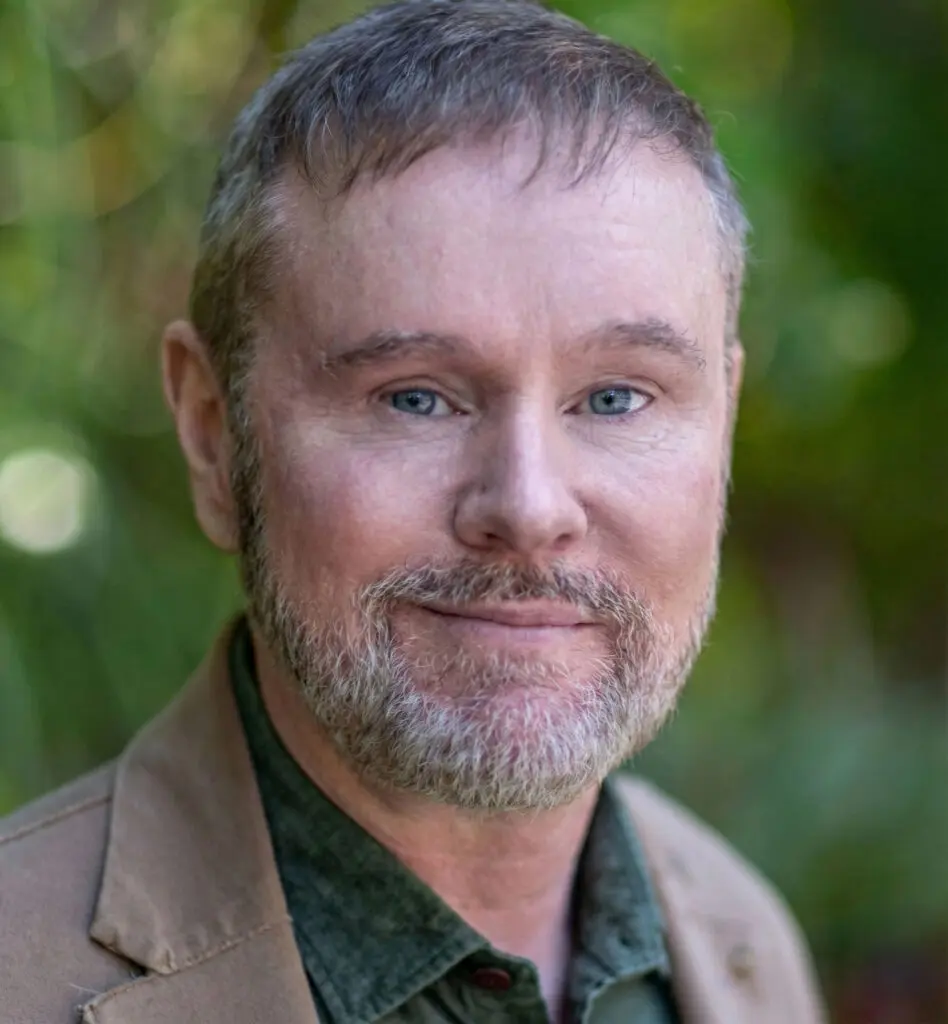
Dr. Gary P. Nolan is the Rachford and Carlota A. Harris Professor of Pathology at Stanford University School of Medicine. He is a founder or co-founder of multiple biotech firms and innovator behind widely used single cell analysis platforms. (Stanford Medicine)
Nolan has also led materials and physiological effect analyses tied to selected UAP cases with a stated goal of building transparent, reproducible pipelines for aerospace forensics. (DocDroid)
At SALT iConnections New York 2023 he said he was “one hundred percent” certain that non-human intelligences have been here. (YouTube)
In 2013 Nolan was approached by an ex-CIA figure and an aerospace executive about anomalous health effects among pilots and personnel; later referenced by Jay Stratton, the first director of the Pentagon’s UAP Task Force, as a go to outside scientist. (Stanford Magazine)
A data first dossier on UAP involvement
Materials analysis
Nolan’s most cited step into the UAP evidence stream is a methods and case study paper coauthored with Jacques Vallée, Sizun Jiang, and retired NASA Ames engineer Larry Lemke. The team lays out mass spectrometry, imaging, and isotopic techniques, then applies them to a historical case labeled CB_JV 1. They conclude that across five subsamples there were no significant deviations from terrestrial isotopic norms and that the sample’s overall provenance and function remain unknown. This is not a claim of non human origin. It is a call for care, calibration, and chain of custody in future investigations. (DocDroid)
Physiological effects work
In 2013, Nolan says he was contacted at Stanford by two visitors, one who said he was former CIA and the other an aerospace executive, who brought MRI scans of personnel with health complaints after proximity to suspected anomalous craft. Those scans highlighted anomalies in the caudate and putamen regions and seeded subsequent collaborations and publications on the role of these regions in pattern recognition and intuition. Stanford Magazine reports that Jay Stratton, later the UAP Task Force director, passed Nolan’s name to pilots who wanted medical advice outside the chain of command. (Stanford Magazine)
Public messaging
Nolan has become a visible scientific voice who argues for open, instrument driven inquiry into UAP while maintaining a dual stance. He has said he personally believes non human intelligences are present, but as a scientist he accepts that the public threshold of proof remains unmet. He articulated both positions in Stanford Magazine in 2023 and in interviews and conference appearances through 2024 and 2025. (Stanford Magazine)
Organizing research and policy
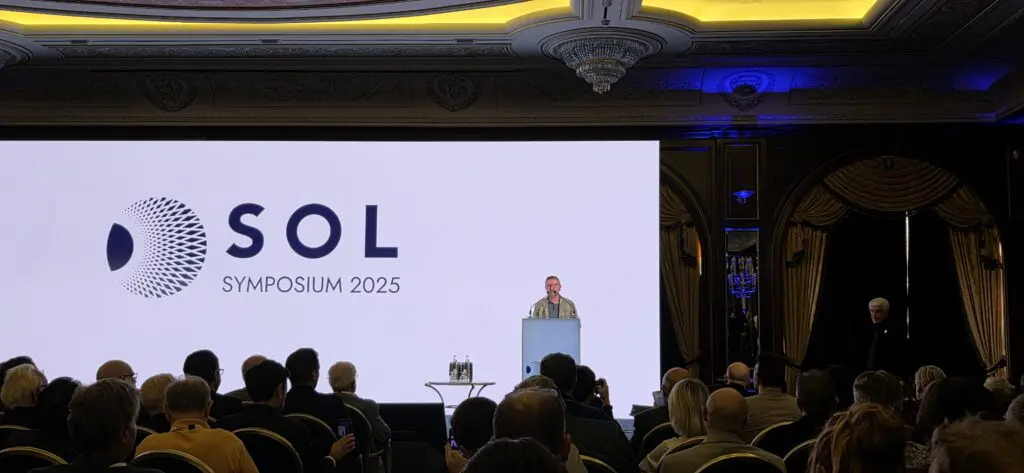
He serves as executive director of the board of the Sol Foundation, which convened academic and policy events at Stanford in 2023 and 2024 and promotes standard setting for UAP research and governance. (The Sol Foundation)
Curriculum and credentials: why his lab matters
Nolan’s Stanford profile documents a career that would be notable without the UAP topic. He trained with Leonard Herzenberg at Stanford and Nobel laureate David Baltimore at MIT, co-developed enabling platforms for gene delivery and single cell analysis, and helped popularize CyTOF and CODEX technologies that are now common in systems immunology and spatial biology. He has founded or guided companies including Rigel, Nodality, BINA, Apprise, Ionpath, and Akoya. Notably, BINA was acquired by Roche and DVS Sciences was acquired by Fluidigm. He also received the Department of Defense Teal Innovator Award for work in ovarian cancer. These details explain why his instrument centric approach carries weight in arguments about how to test UAP linked materials. (Stanford Medicine)
A formative non-UAP example is his work on the so-called Atacama skeleton, in which a tiny Chilean mummy had been promoted as non-human by others. Nolan and collaborators sequenced the genome and showed it to be human with multiple mutations associated with skeletal dysplasia. The case became a model for letting data dissolve sensational claims and also led to published debate about research ethics in bioarchaeology. (PMC)
On the record: public appearances and messaging style
- SALT iConnections New York 2023. Nolan’s interview on stage, moderated by Alex Klokus, produced his most quoted line. He called his confidence in non human presence one hundred percent and suggested drones and advanced autonomous systems as plausible vehicles. The clip reverberated across general media. (YouTube)
- Long form interviews. Nolan has appeared in extensive conversations that explore his methods, the MRI cases, materials analyses, and his push for serious policy engagement. These include a Lex Fridman episode and multiple sit downs with journalist Ross Coulthart. (YouTube)
- Institutional features. Stanford Magazine’s 2023 profile anchors his UAP arc inside his broader scientific career and quotes Jay Stratton about referring pilots to Nolan. It also captures Nolan’s personal belief versus scientific standard distinction. (Stanford Magazine)
- Popular press. Outlets such as Popular Mechanics and Fox News amplified his SALT remarks, illustrating both his reach and the polarization that trails modern UAP coverage. (Popular Mechanics)
Known public connections and networks
- Jacques Vallée. Longtime UAP researcher and coauthor with Nolan on the 2022 Progress in Aerospace Sciences methods paper. (DocDroid)
- Larry G. Lemke. Retired NASA Ames engineer and coauthor on the 2022 paper. (DocDroid)
- Sizun Jiang. Stanford based coauthor on the 2022 paper. (DocDroid)
- Christopher “Kit” Green, Eric Davis, Colm Kelleher. Nolan has publicly acknowledged friendships and professional conversations with this cohort sometimes referred to as the Invisible College in a widely shared interview. (VICE)
- Jay Stratton. Former head of the Pentagon’s UAP Task Force. According to Stanford Magazine, Stratton gave Nolan’s name to pilots seeking medical advice. (Stanford Magazine)
- Sol Foundation community. Leadership and speakers across the 2023 and 2024 conferences include Peter Skafish, Jonathan Berte, Avi Loeb, Kevin Knuth, Karl Nell, and Timothy Gallaudet among others. (The Sol Foundation)
Government involvement: what is documented
- Direct contact. Nolan recounts that in 2013 he was approached by an individual who said he was ex CIA and by an aerospace executive. They sought help in working up MRIs and biological data from personnel with unusual injuries. This origin story is reported in Stanford Magazine and backed by Nolan’s many interviews. (Stanford Magazine)
- Operational referrals. Jay Stratton’s role, as quoted in Stanford Magazine, places Nolan in a practical advisory lane for flyers and operators concerned about possible exposure near anomalous craft. (Stanford Magazine)
- Policy context. NASA’s UAP independent study report from September 2023 and AARO’s Historical Record Report in March 2024 both state that verified public evidence of off world technology has not been found to date. Those positions frame the evidentiary burden for any lab that claims non human materials. (NASA Science)
- DOD research bona fides. Although unrelated to UAP, Nolan’s receipt of the Department of Defense Teal Innovator Award and his long record of NIH and FDA funded tool building label him as an established government funded scientist. (Stanford Medicine)
Publications and artifacts most relevant to UAP
- Nolan, Vallée, Jiang, Lemke 2022. Improved instrumental techniques including isotopic analysis, applicable to aerospace forensics. Case study shows isotopic ratios consistent with terrestrial norms for the analyzed legacy sample. The paper is about method, documentation, and how to build future chain of custody and instrument practice. (DocDroid)
- Genome Research work on the Atacama skeleton 2018. An example of Nolan’s scientific approach dissolving exotic claims through sequencing and variant interpretation. (PMC)
- Stanford Magazine feature 2023. Integrates narrative, quotes from Jay Stratton, and the personal belief versus scientific standard distinction. (Stanford Magazine)
Nolan also gave public comments about magnesium isotope anomalies in materials associated with the historic Ubatuba case. Reporting on related analyses is mixed, with some work noting unusual purity or isotopic ratios and other work finding terrestrial ranges. This divergence underscores the centrality of chain of custody and instrument settings across different labs. (VICE)
Work history relevant to why his lab is equipped for UAP questions
Nolan’s career brought biomedical grade instrumentation and analytics to immune cells, tumors, and complex tissues. Those skills translate well to the atom by atom questions that UAP materials raise.
- Single cell and spatial tools. CyTOF and CODEX enable very high parameter mapping of cells and materials. The mindset required to turn noisy biological data into actionable maps mirrors the task of mapping inhomogeneous alloys or layered bismuth magnesium composites that appear in the UAP discourse. (Stanford Medicine)
- Company building. Rigel, Nodality, BINA, Apprise, Ionpath, and Akoya are examples of how Nolan converts lab platforms into industrial grade tools. BINA was acquired by Roche; DVS Sciences sold to Fluidigm. That history increases his access to state of the art mass spectrometers and imaging suites needed for difficult isotopic work. (Stanford Medicine)
Controversies and counter-positions
A data first investigation must include the institutional and methodological counterpoints that bracket Nolan’s work.
- NASA and AARO caution. NASA’s independent study team concluded that the primary barrier to progress is poor data quality and lack of calibrated sensors; AARO’s historical record review concluded no verified evidence of extraterrestrial technology exists in the record it examined. These reports do not invalidate Nolan’s push for better materials forensics; they set the bar he must clear. (NASA Science)
- The 2022 methods paper as a Rorschach. Skeptically inclined readers note that the paper’s case study found no anomalous isotope ratios. Nolan’s supporters argue that the paper is the point; serious methods in an aerospace journal are the precondition for future breakthroughs. Both readings are compatible with the text. (DocDroid)
- Atacama ethics. Scholars in paleopathology criticized aspects of the Atacama skeleton study’s framing and ethics. Newspapers and university communications, however, accepted the core genetic conclusion that the remains are human with multiple pathogenic variants. (ScienceDirect)
- Ubatuba claims. Interviews report unusual magnesium isotope ratios in at least one shard from the historic case. Other published analyses have found terrestrial ranges. Without unbroken chain of custody and consistent instrument calibration, discordant results should be expected. (VICE)
Claims taxonomy: what Nolan has said, what is documented, how to weigh it
| Claims | Statement or context | Independent documentation | Evidence grade and status |
|---|---|---|---|
| Presence of non human intelligence | At SALT 2023 he put his personal confidence at one hundred percent and suggested drones and advanced autonomy as the likely mode. | Video record and press coverage. | Disputed. Public record of statement is strong; empirical evidence in the public domain remains absent. (YouTube) |
| Anomalous materials exist | Interviews and talks describe isotopic and structural oddities in legacy samples, including discussion of Ubatuba shards. | Peer reviewed 2022 case study found isotopes within terrestrial ranges for the examined Council Bluffs sample; other published Ubatuba work reports terrestrial magnesium isotopes. | Mixed. Methods foundation is solid; positive anomaly claims require better chain of custody and replication. (DocDroid) |
| Physiological effects among personnel near UAP | Reports of MRIs with caudate and putamen features among a cohort referred via intelligence and aerospace contacts. | Stanford Magazine describes initial contact and Stratton’s referrals. | Probable. Preliminary and largely clinical narrative; suitable for prospective study designs but not yet a published medical cohort with open data. (Stanford Magazine) |
| Government briefings and consultations | Personal accounts of briefing senior officials and advising pilots off record; Sol Foundation convenings with former officials. | Stanford Magazine quotes Jay Stratton; Sol Foundation programs and rosters are public. | Probable. Documented that Nolan is in the conversation; the content of classified briefings is not public. (Stanford Magazine) |
Evidence grade is a UAPedia rubric that weighs public documentation, peer review, repeatability, and chain of custody. It is not a judgment of truth. It is a navigation aid for readers.
Implications if Nolan’s program succeeds
For aerospace forensics
The 2022 paper sets a blueprint for how to study solid materials at nanometer scale with isotopic sensitivity. If other labs adopt that blueprint with clean custody and cross lab replication, the field can mature from screenshot speculation into data series that withstand skepticism. That is exactly what NASA’s UAP report asked for in 2023 when it called for rigorous data acquisition, calibrated sensors, and repeatable methods. (NASA Science)
For human performance and safety
If a subset of personnel are sustaining injury from proximity to unknown craft or novel fields, then clinical pathways and protective standards are required. Nolan’s early case exposure in 2013 and subsequent collaboration spurred basic neuroscience papers around the caudate and putamen. The next step is controlled studies with transparent cohorts. (Stanford Magazine)
For disclosure policy
Sol Foundation’s symposia are creating a meeting ground for lab scientists, former officials, and risk modelers. If standards for materials handling and injury documentation emerge from that work, the center of gravity on UAP could shift toward transparent science that sits upstream of policy fights. (The Sol Foundation)
For academic culture
Stanford Magazine casts Nolan as a scientist willing to risk stigma to test unlikely ideas with hard instruments. If he and peers produce even one unambiguous non terrestrial signature with open methods, the center of academic opinion will move. If they do not, the documented methods can still improve failure analysis in aerospace and materials science. (Stanford Magazine)
List of links to relevant primary material
- Nolan’s Stanford faculty profile and career overview. (Stanford Medicine)
- The Progress in Aerospace Sciences methods paper and case study (PDF access). (DocDroid)
- Stanford Magazine profile “First Contact” with quotes from Jay Stratton. (Stanford Magazine)
- SALT iConnections New York interview where Nolan states his one hundred percent confidence. (YouTube)
- Vice interview on anomalous materials and the Ubatuba shards. (VICE)
- NASA UAP Independent Study Team final report 2023. (NASA Science)
- AARO Historical Record Report Volume 1, 2024. (U.S. Department of War)
- Sol Foundation leadership page and inaugural conference announcement. (The Sol Foundation)
- Atacama skeleton genome analysis and Stanford news explainer. (PMC)
- Reporting that amplified his SALT remarks for general readers. (Popular Mechanics)
Bottom line
Nolan’s value to the UAP evidence movement is not his SALT soundbite. It is his willingness to put procedures, instruments, and software first, and to publish those pipelines in a mainstream aerospace journal with enough detail that critics can replicate or refute.
The 2022 paper shows no isotopic anomalies in its tested case. That negative finding is still a scientific contribution and it is exactly the sort of contribution that a field needs if it is going to sort genuine anomalies from stories and contamination. (DocDroid)
At the same time, Nolan’s network and public posture keep pressure on agencies and contractors that hold legacy materials to release samples through an agreed process with documented custody. NASA and AARO have told the public what will count as evidence and where today’s cases fall short.
Sol Foundation and allied labs are trying to build the rails to meet that bar. That is the story worth following. (NASA Science)
References
Bhattacharya, S., Li, J., Sockell, A., Kan, M. J., Bava, F. A., Chen, S. C., Ávila-Arcos, M. C., Ji, X., Smith, E., Asadi, N. B., … Nolan, G. (2018). Whole genome sequencing of Atacama skeleton shows novel mutations linked with dysplasia. Genome Research, 28(4), 423–431. https://doi.org/10.1101/gr.223693.117 (PMC)
Halcrow, S. E., Killgrove, K., Robbins Schug, G., Knapp, M., & Huffer, D. (2018). On engagement with anthropology: A critical evaluation of skeletal and developmental abnormalities in the Atacama preterm baby and issues of forensic and bioarchaeological research ethics. International Journal of Paleopathology, 22, 163–167. https://doi.org/10.1016/j.ijpp.2018.06.008 (ScienceDirect)
Nolan, G. P., Vallée, J. F., Jiang, S., & Lemke, L. G. (2022). Improved instrumental techniques, including isotopic analysis, applicable to the characterization of unusual materials with potential relevance to aerospace forensics. Progress in Aerospace Sciences, 128, 100788. https://doi.org/10.1016/j.paerosci.2021.100788 (DocDroid)
Scott, S. (2023, July). First Contact. Stanford Magazine. https://stanfordmag.org (Stanford Magazine)
SALT iConnections. (2023). The Pentagon, Extraterrestrial Intelligence and Crashed UAPs [Video]. YouTube. https://www.youtube.com/ (YouTube)
Campion, T. (2021, December 10). Stanford Professor Garry Nolan is analyzing anomalous materials from UAP crashes. VICE Motherboard. https://www.vice.com/ (VICE)
National Aeronautics and Space Administration. (2023, September 14). UAP Independent Study Team Final Report (NASA SP). https://science.nasa.gov/ (NASA Science)
U.S. Department of Defense, All domain Anomaly Resolution Office. (2024, March 8). AARO Historical Record Report, Volume 1. https://www.aaro.mil/ (U.S. Department of War)
Popular Mechanics Staff. (2023, May 25). Aliens are already here says Stanford prof with CIA ties. Popular Mechanics. https://www.popularmechanics.com/ (Popular Mechanics)
The Sol Foundation. (2023–2025). People and events pages. https://thesolfoundation.org/ (The Sol Foundation)
Yingling, M. E., et al. (2023). Faculty perceptions of unidentified aerial phenomena. Humanities and Social Sciences Communications, 10, Article 885. https://www.nature.com/ (Nature)
Journal of Scientific Exploration. (2022). Isotope ratios and chemical analysis of the 1957 Brazilian Ubatuba fragment. JSE, 36(1), 39–48. https://journalofscientificexploration.org/ (UAP Caucus)
Fox News. (2023, May 27). Aliens have been on Earth a long time. FoxNews.com. https://www.foxnews.com/
Note: Reference links above point to the official or publisher pages and to archived or PDF copies where appropriate.
SEO keywords
Garry Nolan, Dr Garry Nolan, Stanford UAP, Stanford UFO, Nolan Vallée isotopic analysis, Nolan SALT iConnections, Sol Foundation UAP, UAP materials science, UAP brain MRI caudate putamen, UAP research methods, Progress in Aerospace Sciences UAP, NASA UAP report, AARO Historical Report, Ubatuba magnesium isotopes, Jay Stratton UAP Task Force, Nolan Atacama skeleton