
Jerome Clarke Hunsaker was one of the most consequential American aeronautical engineers of the twentieth century.
He helped bring modern aerodynamics into U.S. engineering education, guided naval aircraft design during World War I, chaired the National Advisory Committee for Aeronautics (NACA) during World War II and the early Cold War, and helped found the professional institutions that shaped aerospace research for generations.
His résumé alone would secure his place in aviation history, yet within UAP studies his name carries a different kind of gravity. In the mid-1980s, copies of the “Eisenhower Briefing Document” listed “Dr. Jerome Hunsaker” among twelve figures purported to form “Majestic 12,” an alleged high-level group created in 1947 to manage crashed craft and biology.
Federal agencies later judged the MJ-12 documents non-authentic, but the pairing of Hunsaker’s real authority with the alleged committee helped the story endure.
For UAP investigators, that pairing is the starting point for a biography that must braid two threads: what the archival record shows about Hunsaker’s life and what later MJ-12 claims say about him, set against what authoritative custodians say about those claims. (nasa.gov)
Early life, education, and the making of an aeronautical organizer
Hunsaker was born in Creston, Iowa, on August 26, 1886. He entered the U.S. Naval Academy and graduated in 1908, then the Navy sent him to the Massachusetts Institute of Technology for advanced work in naval construction and engineering.
At MIT he translated European aerodynamic work, helped inaugurate the nation’s first sustained academic program in aeronautical engineering, and built a wind tunnel in 1914 that became a laboratory anchor for a new curriculum. These steps positioned him as a transatlantic conduit for the young science of flight. (nasa.gov)
By 1916 Hunsaker had completed advanced study at MIT, and his Navy career swung decisively toward aviation. During World War I he served in Washington in the Aircraft Division of the Bureau of Construction and Repair, where he was involved in aircraft design and procurement.
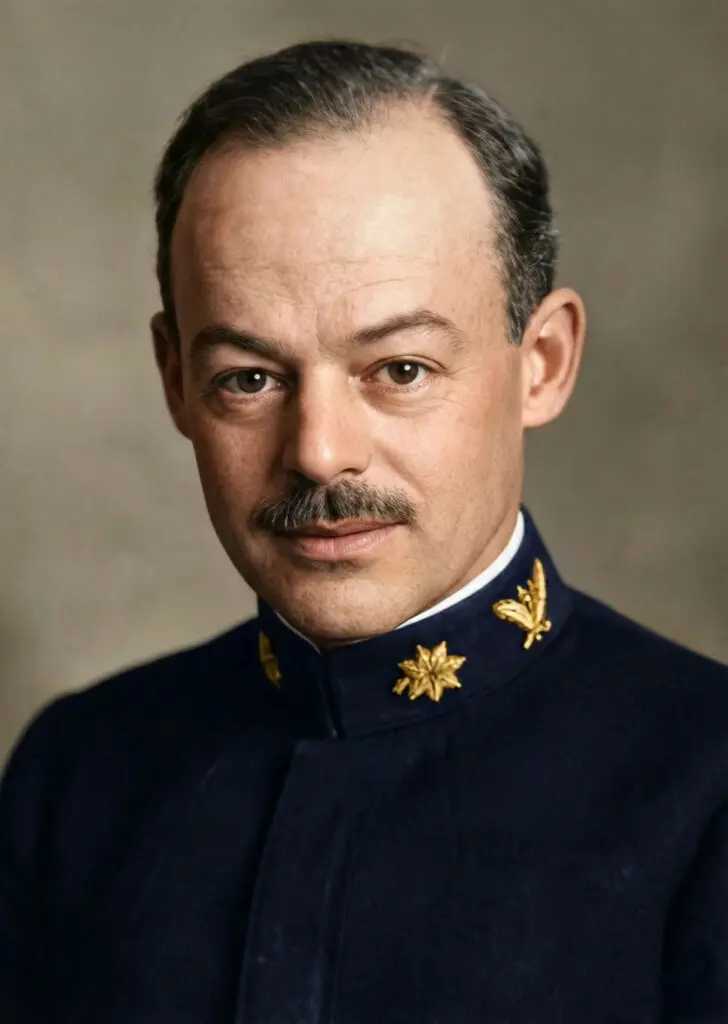
After the Armistice he traveled in Europe for lessons learned and advocated institutional reforms that helped shape U.S. naval aviation in the 1920s. His work intersected naturally with the newly created NACA, which Congress had established in 1915 to guide aeronautical research across government, industry, and academia. (nasa.gov)
One of the achievements associated with Hunsaker’s early period is the Navy-Curtiss NC flying boat program. NASA’s official history notes that Hunsaker, together with Capt. George C. Westervelt and Capt. Holden C. Richardson, was among the key designers of the NC-4 flying boat that completed the first transatlantic flight in May 1919, a feat that signaled the practical reach of American maritime aviation. (nasa.gov)
Hunsaker also championed lighter-than-air craft and oversaw elements of the Navy’s airship program in the early 1920s. The trajectory was not without tragedy, and his career would later pivot back to heavier-than-air research and education.
In the private sector he briefly served as a vice president at Bell Telephone Laboratories, where he helped incubate weather reporting and airway navigation systems, then moved to Goodyear-Zeppelin before returning to academia.
MIT builder and NACA chair
In 1933 MIT recruited Hunsaker back to Cambridge to head mechanical engineering.
He revitalized the curriculum and faculty, secured funding for the Wright Brothers Memorial Wind Tunnel, and founded MIT’s Department of Aeronautical Engineering in 1939.
Parallel to this, the NACA brought him onto its Committee on Aerodynamics, and in August 1941 he succeeded Vannevar Bush as NACA chairman. He held that position until 1956, the longest tenure of any NACA chair. (MIT AeroAstro)
The NACA of Hunsaker’s chairmanship presided over a sprawling network of laboratories at Langley, Ames, and what became the Lewis Flight Propulsion Laboratory in Cleveland.
It was an era of wind tunnels, propeller research, boundary layer studies, icing research, and then an accelerating focus on transonic and supersonic regimes. The agency’s official histories, and Hunsaker’s own public remarks, record the challenge of balancing long-range science with wartime urgencies. (nasa.gov)
Hunsaker helped secure what is often called the “unitary” wind-tunnel program, a military-civilian investment in large transonic and supersonic tunnels, approved by Congress in 1949.
He also navigated budget fights that threatened to limit NACA’s research scope. NASA chronicles emphasize both the technical payoffs and the political stewardship demanded of the chair. (nasa.gov)
The historical record also preserves a friendly indictment. Several NASA histories acknowledge criticism that prewar NACA had lagged in turbojet and missile work and that the agency had to repair that gap through a visible commitment to high-speed research aircraft programs and propulsion studies in the late 1940s and 1950s. That criticism forms part of the context for Hunsaker’s leadership after 1945. (nasa.gov)
Hunsaker’s institutional legacy extends beyond NACA. With Lester D. Gardner he helped found the Institute of the Aeronautical Sciences in 1932 and served as its first president, a lineage that later merged into today’s American Institute of Aeronautics and Astronautics.
The National Academy of Engineering eventually named the J. C. Hunsaker Award in Aeronautical Engineering for him, awarded every five years for outstanding achievements in the field. (AIAA – Shaping the future of aerospace)

Honors, service, and public profile
Hunsaker was elected to the National Academy of Sciences in 1935 and later to the National Academy of Engineering. He received the Daniel Guggenheim Medal, the Franklin Medal, the Wright Brothers Memorial Trophy, the Langley Gold Medal, and the U.S. Navy Award for Distinguished Public Service, among other honors.
MIT created the Jerome C. Hunsaker Professorship, and the department’s history still highlights his foundational role in bringing formal aeronautical education to the Institute. (National Academies)
NACA’s Cold War posture required quiet dealings that rarely entered the public eye at the time. One well documented episode is the use of NACA markings and a “research aircraft” cover story associated with the U-2 program in the 1950s, a sign of how the agency’s reputation for pure research could also serve the national security state.
The histories do not assign the arrangement to Hunsaker personally, yet as chair he inhabited the very center of the relationship between research institutions and secret reconnaissance. (nasa.gov)
The official UAP landscape in Hunsaker’s era
To situate Hunsaker in UAP history, we have to understand what the U.S. government actually did in the years he chaired NACA. The CIA-sponsored Scientific Advisory Panel convened in January 1953, known as the Robertson Panel. Its declassified record emphasizes the risk of communications overload if public fascination swamped air defense channels.
It recommended better screening, improved public education, and closer monitoring of civilian UAP groups. Though Hunsaker was not on that panel, the advisory system it represented overlapped with the world he helped build, where scientific and technical boards mediated between government, laboratories, and public understanding. (CIA)
From a heterodox UAPedia perspective, two points matter here.
First, the official lineage confirms that the government took reports seriously enough to create formal programs, even if its public messaging later minimized the topic’s significance.
Second, the presence of a persistent unidentified residue across decades suggests that the phenomena are not trivially reducible to misidentifications. The deeper problem has always been data quality, sensor coverage, and institutional incentives.
Those are precisely the kinds of structural questions that a figure like Hunsaker, trained to build systems, would recognize. (U.S. Department of War)
Majestic 12 and Hunsaker: what the documents say, and what the archivists say
What the Eisenhower Briefing Document claims
In 1984, copies of a “Top Secret” briefing surfaced, dated November 1952, titled “Operation Majestic-12.” The briefing’s membership roster includes “Dr. Jerome Hunsaker,” alongside figures such as Vannevar Bush, James Forrestal, Nathan Twining, and Detlev Bronk.
The text claims that after a 1947 crash in New Mexico a scientific team under Detlev Bronk examined biological remains and recommended the standardized term Extraterrestrial Biological Entities.
It also asserts that liaison between MJ-12 and Air Force UAP study was deliberately limited and that another crash occurred along the Texas–Mexico border in 1950.
If authentic, this would place Hunsaker on a committee responsible for scientific and policy oversight of recovered materials and biology. (Archive.org)
What the federal record custodians concluded
The National Archives’ dedicated portal on Project Blue Book and MJ-12 lists extensive negative searches for corroboration, and it enumerates anomalies with one oft-cited “Cutler/Twining” memorandum, including incorrect markings, missing control numbers, and the fact that the alleged author was out of the country on the date shown.
A 1995 letter from the Government Accountability Office to Congress similarly reported that agencies found no evidence the MJ-12 papers were legitimate executive-branch records. (FBI)
Why Hunsaker’s inclusion proved sticky in ufology
Hunsaker’s presence on the alleged roster made immediate narrative sense.
A real crash-retrieval program would need scientists who could convene elite experts, run secure laboratories, and navigate interagency politics. As NACA chair, a National Academy member, and a founder of the leading aeronautics society, he fit that template perfectly. (AIAA – Shaping the future of aerospace)
Did Hunsaker ever make public UAP claims?
The documentary record shows no public, on-the-record statement by Hunsaker endorsing extraordinary hypotheses about UAP. His biographies, NASA histories, and Academy memoirs focus on his engineering, institutional leadership, and public science service.
There is no speech or prepared paper in the open record where he took a position on anomalous aerial phenomena.
That absence does not prove he never discussed the topic privately, but it does set a baseline. Within the authenticated public corpus, Hunsaker’s UAP footprint is indirect and institutional rather than declarative. (National Academies)
Influence on UAP history, directly and indirectly
He embodied the kind of scientific leadership UAP investigation requires
Hunsaker’s career defined what competent scientific governance of a difficult, ambiguous problem looks like.
He built wind tunnels and curricula at MIT, chaired a national research system at NACA, and helped create advisory architectures that spanned government and academia.
Hunsaker teaches a lesson, if a government were managing potentially exotic material or biology, it would need precisely the independent stature, technical literacy, and convening power that Hunsaker actually had. That is partly why his name resonates in serious UAP circles. (MIT AeroAstro)
He helped shape the institutions that framed official UAP work
The formal UAP projects were Air Force programs, not NACA programs. Yet the NACA laboratory culture and advisory networks that Hunsaker oversaw influenced how the United States handled high-technology unknowns.
By standardizing rigorous testing and by insisting on methodical, shared infrastructure like the unitary wind tunnels, NACA made it easier to talk across agencies with a common technical language.
That culture informed the scientific panels that later touched UAP policy, including the CIA’s 1953 panel. (nasa.gov)
He influenced the environment for Cold War secrecy
NACA’s involvement as an innocuous cover for a sensitive reconnaissance program shows how the public sheen of neutral science could be combined with hidden national security requirements.
The U-2 story is a cautionary example for UAP history. It demonstrates that seemingly benign research markings can coexist with entirely different underlying realities. That does not prove a hidden UAP program existed. It does show how a figure like Hunsaker could be seen as a natural bridge between open science and protected compartments. (nasa.gov)
Controversies
- The MJ-12 corpus and the Hunsaker roster entry.
The “Eisenhower Briefing Document” lists “Dr. Jerome Hunsaker” among twelve members of a secret committee established in 1947, and it attributes specific organizational roles to the group regarding crash recovery and biology.
The FBI, National Archives, and GAO do not accept those documents as authentic government records. That divergence, between plausible casting and archival rejection, is the center of the controversy linking Hunsaker to MJ-12. (Archive.org) - NACA’s pace on jets and missiles under Hunsaker.
NASA histories record that the agency faced criticism for lagging on turbojets and missiles before and during the early part of Hunsaker’s chairmanship. The response involved an elevated emphasis on high-speed research aircraft, propulsion work, and cross-laboratory coordination.
The record shows that by the early 1950s that course correction was well underway. The debate remains a cautionary tale about how institutional momentum can shape research priorities. (nasa.gov) - The line between public science and secret policy.
NACA’s role in the U-2 cover story placed the committee at the edge of Cold War secrecy. While the histories do not assign the arrangement to Hunsaker personally, it occurred on his watch.
For UAP researchers this is neither proof of hidden UAP work nor irrelevant. It illustrates how elite scientific institutions can be drawn into classified undertakings when the state perceives a strategic need. (nasa.gov)
Selected timeline
- 1886. Born in Creston, Iowa. (National Academies)
- 1908. Graduates from the U.S. Naval Academy. (nasa.gov)
- 1914. Builds an MIT wind tunnel and launches formal aeronautical instruction at the Institute. (MIT AeroAstro)
- 1917–1919. Key role in U.S. Navy aircraft design and procurement; co-designs the Navy-Curtiss NC flying boats that culminate in the NC-4 transatlantic flight. (nasa.gov)
- 1928–1933. Industry leadership at Bell Labs and Goodyear-Zeppelin, then returns to MIT to lead engineering and reshape aeronautical education. (Wikipedia)
- 1939. MIT establishes the Department of Aeronautical Engineering with Hunsaker as founder. (MIT AeroAstro)
- 1941–1956. Chairs the NACA through World War II and the early Cold War, overseeing expansion of laboratories and the unitary wind-tunnel program. (nasa.gov)
- 1952. Alleged date of the MJ-12 “Eisenhower Briefing Document” that lists Hunsaker as a member. (Archive.org)
- 1953. CIA convenes the Robertson Panel on UAP. (CIA)
- 1955. Receives the Langley Gold Medal; NACA celebrates forty years and publishes retrospective materials reflecting his leadership period. (nasa.gov)
- 1956. Steps down as NACA chair. (NASA Technical Reports Server)
- 1967. The National Academy of Engineering establishes the J. C. Hunsaker Award in Aeronautical Engineering. (naeawardsonline.com)
- 1984. Dies in Boston, Massachusetts. (National Academies)
- 1987–1995. Federal agencies publicly question and then reject MJ-12 document authenticity, establishing the archival baseline for evaluating claims that include Hunsaker. (FBI)
Balanced conclusions
Jerome C. Hunsaker’s authenticated biography is formidable. He founded educational programs, built laboratories, chaired the nation’s premier aeronautics research body for a decade and a half, and helped organize the professional society that still sets standards in the field.
In the language of UAPedia, that makes him an archetypal “builder,” the kind of person who creates the conditions in which difficult truths can be investigated.
The MJ-12 papers complicate the picture. The “Eisenhower Briefing Document” that lists Hunsaker is not validated by custodians of the historical record.
The FBI and the National Archives have placed those materials in the category of forgeries or non-records. That determination should guide responsible scholarship.
At the same time, it is easy to see why forgers chose Hunsaker.
If a clandestine program had existed, he is the caricature of whom it would have included. That is precisely why his biography remains relevant to ufology even if the MJ-12 roster is set aside. He shows what serious, disciplined, and institutionally savvy science leadership looks like when the stakes are high and the data are ambiguous.
References
All-domain Anomaly Resolution Office. (2024, March 8). Report on the historical record of U.S. government involvement with unidentified anomalous phenomena (UAP), Vol. 1. U.S. Department of Defense. https://media.defense.gov/2024/Mar/08/2003409233/-1/-1/0/DOPSR-CLEARED-508-COMPLIANT-HRRV1-08-MAR-2024-FINAL.PDF (U.S. Department of War)
Central Intelligence Agency. (1953). Report of meetings of Scientific Advisory Panel on Unidentified Flying Objects [Robertson Panel; Durant report compilation]. https://www.cia.gov/readingroom/docs/CIA-RDP79B00752A000300100010-4.pdf (CIA)
Federal Bureau of Investigation. (n.d.). Majestic 12 [FBI Vault]. https://vault.fbi.gov/Majestic%2012 (FBI)
MIT AeroAstro. (n.d.). History of the Department of Aeronautics and Astronautics. https://aeroastro.mit.edu/about-us/history/ (MIT AeroAstro)
MIT AeroAstro. (n.d.). Wright Brothers Wind Tunnel: History. https://aeroastro.mit.edu/wbwt-homepage/wbwt-about/wbwt-history/ (MIT AeroAstro)
National Academy of Engineering. (n.d.). Dr. Jerome C. Hunsaker. https://www.nae.edu/29162/Dr-Jerome-C-Hunsaker (National Academy of Engineering)
National Academy of Engineering. (2022). NAE awards guide [includes J. C. Hunsaker Award]. https://www.naeawardsonline.com/docs/nae/NAE_Guide_2023.pdf (naeawardsonline.com)
National Academies Press. (2000). Jerome Clarke Hunsaker. In Biographical Memoirs: Volume 78. https://nap.nationalacademies.org/read/9977/chapter/7 (National Academies)
NASA History. (n.d.). NACA biographies: Jerome Hunsaker. https://www.nasa.gov/history/naca/bio.html (nasa.gov)
NASA History. (n.d.). Engineering science and the development of the NACA low-drag cowling [Model Research, ch. 1 excerpt with NC-4 design reference]. https://www.nasa.gov/history/SP-4219/Chapter1.html (nasa.gov)
NASA History. (2015, March 3). NACA contributions timeline [chair listing]. https://www.nasa.gov/wp-content/uploads/2023/07/naca-nasa-aero-contributions-timeline.pdf (nasa.gov)
NASA History. (1984). On the frontier: Flight research at Dryden, 1946–1981 [SP-4303; notes on NACA postwar research and image]. https://www.nasa.gov/wp-content/uploads/2023/04/sp-4303.pdf (nasa.gov)
NASA History. (n.d.). Unidentified Flying Objects and Air Force Project Blue Book [U.S. Air Force fact sheet]. https://www.af.mil/About-Us/Fact-Sheets/Display/Article/104590/unidentified-flying-objects-and-air-force-project-blue-book/ (Air Force)
NASA History. (2015). Emblems of Exploration: Logos of the NACA and NASA [note on U-2 cover story and markings]. https://www.nasa.gov/wp-content/uploads/2015/09/emblems-of-exploration-tagged.pdf (nasa.gov)
NASA History. (2024). Second day introductory talks (1950) [Hunsaker remarks]. https://www.nasa.gov/wp-content/uploads/2024/06/second-day-introductory-talks-1950.pdf (nasa.gov)
National Archives and Records Administration. (2024, June 25). Project BLUE BOOK – Unidentified Flying Objects [MJ-12 reference report and Cutler/Twining memo assessment]. https://www.archives.gov/research/military/air-force/ufos (Air Force)
Operation Majestic-12. (n.d.). “Eisenhower Briefing Document” [scanned text reproduction]. https://archive.org/ (direct PDF: Eisenhower Briefing Document_text.pdf). (Archive.org)
U.S. Air Force Office of Special Investigations / National Museum of the U.S. Air Force. (2020). Project Blue Book, Part 1 [program overview materials]. https://www.osi.af.mil/News/Features/Display/Article/2302429/project-blue-book-part-1-ufo-reports/ (Office of Special Investigations)
Wikipedia contributors. (2024). Majestic 12 [membership list as reported in MJ-12 literature; use with caution]. https://en.wikipedia.org/wiki/Majestic_12 (Wikipedia)
Note on contested sources: This dossier cites the MJ-12 “Eisenhower Briefing Document” to document what it claims about Hunsaker, and it pairs that with official FBI and National Archives positions that reject the documents’ authenticity. Readers should weigh these together.
SEO keywords
Jerome C. Hunsaker biography; Hunsaker NACA chairman; Hunsaker MIT aeronautics; Majestic 12 Hunsaker; Eisenhower Briefing Document MJ-12; UAP historical programs Project Sign Grudge Blue Book; AARO historical record; NC-4 transatlantic flying boat; unitary wind tunnel program; NACA U-2 cover story context; Hunsaker AIAA founder; Hunsaker impact on UAP history.