
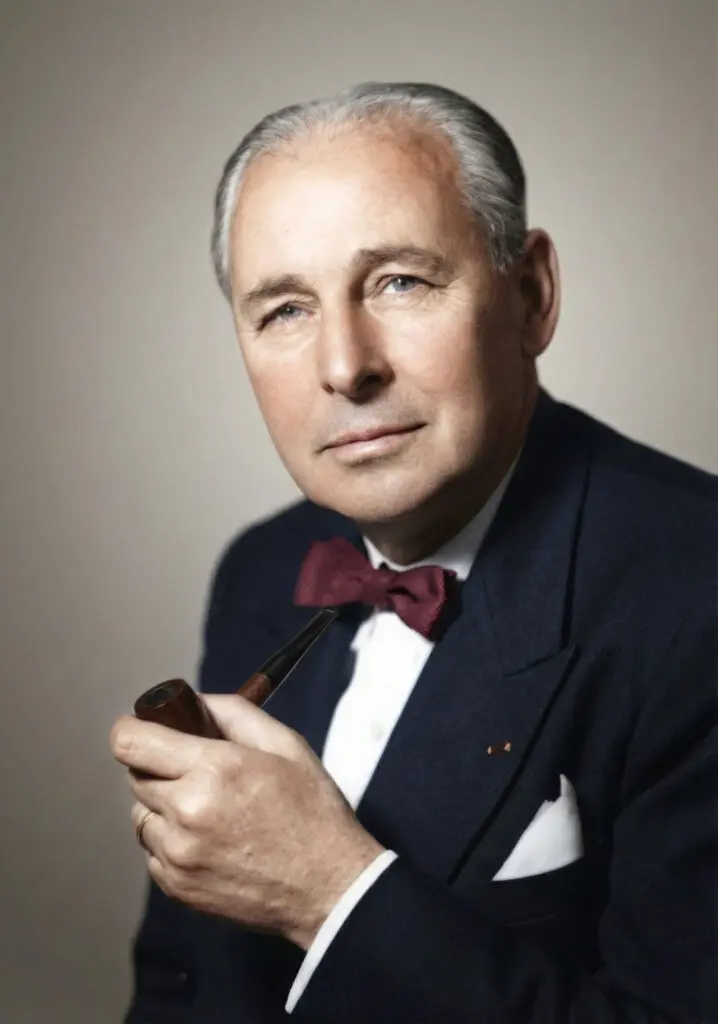
Lloyd Viel Berkner (1905–1967) was that rare figure whose life intersected with nearly every frontier of mid twentieth century science and national security.
As a pioneering radio and ionospheric engineer, an architect of the International Geophysical Year, the first chair of the National Academy of Sciences’ Space Science Board that helped guide NASA, and a trusted governmental science advisor, he moved easily among laboratories, universities, and cabinet level meeting rooms.
In January 1953, he sat on the CIA’s Robertson Panel, the secret scientific committee that reviewed the then called “UFO” problem at the height of Cold War anxiety.
Three decades later, his name surfaced again in the controversial Majestic 12 papers that claimed a hidden interagency group managed crash recoveries and policy.
The open record establishes Berkner’s scientific eminence and his role in defining official attitudes toward Unidentified Anomalous Phenomena.
The same record shows that the Majestic 12 documents remain unverified by official repositories. Understanding Berkner requires both narratives to be told clearly and carefully.
Early life and formation of a radio-scientist
Berkner was born in Milwaukee on 1 February 1905 and raised in Sleepy Eye, Minnesota, where an early obsession with amateur radio foreshadowed a career spent listening to the sky.
He earned a B.S. in electrical engineering from the University of Minnesota in 1927, joined the Naval Aviation Reserve, and quickly moved into applied radio work at the U.S. Bureau of Lighthouses and then the National Bureau of Standards.
In 1928 he supported Amelia Earhart’s pioneering transatlantic aircraft radio installation and soon after served as a radio engineer on Richard E. Byrd’s first Antarctic expedition, experience that cemented his interest in the far reaches of Earth and its upper atmosphere. (Naval History and Heritage Command)
By the early 1930s Berkner’s path bent toward the ionosphere, the high atmospheric plasma that bends and reflects radio waves around the world.
At the Carnegie Institution’s Department of Terrestrial Magnetism he worked on ionosphere-sounding programs and continuous recording equipment that evolved into standard instruments at ionospheric stations, enabling height and electron density measurements that underpinned a more complete theory of shortwave propagation.
Photographs from Carnegie archives show Berkner at the racks of multifrequency ionospheric equipment in 1937, a working image of the era’s rapidly maturing radio geophysics. (NAS)
Contemporary summaries credit Berkner with first reliable measurements of ionospheric heights and densities and with key early papers on the F-region’s seasonal and diurnal variability. These studies seeded an international network of observatories and made the ionosphere an everyday tool for communication engineers and researchers.
Wartime and immediate postwar service
World War II drew Berkner’s expertise into national service. He contributed to radar and navigation systems and then, in 1946, was appointed executive secretary of the new joint Research and Development Board, chaired by Vannevar Bush.
The RDB was the apex mechanism that coordinated the services’ science and technology programs during the postwar transition from the Manhattan Project and into the Cold War. Berkner’s portfolio put him at the center of committees, panels, and information flows that linked scientists to the military in the nation’s most sensitive programs. He subsequently served as special assistant to the Secretary of State, chaired a committee on military assistance planning for NATO, and led a National Academy of Sciences study on science and foreign relations.
These assignments foreshadowed the 1950 “Berkner Report,” which urged stronger science advising within the Department of State and helped seed the science attaché program.
The International Geophysical Year and the Space Age
Berkner’s most enduring scientific legacy began at a small 1950 gathering at James Van Allen’s home. He argued that the world should not wait fifty years for another International Polar Year.
Instead, new technologies and an approaching solar maximum called for a global geophysical effort in 1957–1958. That suggestion catalyzed the International Geophysical Year, an 18-month worldwide campaign that mobilized 67 nations and fourteen Earth science disciplines, from aurora studies to rocket and satellite observations. Berkner helped design the IGY’s international and U.S. structures, served as a leader in its international committees, and pressed for a nonmilitary U.S. satellite program to support upper-atmosphere science.
When Sputnik and then Explorer I flew, the Space Age arrived inside the project he had helped imagine.
The National Academy of Sciences created the Space Science Board in 1958 to provide continuing scientific guidance for the new era. Berkner became its first chair and, by contemporaneous accounts, reorganized the board into an effective advisory engine for the newly formed NASA and other agencies.
Early board memoranda and histories underscore how quickly the group identified exobiology, planetary exploration, and space physics as core lines of scientific inquiry. (National Academies)
In these same years Berkner served as president of multiple scientific unions that embodied his commitment to international cooperation. He was president of the International Council of Scientific Unions in the mid-1950s, then led the International Union of Radio Science in 1957, and became president of the American Geophysical Union in 1959.
He also served on President Eisenhower’s Science Advisory Committee and chaired a panel whose rapid report became a blueprint for modern seismology.
Berkner’s administrative reach extended to big research infrastructure. As the first full-time president of Associated Universities, Inc. from 1951 to 1960, he was instrumental in establishing the National Radio Astronomy Observatory at Green Bank, West Virginia.
The NRAO timeline records him signing the NSF–AUI agreement in November 1956 and acting as the observatory’s first director during start-up.
The breadth of his influence can be measured from Antarctica to West Virginia. An ice rise discovered during IGY work was named Berkner Island in his honor. (National Radio Astronomy Observatory)
The Robertson Panel and the making of official UAP posture
The wave of high-profile sightings in 1952, including the July incidents in the skies over Washington, D.C., forced a policy response. The CIA’s Office of Scientific Intelligence convened a “Scientific Advisory Panel on Unidentified Flying Objects” that met 14–18 January 1953 under physicist Howard P. Robertson.
Berkner was a member of this “Robertson Panel,” alongside Thornton Page, Luis Alvarez, and Samuel Goudsmit, with J. Allen Hynek briefing from Project Blue Book. Declassified notes and the so called Durant report capture the sequence of briefings, film analyses, and debates, including reviews of the Tremonton, Utah and Great Falls, Montana motion picture cases. (CIA)
Two conclusions from the panel would echo for decades in UAP history.
First, the panel judged unanimously that there was no evidence of a direct national security threat in the objects then being reported.
Second, it warned that the subject could nonetheless overload communications and create vulnerabilities during a real crisis, so education and better filtering were important. The panel explicitly recommended a broad training and public information effort whose second aim was “debunking,” and it discussed the monitoring of civilian UAP groups.
The committee also urged improved field investigation processes and more disciplined data collection. These positions framed the government’s posture for years to come. (The Black Vault Documents)
For UAP researchers, Berkner’s presence on the panel matters. He was not a peripheral figure. He represented the mainstream of American science, already central to upper-atmosphere studies and soon to be central to NASA’s scientific direction.
His participation helped legitimize a policy line that treated UAP as a manageable air defense nuisance rather than an urgent technical mystery. That tone, set in 1953, influenced how later offices and projects approached the subject.
The Majestic 12 episode: Berkner’s name in the controversial papers
In the mid-1980s, a packet of film reportedly delivered to a television producer yielded copies of “Top Secret/Eyes Only” documents.
The most famous of these, the “Eisenhower Briefing Document” dated November 1952, lists “Majestic-12” members said to have been designated to manage extraordinary recoveries and policy. The list includes Admiral Roscoe Hillenkoetter, Vannevar Bush, James Forrestal, Nathan Twining, Hoyt Vandenberg, Detlev Bronk, Jerome Hunsaker, Sidney Souers, Gordon Gray, Donald Menzel, Robert Montague, and “Dr. Lloyd V. Berkner.”
That roster was tailor made to feel plausible because it gathered figures who sat at the nexus of atomic stewardship, air defense, and elite science. (Archive.org)
Official repositories, however, have not verified the authenticity of the Majestic 12 materials. The FBI’s public Vault summarizes an Air Force determination that the “Operation Majestic-12” briefing was bogus.
The National Archives’ MJ-12 reference note details problems with the associated “Cutler–Twining” memo, including the absence of required Top Secret register markings and the fact that Robert Cutler was out of the country on the date of the purported memorandum.
The U.S. Government Accountability Office reported in 1995 that agencies’ knowledge of “Majestic 12” was limited to the contested documents themselves. These points anchor the historical consensus in the archival record. (FBI)
Berkner’s appearance in the list remains a curiosity that says more about his real-world credibility than about the papers’ provenance. As executive secretary of the Research and Development Board under Vannevar Bush and later as a central figure in geophysics and space policy, Berkner belonged to the small world of people who plausibly might have been consulted if the United States had created a tiny, compartmented panel about unknown aerospace materials.
That plausibility is exactly why the MJ-12 story attached to him so easily and why it persists in popular discourse despite the documentary anomalies.
What Berkner himself claimed about UAP
There is no public record of Berkner advocating extraordinary explanations for UAP or making personal claims about crash recoveries, technologies, or nonhuman intelligence.
His on-the-record involvement is the Robertson Panel, whose report he helped shape. The panel’s conclusions and recommendations are clear in the declassified documents. They emphasize national security workflow risks, improved investigation, and a public education effort that would train observers and reduce confusion.
Beyond that committee work, Berkner’s published scientific output and public roles centered on radio science, atmospheric evolution, international scientific cooperation, and space policy. (The Black Vault Documents)
Influence and impact on ufology
Setting the tone for official engagement. The Robertson Panel gave federal agencies a coherent framework for handling UAP reports in the 1950s.
It helped justify a shift from urgent threat assessment to procedural management. Berkner’s participation meant that mainstream scientific authority endorsed that shift, which, in turn, shaped how data were collected and what counted as worthy of deep analysis.
The Air Force’s Project Blue Book later logged 12,618 cases between 1947 and 1969 and left 701 “unidentified,” but institutional conclusions steadily moved toward prosaic explanations absent exceptional evidence. (Air Force)
Reverberations into the Space Age. Berkner’s leadership of the Space Science Board and his advocacy for satellites and exobiology created an intellectual pathway where rigorous space science could flourish without reference to UAP.
That separation of domains had lasting effects. NASA and the academy built durable programs to study life’s origins, planetary environments, and near-Earth space, while intelligence and defense communities handled UAP as an air defense and information-management problem.
The bifurcation reduced opportunities for sustained, cross-domain study of anomalies. (National Academies)
A touchstone for competing stories.
The later appearance of Berkner’s name in the MJ-12 list made him a symbolic figure for two narratives that still compete. In one, an interagency inner circle managed a profound, hidden technical discovery starting in 1947.
In the other, the papers are crafted forgeries that parasitized the reputations of exactly the kinds of people who would have been consulted if such a group had existed. Institutional assessments by the FBI, National Archives, and GAO align with the latter view, even as public fascination with the former persists.
For ufology, Berkner stands at the hinge between these possibilities. (FBI)
Context from today’s official reviews. The Department of Defense’s All-domain Anomaly Resolution Office, in its 2024 historical report, stated that it found no verifiable evidence of extraterrestrial technology in U.S. government holdings and no substantiated crash retrieval or reverse-engineering programs.
That conclusion does not negate a residual core of intriguing cases. It does establish the present institutional baseline that researchers must address when revisiting the choices made in 1953 and the legacies of figures like Berkner. (U.S. Department of War)
Other achievements that defined his stature
A full appreciation of Berkner’s UAP significance rests on his broader career.
- Ionosphere and radio science. Berkner’s work on ionospheric sounding and on F-region variability became pillars of mid-century radio propagation theory and practice.
The global ionosonde networks that his generation helped pioneer remain core infrastructure for space-weather operations and research. (NAS)
- International cooperation. As ICSU president in the 1950s, URSI president in 1957, and AGU president in 1959, Berkner was a diplomatic heavyweight for science.
His collaborative approach carried real policy consequences, from the Antarctic Treaty’s scientific regime to multilateral space science.
- Institution building. At Associated Universities, Inc., he drove the creation of the National Radio Astronomy Observatory. NSF and AUI records show him signing the foundational agreement in 1956 and serving as acting director during the observatory’s launch. (National Radio Astronomy Observatory)
- Space policy leadership. As the first chair of the Space Science Board, Berkner helped set the scope for NASA’s scientific portfolio, including committees on exobiology and planetary missions.
This was the scientific governance architecture of the early space program. (National Academies)
- Later years. In the 1960s he helped found what became The University of Texas at Dallas, serving as the first president of the Graduate Research Center of the Southwest, while remaining active in national and international scientific associations.
He died in Washington, D.C., on 4 June 1967. (nasa.gov)
Controversies
The Robertson Panel’s “debunking” recommendation.
The panel’s advice to undertake an educational program with a debunking component remains one of the most criticized choices in the U.S. government’s engagement with UAP. Supporters argue the recommendation was pragmatic in a tense Cold War context that demanded communications discipline.
Critics argue that it created a culture of ridicule that discouraged careful study and drove some witnesses underground.
The historical record shows that the panel explicitly used the word “debunking” within an education framework, which is why the controversy endures. (The Black Vault Documents)
Berkner’s inclusion in the MJ-12 list. The Eisenhower Briefing Document’s membership roster places Berkner among twelve luminaries charged with managing the most sensitive technical matter imaginable.
The FBI and National Archives findings, along with the GAO’s 1995 note, count heavily against the authenticity of those documents.
Yet the list was crafted with an insider’s understanding of who actually sat near the center of postwar science and security. That design choice kept the story alive. (Archive.org)
Science versus secrecy. Berkner operated at the seam between open science and closed national security.
In practice, this meant he used scientific authority in support of policies that balanced transparency against perceived threat.
For UAP historians, that dual role is both admirable and fraught. It explains how a builder of global scientific cooperation could also help author a policy that filtered and deemphasized anomalous reports. The tension is real and cannot be reduced to a single motive.
A UAPedia synthesis of Berkner’s impact
Berkner’s biography reframes a familiar debate.
He was not a shadowy spymaster. He was a nation-building scientist who believed that coordinated, international research could answer big questions.
The same competencies that made him indispensable to IGY planning and to NASA’s early advisory structure made him a natural choice for the 1953 panel that sought to bring discipline to the UAP problem.
In the archival record, Berkner’s UAP footprint consists of the Robertson Panel’s proceedings and conclusions. Those conclusions reduced perceived threat and urged public education that included debunking.
That advice shaped an era.
The later MJ-12 papers tried to draft him into a very different story. The FBI’s and National Archives’ assessments point strongly to inauthenticity. Yet the choice to include Berkner was savvy because it recognized where power and knowledge actually sat in the late 1940s and early 1950s.
He was the kind of person you would ask if you needed a small, trusted group to study something astonishing.
The fact that he was precisely that kind of person tells us as much about the architecture of American secrecy as it does about UAP. (The Black Vault Documents)
Today’s official reviews, including AARO’s 2024 historical volume, put a clear marker down. They report no verified evidence of extraterrestrial technology in U.S. government holdings. That institutional position is the starting point for current research.
It does not drain the mystery from complex cases, nor does it end public interest. It does help explain why Berkner’s practical, systems-level approach has had such a long half-life in policy.
He helped build structures that assume better data and better processes will resolve most cases, and he prioritized the protection of national networks over the exploration of anomalies.
Whether one applauds or laments that outcome, it is crucial to understanding how the United States learned to live with unanswered questions in its skies. (U.S. Department of War)
Chronology
- 1905–1927
Born in Milwaukee, raised in Minnesota, and graduates from the University of Minnesota in electrical engineering. Early amateur radio accomplishments and Naval Aviation Reserve service point him toward applied radio work. (UT Dallas Magazine) - 1928–1933
Works at the National Bureau of Standards on radio propagation, serves as radio engineer with Byrd’s Antarctic expedition, and deepens his atmospheric interests. (Naval History and Heritage Command) - 1933–1946
At Carnegie’s Department of Terrestrial Magnetism, advances ionospheric sounding and publishes widely on ionospheric structure and variability. (NAS) - 1946–1950
Executive secretary to the joint Research and Development Board under Vannevar Bush, then special assistant to the Secretary of State; leads NAS study “Science and Foreign Relations,” producing the 1950 Berkner Report. - 1950–1958
Proposes the International Geophysical Year; helps organize international and U.S. structures; sees IGY through Sputnik and Explorer I. - 1951–1960
First full-time president of Associated Universities, Inc.; signs the 1956 agreement to build and operate the National Radio Astronomy Observatory and serves as acting director during start-up. (National Radio Astronomy Observatory) - January 1953
Serves on the CIA’s Robertson Panel reviewing UAP. Panel concludes no direct threat and recommends training and debunking within a broader education program. (The Black Vault Documents) - 1955–1959
Leads international scientific unions and becomes AGU president in 1959; serves on President Eisenhower’s Science Advisory Committee. - 1958 onward
First chair of the Space Science Board, shaping early NASA science advisory processes. (National Academies) - 1961–1967
Founding president of the Graduate Research Center of the Southwest, the seed of The University of Texas at Dallas; dies in Washington, D.C., on 4 June 1967. (nasa.gov)
References
All-domain Anomaly Resolution Office. (2024, March 8). Report on the historical record of U.S. government involvement with UAP, Vol. 1. Department of Defense. https://www.aaro.mil/Portals/136/PDFs/AARO_Historical_Record_Report_Volume_1_2024.pdf (U.S. Department of War)
Central Intelligence Agency. (1953). Report of meetings of the Office of Scientific Intelligence Scientific Advisory Panel on Unidentified Flying Objects, January 14–18, 1953 [declassified memorandum; “Durant report”]. The Black Vault. https://documents.theblackvault.com/documents/ufos/robertsonpanelreport.pdf (The Black Vault Documents)
Encyclopedia Britannica. (n.d.). Lloyd Viel Berkner. https://www.britannica.com/biography/Lloyd-Viel-Berkner (Encyclopedia Britannica)
Federal Bureau of Investigation. (n.d.). Majestic 12. The Vault. https://vault.fbi.gov/Majestic%2012 (FBI)
National Academy of Sciences. (1992). Hales, A. L. Lloyd Viel Berkner. In Biographical Memoirs (Vol. 61). https://www.nasonline.org/wp-content/uploads/2024/06/berkner-lloyd-v.pdf
National Academies of Sciences, Engineering, and Medicine. (2009). Appendix B: The Space Studies Board. In America’s Future in Space (background history). https://nap.nationalacademies.org/read/12675/chapter/23 (National Academies)
National Archives and Records Administration. (2024, June 25). Project Blue Book; Majestic 12 reference note. https://www.archives.gov/research/military/air-force/ufos (National Archives)
NASA History. (n.d.). International Geophysical Year. https://www.nasa.gov/history/sputnik/igy.html (nasa.gov)
NASA History. (2005). Sputnik biographies: Lloyd V. Berkner (1905–1967). https://www.nasa.gov/history/sputnik/berkner.html (nasa.gov)
National Radio Astronomy Observatory Archives. (n.d.). Timeline of NRAO history. https://www.nrao.edu/archives/nrao-timeline (National Radio Astronomy Observatory)
National Radio Astronomy Observatory. (n.d.). Lloyd Berkner [photo and biographical note]. https://public.nrao.edu/gallery/lloyd-berkner/ (National Radio Astronomy Observatory)
Office of the Secretary of the Air Force. (n.d.). Unidentified Flying Objects and Air Force Project Blue Book [USAF Fact Sheet 95-03]. https://www.af.mil/About-Us/Fact-Sheets/Display/Article/104590/unidentified-flying-objects-and-air-force-project-blue-book/ (Air Force)
The University of Texas at Dallas Magazine. (2020, February 10). Lloyd Berkner: A man made to be a comet. https://magazine.utdallas.edu/2020/02/10/lloyd-berkner-a-man-made-to-be-a-comet/ (UT Dallas Magazine)
U.S. Government Accountability Office. (1995, July 28). Comments on Majestic 12 material [B-260087]. https://www.gao.gov/assets/154832.pdf (Government Accountability Office)
Wikipedia. (n.d.). International Geophysical Year. https://en.wikipedia.org/wiki/International_Geophysical_Year (Wikipedia)
Wikipedia. (n.d.). Robertson Panel. https://en.wikipedia.org/wiki/Robertson_Panel (Wikipedia)
Primary source reproduction of the contested document:
Archive.org. (n.d.). Eisenhower Briefing Document: Operation Majestic-12 [disputed PDF reproduction]. https://ia800500.us.archive.org/35/items/majestic-12-documents-for-majic-eyes-only/Eisenhower%20Briefing%20Document_text.pdf (Archive.org)
Carnegie Science. (n.d.). Observing Earth and Atom [DTM photo collection, including 1937 photo of Berkner with ionospheric equipment]. https://collection.carnegiescience.edu/
Note: The “Majestic 12” materials are cited solely for documentary reference while acknowledging the official assessments listed above. Where government or institutional sources provide the core fact pattern, general encyclopedic sources are used only to supplement dates or background context.
SEO keywords
Lloyd V. Berkner biography, Berkner and Majestic 12, Berkner Robertson Panel 1953, Lloyd Berkner UAP history, International Geophysical Year origins, Space Science Board first chair, AUI NRAO Green Bank history, MJ-12 Eisenhower Briefing Document Berkner, FBI and National Archives on MJ-12, Project Blue Book statistics, AARO 2024 UAP historical report, ionospheric sounding and Berkner, Byrd Antarctic expedition Berkner