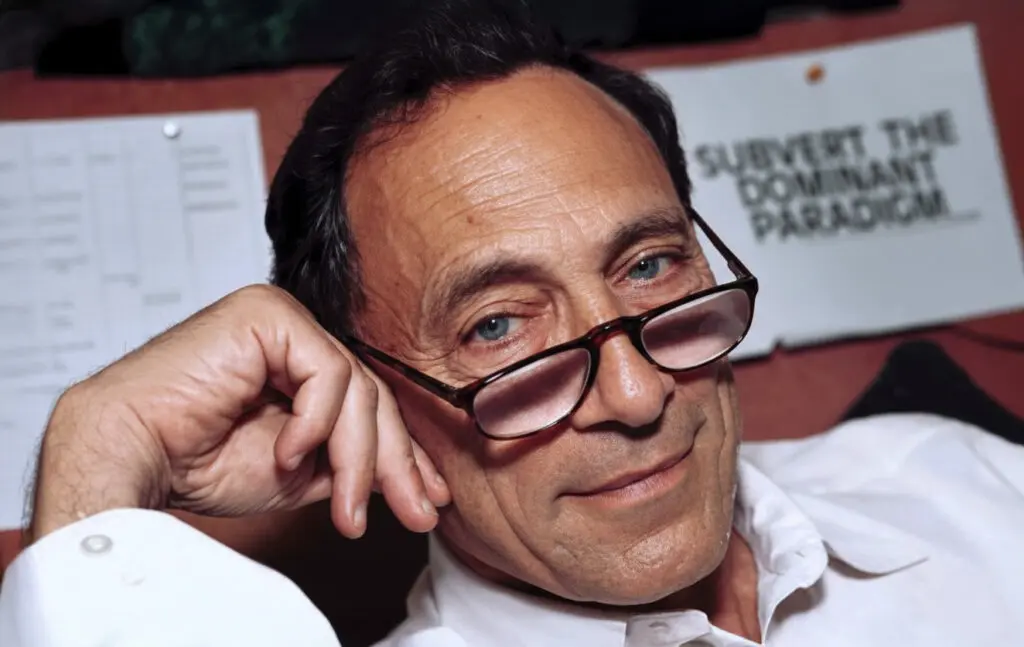
John Edward Mack was a tenured professor of psychiatry at Harvard Medical School whose career bridged mainstream clinical scholarship and frontier research into human encounters with non‑human intelligences. Early work on nightmares, adolescent psychology, and addiction culminated in a Pulitzer Prize for his T. E. Lawrence biography. In the 1990s he founded the Program for Extraordinary Experience Research and treated UAP experiencers as serious witnesses to an ontologically challenging reality. Harvard reviewed his work, then publicly reaffirmed his academic freedom. Mack’s interviews with schoolchildren in Ruwa, Zimbabwe, and his books Abduction and Passport to the Cosmos reshaped the cultural and clinical conversation about contact.
Early life and education
- Born in New York City on 4 October 1929; B.A. from Oberlin College in 1951; M.D. from Harvard Medical School in 1955. He trained at Massachusetts General Hospital and the Massachusetts Mental Health Center, and completed psychoanalytic training in Boston.
- Joined the Harvard faculty in 1964 and became a professor in 1972. He helped build the psychiatry service at Cambridge Hospital, Harvard’s community teaching affiliate.
From mainstream psychiatry to UAP studies
- Mack’s mainstream scholarship included influential work on nightmares and adolescent suicide, and collaboration on the “self‑medication” view of addiction. A widely cited article with Edward Khantzian and Alan Schatzberg appeared in American Journal of Psychiatry in 1974.
- His psychobiography A Prince of Our Disorder: The Life of T. E. Lawrence earned the 1977 Pulitzer Prize for Biography.
- In the early 1990s, after encounters with experiencers and researchers, Mack began systematic clinical study of reported abductions. He sometimes used hypnosis as a recall aid, which drew methodological criticism, yet he argued that the experiences were deeply real to witnesses and often transformative.
Institutions he built
- Center for Psychological Studies in the Nuclear Age established in the early 1980s, later renamed the Center for Psychology and Social Change, then the John E. Mack Institute (JMI). The Center examined the psychological roots of global risk before expanding to “frontiers of human experience.”
- Program for Extraordinary Experience Research (PEER) launched in 1993 to study anomalous encounters reported by otherwise healthy individuals. JMI notes the Center developed PEER “with funding from Laurance Rockefeller.”
Landmark moments
- 1992 MIT Abduction Study Conference. Mack served as co‑chair for the June 13–17 academic conference that produced the 600‑plus page proceedings Alien Discussions.
- 1994: Abduction: Human Encounters with Aliens was published by Scribner and became a bestseller.
- 1994–1995 Harvard review. After a fourteen‑month inquiry, Harvard Medical School chose not to sanction Mack; the dean publicly “reaffirmed Dr. Mack’s academic freedom to study what he wishes and to state his opinions without impediment.” Contemporary reporting and the school’s statement document the outcome.
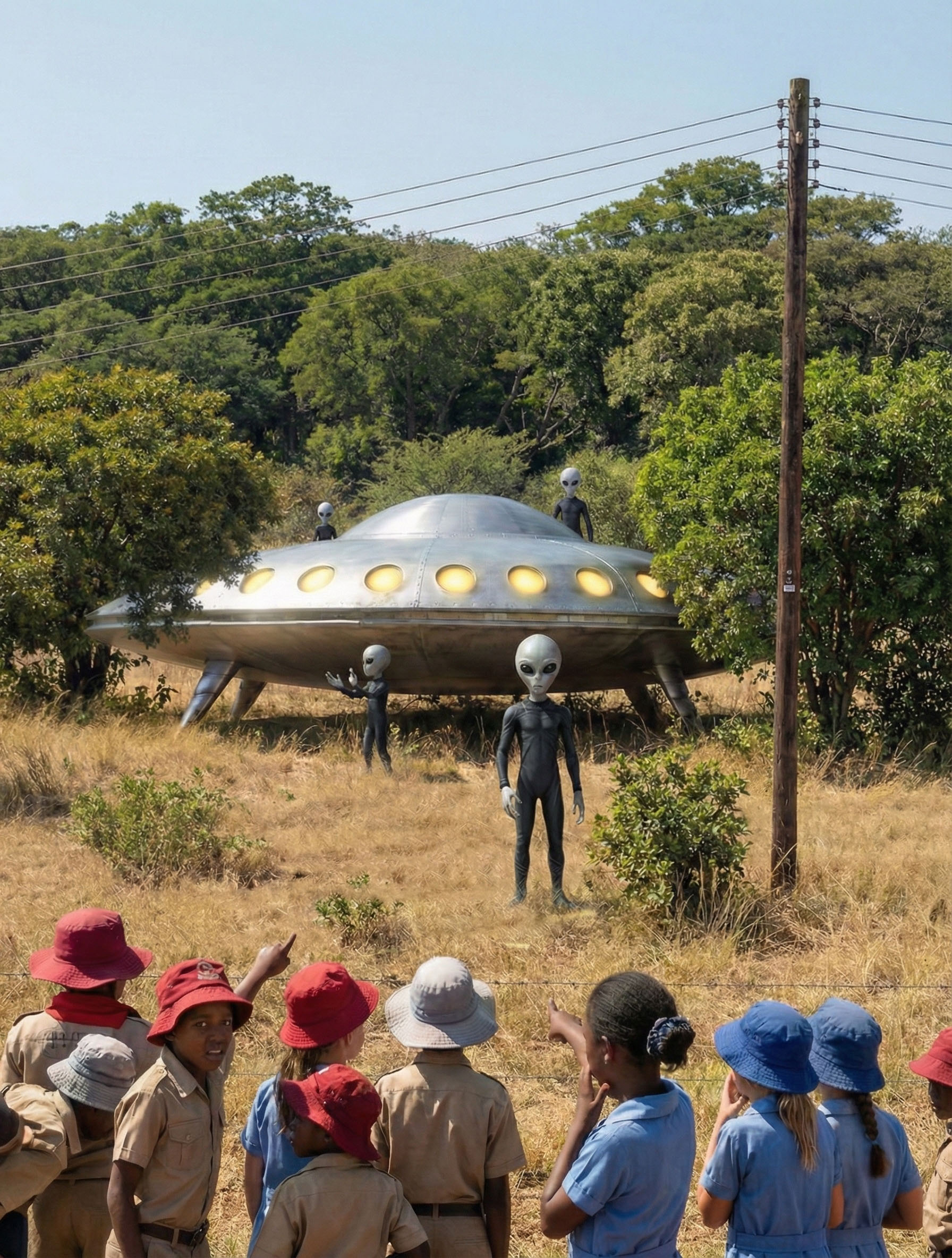
- 1994 Ariel School, Zimbabwe. Within days of the well‑known schoolyard encounter, Mack interviewed dozens of pupils on camera, work later revisited in the documentary Ariel Phenomenon.
- 1999: Passport to the Cosmos: Human Transformation and Alien Encounters synthesized his mature view that contact reports suggest an expanded model of reality and of human–non‑human relationship.
Ariel school and abduction cases findings
Mack’s fieldwork at the Ariel School in Ruwa, Zimbabwe, in 1994 became one of his most widely discussed case studies. Dozens of schoolchildren reported witnessing a landed craft and beings of non‑human appearance communicating telepathically about humanity’s stewardship of the Earth. Mack interviewed the children soon after the event, finding their accounts highly consistent and their affect congruent with genuine perception rather than fantasy or contagion. He concluded that the Ruwa testimony illustrated the phenomenon’s cross‑cultural dimension; appearing in a remote African setting with themes parallel to reports from North America; and that it pointed toward an experience interweaving the psychological, ecological, and numinous. The case impressed on him the need for clinicians to suspend premature dismissal and to recognize the ontological challenges such coherent experiential data present.
Across other abduction and contact narratives he investigated, Mack noted recurring patterns: luminous or energetic beings; intense visionary states; episodes of paralysis followed by perceived transport; and transformative aftermaths emphasizing planetary concern and expanded consciousness. He came to view these not solely as psychopathological products but as encounters occurring at the interface of consciousness and a yet poorly understood external reality. His synthesis argued that abduction phenomena embodied both trauma and transcendence, events that might signal an evolutionary or ecological message rather than a clinical disorder. These conclusions placed Mack at the forefront of efforts to interpret UAP experiences as meaningful components of human experience, demanding both scientific rigor and openness to new models of mind and cosmos.
Death
Mack died in London on 27 September 2004 after being struck by a car while attending a T. E. Lawrence conference. Obituaries in medical and national press record the circumstances.
Perspective and legacy
Mack’s heterodox stance treated UAP witnesses as credible informants whose experiences merited careful clinical attention rather than pathologizing dismissal. He argued that the phenomenon challenges a strictly materialist worldview and that experiencers often show trauma‑like signs despite otherwise intact functioning. This reframing seeded today’s patient‑centered approach to UAP contact research, helped legitimize qualitative inquiry into anomalous experiences, and influenced a generation of clinicians and scholars.
Chronological timeline
- 1929: Born in New York City.
- 1951: B.A., Oberlin College.
- 1955: M.D., Harvard Medical School; psychiatric training at Harvard‑affiliated hospitals follows.
- 1964–1972: Joins Harvard faculty; promoted to professor. Helps build Cambridge Hospital psychiatry.
- 1970: Publishes Nightmares and Human Conflict.
- 1976–1977: Publishes A Prince of Our Disorder; awarded the Pulitzer Prize for Biography.
- 1982–1983: Founds Center for Psychological Studies in the Nuclear Age; expands into Center for Psychology and Social Change.
- 1992: Co‑chairs MIT Abduction Study Conference; proceedings published as Alien Discussions.
- 1993: Launches PEER to study experiencer testimony.
- 1994: Releases Abduction; Harvard opens an inquiry.
- Sept 1994: Interviews witnesses of the Ariel School encounter in Zimbabwe.
- Aug 1995: Harvard review ends with no censure and a public reaffirmation of academic freedom.
- 1999: Publishes Passport to the Cosmos.
- 2004: Dies in London while attending a T. E. Lawrence conference.
- 2021: Ralph Blumenthal’s biography The Believer reassesses Mack’s life and UAP work.
Accolades and roles
- Pulitzer Prize for Biography for A Prince of Our Disorder (1977).
- Founder and director, Center for Psychological Studies in the Nuclear Age; later Center for Psychology and Social Change; later JMI.
- Founder, Program for Extraordinary Experience Research (PEER).
- Founding and leadership work in Cambridge Hospital psychiatry, Harvard system.
- Peace and medical activism, including work allied with Physicians for Social Responsibility and International Physicians for the Prevention of Nuclear War.
Selected bibliography
Major books by John E. Mack
- Mack, J. E. (1970). Nightmares and human conflict. Boston, MA: Little, Brown.
- Mack, J. E. (1976). A Prince of Our Disorder: The life of T. E. Lawrence. New York, NY: Little, Brown.
- Mack, J. E. (1994). Abduction: Human encounters with aliens. New York, NY: Scribner.
- Mack, J. E. (1999). Passport to the cosmos: Human transformation and alien encounters. New York, NY: Crown.
- Mack, J. E., & Hickler, H. (1981). Vivienne: The life and suicide of an adolescent girl. Boston, MA: Little, Brown.
Edited volumes and proceedings
- Pritchard, A., Pritchard, D. E., Mack, J. E., Kasey, P., & Yapp, C. (Eds.). (1995). Alien discussions: Proceedings of the Abduction Study Conference held at MIT, Cambridge, MA. Cambridge, MA: North Cambridge Press.
Selected academic articles
- Khantzian, E. J., Mack, J. E., & Schatzberg, A. F. (1974). Heroin use as an attempt to cope: Clinical observations. American Journal of Psychiatry, 131(2), 160–164. https://pubmed.ncbi.nlm.nih.gov/4809043/?utm_source=https://uapedia.ai
Works about Mack
- Blumenthal, R. (2021). The Believer: Alien encounters, hard science, and the passion of John Mack. Albuquerque, NM: University of New Mexico Press.
Why Mack matters to UAP studies
Mack reframed “abduction” as a complex human encounter with a non‑human presence that left consistent psychological, somatic, and spiritual signatures. He did not reduce experiencers to pathology; he asked what their stories indicate about consciousness, ecology, and an expanded cosmos. His insistence on clinical care, fieldwork like the Ruwa interviews, and a willingness to challenge disciplinary boundaries helped move UAP research from ridicule to a serious transdisciplinary inquiry.
References
Harvard Medical School. (1995, August 3). Statement by the Dean of Harvard Medical School [press release].
Harvard Crimson. (1995, August 4). HMS takes no action against “UFO doctor.” (Crimson)
Washington Post. (1995, Aug 3). Harvard clears best‑selling UFO author. (WP)
Lenzer, J. (2004). John E. Mack. BMJ, 329, 924. (BMJ)
Pulitzer Prize, Biography, 1977. A Prince of Our Disorder: The Life of T. E. Lawrence, John E. Mack. (Pulitzer)
Los Angeles Times. (2004, Oct 2). John E. Mack, 74; psychiatry professor stirred controversy with alien‑abduction research. (LA Times)
Pritchard, A., Pritchard, D. E., Mack, J. E., Kasey, P., & Yapp, C. (Eds.). (1995). Alien discussions. North Cambridge Press. (Library listing)
John E. Mack Institute. Program for Extraordinary Experience Research (PEER).
John E. Mack Institute. History.http://johnemackinstitute.org/history/?utm_source=uapedia.ai
WHYY. (2023, Oct 23). Documentary explores the UFO sighting that changed the course of 62 children’s lives. (WHYY)
Wikipedia contributors. Ariel School.https://en.wikipedia.org/wiki/Ariel_School?utm_source=uapedia.ai
Scribner listing for Abduction (1994).https://www.amazon.com/ABDUCTION-ENCOUNTERS-ALIENS-John-Mack/dp/0684195399?utm_source=uapedia.ai
Crown listing for Passport to the Cosmos (1999).https://www.amazon.com/Passport-Cosmos-Human-Transformation-Encounters/dp/0517705680?utm_source=uapedia.ai
Blumenthal, R. (2021). The Believer. University of New Mexico Press.https://www.unmpress.com/9780826363954/the-believer/?utm_source=uapedia.ai
Psychology Today. (1994, Mar). The Harvard professor & the UFOs. (Psychology Today)
SEO keywords
John E. Mack biography; Harvard psychiatrist UAP; PEER Program; Abduction John Mack; Passport to the Cosmos; Ariel School Zimbabwe; MIT Abduction Conference; Harvard inquiry academic freedom; UAP experiencers; John E. Mack timeline.