
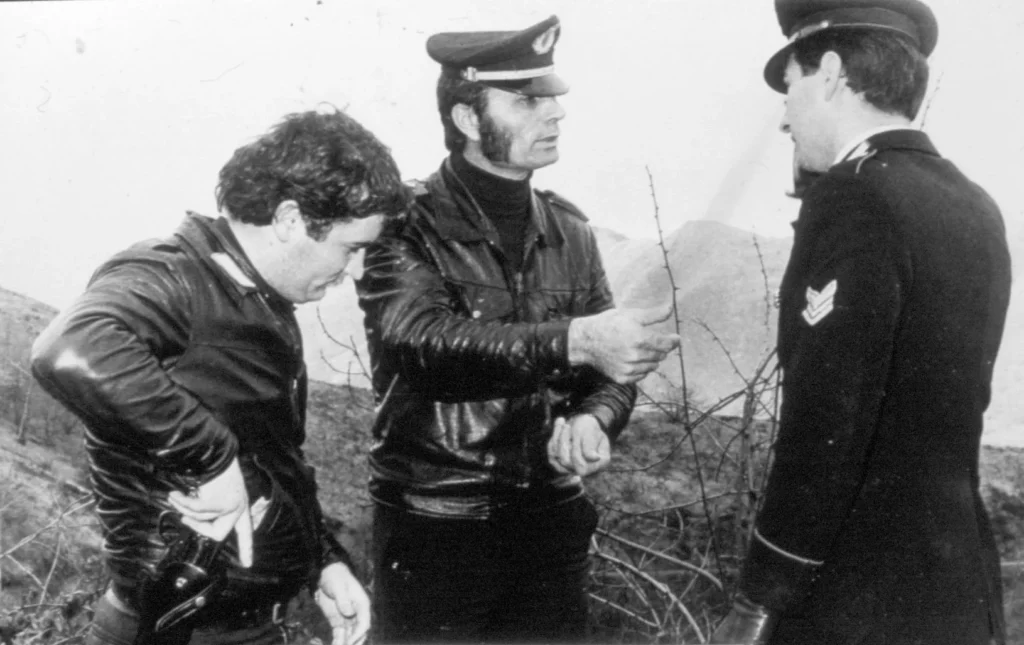
On a frozen Ligurian night in December 1978, a 26-year-old security guard drove a small Fiat up into the Apennine dark. He expected the usual routine: check a villa, leave the time-stamped slip, move on. Instead, his voice burst through the radio in panic, repeating a line that still sits like a splinter in Italy’s UAP history: “Mamma mia, quant’è brutto… No, non sono uomini, non sono uomini…” (RinoDiStefano.com)
That transmission did not begin a single strange encounter. It opened what many Italian researchers treat as a wave: multiple nights, multiple locations around Torriglia and its frazioni (hamlets), multiple witnesses reporting anomalous lights, and a paper trail that includes Carabinieri inquiry steps and later judicial archiving.
It also launched a human story that never really ends, because abduction narratives do not “conclude” when the headlines fade.
The case, in data
Here are the load-bearing data points that shape the Zanfretta file.
- Primary witness: Pier Fortunato Zanfretta, then a private security guard (metronotte) working patrols in the Torriglia area. (RinoDiStefano.com)
- Timeframe (commonly cited): Begins the night of 6 December 1978 in Marzano (Torriglia, Genoa). Zanfretta later claimed repeated abductions across 1978–1981. (Corriere della Sera)
- Count of alleged abductions: Corriere’s summary describes “about a dozen” across 1978–1981. (Corriere della Sera)
- Count of corroborating reports in the area:
- 52 witness testimonies were reportedly collected by the Carabinieri commander in Torriglia during the inquiry described by journalist Rino Di Stefano (and echoed in multiple later retellings). (RinoDiStefano.com)
- Corriere’s overview also references 56 complaints to the Carabinieri by residents who said they saw unusual things in the sky. (Corriere della Sera)
These numbers likely refer to different counting rules (unique witnesses vs. filed complaints vs. time window), but they converge on an unusual point: this was not a single-witness claim in a vacuum.
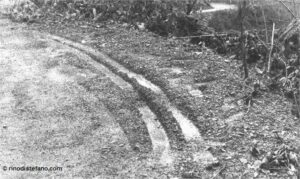
- Physical trace claims (documented in reporting): flattened/marked ground at the villa on the first night; later “giant” footprints and a vehicle reportedly hot to the touch after a disappearance episode. (RinoDiStefano.com)
- Medical/psychiatric evaluation (as reported): Prof. Giorgio Gianniotti examined Zanfretta multiple times and issued a certificate stating no neurological or psychiatric impairment was found, describing him as in “perfect” condition. (RinoDiStefano.com)
- Hypnosis record: A regressive hypnosis session was conducted by Dr. Mauro Moretti in December 1978 (and later material exists as filmed/archived segments in the Zanfretta media ecosystem). (RinoDiStefano.com)
- Media escalation: Coverage by Ligurian press, then national attention including TV appearances (most notably “Portobello”). (RinoDiStefano.com)
What makes Zanfretta unusually “data-rich” for an abduction file is not that it has laboratory-grade instrumentation. It is that it has multiple points of contact between lived testimony, law enforcement note-taking, medical evaluation, and contemporaneous journalism. That is a different evidentiary shape than a solitary late-life recollection.
Where it happened: a geography built for ambiguity
Torriglia sits in the Ligurian Apennines inland from Genoa, an environment that can manufacture confusion even before you add anything anomalous: cold, fog, narrow roads, patchy radio reception, and deep darkness broken only by occasional villas and car headlights.
The opening incident is tied to Marzano, a frazione of Torriglia, near a villa referred to as “Casa Nostra” (owned by a Genoese dentist, Ettore Righi, in Di Stefano’s account). (RinoDiStefano.com)
A later disappearance episode is tied to the road toward Rossi, where the patrol car and Zanfretta were located after a search in poor weather conditions. (RinoDiStefano.com)
This matters because abduction cases often pivot on “liminal” geography: outskirts, rural edges, transitional roads. The Torriglia file is a liminal landscape by default.
A compressed timeline of key, well-cited moments
Below is a data-first timeline focusing on events that appear consistently in major secondary sources and Di Stefano’s detailed reporting.
| Date / Period | Location | What is reported | Evidence type (as available) |
|---|---|---|---|
| Night of 6–7 Dec 1978 | Marzano (Torriglia), villa “Casa Nostra” | Zanfretta reports anomalous lights and a non-human entity encounter; a panicked radio exchange is recalled by the operator on duty; he is found later in shock; Carabinieri reportedly document ground impressions and collect many local witness statements about a luminous object. | Testimony, contemporaneous journalism, reported law enforcement documentation, reported physical trace. (RinoDiStefano.com) |
| 23 Dec 1978 | Genoa (medical office setting) | Regressive hypnosis session conducted by Dr. Mauro Moretti; Zanfretta describes being taken aboard a craft and subjected to procedures. | Hypnosis-derived testimony; later media artifacts. (RinoDiStefano.com) |
| Night of 27–28 Dec 1978 | Road near Rossi (Torriglia area) | Zanfretta radios that he is enveloped in fog and the car is behaving oddly; he disappears; later found distressed; car reported hot; large footprints reported near the vehicle. | Testimony plus reported physical trace observations. (RinoDiStefano.com) |
| Jan 1979 | Genoa / Torriglia | A Carabinieri report is said to be transmitted to judicial authorities (Pretura) as part of the procedural track; telex notifications to national offices are described in Di Stefano’s reporting. | Reported government communications via journalistic sourcing. (RinoDiStefano.com) |
| 28 & 30 Dec 1978 and 31 Jan 1979 (certificate date) | Genoa (hospital/clinic context) | Prof. Giorgio Gianniotti examines Zanfretta and reports no psychiatric/neurological alteration. | Medical evaluation reported in journalism. (RinoDiStefano.com) |
| 1978–1981 (claimed broader arc) | Genoa hinterland | Zanfretta claims repeated abductions by “Dargos,” described as ~3m tall beings; the case becomes internationally circulated in UAP literature. | Long-arc testimony and secondary summaries. (Corriere della Sera) |
Witness accounts: what people say happened
The radio transmission that anchored the story
In Di Stefano’s detailed reconstruction (originally published in Il Giornale and later archived on his site), the operator on duty, Carlo Toccalino, recalls receiving Zanfretta’s first frantic call “around midnight and a quarter,” with Zanfretta repeating: “Mamma mia, quant’è brutto,” and then insisting: “No, non sono uomini, non sono uomini…” before the communication broke off. (RinoDiStefano.com)
This is not a minor flourish. In abduction investigations, real-time communications (calls, radio, logs) create a different class of anchor than a memory recovered months later. Even if one debates interpretation, the presence of a contemporaneous escalation matters.
The first night: lights, a being, and a departure
Di Stefano’s account places Zanfretta driving toward the villa, experiencing a sudden vehicle failure (lights and engine), seeing four moving lights in the garden area, and approaching with his service weapon. He later describes a being roughly three meters tall with unusual facial and body features. (RinoDiStefano.com)
Corriere’s later summary captures similar descriptive themes: “Dargos,” very tall, triangular head/eyes, and the notion of interrogation with a helmet-like device that Zanfretta reportedly still fears. (Corriere della Sera)
The second major disappearance: fog, a self-moving car, heat, and prints
The night of 27–28 December is described as operationally different but structurally familiar: distress over radio, disorientation, disappearance, later recovery, and physical anomalies around the vehicle. Di Stefano quotes a Carabinieri responder describing Zanfretta as trembling and crying, with his head and ears unusually hot and his clothes strangely dry given rain and cold. He also reports the roof of the Fiat as hot and the presence of large footprints near the car. (RinoDiStefano.com)
This “heat motif” also appears in Corriere’s summary, which notes the service Fiat being found “torrida” (hot) after alleged abduction episodes. (Corriere della Sera)
The documentation layer: what was officially engaged
UAPedia’s editorial stance treats government and official sources as important but not sufficient on their own. In the Zanfretta case, the most meaningful “official” layer is not a definitive conclusion, but procedural engagement: Carabinieri taking statements, documenting impressions, and transmitting information into a judicial channel.
Di Stefano reports that the Carabinieri inquiry located 52 witnesses who reported a large luminous object in the relevant window, and that a physical impression near the villa was documented in a Carabinieri report using cautious language. (RinoDiStefano.com)
Corriere’s overview adds that dozens of residents filed complaints after seeing something unusual, and even references an episode where Carabinieri reportedly fired at a luminous object. (Corriere della Sera)
This is the key investigative takeaway: the file behaved like a wave, not like a solitary hallucination story.
The hypnosis record: evidentiary value and risk
Hypnosis is a recurring tool in abduction research, and a recurring fault line. In the Zanfretta case it became part of the narrative early: Di Stefano describes a hypnosis session with Dr. Mauro Moretti on 23 December 1978, with Zanfretta vocalizing fear and describing procedures aboard a craft. (RinoDiStefano.com)
On Di Stefano’s site there is also a hosted video page explicitly framed as footage of the regression hypnosis (“Non siete esseri umani…”). (RinoDiStefano.com)
From a data-first standpoint, hypnosis-derived material should be handled as structured testimony, not as a truth-machine:
- It can reveal consistent motifs and subjective certainty.
- It can also be contaminated by suggestion, prior media exposure, and the brain’s tendency to “complete” narratives under altered states.
The Zanfretta case is therefore strongest when hypnosis content is treated as one layer among: real-time radio panic, third-party witness reports, and physical anomalies described by multiple parties.
Books and the “research infrastructure” around the case
A case becomes “global” when it acquires infrastructure: books, translations, media packages, and repeatable citations.
Rino Di Stefano’s central text
Di Stefano’s book, Il caso Zanfretta: La vera storia di un incredibile fatto di cronaca (6th revised edition, 2014), is the most detailed single-author narrative framework for the case in Italian, and he provides publication specs and ISBNs on his site (including a 340-page print edition). (RinoDiStefano.com)
Di Stefano also explicitly states he followed the events as a working crime reporter and sought hypnosis sessions as part of his investigative approach, while emphasizing that the case had a judicial track and multiple witnesses. (RinoDiStefano.com)
Internationalization and translation
Di Stefano notes English availability (The Zanfretta Case) and other translations in his long-form 2017 retrospective on the case’s reach. (RinoDiStefano.com)
This matters because once a narrative is translated and circulated, it begins to influence the global “abduction template.” Later witnesses elsewhere can pick up details unconsciously, and skeptics can argue feedback loops. The Zanfretta file sits at that crossroads: it is old enough to be foundational, and famous enough to become culturally contagious.

Aftereffects: what the story did to the witness
Abduction claims are often assessed like puzzles: did it happen, what was it, what does it mean. The human cost becomes an afterthought. In the Zanfretta story, the cost is not incidental. It is baked into the reporting.
Di Stefano describes Zanfretta as disturbed by the attention, complaining of strangers calling to mock him, while insisting: “I don’t know what it was… but I saw it. I’m not a liar.” (RinoDiStefano.com)
Corriere’s later summary adds a durable psychological residue: Zanfretta reportedly still feels terror connected to the “helmet” device he said was used on him during interrogations. (Corriere della Sera)
Di Stefano’s book page also frames occupational jeopardy and later life disruption as part of the arc, emphasizing that Zanfretta risked dismissal and that the experience marked him socially and professionally. (RinoDiStefano.com)
Medical framing without dismissal
One of the most important “aftereffects” datapoints is not a symptom, but a counterclaim: that Zanfretta was medically evaluated and not judged psychiatrically impaired. Di Stefano reproduces the existence and thrust of Prof. Gianniotti’s certificate, describing Zanfretta as found in “perfect” neurological and psychic condition. (RinoDiStefano.com)
This does not prove abduction. It does reduce the convenience of writing the case off as simple madness.
Why this case refuses to die: the wave problem
Many abduction narratives can be “collapsed” by skeptics into a single explanatory bucket: sleep paralysis, fantasy-proneness, hoaxing, misidentification, suggestibility. The Zanfretta case resists collapse because it behaves like a cluster:
- A primary witness experiences multiple episodes and escalating phenomena.
- Other locals report anomalous lights in the same time window.
- Physical anomalies are repeatedly alleged (ground traces, heat, footprints).
- Law enforcement is pulled in, not to validate aliens, but to document an event that citizens are reporting in quantity.
Corriere’s mention of dozens of complaints and a Carabinieri shooting incident is especially telling in this respect: whatever the ultimate cause, a portion of the community experienced something persistent enough to generate reporting behavior. (Corriere della Sera)
Implications for UAP research and public policy
Abduction research needs better “rapid capture”
If a case is unfolding across multiple nights, the most valuable data is perishable: weather logs, radio tapes, vehicle inspections, soil sampling, witness separation protocols, and time-synced interviews. The Zanfretta file shows what happens when a wave hits before modern capture standards: you get testimony density, but you do not get instrumentation density.
Police engagement is evidence of seriousness, not of origin
Carabinieri engagement and judicial archiving are meaningful as signals of procedural seriousness and of a community-impacting event. They are not, by themselves, adjudications of non-human agency. The right way to use this layer is as corroboration that something was reported, investigated, and documented.
The “template effect” and cross-case contamination
Once Zanfretta’s “Dargos” and helmet interrogation imagery enters global media, it becomes part of the abduction vocabulary. Future cases may echo it through genuine similarity, cultural absorption, or both. Investigators should track who had exposure to which narratives, and when.
Mental health support should not require agreement on metaphysics
The Zanfretta aftereffects show the ethical need for experiencer support that does not hinge on taking a position about “what it was.” The trauma can be real even when interpretation remains disputed.
Claims taxonomy
Verified (supported by converging reporting and documentation that the events were reported/investigated; not verifying non-human origin)
- Zanfretta was on patrol in the Torriglia area and made distress calls via radio that were recalled by the operator on duty, including the “non sono uomini” line in Di Stefano’s report. (RinoDiStefano.com)
- Carabinieri inquiry activity is described as including collection of many local witness statements and documentation of a ground impression near the villa. (RinoDiStefano.com)
- A medical evaluation by Prof. Giorgio Gianniotti is reported as finding Zanfretta neurologically and psychiatrically normal. (RinoDiStefano.com)
- The case gained major media attention and Zanfretta appeared in prominent TV/media contexts (including “Portobello”). (RinoDiStefano.com)
Probable (strong but incomplete; plausible prosaic explanations not fully excluded)
- A wave of luminous-object sightings occurred around Torriglia/Marzano, reflected in dozens of complaints and multiple witness statements. (Corriere della Sera)
- The “heat and trace” motif (vehicle reportedly hot; large footprints) reflects either a repeatable anomaly or a repeatable narrative element; multiple sources present it, but primary forensic records are not fully public. (RinoDiStefano.com)
Disputed (core abduction claims and specific non-human details)
- That Zanfretta was literally taken aboard a craft by “Dargos” multiple times across 1978–1981. (Corriere della Sera)
- That hypnosis sessions retrieve accurate factual memories of events rather than reconstructive narratives under suggestion risk. (RinoDiStefano.com)
- Claims involving an “artifact” or “sphere” custodianship (reported within the extended narrative ecosystem) remain unverified publicly. (RinoDiStefano.com)
Misidentification
- No single, demonstrable misidentification has been established that cleanly explains the cluster behavior, the multi-witness reporting, and the repeated anomaly motifs as summarized in major sources. This category remains a live possibility for specific sub-events (for example, a particular light source or aircraft), but not a comprehensive resolution on current public data. (Corriere della Sera)
Hoax
- Not established. The public record summarized here includes substantial social cost to the primary witness and a broader witness environment, which does not eliminate hoaxing but raises its complexity threshold. (RinoDiStefano.com)
Speculation labels
These are clearly separated from the evidence summary above.
Hypothesis
A localized UAP wave occurred in the Torriglia area in late 1978, producing repeated luminous-object sightings by multiple residents, with one primary witness experiencing direct contact and missing-time style episodes that included physical anomalies around his vehicle. This hypothesis is consistent with the “cluster” behavior described in both journalistic and secondary summaries, but it is not instrument-confirmed. (Corriere della Sera)
Witness interpretation
Zanfretta interpreted his experiences as repeated abductions by non-human beings (“Dargos”), including interrogation using a helmet-like apparatus and medical examination aboard a craft. (Corriere della Sera)
Researcher opinion
Rino Di Stefano argues, from the stance of a working reporter, that the case cannot be treated as purely imaginary because of the presence of a judicial track, numerous witnesses, and recurring physical anomalies reported around the episodes. (RinoDiStefano.com)
References
Corriere.it (case overview card: “Il Caso Zanfretta (1978)”) https://www.corriere.it/tecnologia/domande/cards/giornata-mondiale-ufo-12-avvistamenti-storici/il-caso-zanfretta-1978.shtml?utm_source=uapedia.ai
La Stampa (contextual overview of the case; mentions witnesses and hypnosis) https://www.lastampa.it/cultura/2016/11/14/news/il-rapito-dagli-alieni-ora-e-a-teatro-1.34806973/?utm_source=uapedia.ai
Rino Di Stefano (Il Giornale, 1984 reprint: detailed reconstruction) https://www.rinodistefano.com/it/articoli/zanfretta.php?utm_source=uapedia.ai
Rino Di Stefano (Il Giornale dei Misteri, 2017: retrospective + media index) https://www.rinodistefano.com/it/articoli/zanfretta-giornale-dei-misteri.php?utm_source=uapedia.ai
Rino Di Stefano (book page with ISBN and edition details) https://www.rinodistefano.com/it/libri/caso-zanfretta.php?utm_source=uapedia.ai
Rino Di Stefano (video page: regression hypnosis footage reference) https://www.rinodistefano.com/it/video/zanfretta-ipnosi-1979.php?utm_source=uapedia.ai
Wikipedia (useful as a secondary index, not as a primary authority)
https://en.wikipedia.org/wiki/Zanfretta_UFO_Incident?utm_source=uapedia.ai
https://it.wikipedia.org/wiki/Pier_Fortunato_Zanfretta?utm_source=uapedia.ai
SEO keywords
Pier Fortunato Zanfretta, Zanfretta case, Torriglia UAP, Marzano di Torriglia, Italy abduction case, Dargos, 1978 abduction Italy, Carabinieri UAP report, Portobello Enzo Tortora Zanfretta, UAP wave Liguria, regression hypnosis abduction, Italian close encounter, classic abduction cases Europe