Long before podcasts turned paranormal talk into a comfort-listen, there was a man in the Nevada desert opening phone lines to the night.
Art Bell did not just host a radio show. For millions of insomniacs, long-haul truckers, experiencers and late-night workers, Coast to Coast AM and its Sunday sister Dreamland were a nightly ritual where UAP, abductions, government secrecy and “things that go bump in the sky” felt as normal as sports talk in the daytime. At its peak in the late 1990s, Coast to Coast AM was carried on hundreds of stations, with claims of up to 15 million listeners on some nights.
From his home studio in Pahrump, Nevada, “from the Kingdom of Nye,” as the famous intro said, Bell turned the post-midnight AM band into a kind of national séance about the unknown. UAP were one of the core pillars: from classic Roswell debates to fresh pilot encounters, from abduction researchers to government whistleblowers, if it touched the phenomenon, somebody probably talked about it with Art.
For UAPedia, Bell is a pivotal figure not because he ran investigations himself, but because he provided the largest, most free-form stage UAP culture ever had.
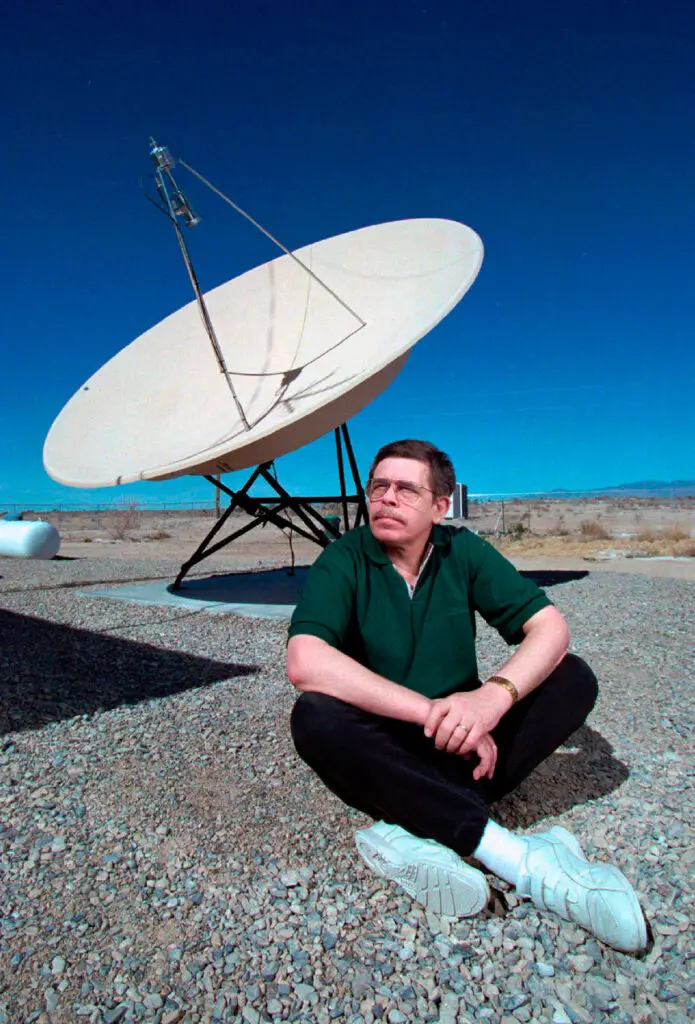
Early life, pirate signals and an obsession with radio
Arthur William Bell III was born on June 17, 1945, in North Carolina to military parents and grew up with both radio and the armed forces woven into daily life.
Key early beats:
- At 13 he became a licensed amateur radio operator, a path that would later culminate in an Amateur Extra Class license and the well-known call sign W6OBB in the United States, plus 4F1AB in the Philippines.
- He served four years in the U.S. Air Force as a medic during the Vietnam era, seeing the human impact of war in places such as Da Nang and Clark Air Base.
- While stationed at Amarillo Air Force Base, he and friends ran a pirate station from the barracks, popular enough that it showed up in ratings and had to be shut down after a year.
After leaving the military, Bell moved through several U.S. stations before landing in Okinawa, Japan, as a rock DJ at KSBK, the only non-military English-language station there. He claimed to have set “world records” for on-air marathons, including more than 115 hours of continuous broadcasting, and even broadcast while seesawing for over two days.
One of the lesser known but telling episodes: from Anchorage he used his microphone to raise money to evacuate about 120 Amerasian orphans from Saigon near the end of the Vietnam War, chartering a DC-8 to bring them to adoptive families in the United States.
Before he was “America’s late-night UAP host,” he was already living proof of what a motivated person with a microphone and a restless mind could do.
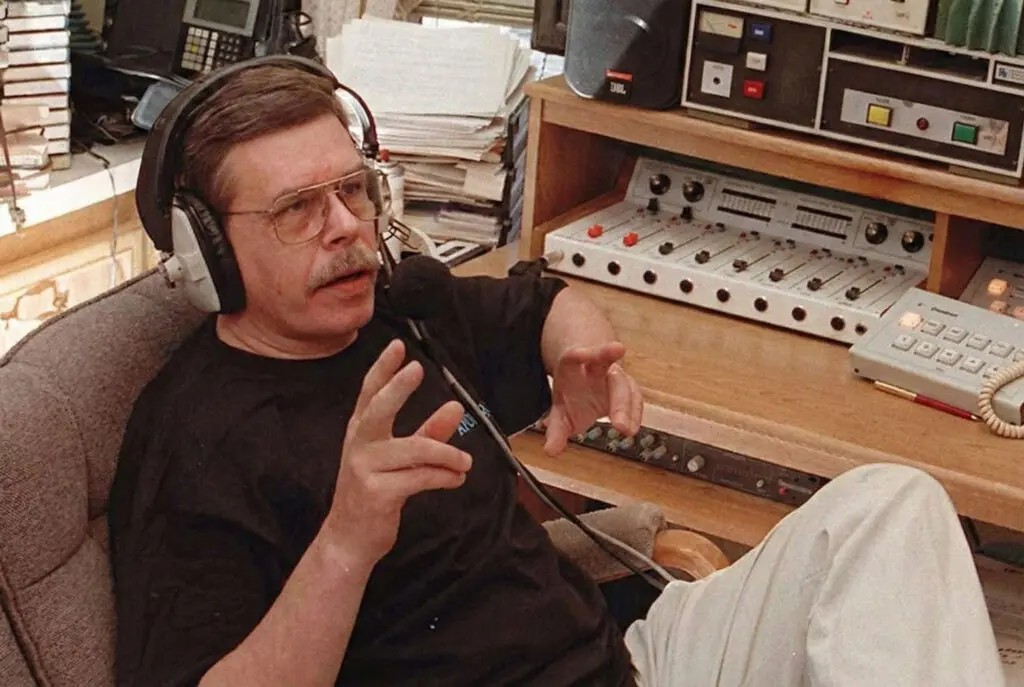
Inventing Coast to Coast AM and Dreamland
The show that would become the beating heart of UAP talk started in a much more conventional way.
- In the late 1970s, Bell hosted a political late-night call-in program from Las Vegas under the name West Coast AM on KDWN.
- In 1988, he and producer Alan Corbeth rebranded it as Coast to Coast AM and moved operations to Bell’s home in Pahrump, giving him near total control of the nighttime soundscape.
Initially the show leaned into politics and culture-war topics, but after the 1995 Oklahoma City bombing, Bell and management pulled back from the most heated militia-adjacent rhetoric and slid deeper into the uncanny: anomalous phenomena, UAP, cryptids, time travel, remote viewing and high-weirdness science.
Sunday nights became Dreamland, which featured long-form interviews on UAP, abduction, ancient mysteries and consciousness. Surviving program logs show shows dedicated to crop circles and government secrecy with Linda Moulton Howe, and UAP analyses with investigative journalist George Knapp. (Fourble)
Crucially, Bell cultivated three habits that shaped UAP discourse:
- Unscreened open lines. For many years anyone could call, including experiencers, alleged insiders, pilots and terrified witnesses.
- Theater of the mind. He treated radio as immersive audio storytelling, pacing his questions, music beds and silences like a horror film. Colleagues later praised his ability to create “theater of the mind,” a phrase repeated in obituaries and Hall of Fame tributes. (Spectrum News 13)
- Declared ambiguity. Bell regularly reminded listeners that the show was “absolute entertainment” and that he did not necessarily endorse every claim. Fans and critics alike agree that he walked a line between host and believer. (Wikipedia)
For most Americans between about 1992 and 2002 who were not already in formal UAP groups, Art Bell was their primary exposure to UAP narratives.
Art Bell and UAP: platform builder, witness and vector
The shows that defined a UAP era
Across thousands of hours of tape, UAP were a recurring backbone. A sampling of known UAP-heavy episodes gives a sense of the range:
- Dreamland episodes in 1995 featuring Linda Moulton Howe on UAP incidents and government response, and George Knapp on official secrecy. (Fourble)
- Coast to Coast AM conversations with Stanton Friedman on Roswell, Nick Pope on UK Ministry of Defence files, Peter Davenport on live sighting reports, and Roger Leir on alleged implant removals. (Internet Archive)
- Coverage of the Phoenix Lights and other large sightings, where callers from across a region deluged the phone lines in near real-time. (Reddit)
In an era before social media, Coast to Coast and Dreamland effectively crowdsourced UAP testimony, storing it in tapes that are now being digitized and replayed on archive feeds and podcasts like Art Bell Back in Time and The Ultimate Art Bell Collection. (Apple Podcasts)
For experiencers, calling Bell was often the first time they ever said “I saw something” to a national audience.
“Our first UAP sighting”: the 1994 triangle
Bell was not only a facilitator. In August 1994, he and his wife Ramona reported their own dramatic encounter near Pahrump.
In a written account posted on his site and replayed in audio, Bell describes driving late at night when a huge triangular craft, estimated at roughly 150 feet across, passed silently overhead less than five miles from their home. He recounts a black, wedge-shaped object with lights on each corner moving in a way no conventional aircraft should. (YouTube)
Later, Bell had the scene painted to match their memory, and he revisited the incident on air many times. UAP communities still circulate the story and the artwork, often citing it as evidence that even the great host eventually “joined” his own mythology by becoming a witness. (Reddit)
“Art’s Parts” and the Roswell debris storyline
One of the most enduring UAP threads associated with Bell is the saga of “Art’s Parts.”
- In 1996, he received a package of metal fragments from an anonymous listener, allegedly passed down from a grandfather who served on a military crash-retrieval team near Roswell in 1947. (Wall Street Journal)
- On air, Bell described the fragments as charred pieces with strange characteristics and offered them up for scientific analysis, turning his show into the front end of a very modern “mystery-metal” story. (Wall Street Journal)
- Researchers like Linda Moulton Howe and later independent experimenters examined samples, reporting layered structures of magnesium, bismuth and trace elements that some argued were suggestive of exotic engineering. (APEC)
Decades later, after the fragments passed through private hands and even the orbit of Tom DeLonge’s To The Stars Academy, the U.S. Army and Oak Ridge National Laboratory were tasked with fresh analysis. A recent investigation summarized by AARO and detailed in mainstream reporting concluded that at least one high-profile fragment likely originated from World War II era military hardware rather than non-human technology. (Wall Street Journal)
UAPedia’s editorial approach treats those lab findings as serious data points but not the final word on all material ever associated with “Art’s Parts.” Government lab work is weighted heavily, yet the chain of custody, sample mixing and the broader history of Roswell claims mean some ambiguity remains.
The most studied shard appears explainable as terrestrial; the broader “crash debris” storyline still functions primarily as a cultural narrative rather than a confirmed UAP case.
Books, climate cataclysms and the UAP-adjacent imagination
Bell did not confine himself to radio. His bibliography offers a snapshot of late-20th-century anxieties and fascinations that often overlapped with UAP ideas.
Key works include:
- The Art of Talk (1998). An autobiography covering his childhood, radio career and behind-the-scenes stories about Coast and Dreamland. (World Radio History)
- The Quickening: Today’s Trends, Tomorrow’s World (1994). A catalogue of accelerating social, technological and environmental shifts, framing the sense that humanity was racing toward a critical threshold. Readers still note how many trends he anticipated. (Goodreads)
- The Source: Journey Through the Unexplained (with Brad Steiger). A tour through anomalies, from ghosts to UAP, linking them into a single “high-strangeness” landscape.
- The Edge: Man’s Mysterious Past & Incredible Future (with Whitley Strieber). A collaboration that marries Bell’s knack for mood with Strieber’s abduction-infused cosmology.
- The Coming Global Superstorm (1999, with Strieber). A speculative climate-catastrophe scenario in which sudden shifts in ocean circulation trigger a rapid ice age. The book famously inspired the disaster film The Day After Tomorrow.
Although Superstorm is not a UAP book, it is part of the same intellectual ecosystem: a taste for big, species-level plot twists where nature, technology and perhaps non-human intelligences intersect.
Known connections and the UAP ecosystem around Bell
Bell’s Rolodex reads like a who’s who of UAP and high-strangeness research in the 1990s and early 2000s.
Regular or notable guests in the UAP domain included:
- Nuclear physicist and Roswell researcher Stanton Friedman.
- Investigative journalists Linda Moulton Howe and George Knapp, both of whom would become central figures in the next generation of UAP journalism.
- Author and experiencer Whitley Strieber, whose collaboration with Bell in print and frequent guest appearances helped normalize abduction narratives for mainstream audiences. (Simon & Schuster)
- Physicist Michio Kaku and SETI astronomers such as Seth Shostak, who brought mainstream science into late-night conversations about intelligent life.
- Entrepreneur and space-investor Robert Bigelow, later central to AAWSAP and Skinwalker Ranch research, long before those programs became widely known.
The show also gave airtime to now-controversial figures like remote viewer Ed Dames, alternative Mars researcher Richard C. Hoagland and others who blurred the line between speculative science and unverifiable claims.
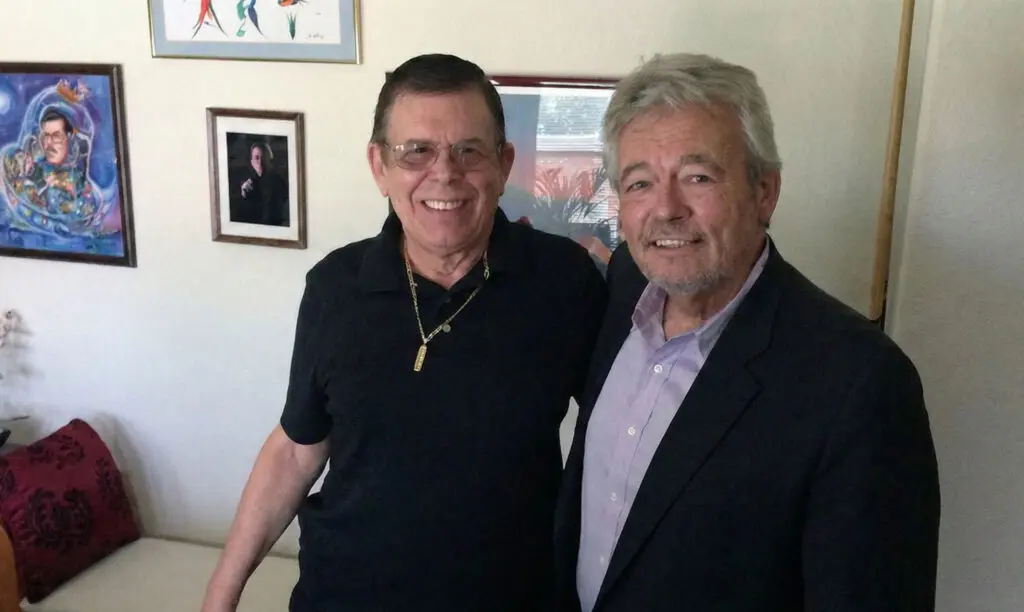
Work history, later shows and multimedia presence
Beyond Coast and Dreamland, Bell’s media footprint continued to grow and mutate.
- After stepping back from full-time hosting in 2003, his classic episodes continued on Premiere’s Somewhere in Time with Art Bell, replaying shows from 1994–2002. (Wikipedia)
- In 2013 he launched Art Bell’s Dark Matter on SiriusXM, a subscription satellite program that revisited familiar terrain: UAP, anomalous science and “dark corners” of reality. It ran for several weeks before ending amid disagreements about streaming access and call quality. (Wikipedia)
- In 2015 he created Midnight in the Desert, an internet-delivered show that once again brought open-line paranormal and UAP talk to late-night listeners before he retired from regular broadcasting for the final time that same year. (Las Vegas Review-Journal)
Bell also popped up in mainstream media:
- A guest spot on CNN’s Larry King Live in 1999. (Podchaser)
- A cameo as himself on the TV series Millennium and voice work in the video game Prey, where he hosts an in-game version of Coast as alien abductions unfold.
- Participation with his wife Ramona in the ABC special Peter Jennings Reporting: UAPs – Seeing Is Believing, which surveyed modern UAP cases for a mainstream audience.
Radio honors followed: induction into the Nevada Broadcasters Association Hall of Fame in 2006 and the National Radio Hall of Fame in 2008, recognizing his unmatched command of the late-night talk format. (Las Vegas Review-Journal)
Controversies and criticism
Bell’s first retirement in October 1998 stunned listeners. He cited a “terrible event” affecting his family but withheld details.
Pieces later emerged in court filings and press reports:
- In 1997, his teenage son was kidnapped and sexually assaulted by a substitute teacher, Brian Lepley, who was HIV positive. Lepley was later convicted and sentenced to prison. (Dokumen)
- Shortly thereafter, former FBI agent Ted Gunderson and others on shortwave radio falsely claimed that Bell himself had been indicted for similar crimes. Bell sued for defamation, and the case settled in 2000. (UPI)
- In interviews, Bell described the impact of being unable to defend himself publicly without exposing his son’s trauma, calling it “a living hell.” (Time)
The ordeal helps explain some of Bell’s repeated retirements, and it also became a cautionary tale within the UAP and paranormal community about reputational warfare and personal vulnerability.
Heaven’s Gate, Hale-Bopp and the ethics of amplification
Another long-running controversy centers on Bell’s coverage of Comet Hale-Bopp and the “companion object” idea.
- In late 1996, Bell hosted amateur astronomer Chuck Shramek and remote viewer Courtney Brown, who promoted images and claimed that a mysterious object might be following the comet. (The Saturday Evening Post)
- When members of the Heaven’s Gate group committed mass suicide in March 1997, framing Hale-Bopp as a gateway to the “Next Level,” some critics asked whether Bell’s broadcasts had fed their cosmology. Scholarly and skeptical analyses note that the group already had an elaborate theology and its own sources, but Coast-style coverage arguably contributed to the atmosphere of expectation.
- Bell later emphasized that he had also aired expert debunking of the “companion” claims and that the only person insisting on a spacecraft was Brown. (TIME)
UAPedia’s editorial stance: the causal link between Bell’s shows and the Heaven’s Gate tragedy is not demonstrable, but the episode raised legitimate questions about how anomaly media handles speculative imagery and claims during emotionally charged moments.
Skeptical pushback
Skeptical organizations and scholars took aim at Bell and Coast to Coast AM throughout the 1990s.
- The Committee for Skeptical Inquiry criticized the show for giving a megaphone to unverified claims and awarded Bell a satirical “Snuffed Candle Award” for “encouraging credulity” and blurring the line between science and pseudo-science. (Skeptical Inquirer)
Final years and passing
By the mid-2010s Bell was mostly retired, living in Pahrump with his fourth wife, Airyn, and their children.
On April 13, 2018, he died at home at age 72. The coroner later ruled the cause an accidental overdose of prescription medications, including oxycodone, hydrocodone, diazepam and carisoprodol, with underlying chronic obstructive pulmonary disease and hypertension as contributing factors.
Tributes poured in from fans and fellow broadcasters. Obituaries emphasized his “voice of the night” persona and his mastery of audio storytelling. (Legacy.com)
Even in 2025, conferences in Pahrump, Nevada, invoke his name as part of the town’s UAP heritage, and entire podcasts now exist just to re-air and dissect his shows. (Pahrump Valley Times)
Implications for UAP studies
For UAP researchers, how should we treat Art Bell?
- As an archive of cultural data. His programs are a time capsule of how people in the 1990s talked about UAP, government secrecy and contact, from frightened rural witnesses to scientists and military veterans. The value lies less in individual claims than in patterns: recurring entity types, flaps, motifs and the evolution of narratives.
- As a bridge between fringe and mainstream. Before streaming and social media, late-night AM radio was one of the few platforms that could connect a retired colonel, a small-town sheriff, a NASA scientist and an abductee caller on the same night. Bell normalised UAP talk for a wide audience.
- As a case study in media ethics around anomalies. Episodes like Hale-Bopp show how quickly speculative material, remote viewing output and ambiguous images can affect vulnerable audiences. For modern UAP communicators, Bell’s career is both inspiring and cautionary.
- As a node in the “Art’s Parts” and crash-retrieval legend. The journey of those fragments from anonymous letter to national lab test encapsulates how UAP material claims are now mature: media exposure, independent hobbyist testing, private-sector interest, and eventually official forensic work.
Bell’s shows did not “prove” anything about UAP, but they helped define what UAP mean in the public imagination.
Key external links (with UAPedia tracking)
- Coast to Coast AM legacy page for Art Bell:
https://www.coasttocoastam.com/pages/art-bell/?utm_source=https://uapedia.ai (Coast to Coast AM) - National Radio Hall of Fame bio:
https://www.radiohalloffame.com/art-bell?utm_source=https://uapedia.ai (Radio Hall of Fame) - Simon & Schuster author page (books overview):
https://www.simonandschuster.com/authors/Art-Bell/1064436?utm_source=https://uapedia.ai (Simon & Schuster) - The Coming Global Superstorm listing:
https://www.amazon.com/Coming-Global-Superstorm-Art-Bell/dp/0671041908?utm_source=https://uapedia.ai (Amazon) - Archive collection of Art Bell shows (historic episodes):
https://archive.org/details/the-ultimate-art-bell-collection_202201?utm_source=https://uapedia.ai (Internet Archive)
References
Apgar, B. (2018, August 1). Radio host Art Bell died of accidental drug overdose. Las Vegas Review-Journal. (Las Vegas Review-Journal)
Bell, A. (1998). The Art of Talk. Paper Chase Press. (Scanned edition summarized at WorldRadioHistory.) (World Radio History)
Genoni, T. C. (1998). Peddling the paranormal: Late-night radio’s Art Bell. Skeptical Briefs, Committee for Skeptical Inquiry. (Skeptical Inquirer)
Robertson, J. (2022, November 22). The truth was out there: On the legacy of Art Bell. Los Angeles Review of Books. (Los Angeles Review of Books)
Wall Street Journal. (2025, June 22). Was it scrap metal or an alien spacecraft? The Army asked an elite defense lab to investigate. (Wall Street Journal)
Wikipedia contributors. (2024). Art Bell. In Wikipedia, The Free Encyclopedia. Retrieved 2026 (Wikipedia)
Wikipedia contributors. (2024). Heaven’s Gate (religious group). In Wikipedia, The Free Encyclopedia. Retrieved 2026 (Wikipedia)
SEO keywords
Art Bell biography, Art Bell Coast to Coast AM, Art Bell UAP shows, Art’s Parts Roswell metal, Art Bell triangle UFO sighting, Dreamland Art Bell UFOs, late night paranormal radio host, Art Bell Hale Bopp Heaven’s Gate, Art Bell Dark Matter SiriusXM, Midnight in the Desert UAP, Coast to Coast AM Linda Moulton Howe, George Knapp and Art Bell, Art Bell crash retrieval materials, UAP radio history 1990s, Art Bell influence on UFO culture