
Setting the scene: when a missile admiral backed the mystery
On 16 January 1957, a recently retired U.S. Navy rear admiral walked into a Washington press conference and changed the tone of the UAP debate in a single paragraph.
Rear Admiral Delmer S. Fahrney, former head of the Navy’s guided missile program and a pioneer of pilotless aircraft, told reporters that “reliable reports indicate there are objects coming into our atmosphere at very high speeds,” and that “the way they change position would indicate their motion is directed by thinking intelligences.” (nicap.org)
Coming from someone sometimes described as “father of the guided missile”, these were not the words of a credulous onlooker. They were a statement from a man who had spent two decades pushing the limits of what human built aerial technology could do. (U.S. Naval Institute)
This UAPedia article treats Fahrney as a data point, not as an oracle. We will map out what we can document about his life, the context behind his famous UAP remarks, the networks he sat inside, and the plausible implications.
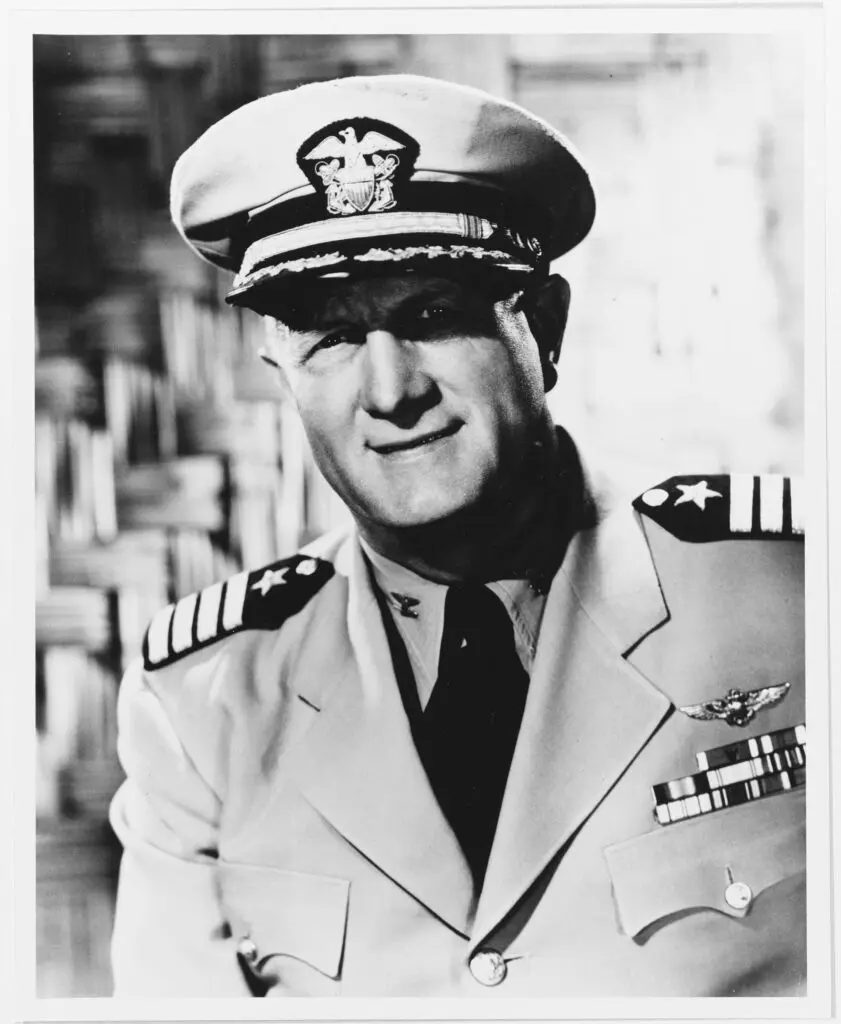
Data snapshot: a timeline of Delmer S. Fahrney
1898–1930: Formation of a technocrat
- Born 23 October 1898 in Grove, Oklahoma, son of Albert Frank and Lillian (Pugh) Fahrney. (Naval History and Heritage Command)
- Graduated from Vinita High School, Oklahoma, then entered the U.S. Naval Academy, graduating in 1919 with a Bachelor of Science. (Naval History and Heritage Command)
- In 1930 he received a Master of Science degree in aeronautical engineering from the Massachusetts Institute of Technology, positioning him at the forefront of early aviation technology. (Naval History and Heritage Command)
1930s–World War II: From radio controlled targets to proto drones
- In the mid 1930s Chief of Naval Operations Admiral William Standley tasked Fahrney with developing radio controlled target aircraft, inspired by the British de Havilland DH.82B Queen Bee. (eScholarship)
- Fahrney coined the term “drone” for these pilotless target aircraft, in deliberate homage to the Queen Bee. (Foreign Policy Association)
- By 1941 he was director of Pilotless Aircraft in the Navy’s Bureau of Aeronautics, supervising the first generation of U.S. guided missiles and radio controlled attack aircraft. (Patch)
1940s–early 1950s: Guided missile pioneer
- During World War II and the immediate postwar years, Fahrney led or supervised major Navy programs that evolved into operational cruise missiles, including developments related to the radar homing “Bat,” often described as the world’s first operational smart weapon. (Warfare History Network)
- After the war he became the first commanding officer of the Naval Air Missile Test Center at Point Mugu, California, where he oversaw emergent guided missile programs. A headquarters building at Point Mugu was later named in his honor. (Warfare History Network)
Mid 1950s: Retirement and NICAP
- Fahrney retired from active Navy service in 1956 as a rear admiral, decorated and widely recognized in technical histories as a leading figure in guided missile development. (Naval History and Heritage Command)
- In October 1956, inventor T. Townsend Brown formally founded the National Investigations Committee on Aerial Phenomena (NICAP). The initial board of governors included retired Major Donald Keyhoe and Rear Admiral Delmer S. Fahrney, described as former chief of the Navy’s guided missile program. (Wikipedia)
January–April 1957: The UAP moment
- By early January 1957 the NICAP board, alarmed at Brown’s financial management, asked him to step down. Fahrney replaced him as board chairman. (Wikipedia)
- On 16 January 1957, the day after the NICAP board’s first meeting, Fahrney held a press conference in Washington as NICAP chairman. This is the event where he publicly endorsed the reality of objects entering the atmosphere at high speeds with directed motion implying intelligence, and emphasized that neither the United States nor the Soviet Union could duplicate such performance. (nicap.org)
- In April 1957 Fahrney resigned as NICAP chairman, citing personal reasons. Later summaries note that his wife was seriously ill and that he was disturbed by the ridicule his UAP involvement generated among some military peers. (Wikipedia)
Late career and death
- After leaving NICAP leadership, Fahrney continued to work as a consultant and historian on guided missile development, including a December 1980 article in the U.S. Naval Institute’s Proceedings titled “The Birth of Guided Missiles.” (U.S. Naval Institute)
- He also completed an unpublished history of pilotless aircraft and guided missiles, used as a source by later historians of drone technology. (eScholarship)
- Delmer S. Fahrney died in 1984 at age 86. In 2000, the Naval Air Warfare Center at Point Mugu named a headquarters building after him, underscoring his status within missile development history. (explorermagazin.de)
This timeline anchors his UAP comments in a life dedicated to pushing the edge of military aerospace capability.
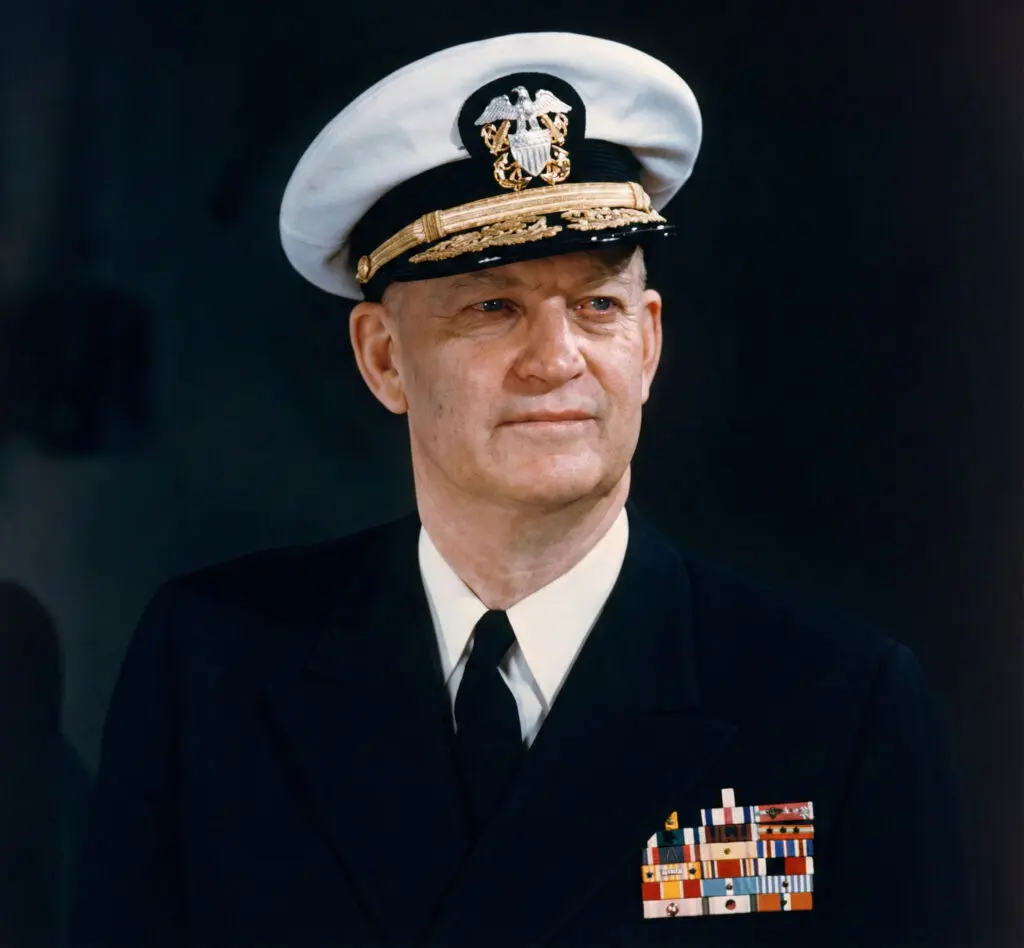
What exactly did Fahrney say about UAP, and why did it matter?
The NICAP archive preserves the text of Fahrney’s 16 January 1957 press conference under the headline “Navy Admiral Gives Support To Reports Of Flying Saucers.” (nicap.org)
Key data points from that statement include:
- He explicitly identified himself as “former head of the Navy’s guided missile program”.
- He stated that “reliable reports indicate there are objects coming into our atmosphere at very high speeds”.
- He noted that “no agency in this country or Russia is able to duplicate at this time the speeds and accelerations which have been reported”.
- He said that “the way they change position in formations and override each other would indicate that their motion is directed”. (nicap.org)
Because mainstream newspapers summarized his comments, most people saw a compressed version. The Associated Press reported that he believed these objects were under “intelligent control” and that they were not products of the United States or the Soviet Union. (nicap.org)
From a data-first perspective, three parts of the statement are especially important:
- He is talking about “reliable reports”, not a single rumor. In context, NICAP intended to focus on high quality cases from pilots, radar operators and other trained observers. (Center for UFO Studies)
- He emphasizes performance envelopes beyond contemporary capabilities, particularly speeds and maneuvering that he, as a missile specialist, knew were not achievable by known guided missiles or aircraft in 1957. (U.S. Naval Institute)
- He is willing in public to exclude both superpowers as the source of at least some of these objects, which implicitly opens the door to non human or non conventional explanations. (Wikipedia)
This is not a vague endorsement of “mystery lights.” It is a carefully worded statement by a technical insider that some UAP exhibit flight characteristics beyond known human systems of the era.
From the UAPedia standpoint, his testimony is an early, high credibility data point for the proposition that the phenomenon includes at least some non prosaic cases. It does not tell us what UAP are. It does firmly challenge any blanket “it was all misidentified aircraft and weather balloons” narrative for mid century sightings.
Work history and government involvement: why his opinion carried weight
Fahrney’s career before NICAP is well documented in official Navy biographical files and later technical histories. (Naval History and Heritage Command)
Highlights that matter for UAP analysis:
- As director of Pilotless Aircraft in the Bureau of Aeronautics, he oversaw early experiments in radio control, television guidance and radar guidance for drones and proto cruise missiles. (Patch)
- He is repeatedly cited as a key figure, sometimes the key figure, in the evolution of U.S. Navy guided missiles, including the radar guided Bat glide bomb and later weapons extensively discussed in Air University histories of cruise missile development. (Warfare History Network)
- He commanded the Naval Air Missile Test Center at Point Mugu, where many new missile systems were test flown, giving him direct exposure to extreme aerodynamic, guidance and propulsion regimes. (Warfare History Network)
In short, Fahrney was one of the small group of people in the 1940s and 1950s who actually knew the limits of classified U.S. missile technology and had access to comparative intelligence on Soviet capabilities.
When someone with that background says “no agency in this country or Russia is able to duplicate at this time the speeds and accelerations which have been reported,” it is not a random guess. It is a domain expert’s judgment based on classified and unclassified knowledge of aerospace performance. (nicap.org)
NICAP, public appearances and quick retreat
NICAP leadership and the January press conference
NICAP was formally founded on 24 October 1956 by inventor T. Townsend Brown as a Washington based nonprofit aimed at investigating “aerial phenomena” and lobbying for better government transparency. The board of governors included Delmer S. Fahrney, Major Donald Keyhoe USMC (Ret.), and other retired military officers. (Wikipedia)
By early January 1957, Brown’s erratic financial management had alarmed the board.
According to later histories and CIA summaries, Brown was pushed out, and Fahrney was elevated to chairman of the board. (Wikipedia)
The press conference on 16 January 1957 was explicitly held in his capacity as NICAP board chairman, the day after that first board meeting. It served two purposes:
- To officially announce NICAP’s existence and framing of UAP as a serious, technological issue.
- To lend the organization immediate credibility by associating it with a recently retired missile admiral who was willing to say that some UAP were under intelligent control and beyond U.S. and Soviet capability. (nicap.org)
The mainstream press took the bait. Coverage in outlets such as the New York Times emphasized that a guided missile specialist believed the phenomenon was real and beyond current technology. (nicap.org)
Resignation and the “quiet phase”
The public phase did not last. In April 1957, just a few months later, Fahrney resigned from NICAP citing personal reasons. A widely repeated note in NICAP and Wikipedia material says that his wife was seriously ill and that he disliked the ridicule from some colleagues over his UAP involvement. (Wikipedia)
NICAP’s own biographical note, probably drawing on insider recollections, states that he served as chairman for about a week and then had to resign, but continued to support the organization privately. (nicap.org)
Later narratives from insiders like Richard H. Hall describe Fahrney continuing as a NICAP “member for many years,” occasionally visiting the office and routing U.S. Navy pilot and missile officer sightings to NICAP investigators and to atmospheric physicist James McDonald. Those descriptions survive in interviews and essays but are not yet backed by declassified documents that show the exact cases involved. (nicap.org)
From the outside, once he stepped away from NICAP’s public leadership, Fahrney largely disappeared from the UAP story, returning to his established identity as a missile expert and historian. Yet that brief window in early 1957 had already done its work.
Known associates and networks
Mapping Fahrney’s network helps us understand the channels through which UAP information could have flowed.
Key nodes include:
- Admiral William H. Standley. As Chief of Naval Operations in the 1930s, Standley tasked Fahrney with developing radio controlled targets, effectively launching U.S. drone development. (eScholarship)
- Grayson Merrill. A younger officer recruited by Commander Fahrney in 1941 as his deputy in the Special Design Branch of the Bureau of Aeronautics, where they jointly directed early guided missile efforts. Merrill’s obituary credits the two with formulating much of the Navy’s World War II and early postwar missile work. (Patch)
- T. Townsend Brown. NICAP’s original founder and an electrogravitics experimenter who believed high voltage systems could interact with gravity. Brown recruited Fahrney onto NICAP’s board, but was quickly sidelined. (Wikipedia)
- Donald E. Keyhoe. Retired Marine corps major and aviation writer whose books argued that “flying saucers” were real craft of likely non terrestrial origin and that the U.S. government was hiding evidence. Keyhoe soon became NICAP’s public face and chief lobbyist. (Wikipedia)
- Roscoe H. Hillenkoetter. The first Director of Central Intelligence and a Naval Academy contemporary of Keyhoe, who joined NICAP’s board after Fahrney’s departure and later wrote a famous letter stating that “there is a serious possibility that we are being visited” by devices of interplanetary origin. (Wikipedia)
This network does not prove hidden programs or secret committees by itself. It does show that by the late 1950s there existed a small circle of retired admirals, generals, intelligence officials and technically trained civilians who were willing to treat UAP as a real, possibly non-human technological issue and to work together outside official channels.
Fahrney’s role in that network is unique. Unlike some later advocates, he was directly tied to the technological cutting edge of his time and used that authority in a very narrow, targeted way: to say that some UAP were performing outside known missile and aircraft capabilities.
Publications and documented views beyond the press conference
Most of Fahrney’s known writings deal with guided missiles, not UAP. These include:
- A December 1980 article in Proceedings of the U.S. Naval Institute titled “The Birth of Guided Missiles,” in which he recounts early Navy missile and drone development. This article and related material firmly establish his technical credentials. (U.S. Naval Institute)
- An unpublished internal history of pilotless aircraft and guided missiles referenced in research on drone history, created under Navy auspices. (eScholarship)
- Various technical and historical pieces cited in the Air University Press book Evolution of the Cruise Missile, which quotes his article “Guided Missiles. U.S. Navy the Pioneer”. (Air University)
On UAP specifically, we have:
- The text of his 16 January 1957 NICAP press conference. (nicap.org)
- A NICAP press release titled “Remarks of Admiral Delmer S. Fahrney,” preserved by CUFOS in their NICAP document collection, which echoes and expands the press conference language. (Center for UFO Studies)
- Secondary quotations by later authors and lecturers who cite him as saying that UAP are “directed by thinking intelligences” and are neither American nor Soviet. These track to the Associated Press summarization of his remarks. (explorermagazin.de)
We do not, as of now, have any extended technical paper by Fahrney on UAP propulsion or origin. His public contribution on the phenomenon is concise and focused on performance and control.
That brevity is interesting in itself. It suggests he was not trying to build a personal brand around UAP. He stepped out, said what his expertise led him to conclude, and then mostly stepped back.
Controversies and contested narratives
Several controversies have built up around Fahrney’s brief UAP moment.
Was he “forced out” of NICAP?
Family histories and some ufological commentary claim that Fahrney’s press conference angered the Air Force or other defense officials enough that he was pressured to resign from NICAP. (nicap.org)
What we can document:
- Public reports at the time simply note that he resigned for “personal reasons”. (nicap.org)
- Later summaries say his wife was seriously ill and that peer ridicule bothered him. These statements appear in secondary sources and are not independently corroborated by surviving Navy personnel records. (Wikipedia)
- There is no declassified memorandum or official instruction currently available that shows direct government pressure forcing him to withdraw.
Under UAPedia’s claims taxonomy, “forced out by official pressure” is therefore contested. The milder statement that social and reputational pressure contributed to his exit is probable, given the culture of the 1950s and his continued loyalty to the Navy image.
Did he see UAP data the public never saw?
Given his roles in guided missile programs and at Point Mugu, it is natural to ask whether Fahrney saw classified UAP material in that capacity.
- The CIA’s internal memo on NICAP, released via the reading room, acknowledges NICAP’s existence and lists some of its activities but does not state that Fahrney had access to special UAP data as an admiral. (CIA)
- Histories of missile testing at Point Mugu and other ranges mention drone failures and radar anomalies but do not specifically tie these to UAP incidents. (Warfare History Network)
- Insiders such as Hall have said that Fahrney funneled Navy pilot and missile officer sightings to NICAP and James McDonald, which implies access to at least some internal reports, but the specific cases have not been definitively matched to surviving documents. (nicap.org)
Speculation label: researcher inference. It is likely that someone in his position saw numerous classified anomalous reports. It is not yet provable which ones or how they influenced his thinking.
Was he misused by later writers?
Skeptical historians sometimes argue that ufologists have leaned too hard on a handful of quotes from military and intelligence figures, including Fahrney, to imply more robust insider confirmation than actually exists. (nicap.org)
There is a fair point here. In a culture where official statements are sparse, a short press conference can acquire decades of interpretive weight. UAPedia’s approach is to keep the quote in proportion: important, but not a magic key.
Implications for UAP analysis
What can we reasonably infer from the Fahrney data set?
Performance anomaly confirmation
First, his remarks are one of the earliest clear confirmations from a senior weapons engineer that some UAP cases involved performance beyond known aircraft and missiles.
This aligns with:
- Later Navy pilot testimonies about objects with hypersonic acceleration and instantaneous maneuvering.
- Documented radar visual cases in the 1950s that show abrupt changes in velocity and direction. (Wikipedia)
From a UAPedia analytical perspective, Fahrney’s statement supports the classification of a subset of mid century UAP incidents as true unknowns, not temporarily unidentified prosaic objects.
Intelligence and control
Second, his emphasis on “directed motion” and formations implies that he took seriously the behavior of these craft as indicative of intelligence. (nicap.org)
That viewpoint resonates with modern frameworks such as the “Six Observables” used by some Pentagon associated analysts:
- instantaneous acceleration
- hypersonic velocity
- low observability
- trans medium travel
- positive lift without traditional control surfaces
- and sometimes apparent intelligent response to aircraft.
Fahrney was noticing an early version of the same signature set.
Not just Cold War misidentification
Third, his explicit exclusion of U.S. and Soviet origin for certain reports complicates any attempt to back fill all 1950s UAP into Cold War hardware testing.
Histories of drones and spy aircraft agree that many later sightings were almost certainly misinterpretations of secret human technology. (Foreign Policy Association)
However, a missile admiral who helped build those programs and had no obvious incentive to embarrass his own service publicly still felt compelled to say that some reported performance was not ours or theirs. That is a strong early warning that “all UAP are hidden black projects” is not an adequate explanation.
Claims taxonomy
Verified:
- Delmer S. Fahrney was a U.S. Navy officer born in 1898 in Grove, Oklahoma, who graduated from the Naval Academy in 1919 and earned a Master of Science in aeronautical engineering from MIT in 1930. (Naval History and Heritage Command)
- He played a central role in U.S. Navy development of pilotless aircraft and guided missiles, serving as director of Pilotless Aircraft in the Bureau of Aeronautics and as first commanding officer of the Naval Air Missile Test Center at Point Mugu. (Patch)
- On 16 January 1957, as NICAP board chairman, he held a press conference in Washington stating that reliable reports indicated objects entering the atmosphere at very high speeds, with directed motion implying intelligence, and that no U.S. or Soviet agency could duplicate the reported performance. (nicap.org)
- Fahrney resigned from NICAP leadership in 1957, citing personal reasons, and NICAP later named other retired military figures such as Roscoe Hillenkoetter to its board. (Wikipedia)
- He wrote at least one major historical article on guided missiles, “The Birth of Guided Missiles,” published in Proceedings in 1980, and is widely cited in cruise missile histories. (U.S. Naval Institute)
Probable:
- Fahrney continued as a NICAP member after stepping down as chairman and quietly forwarded Navy pilot and missile officer UAP reports to NICAP and to atmospheric physicist James McDonald. This is supported by credible insider testimony but lacks independent documentary confirmation. (nicap.org)
- Social and reputational pressure within naval and defense circles, combined with his wife’s illness, contributed to his decision to withdraw from public UAP advocacy. (Wikipedia)
Disputed:
- Claim that Fahrney was directly ordered by the Air Force or other agencies to resign from NICAP or to cease public UAP statements. Secondary and family sources imply this, but no declassified directive has surfaced. (nicap.org)
- Assertion that he had access to an organized, compartmentalized UAP exploitation program and that his remarks were a veiled reference to it. This is unsupported by primary documentation and sits primarily in speculative commentary.
Legend:
- Later retellings that cast Fahrney as a long running internal rebel on UAP inside the Navy or as a secret participant in hidden UAP working groups go beyond currently available evidence. These should be treated as narrative embellishment unless corroborating records emerge.
Speculation labels
To keep analysis honest, UAPedia labels speculative assessments explicitly.
Credibility shock effect
Hypothesis: Fahrney’s press conference in 1957 produced a short term “credibility shock,” temporarily increasing media and elite openness to UAP as a serious issue by demonstrating that not all senior officers dismissed the phenomenon. Impact: moderate. Evidence: contemporaneous national coverage, archival references to his statement, and NICAP membership growth in the late 1950s. (nicap.org)
Quiet pipeline effect
Hypothesis: After stepping down, Fahrney helped route high quality Navy UAP reports into NICAP files that might otherwise have remained buried in internal channels, contributing to the case pool later used by researchers like James McDonald. Impact: potentially high for specific cases, but evidence is mostly testimonial. Label: researcher inference. (nicap.org)
Boundary marker for black project explanations
Hypothesis: Because Fahrney had unusually good knowledge of classified missile and drone capabilities, his exclusion of both U.S. and Soviet origin for some UAP cases acts as a boundary marker showing that not all mid century UAP can be assigned to black projects. Impact: conceptually high for evaluating “all secret tech” explanations. Label: analytical inference based on role and testimony. (U.S. Naval Institute)
Cultural echo effect
Hypothesis: Ufologists have sometimes over amplified Fahrney’s brief UAP remarks, using them as shorthand for broad official endorsement. This may have unintentionally flattened nuance in his position but also kept his name alive in discourse. Impact: moderate, mainly in narrative framing. Label: researcher opinion influenced by historiography. (nicap.org)
References
NICAP archive: “Navy Admiral Gives Support To Reports Of Flying Saucers” (full press conference text)
www.nicap.org/jan16.htm?utm_source=uapedia.ai (nicap.org)
NICAP biographical note on Rear Admiral Delmer S. Fahrney
www.nicap.org/bios/NICAP-Bios/Fahrney_D.htm?utm_source=uapedia.ai (nicap.org)
Wikipedia overview of NICAP, including Fahrney’s brief chairmanship
en.wikipedia.org/wiki/National_Investigations_Committee_On_Aerial_Phenomena?utm_source=uapedia.ai (Wikipedia)
U.S. Naval History and Heritage Command biographical file on Fahrney
www.history.navy.mil/research/library/research-guides/modern-biographical-files-ndl/modern-bios-f/fahrney-demler-s.html?utm_source=uapedia.ai (Naval History and Heritage Command)
U.S. Naval Institute Proceedings article “The Birth of Guided Missiles”
www.usni.org/magazines/proceedings/1980/december/birth-guided-missiles?utm_source=uapedia.ai (U.S. Naval Institute)
Air University Press book Evolution of the Cruise Missile (citations to Fahrney’s articles)
www.airuniversity.af.edu/Portals/10/AUPress/Books/B_0006_WERRELL_EVOLUTION_CRUISE_MISSILE.pdf?utm_source=uapedia.ai (Air University)
Drone history paper referencing Fahrney’s unpublished missile history
escholarship.org/content/qt0fg216f7/qt0fg216f7.pdf?utm_source=uapedia.ai (eScholarship)
Article on the secret history of drones (Smithsonian Air & Space)
airandspace.si.edu/air-and-space-quarterly/issue-12/secret-history-of-drones?utm_source=uapedia.ai (Smithsonian Air and Space Museum)
SEO keywords
Delmer S. Fahrney UAP, Rear Admiral Fahrney and NICAP, guided missile pioneer and UAP, Navy admiral intelligent control statement, 1957 flying saucer press conference, NICAP board chairman Fahrney, father of guided missiles UAP implications, Point Mugu guided missile history, UAP performance beyond missiles, U.S. Navy drone inventor Fahrney, Delmer Fahrney press conference transcript, NICAP early history UAP, Cold War guided missiles and UAP, high credibility UAP witnesses, Delmer Fahrney biography