
On a September afternoon in 2023, the lower house of Mexico’s Congress looked less like a legislative chamber and more like a sci-fi convention. Two small, chalky figures lay in satin-lined caskets. Cameras flashed. Social media exploded.
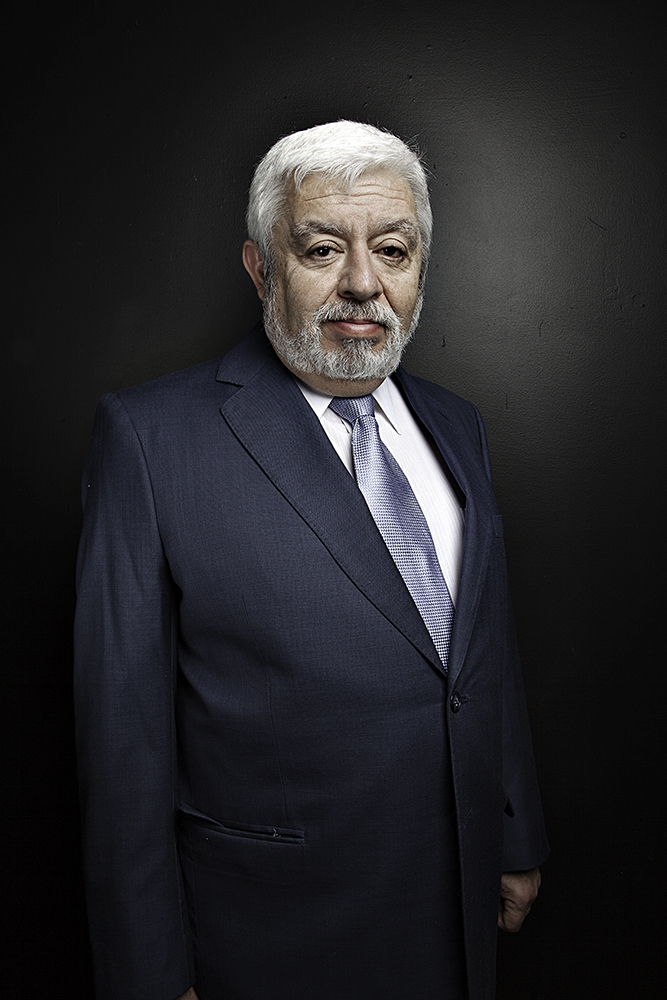
Standing beside the boxes was the white-bearded man who had orchestrated the spectacle: José Jaime Maussan Flota, known across Latin America simply as Jaime Maussan.
“These specimens are not part of our terrestrial evolution,” he declared under oath. “We are not alone in this vast universe; we should embrace this reality.” (FOX 9 Minneapolis-St. Paul)
To his admirers, this was Maussan doing what he has done for three decades: forcing institutions to look at anomalies they would rather ignore. To critics, it was another stunt in a long line of debunked “alien” reveals.
Maussan is an award-winning Mexican journalist who studied at the National Autonomous University of Mexico and Miami University in Ohio, then spent decades as a reporter and correspondent for major outlets such as El Sol de México, XEX Radio and Televisa’s flagship newscast 24 Horas and 60 Minutos.
In 1990 he received the United Nations Environment Programme’s Global 500 Roll of Honour for environmental reporting.
Sometime in the early 1990s, though, the trajectory of his career bent toward the sky. The result is one of the most polarizing figures in UAP history: a man who gave millions of Spanish-speaking viewers their first sustained exposure to anomalous phenomena and who simultaneously attached his name to a remarkable number of hoaxes.
From Popotla to prime time
Maussan was born on 31 May 1953 in Mexico City and grew up in the Popotla neighborhood, not far from the legendary “Tree of the Sad Night” where Hernán Cortés is said to have wept after a military defeat.
He studied journalism at UNAM and later at Miami University, then plunged into the profession at age seventeen. Over the 1970s and 1980s he cycled through newspapers and radio before being hired by Televisa. There he served as U.S. correspondent, general-assignment reporter and producer for the influential Sunday magazine show “Domingo a Domingo” with anchor Jacobo Zabludovsky.
Colleagues remember a versatile reporter, comfortable covering politics, disasters and human-interest stories. Environmental pieces about whales and the ozone layer won him multiple National Journalism Awards from Mexico’s Club de Periodistas and helped secure the UNEP honor. (EL PAÍS English)
This early phase matters because it framed how many Mexicans still see him. For viewers who grew up in the era of limited TV channels, Maussan was not “the alien guy.” He was simply one of the faces of serious national news. (Reddit)
“Tercer Milenio” and the birth of a Latin American UAP brand
The pivot came in the late 1980s and early 1990s, as mass UAP sightings over Mexico City and a global wave of interest in crop circles, abductions and NASA anomalies provided fertile terrain.
In 1991 Maussan helped drive a marathon broadcast on host Nino Canún’s talk show “¿Y usted qué opina?” which stayed on air more than eleven hours discussing UAP claims. The ratings were enormous.
Soon Maussan launched his own franchise.
“Tercer Milenio” debuted in the mid-1990s and evolved into a long-running television and later YouTube series dedicated to UAP, anomalous footage, archeological mysteries and environmental issues. (IMDb)
The format was classic investigative magazine:
- Dramatic narration by Maussan
- On-screen analysis of video clips from around the world
- Interviews with pilots, farmers, contactees and scientists
- Studio debates with skeptics
His team pushed segments on NASA’s STS-75 “tether incident,” strange lights over volcanoes, the so-called “Mars mermaid” rock formation and mass sightings in Mexico. (gatopardo.com)
In 2005 a feature documentary, also titled “Tercer Milenio,” was released on DVD and marketed in the United States, extending his reach into Spanish-speaking communities north of the border. (eBay)
By the 2010s, “Tercer Milenio 360 Internacional” was streaming online, and in 2025 Maussan launched his own digital channel, Maussan Televisión, in partnership with Grupo Imagen. (Wikipedia)
In other words, long before social media fed UAP clips into every timeline, Maussan was already running a one-man anomalous phenomena network in Spanish.
Books, magazines and side projects
Parallel to broadcast work, Maussan moved into print and publishing. His name appears on novels and non-fiction titles including “1959: Operación Lightfire,” a Cold War thriller co-written with Cecy Rendón, and volumes such as “La guerra secreta” and “Los secretos de Jaime Maussan.” (El Santo del Rock)
He also fronted the magazine “Grandes Misterios del Tercer Milenio,” a glossy digest of UAP reports, archeological enigmas and paranormal case files. (Mercado Libre)
By the mid-2020s, Maussan had turned his personal life into part of the brand. A widely covered Airbnb promotion offered fans a night at his bunker-like home in the Desierto de los Leones forest outside Mexico City, complete with stargazing and late-night UAP talk. (Airbnb Newsroom)
Signature cases and spectacular claims
Maussan’s UAP career is essentially a string of headline-grabbing “discoveries,” many of which later collapsed under scrutiny. For UAPedia purposes, they are important both as cultural events and as cautionary tales.
The Metepec creature
In 2007 a rancher near Metepec found a small, hairless creature caught in a trap. Maussan purchased the body and presented it as possible non-human biological evidence, suggesting it might be an unknown hybrid being. (allspecies.fandom.com)
DNA tests were inconclusive for years, but in 2010 a taxidermist named Urso Moreno Ruíz reportedly confessed to fabricating the specimen from the corpse of a Buffy-tufted marmoset. Independent researchers who examined the body concluded it was a monkey carcass altered for dramatic effect. (allspecies.fandom.com)
The Metepec saga became the first major dent in Maussan’s credibility among international investigators.
The “demon fairy”
In 2016 Maussan unveiled what he called a “hada demoníaca” or demon fairy: a tiny winged humanoid preserved in a jar. Some outlets even reported a five-figure sale price for the specimen. Subsequent analysis showed it to be a composite of bat remains, wooden sticks and epoxy glue arranged to mimic a humanoid form.
Roswell and the “Be Witness” slides
Perhaps the most infamous episode before the Nazca mummies came in 2015, when Maussan joined researchers Tom Carey, Donald Schmitt and others in promoting the so-called “Roswell slides.” The slides appeared to show a small body on display and were marketed as photographic proof that the U.S. military had recovered a non-human being at Roswell in 1947.
Maussan hosted a pay-per-view event in Mexico City titled “Be Witness,” where the slides were projected in a packed auditorium.
Within days, independent analysts enhanced the images and read a blurred museum placard at the corpse’s feet. It identified the remains as those of a Native American child displayed at a Colorado museum. Snopes and other outlets concluded that the “alien” was a mummified human. (ABC)
Nazca three-finger mummies, round one
In 2017 Maussan appeared in a Gaia-sponsored documentary touting mummified bodies allegedly discovered near the Nazca Lines in Peru. The specimens had elongated skulls and three long fingers on each hand and foot. Maussan and collaborators promoted them as possible non-human beings. Recently, since 2015, several researchers started scientific enquiry on these bodies renaming them the Nazca Trydactils.
A Peruvian prosecutor’s report that year, and further investigations in 2024, concluded that some of the bodies were modern constructions made from disarticulated human and animal bones held together with synthetic glue and covered in fake skin. Anthropologist Christopher Heaney and others argued that these “alien mummy” narratives recycle colonial attitudes by treating pre-Columbian remains as exotic props rather than human ancestors. (Bunk History)
However, advocates of authenticity have continued to press their case, most prominently through the website tridactyls.org, which presents radiographic images, CT scans, metallurgical analyses and DNA summaries purportedly supporting the argument that at least some of the specimens are intact, once-living organisms rather than assembled composites. (Nazca Trydactils)
The tridactyls.org team argues that high-resolution CT scans show continuous bone structures without obvious cut marks or glue seams, particularly in smaller specimens nicknamed “Maria” and “Josefina.” They point to allegedly consistent joint articulations in the three-fingered hands, claiming the phalanges are proportioned in ways that would be biomechanically difficult to fake from rearranged human bones. The site also highlights metal implants composed of osmium-cadmium-like alloys (according to their cited analyses), suggesting deliberate surgical placement in antiquity.
Peruvian authorities, meanwhile, seized similar figures being transported out of Peru and reiterated that they were recent constructions from looted mummies. Forensic archaeologist Flavio Estrada described them as “dolls made of animal and human bones assembled with synthetic glue.”
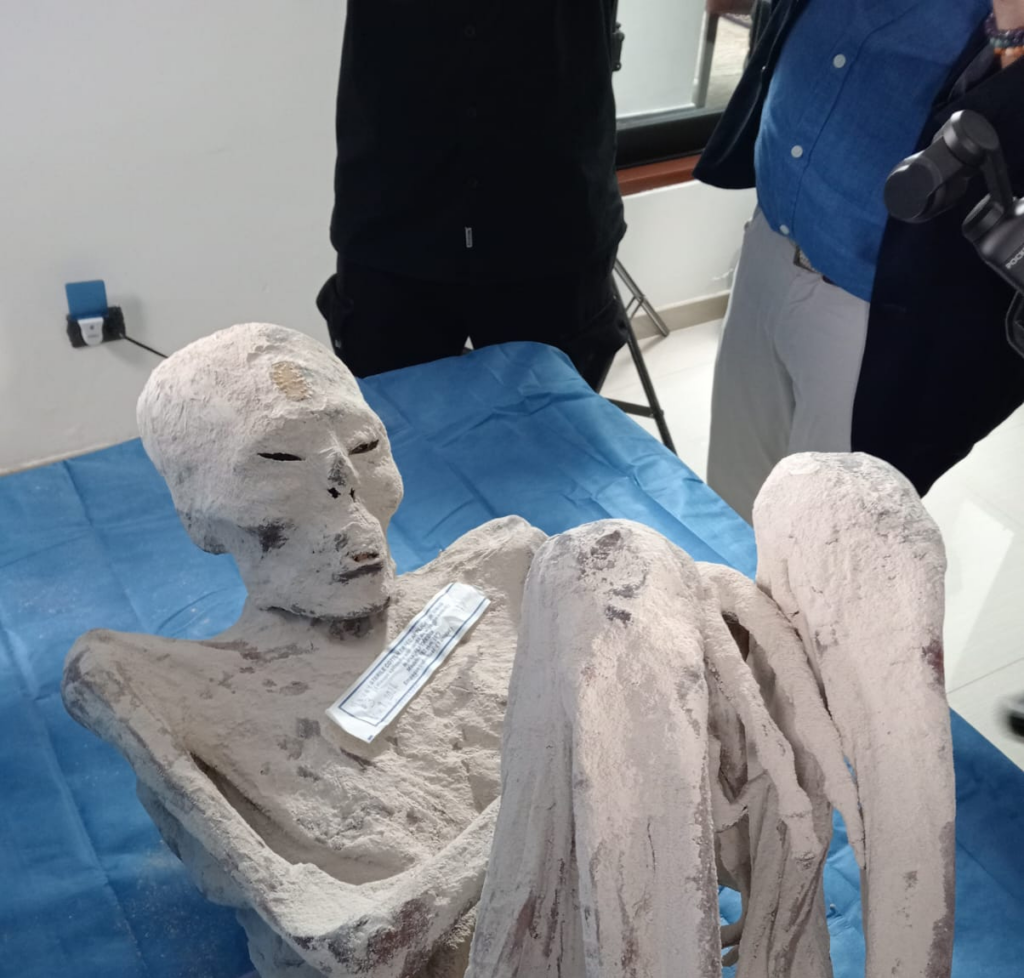
Maussan insists the saga is not over. In a 2025 profile in El País he maintained that the mummies contain strange metal implants and non-human DNA, casting himself as a misunderstood investigator battling an academic establishment that refuses to look at the evidence. “Put me in a debate with any scientist,” he said. “I’ll tear them to pieces.” (EL PAÍS English)
In short, the Nazca mummies remain a Rorschach test. To proponents clustered around tridactyls.org and Maussan’s media network, the scans and test results justify further open-minded study and possibly a paradigm shift in human, or non-human, history. To most archaeologists, geneticists and forensic experts, the lack of controlled excavation, peer-reviewed publication and reproducible independent analysis places the burden of proof squarely on those making extraordinary claims.
It is this unresolved tension – between dramatic anatomical imagery and methodological red flags – that has kept the Nazca bodies cycling through headlines, conferences and congressional hearings nearly a decade after their debut.
Hydrotene and pandemic pseudoscience
During the COVID-19 pandemic, Maussan lent his platform to promote “Hydrotene,” a supposed natural antiviral treatment claimed to be 96 percent effective against the virus. The product never gained scientific recognition and was criticized by medical authorities as unproven.
For many in the scientific and skeptical communities, this episode confirmed a pattern: Maussan tends to treat sensational claims as true first and vet them later, if at all.
Public persona, appearances and networks
Jaime Maussan functions as both investigator and showman.
He is a regular guest on Spanish-language talk shows and has appeared on English-language platforms such as Coast to Coast AM to discuss mass sightings, crash retrieval stories and his latest cases. (Coast to Coast AM)
Allies within his orbit include:
- Doctors such as José de Jesús Zalce Benítez, who interpreted scans of the “mummies” for the 2023 hearing and asserted that their anatomy showed eggs and metallic implants. (Anadolu Ajansı)
- Online platforms like Gaia, which gave international exposure to the Nazca mummy narratives.
- Long-time collaborators in Mexican television and his son Sebastián, who hosts “Tercer Milenio 360 Internacional.” (Everand)
On the other side, his work is frequently critiqued by Latin American researchers such as Anthony Choy and by international skeptics, who see his portfolio of debunked cases as evidence of serial gullibility or opportunism rather than careful investigation.
Impact on the UAP landscape
Measured strictly against the UAPedia taxonomy, Jaime Maussan is a textbook example of a “signal-plus-noise amplifier.” His career has had at least four major effects.
- Mainstreaming UAP in Spanish-speaking media
Before Maussan, sustained UAP coverage in Latin American prime-time news was rare. “Tercer Milenio” turned Mexican and Latin American audiences into active participants in the modern UAP story and helped normalize reporting on pilots, military footage and mass sightings. (IMDb) - Elevating anomalous cases that deserve attention
Buried within the sensationalism, Maussan’s platform has highlighted legitimate mysteries, from multiple-witness sightings over Mexico City to unusual sensor footage. Even critics acknowledge that some raw material he broadcasts later proves worthy of independent follow-up. (gatopardo.com) - Feeding a cycle of debunked spectacle
The flip side is that many of his most hyped “smoking guns” have been exposed as hoaxes, misinterpretations or pseudoscientific constructions. From the Metepec creature and WTC “craft” to the demon fairy and Roswell slides, these collapses give skeptics easy examples with which to dismiss the wider UAP data set. - Ethical questions around human remains
The Nazca mummies controversy raises serious ethical issues. Using modified human remains as spectacle, and doing so without clear provenance or permission from the countries of origin, has provoked criticism from archaeologists and Indigenous rights advocates. Even for researchers who believe some UAP-linked biological evidence may be real, these cases complicate efforts to establish credible protocols. (Bunk History)
In short, Maussan’s impact is impossible to separate from his contradictions. He is both a pioneer of Latin American UAP journalism and a cautionary tale about how not to handle alleged non-human evidence.
References
Aja Romano. (2023, September 16). The true story of the fake unboxed aliens is wilder than actual aliens. Vox.
Associated Press. (2023, September 13). Scientists call fraud on supposed extraterrestrials presented to Mexican Congress. NBC News.
Carpenter, L. (2017, September 30). The curious case of the alien in the photo – and a mystery that took years to solve. The Guardian.
Garrison, C. (2023, September 16). Exclusive: A close encounter with the “alien bodies” in Mexico. Reuters.
Lakehead University. (2024). The aliens have landed? Journey Magazine.
Romero, H. (2023, September 13). Journalist presents Mexican Congress with alleged “non-human” alien corpses at UAP hearing. Fox News.
Universidad Nacional Autónoma de México. (2023, September 13). Comunicado sobre los estudios de datación por carbono 14 realizados a muestras de momias de Nazca. UNAM.
El País. (2025, February 1). Jaime Maussan, a journalist from another planet: “Put me in a debate with any scientist, I’ll tear them to pieces.” El Pais.
Gatopardo. (2010). Jaime Maussan, un cronista de otro planeta. Gatopardo.
SEO keywords
Jaime Maussan biography, Jaime Maussan UAP, Tercer Milenio Jaime Maussan, Mexican Congress alien mummies, Nazca three finger mummies controversy, Metepec creature hoax, demon fairy bat parts, Roswell slides Be Witness event, Latin American UAP journalism, Maussan television channel, Hydrotene COVID treatment Jaime Maussan, non human beings not part of terrestrial evolution quote, Mexican UAP hearings 2023, Nazca mummies fraud analysis, Jaime Maussan skeptics and debunking