
The Jinn (also Djinn or Genie) sit in a difficult place for modern readers. In one register, they belong to scripture and theology. In another, they belong to witness testimony, family memory, and everyday religious life.
In a third register, they belong to the “high strangeness” archive: experiences that feel intelligent, intrusive, and reality-bending, where an unseen presence appears to watch, deceive, retaliate, bargain, or “take up residence” in the human world.
Classical descriptions foreground precisely the elements UAPedia tracks across anomalous encounter traditions: invisibility, apparent agency, shapeshifting, and the sense of a parallel ecology operating alongside ours.
Within Islamic doctrine, jinn are a distinct created order. But culturally they also function as an enduring interpretive technology: a living vocabulary for encounters that do not behave like simple superstition, and do not reliably stay inside the boundaries of ordinary perception. That dual role, cosmology plus encounter-language, is why jinn remain so durable across centuries and across the Islamic world.
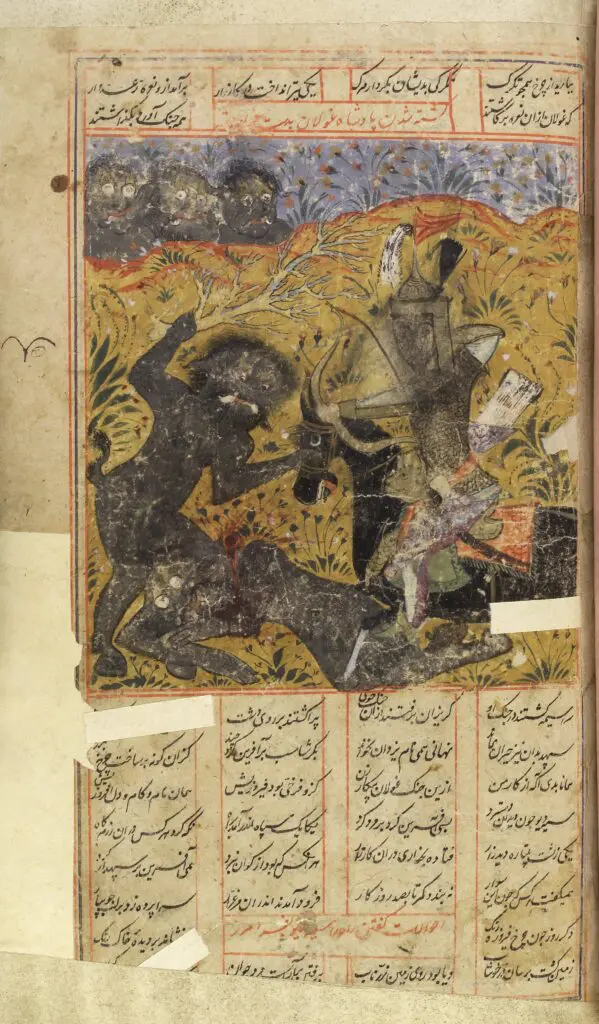
What Islam actually says jinn are
The scriptural foundation is explicit. Qur’an 15:27 describes the jinn as created “from scorching fire,” often rendered as smokeless flame. (Quranic Arabic Corpus)
Qur’an 72 opens with a scene that is striking for encounter-studies: a group of jinn listen to the Qur’an and report back, calling it a “wondrous recitation.” The implication is not only that jinn exist, but that they form communities capable of interpretation, communication, and choice. (Quran.com)
Qur’an 27:39 places an ‘ifrīt (a powerful jinn) inside the Solomon cycle, offering to transport the Queen’s throne with extraordinary speed and strength. (Quran.com)
Qur’an 34:12 expands this portrait further, describing jinn “subjected” to work under Solomon, alongside the famous motif of the wind’s vast stride. Whatever a reader makes of that narrative, it treats jinn as capable agents interacting with material construction and translocation, not as mere metaphors. (Quran.com)
Islam also inherited and reshaped older Arabian material. Britannica notes that belief in jinn was widespread in pre-Islamic Arabia and that they were associated with poets and soothsayers.
Islam did not erase this substrate so much as re-situate it inside a monotheistic cosmology where jinn are parallel to humans, morally accountable, and capable of good or evil.
By the classical period, jinn had become part of a much larger archive of Muslim thought and storytelling. Syracuse University Press’s description of Amira El-Zein’s Islam, Arabs, and the Intelligent World of the Jinn emphasizes that beliefs about jinn are deeply integrated into Muslim culture and religion and run through law, theology, folklore, literature, human-jinn relations, and poetic creation. Modern witnesses are not improvising the category from scratch. They are speaking from inside a very old vocabulary. (Syracuse University Press)
Why the jinn frame still has social force
The idea that belief in jinn survives only at the edges of Muslim life is wrong. Pew found that belief in jinn was widespread in 13 of the 23 countries where the question was asked. Reported belief reached 84% in Bangladesh, ranged to 86% in Morocco, and remained a majority belief in places such as Iraq (55%). (Pew Research Center)
The same survey also found that in 21 of 23 countries, fewer than one in ten respondents said they had ever seen jinn. Belief is common. Claimed direct encounter is much rarer. That asymmetry matters: it implies jinn operate less like a casual claim (“I saw one yesterday”) and more like a stable, socially shared cosmology that can become “activated” by particular kinds of anomalous experiences. (Pew Research Center)
Culture keeps the jinn frame alive in a second way: narrative saturation. The jinn are often called “favourite figures” across multiple regions, at the center of immense popular literature, appearing notably in The Thousand and One Nights, and entering India and Indonesia through Qur’anic description and Arabic literature.
In Western settings, the sanitized “genie” is one of the most influential afterlives of the jinn concept. EBSCO notes that much of the Western concept of jinn/genies flows through One Thousand and One Nights and highlights Aladdin as a modern cultural pipeline for the wish-granting, bargain-bound entity.
This is not a trivial point for UAPedia: it shows how an encounter-category can be domesticated by entertainment without disappearing from the underlying tradition that produced it. (EBSCO)
When witnesses say, “It was a jinn”
Witness language usually does not present jinn as abstract metaphysics. It presents them as an intruding intelligence with preferences, boundaries, and consequences.
One of the most “high strangeness” motifs is form-instability. In common folklore, jinn are described as capable of assuming human or animal form and as dwelling in “all conceivable inanimate objects,” including stones, trees, and ruins. That is an encounter ecology rather than a simple demonology. The world becomes inhabited, and agency can appear from places modern categories treat as inert.
A second motif is the jinn as a morally differentiated presence, not a single-note evil. A famous report in Sahih Muslim describes the Prophet saying that in Medina there are jinn who have accepted Islam, and it instructs that if a snake is encountered in the home it should be warned for three days before being killed. In narrative terms, this is extraordinary: it treats “entity-as-animal” as a live possibility, while also assigning that entity moral status, community membership, and rules of engagement. (Sunnah)
A third motif is the “dangerous neighbor,” the jinn that retaliate when harmed or offended, even unintentionally. Britannica notes that jinn are said to delight in punishing humans for harm done to them, intentionally or unintentionally, and that they are held responsible in folklore for many diseases and all kinds of accidents. This is high strangeness framed as ethics: the anomaly is not random, it is relational. (Encyclopedia Britannica)
Folklore also differentiates subtypes that behave like specialized encounter-roles. The ghoul, for example, is described by Britannica as belonging to a diabolical class of jinn, inhabiting burial grounds and deserted places, capable of changing form, and stalking travelers in the desert. Even if treated as legend, the pattern is consistent: liminal geography, predatory intelligence, and perceptual deception. (Encyclopedia Britannica)
For UAPedia readers, these motifs should feel structurally familiar. Jacques Vallée’s long-running argument is that modern UAP “visitation” narratives share deep continuities with older encounter traditions, including trickster-like behavior and cultural shape-shifting across time. The jinn archive is one of the strongest non-European corpora for testing that idea. (WIRED)
What the broader literature found
Zoom out from any single testimony and the most consistent finding is that “jinn” is both a theological category and a cultural grammar.
On the theological side, the Qur’an positions jinn as a parallel created order, capable of listening, understanding, responding, and acting with unusual capacities. The Solomon cycle, in particular, normalizes translocation, extraordinary strength, and interaction with material tasks. (Quran.com)
On the cultural side, the jinn are a transregional narrative engine. Britannica emphasizes their centrality in North African, Egyptian, Syrian, Persian, and Turkish folklore, and places them at the center of immense popular literature, notably The Thousand and One Nights. (Encyclopedia Britannica)
This is also where the “genie” misdirection happens. EBSCO’s overview links Western genie imagery to One Thousand and One Nights and popularizes the bargain-bound entity through Aladdin. That process often strips the jinn of their moral ambiguity, their ecology of place, and their capacity for retaliation or indifference, leaving only the domesticated wish-machine. For UAPedia, that flattening is a cautionary tale: cultures routinely convert encounter-traditions into entertainment artifacts, which can obscure but does not erase the underlying phenomenology. (EBSCO)
Finally, scholarship like El-Zein’s stresses that jinn are not a fringe superstition but an integrated component of Muslim cultural production and metaphysical reasoning, running through law, theology, folklore, and literature. That integration is precisely what makes the jinn frame so powerful as an “interpretive stabilizer” for high strangeness experiences. (Syracuse University Press)
Night attacks, seizures, and the body
Across the jinn archive, the night is a favored theater. Not because the tradition needs darkness to “make it spooky,” but because night is when perception is vulnerable, boundaries feel thin, and solitude amplifies the sense of intrusion.
Folklore repeatedly treats jinn as inhabitants of ruins, deserted places, and the hidden layers of ordinary environments. Britannica describes them as dwelling in ruins and “all conceivable inanimate objects,” and as operating underneath the earth, in the air, and in fire. In practical terms, this makes the world feel porous. “Where” you are becomes inseparable from “what” can encounter you.
The body, in turn, becomes the primary site where such intrusion is recognized: sudden illness, unexplained accidents, sensations of being targeted, or the feeling of punishment after a perceived boundary violation. Again, Britannica explicitly notes the role of jinn in explaining diseases and accidents in common folklore.
Even within authoritative Islamic narration, the home at rest is not immune to entity ambiguity. The Sahih Muslim snake account is, among other things, a domestic-threshold story: the intruder is real enough to kill, ambiguous enough to require warning, and socially legible enough to be called “jinn” rather than merely “animal.” (Sunnah)
The real controversies
One controversy lives inside Islamic belief and practice: what belongs to doctrine and what belongs to folklore layering. The Qur’an presents jinn as real and morally accountable, but local storyworlds add specialized subtypes, geographies, and encounter-rules that may vary widely by region.
A second controversy is about legitimacy of interaction. Pew notes that Islamic tradition teaches reliance on God rather than talismans, and the same survey finds varying levels of talisman use and other protective objects across countries. In other words, even where belief in jinn is common, the approved “technology of response” is debated, and practices can slide between piety, folk custom, and outright prohibition depending on school and community. (Pew Research Center)
A third controversy, central to UAPedia’s mission, is interpretive: are jinn best understood purely as a religious-metaphysical ontology, or are they also a culturally calibrated label for a class of objective encounters with non-human intelligences? Vallée’s framework keeps that question open, arguing that the phenomenon adapts its mask to the era’s expectations. The jinn tradition is one of the strongest candidates for that “mask” function in Islamic cultural space. (WIRED)
What institutions now do with this
In many Muslim communities, “institutions” here means family, mosque, scholar, storyteller, and local custom, not a centralized authority.
On the normative end, the emphasis is often on reliance on God and avoidance of magical objects. Pew’s report summarizes this teaching and shows that many Muslims report not possessing talismans, even in settings where belief in jinn is high. (Pew Research Center)
On the popular end, culture continues to preserve and distribute jinn imagery through literature and media. The Thousand and One Nights remains a major transmission engine, and “genie” pop culture is its modern offshoot. EBSCO explicitly links Aladdin’s genie to this lineage, illustrating how a complex encounter-being can be reduced to a single function (wish fulfillment) while still keeping the category alive in the imagination. (EBSCO)
Why this matters
For UAPedia readers, jinn belong naturally inside Religious Experiences, but they also belong near the core of high strangeness research. They represent a long-lived, internally coherent model of non-human intelligences cohabiting the same world as humans, interacting through perception, place, and moral boundary.
UAP scholarship that takes the phenomenon seriously often converges on the same unsettling pattern: encounters behave less like straightforward contact with a distant civilization and more like a relational intelligence that shapes experience, belief, and culture. Vallée’s work is one influential articulation of that pattern. The jinn corpus gives UAPedia a non-Western archive to compare against modern UAP entity narratives without flattening either tradition. (WIRED)
For UAPedia’s taxonomy, Islamic jinn belong inside 33. Religious Experiences under F – Consciousness and Psychic Phenomena. That category already sits alongside articles such as Fátima 1917 and the “Miracle of the Sun”, Islamic Prophet Muhammad’s Interdimensional Travel, and Biblical Visions and UAP: an Investigative Read. Nearby UAPedia pages also connect this terrain to Consciousness as a Channel for UAP and the Supernatural, which makes them natural internal bridges for this article.
Claims taxonomy
Verified
Within Islamic doctrine, jinn are a distinct created order described in the Qur’an, including their creation from fire and their capacity for agency and response. Belief in jinn is also widely attested across Muslim-majority societies in large-scale survey data. (Quranic Arabic Corpus)
Probable
Across classical and modern folklore, jinn function as an encounter category characterized by invisibility, shapeshifting, and place-bound agency (ruins, objects, deserted spaces). These motifs appear consistently across encyclopedic and literary reference treatments. (Encyclopedia Britannica)
Disputed
Whether jinn traditions describe an objectively external non-human intelligence that overlaps with modern UAP-linked entity encounters, or whether they represent a culture-specific ontology that does not map cleanly onto UAP cases. Vallée’s continuity thesis is influential but not universally accepted, and the mapping remains interpretive rather than settled. (WIRED)
Legend
Many jinn subtypes and stories, including ghoul narratives and some Thousand and One Nights motifs, function as cultural literature rather than modern evidentiary case files. Their value is in pattern, symbolism, and phenomenological continuity, not courtroom-style proof. (Encyclopedia Britannica)
Misidentification
Some events described in jinn language can plausibly involve ordinary causes (animals in homes, environmental hazards in deserted places, accidents) that become “agentive” through cultural interpretation. This does not negate jinn as a cosmology, but it cautions against assuming every jinn-labeled event is non-ordinary. (Sunnah)
Hoax
The literature and reference sources do not justify treating the jinn subject as deception in the aggregate. However, as with any high-stakes belief domain, individuals can exploit fear, authority, and money around protective services and claims of specialized knowledge. (This is a general risk statement, not an attribution to any single tradition.) (Pew Research Center)
Speculation labels
Hypothesis
A subset of jinn encounter motifs may describe the same class of “control-system” or trickster-like non-human intelligence proposed in parts of UAP literature, adapted to Islamic cosmology and local narrative expectations. (WIRED)
Witness Interpretation
For witnesses, “jinn” often names a lived encounter with perceived agency: something unseen that appears to watch, intrude, retaliate, bargain, or inhabit space. The label persists because it matches the experience as lived inside a long-standing cosmology.
Researcher Opinion
The most productive UAPedia stance is to treat jinn on multiple levels at once: as real beings within Islamic doctrine, as a cultural and literary ecosystem that preserves encounter-patterns, and as a comparative dataset for high strangeness studies that rejects simplistic reduction. (Syracuse University Press)
Selected publications
Al-Rawi, A. K. (2009). The mythical ghoul in Arabic culture. Cultural Analysis, 8, 45–69. (Open Computing Facility)
El-Zein, A. (2017). Islam, Arabs, and the intelligent world of the jinn. Syracuse University Press. (Syracuse University Press)
Lebling, R., & Shah, T. (2010). Legends of the fire spirits: Jinn and genies from Arabia to Zanzibar. I.B. Tauris. (Bloomsbury Publishing)
Pew Research Center. (2012). The world’s Muslims: Unity and diversity. (Section: “Other beliefs and practices,” including “Jinn”). (Pew Research Center)
The Qur’an. (Primary source). Relevant passages include 15:27, 72:1, 27:39, 34:12. (Quranic Arabic Corpus)
Muslim, I. (Primary source). Sahih Muslim 2236a (report regarding jinn in Medina and warning household snakes). (Sunnah)
Vallée, J. (1969). Passport to Magonia: From folklore to flying saucers. (Comparative framework for folklore and UAP continuity). (WIRED)
Internal crosslinks suggestion
Historical Religious Responses to UAP
Fátima 1917 and the “Miracle of the Sun”: A Mass UAP Interpretation
Biblical Visions and UAP: an Investigative Read
Islamic Prophet Muhammad’s Interdimensional Travel
Consciousness as a Channel for UAP and the Supernatural
SEO keywords
Islamic jinn, jinn in Islam, jinn high strangeness, jinn folklore, djinn shapeshifter, ifrit jinn, ghoul jinn, jinn ruins deserts, Thousand and One Nights jinn, Aladdin genie origins, jinn encounter narratives, non-human intelligence, ultraterres