
Some UAP accounts arrive like a postcard: a light, a shape, a trajectory that does not behave like an aircraft. You can argue about distance and speed, but everyone agrees on the kind of story being told.
Other accounts arrive like a letter you find already opened.
The witness describes the world going oddly quiet, time feeling “thick,” and then the most unsettling feature: information arriving without being spoken. Not a voice exactly. Not a normal chain of thoughts. More like a compressed packet of meaning. A warning. A vivid image. A certainty. A sense that the phenomenon noticed attention and responded.
In UAP circles, this cluster of claims often gets filed under one catch‑all word: psionics. The problem is that the word feels technical, like it names a settled mechanism. It does not. It is a label, and labels can help us organize data or quietly smuggle in conclusions.
This explainer keeps the label, but strips it down to what it can responsibly mean in UAP research: a shorthand for alleged consciousness-linked interaction, especially nonverbal communication.

A sci‑fi word that escaped into fieldwork
“Psionics” did not begin as a laboratory term. It began as science-fiction terminology. The Science Fiction Encyclopedia traces its early print use to Jack Williamson’s story “The Greatest Invention” (published in Astounding in July 1951), and notes how it quickly became associated with the idea of “psi powers plus electronics.” (SF Encyclopedia)
That origin matters because it explains why psionics sounds like a discipline: it was built to. In genre history, the word functioned like “robotics” or “astronautics,” implying a coherent field even when the underlying claims were speculative. (SF Encyclopedia)
In UAP research today, “psionics” is often used more loosely. It can refer to:
- alleged mind-to-mind communication during close encounters
- “downloads,” sudden insights, or meaning-rich imagery
- attention effects (the sense that looking or thinking “calls” the phenomenon)
- cognition-linked physiological or emotional shifts around encounters
None of those, by itself, proves a mechanism. But together they describe a recurring contact motif that shows up across decades of testimony.
A brief comparison with CE‑5 (Close Encounters of the Fifth Kind) helps clarify the difference between a protocol and a placeholder term. CE‑5, popularized by Steven Greer, refers to organized attempts at initiating contact through meditation, focused intention, and coherent group signaling; often combining mental visualization with lights, tones, or other physical cues. In that framework, consciousness is treated as an active transmitter: humans are deliberately “calling” or inviting interaction. Psionics, as used in this article, is broader and more descriptive. It does not assume initiation, success, or even a working technique. It simply tags reports in which communication or influence appears to occur through consciousness-linked channels, whether spontaneous or intentional. In other words, CE‑5 is a specific claimed method of mind‑UAP interaction; psionics is the observational category that would include CE‑5 outcomes if such interaction were demonstrated under controlled conditions.
“Psi” is a placeholder, not a victory flag
Parapsychology’s umbrella term “psi” was introduced as a neutral placeholder for anomalous information transfer and mind-matter effects, precisely because older terms carried built-in assumptions. The Psi Encyclopedia notes that psychologist Robert Thouless introduced “psi” in 1942, crediting physiologist Bertold Wiesner with proposing it, and argued that terms like telepathy and clairvoyance were misleading because they implied mechanisms we do not actually understand. (Psi Encyclopedia)
That is the most useful way to import “psi” into UAP studies: not as a claim that the phenomenon is solved, but as a marker that witnesses report something that behaves like information transfer without normal sensory channels.
What “nonverbal communication” looks like in UAP testimony
When experiencers say “telepathy” they are often pointing at a specific felt texture of communication: meaning delivered without speech. UAPedia’s own consciousness-focused articles repeatedly note that reports of nonverbal messaging, “downloads,” time distortion, and altered awareness cluster around close encounters.
Across narrative datasets (especially close-contact and abduction accounts), a few motifs show up again and again:
Communication without speech
UAPedia’s pattern analysis of abduction narratives describes “communication without speech” as a recurring element, along with sudden emotional shifts and reassurance messaging.
Emotional modulation
Many reports describe not just receiving information, but having fear reduced or attention “steered,” sometimes abruptly. Whether that reflects neurobiology, shock response, or an external influence is the debate. The key point for investigators is simpler: the emotional shift itself is data and should be logged, not waved away.
The “Oz Factor” and the bubble effect
The “Oz Factor” framework describes episodes where reality feels staged, hushed, or selectively filtered, as if perception has been tuned. UAPedia summarizes this as a consciousness-centric reading of certain close encounters: the witness is not merely observing an object, but being placed into a specific experiential envelope. (UAPedia – Unlocking New Realities)
This is exactly where “psionics” becomes a useful filing term, because the contact looks like an interface problem, not just a sighting problem.
Consciousness as the interface: why the motif refuses to go away
If you only study UAP as propulsion puzzles, nonverbal communication looks like noise. If you study UAP as an interaction, it starts to look like part of the signal.
UAPedia’s discussion of consciousness-linked encounters frames the issue bluntly: many people reporting close UAP events claim not only to have seen something unusual, but to have undergone a shift in awareness, sometimes accompanied by seemingly telepathic messaging or meaning-laden insight.
This aligns with a larger interpretive lens in modern UAP studies: Jacques Vallée’s “control system” framing, which treats UAP not merely as vehicles but as adaptive interactions that modulate observers, beliefs, and attention. In that view, the message is not just the craft. The message is the total information package, including psychological and cultural effects.
You do not have to fully endorse any one theory to see the practical implication: if the phenomenon interacts with human perception, then consciousness becomes part of the data stream.
Mind-matter research: the “human interface” bridge
There is a reason “psionics” keeps getting dragged back into the conversation even by people trying to stay technical: modern science already includes legitimate mind-to-machine interfaces. Brain-computer interfaces are real. Attention and intention can measurably shape performance and decision-making.
Institutional documents sometimes reveal interest in “human interface” questions in advanced aerospace contexts, but UAPedia’s editorial stance is clear that government sources are inputs, not verdicts. They are one evidentiary vector, and they require context, not deference.
With that caution in place, it is still notable that a Defense Intelligence Agency FOIA-released memo about AAWSAP deliverables lists “human interface” and “human effects” among the topic areas covered by contracted technical reports.
This does not prove psionics, and it does not validate any specific UAP claim. What it does show is that “the interface between human beings and advanced systems” is not a fringe topic in principle. It is a recurring engineering and intelligence concern.
Skywatcher’s claims: “machine calling” and “psionic calling”
The most concrete modern example of psionics language colliding with fieldwork is Skywatcher, a private initiative that describes itself as focused on aerial intelligence, advanced sensing, and unconventional aerospace research.
On its own media page, Skywatcher explicitly frames its work as attempting to validate UAP through two channels:
- electromechanical signaling, described as “machine calling”
- neuromeditative interaction, described as “psionic calling”
Skywatcher also states that its first episode involves interviews with individuals who claim to be able to “summon these objects in the sky,” and that the project moves from interviews toward attempted demonstration.
UAPedia’s handling of Skywatcher is a model of how to keep the topic readable without turning it into belief theatre: in a dossier on recent flap dynamics, UAPedia treats Skywatcher outputs as testimony and researcher claims, assessing them as Probable for “serious field effort,” while holding the nature of targets as undetermined until synchronized raw datasets are broadly available.
That is the right posture. Skywatcher’s claims matter because they are an explicit attempt to operationalize mind-linked interaction in the open, alongside instrumentation. But until the underlying data is shared in a way other analysts can audit, the claims remain claims.
A better way to read “psionics” in UAP cases
If psionics is real in the strong sense, it should eventually produce testable, repeatable predictions. If it is not real, the same discipline should still extract value: it should help us separate neurological effects, cultural framing, and genuine anomalies instead of blending them into one foggy story.
A grounded way to use the label is:
Psionics = reported consciousness-linked interaction as an observational category.
Not as proof of psychic powers. Not as proof of non-human intelligence. Not as proof of anything other than a recurring experiential pattern that deserves structured collection.
The “Ganzfeld and the UAP data problem” article hints at the methodological direction: if some subset of encounters involves anomalous information transfer (as witnesses interpret it), then protocols from perception research and parapsychology can be adapted with modern safeguards such as pre-registration and transparent scoring.
In plain language: treat nonverbal messaging like you would treat any other claimed channel. Define it. Instrument what you can. Log what you cannot. Make the data legible enough that disagreement becomes productive.
Bottom line
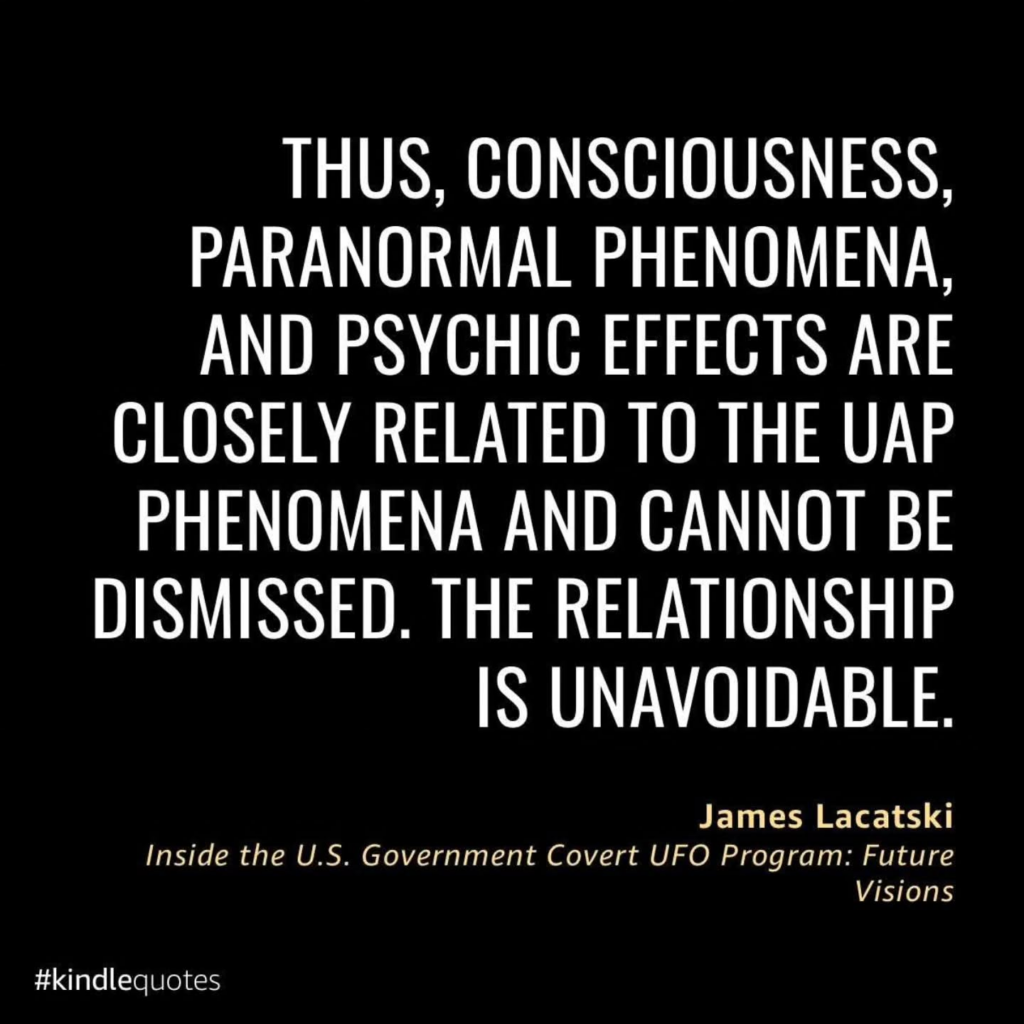
Psionics is not a mechanism. It is a filing label for a stubborn feature of the UAP record: contact experiences that behave like communication without speech, often entangled with altered states, emotional modulation, and perception “bubbles.”
Ignoring that feature makes UAP analysis smaller than the dataset. Over-believing it turns investigation into folklore.
Claims taxonomy
Verified
The term “psionics” originated in science-fiction usage and is traced by the Science Fiction Encyclopedia to early print use in 1951. (SF Encyclopedia)
“Psi” was introduced in 1942 by Robert Thouless (crediting Wiesner) as a neutral placeholder term. (Psi Encyclopedia)
Skywatcher publicly describes “machine calling” and “psionic calling” as part of its stated approach. (Skywatcher)
Probable
Nonverbal communication and emotional modulation are recurring motifs across close-contact narrative clusters, and they can be consistently coded as reported features even when mechanism remains unknown.
Disputed
Whether nonverbal communication in UAP encounters reflects an external intelligence, a consciousness interface, psychological effects, or some blend remains unresolved and case-dependent.
Speculation labels
Hypothesis
Some subset of UAP encounters includes an anomalous information-transfer component that can be modeled and tested using modern perception protocols, rigorous logging, and transparent scoring, without assuming a specific metaphysical explanation.
Witness interpretation
Some experiencers interpret nonverbal communication during UAP events as telepathy, “downloads,” or direct mind-to-mind contact.
Researcher opinion
“Psionics” is best treated as a descriptive tag for consciousness-linked contact claims, not as a declaration that the mechanism is known or settled.
References
Science Fiction Encyclopedia. (n.d.). Psionics. (SF Encyclopedia)
Skywatcher. (n.d.). Media. (Skywatcher)
Skywatcher. (n.d.). Skywatcher | Defining the Future of Aerial Intelligence. (Skywatcher)
Thouless, R. (n.d.). Robert Thouless. Psi Encyclopedia (Society for Psychical Research). (Psi Encyclopedia)
UAPedia. (2026). UAPedia Editorial Standards – Navigating the Mystery. (UAPedia – Unlocking New Realities)
UAPedia. (2026). How UAPedia Treats Government Sources. (UAPedia – Unlocking New Realities)
UAPedia. (2026). Ganzfeld and the UAP Data Problem. (UAPedia – Unlocking New Realities)
UAPedia. (2026). UAP as an Entry Point to High Consciousness. (UAPedia – Unlocking New Realities)
UAPedia. (2026). The Oz Factor and UAP: When Reality Slips Sideways. (UAPedia – Unlocking New Realities)
UAPedia. (2026). The Pattern Beneath the Panic: Common Elements in Abduction Narratives. (UAPedia – Unlocking New Realities)
UAPedia. (2026). The Control System Theory of UAP. (UAPedia – Unlocking New Realities)
UAPedia. (2026). The New Jersey Flap (2024–25): Sorting Signal from Noise. (UAPedia – Unlocking New Realities)
U.S. Defense Intelligence Agency. (2009). Review of Advanced Aerospace Contract Deliverables (U-429-09) [FOIA reading room document].
Internal crosslinks for UAPedia
“Ganzfeld and the UAP Data Problem” (UAPedia – Unlocking New Realities)
“UAP as an Entry Point to High Consciousness” (UAPedia – Unlocking New Realities)
“The Oz Factor and UAP: When Reality Slips Sideways” (UAPedia – Unlocking New Realities)
“The Pattern Beneath the Panic: Common Elements in Abduction Narratives” (UAPedia – Unlocking New Realities)
“The Control System Theory of UAP” (UAPedia – Unlocking New Realities)
“The New Jersey Flap (2024–25): Sorting Signal from Noise” (for Skywatcher treatment) (UAPedia – Unlocking New Realities)
“UAPedia Editorial Standards – Navigating the Mystery” (UAPedia – Unlocking New Realities)
SEO keywords
psionics, psi, consciousness and UAP, nonverbal communication UAP, telepathic messaging UAP, UAP downloads, mind-UAP interaction, Oz Factor UAP, experiencer communication, contact protocols UAP, Skywatcher machine calling, Skywatcher psionic calling, consciousness interface, anomalous information transfer, UAP contact narratives