
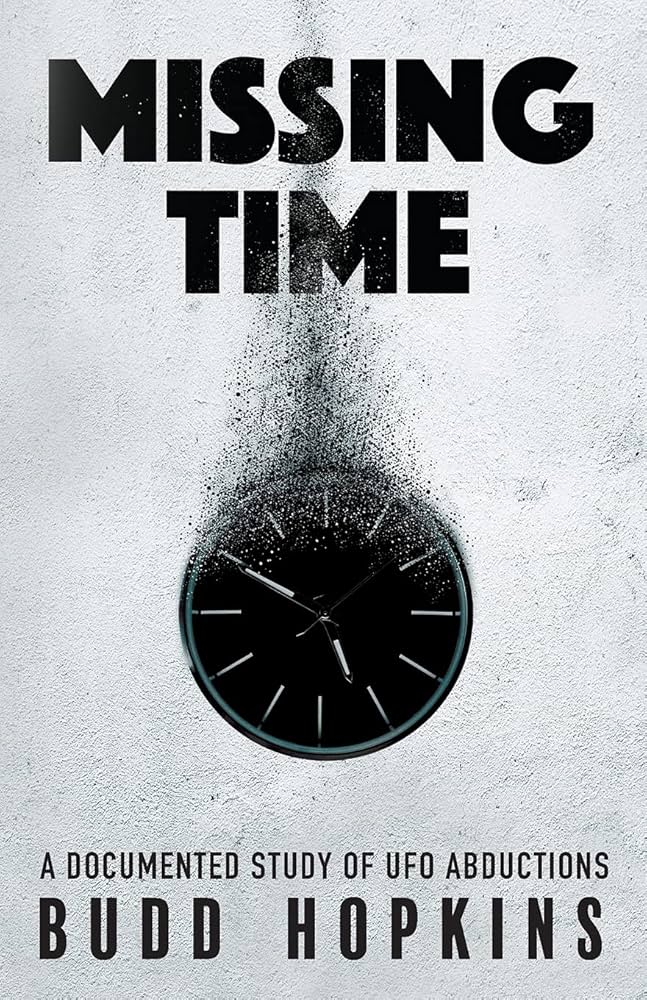
Missing time is the most underrated “instrument reading” in UAP research.
Not the cinematic version, where a watch spins and a cabin light flickers. The real-world version is quieter and, for investigators, more difficult: a couple arrives home later than their route allows, a patrolman’s radio call fractures into panic, a group’s night in the woods seems to have holes in it, and the timeline refuses to reconcile even after you do the obvious math.
In most fields, time is the scaffolding that holds evidence together. In UAP encounter research, time sometimes becomes the evidence.
This article takes an investigative, approach to missing time as a research variable: what it is, how it shows up in classic cases, where government reporting and archival systems help and where they still fall short, and how a modern methodology can turn “I lost two hours” from a motif into an analysable event signature.
The goal is not to use missing time as a shortcut to conclusions. The goal is to treat it like any other anomaly: with provenance, metadata, uncertainty bars, and a strict separation between what is documented, what is remembered, what is reconstructed, and what is hypothesized.
Defining missing time like an auditor
For publication-grade work, “missing time” needs an operational definition that is strict enough to test and humble enough to survive cross-examination.
A workable definition:
Missing time is a discrepancy between expected and reconstructed elapsed time that remains after accounting for known delays and measurement error, and that is reported as an experiential gap (memory discontinuity, temporal compression, or a perceived “jump”) by one or more witnesses.
That definition matters because it forces two separations that UAP research too often blurs:
- Timeline discrepancy (the ledger problem): the clocks do not add up.
- Memory discontinuity (the human problem): the witness cannot account for the discrepancy.
Sometimes you get one without the other. Sometimes you get both. And sometimes you get both plus additional elements: physiological effects, environmental traces, contemporaneous recordings, radar returns, dispatch logs, or third-party witnesses.
A data-first approach does not assume what missing time “means.” It asks what data exists, what data is missing, and how much interpretation is being used to fill the gap.
Government involvement in data collection
A serious investigator needs to know where the official record is strong, where it is thin, and where it is structurally not designed to capture what experiencers report.
Project Blue Book as historical baseline
The U.S. Air Force fact sheet on Project Blue Book states that 12,618 reports were investigated and 701 remained “unidentified” when the program ended. (U.S. Air Force, n.d.)
Blue Book matters here for one methodological reason: it shows how a structured program can still end with a residue, and how older case systems often do not preserve the high-resolution, witness-level timeline and metadata needed for modern missing-time analysis.
FAA notice (late 2025): UAP enters air traffic procedure
FAA Notice N 7210.970 exists, lists an effective date of October 26, 2025 and a cancellation date of January 22, 2026, and prescribes reporting procedures for UAP activity observed by pilots or air traffic personnel. (FAA, 2025)
This is not just terminology management. In practice, procedures change what gets logged, how it gets routed, and whether later correlation becomes possible.
NARA Record Group 615: the archival spine is real
NARA’s FAQ states that the 2024 NDAA requires establishment of the “Unidentified Anomalous Phenomena Records Collection,” and that NARA has established Record Group 615, receiving records “on an ongoing, rolling basis.” (NARA, n.d.)
This is a structural shift. Missing-time research improves dramatically when you can audit historical timelines against released logs, memos, dispatch records, and early witness statements that were never part of popular retellings.
The NRC memo
A U.S. Nuclear Regulatory Commission memo can be used responsibly as an example of agency implementation of the UAP records data call and internal handling of record-identification requests. It should not be presented as the best source for the statutory scope itself. The statutory breadth and mandate are more directly supported by NARA’s FAQ and related NARA documentation. (NARA, n.d.; NRC, 2024)
GEIPAN: a durable public case-file model
France’s GEIPAN offers something most countries still lack: a stable, public, citable corpus with structured case files and classification outcomes.
GEIPAN’s statistics page shows 3,320 cases and Category D at 3.2% (106 cases), dated 03/03/2026. (GEIPAN, 2026)
For missing time research, that matters because it normalizes the idea that unresolved cases can exist in a structured system without becoming either taboo or spectacle.
The missing-time data model: what to capture every time
If you want missing time to be more than a motif, your intake must be engineered for reconstruction.
A practical missing-time case record should include:
Clock layer
- device time stamps (phone call logs, message times, photo metadata)
- vehicle telemetry where available
- dispatch logs or check-in systems (work shifts, patrol schedules)
- photos of analog clocks or watches when relevant
Route layer
- planned path vs actual path
- expected travel time window
- plausible delays (traffic, stops, weather)
Witness layer
- first-pass statement (minimally prompted, before group discussion or memory-recovery techniques)
- later statements with versioning
- explicit description of the blank spot: when it starts, how it feels, what fragments exist
Trace layer
- contemporaneous recordings (911 calls, police tapes, radio traffic)
- medical notes if any exist close in time
- physical artifacts with chain-of-custody discipline
Uncertainty layer
- what is documented vs inferred
- confidence ranges, not binary judgments
Classic missing-time cases often stumble here because they were not collected with version control. A narrative becomes a single “account,” when it should be treated like a dataset with revisions.
Case studies: four ways the ledger gap shows up
These cases are included not because they force one conclusion, but because each illustrates a different relationship between timeline discrepancy, testimony, and documentation.
Case study 1: The Hills and the “two missing hours” as an archival claim
Documented timeline fact (archival): The University of New Hampshire’s collection description for the Betty and Barney Hill papers states they returned home “unable to explain the two missing hours,” and it situates later hypnosis therapy as part of their attempt to address the gap. (UNH Library, n.d.)
This supports a crucial methodological separation:
- Layer A: the missing-time claim as a time-accounting discrepancy.
- Layer B: detailed abduction narrative material that emerges later, much of it associated with hypnosis and subsequent publication.
A data-first reading treats Layer A as the primary anomaly and tags Layer B by method and timing. This is not about dismissing the Hills. It is about preserving verifiability.
Case study 2: Pascagoula and the value of a contemporaneous recording
Pascagoula is often discussed for the encounter narrative. For missing-time methodology, its standout feature is something more basic: a contemporaneous evidentiary anchor.
WLOX reports that investigators had a cassette recording of Charles Hickson and Calvin Parker discussing the encounter the night it happened. (WLOX, 2023) A library guide from Hinds Community College points readers to a 1973 recording resource, reinforcing availability and curatorial framing. (Hinds CC Library, n.d.)
Why this matters:
- It reduces narrative drift by preserving early language and emotional state.
- It anchors the case in time, not only in memory.
A recording does not determine ontology. It does support immediacy and gives later investigators something to compare against later retellings.
Case study 3: Allagash as testimony-forward, not externally “proven”
Allagash is frequently summarized as a group missing-time experience during a 1976 trip in Maine. The key is to avoid overstating what public sources can support.
A publication-grade phrasing can safely say:
- The case is best known through Raymond E. Fowler’s book The Allagash Abductions (1993), which presents the narrative and investigative framing. (Fowler, 1993)
- The claims have persisted in public discourse and local reporting over time, reflecting sustained witness assertion rather than a closed historical footnote. (Portland Press Herald, 2013)
What this does not establish by itself:
- independent external verification of the missing-time interval
- a cleanly documented chain-of-custody for all early statements
- a causal mechanism for the reported gap
Allagash remains valuable, but primarily as a methodological stress test: group cases allow comparison across witnesses, but only if early statements and interview practices are handled in a way that minimizes contamination.
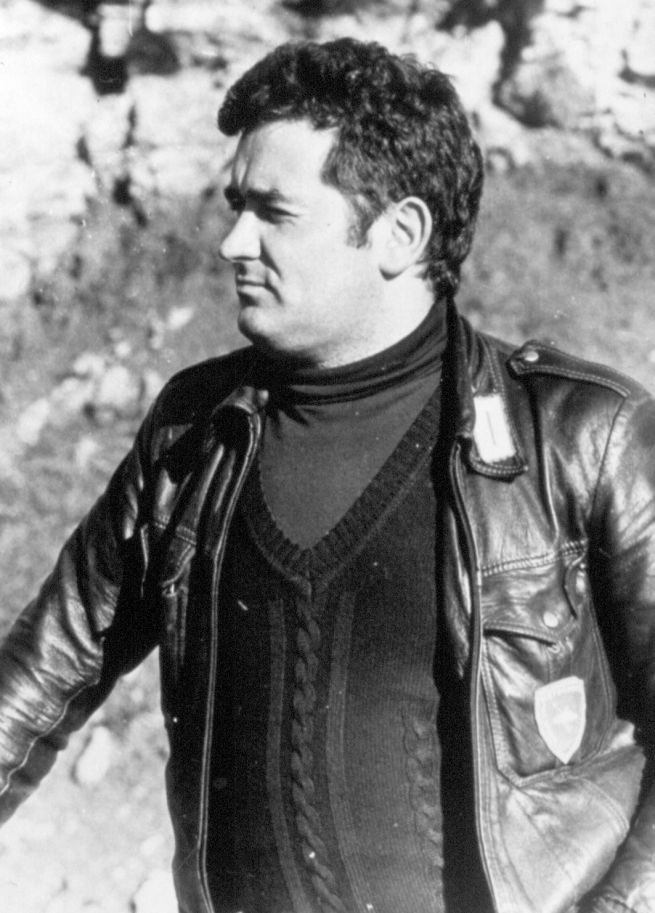
Case study 4: Zanfretta and contemporaneous press grounding
The Zanfretta material is often weakened in English-language writing by vague sourcing. The most defensible move is to anchor claims to contemporaneous documentation.
A December 10, 1978, La Stampa item contains OCR-visible lines including “Carabinieri indagano sull’Ufo,” “Il racconto d’un metronotte,” and the name Fortunato Zanfretta. (La Stampa, 1978)
This supports a narrow but important claim:
A contemporaneous newspaper record tied Zanfretta (a metronotte), Carabinieri attention, and the event narrative together in December 1978.
It does not prove all later accretions or interpretations. It does establish historical placement and a documentary foothold.
For missing time research, Zanfretta is important because a security guard’s work context implies timekeeping systems: patrol schedules, expected check-ins, dispatch interactions, and institutional responses. Even when those records are not publicly available, the case reminds investigators what to look for.
The hard argument: hypnosis, sleep paralysis, and why labelling is non-negotiable
Missing time sits at the fault line between anomalous-event research and memory science. If you ignore that, you publish narratives that fail basic scrutiny. If you let memory science become a bludgeon, you flatten credible testimony into dismissal. A serious approach does neither.
Hypnosis and confidence inflation
Ohio State University reporting summarizes a key caution: hypnosis can increase confidence in memories without improving accuracy. (Ohio State University, 2001)
A broader scholarly treatment of whether hypnosis should be used to recover historically accurate memories highlights risks including suggestion and confabulation and emphasizes that vivid recall under hypnosis is not a guarantee of historical truth. (Lynn et al., n.d.)
Data-first implication for UAP cases:
Hypnosis-derived material must be tagged as “memory-recovered,” never merged into the same evidentiary tier as contemporaneous logs, recordings, or independently time-stamped artifacts.
Sleep paralysis as a partial explanatory framework
Susan Blackmore’s discussion links some abduction-style experiences to sleep paralysis and related phenomena. (Blackmore, 1998)
McNally and Clancy discuss cases where abduction claims are linked to apparent episodes of sleep paralysis and hypnopompic hallucinations interpreted as alien beings. (McNally & Clancy, 2005)
This supports a narrow claim, and only a narrow claim:
Some abduction-like experiences plausibly overlap with known sleep phenomena.
It does not justify a blanket reduction of all missing-time claims, especially those in mobile contexts (driving, patrolling) where multiple external time anchors exist.
Implications: why missing time matters beyond folklore
Missing time is often reported with distress and disorientation. Regardless of cause, the ethical duty is to preserve witness dignity and preserve evidence integrity. Good ethics also produces better data: minimally leading interviews, careful documentation, and transparent labelling.
Claims taxonomy
These labels apply to the claims made in this article, not to the entire UAP topic.
Verified
- NARA established Record Group 615 and is receiving records on a rolling basis. (NARA, n.d.)
- GEIPAN statistics page shows 3,320 cases and Category D at 3.2% (106), dated 03/03/2026. (GEIPAN, 2026)
- USAF Blue Book fact sheet states 12,618 investigated reports and 701 unidentified. (U.S. Air Force, n.d.)
- UNH finding aid states the Hills returned home unable to explain two missing hours, supporting the missing time claim as an archival point separate from later narrative detail. (UNH Library, n.d.)
- WLOX reports the existence of a contemporaneous cassette recording in the Pascagoula case context. (WLOX, 2023)
- La Stampa (Dec 10, 1978) includes lines naming Zanfretta as a metronotte and referencing Carabinieri attention. (La Stampa, 1978)
Probable
- Hypnosis can increase confidence without increasing accuracy, so hypnosis-derived encounter detail should be handled as method-labelled material, useful for leads but not as documentary-tier evidence. (Ohio State University, 2001; Lynn et al., n.d.)
- Allagash is best treated as testimony-forward and literature-mediated (Fowler’s narrative and later reportage), not as independently corroborated proof of a missing-time interval. (Fowler, 1993; Portland Press Herald, 2013)
Disputed
- The share of missing-time cases attributable to sleep paralysis versus other causes remains contested. Sleep paralysis clearly fits some cases, but does not cleanly map onto all mobile-context missing-time claims. (Blackmore, 1998; McNally & Clancy, 2005)
Legend
- Universal scripts claiming all missing time follows one single template.
Speculation labels
Hypothesis
Missing time may reflect a recurring interaction signature in a subset of UAP encounters, where cognition, perception, and time-accounting anomalies cluster together more often than chance would suggest.
The most productive near-term research path is rigorous metadata capture and cross-correlation, not narrative escalation.
Witness Interpretation
“I lost time because the event altered time itself.” This can be an honest encoding of experience, but it is not automatically a physical conclusion.
Researcher Opinion
Missing time should be published as a layered ledger: timeline facts, testimony, memory-recovered material, and hypotheses kept in separate compartments.
References
Blackmore, S. (1998). Abduction by aliens or sleep paralysis? Skeptical Inquirer, 22(3).
Federal Aviation Administration. (2025). Notice N 7210.970: Unidentified Anomalous Phenomena (UAP) Reports (Effective October 26, 2025; Cancellation January 22, 2026). (FAA)
Fowler, R. E. (1993). The Allagash abductions. (Reference record).
GEIPAN. (2026, March 3). Statistics (dynamic statistics page).
La Stampa. (1978, December 10). Carabinieri indagano sull’Ufo (archived text).
Lynn, S. J., Evans, J., Laurence, J.-R., & Lilienfeld, S. O. (n.d.). Recalling the unrecallable: Should hypnosis be used to recover memories? (PDF).
McNally, R. J., & Clancy, S. A. (2005). Sleep paralysis, sexual abuse, and space alien abduction. Transcultural Psychiatry, 42(1), 113–122. (NIH)
National Aeronautics and Space Administration. (2023). Unidentified Anomalous Phenomena Independent Study Team: Final report. (PDF).
National Archives and Records Administration. (n.d.). Unidentified Anomalous Phenomena Records Collection: Frequently asked questions. (NARA)
Nuclear Regulatory Commission. (2024). Internal memo regarding agency handling of UAP records collection requests. (PDF).
Office of the Director of National Intelligence & Department of Defense All-domain Anomaly Resolution Office. (2024). FY2024 consolidated annual report on unidentified anomalous phenomena (UAP). (PDF).
Ohio State University. (2001). Hypnosis may give false confidence in inaccurate memories. Ohio State News.
Portland Press Herald. (2013). Feature reflecting continued public claims regarding the Allagash abduction narrative. Portland Press Herald.
University of New Hampshire Library. (n.d.). Betty and Barney Hill papers, 1961–2006 (collection description).
U.S. Air Force. (n.d.). Unidentified Flying Objects and Air Force Project Blue Book (fact sheet).
WLOX. (2023, September 2). Calvin Parker, who claimed he was abducted by aliens in Pascagoula in 1973, has died. (WLOX)
Internal crosslink suggestions for UAPedia
- UAPedia Editorial Standards: Navigating the Mdystery
- How UAPedia Treats Government Sources
- Historical Evolution of Abduction Narratives
- The Betty and Barney Hill Abduction: A Forensic Overview
- Pier Fortunato Zanfretta and the Torriglia Abduction Wave (Italy, 1978–1981)
- GEIPAN: France’s Official UAP Unit
- NASA’s 2023 UAP Study
SEO keywords
missing time UAP, missing time phenomenon, UAP abduction research, data-first UAP investigation, UAP timeline discrepancy, NASA UAP report 2023 consistent detailed curated observations, AARO FY2024 UAP report 757 1652 444 392 FAA, FAA Notice N 7210.970 UAP reports effective Oct 26 2025 cancellation Jan 22 2026, NARA Record Group 615 UAP records collection rolling basis, GEIPAN statistics 3320 cases 106 Category D 3.2% 03/03/2026, Betty and Barney Hill two missing hours UNH archive, Pascagoula Hickson Parker cassette recording, Allagash Abductions Fowler 1993 testimony forward, Zanfretta metronotte Carabinieri La Stampa 1978