“Close Encounters” are the most widely recognized shorthand for describing UAP interactions at close range. But the taxonomy has grown far beyond its original, tightly focused intent, and “CE-5” today is often used to describe human-initiated contact protocols, a meaning that was not part of the original scientific framework. To cleanly separate evidence from narrative, we present a guide to CE-1 through CE-5: origins, definitions, how each class is used, where “initiated contact” fits, what critics say, and how to evaluate claims with rigor.
Origins: Hynek’s Scientific Short-Hand (CE-1 to CE-3)
The Close Encounter scheme was introduced by astronomer J. Allen Hynek initially a consultant to the U.S. Air Force’s UAP programs (Sign, Grudge, and Project Blue Book) as a practical way to organize and communicate reports in his book The UFO Experience: A Scientific Inquiry (1972). Hynek’s intention was modest and methodological: create categories that captured proximity and key observational features without presupposing an explanation. HISTORY
Hynek’s original “close” categories were:
- CE-1 (Close Encounter of the First Kind): a visual sighting of a UAP at close range (often ~500 feet threshold) with significant detail.
- CE-2 (Second Kind): a close sighting with physical effects, vehicle/electromagnetic interference, animal reactions, physiological effects, or trace evidence (soil impressions, scorched vegetation, residues).
- CE-3 (Third Kind): a close sighting involving an observed entity (humanoid/robotic/other) associated with the UAP. Later researchers (e.g., Ted Bloecher) added subtypes such as “Aboard,” “Close,” and “Direct.” Center for UFO Studies
Hynek’s classification, popularized after 1977 by the film Close Encounters of the Third Kind, was built to summarize reports and facilitate investigation, not to arbitrate ultimate causes. The Center for UFO Studies (CUFOS) continues to publish and use these definitions in case literature and educational materials. HISTORY
Extensions Beyond Hynek: CE-4 and CE-5 (Competing Meanings)
CE-4 (Abduction; “Transformational” Events)
After Hynek, other researchers added CE-4 to label abduction claims (detention by UAP occupants, medical procedures, missing time). Some scholars, Jacques Vallée, for example, have argued that the “fourth kind” should capture transformative/altered-reality experiences tied to UAP encounters (not only abductions), placing emphasis on psychophysiological effects. In practice, CE-4 is most often used to denote abductions in public and case-work discourse.
CE-5 (Two Histories: “Effect on the Witness” vs. “Human-Initiated Contact”)
There are two lineages of CE-5:
- Vallée-style extension (1990s literature): in Jacques Vallée‘s writings, CE-5 was framed as effects on the witness (e.g., injury/healing) or otherwise as advanced interaction outcomes, an elaboration of encounter consequences. The literature is heterogenous and not universally standardized.
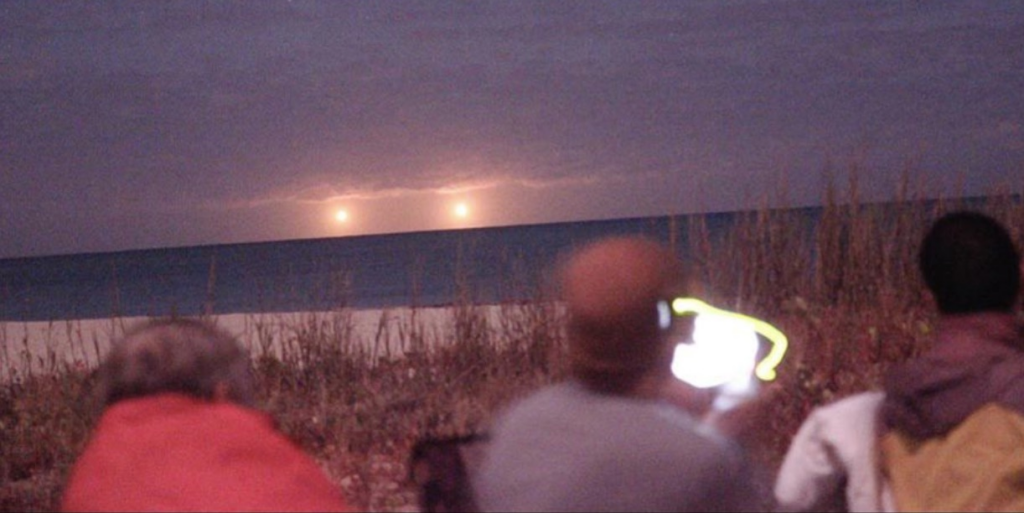
- Contemporary popular usage (CSETI/Greer): today the overwhelming public meaning of CE-5 is human-initiated contact organized groups attempting proactive communication with non-human intelligences via coordinated meditation, “coherent thought sequencing,” audio tones, patterned light signaling (including lasers), vectoring, and field protocols. This usage originated and spread through CSETI/Steven Greer trainings, literature, and later the CE5 Contact app. Dr. Steven Greer
Bottom line: “CE-5” is ambiguous across sources. In scientific/archival contexts, always define which sense you mean; in public contexts, readers almost always assume initiated contact.
Definitions
Below we present operational definitions meant for investigators and researchers, aligning with Hynek where canonical, and making explicit the modern CE-5 practice.
CE-1 – Close Encounter of the First Kind (Observation at Close Range)
Definition: Visual observation of a UAP at close range (often ≤ 500 ft / 150m) with appreciable angular size and detail; no claimed physical effects.
Use in fieldwork: Baseline for collecting angular size, estimated distance, duration, azimuth/elevation, and sensor corroboration (cameras, radar).
Notes: Many CE-1 reports today involve misperceptions of satellites (e.g., Starlink trains), drones, and re-entries, requiring robust correlation with astronomical/space-traffic data. Space
CE-2 – Close Encounter of the Second Kind (Physical Effects)
Definition: CE-1 plus one or more physical effects: EM interference with vehicles/electronics, animal reactions, physiological sensations (heat, tingling), or trace evidence (soil compaction, scorch marks, residues).
Use: Demands forensic protocols, chain-of-custody for samples, blind lab analyses, site controls, and careful confound handling (soil moisture, vehicle tracks).
CE-3 – Close Encounter of the Third Kind (Entities Observed)
Definition: CE-1/CE-2 plus observation of an entity (humanoid/robot/other) associated with the UAP.
Use: Requires composite sketches, independent witness interviews, and tracking of Bloecher subtypes (e.g., “Aboard,” “Close,” “Direct”). Center for UFO Studies
CE-4 – Close Encounter of the Fourth Kind (Abduction / Transformational)
Definition (common use): Abduction or forced transport by a UAP or its occupants, often with missing time, medical procedures, and long-term after effects; some researchers broaden to transformational reality shifts.
Use: Demands clinical-grade interviewing, sleep/parasomnia screening, corroboration attempts (co-witnesses, environmental traces), and avoidance of suggestive techniques in testimony collection.
CE-5 – Close Encounter of the Fifth Kind (Human-Initiated Contact)
Definition (contemporary popular use): Deliberate, protocol-driven attempts by humans to attract and communicate with non-human intelligences: group meditation, coherent thought sequencing, geolocated vectoring, structured light (including laser pointers in some groups), and audio signaling. Sessions are often documented with night-vision, astronomical apps, audio recorders, and synchronized logging. Dr. Steven Greer
Critical safety/legal note: In the United States it is a federal crime to aim a laser pointer at an aircraft or its flight path (18 U.S.C. §39A); the FAA treats unauthorized laser illumination of aircraft as an in-flight emergency, with formal reporting procedures and safety guidance. Any CE-5 protocol must rigorously avoid sky-directed lasers and manage line-of-sight risks near air traffic. Federal Aviation Administration
Initiated Contact Protocols (How CE-5 is Practiced)
Across public CE-5 communities, common elements recur:
- Site selection & data prep: Dark-sky locations away from airways when possible; pre-session NOTAM and satellite pass checks (e.g., Starlink, ISS); star charts; synchronized timekeeping; checklists.
- Meditative coherence & “coherent thought sequencing” (CTS): Group meditation to establish shared intent, followed by mental “vectoring” imagery intended to signal location and peaceful contact. nonordinary.com
- Structured signaling: Tones played over speakers; light patterns using lamps or (controversially) laser pointers,the latter raising aviation and wildlife risks and legal exposure (see safety section). Dr. Steven Greer
- Documentation: Multi-angle video, night-vision, magnetometers/EMF meters (where possible), and contemporaneous logs, sometimes coordinated via the CE5 Contact smartphone app. Google Play
- Post-hoc analysis: Matching time-stamped observations against satellite/aircraft data; assessing internal consistency of witness narratives; sharing to community repositories.
Primary programmatic descriptions of these steps come from CSETI/Greer publications and training pages; independent, peer-reviewed validations are scarce, which is one driver of criticism (below). Dr. Steven Greer
How the Typologies Are Used in Practice
- Investigators and archives (CE-1/2/3): CUFOS, MUFON chapters, and independent researchers still label cases CE-1–CE-3 during intake and cataloging. The labels help routing (e.g., CE-2 → trace collection; CE-3 → entity sketches & psychological protocols). Center for UFO Studies
- Abduction researchers (CE-4): Case literature (e.g., Bullard; Hopkins; Jacobs) historically grouped abductions under CE-4; current best practice is to keep clinical neutrality, avoid leading questions, and separate narrative from corroborated data. Princeton University Press
- Public contact groups (CE-5): Global networks self-organize via apps/social platforms and conduct field nights framed as peaceful, diplomatic contact experiments. Documentation standards vary; some groups have begun adopting astronomy/air-traffic cross-checks to reduce false positives (e.g., Starlink trains). Google Play
Criticisms
1) Lack of controlled evidence for initiated contact causality
Critics argue that CE-5 sessions rarely demonstrate cause-and-effect between protocols and observations. Without blinding, controls, and pre-registered criteria, confirmation bias and expectancy effects are hard to rule out. Anomalistic psychology literature notes that unusual sky stimuli + strong expectation + group contagion can yield sincere but misinterpreted perceptions. NASA’s 2023 UAP study likewise stresses the need for calibrated sensors and transparent, sharable data to transform anecdotes into scientific inferences. AP News British Psychological
2) Misidentifications (especially satellites and rockets)
Starlink “trains” and twilight rocket plumes are among the top sources of modern “CE-1-like” reports. Responsible CE-5 groups now include satellite/launch forecasts in prep steps to reduce false attributions. Space
3) Laser safety, aviation legality, and wildlife ethics
- Federal law: Aiming a laser at an aircraft or its flight path is a federal felony (18 U.S.C. §39A). The FAA treats laser illumination as an emergency; guidance appears in Advisory Circular 70-2B and FAA safety brochures. Do not use sky-directed lasers. Federal Aviation Administration
- Enforcement reality: The FBI and FAA actively prosecute laser strikes; prison terms and substantial fines are documented. Federal Bureau of Investigation
- Non-aviation hazards: Wildlife managers warn of misrepresented lasers and animal stress; prudent protocols avoid fauna harassment and adhere to local restrictions. avisure.com
4) Terminological drift and public confusion
The same label (CE-5) means different things in different literatures (Vallée vs. initiated contact). Researchers urge explicit definitions in reports to avoid category errors and misleading “evidence stacking.”
Implications for Research, Communities, and Policy
- Standardization helps everyone.
Use Hynek CE-1/2/3 strictly for observational taxonomy; CE-4 for abduction/transformational claims with clinical safeguards; CE-5 explicitly flagged as initiated contact (if that’s the intended meaning). This reduces category confusion and improves meta-analysis across archives. Center for UFO Studies - Pre-registration and controls for CE-5.
Treat initiated contact nights as field experiments: publish pre-plans, avoid lasers, log all stimuli (including known sky traffic), and invite third-party astronomers for blind adjudication of video tracks. NASA’s recommendations around open data and calibrated sensors are an actionable blueprint. NASA Science - Aviation-safe signaling only.
Replace lasers with ground-contained light sources, IR-filtered cameras, and RF monitoring. Build “no-sky-beam” rules into group charters; educate participants on 18 U.S.C. §39A and FAA guidance. Legal Information Institute - Distill the truly anomalous.
Expect many CE-1-type observations to match space and aviation activity. The role of good protocols is to reject the explainable quickly so that residuals, if any, can be analyzed deeply. Space
Quick-Reference Definitions
- CE-1: Close-range visual UAP, no physical effects.
- CE-2: CE-1 plus physical/EM/trace effects.
- CE-3: CE-1/2 plus entity observed.
- CE-4: Abduction/Contact (common use) / transformational event (some scholarly use).
- CE-5: Initiated contact (meditation/vectoring/signaling) in contemporary public use; alternative scholarly senses exist, define your terms.
How to Report and Study CE-1…CE-5 Events
- Define the class you’re claiming (CE-1–5) in your report, state which CE-5 meaning you are using.
- Time-sync devices; log azimuth/elevation, duration, sky conditions, and instrument settings.
- Pre-check: NOTAMs, satellite passes (esp. Starlink), rocket launch windows, local drone rules. Space
- Sensors: favor multi-sensor capture (optical, RF spectrum snapshots, magnetometer); keep calibration notes per NASA’s open-science guidance. NASA Science
- Safety/legal: no sky-directed lasers; follow FAA guidance and local wildlife rules. Federal Aviation Administration
- Open data: share raw files + metadata to enable independent replication and error checking.
Conclusion
Hynek’s CE-1/2/3 remain a useful lingua franca for UAP casework concise, observational, and compatible with scientific documentation. CE-4 and CE-5 reflect the field’s expansion: from abduction/transformational narratives to initiated contact as a community practice. Whether one sees CE-5 as pioneering diplomacy or as an under-controlled experiment, the path to clarity is the same: explicit definitions, calibrated sensors, controlled methods, and safety compliance. That’s how we preserve intellectual openness and ensure that any true anomalies stand out from an increasingly crowded sky.
Claims Taxonomy
Verified
- Hynek’s CE-1/2/3 definitions and their ongoing use by CUFOS and other archives. Center for UFO Studies
- Bloecher’s CE-3 subtypes exist in the literature and are referenced by investigators. Internet Archive
- Federal laser law (18 U.S.C. §39A); FAA treats unauthorized laser illumination as an in-flight emergency and provides formal reporting procedures. Legal Information Institute
Probable
- Many modern CE-1 reports are misidentified satellites (especially Starlink) or rocket phenomena; best mitigated by pre-planning and astronomy cross-checks. Space
Disputed
- The original scholarly meaning of CE-5 is not uniform; Vallée-style “effect on witness” vs. initiated contact à la CSETI, usage varies by community and time period.
Legend
- Pop-culture conflations (e.g., that CE-5 always guarantees interactive “summoning”) lack controlled, replicable evidence and should be treated as narrative until supported by multi-sensor data. (General inference aligning with NASA’s call for robust data.) NASA Science
Misidentification
- Starlink trains, Chinese lanterns, drones, and twilight rocket plumes frequently mimic CE-1/2 signatures without being anomalous. Space
Speculation Labels
Hypothesis
- If initiated contact yields repeatable, time-locked anomalies across independent sensor suites (optical + RF + magnetometer), it may indicate a responsive signal source distinct from known satellites/aircraft. To test: run registered trials, include control nights, and publish raw telemetry for third-party replication. (Testable design; evidence pending.)
Witness Interpretation
- Group expectation, dark-adaptation effects, and suggestive cueing may prompt sincere over-attribution of ambiguous lights as “responsive.” Implement double-observer protocols and independent adjudication of videos to reduce expectancy effects. (A parsimonious alternative for many reports.) British Psychological Society
Researcher Opinion
- The CE framework is still useful but only when its terms are explicitly defined and paired with measurement discipline. Treat CE-5 as an experimental modality, not a foregone conclusion; build bridges with astronomy clubs, amateur radio, and air-traffic data communities. (Methodological recommendation aligned with NASA’s open-science stance.) NASA Science
References
Hynek, J. Allen – background & role; classification: History & Northwestern finding aids; CUFOS classification page. HISTORY findingaids.library.northwestern.edu
Bloecher subtypes and CE-3 literature: CUFOS CE-3 page; 1976 Bloecher compilation. Center for UFO Studies
Vallée typology perspective (strategy PDF / GEIPAN): UNIDENTIFIED AERIAL PHENOMENA: A Strategy for Research. geipan.fr
NASA UAP Study (2023) & UAP portal: methodology and recommendations; news releases summarizing aims. NASA Science NASA Science
CE-5 protocols (CSETI/Greer) & CE-5 Big Book: expedition pages and detailed protocol text; CE5 Contact app page. Dr. Steven Greer nonordinary.com
Laser law & aviation safety: 18 U.S.C. §39A; FBI overview and recent enforcement. Federal Bureau of Investigation Legal Information
Misidentifications: Starlink-as-UAP reporting and public confusion examples (Space.com explainer; regional coverage). Space
Anomalistic psychology perspective on encounters/abductions: British Psychological Society overview. British Psychological Society
Hynek background & Blue Book role: condensed historical context. HISTORY
Bloecher’s CE-3 subtypes: archival/literature references. Internet Archive
FAA Advisory Circular 70-2B & safety brochure: what to do about laser incidents, why lasers endanger crews. Federal Aviation Administration
SEO Keywords
UAP close encounters, CE-1 CE-2 CE-3 CE-4 CE-5, initiated contact, CE-5 protocols, Hynek classification, CUFOS, Bloecher subtypes, Vallée typology, UAP abduction, UAP trace evidence, UAP meditation protocols, FAA laser law, Starlink UFO mistaken sightings, NASA UAP report, UAP research methods, UAP field protocols, coherent thought sequencing, CE5 Contact app.