
Eric W. Davis is a propulsion and astrophysics researcher whose career sits at the intersection of advanced space concepts and the modern UAP conversation.
Trained as an astrophysicist and long associated with Harold E. Puthoff’s Institute for Advanced Studies at Austin and EarthTech International in Texas, Davis has spent decades probing topics that most scientists avoid in public: wormholes, warp metrics, quantum vacuum engineering, and the question of what highly anomalous craft observed in restricted airspace may imply about physics.
He earned a PhD in astrophysics at the University of Arizona in 1991, serves as a senior science advisor at EarthTech, and has taught as an adjunct with Baylor University’s Center for Astrophysics, Space Physics and Engineering Research. (EarthTech)
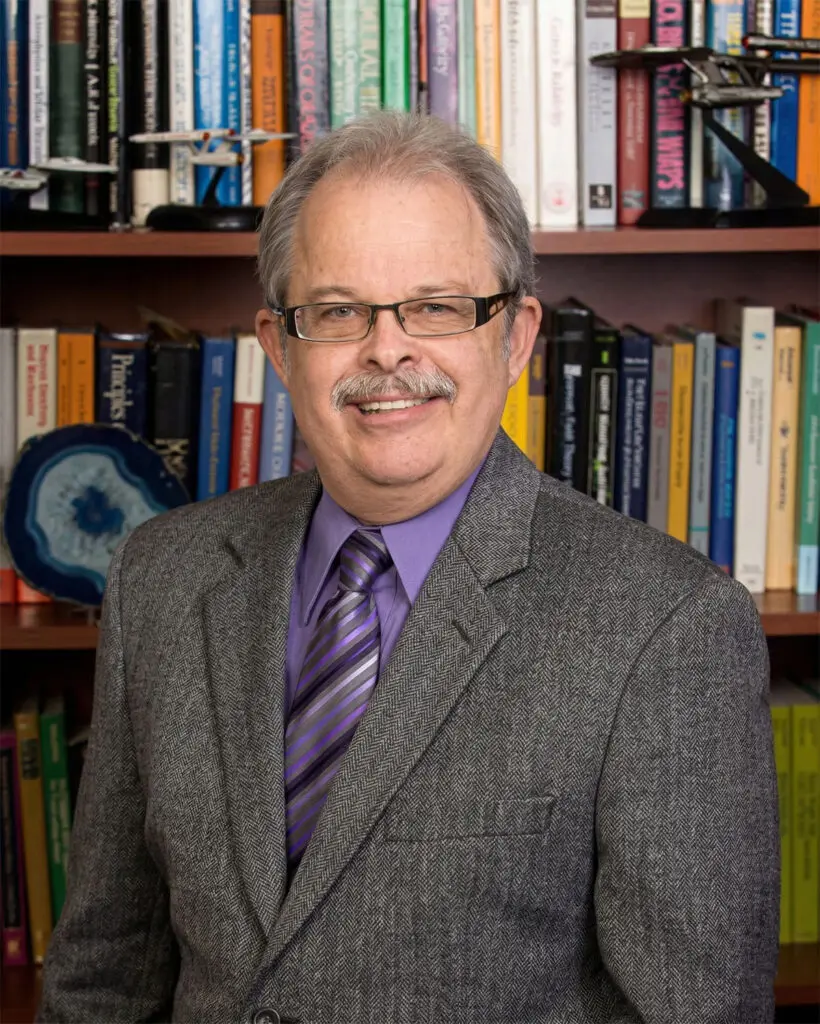
Early formative years and professional base
In the 1990s Davis began appearing in the small but persistent research community exploring breakthrough spaceflight physics. He contributed to NASA’s Breakthrough Propulsion Physics efforts and later co edited, with former NASA program manager Marc Millis, the American Institute of Aeronautics and Astronautics volume Frontiers of Propulsion Science, a 700 plus page reference text that treats warp metrics, spacetime engineering, and other unconventional avenues with sober, technical rigor. The book remains the most comprehensive engineering-oriented compendium on the subject. (AIAA Journal)
NIDS, Skinwalker Ranch, and an early UAP lens
From 1996 into the early 2000s Davis consulted for Robert Bigelow’s National Institute for Discovery Science in Las Vegas, a laboratory effort that investigated anomalous phenomena on and off the Skinwalker Ranch property.
He appears in the technical literature of that era and later co-authored conceptual work on how to study high strangeness scientifically with Jacques Vallée, proposing a layered model that treats UAP not only as flight objects but as events with physical, psychic, informational, and social signatures that resist simple categorization. (Lifeboat Foundation)
Publications that shaped the debate
Davis’s bibliography straddles government contract reports, peer reviewed papers, and academic book chapters. A small selection that shows his range:
• Teleportation Physics Study for the Air Force Research Laboratory in 2004, a broad survey of known and speculative “teleportation” concepts from quantum to wormhole transport. This report has been widely circulated and is frequently cited in debates about whether defense agencies have quietly explored the edge of physics. (Internet Archive)
• Advanced Propulsion Study for AFRL in the same period, surveying nonchemical concepts and their physics limits. (ResearchGate)
• A series of DIA Defense Intelligence Reference Documents written under the Advanced Aerospace Weapon System Applications program in 2009 to 2011, including Traversable Wormholes, Stargates, and Negative Energy, Concepts for Extracting Energy From the Quantum Vacuum, Antigravity for Aerospace Applications, and a later study on quantum tomography of negative energy. These reports did not claim operational capability. They mapped the theoretical boundary conditions of how such things would have to work if they were ever to be engineered. (EarthTech)
• The DIA released versions of related AAWSAP reference documents through FOIA, including the wormholes paper and a companion study on warp drive from the same 38 paper set. These documents show the government’s interest in cataloging breakthrough physics literature, not proof of fielded systems.
• As co editor and contributor to Frontiers of Propulsion Science, Davis authored chapters on gravity control within relativity and faster than light approaches, and with Puthoff co-authored a review on extracting energy from the quantum vacuum. (EarthTech)
Colleagues and networks
Davis’s closest long -term colleague is Harold E. Puthoff, who founded EarthTech. The EarthTech roster confirms Davis’s senior role there and notes his teaching at Baylor.
He has co-authored with Puthoff on negative energy experiments and polarizable vacuum models, and with Jacques Vallée on the six layer approach to UAP.
He worked in Bigelow’s ecosystem during the NIDS era, which presaged the later DIA funded AAWSAP contract won by Bigelow Aerospace Advanced Space Studies. (EarthTech)
Claims, interviews, and public posture
Davis’s posture in public has been consistent. He argues that a subset of UAP cases demonstrates technology that is not consistent with known aeronautics and should be investigated without stigma. At the 2013 MUFON Symposium he stated plainly that some cases point to “supremely advanced technology.” (MUFON)
In April 2019 he joined Open Minds UAP News for a long interview that reviewed his EarthTech work, his time with NIDS, and experiences at Skinwalker Ranch.
Coast to Coast AM lists two 2018 appearances in which he and Puthoff discussed the Pentagon study and what it did and did not conclude. These conversations reveal a careful scientist, unwilling to declare origins, but adamant that a serious anomaly exists that merits advanced instrumentation and open minded physics. (Apple Podcasts)
Briefings and the 2020 news flash
Davis’s name entered mainstream headlines in July 2020 when a New York Times report said he had given a classified briefing that included descriptions of “off world vehicles not made on this earth.” Coverage that summarized and quoted the Times reported that Davis briefed Defense Department officials in March 2020 and Senate committees in October 2019. Whatever the precise wording in classified settings, the public signal was unambiguous. A defense physicist with government credentials told lawmakers and agencies that crash retrieval claims were being taken seriously. (New York Magazine)
The Wilson Davis notes and why they matter
An even more controversial document set, the so called EDW Notes, surfaced publicly in 2019 and were later archived as an exhibit in a 2022 House hearing record.
The notes summarize a 2002 conversation between Davis and former DIA director Thomas Wilson about a deeply buried crash retrieval effort. Admiral Wilson has denied the account and said he never met with Davis in the way described.
Davis has given no public authentication of the notes and has repeatedly declined to comment. The notes’ appearance in the congressional record does not validate their claims, but it does ensure that researchers will study and debate them for years to come.
What he likely knows but cannot say
This section is informed inference, not revelation. Davis has held clearances and continues to work in classified defense contexts. Puthoff has stated on the record that he will not comment on documents that purport to describe classified programs, and Davis has issued similar no comment responses on the Wilson material.
That pattern, combined with contemporary reporting that he briefed governmental audiences on crash retrieval claims, suggests Davis is aware of classified allegations and their evidentiary status, including where the strongest technical analyses of anomalous materials stand, which contractors have pursued metamaterials or legacy debris analysis, and which claims fail upon deeper scrutiny.
It is reasonable to infer that he knows more about the scope and limitations of legacy reverse engineering attempts than he is permitted to discuss in public, and that he is constrained by nondisclosure obligations that cover program names, methods, and provenance. (The Black Vault)
Controversies and criticism
Davis’s work inevitably draws fire from multiple directions. Some mainstream outlets and former officials argue there is no evidence that the United States possesses non-human craft and point to findings from the Pentagon’s All domain Anomaly Resolution Office that have not confirmed extraterrestrial technology in government hands.
Others respond that AARO’s remit, access, and methods do not capture legacy programs or private compartmentalization.
Davis’s own reports, now public via FOIA, have been caricatured as fantasies, yet they read as technical scoping documents, the sort of horizon scans governments often commission to map potential scientific pathways whether or not a path is currently buildable.
The debate is healthy. It sharpens definitions and forces clarity about what is known and what is not, even as AARO’s conclusions and independent investigations remain under dispute. (The Guardian)
Contribution to UAP research
Three contributions stand out. First, Davis helped normalize a vocabulary of spacetime engineering within aerospace circles, shifting discussions of astonishing flight performance from anecdote to equations that define what physics would be required if even part of the UAP data set reflects advanced craft.
Second, by placing ideas like negative energy densities, wormhole metrics, and quantum vacuum engineering into mainstream publisher formats, he made it possible for younger engineers to talk about them in classrooms and at conferences without career penalty.
Third, through podcasts, conference keynotes, and quiet briefings, he has kept pressure on institutions to confront the possibility that some UAP are not ours and not a misperception, and to instrument the problem accordingly. (AIAA Journal)
What Davis shared at the Sol Foundation Symposium, 2024
On November 22, 2024, at Fort Mason in San Francisco, Eric W. Davis appeared in a fireside conversation titled “The Politics of Executive Branch UAP Secrecy.” He shared the stage with longtime congressional national security staffer Kirk McConnell, with Sol Foundation cofounder Peter Skafish moderating.
The session outlined how secrecy practices inside the executive branch complicate Congress’s ability to obtain full and timely information on UAP related programs. (The Sol Foundation)
Davis stated that some United States presidents had been briefed on the UAP issue while others were not. According to live reporting from the event, Davis stated that Dwight Eisenhower, John Kennedy, Richard Nixon, and Ronald Reagan were briefed; that Jimmy Carter received a briefing; that Bill Clinton was not briefed; and that Jay Stratton briefed Donald Trump on the UAP problem. (PopMatters)
For context, this exchange occurred during the session “The Politics of Executive Branch UAP Secrecy” with Davis, Kirk McConnell, and moderator Peter Skafish. The full session was later posted by Sol’s channels for public viewing. (YouTube)
Davis’s emphasis fell on the machinery of classification and how it intersects with the study of legacy UAP programs. Speaking from the vantage point of a cleared physicist who has briefed federal audiences, he framed UAP secrecy as a structural problem that involves special access programs, contractor compartmentation, and long standing habits that constrain disclosure to legislators.
McConnell supplied the constitutional backdrop, arguing that an executive practice of withholding significant national security information from Congress is difficult to square with the legislature’s duties under Article I.
The exchange set the table for a broader Sol Foundation policy argument that recent legislation and draft measures are themselves evidence that Congress suspects unreported UAP activities may exist inside the executive branch. (The Debrief)
Selected books, reports, papers, and memos
Books and chapters
• Frontiers of Propulsion Science, ed. Marc G. Millis and Eric W. Davis, AIAA, 2009. Davis contributed chapters on gravity control and faster than light concepts and co-authored a chapter with Puthoff on vacuum energy. (AIAA Journal)
• Vallée and Davis, Incommensurability, Orthodoxy and the Physics of High Strangeness, presented 2003 and published in proceedings in 2005 and again in later compilations. (bdigital.ufp.pt)
Government and contract reports
• Teleportation Physics Study, AFRL Special Report AFRL PR ED TR 2003 0034, 2004. (Internet Archive)
• Advanced Propulsion Study, AFRL PR ED TR 2004 0024, 2004. (ResearchGate)
• Traversable Wormholes, Stargates, and Negative Energy, DIA Defense Intelligence Reference Document, 2009.
• Warp Drive, Dark Energy, and the Manipulation of Extra Dimensions, DIRD, with Richard Obousy, 2009. (EarthTech)
• Concepts for Extracting Energy From the Quantum Vacuum, DIRD, 2009. (EarthTech)
• Antigravity for Aerospace Applications, DIRD, 2010. (EarthTech)
• Quantum Tomography of Negative Energy States in the Vacuum, DIRD, 2011. (EarthTech)
Peer reviewed and symposium highlights
• Faster Than Light Space Warps, Status and Next Steps, Journal of the British Interplanetary Society, 2013.
• Experimental concepts for generating negative energy in the lab, with Puthoff, AIP Conference Proceedings, 2006.
• Multiple AIAA papers on spacetime metrics and beamed propulsion. (EarthTech)
Memos and notes
• EWD Notes attributed to Davis and archived as part of a 2022 House hearing record, with Admiral Wilson’s categorical denial noted by The Black Vault. Authenticity remains disputed.
Podcasts and broadcast interviews
• Open Minds UAP News, Dr. Eric Davis: Investigating and Experiencing the Paranormal, April 30, 2019. (Apple Podcasts)
• Coast to Coast AM, guest appearances discussing the Pentagon UAP study, 2018. (coasttocoastam.com)
Why his story matters
Davis has functioned as a bridge figure. For academic propulsion specialists, he translates the most exotic claims into tractable physics questions.
For UAP investigators, he insists on instruments, error budgets, and the discipline of peer review.
In a field roiled by rumor, he is a primary source because his output is documented, citable, and often commissioned by agencies that will shape how the United States approaches UAP for a generation.
References
EarthTech International, Principal Team biography of Eric W. Davis and EarthTech publications page for Davis. (EarthTech)
AIAA, Frontiers of Propulsion Science book page and a review in The Aeronautical Journal. (AIAA Journal)
Air Force Research Laboratory reports: Teleportation Physics Study and Advanced Propulsion Study. (Internet Archive)
DIA Defense Intelligence Reference Documents released via FOIA: Traversable Wormholes and Warp Drive.
Vallée and Davis, Incommensurability and the Physics of High Strangeness, proceedings and archival copies. (bdigital.ufp.pt)
Open Minds UAP News podcast episode with Davis and Coast to Coast AM guest listing. (Apple Podcasts)
MUFON 2013 summary of Davis’s keynote claim about supremely advanced technology. (MUFON)
New York Times coverage as summarized by New York Magazine and by Gizmodo regarding Davis’s briefings and “off world vehicles” wording. (New York Magazine)
EWD Notes as archived in the 2022 House hearing record and Admiral Wilson’s denial compiled by The Black Vault. (The Black Vault)
The Guardian’s reporting on AARO’s 2024 report and reaction within the community. (The Guardian)
SEO keywords
Eric W Davis biography, Erik W Davis UAP, EarthTech International, DIA AAWSAP DIRD, Traversable Wormholes Stargates Negative Energy, Teleportation Physics Study, Frontiers of Propulsion Science, Wilson Davis memo, Skinwalker Ranch NIDS, Harold Puthoff colleague, Jacques Vallee six layer model, Senate briefings off world vehicles, UAP crash retrieval claims, advanced propulsion physics