Chris Bledsoe, the North Carolina builder’s 2007 encounter developed into one of the most unusual and culturally significant experiencer narratives of the modern UAP era, drawing together family testimony, luminous phenomena, Christian mysticism, the divine feminine, former intelligence officers, space-program veterans, disputed imagery, and a prediction extending into late 2026.
The man who walked away from the fire
On January 8, 2007, Chris Bledsoe entered the woods beside North Carolina’s Cape Fear River carrying more than fishing gear. His construction business had deteriorated, his health had been failing, and his confidence in the future had almost disappeared. He has described himself at that moment as financially broken, physically sick, spiritually desperate, and uncertain of his usefulness to his family.
The outing had begun as a small celebration. According to Bledsoe, workers had completed a construction punch list, and he invited three of them to join him and his 17-year-old son, Chris Jr., for an afternoon of fishing near Fayetteville. They gathered around a fire as daylight faded. At approximately 5:10 p.m., Bledsoe walked away from the group toward a gate and an open field. He says he began to pray, asking for help because he no longer knew how to repair his life. (Your Podcast Transcripts)
What followed became the foundational event of the Bledsoe story.
He heard movement in nearby brush. As he approached the top of a rise, he saw what he initially took to be the glow of the setting sun. The light resolved, in his recollection, into two fiery spheres suspended above the landscape. He estimated that they were hundreds of yards away and perhaps a few hundred feet above the ground. A third sphere appeared closer. Bledsoe has said that this light seemed to react to his thoughts, an interpretation that would later become central to his belief that consciousness and the phenomenon are connected.
Then came a break in his memory.
Bledsoe thought only a brief interval had passed. When he returned, his companions told him that he had been missing for much longer. His son had gone looking for him and returned profoundly frightened. Chris Jr. later described seeing small luminous beings with reddish eyes. Other members of the group reportedly observed unusual lights overhead, including several star-like objects that appeared to move in formation or descend. As the party drove away, Bledsoe says they encountered a silent, luminous object shaped like an egg, football, or elongated capsule hovering relatively close above the road before departing rapidly. (Your Podcast Transcripts)
This is the account as Bledsoe and his family have presented it. It is not an instrumented reconstruction. No publicly available radar record, calibrated optical measurement, or contemporaneous sensor package fixes the reported objects in three-dimensional space. Nevertheless, the involvement of several people makes the episode more evidentially consequential than an entirely solitary observation. Multiple witnesses increase the seriousness of an account, even though they do not automatically verify a witness’s interpretation of what was seen.
Before the encounter
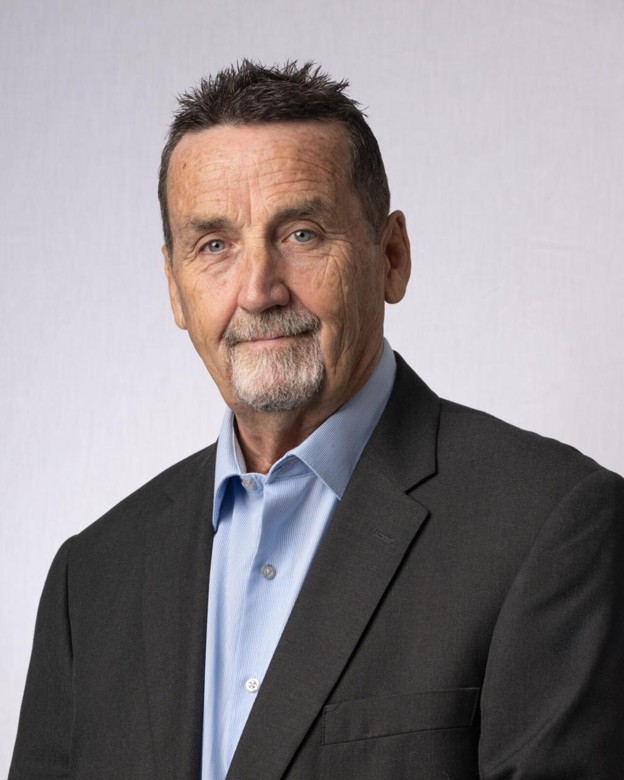
Bledsoe’s biography before 2007 is important because it prevents his story from being reduced to a single extraordinary evening.
He describes growing up on a North Carolina farm in a Baptist family. His father was a carpenter, and the family worked with tobacco, hay, and dairy cattle. Christianity was not an intellectual abstraction in this environment. It provided the moral and symbolic architecture of daily life. Bledsoe later married into a Pentecostal family and served as a church deacon. He has also said that he became a commercial pilot and taught weather-related subjects to student pilots before turning more fully toward residential construction. These aviation details presently rest primarily on his own testimony rather than a publicly released licensing file. (Your Podcast Transcripts)
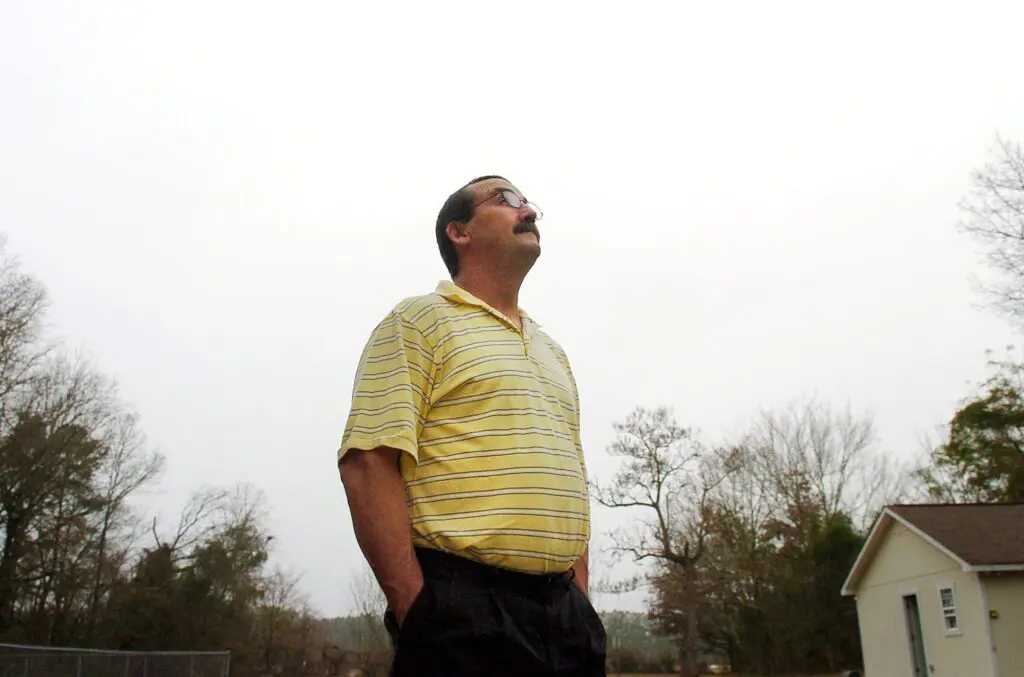
By the middle of the 2000s, Bledsoe was operating a substantial homebuilding business. A 2006 WRAL report provides an independent and contemporaneous anchor for at least part of his later autobiographical account. Bledsoe told the station that his company had built approximately 90 homes during the previous year. The report also documented customer complaints and financial disputes involving the business. Bledsoe said that he had spent much of the preceding two years moving in and out of hospitals and was attempting to sell the company. (WRAL News)
The local reporting does not establish anything about the cause of the following year’s encounter. It does, however, show that Bledsoe’s descriptions of severe health problems, business pressure, and personal crisis were not invented only after he became publicly associated with UAP.
In later interviews, Bledsoe has identified his illness as Crohn’s disease. He says his symptoms were severe, that conventional expectations for his recovery were poor, and that the condition improved dramatically following the encounter. He has described later medical evaluations as finding no continuing signs of the disease.
The healing claim is central to his understanding of the experience. It is also one of the least independently accessible parts of the public case. A clinical record establishing the original diagnosis, treatment history, timing of remission, and medical findings has not been released in a form that permits independent review. The available evidence therefore supports the statement that Bledsoe reports an extraordinary recovery. It does not establish that a UAP encounter caused that recovery.
A household transformed
The Cape Fear episode did not remain confined to the riverbank.
Bledsoe has described additional experiences after returning home, including small beings, a taller figure observed near a window, telepathic communication, and recurring luminous spheres. One entity, he says, conveyed the short message that it was “here to help.” The tone of the contact, as Bledsoe came to understand it, was not primarily threatening. It was corrective, spiritual, and intimately connected to prayer.
That interpretation placed him in conflict with his religious community.
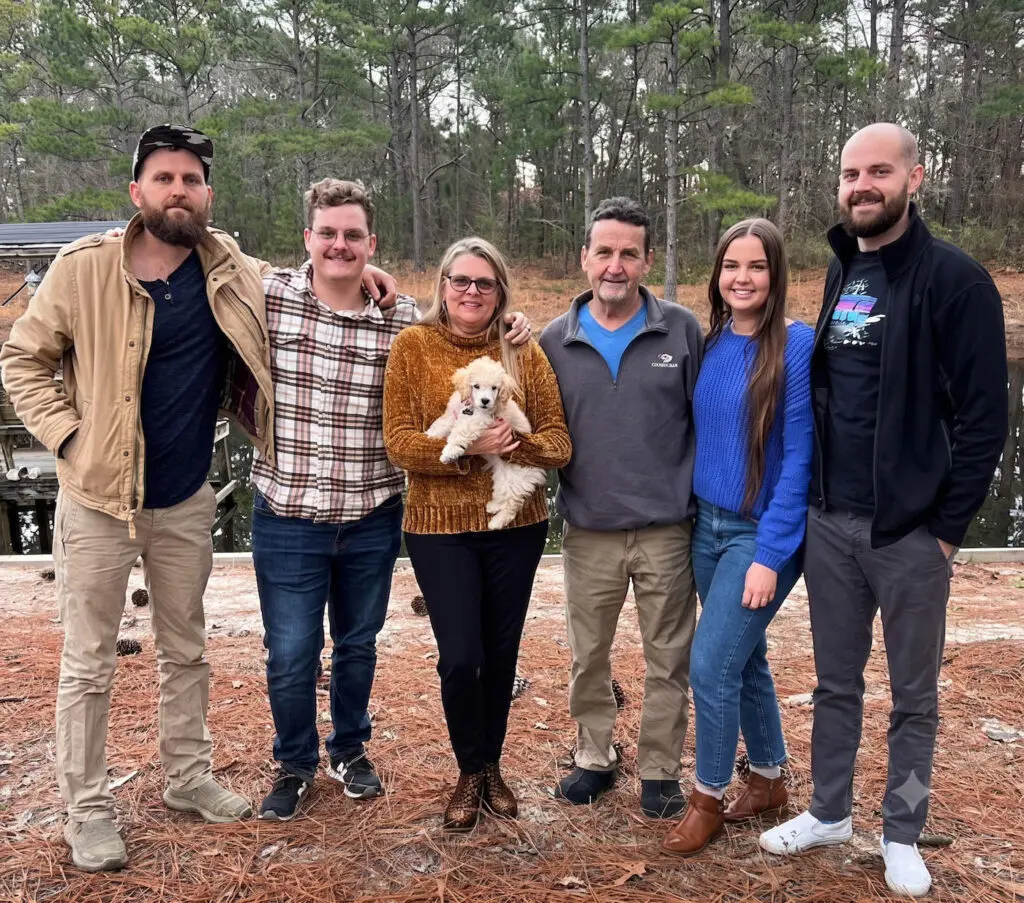
Bledsoe says some members of his church regarded the reported beings and lights as demonic. For a man whose identity had been built inside conservative Christianity, this response created a second crisis. He was not simply asking whether he had seen an unusual object. He was being forced to decide whether an experience that felt healing and compassionate could be evil because it existed outside the accepted religious framework of his congregation.
The family’s public ordeal deepened the conflict. According to Bledsoe, his children were mocked, the household became socially isolated, and the experience strained family relationships. He has called the period from roughly 2007 through 2012 “five years of darkness.” The encounter may have given him renewed purpose, but telling other people about it produced humiliation and instability. (Your Podcast Transcripts)
This social history matters. The family had little obvious reason to expect financial or reputational reward from becoming publicly associated with entities and luminous spheres in 2007. That does not prove the accuracy of every memory, but it complicates simple assertions that the story was casually fabricated for attention.
It also resembles what researchers call ontological shock. A witness’s inherited model of reality becomes inadequate, but no new model has yet taken its place. The result can be fear, disorientation, religious conflict, compulsive meaning-making, and an urgent search for people who have experienced something similar.
Television, MUFON, and the danger of the lie-detector narrative
Bledsoe’s first major exposure came through the Mutual UFO Network and the Discovery program UFO’s Over Earth. The 2008 episode, “The Fayetteville Incident,” placed investigators, psychological assessments, witness interviews, hypnotic regression, and a polygraph examination inside a television structure designed to produce a conclusion within a single episode. (YouTube)
Bledsoe remembers the production as a painful public judgment. He has repeatedly said that he felt the program branded him a liar, particularly in relation to the entity portion of the account. The episode itself was more complicated than a simple declaration that nothing happened, but television editing left viewers with the impression that an instrument could decide which parts of an extraordinary experience were real.
That premise is scientifically weak. Polygraphs measure physiological responses associated with stress and arousal. They do not directly measure deception, and the National Academies has concluded that polygraph accuracy is limited by significant theoretical and practical problems. An inconclusive or adverse polygraph result cannot resolve whether a person encountered an anomalous object, misremembered an event, interpreted an altered state through religious imagery, or deliberately lied. (National Academies)
The television investigation nevertheless established something historically important. Bledsoe’s story was publicly documented relatively early, before his 2023 book and before the present UAP media environment had made experiencer narratives commercially familiar. The episode also preserved an earlier layer of the family’s testimony, which can be compared with the more elaborate accounts offered many years later.
Such comparison should be conducted carefully. Human memory is reconstructive, and repeated storytelling can change emphasis without implying deceit. At the same time, later additions should not automatically be granted the same evidentiary weight as details recorded closest to the event. The earliest available interviews, production footage, written reports, and witness statements deserve preservation as the historical baseline of the case.
The arrival of the Lady
In Bledsoe’s account, the next decisive transformation occurred around Easter 2012.
He says he heard a voice instructing him to rise and go outside. He followed an unusual presence into the night and encountered a luminous feminine figure whom he came to call the Lady. The experience also included a strange bull-like form, according to his later telling. The Lady was beautiful, authoritative, and surrounded by light. She communicated a message concerning humanity, spiritual renewal, and a future astronomical sign.
This encounter moved the Bledsoe narrative beyond the familiar structure of a close UAP encounter. The story was no longer centered only on objects, missing time, or beings. It had become an account of revelation.
Bledsoe gradually associated the Lady with several figures from religious history, particularly the Egyptian goddess Hathor and the sacred feminine within Christian and esoteric traditions. In interviews, he has drawn parallels to Mary, Sophia, and other maternal or feminine mediators between humanity and the divine. These identifications are Bledsoe’s interpretations rather than independently established identities.
The cross-cultural resemblance is still worthy of study. Luminous women, celestial mothers, protective female messengers, radiant garments, astronomical signs, healing, and warnings about humanity appear in Marian apparitions, ancient Mediterranean religion, Indigenous traditions, and modern contact narratives. Similarity does not prove that every tradition describes the same entity. It does show that human beings repeatedly organize extraordinary experiences through a recognizable family of symbols.
Religious-studies scholar Diana Walsh Pasulka has examined how space technology, reported contact, secrecy, ritual, and belief interact in contemporary culture. Her work provides a useful framework for understanding Bledsoe without forcing a choice between “physical event” and “religious experience.” An event can be interpreted religiously without being imaginary. A luminous object can be physically present while acquiring sacred meaning through the witness’s culture. Conversely, a life-changing vision can be psychologically and spiritually real without proving that a non-human spacecraft was present. (University of North Carolina Wilmington)
This is one reason the Bledsoe case resists conventional categories. He does not present himself only as a witness to advanced technology. He presents himself as a recipient of contact whose central message concerns compassion, prayer, the restoration of the divine feminine, and a change in human consciousness.
From reluctant witness to public experiencer
For years, Bledsoe says, the phenomena continued. Lights appeared over his property. Visitors sometimes reported seeing them. He began photographing and filming bright objects, many of which he described as responsive orbs. Prayer and focused attention became, in his view, part of the interaction.
His public identity changed accordingly. The financially distressed builder became an experiencer, then an informal host to investigators, officials, authors, filmmakers, and other witnesses. His family also became involved in the public presentation of the story. The Bledsoe name developed into a recognizable part of the UAP media ecosystem through appearances, online videos, podcasts, and the family-associated program Bledsoe Said So.
In 2023 he published UFO of God: The Extraordinary True Story of Chris Bledsoe. The book gave readers the fullest version of his life story and placed the Lady at its theological center. That same year, HISTORY devoted an episode of Beyond Skinwalker Ranch to the case. Additional episodes in 2025 revisited Bledsoe and his family, while a Gaia production, distributed through services including Apple TV, presented a documentary version of the story in 2024. (Chris Bledsoe)
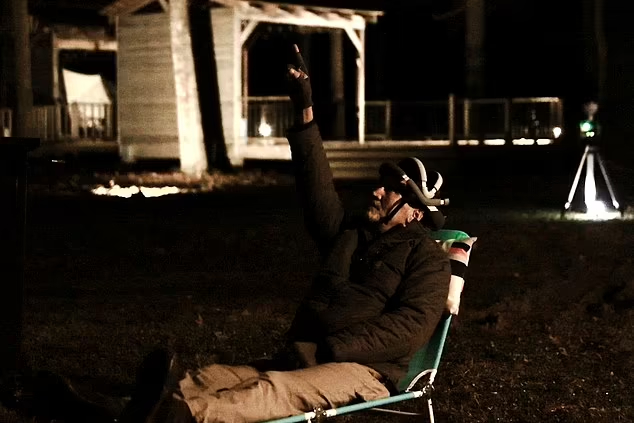
The media attention strengthened Bledsoe’s position as a major public experiencer. It also created a difficult feedback loop. More attention brought more visitors, more cameras, more testimony, and more interpretation. It became increasingly difficult to separate the original case from the community that had formed around it.
Why credentialed people took an interest
Three names are especially important in understanding why the Bledsoe story is not easily dismissed as an isolated internet legend.
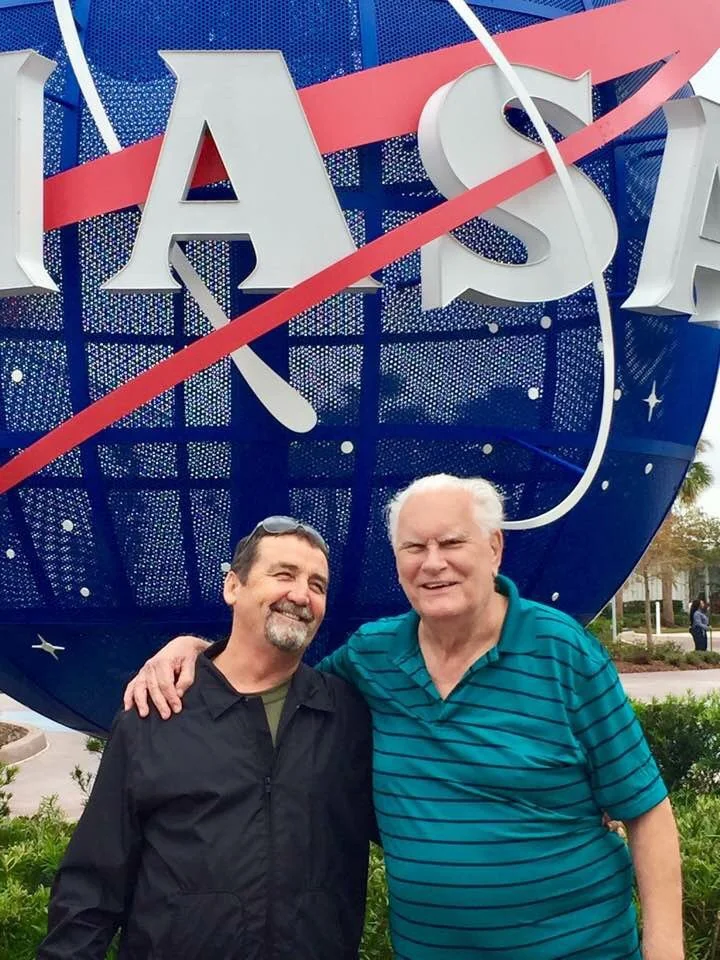
The first is Hal Povenmire, an astronomer and space-program veteran whose work included Mercury, Apollo, and Space Shuttle activities. Biographical records also describe him as having worked with J. Allen Hynek as a field investigator during the Project Blue Book period. Bledsoe says Povenmire investigated the case, sought other local witnesses, and became a close family friend. Povenmire’s documented career makes his interest noteworthy, although it does not establish that NASA formally opened a Bledsoe investigation. (Space Worker Hall of Honor)
The second is Jim Semivan, who retired after a 25-year career in the CIA’s National Clandestine Service and served in the Senior Intelligence Service. Semivan wrote the foreword to Bledsoe’s book and has publicly expressed confidence in him. The third is retired Army Colonel John B. Alexander, whose career included Special Forces command, work at Los Alamos National Laboratory, and long-standing investigation of UAP and other anomalous phenomena. Alexander wrote the book’s introduction. (Simon & Schuster)
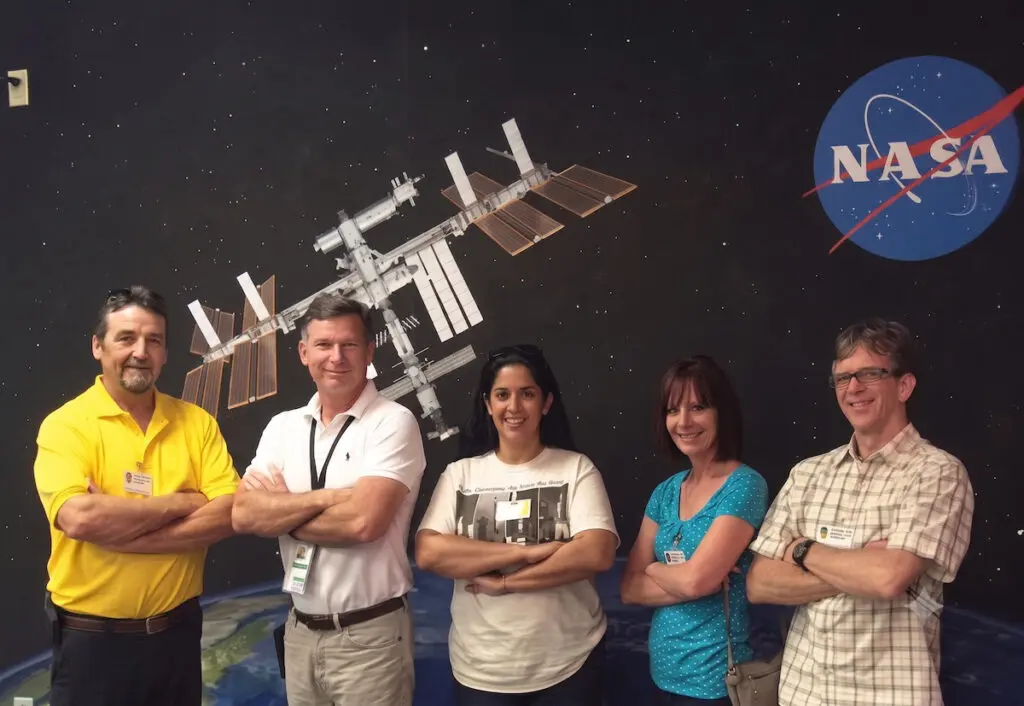
Their participation matters. Experienced intelligence and military personnel are trained to interview people, evaluate behavior, operate amid uncertainty, and detect some forms of inconsistency. Their willingness to associate their names with Bledsoe is evidence that they did not regard him as obviously unserious.
But credentials do not transfer automatically from a person to a claim.
A former intelligence officer can conclude that Bledsoe is sincere without proving that an orb is intelligent. A space-program veteran can observe unusual lights without establishing their origin. A retired colonel can find a witness credible without possessing the sensor data needed to determine what occurred in 2007. Personal support is not CIA confirmation, Army confirmation, NASA confirmation, or United States government confirmation.
The strongest accurate statement is that several people with substantial professional backgrounds personally engaged with Bledsoe and, in some cases, publicly supported him. That is socially and evidentially relevant. It remains distinct from an official institutional finding.
The problem of the orbs
Bledsoe’s later photographs and videos are now the most publicly visible portion of the case. They are also where the need for disciplined analysis is greatest.
A bright point of light recorded on a smartphone can represent many different things: a star, planet, aircraft, satellite, balloon, drone, distant lamp, insect, optical reflection, sensor flare, digital sharpening artifact, or a genuinely unidentified object. Digital zoom does not reveal hidden structure in the way a telescope does. It enlarges a small cluster of pixels, after which computational photography may invent edges, textures, rings, or apparent internal forms.
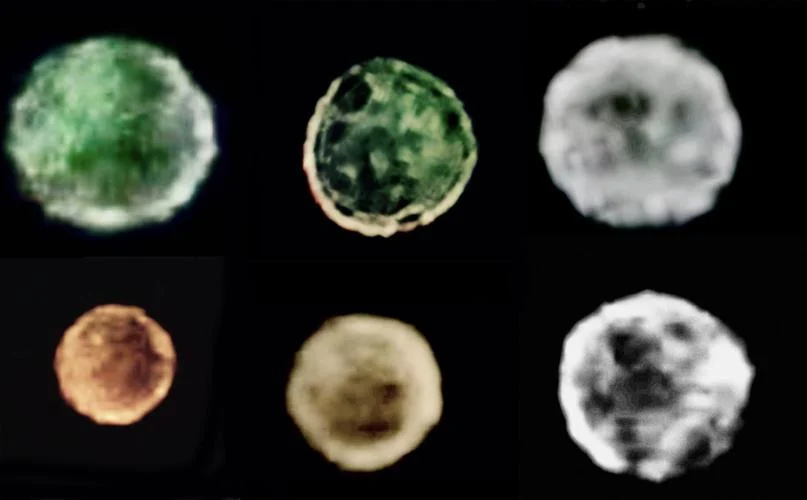
The public Bledsoe material is often encountered through compressed social-media reposts. Such files may lack original metadata, exact recording location, camera orientation, exposure settings, unedited duration, and independent simultaneous observations. Without those elements, even an honest and visually interesting recording can be impossible to identify reliably.
In February 2026, a MUFON photo analyst examined a widely circulated green-orb image attributed to a Bledsoe post. The analysis found that the apparent internal lettering or structured markings were unstable under examination and were most consistent with digital processing, compression, zoom artifacts, and pareidolia acting on a distant point source. (MUFON)
That finding should be accepted for the item analyzed unless original evidence emerges that changes the result. It should not be exaggerated into a verdict on every Bledsoe sighting.
A person can misidentify a light without fabricating an earlier encounter. One weak image does not erase multiple-witness testimony. It does, however, warn against allowing emotional investment in the larger story to override case-by-case analysis. Each photograph and video must stand or fall on its own evidentiary quality.
The Bledsoe case would benefit from a public, professionally managed evidence archive containing:
- Original, uncompressed files rather than social-media copies.
- Precise date, time, location, direction, and elevation estimates.
- Camera model, lens information, exposure data, and complete metadata.
- Weather, aircraft, satellite, astronomical, and drone comparisons.
- Continuous footage before and after the event.
- Independent cameras placed at separated locations for triangulation.
- Witness statements recorded individually before group discussion.
- A chain-of-custody log identifying every person who handled a file.
- Clear publication of both unexplained and successfully identified events.
A serious experiencer case deserves this level of documentation. Endless reposting of ambiguous lights helps neither Bledsoe nor the study of UAP.
The healing claim
Bledsoe regards the improvement in his health as one of the strongest proofs that the encounter was benevolent. From his perspective, the sequence is direct: he was gravely ill, prayed for help, encountered the phenomenon, and recovered.
From an evidentiary perspective, the causal connection remains unresolved. Public access to a complete medical file would still not automatically prove an anomalous mechanism, but it could establish several essential facts: whether Crohn’s disease was definitively diagnosed, the severity of the condition, treatments received, the timing and degree of remission, and whether physicians considered the course medically unusual.
Without those records, the appropriate description is neither “miracle proved” nor “healing disproved.” It is a reported remission interpreted by the witness as part of the encounter.
The claim is also central to understanding why ordinary skeptical objections have had little influence on Bledsoe. His belief is not based primarily on a pixelated light in the sky. It rests on a perceived convergence of physical recovery, family experiences, recurring phenomena, meaningful coincidences, religious symbolism, and encounters with people he considers credible. To him, the case is cumulative and personal. Explaining one photograph does not dismantle the structure because the structure was never built from that photograph alone.
The prediction of 2026
The most testable and potentially damaging element of Bledsoe’s public narrative concerns a message attributed to the Lady.
He has described being told that a major change would occur when the star Regulus appeared red on the horizon, before dawn, within the gaze of the Great Sphinx of Giza. The event was associated with new knowledge, the end of an old way, and the beginning of something new. In the book and subsequent discussion, this celestial sign became widely associated with Easter 2026.
Easter Sunday fell on April 5, 2026. Before that date arrived, however, Bledsoe addressed the timing in a February 19, 2026 interview with The Why Files. He said he had never been completely certain about the Easter calculation and indicated that other people had produced the date. During the discussion, he provisionally accepted October 7, 2026, at approximately 5:30 a.m. as a more likely astronomical alignment and discussed being in Egypt during that period. (Podcasts)
As of July 10, 2026, October 7 remains in the future.
The change does not prove deliberate deception. People can sincerely misunderstand symbolic messages, astronomy, or dates. It does reduce the prediction’s scientific value unless the claim is fixed before the event. A prediction that shifts from Easter to October, while its expected outcome changes from a recognizable event to a gradual awakening, becomes progressively harder to falsify.
The responsible procedure is to preserve the claim prospectively:
- The relevant date is October 7, 2026.
- The proposed location is the Great Sphinx at Giza.
- The astronomical configuration should be calculated independently.
- The predicted event or change should be defined before the date.
- Criteria for confirmation, partial confirmation, and failure should be stated in advance.
- Interpretations written after the event should be compared with the original wording.
This is not hostility toward the witness. It is respect for the seriousness of the claim. Prophecy becomes evidentially meaningful only when the conditions are clear enough that the prediction could fail.
The biography beneath the phenomenon
Chris Bledsoe is sometimes described as a man who summons orbs. That description is too narrow.
His story is a biography of collapse and reconstruction. A farmer’s son became a pilot and builder. The builder became ill and watched his business falter. The desperate man prayed beside a river and reported encountering lights, missing time, and beings. The witness was rejected by parts of his religious community. The outcast eventually reinterpreted the experience as a calling. The Christian deacon’s cosmology widened to include Hathor, the divine feminine, telepathic intelligence, healing, and a living sky.
This progression has parallels in religious history. Visionaries frequently begin as reluctant recipients. Their experiences violate accepted doctrine, producing rejection before a new community forms around them. Repeated signs, healings, visitors, sacred geography, celestial timing, and future-oriented messages gradually transform a private event into a public revelation.
Recognizing this pattern does not settle the ontology. It does not tell us whether the originating force was non-human intelligence, an unusual natural phenomenon, an altered state, a spiritual presence, or a mixture of physical and psychological events. It tells us how extraordinary experiences become durable cultural realities.
Bledsoe’s emphasis on consciousness is especially significant. In his model, the witness is not a passive observer of a machine crossing the sky. Attention, prayer, intention, emotion, and moral orientation are part of the interaction. The observer may function as a participant in the event.
That proposal resembles reports from other high-strangeness cases, religious apparitions, parapsychological research, and consciousness-based contact practices. It remains difficult to test because expectation and attention can also increase false positives. A person watching the sky with intense anticipation will notice more satellites, aircraft, scintillating stars, and ambiguous lights. The same method that might facilitate an interaction could also amplify misidentification.
This is why the Bledsoe case needs both phenomenological respect and technical controls. The witness’s inner experience should be documented without ridicule. The objects should be studied without assuming the witness’s interpretation. Neither side of that equation should erase the other.
What can responsibly be concluded?
The available public record strongly establishes that Chris Bledsoe underwent a profound personal crisis, reported a multi-person UAP encounter in January 2007, brought the story to investigators and television relatively early, endured significant social consequences, and developed a sustained spiritual interpretation of recurring phenomena.
It also establishes that several credentialed individuals personally investigated, befriended, or publicly supported him. His memoir exists, his media record is extensive, and his influence on contemporary experiencer culture is real.
The public evidence does not yet establish that non-human beings appeared beside the Cape Fear River, that luminous spheres respond intelligently to prayer, that an anomalous intelligence cured Crohn’s disease, or that a celestial event on October 7, 2026, will initiate a transformation of humanity.
The case is therefore unresolved, not empty.
Bledsoe may be sincere and mistaken about some observations. Some recordings may be ordinary while other events remain genuinely unexplained. Religious symbolism may be a human interpretive layer, a communication strategy employed by an external intelligence, or both. These possibilities should not be collapsed prematurely into a single answer.
His significance is ultimately larger than the identity of any individual orb. Chris Bledsoe occupies a boundary where UAP testimony becomes religious experience, where government-linked individuals become personal witnesses, where suffering becomes revelation, and where modern technology records lights that ancient cultures might have called signs.
The responsible response is neither canonization nor caricature. It is preservation, investigation, comparison, and patience.
Recommended interview videos
The titles below reflect the framing selected by each producer. Including a video does not mean UAPedia adopts every claim in its title or presentation.
Chris Bledsoe on the Shawn Ryan Show, 2025
This is the most useful single interview for the biographical arc. It covers Bledsoe’s childhood, religious background, construction business, illness, the 2007 event, the Lady, and his relationships with investigators. It is long and largely witness-led, which makes it valuable as a primary source rather than an independent investigation. (Podcasts – Your Podcast Transcripts)
Suggested excerpts:
- Childhood, aviation, and construction
- Business and health collapse
- January 8, 2007 chronology
- The Lady encounter
- The Regulus and Sphinx prediction
The Why Files Basement interview, February 19, 2026
This is essential for an updated article because it records Bledsoe’s discussion of the Easter 2026 date and his provisional movement toward October 7, 2026. It should be embedded near the prediction section. (YouTube)
New Thinking Allowed: “UFOs and Miracles with Chris Bledsoe”
This interview is particularly useful for the religious, healing, and consciousness aspects of the story. Jeffrey Mishlove’s format allows Bledsoe to describe the experience without the aggressive pacing of entertainment television. (YouTube)
The Danny Jones Podcast with Chris and Emily Bledsoe
The inclusion of Emily Bledsoe gives readers access to a family perspective rather than relying exclusively on Chris Bledsoe’s narration. It is useful for the sections concerning stigma, household experiences, and the long-term consequences of public exposure. (YouTube Music)
American Alchemy with Jesse Michels
This production is useful for understanding the network of scientists, former officials, and researchers associated with the case. Its promotional title and institutional implications should be treated as producer framing, not proof that NASA formally studied or endorsed Bledsoe. (YouTube)
Discovery Channel archival clips
Watch “Unseen UFO Footage That Defies Explanation!”
Watch “The Fayetteville UFO Incident Gets Stranger”
These clips are historically important because they preserve portions of the earliest televised investigation. The article should contrast this presentation with Bledsoe’s later interpretation of the production. (YouTube)
Area52 documentary
This provides a contemporary visual treatment and can supply environmental footage, subject to permission and editorial review. Its conclusions should be evaluated separately from its production quality. (YouTube)
NewsNation’s Reality Check
This is suitable for readers seeking a shorter introduction before engaging with the multi-hour interviews. (YouTube)
Internal crosslinks
The working UAPedia taxonomy provides natural editorial homes for Bledsoe under Religious Experiences, Mind-UAP Interaction, Contact Modalities, Neurological and Psychological Effects, Witness Reliability, Public Figures, and Experiencer Narratives. A dedicated biography should be added as a primary entry under Z-905 Experiencer Narratives, with a secondary index entry under N-93 Public Figures & Advocates.
Suggested internal links:
References
A+E Television Networks. (2023, August 1). Chris Bledsoe [Television series episode]. In Beyond Skinwalker Ranch. HISTORY. (HISTORY)
Bledsoe, C. (2023). UFO of God: The extraordinary true story of Chris Bledsoe. UFO of God. Official book website
Bledsoe, C. (2025, February 3). #165 Chris Bledsoe: The episode we never censored [Video interview]. The Shawn Ryan Show. YouTube
Discovery Channel. (2008). The Fayetteville Incident [Television series episode]. In UFO’s Over Earth. Discovery Communications. (IMDb)
Feinstein, S. H. (2026, February 13). Is this green orb communicating? A forensic image analysis of a viral UAP claim. Mutual UFO Network. MUFON analysis
Gentile, A. J. (Host). (2026, February 19). UFO contact, government secrets and the CIA: Basement #004, Chris Bledsoe [Video podcast episode]. The Why Files. YouTube
National Research Council. (2003). The polygraph and lie detection. The National Academies Press. https://doi.org/10.17226/10420
Pasulka, D. W. (2019). American cosmic: UFOs, religion, technology. Oxford University Press. Publisher page
Simon & Schuster. (n.d.). Jim Semivan. Author biography
UAPedia. (n.d.). How UAPedia treats government sources. Editorial policy
UAPedia. (n.d.). UAPedia editorial standard: Navigating the mystery. Editorial standard
University of North Carolina Wilmington. (n.d.). Diana Heath. Faculty profile
U.S. Space Walk of Fame Foundation. (n.d.). Hal Povenmire. Space Worker Hall of Honor
Vail Symposium. (n.d.). Col. John B. Alexander. Speaker biography
WRAL. (2006, August 3). Homeowners in Hope Mills say builder let them down. WRAL archive
SEO keywords
Chris Bledsoe, Chris Bledsoe biography, Chris Bledsoe UAP, UFO of God, Cape Fear River encounter, Chris Bledsoe orbs, the Lady Chris Bledsoe, Hathor UAP, divine feminine UAP, Chris Bledsoe healing claim, Chris Bledsoe 2026 prediction, Regulus Sphinx alignment, October 7 2026 UAP, Chris Bledsoe NASA claims, Jim Semivan Chris Bledsoe, John B. Alexander Chris Bledsoe, Hal Povenmire, UAP consciousness, religious UAP experiences, experiencer testimony, Fayetteville UAP incident, MUFON Chris Bledsoe analysis