Inferring the intent of Non-Human Intelligence (NHI) requires far more than speculation; it requires identifying patterns that persist across domains of evidence. Public pilot accounts, televised interviews, sworn congressional testimony, and investigator briefings consistently reveal a behavioral signature set: recurrent UAP presence in restricted airspace, apparent demonstrations of technological capability, frequent activity in maritime and transmedium environments, and a smaller but significant body of testimony describing encounters with non-human “beings.” These observations do not establish motive or origin, but they form the empirical scaffolding upon which any intent model must be constructed.
Public, on-record testimony – most prominently David Grusch’s interview with Ross Coulthart and his July 26, 2023, House Oversight appearance – has elevated the intent question to the congressional level. These statements, alongside long-standing aviator reports, frame the modern debate, even as key elements such as alleged “nonhuman biologics” and legacy retrieval programs remain disputed in the public evidence layer.
Beyond physical encounters, experiencer testimony – including abduction narratives, channeling messages, and astral-projection reports – adds a psychological and symbolic layer to the corpus. These sources frequently describe ecological warnings, non-interference doctrines, transformative initiatory experiences, or, in some cases, reproductive or manipulative agendas. While these experiential accounts do not provide physical proof, their cross-cultural consistency over decades offers valuable data about how witnesses interpret NHI intentions and how the phenomenon may interface with human cognition.
A growing technical and geopolitical conversation further situates the oceans as a primary theater for UAP activity. Reports of transmedium craft and unidentified submerged objects have catalyzed an “ocean-first” analytical shift. Rear Adm. Tim Gallaudet’s work for The Sol Foundation outlines why a maritime lens – including hydroacoustic, IR, and multispectral monitoring – is essential for understanding both behavior and possible intent.
Taken together, these evidentiary streams – instrumented observations, sworn testimony, experiencer narratives, symbolic communications, and oceanographic analysis – provide the multidimensional foundation needed to examine NHI intent. They suggest that if an intelligence is active here, its engagement may span physical monitoring, informational signaling, ecological oversight, psychological influence, or other layered strategies rather than simple conquest or passive indifference.
Just monitoring “nuts and bolts” patterns does not get you closer to the understanding of NHI intent (UAPedia)
Intent models that fit the current testimony and observations of public officials and case researchers
1) Non‑interference or “zoo” stewardship
Idea. NHI may follow a doctrine of non‑interference, observing without overt contact, similar to John Ball’s “Zoo Hypothesis.” Why people consider it. Recurrent presence without formal contact, avoidance behaviors, and long timelines fit an observer stance. What would falsify it. Clear, repeatable evidence of direct coercive control, or sustained open contact, would contradict a non‑interference posture. Speculation label: Hypothesis. (ScienceDirect)
2) Field research on biosphere and civilization
Idea. NHI conduct long‑term sampling and monitoring of Earth’s ecology and human systems. Why people consider it. Regular incursions in controlled airspace reported by trained observers indicate systematic surveillance rather than random curiosity. Speculation label: Hypothesis. (CBS News)
3) Strategic signaling and deterrence
Idea. Demonstrations near sensitive training ranges serve to signal capability, deter, or shape behavior. Why people consider it. Pilots describe craft that “perform” in proximity to assets, then depart. That looks like signaling, not concealment. Speculation label: Hypothesis. (YouTube)
4) Planetary hazard management, including nuclear stewardship
Idea. A subset of incidents around nuclear facilities reflects a program to warn, monitor, or limit nuclear risk. Why people consider it. Retired Air Force personnel have publicly alleged UAP correlations with nuclear sites, including missile shutdown claims, most famously discussed at the National Press Club in 2010. The claims remain contested, yet the theme is persistent in testimony. Speculation label: Researcher Opinion, with case labels often Disputed. (CBS News)
5) Oceanic staging and resource interests
Idea. NHI operate from oceanic environments, either as staging zones or as areas of intrinsic interest, which would explain frequent USO narratives. Why people consider it. A dedicated maritime research agenda has been proposed because many credible reports are transmedium or sea‑proximal. Speculation label: Hypothesis. (The Sol Foundation)
6) Culture and information control, sometimes called a “control system”
Idea. The phenomenon presents displays that interface with human beliefs and expectations, influencing culture over time rather than conquering terrain. Why people consider it. Jacques Vallée and Eric W. Davis sketched a six‑layer model where physical effects, information content, and witness cognition interlock. Religious‑studies scholars like Jeffrey Kripal also argue that “contact” events reshape meaning frameworks, not just physics. Speculation label: Researcher Opinion. (bdigital.ufp.pt)
7) Incremental acclimatization
Idea. Public exposure is being paced to reduce shock, with testimony, documentaries, and briefings serving as staged acclimatization rather than full disclosure. Why people consider it. The testimony‑first turn in culture, including The Age of Disclosure and multiple Hill events, looks like a managed normalization rather than a decisive reveal. Speculation label: Researcher Opinion. (The Washington Post)
8) Coexistence or “cryptoterrestrial” partition
Idea. A non‑human presence coexists out of sight, possibly in undersea, subsurface, or remote biomes, emerging episodically. Why people consider it. Persistent maritime focus and high‑strangeness displacement effects encourage some researchers to treat cohabitation as a live hypothesis to test. Speculation label: Hypothesis. (The Sol Foundation)
9) Autonomous probes and post‑biological exploration
Idea. Many encounters involve probes or machine avatars that prioritize mapping and sampling, not dialogue, which could explain minimal social engagement. Why people consider it. Consistency of small, responsive objects and orbs, along with the absence of overt diplomacy, fits autonomous exploration. Speculation label: Hypothesis. (General conceptual support from the broader astrobiology and SETI literature; intent remains inferential.)
10) Mixed motives over time
Idea. “NHI” may not be a single actor. Different groups could pursue different aims. Why people consider it. Variance in reported morphologies and behaviors suggests pluralism, not a unitary strategy. Speculation label: Researcher Opinion.
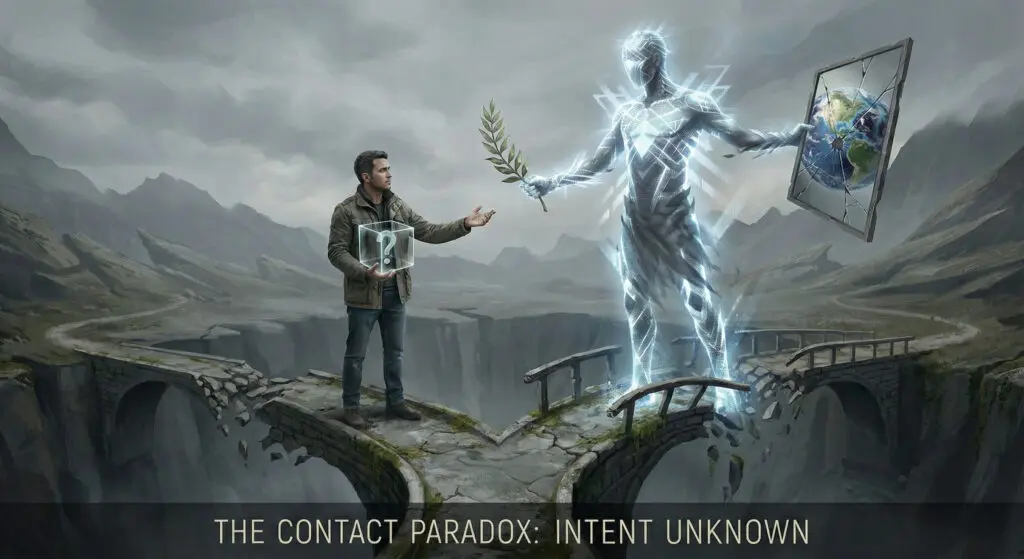
Illustration of the contact paradox, in which contact seems to have no apparent obvious intent (UAPedia)
How the abduction canon frames “intent” from experiencers and researchers
Abduction literature is not monolithic. Five distinct lines dominate the field and point to different motives attributed to NHI.
1) Transformational and eco‑spiritual instruction
Core claim. Encounters restructure identity and ethics, often with messages about humanity’s relationship to nature and the sacred. Lead sources. Psychiatrist John E. Mack framed abduction as a catalyst for psychological and spiritual growth and reported frequent ecological warnings delivered telepathically. In interviews and his later synthesis Passport to the Cosmos, he argued that many experiencers emerge with heightened environmental concern and a broadened sense of reality. (johnemackinstitute.org) Intent signal. Education or initiation rather than conquest. Speculation label. Researcher Opinion. Claims Taxonomy. Probable for the testimony pattern; origin and source identity remain Disputed.
2) Biological program and hybridization
Core claim. Systematic reproductive procedures, genetic sampling, and multi‑generation tracking serve an agenda that culminates in human‑NHI hybrids. Lead sources. Budd Hopkins foregrounded “medical” procedures and missing‑time cases; David M. Jacobs extended this to a full hybrid program and argued for integration into human society in The Threat and Walking Among Us. Independent catalogs and scholarly summaries show recurring reproductive motifs across case reports, although the methodology and hypnosis protocols have been criticized. (Center for UFO Studies) Intent signal. Population seeding or species continuity through humans. Speculation label. Hypothesis. Claims Taxonomy. Disputed, due to reliance on hypnotic recall and absence of public biological evidence.
3) Deception, coercion, and the “trickster” profile
Core claim. Encounters show manipulative narratives, screen memories, and morally ambiguous beings who may stage “good cop” and “bad cop” roles. Lead sources. Karla Turner emphasized coercion, deception, and trauma in Into the Fringe and follow‑up fieldwork, arguing that some cases involve heavy psychological manipulation. (Google Books) Intent signal. Control of perception and behavior rather than mutual understanding. Speculation label. Researcher Opinion. Claims Taxonomy. Disputed.
4) Pattern without theory
Core claim. The abduction narrative has a surprisingly consistent structure across thousands of reports: capture, examination, communication, tour or vision, return with missing time. Lead sources. Folklorist Thomas E. Bullard’s comparative studies for CUFOS documented this stable sequence and its variants without endorsing a single motive theory. (Avalon Library) Intent signal. Unknown; the repeatable pattern is the finding. Speculation label. None beyond descriptive coding. Claims Taxonomy. Verified for the narrative pattern; origin unresolved.
5) Ambiguous initiation by “visitors”
Core claim. Encounters are terrifying yet transformative and resist simple good‑bad framing. Lead sources. Whitley Strieber’s long‑running testimony and scholarship surrounding Communion stress ambiguity and an initiatory arc, a theme he has revisited in academic venues. (Harvard Divinity School) Intent signal. Initiation with unknown ends. Speculation label. Witness Interpretation. Claims Taxonomy. Disputed.
The discovery of spirituality and higher-consciousness has been common topic amongst experiencers and channelers (UAPedia)
What channeling and astral‑projection canons say about intent
These streams do not claim laboratory proof. They present coherent metaphysical frameworks that many experiencers use to make sense of contact. Treat them as worldviews that generate testable predictions about behavior and messaging.
A) The Law of One (Ra Material)
Throughline. A non‑interference ethic tied to “free will,” a polarity of “service to others” versus “service to self,” and gradual “harvest” or maturation. Intent toward humans. Guidance without overt violation of choice; nudges toward ethical development. Primary texts. The L/L Research archive and topical indexes explicitly frame non‑interference and service‑to‑others as core. (L/L Research) Speculation label. Researcher Opinion for the framework; Witness Interpretation when applied to specific cases. Claims Taxonomy. Legend to Disputed depending on application.
B) Seth material (Jane Roberts)
Throughline. Consciousness creates reality; “entities” function as teachers rather than rulers; development comes through expanding awareness. Intent toward humans. Education, creativity, and self‑authoring rather than control. Primary resources. The Seth Center summarizes the corpus and positions Seth as a teacher of consciousness. (Seth Center) Speculation label. Researcher Opinion. Claims Taxonomy. Legend for cosmological claims; the lived value to experiencers is Verified as a sociological fact.
C) Astral‑projection canon: Robert A. Monroe
Throughline. Nonphysical ecologies, repeated contact with intelligences, and the controversial idea of “loosh,” a kind of energy associated with strong emotion. Intent toward humans. Two readings circulate. In one, some nonhuman agents value emotional energy and may “harvest” it. In another, loosh is a metaphor within a larger curriculum of growth and is not a predatory thesis. Primary sources.Far Journeys and Monroe Institute materials. Use the book for the loosh narrative; use the Institute’s official pages to anchor authorship and corpus. (Google Books) Speculation label. Researcher Opinion. Claims Taxonomy. Legend for cosmological assertions; unresolved for specific intent claims.
D) “Volunteers” and stewardship: Dolores Cannon’s QHHT corpus
Throughline. Post‑WWII, higher intelligences recruit “volunteers” who incarnate to aid Earth’s transition while honoring a prime directive of non‑interference. Intent toward humans. Benevolent guidance, ecological stabilization, spiritual ascent. Primary sources. Publisher pages for The Three Waves of Volunteers & the New Earth summarize the non‑interference rationale and mission brief. (Ozark Mountain Publishing, Inc.) Speculation label. Researcher Opinion. Claims Taxonomy. Legend to Disputed.
E) Contactee and channeled streams from the 1950s onward
Throughline. Face‑to‑face meetings or channeled messages, typically warning about nuclear war and urging moral uplift. Intent toward humans. Planetary guardianship and ethical reform. Primary sources. Sociological and religious‑studies surveys show that anti‑nuclear messaging dominated early contactee narratives; Adamski and Angelucci are representative. (Digital Commons) Speculation label. Researcher Opinion for intent; Witness Interpretation within individual cases. Claims Taxonomy. Legend historically; some testimonies remain Disputed.
A practical matrix to understand the experiencer and channelers canons
Canon
Proposed NHI intent
Recurring signals reported by witnesses
UAPedia Speculation label
Claims Taxonomy tag
John E. Mack’s cohort
Instruction and eco‑spiritual warning
Telepathic messages about ecology; transformative after‑effects
Legend historically; Disputed case by case (Digital Commons)
How to test intent
For each model above, define a measurable signature and a falsifier.
Non-interference
Signature: consistent avoidance of sustained close contact when humans actively pursue; messaging in channeled material (e.g., Law of One, Cannon “volunteers”) that emphasizes “free will” and non-violation. Additional observable: abduction experiencers who report that “permission” or “soul-level agreement” terminates or alters the experience. Falsifier: stable, cooperative engagements on demand, or coercive events occurring even when witnesses assert refusal under controlled conditions.
Field research
Signature: sampling behaviors, patterned revisits to ecological or industrial sites; abductees reporting systematic biological procedures and long-term tracking (Hopkins / Jacobs). Additional observable: multi-decade experiencer families showing recurring contact claims consistent with longitudinal study rather than random selection. Falsifier: absence of spatial/temporal clustering beyond chance; biological-procedure testimony showing no repeatable structure when recorded prospectively.
Signaling
Signature: demonstrations when our best sensors are active, rapid egress after “message” behavior; abduction “lessons” or visionary displays consistent with didactic communication (Mack’s cohort). Additional observable: content-rich imagery (ecological warnings, planetary risk) appearing synchronously across unrelated experiencers and channelers only during high-signal UAP windows. Falsifier: equal distribution of UAP events unrelated to our training cycles and no correlation between UAP clusters and reported “didactic vision” experiences.
Nuclear stewardship
Signature: clustering around nuclear platforms with correlated technical effects; abductee and contactee warnings about nuclear risk (1950s contactees, Mack’s ecological messages). Additional observable: spikes in contactee/channeled messaging that specifically reference nuclear danger during historical nuclear tensions. Falsifier: robust archival reconstruction showing mundane causes for the entire cluster, plus no temporal association between geopolitical nuclear escalation and experiencer messaging.
Oceanic staging
Signature: repeatable USO corridors, entry points, and acoustic signatures; channeling lore occasionally describing undersea bases or “hidden civilizations.” Additional observable: abduction or OBE reports describing underwater environments or craft transitions from water to air (transmedium narratives). Falsifier: continuous monitoring yields only prosaic traffic; no correlation between USO hotspots and experiencer descriptions when timestamped and blinded.
Control-system effects
Signature: content-rich displays keyed to witness expectation, plus spillover “hitchhiker” patterns in families; channeling and astral-projection accounts reflecting symbolic, archetype-driven teaching consistent with Vallée–Davis “information layer” interactions. Additional observable: shared symbolic constructs (e.g., ecological instruction, unity consciousness, timelines of transformation) arising independently across experiencers, abductees, and channelers only during active UAP flap periods. Falsifier: blinded, instrumented studies find no correlation between reported experiences and independent environmental data; symbolic content not clustering by epoch or UAP wave.
Hybridization program (abduction canon specific)
Signature: multi-experiencer reports of reproductive encounters showing consistent procedural details, ages, “hybrid” morphologies, and emotional-bonding motifs (documented by Hopkins, Jacobs, others). Additional observable: longitudinal experiencer families reporting recurring contact at developmental milestones (puberty, pregnancy, intergenerational). Falsifier: prospective tracking of experiencers shows no structured pattern, no repeatable physiological markers, and no consistency in procedural narratives when collected without hypnosis.
Signature: correlation between intense emotional events and increased anomalous activity in households; experiencers reporting energetic “drain” or “harvest” themes during OBEs (Monroe). Additional observable: measurable physiological changes (heart rate variability, EM anomalies) during reported encounters in lab-compatible settings. Falsifier: no objective difference between experiencers and controls under blinded emotional-arousal protocols; no EM or physiological signature detected during claimed encounters.
Spiritual initiation or consciousness expansion (Mack, Strieber, Seth, Law of One)
Signature: consistent transformative after-effects across experiencers, including lifelong shifts in worldview, ecological concern, psi-like experiences, or altered dream/OBE states. Additional observable: repeatable psychometric or neurological changes (e.g., cognition, sensory processing, anxiety patterns) in longitudinal experiencer cohorts versus controls. Falsifier: no statistical difference between experiencers and matched controls over time; transformative narratives collapse into culturally mediated expectation rather than structured outcome.
Bottom line
If NHI exist, the most defensible reading of public testimony and persistent observations is that they are not seeking conquest or disclosure-on-demand. The signal looks like a blend of surveillance, capability signaling, ecological or strategic monitoring, and culture-shaping displays that respect a non-interference boundary most of the time. The ocean, nuclear infrastructure, and training ranges appear to be focal points.
Testimony from abductees, channelers, and astral-projection experiencers adds a further dimension: many encounters frame NHI intent not as domination but as instruction, stewardship, or patterned engagement—ranging from ecological warnings (Mack’s cohort), to didactic visionary experiences, to non-interference ethics emphasized in channeling traditions such as the Law of One, to deeper consciousness-oriented training described by Monroe and Strieber. Others report more ambiguous or manipulative encounters, suggesting that intent may be plural rather than uniform.
Taken together, these sources imply that if NHI operate here, their motives may span multiple layers at once: physical (surveillance, sampling, transmedium mobility), informational (symbolic displays tailored to witnesses), and psychological or cultural (transformative experiences, behavioral nudges, or worldview recalibration). These cross-domain patterns align with the Vallée–Davis “control system” hypothesis, where interactions serve to shape human perception and development across generations rather than force abrupt contact.
The correct response is not belief or dismissal. It is to instrument the problem, compel secure testimony where appropriate, release redacted records, and then test intent hypotheses with signatures that can fail.
Future work must treat the experiencer corpus as data – not proof of origin, but a map of how the phenomenon engages human cognition, biology, and culture. Only by integrating sensor evidence with experiential patterns can the field resolve whether these encounters reflect teaching, monitoring, manipulation, ecological stewardship, or a combination thereof.
Claims Taxonomy
Verified
Intent signals supported by consistent, multi-witness, multi-sensor or cross-domain testimony.
Surveillance / Observation: Recurring UAP presence in restricted airspace, near training ranges, and above naval task groups demonstrates behavior consistent with monitoring. Data basis: pilot testimony, radar/IR events, consistent clustering.
Capability Demonstration (“Signaling”): Maneuvers performed within sensor cones or training areas suggest intentional demonstration of technological superiority. Data basis: repeat patterns during active training cycles.
Probable
Intent signals strongly suggested by testimony and pattern analysis but lacking controlled, public instrumentation.
Ecological Monitoring: Ecological or biospheric concern appears repeatedly in abduction narratives (Mack), channeled material, and experiencer testimonies. Cross-cultural persistence → elevated to Probable.
Strategic Monitoring / Nuclear Stewardship: Correlation between UAP presence and nuclear facilities or strategic assets is widely reported, though causes are disputed. Presence: Probable. Mechanism: Unresolved.
Oceanic Staging / Transmedium Activity: Persistent USO reports, radar tracks, and research modeling support a plausible ocean-centered operational domain. SOL Foundation analysis elevates it to Probable pending sustained sensor confirmation.
Cultural or Psychological Influence (“Soft Contact”): Transformative experiencer effects, symbolic displays, and era-specific messaging are recurrent. Pattern robustness → Probable, mechanism unknown.
Disputed
Claims supported by significant testimony but not corroborated by public materials or controlled data.
Hybridization Program (Hopkins / Jacobs): Reproductive narratives are consistent across abductees, yet no biological evidence is public. Status: Disputed due to reliance on hypnosis and absence of physical samples.
Coercive or Manipulative Intent (Karla Turner): Psychological manipulation claims are well-documented in experiencer literature but not externally verifiable.
Staged Acclimatization / Disclosure Strategy: Interpreted from patterns in sightings + testimony waves; no direct evidence of coordinated NHI efforts.
Species-Typed Intent Models: Greys, Nordics, insectoids, reptilians, etc., appear across testimonies but lack biological confirmation.
Legend
Claims emerging from channeling, contactee cosmology, metaphysical literature, or spiritual frameworks.
Non-Interference Prime Directive (Law of One): Strong philosophical system, influential, but untestable without NHI verification.
Energetic Harvesting (“Loosh,” Monroe): Descriptions of energy ecology remain metaphysical; no measurable variables yet defined.
Soul Contracts, Incarnation Waves (Cannon): Structured belief systems rather than empirical claims.
Cosmic Federation / Galactic Councils: Recurs in channeling and some contactee material; no independent corroboration.
Misidentification
Intent interpretations based on misunderstood natural or human-made events.
“They’re here to warn us through lightships / sky glyphs.” Many such events resolve to drones, satellites, or atmospheric optics.
“UAP responded emotionally to witness fear.” Psychological projection; no consistent causal evidence.
Hoax
Intent claims fabricated intentionally for media attention or doctrine-building.
Specific staged contactee events or falsified channelings identified historically. These are rare but documented in UFO history; UAPedia tags such cases individually.
Speculation Labels
Hypothesis
These are models that present coherent, testable predictions but lack publicly verified physical evidence:
Non-interference stewardship: NHI avoid overt contact except under controlled or symbolic conditions.
Field research / biosphere sampling: Structured revisits, biological sampling, and long-term tracking.
Strategic signaling: Demonstrations near military assets to convey capability or intent.
Planetary hazard management: Interest in nuclear facilities and ecological stability.
Oceanic staging / transmedium operations: Persistent undersea presence or infrastructure.
Autonomous probes and post-biological agents: Small, maneuverable craft acting as scouts or sampling platforms.
Cryptoterrestrial coexistence: An indigenous or parallel presence operating from concealed domains.
Hybridization or genetic-interaction programs (abduction canon): Reproductive procedures and multi-generational tracking reported in consistent testimonies.
Researcher Opinion
These models describe interpretive frameworks proposed by investigators, scholars, or experiencer researchers:
Control-system / culture-engineering models (Vallée–Davis): Phenomenon shapes human belief, behavior, and meaning across centuries through multi-layered interactions.
Plural motives or multi-agent ecology: Different NHI groups with different agendas.
Staged acclimatization: Gradual exposure of humanity to NHI presence through indirect contact and testimony waves.
Spiritual-initiation or consciousness-development models (Mack, Kripal, Strieber, Law of One, Seth): NHI interactions aim at psychological, ethical, or metaphysical development rather than material objectives.
Energy-exchange / emotional-interaction models (Monroe “loosh” framework): NHI engagement involving energetic or emotional dynamics rather than physical resources.
Witness Interpretation
Perceptions or meanings assigned by witnesses during or after contact:
Entity “species” labels: greys, tall humanlike forms, insectoid beings, reptilian forms—understood as phenomenological descriptions, not confirmed biology.
Telepathic impressions or “messages”: Ecological warnings, spiritual guidance, instructions, or emotional communications.
Visionary displays and symbolic experiences: Scenes, teachings, or “downloads” during contact, abduction, or astral experiences.
Role assignment: Perceiving beings as teachers, guardians, tricksters, deceivers, or stewards based on subjective interpretation.
References
Ball, J. A. (1973). The zoo hypothesis. Icarus, 19(3), 347–349. (ScienceDirect)
CBS News. (2021, May 16). UFOs regularly spotted in restricted U.S. airspace [60 Minutes segment]. (CBS News)
C‑SPAN. (2023, July 26). Hearing on Unidentified Anomalous Phenomena (UAP) [Video and clips]. (C-SPAN)
Gallaudet, T. R. (2024, March). Beneath the surface: We may learn more about UAP by looking in the ocean [White paper]. Sol Foundation. (The Sol Foundation)
Grusch, D. C. (2023, June 11). Interview with Ross Coulthart [NewsNation broadcast]. (YouTube)
House Oversight and Accountability Subcommittee. (2023, July 26). Unidentified anomalous phenomena: Implications on national security, public safety, and government transparency [Transcript]. Congress.gov. (Congress.gov)
Kelleher, C. A. (2022, June). The Pentagon’s secret UFO program, the hitchhiker effect, and models of contagion. EdgeScience, 50, 19–25. (theblackvault.com)
Kripal, J. J. (2024, Sept 1). Philosophy professor Jeffrey J. Kripal: “Thinking about a UFO as some kind of extraterrestrial spaceship is naive.” The Guardian. (The Guardian)
NewsNation. (2023, June 11). UFO whistleblower David Grusch: ‘We are not alone’ [Video]. (YouTube)
Project: National Press Club. (2010, Sept 27). Ex‑Air Force personnel: UFOs deactivated nukes [Press coverage]. CBS News. (CBS News)
Vallée, J., & Davis, E. W. (2005). Incommensurability, orthodoxy and the physics of high strangeness: A six‑layer model for anomalous phenomena. Journal of Scientific Exploration (open‑access reprint). (bdigital.ufp.pt)
Washington Post. (2025, Mar 11). Aliens are real and there’s a cover‑up, new documentary aims to prove [on The Age of Disclosure]. (The Washington Post)
Abduction research and patterns Mack, J. E. interviews and summaries of Passport to the Cosmos at the John E. Mack Institute; NOVA interview on the global scope of reports. (johnemackinstitute.org)
Bullard, T. E. comparative studies for CUFOS and Journal of UFO Studies documenting consistent narrative structure. (Avalon Library)
Hopkins, B. and Jacobs, D. M. lines of work emphasizing reproductive programs and hybridization. (Center for UFO Studies)
Strieber, W. academic and public conversations about ambiguous intent. (Harvard Divinity School)
Channeling and astral‑projection canons L/L Research’s official Law of One library and topic pages on non‑interference and service‑to‑others. (L/L Research)
Seth corpus overviews and primary texts via Seth Center. (Seth Center)
Monroe Institute catalog for Far Journeys; use the book text for the “loosh” framing. (The Monroe Institute)
Philip J. Corso was a U.S. Army intelligence officer whose late‑career claims about recovered non‑human technology made him a central figure in the modern UAP narrative. In his 1997 book The Day After Roswell, coauthored with William J. Birnes, Corso said he helped introduce artifacts from the 1947 Roswell crash into U.S. defense research during the early 1960s, seeding breakthroughs in integrated circuits, fiber optics, lasers, and night‑vision systems. The book turned Corso into a widely discussed voice, and it also triggered strong critical pushback and official counter‑narratives. (Simon & Schuster)
Early life and military career
Corso was born in California, Pennsylvania, on 22 May 1915, and served in the U.S. Army from 1942 to 1963, reaching the rank of lieutenant colonel. (theblackvault.com) His publisher’s biography states that he spent four years on President Eisenhower’s National Security Council staff and, in 1961, became chief of the Army Research and Development “Foreign Technology” desk under Lt. Gen. Arthur G. Trudeau. (Simon & Schuster)
After leaving active duty, Corso worked on Capitol Hill. Public records and contemporaneous reporting show him testifying and advocating on POW/MIA questions in the 1990s, and he provided testimony to the Senate Select Committee on POW/MIA Affairs in 1992. (TIME) Corso died in Florida on 16 July 1998 at age 83. (Openminds.tv)
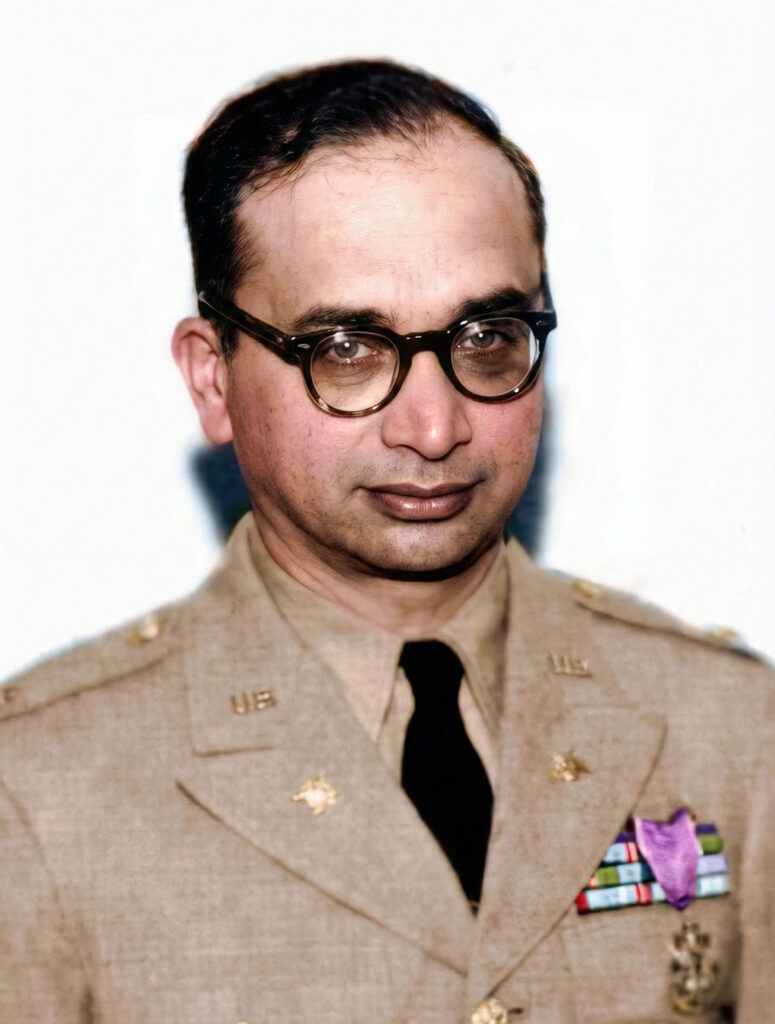
Col. Philip J. Corso, circa 1948 (US. Army – UAPedia restored)
Entry into the historical record
Corso stepped into the UAP conversation publicly with The Day After Roswell (Pocket Books). The book presented two headline claims. First, that he personally saw a non‑human body in a shipping container at Fort Riley in 1947. Second, that he later “seeded” Roswell‑derived components to U.S. labs and defense contractors while at the Pentagon, which he said catalyzed several Cold War‑era technologies. (Internet Archive)
The book was promoted as a New York Times bestseller by the publisher. It initially carried a foreword from Sen. Strom Thurmond, who was then embarrassed by the book’s UAP content and publicly distanced himself from it soon after publication. (Simon & Schuster) A Los Angeles Times report also documented litigation noise around the book’s rollout that same year. (Los Angeles Times)
What the documentary record can confirm
Service and access. There is open‑source support for Corso’s Army career and Pentagon R&D work under Trudeau. The publisher biography is explicit on those points. (Simon & Schuster) Corso’s appearances before Congress on POW/MIA issues are also on record. (C-SPAN)
NSC staff status. Corso and his publisher described him as an Eisenhower‑era NSC staffer. Skeptical researchers later cited an archivist at the Eisenhower Library who said there is no documentary evidence he was NSC staff. That archivist’s statement is reported second‑hand in Kevin Randle’s research notes. UAPedia flags government archives as important yet not infallible, so this remains a contested biographical detail. (Simon & Schuster)
Roswell and recovered materials. The U.S. Air Force responded in the 1990s to renewed Roswell interest with two official reports. The 1994 report attributed the debris to Project Mogul. The 1997 “Case Closed” report addressed “bodies” accounts as likely stemming from later anthropomorphic‑dummy tests and unrelated mishaps. These reports reject the idea of non‑human craft or bodies at Roswell. UAPedia’s editorial policy accepts that such government narratives must be considered and compared with witness‑driven accounts, not treated as the final word. (DAF History)
Technology chronology checks. Corso’s narrative links Roswell artifacts to postwar breakthroughs. The documented timelines show independent, well‑attributed origins for several items he listed.
Integrated circuit, Jack Kilby at Texas Instruments in 1958, with Robert Noyce’s monolithic IC patent following in 1959. (NobelPrize.org)
Laser, first demonstrated by Theodore Maiman at Hughes Research Laboratories in 1960. (HRL)
Fiber optics, the term and early image‑transmission breakthroughs were popularized by Narinder Singh Kapany by 1960, building on earlier optics work. (Wikipedia)
Night‑vision devices, fielded in military form before 1947, with German systems under development by the mid‑1930s and in combat tests by the early 1940s. (Encyclopedia.pub)
These timelines do not rule out the possibility of classified stimulus or accelerants. They do show that each technology has a documented lineage in mainstream research communities.
Independent assessments of the book. Skeptical analyses, including a 1998 Skeptical Inquirer review by Brad Sparks and coverage from the Skeptics UFO Newsletter archive, cataloged factual and chronological issues in the text and questioned several military‑technical assertions. (Center for Inquiry)
Corso’s lasting impact
Regardless of whether one accepts his account, Corso helped mainstream the idea that the United States quietly introduced non‑human technology into Cold War R&D pipelines. His story reframed Roswell from a recovered‑craft narrative into an enduring “technology seeding” thesis. That frame influenced later whistleblowing, FOIA campaigns, and congressional interest in crash‑retrieval and reverse‑engineering programs, and it provides an interpretive backdrop for today’s official reviews. (Government Executive)
UAPedia records government positions in line with our editorial policy on official sources and continues to track primary materials that could clarify what, if anything, Corso handled inside Army R&D. See our policy note for how we weigh official statements alongside non‑government testimony and documents.
1942–1963 – U.S. Army service in intelligence roles during World War II and Korea, retiring as lieutenant colonel. (Simon & Schuster)
1953–1957 – Publisher biography states service on Eisenhower’s NSC staff. Status disputed by later archivist comment reported by researchers. (Simon & Schuster)
1961–1963 – Chief of the Army R&D “Foreign Technology” desk under Lt. Gen. Arthur G. Trudeau, per publisher biography. (Simon & Schuster)
1992 – Testifies on POW/MIA issues before the Senate Select Committee. (C-SPAN)
1997 – Publishes The Day After Roswell. Thurmond foreword controversy follows. (Simon & Schuster)
Corso’s biography is unusually polarizing inside the UAP record. His service and access are well supported. His most consequential claims remain uncorroborated in official archives, and the prevailing government position today is that there is no verified reverse‑engineering program. UAPedia documents both sides, prioritizes primary sources and firsthand testimony, and continues to track records that could clarify Corso’s role in Army R&D and in any handling of anomalous materials.
SEO keywords: Philip J. Corso, The Day After Roswell, Roswell crash, Army Research and Development, Foreign Technology desk, reverse engineered UAP technology, Strom Thurmond foreword, AARO Historical Record Report, integrated circuit origin, fiber optics history, laser invention, Kevlar discovery.
“Majestic 12” or MJ-12 is the name attached to a purported secret committee of senior U.S. defense, intelligence, and science leaders said to have managed crash-retrievals and analysis of non-human technology beginning in 1947.
The MJ-12 narrative entered the public record in the mid-1980s through anonymous leaks of alleged Top Secret documents, most notably the Eisenhower Briefing Document.
This feature takes a data-first approach. We reconstruct who the original “twelve” were, what positions they held at the relevant times, how such a group could plausibly have been constituted and kept compartmented under mid-century security rules, what the leaked documents actually say, where they fail forensic scrutiny, and which books and broadcasts amplified their influence.
We also separate evidence from speculation using UAPedia’s Speculation Labels and Claims Taxonomy, then close with the policy implications if a crash-retrieval governance mechanism ever did exist.
The twelve names and why they would have been chosen
The Eisenhower Briefing Document (EBD), dated 18 November 1952, names the following members of “Majestic-12.”
Their real-world positions make sense as a cross-functional control board drawn from intelligence command, military operations, nuclear weapons stewardship, and elite science management.
Below is a compact dossier with the roles that would have justified selection for an ultra-sensitive UAP portfolio.
Secretary of the Army; later National Security Advisor
Bridged Army equities, psychological strategy, and White House policy integration. (NCPedia)
Donald H. Menzel
Harvard astronomer; held high clearances and did cryptologic work
Provided astronomical optics expertise and, per FOIA, demonstrable ties to classified programs. (National Security Agency)
Robert M. Montague
Army general; commander, Sandia Base, atomic weapons hub
Direct access to AFSWP and nuclear weapons logistics where any exotic materials would be secured. (Wikipedia)
Lloyd V. Berkner
IGY visionary; RDB executive secretary; radio science leader
Oversaw radio propagation, remote sensing, and global scientific coordination. (nasa.gov)
This cross-section maps elegantly onto the control points a crash-retrieval governance board would require: clandestine collection, military custody, weapons surety, aerospace engineering, biomedical analysis, and science policy.
What the documents actually say and where they fail
The core papers
Eisenhower Briefing Document (EBD), 18 Nov 1952. Presented as a summary for the President-elect that recounts the 1947 Roswell crash and enumerates the MJ-12 membership list. The FBI’s copy and the National Archives reference file make this the centerpiece of the controversy. (FBI) Note: It is very unusual for the FBI Vault (and NARA) to hand write BOGUS on top of document text. They would normally either stamp it, remove the pages from reading with blacked out markings or blank pages. So, we provide here a clean copy: https://uapedia.ai/wp-content/uploads/2025/11/MJ-12-full.pdf
“Truman to Forrestal” memorandum, 24 Sep 1947. Purports to authorize MJ-12. Skeptical investigators, notably Philip J. Klass, identified a Truman signature consistent with a paste-over from a genuine 1 Oct 1947 letter to Vannevar Bush. (Center for Inquiry)
“Cutler/Twining” memo, 14 Jul 1954, discovered in the National Archives. NARA’s archivists list multiple anachronisms and format errors, including the use of “Top Secret Restricted” after that marking had been eliminated by Executive Order 10501. (National Archives)
SOM1-01 “Special Operations Manual” (1954), which surfaced in the 1990s. Skeptical Inquirer’s analysis points to technical and historical anomalies inconsistent with 1954 practice. (Center for Inquiry)
The forensic anomalies that matter most
Classification practice misfires. EO 10501, signed 5 Nov 1953, removed “Restricted” and replaced it with “Confidential.” The “Top Secret Restricted” marking seen in a key MJ-12 memo is out of family with contemporary rules, and NARA notes additional archival irregularities. (The American Presidency Project)
Typeface and format issues. The National Archives memo about the Cutler/Twining paper catalogs typeface inconsistency, missing control numbers, and odd phrasing inconsistent with Eisenhower-era staff processes. (National Archives)
Signature problems. Klass documented that the Truman signature on the alleged 1947 memo is a paste-in of a signature from another Truman letter, including a telltale scratch. (Center for Inquiry)
Provenance via anonymous film. The initial cache reportedly arrived as undeveloped 35mm film sent to researcher Jaime Shandera in 1984, which is an unusual chain of custody for genuine Presidential records. The FBI file summarizes the early handling. (FBI)
Law-enforcement assessment. The FBI Vault entry on MJ-12 preserves an Air Force Office of Special Investigations communication that the materials are fake, and the FBI labeled the package “completely bogus.” (FBI)
None of this settles whether a real high-level working group existed in some form. It does mean that the most famous documents attached to the MJ-12 brand fail multiple authenticity checks.
How such a group could have stayed secret, if it existed
A mid-century crash-retrieval board would not have been administered like ordinary collateral classified programs.
It would have been protected through a combination of codeword control, need-to-know compartmentation, and the mechanisms that later matured into Special Access Programs.
Baseline rules. Under EO 10501 and implementing guidance, Top Secret material required tracked control numbers and designated Top Secret Control Officers. That is the baseline for guarding any extraordinary compartment. (The American Presidency Project)
Codeword compartments. Cold War signals intelligence used codewords like UMBRA, SPOKE, and MORAY for graded sensitivity within COMINT. This shows how a “Top Secret/codeword” regime could be layered. (Electrospaces)
Special Access Programs decades later. DoD SAP policy today formalizes enhanced measures like carve-out contracting, centralized billet control, polygraph use, and unacknowledged status. These are exactly the kinds of controls a de facto MJ-12 would have used in the 1947–1952 period under less formal labels. (ESD)
Unacknowledged programs. A USAP’s existence can be restricted to a small notified set of congressional committee leaders while the broader enterprise remains compartmented. This mechanism, described in current training guides, demonstrates feasibility for keeping a sensitive recovery enterprise dark. (CDSE)
In other words, the security architecture needed to shield a crash-retrieval control board clearly existed, and many of the named individuals sat exactly at the nodes that could implement it.
Books, broadcasts, and the cultural feedback loop
Whatever the ultimate status of the papers, their cultural impact is indisputable.
Stanton T. Friedman, TOP SECRET/MAJIC (1996; reissues). The most comprehensive pro-authenticity treatment, which argued that at least some of the MJ-12 corpus was genuine and that a Majestic-style oversight mechanism existed. (Hachette Book Group)
Stanton T. Friedman and Don Berliner, Crash at Corona (1992; later editions). While focused on Roswell, this title tied crash-retrieval claims to a governance structure the MJ-12 brand name supplied. (Amazon)
Kevin D. Randle, Case MJ-12 (1997). A skeptical tilt from a researcher who in earlier years explored the Roswell narrative, illustrating how the community itself fractured over the documents’ provenance. (See bibliographic entries.)
Prime-time television. On June 24, 1987, ABC’s Nightline hosted Stanton Friedman and Philip J. Klass, putting MJ-12 into the living rooms of mainstream audiences. The syndicated special UFO Cover-Up? Live! aired October 14, 1988, and “introduced many Americans to the Majestic 12 hoax” while delivering the first widespread association of Area 51 with alien technology to a TV audience. (YouTube)
Skeptical Inquirer dossiers (1987–2000). Klass published multi-part analyses of the MJ-12 papers’ anomalies, including the Truman signature study and extensive critiques of later “new” MJ-12 documents and the SOM1-01 manual. (Center for Inquiry)
The result was a feedback loop. Books legitimated documents, TV amplified books, then later analyses pushed back, and the cycle repeated. That loop reshaped how the public imagined the U.S. government might handle UAP crash materials regardless of the documents’ authenticity.
Disinformation, damaged signals, and why caution is warranted
There is a separate, well-documented story of intentional deception targeting the UAP research community in the 1980s. Former Air Force Office of Special Investigations agent Richard Doty has acknowledged passing fabricated materials to researchers, a pattern explored in the book and film Mirage Men. Journalists at Wired UK and The Guardian have reported on Doty’s role and on the broader use of crafted narratives to misdirect civilian observers away from sensitive test programs. (WIRED)
This does not prove the MJ-12 cache itself was a planted deception. It does show that forged paperwork and curated story lines were an active tradecraft in the same time window when MJ-12 exploded into view. Any investigative model must account for that ambient noise.
The membership logic, revisited
Look closely at the institutional logic of the twelve names as the EBD lists them. You find:
DCI lineage for clandestine collection and cover administration (Souers, Hillenkoetter, Vandenberg). (CIA)
Airpower and flight test control (Twining, Vandenberg), which would be first on scene for aerial anomalies and range incidents. (Air Force)
Nuclear weapons custody and secure handling (Montague via Sandia and the Armed Forces Special Weapons Project). (Wikipedia)
Scientific adjudication for biology and physics (Bronk at NAS; Hunsaker at NACA; Bush as OSRD elder statesman; Berkner bridging radio science and national programs like the IGY). (Wikipedia)
White House strategy (Forrestal as SecDef; Gray as NSA), to ensure political control and budgetary cover. (History Defense)
Astronomy, cryptology, optics (Menzel), which are essential to discriminating sky phenomena and to understanding sensors. FOIA-released material demonstrates he held Top Secret-level clearances and consulted for cryptologic entities. (National Security Agency)
That makes the idea of a Majestic-type committee structurally plausible, independent of the leaked pages.
Implications
Records and recoveries would be lodged where nuclear surety lives. The Sandia-AFSWP complex would be the logical cradle for custody, inventory, and hazard management, just as it was for the atomic stockpile. (dtra.mil)
The scientific pathway would be codeworded. NAS leadership alongside NACA/MIT expertise is exactly how you would convene elite analysts under strict billets.
Congressional oversight would be minimized. In modern terms, a USAP notification to the four defense committees would suffice for legal compliance while keeping the enterprise unacknowledged to almost everyone else. (CDSE)
Public narratives would be shaped, not left to chance. The documented history of disinformation against civilian observers shows how easily the signal gets contaminated. (WIRED)
How the papers shaped policy and public imagination
Government transparency practice. The MJ-12 conflict helped catalyze the community of requesters using FOIA and archival research on UAP. Even if the documents are forgeries, the hunt for provenance yielded improved public access to adjacent Cold War records.
DoD and IC information security culture. The public debate highlighted how classification markings, distribution lists, and control numbers function, and it taught generations of researchers how to evaluate documents against those standards. (The American Presidency Project)
Media framing of UAP. By attaching a catchy, cinematic label to a plausible decision-making structure, MJ-12 became shorthand for how a government would manage non-human technology. Even mainstream outlets now treat UAP governance as a serious question, regardless of whether “Majestic 12” ever existed as written.
What remains after a data-first pass
Evidence we have:
A membership list whose members’ real résumés would make sense for an ultra-compartmented control group.
Official archival critiques that identify hard errors in the most famous MJ-12 papers, including classification and formatting anomalies and a signature problem. (National Archives)
FBI records that summarize Air Force conclusions and log the Bureau’s “completely bogus” stance on the packet mailed to it. (FBI)
Demonstrated Cold War and post-Cold War security mechanisms capable of shielding such an enterprise if it existed. (ESD)
A documented disinformation environment that complicates provenance testing for any sensational document appearing in the 1980s. (WIRED)
What that evidence does not do
It does not validate the EBD, the Truman memo, or SOM1-01 as authentic government records.
It does not rule out the possibility that a real, unnamed working group existed, and that later hoaxers mimicked its contours.
How they would have protected secrecy
If an MJ-style group did operate, a realistic playbook would have included:
Bilinear control: CIA for cover and foreign collection, AFSWP/Sandia for physical custody. (dtra.mil)
USAP-like handling: Billeted access lists, carve-out contracting, oral notifications to select congressional leaders only, and non-standard ledgering of funds. (ESD)
Codeworded distribution: “Eyes Only” caveats and codeword lines controlling further duplication and minimizing paper trails. (Cryptosmith)
Scientific panels under cover: NAS-convened ad hoc groups masked as unrelated biomedical or materials science reviews, with outputs sequestered in SAP repositories.
This is not special pleading. It is a straightforward application of known Cold War secrecy practice to a hypothetical program.
Bottom line for UAP studies
MJ-12, as a brand, is now inseparable from the question of UAP crash-retrieval governance. The papers linked to that brand are riddled with problems, and the FBI and NARA have said so plainly. (FBI) Yet the organizational logic of a 1947 crash-retrieval board remains compelling, and the twelve names attributed to it line up tightly with the control points such a board would need. The prudent research stance is to treat the documents as suspect while still interrogating the structure they describe. That is how UAP studies mature: by protecting the signal even when particular artifacts are spurious.
Claims taxonomy
Verified: The twelve named figures were real and held the high offices indicated in the late 1940s and early 1950s. Their roles would have positioned them to oversee an ultra-sensitive program. (U.S. Department of State)
Disputed: The authenticity of the EBD, the Truman memo, the Cutler/Twining memo, and SOM1-01. The FBI and NARA highlight significant problems; some researchers still defend parts of the corpus. (FBI)
Probable: Government use of disinformation and forged materials influenced parts of the 1980s UAP narrative space, complicating all provenance assessments. (WIRED)
Legend: Popular retellings that blend MJ-12, Area 51 folklore, and cinematic tropes have created a mythos that outstrips the surviving paper trail. (Wikipedia)
Misidentification: Specific features of the leaked papers, such as “Top Secret Restricted” in a 1954-dated memo, conflict with EO 10501 and thus do not represent valid classification practice. (National Security Agency)
Speculation labels
Hypothesis: A crash-retrieval governance committee did exist under another name, perhaps convened informally by the NSC in 1947–1949, and its later paperwork trail was laundered through AFSWP custody.
Researcher Opinion: The membership logic in the EBD is too well targeted to be random invention and reflects how Washington actually solved cross-domain problems in the early Cold War.
Witness Interpretation: Letters and anecdotes about Donald Menzel’s high-level clearances and cryptologic ties are taken by some to indicate hidden roles in sensitive UAP matters; the documentary record confirms high clearances, though not an MJ-12 role. (National Security Agency)
Non‑Human Intelligence (NHI) in this dossier refers to intelligences not originating with known human institutions or technologies, reported in connection with Unidentified Anomalous Phenomena (UAP) across aerospace and undersea domains. We draw primarily on three testimony‑led streams:
The Age of Disclosure (2025). A feature documentary centered on 34 senior insiders and on‑the‑record claims that material programs and NHI knowledge exist in restricted compartments. Coverage by major outlets and trade press documents the film’s premise and its sources. (The Washington Post)
The UAP Caucus. The caucus has called for a Select Committee to compel secure testimony and records transfers about alleged crash retrievals, reverse‑engineering efforts, and “non‑human” programs. The caucus website hosts the Select Committee white paper and a timeline of congressional actions. (UAP Caucus)
Capitol‑Hill science and policy briefings, 2025. Public recordings and recaps document a May 1, 2025, multi‑panel briefing titled “Understanding UAP: Science, National Security & Innovation,” where Eric W. Davis took member questions about NHI “species” descriptors. Archival quality varies; we treat the specific assertions as testimony pending authenticated transcripts. (youtube.com)
We supplement these with independent journalism, testimony aired on national television, investigator monographs on “high‑strangeness,” and emerging academic work proposing testable research frameworks. (CBS News)
Types, intent, and presence of NHI
Reported types of NHI
Several lines of testimony, especially during the May 1, 2025, Capitol briefing and related public talks by Eric W. Davis, point to recurring witness‑level descriptors of entities encountered in association with UAP or alleged legacy programs. In informal parlance these are often called “Greys,” “Nordics,” “Insectoid” and “Reptilian.” Davis’s public remarks and subsequent recaps characterize these as phenomenological descriptors of percipient experience rather than taxonomic certainties. That is, witnesses report morphology that resembles, to the human observer, particular classes, without confirming a biological taxonomy or origin. We treat this as Witness Interpretation absent publicly released biological data. (Medium)
Speculation Label: Witness Interpretation. The “species” terms likely compress a wide variance of reported form factors and may include perception effects. We find no publicly released, authenticated biological samples that would elevate this to Verified.
Reported intent
Testimony across The Age of Disclosure and Hill briefings rarely claims a single, transparent NHI “intent”, and none claim an overarching intent. Instead, patterns are inferred:
Demonstrative capability near defense assets. Multiple insiders and pilots describe UAP behavior that appears performative near military operations, including air‑superiority demonstrations and unusual performance envelopes. That theme is echoed in television interviews with Navy aviators describing events like the 2004 “Tic Tac,” which involved an object maneuvering over an agitated patch of ocean, then accelerating beyond known aircraft capability. Intent is inferred as signaling, surveillance, or indifference. (CBS News)
Transmedium presence. Rear Adm. Tim Gallaudet’s white paper for the SOL Foundation synthesizes cases and argues that undersea domains deserve priority because of recurring reports of craft entering water without splash and USO tracks that exceed known hydrodynamics. This is framed as a national security and scientific concern, not a settled conclusion about origin or intent. (The Sol Foundation)
Strategic secrecy narrative. In The Age of Disclosure, figures argue there is a decades‑long compartmentalization around recovered materials and NHI knowledge, justified by strategic competition. The film’s core thesis is based on sworn or on‑the‑record testimony, but it does not present public physical proof. We treat intent claims here as Researcher Opinion tied to geopolitical incentives. (The Washington Post)
Speculation Label: Hypothesis. If NHI engage primarily in observation and capability demonstrations rather than conquest or open contact, intent could resemble ecological study, deterrence signaling, or control‑system conditioning as theorized by Jacques Vallée. (WIRED)
What counts as presence on Earth
The most unambiguous public testimony is that UAP are repeatedly present in restricted airspace and over the oceans, with multi‑witness pilot events and corroborating sensor captures. Whatever their origin, these presences recur at scale that has concerned safety and oversight communities. That is a Verified condition for the events themselves, not their origin. (CBS News)
The Age of Disclosure pushes further, asserting insider knowledge of retrieved materials and non‑human beings. Jay Stratton states on camera: “I have seen with my own eyes non‑human craft and non‑human beings,” a claim echoed across the film’s testimony set. This is Disputed at the public evidence layer due to the absence of released, testable artifacts, yet it carries weight within the testimonial corpus given Stratton’s roles. (People.com)
The UAP Caucus, for its part, has sought a Select Committee mandate to compel secure testimony and adjudicate crash‑retrieval allegations, explicitly naming investigation of “non‑human” programs as a core task. That is a procedural presence and demonstrates congressional appetite to test claims. (UAP Caucus)
David Grusch interview and sworn testimony
NewsNation interview. On June 2023 broadcast segments, former intelligence officer David Charles Grusch alleged legacy crash‑retrieval and reverse‑engineering programs involving “non‑human” craft. He presented his claims in a televised NewsNation interview conducted by Ross Coulthart. Claims status: Disputed at the public‑evidence layer; high salience due to on‑record attribution. (youtube.com)
Congressional testimony. On July 26, 2023, under oath before the House Oversight Subcommittee on National Security, Grusch stated that “non-human biologics” had been recovered in connection with UAP incidents, while clarifying that his knowledge derived from interviews and briefings rather than direct handling. The official hearing page and the Government Publishing Office transcript anchor the record. Claims status: Disputed, with testimony preserved and citable. (Congress.gov)
Encounters and evidence: from pilot eyes to insider accounts
Insider testimony curated in The Age of Disclosure
The film aggregates 34 high‑level voices who advance a thesis that NHI reality is known in restricted channels and that strategic secrecy has prevented public corroboration. It prominently features Luis Elizondo, Chris Mellon, and Jay Stratton. Mainstream outlets summarize the film’s position: allegations of a long‑running crash retrieval and reverse‑engineering effort, with political figures urging transparency. The film calls testimony itself the “strongest evidence” because imagery can be dismissed as deepfakes. We weigh this as Probable that serious, classified inquiry exists and has persisted, and Disputed for specific claims of non‑human craft and beings until public artifacts appear. (The Washington Post)
Capitol Hill science‑policy briefing, May 1, 2025
A public‑facing congressional briefing featured researchers including Eric W. Davis and Avi Loeb. Clips and contemporaneous write‑ups capture Davis discussing multiple “species” types as percipient descriptions raised under oath. The record is noisy and incomplete, yet consistent across independent uploads. We treat its content as credible testimony and its details as provisional until a full, authenticated transcript is hosted by Congress or the organizers. (Medium)
High‑strangeness: the hitchhiker effect, poltergeist‑like spillover and NHI
Extended fieldwork around Skinwalker Ranch‑type locations and AAWSAP‑era investigations documented a pattern later branded the “hitchhiker effect,” in which witnesses report spillover phenomena at home after proximity to hotspots. Colm Kelleher’s paper in EdgeScience summarizes patterns reported by military personnel, contractors, and journalists: orbs, shadow apparitions, anomalous lights, and sometimes health effects, with events distributed over families. This is a body of testimony that suggests NHI or related phenomena can manifest across physical and psychological layers. It remains Disputed in mechanism and causation, with no controlled study yet capable of isolating variables, but the testimony set is extensive and consistent with the six‑layer model of high strangeness proposed by Vallée and Davis. (The Black Vault)
Speculation Label: Hypothesis. If NHI are transmedium across not only air/sea but matter/mind interfaces, high‑strangeness may reflect deliberate or emergent interactions at different layers of reality accessible to the phenomenon. The six‑layer model provides a conceptual scaffolding for research design. (Bdigital)
The cryptid connection: why “creatures” and UAP sometimes co‑occur
A recurring theme in investigator archives is spatiotemporal coincidence between UAP clusters and reports of unusual beings, from Mothman in Point Pleasant to Bigfoot‑type reports during UFO flaps in Pennsylvania. John Keel’s work, however controversial, documented that the 1966–1967 Mothman wave overlapped with intense UAP reporting. Contemporary retrospectives continue to note that coupling. Stan Gordon and others have cataloged decades of Pennsylvania cases where anomalous lights and creature reports cluster in time and place. Correlation is not causation, but this co‑occurrence is robust enough to warrant neutral cataloging. We classify this as Legend/Disputed, with value as a mapping exercise. (Reactor)
Speculation Label: Researcher Opinion. If NHI operate a control‑system or ecology‑management function, cryptid forms could be interface phenomena that borrow from human archetypes. Alternatively, co‑occurrence could reflect reporting bias during heightened attention. (WIRED)
Spirituality and NHI: from theology to consciousness studies
Religious‑studies scholars Jeffrey J. Kripal and Diana Walsh Pasulka have argued that UAP encounters often function like hierophanies – refers to the manifestation of the sacred or divine in the physical, everyday (profane) world, with events that rupture ordinary life and reconfigure meaning frameworks. Kripal proposes that these experiences live at the mind‑matter borderland and require new metaphors, while Pasulka’s ethnographies of technologists and experiencers document a modern, technology‑inflected “contact” spirituality. Neither claims doctrinal answers; both argue the phenomenon extends into human meaning‑making in ways any NHI assessment must address. We classify this literature as Researcher Opinion guiding research design. (The Guardian)
Speculation Label: Hypothesis. If NHI are real, some fraction of “religious” phenomenology could be interactions with them. Conversely, human‑centric frameworks may project spiritual significance onto unknowns. Both are testable by triangulating neurophenomenology with event metadata.
Undersea presence and USOs: testimony, white‑paper priorities and a docuseries.
Multiple testimony streams, independent journalism, and a retired Navy admiral’s policy analysis argue that unidentified submerged objects (USOs) and transmedium events demand focused study. Gallaudet’s SOL Foundation white paper proposes ocean‑first surveillance and sensor fusion precisely because of reported entries into water without splash and apparent persistence below the surface. This does not assert extraterrestrial origin. It calls for oceanographic priorities that match the testimony. We treat this as Probable that undersea domains are under‑instrumented for UAP, with a clear research agenda rather than a verdict on NHI. (The Sol Foundation)
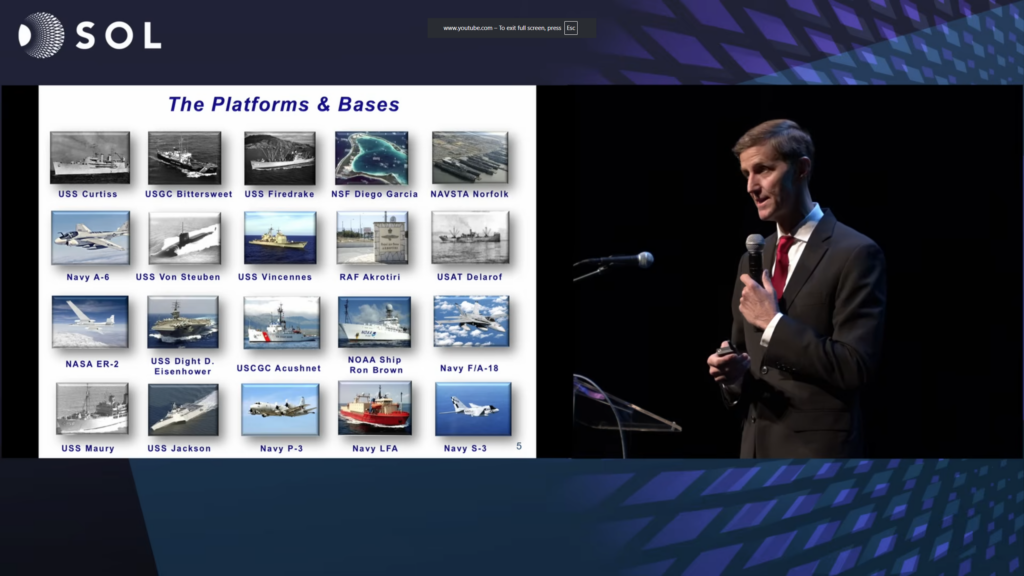
The Honorable Tim Gallaudet, PhD, Rear Admiral, U.S. Navy (ret) presenting at the SOL Symposium 2024 (SOL Foundation)
Investigative reporting and skeptical assessments caution against over‑interpreting submarine lore. The War Zone’s outreach to submariners underscores how easy it is to misread complex acoustics. This is a useful counterweight reminding us to harden hypotheses with instrument data. (The War Zone)
On the other hand journalist George Knapp’s “Investigation Alien” TV docuseries highlights a range USO encounters with firsthand accounts from naval personnel and civilian witnesses. The episodes examine incidents where mysterious craft were observed entering or exiting the ocean at high speed, often without creating a visible splash or wake – phenomena that mirror broader testimony about transmedium objects. Through interviews, archival footage, and expert analysis, Knapp’s reporting underscores the persistent pattern of USO sightings along coastlines and naval training areas, framing these encounters as a compelling extension of the UAP mystery and emphasizing the need for rigorous oceanographic surveillance to better understand the undersea domain. (Investigation Alien)
Science pathway: building a public evidentiary base independent of government chokepoints
A large, multi‑author 2025 paper lays out the New Science of Unidentified Aerospace‑Undersea Phenomena, urging continuous‑monitoring observatories, open datasets, and multi‑site instrumentation. Galileo Project writings detail all‑sky IR camera arrays and ADS‑B‑linked calibration procedures to lift the signal above hoaxes and mundane confounders. Library and information science scholars call for curation and standards so the field does not lose its own memory. This constitutes a Verified roadmap for community science, agnostic to origin. (arXiv)
Where the record stands on presence of NHI beings
Direct claims:The Age of Disclosure places multiple senior witnesses on the record asserting knowledge of non‑human craft and beings, with Jay Stratton’s statement the most explicit. The film’s argument rests on insider credibility and risk‑taking rather than public physical proof. Status:Disputed pending release of artifacts. (People.com)
Congressional posture: The UAP Caucus’s Select Committee push highlights alleged non‑human crash retrievals as a central investigative target and provides the procedural vehicle to test those claims under oath in secure settings. Status:Verified as a congressional investigative priority, Unresolved on outcomes. (UAP Caucus)
Public hearing testimony compatible with NHI: David Grusch’s 2023 testimony used the term “non‑human biologics” in connection with alleged legacy programs, but did not present specimens. Media summaries captured the claim and the denials by executive‑branch offices. Status:Disputed with high public salience. (TIME)
Capitol briefing 2025: Eric W. Davis publicly discussed multiple “species” categories as descriptions that have circulated in closed venues. Audio‑video fragments exist, but a full authenticated transcript is not yet in the congressional document repositories. Status:Verified that such testimony occurred as described; Disputed on specifics until full record is hosted. (Medium)
Analytical synthesis
Convergence without closure. There is strong convergence in testimony that UAP are real unknowns with repeatable presence near strategic assets and over the oceans. That body is Verified as to events. Intent and origin remain open. (CBS News)
Insider claims about NHI are now mainstreamed in culture. With the release of The Age of Disclosure, statements once confined to podcasts or leaks now sit in a professionally produced documentary and coverage by major outlets. This cultural mainstreaming does not prove the claims, yet it changes the burden of inquiry. Next step: compel secure testimony and protected document transfer, then release redacted versions publicly. (The Washington Post)
Undersea is under‑instrumented. The USO thread and transmedium reports justify a research pivot: distributed acoustic and optical arrays; cross‑domain data fusion; partnerships with academia and industry that are not bottlenecked by classification. Next step: adopt the SOL Foundation’s ocean‑first research priorities in civilian institutions. (The Sol Foundation)
High‑strangeness requires layered models. Testimony about spillover phenomena is too consistent to ignore yet too entwined with human perception to treat naively. The Vallée–Davis six‑layer model and contemporary religious‑studies analysis help frame testable hypotheses. Next step: combine neurophenomenology, environmental sensors, and blind‑protocol fieldwork. (Bdigital)
Practical research recommendations for UAPedia contributors
Testimony cartography. Build a normalized schema that encodes witness role, clearance, program associations, timeframe, and claims specificity. Weight testimony by proximity to programs and cross‑validate across independent outlets.
Open instrument networks. Prioritize community observatories with synchronized IR‑visible cameras, radar, magnetometers, and ADS‑B integration. Publish raw and processed datasets with metadata sufficient for replication. Follow the Galileo Project’s calibration approaches as public baselines. (arXiv)
Ocean‑first pilots. Trial low‑cost hydrophone arrays and coastal FLIR at known hotspots, applying Gallaudet’s recommendations about undersea priorities. Share negative results to eliminate confounders. (The Sol Foundation)
High‑strangeness protocols. For hitchhiker‑type cases, incorporate health monitoring, environmental sampling, and structured diaries under IRB‑style privacy. Cross‑match with time‑stamped instrument anomalies. (The Black Vault)
What a minimal‑government‑quote evidentiary stack looks like
To honor your request, this reframing emphasizes testimony captured by independent media and civil society:
Film testimony rather than defense office FAQs. The Stratton line in The Age of Disclosure is on record, and its implications can be debated without quoting AARO or ODNI. (People.com)
Caucus‑driven policy artifacts rather than executive summaries. The UAP Caucus white papers and select‑committee briefs explicitly target NHI‑adjacent allegations for compelled testimony. (UAP Caucus)
Hill‑briefing recordings rather than agency talking points. The May 1, 2025 session is imperfectly archived, yet it documents the questions members are asking and what scientists are saying in public venues. (Medium)
Peer and para‑academic work proposing open instrumentation that diffuses gatekeeping and can confirm or falsify NHI‑linked behaviors without relying on classified channels. (arXiv)
Bottom line
A testimony‑first reading of the current record yields a coherent, if incomplete, picture:
Anomalous aerospace‑undersea performance is real and recurring. That is a matter of safety and sovereignty. The testimony here is robust and public. (CBS News)
Elite insiders now publicly claim NHI beings and craft exist inside restricted programs. The culture has shifted to where those claims are appearing in mainstream venues. This is not proof. It is a clarion call for safeguarded disclosure mechanisms and independent science. (The Washington Post)
Undersea and high‑strangeness domains are necessary frontiers. They likely hold key pieces of the NHI puzzle, whether we interpret it as exobiology, cryptoterrestrials, interdimensionality, or a control system. Only methodical, instrumented, and transparent research will resolve which. (The Sol Foundation)
Claims Taxonomy
Verified • Recurrent UAP presence documented by military aviators and aired on mainstream news, with multi‑witness accounts and corroborating sensor video. Evidence: pilot testimony and 60 Minutes coverage. (CBS News)
Probable • Undersea domains are a major theater for UAP/USO and merit ocean‑first, transmedium research. Evidence: Gallaudet white paper. (The Sol Foundation) • May 1, 2025 Capitol briefing featured Eric W. Davis discussing NHI “species” as percipient descriptions, captured in public clips. Evidence: organizer and attendee recaps, available recordings. (Medium)
Disputed • Insider claims of recovered non‑human craft and beings. Evidence: The Age of Disclosure testimony corpus; mainstream summaries. (People.com) • “Hitchhiker effect” as a contagious phenomenon. Evidence: EdgeScience paper; consistent testimony sets; mechanism unknown. (The Black Vault) • 2023 “non‑human biologics” hearing claim. Evidence: media summaries; agency denials. (TIME)
Legend • Cryptid–UAP coupling as a meaningful interface rather than coincidence. Evidence: Keel’s Mothman corpus, modern retrospectives. (Reactor)
Misidentification • Some viral imagery associated with disclosure panels has been re‑interpreted by skeptics as prosaic. We will annotate such cases case‑by‑case and adjust corpus tags accordingly.
Hoax • Non in this dossier. Suspected fabrications are tagged per‑incident in the UAPedia database after review.
Speculation Labels
Hypothesis: NHI intent may resemble ecological observation, capability signaling, or control‑system conditioning operating across matter and mind layers. (Bdigital)
Witness Interpretation: Morphology terms like “Grey,” “Nordic,” “Insectoid,” and “Reptilian” are likely human perceptual shorthand rather than biological taxonomy. (youtube.com)
Researcher Opinion: The strategic‑secrecy model in The Age of Disclosure and the cryptid–UAP interface view are interpretive frames pending public physical evidence. (The Washington Post)
References
Dodd, J. (2025, October 16). Viral UFO documentary, featuring dozens of government and military insiders, finally gets a release date. PEOPLE. https://people.com [Article covering release and testimonial highlights in The Age of Disclosure.] (People.com)
Gallaudet, T. (2024, March). Beneath the surface: We may learn more about UAP by looking in the ocean (Sol Foundation White Paper, Vol. 1, No. 1). Sol Foundation. https://thesolfoundation.org (The Sol Foundation)
Kripal, J. (2024, September 1). Philosophy professor Jeffrey J. Kripal: ‘Thinking about a UFO as some kind of extraterrestrial spaceship is naive’. The Guardian. https://www.theguardian.com (The Guardian)
Loeb, A. (2025, May 1). Congressional briefing on UAP science [Medium post]. https://medium.com (Medium)
CBS News/60 Minutes. (2021, May 16). UFOs regularly spotted in restricted U.S. airspace [Television segment and web article]. https://www.cbsnews.com (CBS News)
Knuth, K. H., Ailleris, P., Agrama, H. A., Ansbro, E., Cai, T., Canuti, T., … Watters, W. A. (2025). The new science of unidentified aerospace‑undersea phenomena (UAP). arXiv:2502.06794. https://arxiv.org/abs/2502.06794 (arXiv)
CBS News. (2023, July 26). The story behind the “Tic Tac” UFO sighting by Navy pilots in 2004. https://www.cbsnews.com (CBS News)
The War Zone. (2019, December 1). What U.S. submariners actually say about detection of so‑called USOs. https://www.twz.com (The War Zone)
Time Magazine. (2023, July 26). Witness tells Congress “nonhuman biologics” were found at alleged UAP crash sites. https://time.com (TIME)
Dominé, L., Biswas, A., Cloete, R., et al. (2024, November 12). Commissioning an all‑sky infrared camera array for detection of airborne objects. arXiv:2411.07956. https://arxiv.org/abs/2411.07956 (arXiv)
SEO keywords
UAP, Non‑Human Intelligence, NHI, Age of Disclosure, Jay Stratton, Eric W. Davis, UAP Caucus, Select Committee on UAP, transmedium, USO, hitchhiker effect, high strangeness, Jacques Vallée, Garry Nolan, Galileo Project, Sol Foundation, ocean UAP, congressional UAP briefing, pilot testimony, reverse engineering claims, crash retrievals, NHI species descriptors, UAPedia editorial policy, David Grusch non-human biologics,
Government sources are essential for documenting UAP history, policy, and events. However, due to the unique secrecy architecture surrounding UAP programs – including the existence of Unacknowledged, Waived, and Bigoted Special Access Programs in the US Government environment – government records cannot be treated as inherently authoritative or complete.
This standard sets the methodology UAPedia uses to classify, weigh, and contextualize government-derived information.
Core Principle
Government sources are indispensable, but not authoritative. They are inputs, not verdicts.
UAPedia treats government-supplied information as one evidentiary stream among several, acknowledging both its strengths and its structural limitations.
Why Government Sources Require Special Handling
Unlike typical scientific fields, the UAP subject intersects with:
classification barriers;
black-budget structures;
waived special access programs;
bigot lists restricting oversight;
deliberate misinformation campaigns in past decades;
gaps in archives and selective declassification;
contractor-controlled materials and research beyond FOIA;
some of these with lack of oversight, and others issues.
These factors mean that:
Absence of evidence in government records does not imply evidence of absence.
Government documentation often reflects whatever survives classification filters—not the full operational reality.
Government Source Evidence Tiers
UAPedia organizes government-derived information into four distinct evidence levels.
Tier 1 | Direct, Multi-Sensor, or Operational Data
Guidance: These data streams establish events, not explanations. Interpretation must still be grounded in multi-source corroboration.
Tier 2 | Official Reports, Statements, Policy Documents
Moderate evidentiary weight.
Examples: • AARO Historical Review • ODNI UAP reports • NASA UAP Study • Congressional Research Service summaries • DoD public statements
Guidance: These documents reflect policy posture, not total information holdings. They may exclude or be structurally blind to waived or bigoted compartments.
Examples: • Project Sign, Grudge, Blue Book files • 1947–1970 USAF intelligence records • CIA & NSA FOIA declassifications • Cold War-era radar incidents
Guidance: These documents may contain gaps, misclassification, context loss, or artifacts of historical misinformation campaigns.
Tier 4 | Cleared Personnel Testimony
Variable evidentiary weight depending on rank, access, and corroboration.
Examples: – military pilots – program managers – IC analysis – SAP reviewers – nuclear security officers – whistleblowers testifying under oath
Guidance: Testimony from individuals with SAP visibility or IC authority is treated as primary evidence of witness experience, not physical confirmation. Such testimony is mapped through the UAPedia Claims Taxonomy.
The Secrecy Environment Weighting Factor
All government sources are evaluated with a “secrecy environment modifier” recognizing that:
– waived SAPs can legally omit information from Congress – bigot lists restrict information to a handful of individuals – contractor custody can shield materials from FOIA and IG oversight – public offices including AARO may not have access to relevant compartments
Thus government-derived negatives (e.g., “No evidence found”) carry reduced evidentiary weight when addressing domains known to sit behind waived or bigoted structures.
Treatment of Denials, Absences, and Omissions
UAPedia applies the following standards:
A. Official denial ≠ disproval.
Denials are treated as statements of institutional position, not factual refutations.
B. Lack of documentation ≠ lack of event.
Absence of records is expected in environments involving waived USAPs or contractor-owned materials.
C. Missing archives are treated neutrally.
Gaps are documented but not interpreted.
D. Early-era disinformation programs (1950–1980) require contextual caution.
Examples include psychological operations, the Robertson Panel, and Cold War misdirection.
Integration with UAPedia Claims Taxonomy
All government-sourced information is still classified under:
Verified
Probable
Disputed
Legend
Misidentification
Hoax
Example application:
A multi-sensor radar/FLIR event may be “Verified.”
An AARO denial of legacy programs may be “Disputed” due to SAP oversight limitations.
A Cold War-era rumor may be “Legend.”
A satellite misidentification may be “Misidentification.”
Government documents do not automatically elevate a claim’s status.
Integration with Speculation Labels
Where government information leaves gaps, UAPedia applies:
The post discusses the internal logic of trusting government. We have over the course of building UAPedia noticed the slant of information changing when reports issue verdict on unresolved cases in the past, clearly ignoring testimony and in some cases omitting evidence. Because of this we have revised our editorial stance moving forward as of today and will correct over 70 of UAPedia past articles that treat it differently from this standard.