
In July 2022 the Department of Defense formalized what had been an ad hoc approach to UAP.
A Deputy Secretary of Defense memo stood up the All domain Anomaly Resolution Office and disestablished the Unidentified Aerial Phenomena Task Force. Congress had already moved the goalposts by writing AARO into law, broadening the mission beyond the air domain and imposing recurring reporting duties.
In the months since, AARO has published annual reports, unveiled a public website with case imagery and trend charts, and delivered a historical review that triggered both applause and backlash. This piece reconstructs how AARO was established, what the documents actually say, who sits at the table, which controversies matter, and how the office is shaping the UAP landscape.
What AARO is, on paper
Congress created the framework. 50 U.S.C. § 3373 directs the Secretary of Defense, in coordination with the Director of National Intelligence, to establish an office to carry out the duties once assigned to earlier efforts, to standardize reporting, to coordinate across agencies, to plan scientific analysis, to execute rapid field investigations, and to deliver a Historical Record Report reaching back to January 1, 1945. The statute also instructs cooperation with civil agencies including FAA, NASA, NOAA and DOE, and it spells out oversight and reporting lines.
The Pentagon implemented the law with a memo dated July 15, 2022. That directive created AARO under the Under Secretary of Defense for Intelligence and Security, transferred data and responsibilities, renamed the interagency Executive Council, and expanded scope to objects in, on, or near the air, sea and space domains, including transmedium objects. The memo also explicitly disestablished UAPTF and made AARO the focal point for all departmental UAP activities.
Five days later a public release announced the office and named its first director. The release explains that AARO fulfills the law’s requirements and lives within OUSD(I&S). Today, AARO’s own mission statement is concise. The office exists to minimize technical and intelligence surprise by synchronizing identification, attribution, and mitigation of UAP in the vicinity of national security areas.
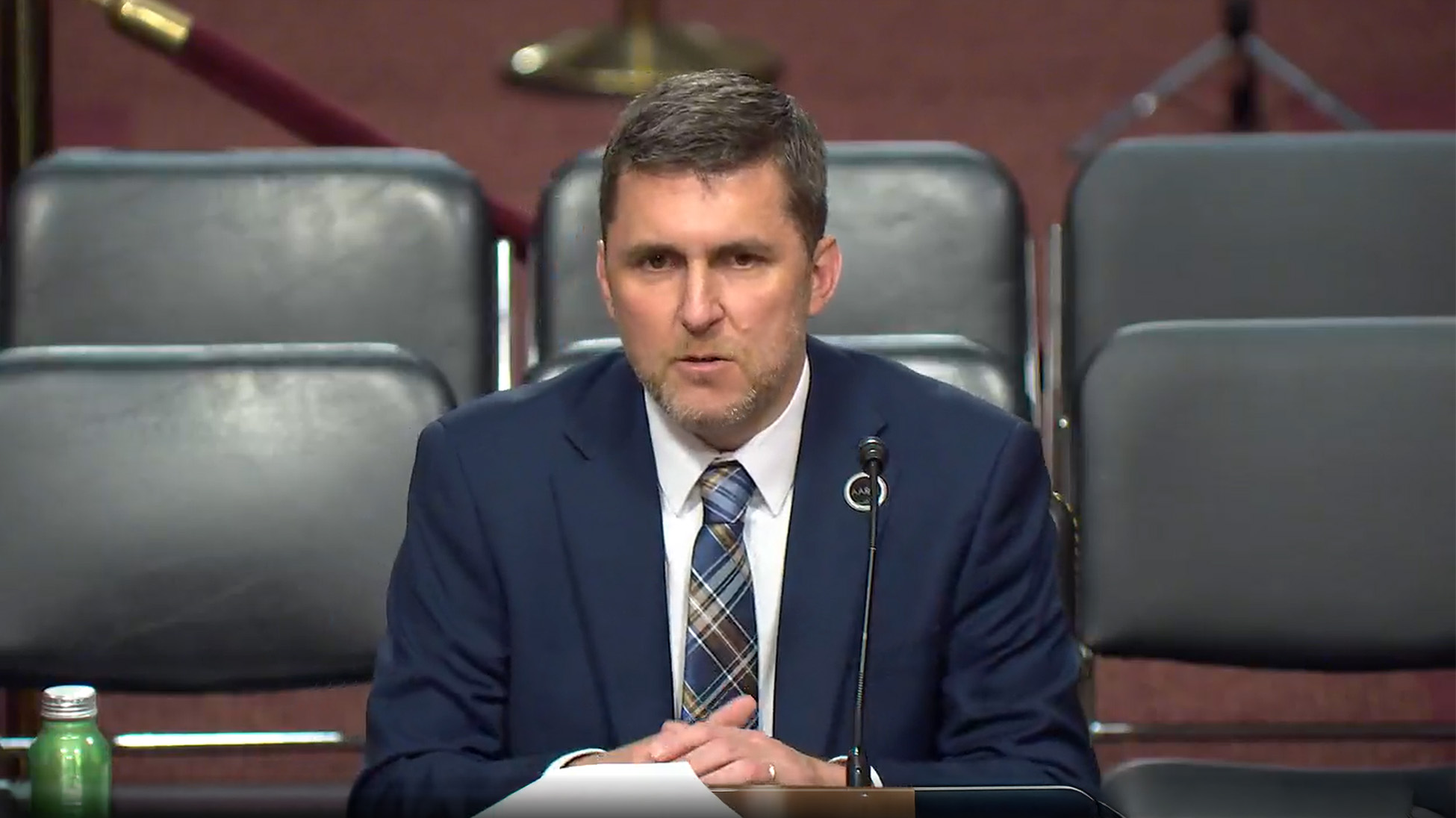
Leadership has evolved. After the founding director stepped down in late 2023, the Department named Dr. Jon T. Kosloski as AARO Director on August 26, 2024, formalizing the transition and continuing the office’s reporting cadence to Congress.
The three documents that built AARO
- The statute – 50 U.S.C. § 3373 (and related sections § 3373a and § 3373b) codify authorities, required interagency coordination, reporting lines to senior DoD and ODNI officials, whistleblower protections, the historical study mandate, and the requirement for recurring unclassified reports. This is the backbone that makes AARO hard to unwind.
- The establishment memo – The Deputy Secretary’s July 15, 2022 memorandum stands the office up inside OUSD(I&S), directs the disestablishment of the UAPTF, and states that AARO’s remit covers anomalous objects in all relevant domains, including transmedium behavior. It also restructures the Executive Council that provides high level oversight.
- The public announcement – The July 20, 2022 release explains AARO’s lines of effort and formalizes the message that this is a permanent office with both intelligence and scientific responsibilities, not a temporary study group.
For context, AARO replaced the short lived AOIMSG that had been created by memo on November 23, 2021 to synchronize detection and attribution in special use airspace. Congress concluded that remit was too narrow and wrote AARO’s broader brief into law.
What the data says so far
AARO’s FY 2024 unclassified annual report offers the most recent clean snapshot of the holdings and adjudications:
- 1,652 total reports in holdings as of October 24, 2024.
- 757 new reports between May 1, 2023 and June 1, 2024.
- A significant inflow from the FAA and the military services as standardized reporting matured.
- The office “possesses no data to indicate the capture or exploitation of UAP,” and has found no evidence of extraterrestrial beings, activity or technology.
- The report flags flight safety concerns in a small number of events and recommends continued improvements in sensor collection and metadata.
AARO’s website supplements the report with official imagery, case notes and reporting trend charts that summarize shapes, environments, and resolution categories. The public portal also consolidates congressional products, a FOIA reading room, and a reporting form for current and former government personnel with direct knowledge of U.S. government UAP programs.
The office’s Historical Record Report, Volume 1 was released in March 2024 pursuant to the statute. It concludes that the majority of cases reviewed from the historical record have ordinary explanations and that AARO found no verified evidence that the U.S. government has non human technology. That finding drew immediate national coverage.
AARO has also operated in public view. On April 19, 2023, the director testified in an open Senate Armed Services subcommittee hearing, walked through sensor analysis and case examples, and repeated that the office had not found verifiable evidence of extraterrestrial technology. AARO returned to the Hill with an open update in November 2024.
Who is in the room: the interagency map
The law and memoranda make AARO a whole of government node. Required collaborators include the Federal Aviation Administration, NASA, NOAA, Department of Energy, and others, with coordination across DoD and the Intelligence Community.
The office’s annual report lists participation or data contributions from a wide roster that typically includes service components and analytic centers such as DIA, NGA, NRO, NSA, FBI, NASIC, NGIC, AFRL and service investigative branches. The mix explains why AARO sits under OUSD(I&S) and reports to both senior DoD leadership and ODNI.
NASA’s role has become a visible complement to AARO’s intelligence mission. In September 2023, NASA’s UAP Independent Study Team urged rigorous, open methods and named a Director of UAP Research to liaise with government partners. NASA emphasizes instrumentation, metadata and data sharing, which aligns with AARO’s focus on sensor quality and collection discipline.
Public statements that defined the establishment
- AARO mission statement. The office exists to minimize technical and intelligence surprise by synchronizing identification, attribution and mitigation of UAP near national security areas. This is the standing description on AARO’s own site.
- AARO establishment release. DoD announced AARO and its initial director on July 20, 2022, tying the move to Section 1683 of the FY 2022 NDAA and explaining the all domain remit.
- Leadership update. DoD announced Dr. Jon T. Kosloski as director on August 26, 2024, continuing AARO’s work under OUSD(I&S).
- Historical record message. Volume 1 of AARO’s historical review, issued March 8, 2024, states there is no verified evidence in the holdings that the U.S. government possesses non human technology. The acting director briefed media on the same week.
Controversies to track
The historical report and community backlash
AARO’s historical review landed with a strong negative claim: no verified evidence of extraterrestrial technology in U.S. government hands. Major outlets covered the finding, while parts of the UAP community said the methods and access were too limited. The divergence is documented and ongoing.
Pace and scope of public reporting
Congress directed formal reporting channels and recurring unclassified reports. AARO launched AARO.mil and a reporting portal for government and contractor personnel, but early commentary criticized delays and the limited eligibility for public submissions. AARO says broader public reporting is a future step and has continued to grow the public library of imagery and case summaries.
Leadership transitions and tone
Founding leadership emphasized analytic caution in public forums, which some advocates read as dismissive. The appointment of Dr. Kosloski stabilized the office after a transition period and kept the cadence of reports and open briefings. The tonal debate has less to do with structure than with expectations about how much can be declassified and how fast.
Where officials draw the line
In open testimony the office has repeatedly said it has not identified extraterrestrial technology, while acknowledging a set of unresolved cases and real safety of flight concerns. That split creates heat. Advocates want deeper declassification and more technical detail on outliers. The office continues to publish case imagery and resolutions while emphasizing data quality constraints.
Influence and impact on the UAP community
Normalization
The very existence of AARO, created by law and resourced inside the defense intelligence apparatus, has normalized UAP as a legitimate topic for pilots, controllers, and analysts. ODNI’s preliminary assessment in 2021 and AARO’s annual reports created a stable cadence of official documents, which reduced stigma and pushed conversations toward chain of custody and sensor metadata rather than anecdote alone.
A shared evidence base
AARO’s website functions as a single shelf where the public can see official imagery, read case notes, scan trend charts, and find congressional products in one place. That has improved the quality of debate both inside and outside the government. Disagreements now pivot on methods and access rather than on whether the topic is real.
A scientific lane
NASA’s 2023 report encouraged rigorous open methods and added a civilian science partner to the mix. That broader framing suggests a future in which AARO helps coordinate defense collection while NASA and partners help set standards for public data and independent analysis.
Bottom line
AARO is not a rebrand. It is a statutory office with defined authorities, interagency partnerships, and an obligation to report.
The establishment documents show a deliberate shift from episodic attention to UAP toward a standing mechanism that can triage thousands of observations, improve safety and warning, and maintain a stable public record.
The findings to date point to ordinary causes in most cases and to genuine data gaps in others. Either way, the system now exists to decide the question on evidence rather than on anecdotes.
Speculation labels
Hypothesis
Congress wrote AARO into law in part to bring a fragmented problem under one accountable roof, to reduce duplication and the risk of surprise near sensitive sites. The structure, reporting lines and interagency requirements in 50 U.S.C. § 3373 support this interpretation, though legislators have also pursued oversight for broader reasons including public pressure.
Witness interpretation
Aircrew and controller reports describing shadowing or near pass events are interpreted by many operators as signs of intelligent control. AARO flags these as safety of flight concerns while withholding conclusions on origin pending stronger data. This is a faithful summary of how such narratives enter the system.
Researcher opinion
The most significant change ushered in by AARO is not a verdict on origin but the pipeline itself. Standard forms, clear authorities, and recurring public reports make it possible to audit progress year to year and to isolate a durable residual if it exists. That is the precondition for scientific traction.
Claims taxonomy
Verified
- Congress mandated an office with specific authorities and duties at 50 U.S.C. § 3373, including interagency coordination and recurring reporting.
- DoD established AARO by July 15–20, 2022 directives and public release, and disestablished UAPTF.
- AARO’s FY 2024 unclassified report lists 1,652 total reports with 757 new in the most recent period and states no evidence of extraterrestrial beings, activity or technology.
- AARO maintains a public site with mission, imagery, trends, congressional products, and a reporting form.
Probable
- The steady rise in reports correlates with improved intake from FAA and the services as standardized reporting matured, which likely improves resolution rates over time.
Disputed
- The conclusion in AARO’s 2024 historical report that there is no verified evidence of government possession of non-human technology remains contested by some witnesses and researchers who argue access and methods were insufficient.
Legend
- Public narratives that the government has openly acknowledged non-human craft or biologics. No AARO or ODNI product makes that claim, and official documents explicitly state the opposite.
Misidentification
- Many high profile videos online are resolved in AARO’s sample library as balloons, birds, uncrewed aircraft, satellites or aircraft once parallax, sensor artifacts and context are analyzed.
References
AARO mission page and site hub. AARO site hub: https://www.aaro.mil/
Deputy Secretary memorandum establishing AARO and disestablishing UAPTF (July 15, 2022). AARO establishment memo (PDF): https://media.defense.gov/2022/Jul/20/2003039074/-1/-1/1/ESTABLISHMENT-OF-THE-ALL-DOMAIN-ANOMALY-RESOLUTION-OFFICE.PDF
DoD press release announcing AARO (July 20, 2022). AARO press release (July 20, 2022): https://www.defense.gov/News/Releases/Release/Article/3100053/
U.S. Code 50 § 3373–3373b establishing AARO’s authorities and reporting. 50 USC §3373 (Cornell Law or gov): https://uscode.house.gov/view.xhtml?req=granuleid:USC-prelim-title50-section3373
AARO FY 2024 unclassified annual report. AARO FY2024 Annual Report (PDF): https://media.defense.gov/2024/Nov/14/2003577632/-1/-1/1/ANNUAL-REPORT-ON-UAP-2024.PDF
AARO Historical Record Report, Volume 1 (March 2024). AARO Historical Record Report Vol. 1 (PDF): https://www.aaro.mil/Portals/136/PDFs/AARO_Historical_Record_Report_Vol_1_2024.pdf
AARO congressional and press products library. AARO congressional products: https://www.aaro.mil/News/Congressional-and-Press-Products/
AARO official imagery and case notes. AARO imagery library: https://www.aaro.mil/Resources/Official-UAP-Imagery/
AARO reporting form for government and contractor personnel. AARO reporting portal: https://www.aaro.mil/Reporting/Report-From/
NASA UAP Independent Study Team report and agency announcement. NASA UAP report (PDF): https://science.nasa.gov/wp-content/uploads/2023/09/uap-independent-study-team-final-report.pdf
DoD announcement naming Dr. Jon T. Kosloski director (Aug 26, 2024). https://www.war.gov/News/Releases/Release/Article/3884318/department-of-defense-announces-the-new-director-all-domain-anomaly-resolution/
SEO keywords
AARO establishment, All domain Anomaly Resolution Office, 50 USC 3373 UAP, AARO annual report 2024, AARO Historical Record Report, UAP reporting portal, AARO mission OUSD(I&S), interagency UAP collaboration FAA NASA DOE, AARO official imagery, UAP task force disestablishment, AOIMSG memo, Senate hearing AARO 2023, UAP data trends, national security and UAP, UAP community impact