
Australian First Peoples possess the world’s oldest continuous culture, with over 60,000 years of history, including rich, complex oral traditions and star knowledge that often record transient atmospheric or astronomical events, sometimes interpreted within modern contexts as Unidentified Aerial Phenomena (UAP) or “sky camp” stories. (AIATSIS)
This article surveys Aboriginal Australian oral and song traditions that describe luminous sky phenomena and sky beings, and compares those narratives with the flight characteristics reported in modern Unidentified Anomalous Phenomena (UAP) observations. It focuses on three interconnected domains. First, sky knowledge and navigation encoded in song lines and star stories that situate place, time, and direction. Second, regional traditions of luminous lights, especially the Min Min lights of western Queensland, which feature behaviors that parallel modern UAP reports such as silent motion, pursuit, avoidance, abrupt direction changes, and persistence near water. Third, iconographic and ceremonial knowledge about sky beings, including the radiance focused traditions of the Wandjina and the widespread Seven Sisters narrative. The article also presents counterpoints grounded in atmospheric optics, psychology, and cultural hermeneutics, and it sets out careful methodological considerations for engaging Indigenous knowledge. The conclusion proposes that Aboriginal archives of the sky offer an underused dataset for UAP research, while requiring culturally respectful protocols and caution against simplistic equivalence between spiritual narratives and aerospace technologies. (adsabs.harvard.edu)
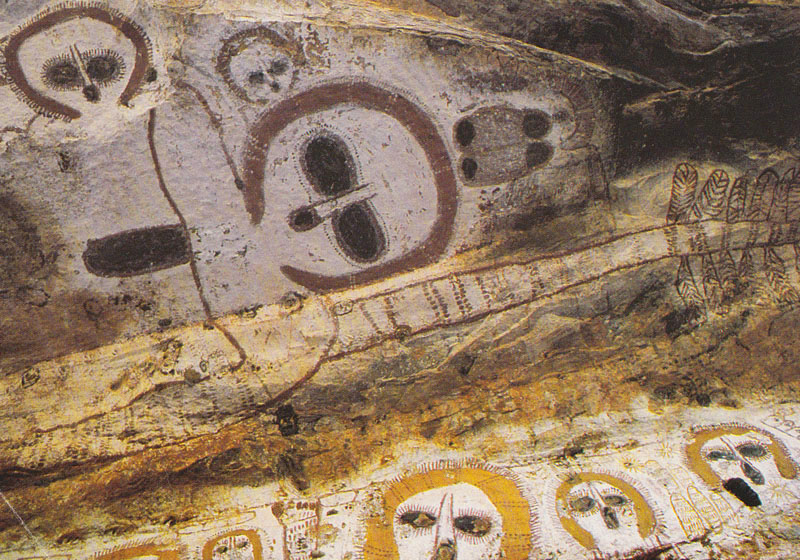
Sky Country and the logic of songlines
Aboriginal peoples across the continent encode geography, history, and law in song. Songlines are both maps and memory palaces which link water sources, camps, ceremonial grounds, and travel corridors to stars and seasonal markers. Far from being folklore in the narrow sense, these paths and their associated songs are operational knowledge systems that integrate sky and country for navigation, timing, and ethics. Scholarly syntheses by astronomers working with Elders and knowledge holders show that celestial knowledge underwrites route finding, resource management, and the timing of ceremony. This includes reported practices among Wardaman knowledge holders and other language groups in which specific stars or asterisms cue direction and sequence along a path. (ResearchGate)
Two principles are central for UAP studies. First, sky observations are not isolated events. They are embedded in stable narrative structures and mnemonic cycles that permit reliable transmission across generations. Second, the narratives are precise about place and relation. They link a sky configuration to a specific ridge, waterhole, or crossing. This stability and precision mean that accounts of luminous aerial encounters, when present within that framework, can be studied as consistent records with spatial anchors rather than as random anecdotes. (ResearchGate)
The Min Min lights: a living archive of luminous phenomena
The Min Min lights of the Channel Country around Boulia are among the best known Australian traditions of luminous aerial phenomena. Aboriginal and settler accounts converge on persistent behaviors: a glowing ball or diffuse light appears near the horizon or slightly above ground, paces a traveller or stockman, sometimes pursues, and eventually vanishes with no obvious source. Local councils and visitor centers underscore that Min Min is a defining feature of place identity, while recent academic and community projects have sought to document Indigenous perspectives on the lights. (boulia.qld.gov.au)
A neurobiological and optical line of research argues that an atmospheric inversion can create an inverted mirage known as a Fata Morgana that ducts distant light sources over the horizon. In field work in western Queensland, Jack Pettigrew reported that he could predict and demonstrate Min Min type lights under specific inversion conditions. The clinical and experimental optometry paper, together with explanatory summaries by Australian science outlets, remains the most methodical naturalistic account to date. (PubMed)
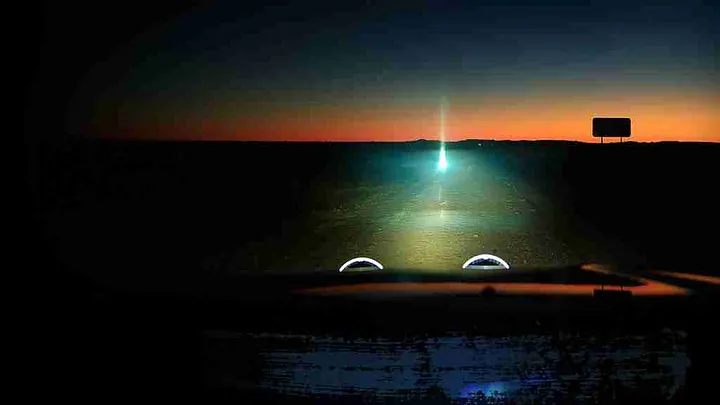
At the same time, ethnographic and journalistic work that foregrounds Indigenous voices records interpretations that cannot be reduced to optics alone. Some Elders describe the lights as sentient presences tied to water and to custodial themes of care and warning. In these tellings the lights may move travellers along particular areas or signal the presence of a powerful being such as the Rainbow Serpent. In a pedagogical resource Pitta Pitta Elders share local knowledge about Min Min on Country as part of a broader curriculum that integrates science with First Peoples perspectives. These accounts matter for UAP comparison because they do not treat the lights as amorphous scenery. They present them as agents that display intention and context sensitive behavior. (The Junction)
Comparison with modern UAP characteristics. Modern UAP reports frequently include silent luminous orbs, close ground level pacing of vehicles, sudden vector changes, intermittent appearance and disappearance, and attraction to water or shoreline environments. The US Government’s public reporting on UAP emphasizes that some incidents involve unusual kinematics and signature management inconsistent with known platforms, even as agencies caution that many cases remain unresolved due to limited data. In a purely functional sense, the Min Min portfolio intersects with the modern profile at five points: silence, persistence near environmental boundaries, pursuit or pacing, abrupt disappearance, and lack of a visible propulsion signature. (dni.gov)
Caveat. The Min Min literature also shows heterogeneity. Some reports are stationary horizon glows likely due to distant vehicle lights refracted in an inversion duct. Others involve maneuvering that seems to exceed a simple mirage. This argues for a mixed phenomenon space rather than a single cause. A careful researcher will therefore stratify the dataset by environmental conditions and by behaviors before drawing UAP level conclusions. (PubMed)
Sky beings and radiance: Wandjina, and disciplinary caution
The rock art and ceremonial life of Worrorra, Wunambal, and Ngarinyin peoples in the Kimberley includes Wandjina beings who are intimately associated with rain, cloud, and fertility. Their characteristic radiance is framed by spectral halos, headdresses, or surrounding motifs that sometimes prompt casual observers to misread them as representations of helmeted astronauts. Scholars who document Kimberley rock art and its chronologies caution strongly against such anachronistic readings. Wandjina are not aircraft pilots. They are powerful ancestral beings whose control of water and seasonal cycles underwrite life in monsoon country. Academic overviews and encyclopedia entries underscore this cosmological and environmental embedding. (Rock Art Australia)
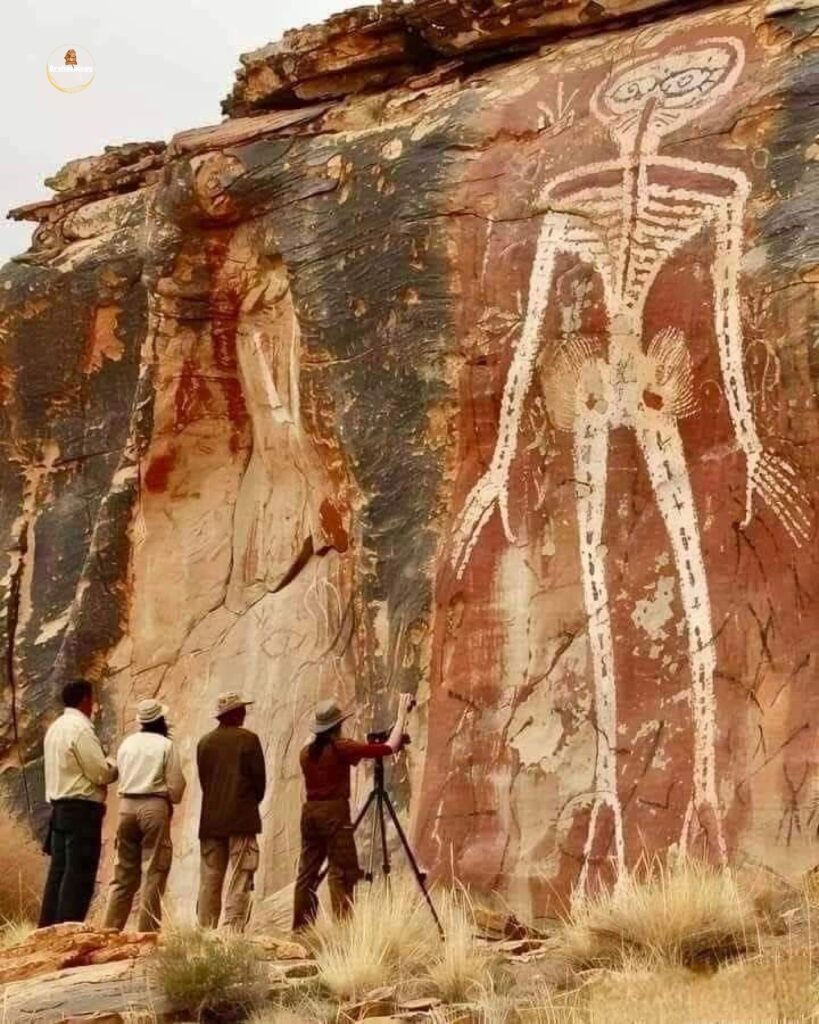
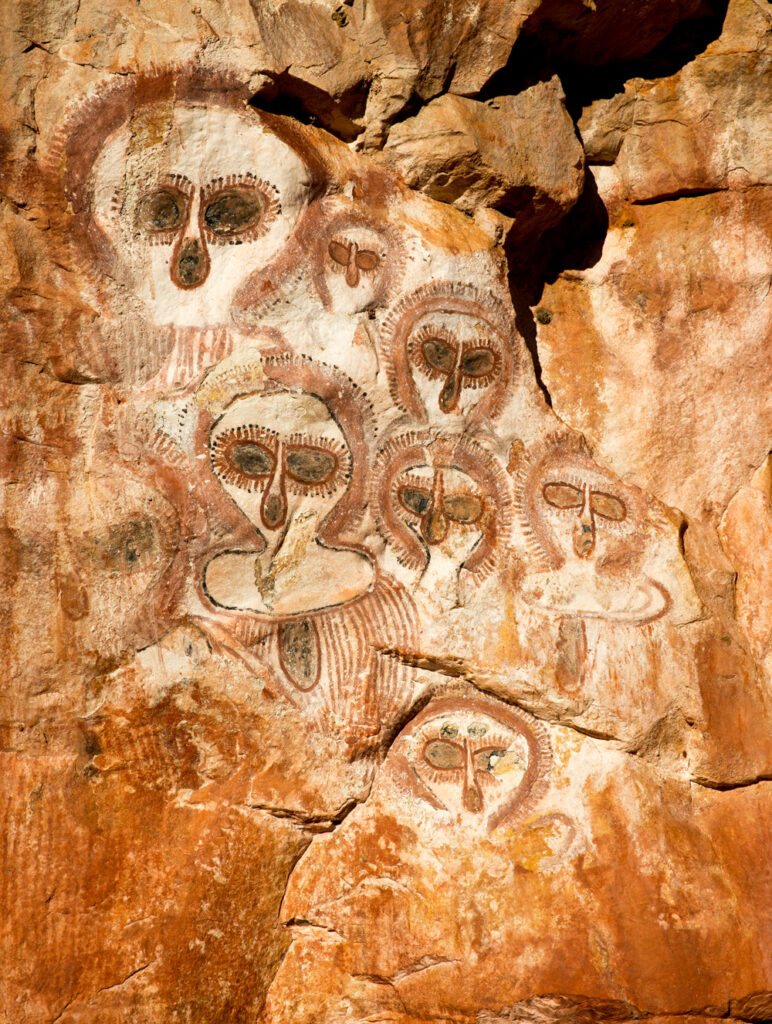
For UAP research, the lesson is methodological rather than evidentiary. Iconographic radiance is not proof of technological contact. Yet it reminds us that in Australia brightness and mobility in the sky have long been a register of meaning. Comparative work should ask whether narratives of luminous descent or ascent cluster in particular ecological niches or ceremonial calendars and then evaluate those clusters for overlap with modern UAP environmental patterns rather than project aerospace motifs onto sacred art. (Rock Art Australia)
The Seven Sisters and the chase motif
Pleiades (Kungkarangkalpa) is an important group of stars forming a the “Seven Sisters” myth across Australia. They represent a group of young women who are pursued by a hunter from whom they ran and hid, moving across the country as he kept following them. They eventually escaped, flying upward to the sky where they can now be seen in the constellation. In the Matu version of the dreamtime story the Minyipuru began their journey in Roebourne as a big group of sisters and mothers. At various places along the way they lost members of their group until eventually only seven sisters remained.
At Kalypa (Well 23 on the Canning Stock Route) the Minyipuru met a group of Jukurrpa men; it was the first time that either group had ever seen members of the opposit sex. The men tried to grab the women, but the women chased them and beat the men with their digging sticks. At Pangkapini the sisters met Yurla, an old man who had been following them all the way from Roebourne and he snatched one of the sisters until the 6 remaining tricked him and rescued her.
At another site to the East, he tried to grab 5 of the sisters but again they out tricked him and they all escaped, eventually making their way into the sky where they remain. Many of the important sites on their journey are wells along the Canning Stock Route.
Across many language groups in Australia, the Pleiades are narrated as a group of sisters pursued across land and sky by a relentless male figure associated with Orion. The story carries deep teachings about kinship, consent, and movement across the country. It is also tied to practical knowledge such as seasonal timing. With appropriate permissions, scholars have mapped the remarkable geographical spread of Seven Sisters narratives and their connection to songlines that extend across deserts and to the west coast. In this corpus the sky is not distant. It is a stage that repeats counsels for life on earth. (adsabs.harvard.edu)
For UAP analysis, the key element is the chase. There is a persistent motif of pursuit, separation, and regrouping in a cluster of luminous points that traverse a known path. Modern UAP case catalogs include pursuit and pacing behaviors, grouping and dispersal of lights, and re aggregation into one object. While the Seven Sisters is not a report of an aircraft, the structural similarity invites a comparative lens that looks for a broader cognitive schema in which moving lights express intent and relation. That schema prepares the ground for communities to encode anomalous aerial behaviors in narrative that endures. (dni.gov)
The “Seven Sisters” tales also spans across different cultures like the Ancient Greeks. They heavily feature themes of pursuit, escape, and sometimes unwanted advances or capture, often involving a hunter figure like Orion or an evil spirit chasing the sisters, who then transform into the Pleiades star cluster for safety, making abduction (or attempted abduction) a core part of the narrative.
Geomythology and impact memories: a test of oral reliability
One powerful line of work in Australian cultural astronomy examines Aboriginal oral traditions about places now known to be impact craters. At Tnorala or Gosses Bluff, for example, a Western Arrernte narrative describes a baby in a coolamon falling from the Milky Way and forming the ring shaped range that stands today. At Wolfe Creek or Kandimalal and at Henbury, stories about objects falling from the sky and scarring the earth coexist with accounts that ascribe different non impact origins. These studies establish that Australian oral traditions can preserve accurate memories of rare sky related events and anchor them in specific landscapes. This is vital for UAP research because it shows that oral systems are capable of maintaining event relevant information about luminous and high energy sky phenomena over very long timescales. (ResearchGate)
The conclusion here is neither that all luminous narratives are about impacts nor that impacts explain UAP. It is that Aboriginal oral systems have demonstrated capacity to encode, transmit, and localize data about extraordinary sky events. This underwrites the methodological legitimacy of reading song and story as serious records when they speak about lights that move in non ordinary ways. (arXiv)
Australian government archives and modern UAP characteristics
To compare ancient and recent narratives, we need a baseline for modern reports in Australia and allied jurisdictions. The National Archives of Australia holds RAAF and other files that recorded Unusual Aerial Sightings during the Cold War and beyond. Public facing archive materials describe investigations in the Woomera Prohibited Area during the period 1959 to 1963 and document both public reporting procedures and specific radar coupled cases, such as an RAN pilot near Nowra seeing bright objects that were concurrently tracked. While terminology in those decades used the older acronym UFO, the underlying data are relevant to UAP research today. (naa.gov.au)
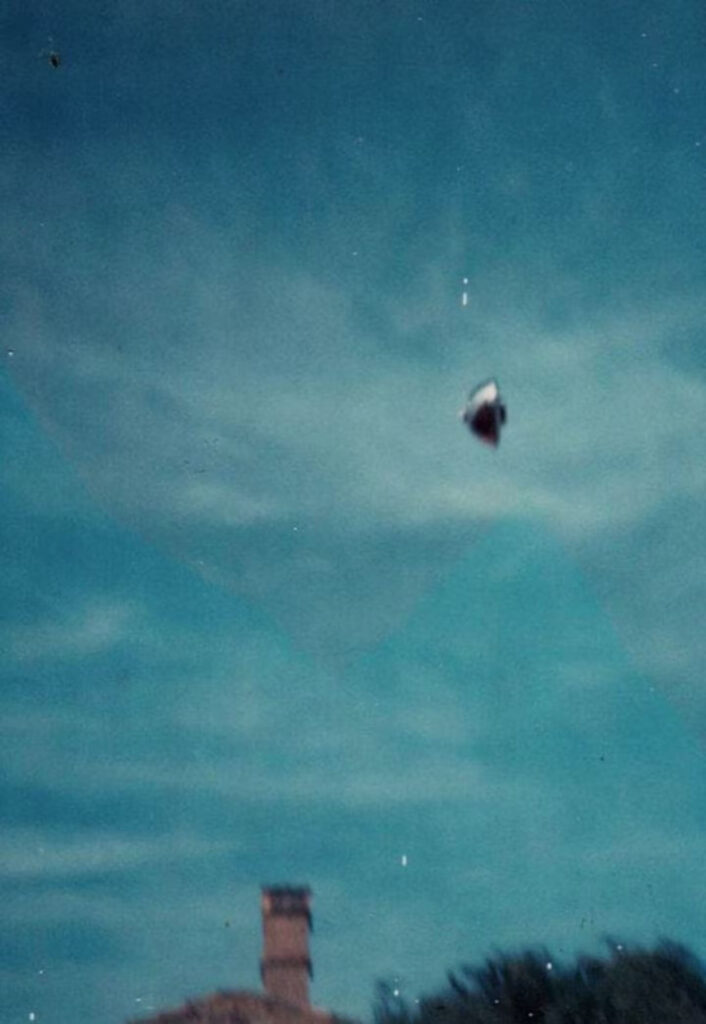
At the allied level, the United States Office of the Director of National Intelligence published a preliminary assessment in June 2021 that characterized unresolved incidents with unusual kinematics and recommended improved data collection. NASA’s 2023 study insisted on rigorous, standardized sensing and data curation for this domain. The All domain Anomaly Resolution Office’s 2024 reporting has emphasized the need for better quality data and has not confirmed extraterrestrial technology, although its public facing imagery portal demonstrates that official case collation and analysis continue. These institutional benchmarks allow us to articulate a modern profile without leaning on uncurated anecdotes. (dni.gov)
Comparative analysis: features that bridge song and sensor
a) Luminous orbs and diffused glows
The Min Min accounts speak of self luminous balls or diffused lights with soft edges and variable color. Modern UAP reports include luminous spheres and glows that exhibit movement without obvious propulsion or burning. Partial naturalistic explanations such as Fata Morgana can account for some stationary or gliding appearances. Others with abrupt maneuvering or terrain following pace may require additional mechanisms. The prudent approach is to stratify by behavior and environment. (PubMed)
b) Pursuit, pacing, and guidance
Multiple Aboriginal narratives frame luminous phenomena as interactive and agentive. In Min Min country this can include the light following a traveller or urging movement along a path. Modern UAP compilations include many pacing and pursuit sequences around vehicles and aircraft. In both corpora this behavior is interpreted through the host culture’s cosmology and threat models. For comparative method, the behavior itself is the common variable. (The Junction)
c) Abrupt appearance and disappearance
Sauntering lights that suddenly vanish and reappear are a mainstay of outback accounts and of radar or electro optical tracks in modern case files. Ducting and refraction can cause apparent discontinuities. Signature management and sensor limitations can as well. A serious comparison needs to treat simple horizon vanishings differently from disappearances directly in front of an observer with unobstructed sightlines. (PubMed)
d) Water and boundary zones
Indigenous tellings often link the lights to water or to old shorelines and to ancestral beings bound to those flows. Modern UAP datasets also show clustering near coasts, lakes, and river systems, though the causal mechanisms are not established. This overlap suggests that water linked contexts are a promising stratification variable for both archives. (The Junction)
e) Silent motion and lack of exhaust or wake
A striking feature of many Aboriginal accounts is the silent glide at close range. Modern UAP cases likewise emphasize absence of sonic booms at apparent supersonic speeds and lack of exhaust plumes in infrared. Silence at low speeds can be readily naturalized. Silence during apparent acceleration or terrain following needs closer scrutiny. (NASA Science)
Counterpoints and caution
Naturalistic optics and physiology.
The Fata Morgana model shows that under particular atmospheric inversions distant light sources can be refracted and magnified to appear as hovering orbs that pace an observer moving along a road. This does not negate all Min Min reports but it cautions against treating every light as a candidate for non ordinary technology. Optical physiology adds that dark adaptation, saccades, and autokinesis can exaggerate apparent motion in small lights against a uniform background. (PubMed)
Biological and geophysical sources.
Some outback lights may be due to insects, birds, or small mammal eye shine under unusual refractive conditions, or rare plasma like events analogous to ball lightning or earth lights near geological faults. None of these fully explains long pursuit behaviors, but they likely account for a percentage of reports. A layered explanatory model is more realistic than a single cause theory. (NASA Science)
Hermeneutic and ethical considerations.
The temptation to map sky beings in rock art or ceremony to spacecraft is strong but methodologically weak. Wandjina are rain and cloud beings within a living ceremonial system. The Seven Sisters story instructs ethics of relation and travel. It is inappropriate and inaccurate to recast these traditions as literal technical descriptions. Respectful UAP research should listen first, obtain permissions, and avoid collapsing spiritual categories into aerospace categories. (Rock Art Australia)
On modern files and confirmation.
Government archives in Australia and allied nations confirm that unknown aerial events have been recorded. They do not confirm foreign or off world craft. The best public reports emphasize data quality and standardization rather than extraordinary explanations. The comparative argument in this article does not require a technical verdict on origin. It requires only that the behavior space described in Aboriginal song and story overlaps with the behavior space recorded by modern sensors and observers. That overlap is real, but it is not proof of identity. (naa.gov.au)
Method for future work
- Community led protocols. Establish research partnerships with Traditional Owners and knowledge holders where community decisions determine what material can be shared and how.
- Behavioral coding. Build a coding scheme for luminous narratives that records behavior, environment, proximity to water, duration, and witness movement.
- Environmental coupling. Pair narratives with meteorological archives for inversion layers, wind, temperature profiles, and with geomagnetic or seismic records.
- Comparative baselines. Use official UAP datasets and public reports for allied nations as baselines for behavior classes and sensor returns.
- Place anchored analysis. Wherever permissible, use songline and toponym anchors to build geospatial layers that correlate with environmental variables and modern case density.
Conclusion
Australian First Peoples maintain one of the world’s richest archives of sky knowledge. In song lines, in stories about ancestral beings, and in regional narratives of lights that move with intention, the sky is a domain of law, navigation, and encounter. When we compare this record with modern UAP characteristics we find a functional overlap in several behaviors: silent luminous motion, pursuit and pacing, abrupt appearance or disappearance, and clustering near water or boundary zones.
At the same time, Min Min lights and related phenomena reside in a mixed space. Some percentage is likely due to atmospheric ducting, refraction, and visual perception. Another percentage may involve biological and geophysical sources. A residual category with more complex behaviors may align with the modern UAP profile. Aboriginal song and story give that residual a context. They indicate that communities have long encountered luminous agents in ways that mattered for travel, safety, and ceremony.
If UAP studies wish to be truly global and historically informed, they must engage Sky Country on its own terms. That means accepting both the rigor and the responsibilities of working with living knowledge systems, and it means building analytic bridges between songs, places, and sensors without collapsing differences of category and purpose. Done well, this comparative approach can enrich both science and country. (ResearchGate)
Claims taxonomy
Verified
- Aboriginal songlines are used for navigation and encode sky knowledge across multiple language groups, with peer reviewed documentation. (ResearchGate)
- Min Min lights are a well documented regional phenomenon in western Queensland with both Indigenous and settler accounts. (boulia.qld.gov.au)
- A peer reviewed optical model proposes Fata Morgana style inversion ducting as a mechanism for some Min Min observations. (PubMed)
- Australian government archives record investigations of unusual aerial sightings including events with concurrent radar observations. (naa.gov.au)
- Allied public reports characterize a subset of UAP incidents with unusual kinematics and call for improved data collection. (dni.gov)
Probable
- There is a functional overlap between some Min Min behaviors and modern UAP characteristics, particularly luminous silent pacing and abrupt disappearance. (PubMed)
- Place anchored Aboriginal narratives can preserve salient details about rare sky events over long timescales as shown by impact crater traditions. (narit.or.th)
Disputed
- Interpretations of Wandjina iconography as ancient astronauts or craft. Scholarly consensus locates Wandjina within rain and fertility cosmologies. (Rock Art Australia)
Legend
- Sacred narratives about radiance and sky beings that encode law, kinship, and seasonal knowledge, and are not meant as technical descriptions of vehicles. (UWA Research Repository)
Misidentification
- Some Min Min reports attributable to distant vehicle headlights ducted by inversion layers or to common optical effects such as autokinesis. (PubMed)
Speculation labels
Hypothesis
Some luminous encounters preserved in Aboriginal oral traditions represent a residual class of non prosaic aerial phenomena that overlaps with the modern UAP behavior space, particularly in water linked boundary zones and in pursuit or pacing sequences.
Witness Interpretation
Observers in Country interpret luminous aerial agents within established cosmologies such as Rainbow Serpent or Wandjina, which order the meaning of water, rain, and law. These interpretations guide conduct and are not reducible to technological metaphors. (Rock Art Australia)
Researcher Opinion
A respectful, community led program that codes behaviors in oral accounts, correlates them with environment, and compares them with modern UAP baselines would advance both cultural astronomy and UAP studies more than attempting to force spiritual narratives into technological molds. (ResearchGate)
References
Norris, R. P. “The Astronomy of Aboriginal Australia.” Proceedings IAU Symposium 260. Discusses sky knowledge beyond metaphor and its practical roles. (adsabs.harvard.edu)
Norris, R. P., with Wardaman knowledge holders. “Songlines and Navigation in Wardaman and other Australian Aboriginal Cultures.” PDF. (ResearchGate)
Hamacher, D. W., and Goldsmith, J. “Aboriginal Oral Traditions of Australian Impact Craters.” Journal of Astronomical History and Heritage. (narit.or.th)
Johnson, D. “Interpretations of the Pleiades in Australian Aboriginal and Torres Strait Islander Traditions.” Cambridge University Press. (CUP)
Rock Art Australia and related academic overviews on Kimberley rock art and Wandjina. (Rock Art Australia)
Pettigrew, J. D. “The Min Min Light and the Fata Morgana.” Clinical and Experimental Optometry. With ABC science summaries and UQ news release. (PubMed)
National Archives of Australia, public facing summaries of Unusual Aerial Sightings, Woomera investigations, and radar correlated cases. (naa.gov.au)
ODNI Preliminary Assessment on UAP, NASA Independent Study Team Report, AARO public materials. (dni.gov)
SEO keywords
Australian Aboriginal UAP, Min Min lights Aboriginal knowledge, songlines and sky country, Wandjina radiance Kimberley rock art, Seven Sisters Pleiades Dreaming, Aboriginal astronomy Hamacher Norris, Woomera UAP archives, ODNI UAP preliminary assessment, NASA UAP report 2023, comparative UAP characteristics, Indigenous geomythology impact craters, Aboriginal oral tradition and anomalous lights.