
If you ask an Assyriologist about the Anunnaki, they will talk about divine councils, underworld gods and royal ideology in Sumer and Babylon. If you ask YouTube it will give you gold-mining space gods from Nibiru, genetic engineering and UAPs in cylinder seals.
Caught between those two worlds sits the Epic of Gilgamesh, our oldest major piece of literature and one of the key launchpads for modern “Anunnaki as extraterrestrial” narratives.
This article stays disciplined on the data. We go to the tablets first, then to the people who read them. Only after that do we examine how Babylonian myth was re-wired into an ancient-astronaut story that still shapes popular thinking about UAP and non-human intelligence today.
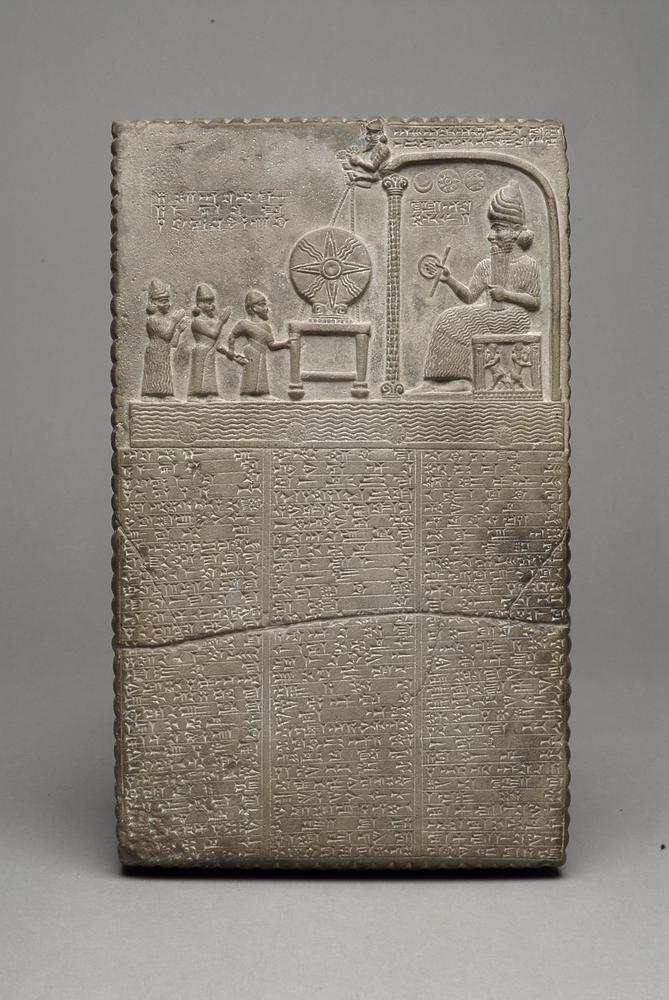
Who are the Anunnaki in the original sources?
In Sumerian and Akkadian texts, Anunna or Anunnaki refers to a category of gods.
Key points from standard reference works and recent scholarship:
- The word is usually written with signs meaning “offspring” plus “prince”, and is often translated as “princely seed” or “royal offspring”.
- In early Sumerian texts the Anunnaki are a group of high gods, descendants (unna) of An (or Anu meaning heaven), the sky god, and Ki, the earth goddess (also meaning earth). They are associated with decreeing fates and presiding over assemblies.
- Later Akkadian and Babylonian sources shift the emphasis. The Anunnaki appear as underworld deities, linked with the netherworld of Ereshkigal, while another divine group, the Igigi, often represents the heavenly gods.
Ancient lexical list or tablet describes the Anunnaki as gods in a very local sense, tied to Mesopotamian cosmology.
Anunnaki in myth cycles beyond Gilgamesh
Several major Mesopotamian compositions feature the Anunnaki as a divine collective:
- Enki and the World Order describes the Anunnaki as receiving domains and duties in the ordered world.
- Inanna’s Descent to the Netherworld shows them as terrifying judges in the underworld, summoned by Ereshkigal to pass judgment on the goddess.
- Later Hurrian and Hittite myths adopt the term for older, chthonic gods who dwell below the earth.
In other words, the Anunnaki are a moving category. They start as a heavenly council, then drift toward underworld “old gods” in later cultures. That fluidity is important, because modern reinterpretations often freeze them into a single, rigid identity.
Gilgamesh 101: Texts, tablets and the Anunnaki cameo
What is the Epic of Gilgamesh?
The Epic of Gilgamesh is a cycle of Sumerian and Akkadian stories about Gilgamesh, king of Uruk, probably a real ruler in the late Early Dynastic period, whose memory was mythologised across more than a thousand years.
The main textual layers are:
- Old Babylonian poems dated around 18th to 17th century BCE.
- The Standard Babylonian version edited by the scribe Sîn-lēqi-unninni, usually dated to the late second millennium BCE, preserved on tablets from the royal library of Ashurbanipal at Nineveh and other sites. (Internet Archive)
- A tablet fragment from the British Museum dated to at least 3,500 BC
Andrew George’s critical edition The Babylonian Gilgamesh Epic plus his Penguin translation The Epic of Gilgamesh are the current gold standards for the text and its reconstruction. (Internet Archive)
Where do the Anunnaki appear in Gilgamesh?
The Anunnaki are not the central players in the epic. They appear briefly, yet significantly, in scenes that deal with fate and the flood.
Examples from the Standard Babylonian version, in George’s translation: (Scribd)
- In the underworld passages, the Anunnaki are invoked as “great gods” who sit in assembly and decree destinies.
- In the flood story told by Utnapishtim, they are among the divine assembly that decides on the destruction and later preservation of humankind.
This matches the broader Mesopotamian role of the Anunnaki as a high council of gods who make collective decisions about humans, rather than as technicians or pilots of craft.
Astronomical and cosmic layers
Several scholars and independent researchers have noted that Gilgamesh is saturated with cosmic imagery.
- Lewis Spence already suggested in 1916 that aspects of the narrative, such as Gilgamesh and Enkidu’s journey and the Bull of Heaven episode, may encode astral or astrological motifs. (Wisdom Library)
- More recent essays argue that the epic mirrors precessional and equinoctial themes, mapping Gilgamesh’s journey to shifts in star lore and celestial order. (uruk-warka.dk)
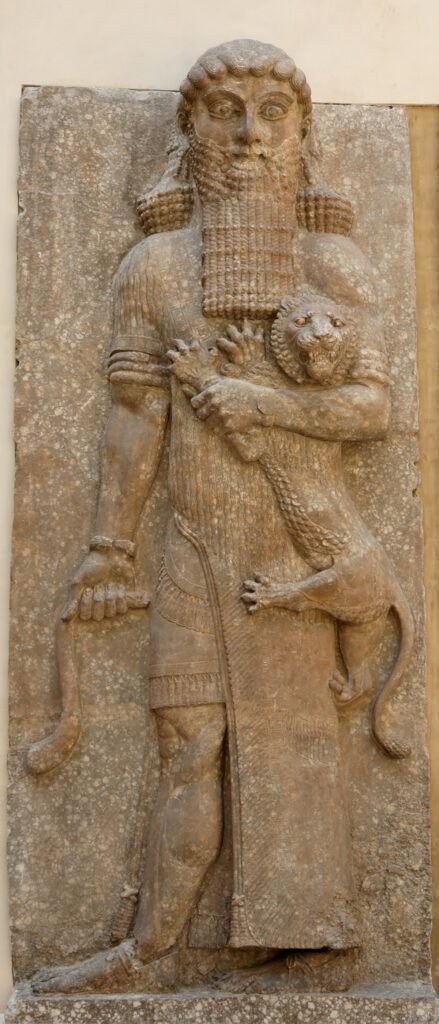
Documents and archaeology: what we actually have
The tablet evidence
For a data first approach we start with what is literally carved in clay.
Key Gilgamesh tablets and related sources include: (Internet Archive)
- Eleven main tablets from Nineveh contain most of the Standard Babylonian epic.
- Additional fragments from smaller sites such as Sippar, Nippur and others, which help fill gaps.
- Old Babylonian fragments that preserve earlier versions of episodes like the Cedar Forest journey.
For the Anunnaki as a group we rely on:
- Literary myths such as Enuma Elish, Enki and the World Order, Atrahasis, Inanna’s Descent and assorted hymns.
- God-lists and lexical texts where divine names and categories are catalogued.
- Later Assyrian and Babylonian commentaries.
These are physical objects in museum collections, not channeled texts or modern narratives.
Iconography, reliefs and cylinder seals
Mesopotamian art shows gods and kings in highly stylised but recognizable forms:
- Deities are anthropomorphic, usually human shaped but larger than mortals.
- They wear horned crowns and radiate a numinous glow called melam, often suggested visually by rays or elaborate robes.
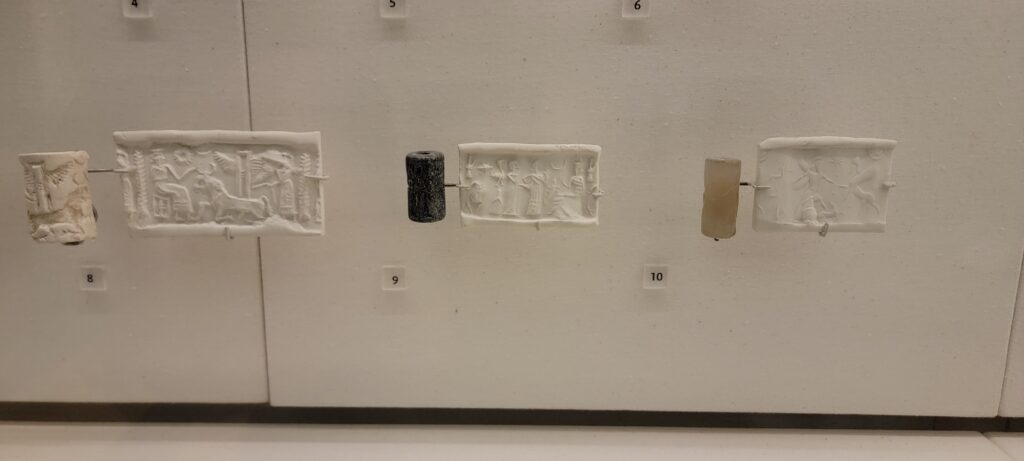
- Reliefs and cylinder seals depict scenes of divine council, combat with monsters, or the bestowal of authority on kings.
No surviving artifact from a secure Mesopotamian context is labeled “Anunnaki” in the sense of a full group portrait, although individual members like Enlil, Enki, Inanna and Shamash are frequently shown.
Modern ancient astronaut literature often reinterprets these standard motifs as space suits and helmets. From an iconographic standpoint they are classic Near Eastern divine regalia.
Ancient “witnesses” and modern experts
Who counts as a witness for Babylonian myths?
Unlike a modern UAP case with living observers, here our “witnesses” are:
- The scribes who wrote and recopied tablets, sometimes leaving colophons that identify the temple or library where the text was stored.(Internet Archive)
- The kings who commissioned royal libraries, such as Ashurbanipal of Assyria, who explicitly boasted of collecting “the writings from before the flood”.(Wisdom Library)
- The archaeological teams of the nineteenth and twentieth centuries who excavated Nineveh, Uruk and other sites and brought the tablets into modern scholarship.
Their testimony is not an oral memory of sky craft. It is the survival and copying of literature that was already mythic in their own times.
Modern Assyriologists and historians
Key academic voices for understanding the Anunnaki and Gilgamesh include:
- Andrew R. George, whose two volume The Babylonian Gilgamesh Epic and later Penguin translation reconstruct and translate the epic based on all known tablets. (Internet Archive)
- Jeremy Black and Anthony Green, whose illustrated dictionary Gods, Demons and Symbols of Ancient Mesopotamia summarises the roles and iconography of Mesopotamian deities, including the Anunnaki. (El Bestiario del Hypogripho Dorado)
- Nicole Brisch, whose work on Mesopotamian gods and god lists synthesises how categories like Anunna and Igigi functioned in cult and literature. (Wikipedia)
- Gwendolyn Leick, whose Dictionary of Ancient Near Eastern Mythology unpacks the structure of myths where the Anunnaki appear. (Ancient Mesopotamia)
These scholars agree on a basic point. The Anunnaki are gods within a traditional pantheon, with fluid but definable roles. There is no trace in the original languages of spacecraft, planets beyond the known ones, or genetic laboratories.
Zecharia Sitchin and the Anunnaki as extraterrestrials
The 12th Planet thesis
The modern idea that the Anunnaki are a race of physical, technologically advanced extraterrestrials comes primarily from Zecharia Sitchin (1920–2010).
Across his Earth Chronicles series, beginning with The 12th Planet in 1976, Sitchin argued that:
- The Sumerians recorded a twelfth “planet” called Nibiru in a long elliptical orbit of 3,600 years.
- The Anunnaki were the inhabitants of Nibiru, who came to Earth to mine gold.
- They genetically engineered Homo sapiens as a slave species by combining their DNA with that of hominids.
- Much of early human history and myth, including the flood and the rise of civilization in Sumer, reflects this intervention. (Wikipedia)
In this schema, the Anunnaki are not deities in a symbolic cosmos. They are a visiting civilization with advanced technology, essentially a deep time UAP civilization with boots on the ground.
Reception and academic criticism
Sitchin’s books sold millions of copies and seeded a cultural meme that later shows like Ancient Aliens amplified, so his influence in the UAP-adjacent imagination is huge.
From a scholarly perspective, however, his work has been described as pseudoscience and pseudohistory:
- Professional Sumerologists, Assyriologists and historians point out systematic mistranslations of cuneiform, arbitrary reinterpretations of divine names as planets and rockets, and incorrect astronomy.
- Michael S. Heiser’s long running project “Sitchin Is Wrong” walks line by line through Sitchin’s key claims, showing where they conflict with standard reference grammars and dictionaries of Sumerian and Akkadian. (sitchiniswrong.com)
- Historian Ronald Fritze notes that Sitchin assigns novel meanings to signs, such as claiming that the divine determinative DIĜIR means “pure ones of the blazing rockets”, which does not match any accepted lexicon. (Wikipedia)
Why the thesis persists
Despite academic rejection, the Sitchin-style Anunnaki endure in popular culture because:
- They offer a grand unifying story about human origins, gods and technology.
- Gilgamesh and the flood myths already feel eerily familiar to readers raised with biblical narratives, which makes the “hidden truth” framing compelling. (CompellingTruth.org)
- Online communities, videos and derivative authors re-amplify the ideas without checking primary sources.
From a UAPedia perspective, this shows how myth, partial data and speculative leaps can coalesce into a powerful narrative that shapes how many people approach UAP and ancient NHI hypotheses.
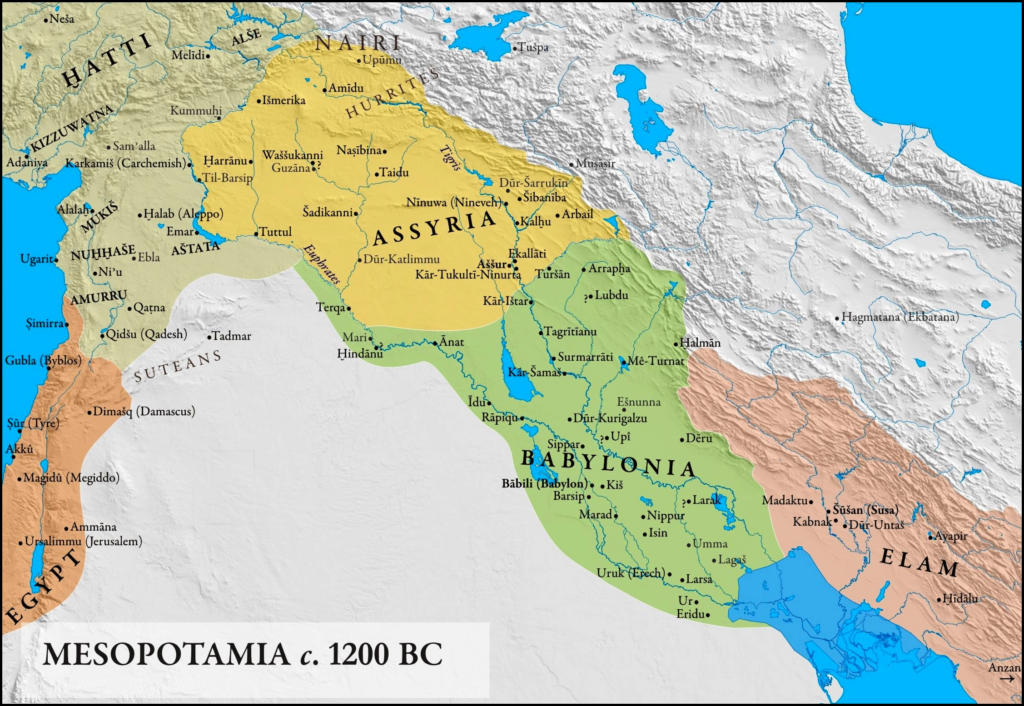
Gilgamesh, the Anunnaki and UAP: data driven perspectives
If we bracket Sitchin’s specific errors but keep the wider question open, what can a careful, data first reading of Gilgamesh and Babylonian Anunnaki traditions say that is relevant to UAP and NHI discussions?
Historical Gilgamesh and mythic overlay
Most scholars accept that Gilgamesh was probably a real Early Dynastic king of Uruk.
- King lists and some independent inscriptions mention a Gilgamesh of Uruk in a sequence of rulers that looks historical.(tota.world)
- The epic then turns him into a semi divine figure, “two thirds god and one third human”, whose exploits include slaying monsters, meeting immortal survivors of the flood and conversing with gods. (Theosophical Society)
From a comparative-religion angle, this is exactly what complex societies do. Real kings, real city states and real river floods become the scaffolding for mythic journeys.
Claims taxonomy:
- Gilgamesh as historical king of Uruk: Probable
- Specific episodes in the epic as factual history: Legend
Sky gods, fates and “non human councils”
The Anunnaki in Gilgamesh and related myths behave in ways that resonate with modern NHI discussions, even if the form is religious rather than technological:
- They gather in councils to decide the fates of humans and cities, a pattern that parallels divine assemblies in many cultures and also modern ideas of NHI “councils” overseeing human development. (Wikipedia)
- They are associated with both the heavens and the underworld, hinting at a multi domain presence that modern UAP researchers might call “trans-dimensional” or “multilevel”.
- Their decisions blend moral judgment, political calculus and cosmic housekeeping, rather than simple benevolence or hostility.
A Vallée style “control system” interpretation would say that whether or not the Anunnaki correspond to a literal group of entities, the pattern of a higher order council shaping human destiny recurs often enough to pay attention to.
Speculation label: Hypothesis
This does not mean that the Anunnaki are literally the operators of modern UAP. It suggests that human cultures have long encoded encounters with “more than human” agency in stories of councils of sky gods.
Astronomical alignments and cosmic journeys
The epic’s obsession with journeys to the edges of the world, across seas of death and through twin peaked mountains has invited astral readings for over a century: (uruk-warka.dk)
- Gilgamesh’s trip to Utnapishtim across the “waters of death” can be read symbolically as a crossing of celestial boundaries.
- The twelve tablet structure and recurring numerical motifs have been linked to zodiacal and precessional cycles.
- Some modern writers propose that the story encodes sky watching knowledge at a level that implies advanced astronomical measurement.
Here the data are more ambiguous. Ancient Mesopotamians certainly tracked stars and planets with impressive accuracy. Ritual and myth were aligned to the heavens. That does not require external technological assistance, although it does fit comfortably with the idea that sky events, including possible rare UAP manifestations, strongly impressed their worldview.
Critics, debunkers and the line between legend and hoax
Because Anunnaki lore straddles mainstream archaeology and fringe ancient astronaut material, it has attracted several types of critique.
Academic debunking of the “space gods” reading
Scholars like Michael Heiser, Nicole Brisch and others argue that: (sitchiniswrong.com)
- There is no cuneiform text that describes Anunnaki arriving in craft, orbiting a hidden planet or performing genetic experiments.
- The words Sitchin translates as “rockets” or “fiery chariots” refer in context to temples, thrones, celestial bodies or divine radiance.
- Sitchin’s Nibiru is not a twelfth planet in Sumerian astronomy, but a flexible term that can denote a crossing point, a star associated with Marduk or Jupiter depending on period and text. (Yumpu)
From this vantage point, the “Anunnaki as ETs” narrative is a modern overlay that tells us more about twentieth century preoccupations with space travel than about Bronze Age religion.
Cultural critics and the mythic milieu
Recent work in religious studies also situates Anunnaki talk within a larger “cultic milieu” where new religious movements, UAP lore and re-enchanted myth blend together: (Student Theses Leiden University)
- The Anunnaki became a flexible symbol for hidden elites, lost origins and offstage powers.
- Ancient Mesopotamian gods are re-framed as distant ancestors, genetic engineers or even oppressors, depending on the audience.
This has parallels with how other mythic figures, from the Nephilim to the Pleiadians, are re coded in modern contactee and disclosure oriented narratives.
Speculation label: Researcher opinion
From a UAPedia standpoint, this does not invalidate every non orthodox idea about Anunnaki. It shows the need to separate what the tablets say, what comparative myth can suggest, and what modern meaning making adds on top.
Claims taxonomy
To keep the landscape clear, here are core claims that appear in this topic space, rated according to UAPedia’s taxonomy.
Historical and textual claims
There was a historical king of Uruk named Gilgamesh.
- Basis: Sumerian King List, independent inscriptions, convergence of later tradition.(tota.world)
- Classification: Probable
The Epic of Gilgamesh preserves genuine second millennium BCE Mesopotamian myth and ritual themes.
- Basis: securely dated tablets from known archaeological contexts, stratigraphy and palaeography.(Internet Archive)
- Classification: Verified
The Anunnaki are a class of Mesopotamian deities associated with divine assemblies, fate and, later, the underworld.
- Basis: multiple myths, god lists, lexical texts and later Hurrian Hittite parallels.(Wikipedia)
- Classification: Verified
Gilgamesh contains significant astronomical symbolism and may encode sky lore.
- Basis: repeated cosmic motifs, work of Spence and later authors, known Mesopotamian astro theology.(uruk-warka.dk)
- Classification: Probable
Extraterrestrial and UAP related claims
The Anunnaki were physical extraterrestrials from a twelfth planet called Nibiru who engineered humanity.
- Basis: modern interpretations by Sitchin and followers, not supported by standard translations.(Wikipedia)
- Classification: Disputed
Mesopotamian cylinder seals and reliefs show rockets, spacesuits and UAP craft.
- Basis: visual pareidolia and reinterpretation of standard divine iconography, no cuneiform labels supporting these readings.(El Bestiario del Hypogripho Dorado)
- Classification: Disputed
Ancient myths like Gilgamesh preserve cultural memory of genuine non human intelligences interacting with humans, although in religious language.
- Basis: cross cultural recurrence of sky god themes, modern UAP reports of “beings from the sky”, Vallée style control system ideas.
- Classification: Probable as a broad comparative hypothesis, not tied to any specific Anunnaki story.
Legend, misidentification and hoax
Episodes such as Gilgamesh slaying Humbaba or meeting Utnapishtim are factual historical events.
- Basis: none outside the epic itself, which is poetic myth. (tota.world)
- Classification: Legend
Every depiction of a horned, radiant figure in Mesopotamian art is proof of Anunnaki astronauts.
- Basis: misidentification of standard religious iconography, failure to engage with specialist literature. (El Bestiario del Hypogripho Dorado)
- Classification: Misidentification
Fabricated “Sumerian quotes” on the internet prove advanced astrophysics or DNA science.
- Basis: unattributed “tablet translations” that cannot be traced to museum numbers or publications.
- Classification: Hoax when individual quotes can be shown to have no origin in any known cuneiform corpus.
Speculation labels
Hypothesis
- Astronomical and precessional readings of Gilgamesh.
- Interpreting Anunnaki councils as intuitive precursors of a non human “governing intelligence”.
Witness interpretation
- Later religious readers projecting their own concerns about justice, mortality and kingship onto Gilgamesh and the Anunnaki.
Researcher opinion
- Sitchin’s Earth Chronicles are a narrative.
- Academic evaluations that situate Anunnaki UAP talk within a modern cultic milieu.
- Vallée inspired control system perspectives applied to Near Eastern myth.
References
Black, J., & Green, A. (1992). Gods, demons and symbols of ancient Mesopotamia: An illustrated dictionary. London: British Museum Press. Retrieved from tuscriaturas.home.blog/wp-content/uploads/2018/12/encyclopedia-of-gods-demons-and-symbols-of-ancient-mesopotamia-an-illustrated-dictionary-jeremy-black-anthony-green.pdf?utm_source=uapedia.ai (El Bestiario del Hypogripho Dorado)
Brisch, N. (2016). Anunna (Anunnaku, Anunnaki). In Ancient Mesopotamian Gods and Goddesses. University of Pennsylvania Museum. Retrieved from www.awluo.com/mesopotamia/anunnaki?utm_source=uapedia.ai (Wiley Online Library)
George, A. R. (2003). The Babylonian Gilgamesh epic: Introduction, critical edition and cuneiform texts (2 vols.). Oxford: Oxford University Press. Retrieved summary via archive.org/details/andrew-george-the-babylonian-gilgamesh-epic-2003?utm_source=uapedia.ai (Internet Archive)
George, A. R. (2020). The Epic of Gilgamesh (rev. ed.). London: Penguin Classics. Overview at www.harvard.com/book/9780140449198?utm_source=uapedia.ai (Harvard)
Heiser, M. S. (2013). The myth of a 12th planet. Retrieved from www.yumpu.com/en/document/view/9664811/the-myth-of-a-12th-planet-michael-s-heiser?utm_source=uapedia.ai and companion site sitchiniswrong.com/?utm_source=uapedia.ai (Yumpu)
Leick, G. (1998). A dictionary of ancient Near Eastern mythology. London: Routledge. Summary references via ancientmesopotamia.org/ideology/anunnaki?utm_source=uapedia.ai (Ancient Mesopotamia)
Spence, L. (1916). Myths and legends of Babylonia and Assyria. London: Harrap. Public domain edition via Project Gutenberg: www.gutenberg.org/ebooks/45137?utm_source=uapedia.ai (Project Gutenberg)
“Anunnaki.” (2025). In Encyclopedia Britannica. Retrieved from www.britannica.com/topic/Anunnaki?utm_source=uapedia.ai (Encyclopedia Britannica)
“Anunnaki.” (2025). In Wikipedia. Retrieved from en.wikipedia.org/wiki/Anunnaki?utm_source=uapedia.ai (Wikipedia)
“Gilgamesh.” (2025). In Wikipedia. Retrieved from en.wikipedia.org/wiki/Gilgamesh?utm_source=uapedia.ai (Wikipedia)
“Anunnaki theory in the modern cultic milieu.” (n.d.). Leiden University student thesis. Abstract via studenttheses.universiteitleiden.nl/access/item%3A3480285/view?utm_source=uapedia.ai (Student Theses Leiden University)
SEO keywords
Anunnaki Gilgamesh, Babylonian Anunnaki myths, Epic of Gilgamesh Anunnaki, Sumerian gods and UAP, Zecharia Sitchin Nibiru critique, ancient astronauts Anunnaki, Mesopotamian sky gods, Gilgamesh flood story Anunnaki, non human intelligence in Babylonian myth, UAP ancient myths Anunnaki