
What follows is a data-driven profile that traces what can be verified about Robert Scott “Bob” Lazar and what remains in dispute.
Each major claim is paired with publicly available evidence, official records where they exist, and on-the-record reporting from broadcast and print outlets.
This article privileges primary documents, law-enforcement records, government or laboratory statements, and first-run journalism. Where we cite a source with a strong point of view, we note that, and we weigh it against independent material.
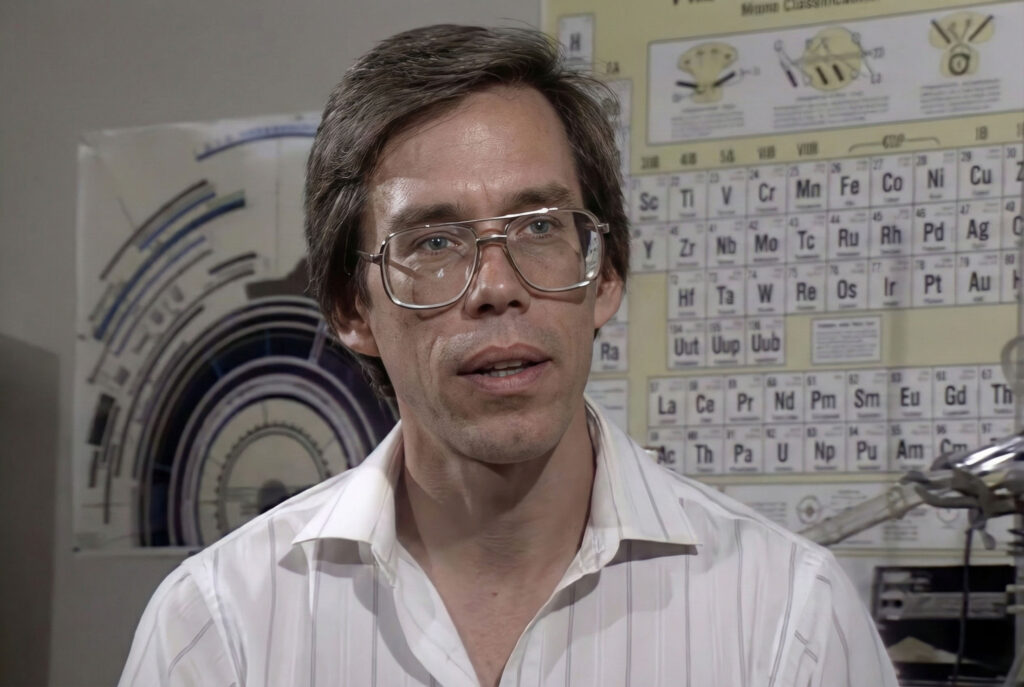
The moment that put Area 51 on the map
On May 15 and again in November 1989, investigative reporter George Knapp and Las Vegas station KLAS aired interviews with an anonymous figure using the name “Dennis,” then unmasked him as Bob Lazar.
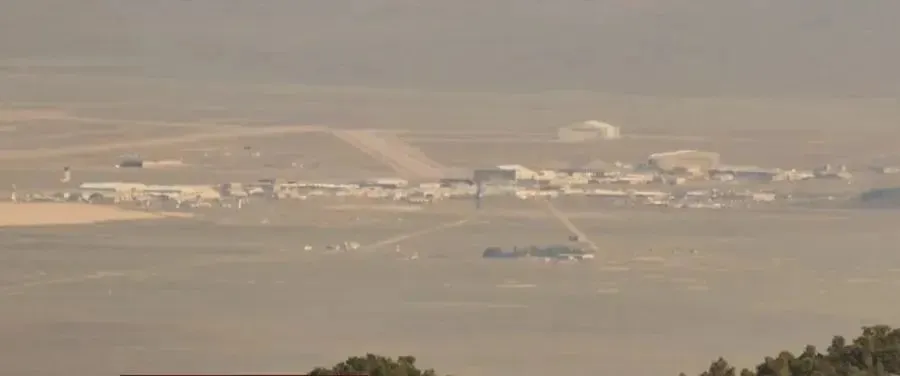
Lazar said he had worked at a site he called S-4, south of Groom Lake on the Nellis range, where he claimed to have seen and helped analyze non human craft and a gravity-based propulsion system. The segment and follow-ups became a cultural shock wave and pushed Area 51 into mainstream awareness. (YouTube)
Lazar’s core technical storyline has been remarkably consistent in broad strokes since those broadcasts.
He said the program involved nine craft, that the power system used an isotope of element 115, and that his compartment was focused on reverse engineering a “sport model” vehicle.
He described a central reactor, wave guides, and “gravity amplifiers” as the working heart of the system. These descriptions appeared again in later interviews and documentaries, which sustained public interest for decades. (YouTube)
The verifiable paper trail: what is on record
Los Alamos era, 1982
A front-page feature in the Los Alamos Monitor profiled Lazar for shoehorning a jet engine into a Honda and described him as a physicist at the Los Alamos Meson Physics Facility.
The same summer, the Santa Fe New Mexican ran a similar feature. Whatever the title, the local coverage is important because it anchors Lazar to time and place and shows he was in that ecosystem during 1982. (Internet Archive)
The KLAS 1989 segment added another data point. When Knapp’s team asked Los Alamos National Laboratory about Lazar, a spokesperson said they had no record of him as an employee.
The KLAS piece then showed a page from a 1982 Los Alamos phone directory listing “Lazar Robert” among laboratory personnel and technicians. In the segment, Knapp notes the lab’s denial and juxtaposes it with the directory and the newspaper articles.
Later reconstructions by researchers argue the directory tag “K/M” indicates a contractor placement through Kirk-Mayer, which would explain why LANL staff files might not show a direct employee record. (YouTube)
Desert Blast and the public person
By the early and mid 1990s, Lazar co-organized a private pyrotechnics gathering called Desert Blast with Jim Tagliani.
Wired covered it in a long feature, documenting Lazar’s role in the festival and noting his new notoriety after the KLAS broadcasts.
This places Lazar in Nevada communities of experimenters and “black-world” watchers who were mapping the Groom Lake testing culture from legal vantage points. (WIRED)
United Nuclear and later business record
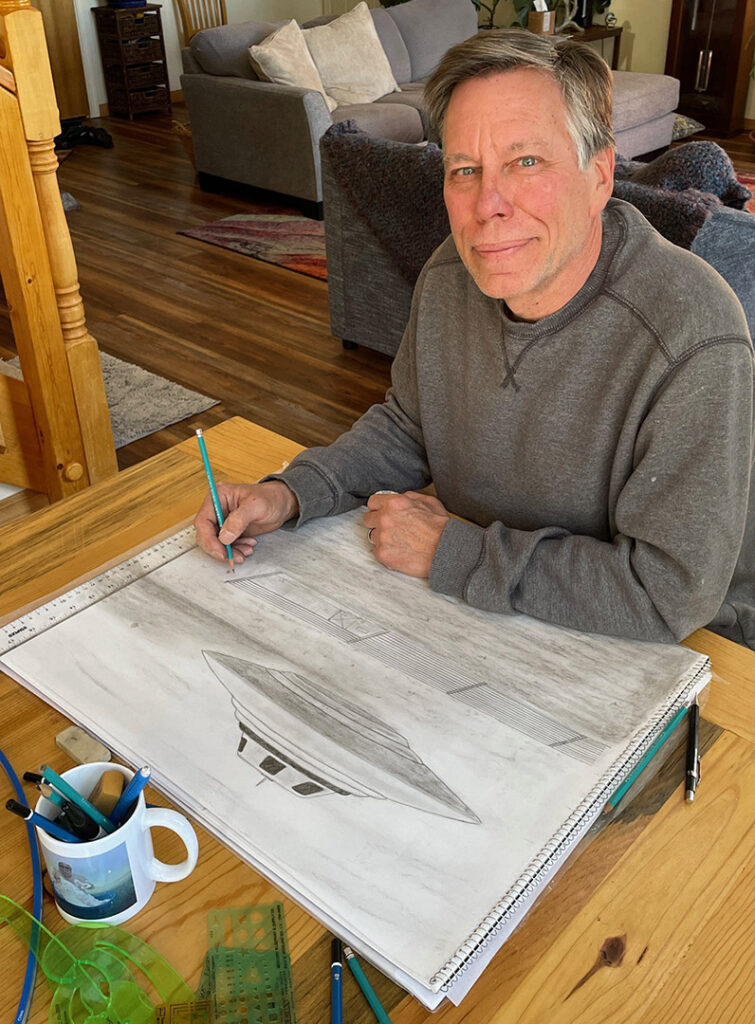
Lazar and Joy White formed United Nuclear Scientific to sell lab supplies and curiosities. Wired profiled the business in 2006, describing a dramatic multi-agency raid related to the sale of chemicals that can be used to make illegal fireworks.
The federal case ended with a plea and probation for the company; a U.S. Consumer Product Safety Commission release explicitly identifies United Nuclear and Lazar. The company later relocated to Michigan and continues to operate online. (WIRED)
Two more official touchpoints
In 2013 the CIA released histories that formally acknowledged Area 51 as a site for U-2, A-12, and related flight-test programs. These releases do not speak to S-4 or craft, but they confirm the location’s historic role in deep-black aerospace development.
In 2019 Lazar’s name surfaced again when state and federal agents searched United Nuclear as part of a homicide inquiry into illicit thallium procurement. FOIA-released police records document that the multijurisdiction team’s purpose was to trace potential sources of the poison. (National Security Archive)
The claims and the counter-record: a line-by-line audit
Below is a data-first summary of Lazar’s major claims, matching them against accessible records.
Claim: S-4 exists near Papoose Lake, south of Groom Lake, and stored multiple non human craft.
Record status: No official acknowledgement of S-4 exists in public CIA histories or declassifications about Groom Lake and the Nellis range. S-4 appears only in witness narratives and secondary reconstructions.
That absence is not dispositive, but it leaves the claim in a documentary vacuum. (National Security Archive)
Claim: Lazar worked on propulsion systems of one craft and read briefing books describing non human origin.
Record status: No program documentation is public. Independent corroboration remains limited to Lazar’s circle and television interviews. The KLAS series remains the primary source for Lazar’s own technical story. (YouTube)
Claim: An isotope of element 115 powered the reactor.
Record status: Element 115, now officially named moscovium, was first synthesized in 2003 by a Dubna-Livermore team. All known isotopes are very short lived. There is no scientific confirmation of a stable moscovium isotope in the literature.
That does not rule out unknown long lived isotopes near the theorized island of stability, but none has been publicly observed. (Joint Institute for Nuclear Research)
Claim: Lazar held advanced degrees from MIT and Caltech.
Record status: In the 1989 KLAS series, Knapp reported the schools Lazar named “say they never heard of him.”
Skeptical researchers have echoed that, and no registrar documentation has surfaced to contradict it. Lazar’s supporters counter that records were expunged. The burden of proof remains unresolved, and the claim is disputed. (YouTube)
Claim: Lazar worked at Los Alamos as a physicist.
Record status: The 1982 phone directory and press coverage show him at Los Alamos facilities and in the community, but later research indicates he was likely placed by a contractor and working as a technician. Los Alamos, when contacted by KLAS in 1989, said it had no record of him as staff.
The contradiction between community coverage calling him a physicist and official silence about a staff role is one of the most persistent intersections of evidence and ambiguity in the Lazar file. (YouTube)
Claim: Nighttime test flights at Groom Lake drew him to take friends to public vantage points where they saw UAP.
Record status: Groom Lake watchers in the 1990s documented extensive classified flight activity and tracked radio traffic, but those open-source chronicles are consistent with developmental stealth aircraft programs at the time. Nothing public confirms non human craft. (WIRED)

Public appearances that shaped the narrative
1989 KLAS series
The initial broadcast under the alias “Dennis,” followed by November’s on-camera unmasking, is ground zero for the modern Area 51 legend in the popular imagination. Those segments remain essential source material for Lazar’s technical claims. (YouTube)
Media and film
Through the 1990s Lazar kept a lower profile while becoming a figure in counterculture reporting and the Wired coverage of Desert Blast. In 2018 he returned to screens through Jeremy Corbell’s feature documentary “Bob Lazar: Area 51 & Flying Saucers,” with Knapp as a producer. The film reframed the saga for a new streaming audience. (WIRED)
Long-form podcasting
In June 2019 Lazar and Corbell appeared on The Joe Rogan Experience, where Lazar reiterated key elements of his account and described long-term personal impacts. That appearance amplified his story to a huge digital audience. (YouTube)
Storm Area 51 moment
When a viral event proposed a mass rush on the base in 2019, Lazar publicly urged people not to attempt it and underscored that Area 51 is an active classified test range. His caution was widely reported. (FOX 10 Phoenix)
S4: The Bob Lazar Story
A separate long-form project titled S4: The Bob Lazar Story is in post-production, positioned as a focused retelling of Lazar’s account centered specifically on the alleged S-4 facility and the technical architecture he described in 1989. What has been signaled in promotional materials and interviews is an intent to revisit primary-era sources; including archival KLAS segments, site geography near Papoose Lake, and propulsion schematics attributed to Lazar; and to frame them within the current UAP transparency climate. Its existence underscores that, decades later, S-4 remains the narrative fulcrum of the Lazar story and a recurring subject for reinterpretation in the streaming era.
Known public connections
George Knapp
The KLAS journalist who aired the 1989 interviews has continued to report on UAP and related Nevada stories. Knapp’s work and later testimony about UAP oversight kept the Lazar story in the mix of mainstream and alternative media. (Wikipedia)
John Lear
The colorful Nevada aviator, son of the Learjet founder, helped connect Lazar to Las Vegas media and to the Area 51 subculture in the late 1980s. Lear was a prolific source on secret-base lore and intersected with the KLAS reporting era that launched Lazar. (Wikipedia)
Jeremy Corbell
The filmmaker who produced the 2018 feature and later UAP releases has served as Lazar’s most visible media collaborator in the streaming era, helping to circulate archival footage and new interviews. (EXTRAORDINARY BELIEFS)
Jim Tagliani and the Desert Blast circle
Wired’s documentation places Tagliani at the center of Desert Blast with Lazar. The network of experimenters and range watchers around them formed an enduring subculture that tracked activity around Groom Lake. (WIRED)
Government touchpoints and legal record
CPSC case against United Nuclear
A 2006 enforcement action culminated in 2007 with a federal guilty plea by United Nuclear Scientific Supplies LLC for selling banned fireworks components. The sentencing release explicitly names the company as founded and operated by Robert Lazar, imposes probation, and levies a fine. This is the clearest government-issued record tying Lazar to a corporate entity and an adjudicated offense. (U.S. Consumer Product Safety Commission)
FBI-assisted search of United Nuclear in Michigan
FOIA-released documents from Laingsburg police and related agencies show that a 2017 search at United Nuclear was part of a homicide investigation into thallium poisoning, and that investigators were tracing potential supply chains for the poison. The materials do not name Lazar as a suspect.
Pandering conviction, 1990
Contemporary Las Vegas Review-Journal coverage reported that Lazar pleaded guilty to a felony pandering charge, receiving probation and other terms. Scans of those articles are preserved by independent researchers and have been widely cited. This episode became a familiar line in debates about his credibility. (Dreamland Resort)
Area 51 declassification
The CIA’s releases in 2013 acknowledged Groom Lake and detailed decades of spy plane testing. The histories do not address S-4 and do not touch the Lazar claims, but they are a cornerstone in any assessment of what the base is and is not. (National Security Archive)
(KLAS-TV)
Publications and media authored by or centered on Lazar
Lazar’s own long-form account is the 2019 book “Dreamland: An Autobiography,” which recapitulates his perspective on S-4, Area 51, and aftermath.
The book is widely distributed through mainstream retailers. The 2018 feature documentary “Bob Lazar: Area 51 & Flying Saucers” and the 2019 podcast appearance extended those themes to large audiences and archive a comprehensive version of his claims. (Simon & Schuster)
Work history in focus
Los Alamos period
The 1982 Los Alamos phone directory and multiple local press pieces support that Lazar worked in Los Alamos that year and was integrated enough to give Knapp a guided tour of the facility years later.
The directory listing has been interpreted by researchers as showing contractor status under Kirk-Mayer, consistent with technician assignments at the Meson Physics Facility, rather than a laboratory staff appointment. Los Alamos spokespeople told KLAS in 1989 they had no staff record, which fits a contractor scenario. (YouTube)
Nevada and the S-4 window
Lazar places his S-4 activity between late 1988 and early 1989. There is no independent employment record in public that confirms a government hire, an EG&G placement, or a Navy billet during that period. EG&G was a common contractor at the Nellis range and managed flight operations for so-called JANET shuttles, but EG&G spokespeople told KLAS in 1989 they had no record of Lazar. (YouTube)
(United Nuclear)
United Nuclear era
Lazar’s on-the-record business activity since the late 1990s is well documented by Wired’s reporting, the CPSC case, and the company’s continuing online commerce. United Nuclear’s storefront and later Michigan relocation are covered by local press and business directory references. (WIRED)
Element 115: what science confirms and what remains speculative
Lazar’s choice of element 115 as the reactor fuel sounded fanciful in 1989. The element did not yet have a name and had not been produced.
In 2003, a joint Russian-American team synthesized element 115 at Dubna with americium-243 and calcium-48.
The element is now moscovium. Its known isotopes decay quickly. The most stable known half-lives are under a second.
The “island of stability” hypothesis continues to motivate superheavy element research, but there is no laboratory confirmation of a stable moscovium isotope that could function as a compact reactor fuel.
This does not disprove Lazar’s narrative in a strict sense, yet it leaves his fuel description unsupported by peer-reviewed physics. (Joint Institute for Nuclear Research)
Controversies that frame the credibility debate
Education credentials
The missing registrar records from MIT and Caltech, the KLAS reporting that those schools had no files for Lazar, and follow-on skeptical investigations remain major obstacles for readers who want institutional confirmation of the scientific background implied in his S-4 role. Supporters reply that files were suppressed. That allegation has never been independently verified. (YouTube)
Employment proofs
A 1982 Los Alamos directory and contemporaneous local news articles place Lazar on site in some capacity, although later commentary indicates contractor technician work. There is no public federal or contractor record that places him at S-4. Again, advocates counter that the lack of records is the point. That claim is not falsifiable with open sources. (YouTube)
Legal history
The 1990 felony pandering plea and the 2006–2007 United Nuclear fireworks component case are documented. For critics, these episodes weigh against Lazar’s credibility. For supporters, they are unrelated to the S-4 claims and have been over-leveraged to avoid testing the technical content of his story. (Dreamland Resort)
Implications for UAP research
Even if one suspends judgment about S-4, Lazar’s saga illustrates several durable lessons for UAP inquiry.
- Compartmentation and contracting are real
The Area 51 histories show how deeply layered secrecy is across Groom Lake programs. If an S-4-like compartment existed, contractor staffing and rolling clearances would make later HR-style verification difficult. That is a caution both for debunkers and for believers. (National Security Archive) - Culture can outrun documents
The CIA declassification validated only that Area 51 is a flight-test nexus. Yet Lazar’s broadcasts changed the popular vocabulary and made Area 51 a global symbol. That cultural shift helped keep attention on the Nellis range and set the stage for today’s public UAP conversation. (National Security Archive) - Technology claims deserve technical stress tests
Moscovium’s real isotopes do not behave as a compact reactor fuel today. Future superheavy research could change that, but anyone invoking element 115 now must bridge a sizable gap to current nuclear physics. (PubChem) - Policy windows open through persistent reporting
KLAS put a local camera on a story most outlets would have ignored in 1989. Thirty years later, Area 51’s existence is routine in official histories. The distance between those points shows how high-risk reporting can open space for government transparency without resolving all claims. (YouTube)
Impact speculation labels
These are UAPedia’s forward-looking assessments based on the data above. They are not adjudications of truth. They are guides for where more research is most likely to yield clarity.
- Catalyst for public awareness: High. The KLAS broadcasts and later media kept Area 51 and a secret-program frame in public view. (YouTube)
- Technical signal value of propulsion description: Low to moderate today, pending any demonstration that a long lived moscovium isotope exists or that a gravity-control device shows repeatable effects in a lab. (PubChem)
- Program reality probability for S-4 as a distinct site: Unknown. No official trace in declassified materials. Circumstantial plausibility exists given the Nellis range’s history. (National Security Archive)
- Cultural vector for UAP policy: Moderate. The Lazar story primed audiences and lawmakers to treat secret aerospace claims as testable subjects rather than taboo. (National Security Archive)
What Bob Lazar changed, regardless of outcome
Three shifts are hard to ignore.
He re-centered the reverse-engineering question
Before Lazar, Area 51 was a rumor in aviation circles. After the KLAS broadcasts, the question of whether the government held exotic materials became a mainstream topic. That single reframing is why his name persists in UAP work to this day. (YouTube)
He introduced a technical script that researchers still test
The element 115 claim was audacious and wrong in the details we can check today, yet it seeded testable hypotheses about superheavy elements and exotic propulsion that remain in the laboratory imagination.
That is not proof that Lazar was right. It is a reminder that bold claims can act as research prompts even when they do not match the present state of the periodic table. (Joint Institute for Nuclear Research)
He made secrecy at Groom Lake a household concept
CIA declassification later confirmed what aviation historians already knew about spy plane testing. Lazar’s broadcast, and the reporting and films that followed, made that secrecy a topic for global audiences, which in turn fueled calls for measured transparency in how we talk about UAP today. (National Security Archive)
Bottom line
- The presence of Lazar in the Los Alamos community in 1982 is supported by multiple independent sources. His role there is debated and likely involved contractor technical work rather than a staff physicist appointment. (YouTube)
- The S-4 narrative remains unverified by independent documentation. That does not close the question, but it leaves it in the realm of testimony. (National Security Archive)
- Element 115 exists in laboratories as moscovium. Known isotopes are short lived, and no stable fuel-class isotope is confirmed. (PubChem)
- Legal and business records ground the later decades of Lazar’s life in verifiable facts that neither prove nor disprove his S-4 claims but inform readers about context and credibility. (U.S. Consumer Product Safety Commission)
For UAP research, Lazar is best treated as a stress test.
His account compels hard questions about compartmented programs and materials science that can be pursued with or without resolving the S-4 claim. As with any high-impact UAP testimony, the goal is not to decide by vibe, but to follow the records and keep pressing for new ones.
Claims taxonomy
Claim: “S-4 facility near Papoose Lake stored nine non human craft”
Evidence for: “1989 KLAS interviews recording Lazar’s testimony”
Evidence against or gaps: “No mention in CIA/NSA declassifications about Area 51”
Status: Disputed
Claim: “Lazar worked at S-4 on propulsion”
Evidence for: “Only Lazar’s statements and media retellings”
Evidence against or gaps: “No public HR, contractor, or payroll record” and “EG&G told KLAS it had no record in 1989”
Status: Disputed
Claim: “Element 115 stable isotope used as fuel”
Evidence for: “Lazar’s description predates experimental synthesis”
Evidence against or gaps: “All known moscovium isotopes decay in fractions of a second”
Status: Misidentification
Claim: “MIT and Caltech master’s degrees”
Evidence for: “Lazar’s own statements”
Evidence against or gaps: “KLAS reported registrars had no record” and “No independent registrar documentation has surfaced”
Status: Disputed
Claim: “Los Alamos employment as physicist”
Evidence for: “1982 LANL phone directory listing with contractor tag” and “1982 local press calling him a physicist”
Evidence against or gaps: “LANL told KLAS it had no staff record” and “Later analyses indicate a contractor technician role”
Status: Verified – Partially corroborated presence, role disputed
Claim: “FBI raid linked to alien material”
Evidence for: “Lazar says agents looked for element 115”
Evidence against or gaps: “FOIA shows 2017 search was tied to thallium homicide probe”
Status: Disputed – Contradicted by official records regarding purpose
References
England, T. (1982, July 30). ‘Jet’ isn’t an idle boast on this car. The Santa Fe New Mexican. (Newspapers.com)
International Union of Pure and Applied Chemistry. (2018). On the discovery of new elements [Technical report]. (IUPAC)
Joint Institute for Nuclear Research. (2003). Experiments on the synthesis of element 115 in the reaction 243Am(48Ca,xn)291−x115 [Preprint]. (Joint Institute for Nuclear Research)
KLAS-TV. (2019, November 8). Bob Lazar describes alien technology housed at secret S-4 base in Nevada — Part 5 [Video]. (YouTube)
KLAS-TV. (2019). I-Team: A look back at 1989 Bob Lazar interview; it started new conversations [Video]. (YouTube)
Lawrence Livermore National Laboratory. (2016). Lawrence Livermore credited with discovery of elements 115, 117, 118. (Lawrence Livermore National Laboratory)
Lazar, B. (2019). Dreamland: An autobiography. Interstellar. (Simon & Schuster)
National Security Archive. (2013, August 15). The secret history of the U-2 — and Area 51. (National Security Archive)
PubChem. (n.d.). Moscovium. National Institutes of Health. (PubChem)
The Black Vault. (2019). Police records and FOIA documents regarding the 2017 United Nuclear search. (The Black Vault)
United States Consumer Product Safety Commission. (2007, July 20). New Mexico company fined, ordered to stop selling illegal fireworks components. (U.S. Consumer Product Safety Commission)
United States Government. (2013). The Area 51 file: Secret aircraft and Soviet MiGs. National Security Archive Briefing Book. (National Security Archive)
Vice/Motherboard. (2018, December 4). New documentary digs into the wild life of alleged UFO technician Bob Lazar. (VICE)
Wired. (1994, December). Ka-Booom!! (WIRED)
Wired. (2006, June 1). Don’t try this at home. (WIRED)
Wynn, A. (2019, July 15). “This is a misguided idea”: Bob Lazar warns people not to storm Area 51. FOX10 Phoenix. (FOX 10 Phoenix)
Additional contemporaneous clippings cited in the text are preserved by independent researchers and reflect the original reporting of the Las Vegas Review-Journal and other outlets; scans are widely available for scholarly review. (Dreamland Resort)
SEO keywords
Bob Lazar, S4, Area 51, Papoose Lake, element 115, moscovium, George Knapp, Jeremy Corbell, Los Alamos, United Nuclear Scientific, Desert Blast, CIA Area 51 declassification, UAP propulsion, gravity amplifier, reverse engineering, EG&G, JANET flights, UAP investigation, UAP whistleblower, KLAS I-Team