
In late 2017, when the New York Times revealed a secret Pentagon program studying unidentified anomalous phenomena, many readers focused on the grainy infrared videos of fast moving objects skimming over the ocean. What most missed at first was the quiet presence of a former senior defense official who had helped engineer the story from behind the scenes.
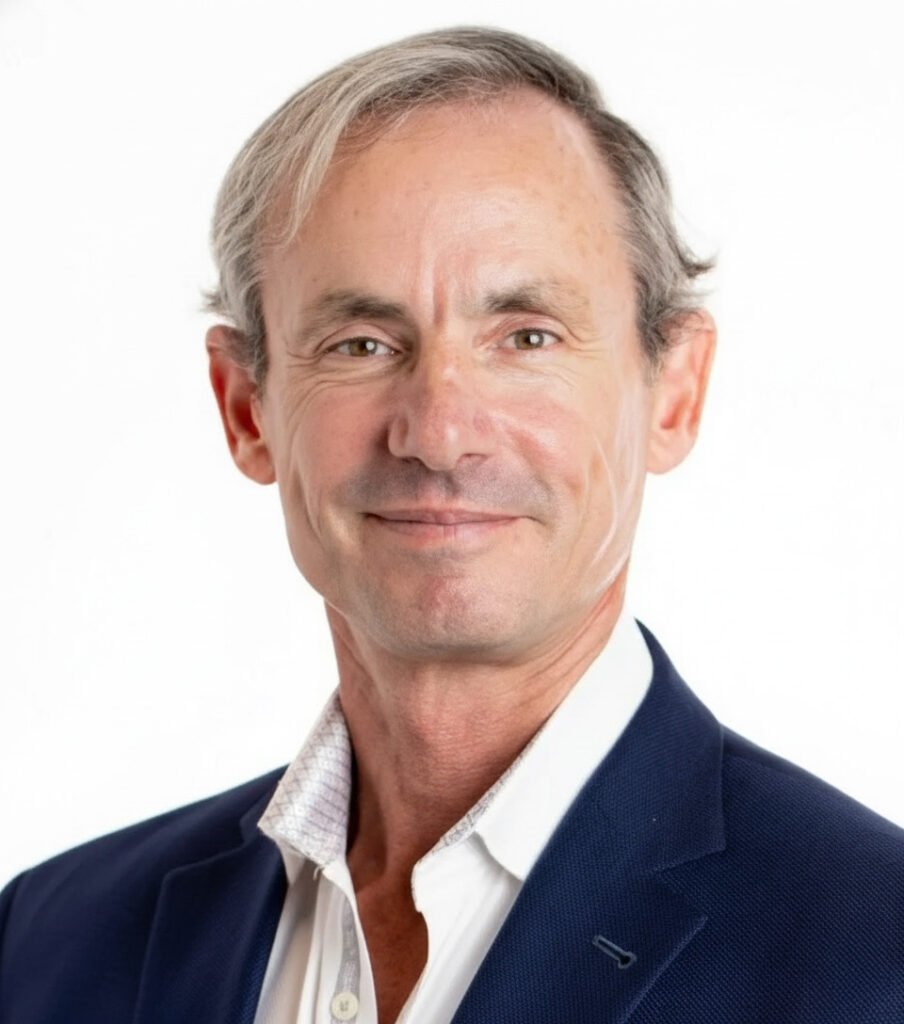
That official was Christopher Karl Mellon, a Mellon family heir, long time Senate and Pentagon insider, and now one of the most visible public advocates for treating UAP as a real and pressing national security issue.
This article takes a data first, investigative look at Mellon: his background and family, his work deep inside the US national security apparatus, the network he moves in, the documents and videos he has helped surface, the controversies that trail both him and his allies, and the implications of his claims for how UAPedia treats modern UAP disclosure efforts.
Background and family ties
Christopher Karl Mellon was born on 2 October 1957 in Topeka, Kansas, to Karl Negley Mellon and Ann (often reported simply as “Ann” in biographical sources). (Justapedia) He is part of the extended Mellon family, a dynasty associated with Mellon Bank, Gulf Oil, and multiple philanthropic institutions in Pittsburgh and beyond.
Despite the famous surname, Mellon’s early life was not a simple story of inherited privilege. According to biographical summaries drawn from David Koskoff’s history of the family, he spent part of his childhood in inner city Chicago in what are described as “difficult” circumstances. His parents eloped as teenagers, later divorced, and he was estranged from his father for a period before reconnecting in adulthood.
Mellon is a descendant of Thomas Mellon, founder of the Mellon banking fortune, and of William Larimer Mellon Sr, co-founder of Gulf Oil. He belongs to the Pennsylvania branch of the family, which Vanity Fair recently contrasted with the politically high profile Virginia–D.C. branch associated with former Treasury Secretary Andrew Mellon and, more recently, donor Tim Mellon. (Vanity Fair)
He has at least two siblings: a sister, Andrea, and a younger brother, Matthew Mellon, the late cryptocurrency investor and fashion world figure who died in 2018.
The modern Mellon family, according to multiple historians, is a loose constellation of branches that often operate independently, with limited contact between lines.
Education
Mellon attended the Loomis Chaffee School, then studied economics at Colby College in Maine, where he earned a B.A. He later completed a master’s degree in international relations at Yale University, with a focus on finance and management.
His own professional bio emphasizes that he considered dropping out of college, worked part time jobs such as coaching youth soccer, and was far from a stereotypical cloistered heir.
From this point on, Mellon’s trajectory shifted decisively toward US national security.
Work history inside the national security state
Senate years and the birth of SOCOM
Beginning in 1985, Mellon joined the staff of the Senate Select Committee on Intelligence (SSCI) and worked for a series of heavyweight senators, including William Cohen, John Chafee, John Warner, and later Jay Rockefeller.
While working as legislative assistant to Senator Cohen, Mellon played a key role in drafting the language that led to the creation of US Special Operations Command (USSOCOM) in the National Defense Authorization Act for Fiscal Year 1987. Historical accounts of special operations reform credit him with helping conceive the structural solution that gave US special operations forces their own unified command and dedicated budget.
This is not a minor footnote. SOCOM would later become central to counter-terrorism and covert operations, and Mellon’s experience building that command infrastructure meant that he spent his formative years thinking about “black” programs, unconventional threats, and the politics of classified capabilities. All of that becomes relevant when he later turns his attention to UAP.
Deputy Assistant Secretary of Defense for Intelligence
In 1997 Mellon moved from Capitol Hill into the Pentagon, becoming Deputy Assistant Secretary of Defense (DASD) for Intelligence under Presidents Bill Clinton and George W. Bush.
In that role and in a subsequent DASD position for Security and Information Operations, he oversaw some of the Department of Defense’s most sensitive activities, including:
- Oversight of special access programs (SAPs), which include deeply classified capabilities and projects.
- High level policy work on signals intelligence, surveillance architectures, and information security.
- Coordination with agencies such as the Defense Intelligence Agency (DIA) and National Reconnaissance Office (NRO).
His official biographies and awards list include the National Reconnaissance Office Gold Medal, the DIA Director’s Medal, and the Secretary of Defense Public Service Award. (Chrismellon)
From a UAP research perspective, this background matters for two reasons:
- It gives Mellon credibility as someone who understands how SAPs and “black” programs are structured.
- It makes his later statements about what he did not see while inside government highly relevant to debates about alleged crash retrieval and reverse-engineering programs.
The 2003 Iraq memo controversy
In 2003, after leaving the Pentagon, Mellon returned to the Senate as minority staff director of the SSCI under Senator Jay Rockefeller, overseeing Democratic staff during the contentious period of post-invasion Iraq intelligence investigations.
That year, a Democratic staff memo outlining possible strategies for how the minority might handle findings on pre war Iraq intelligence was leaked and seized upon by Republican members as evidence of partisan weaponization. The Washington Post described a “barely contained partisan squabble,” with Republicans accusing Democrats of planning to discredit the committee’s report and demanding repudiation. (The Washington Post)
Conservative commentators and a Wall Street Journal editorial pointed at Mellon as a central figure and suggested his removal. Later opinion pieces alleged that he had created an “autonomous Democratic staff apparatus” that aggressively targeted Pentagon and State Department officials.
However, Senator Richard Durbin wrote in a contemporaneous letter that Rockefeller had appointed Mellon, “a registered Republican,” as minority staff director precisely because he had previously served Republican members in senior roles, and held him up as evidence of the committee’s bipartisan tradition.
No legal action followed, but the episode is important. Mellon emerged from it as a figure both praised and distrusted across the aisle, experienced in the politics of leaks and classified information. Those skills would later be deployed in a very different arena: UAP.
Post-government career
Mellon left federal service in the mid-2000s, moved back to southwestern Pennsylvania, and became involved in private equity investments in biotech and information-technology startups. He also served on the board of the Carnegie Museum of Natural History and chaired its science committee.
By his own account, he expected a relatively quiet life of investing, teaching, and museum work. Instead, he became the most prominent face of what mainstream media now calls the modern UAP disclosure movement.
Pivot to UAP: from black programs to black triangles
First contact with AATIP and AAWSAP
The Pentagon’s modern UAP story centers on overlapping programs:
- The DIA’s Advanced Aerospace Weapons Systems Application Program (AAWSAP), funded from 2008 to 2010 and deeply intertwined with Robert Bigelow’s research on unusual phenomena.
- The later Advanced Aerospace Threat Identification Program (AATIP), active around 2007–2012 with a narrower focus on anomalous aerospace threats. (Wayback Machine)
Mellon’s direct role in these programs appears limited. Reporting by Popular Mechanics and others indicates that, while already out of government, he was invited to at least one AATIP related meeting by a CIA acquaintance and came away convinced that multiple incidents involving US Navy assets had not been adequately investigated or reported up the chain of command.
That perception, combined with his familiarity with SAP oversight, seeded his later public argument: UAP intrusions were real, recurrent, and not being treated with the seriousness applied to other aerospace threats.
Leaking the Navy videos
Mellon’s most famous concrete action in the UAP space is his admitted role in getting three Navy cockpit videos in front of the New York Times and the wider public.
In a 2020 interview for James Fox’s documentary The Phenomenon, Mellon stated that he met a Defense Department contact in the Pentagon parking lot, received a package containing the now well known infrared videos often labeled “Tic Tac,” “Gimbal,” and “GoFast,” and then provided those videos to the New York Times and to To The Stars Academy (TTSA). (VICE)
The videos had been processed for release through the Defense Office of Prepublication and Security Review at the request of AATIP’s then head, Luis Elizondo, who resigned the same day he began working with TTSA. (VICE)
Mellon’s self described rule-bending transfer of the media ready files is a crucial hinge point:
- It helped trigger the December 2017 New York Times article on a “shadowy” Pentagon UAP program. (Issues in Science and Technology)
- It gave TTSA, where Mellon was about to become National Security Affairs Advisor, an exclusive pipeline to “official” UAP imagery and a strong credibility boost. (VICE)
From UAPedia’s editorial perspective, this is a textbook case for careful application of our government source policy: the videos are genuine US Navy sensor data, but their release path mixed internal review, personal networks, and a private entertainment-science company. They cannot be treated as neutral “government disclosure” in isolation. (HISTORY)
The Washington Post op-ed and the national security framing
On 9 March 2018, Mellon published an op-ed in the Washington Post arguing that US military personnel “keep encountering” unidentified craft displaying advanced capabilities and that the Pentagon leadership appeared uninterested.
Keith Kloor, writing in Issues in Science and Technology, later identified this column as a turning point that moved UAP from fringe media into what the Post itself called a “serious news story.” (Issues in Science and Technology)
In follow up correspondence cited by Kloor, Mellon clarified that he was not claiming the objects were definitively alien, but that they appeared “real, intelligently controlled and not ours,” hence worthy of further investigation as a national security concern. (Issues in Science and Technology)
This framing still defines his public work:
- Treat UAP as an unresolved flight safety and national security issue rather than a purely scientific curiosity.
- Emphasize instrumented, sensor-rich cases such as the 2004 USS Nimitz incident and the 2015 “Gimbal” and “GoFast” encounters involving the USS Roosevelt carrier group, all of which fit under UAPedia’s “Modern and sensor verified cases” cluster.
- Argue that ignoring such cases constitutes a failure of defense oversight, not an exercise of healthy skepticism. (Issues in Science and Technology)
Public appearances and media ecosystem
Mellon has become a staple presence in UAP related media:
- Featured contributor on History Channel’s Unidentified: Inside America’s UFO Investigation, which followed TTSA’s attempts to document cases and push for government action.
- Regular guest on cable news segments and podcasts where he reiterates the “real, unknown, potential threat” theme.
- Key voice in Dan Farah’s 2025 documentary Age of Disclosure, whose trailer shows him calling the situation “the biggest discovery in human history,” set alongside on-the-record testimony from 34 current and former officials. (Wayback Machine)
He also maintains:
- A personal site, ChristopherMellon.net, which hosts short blog posts, links to media appearances, and some prepared speeches such as his 2024 address to the Japanese Parliamentary UAP Caucus. (Chrismellon)
- A Substack where he archives earlier opinion pieces and policy essays, including posts on over-classification, suggested questions for congressional hearings, the Gillibrand UAP amendment, and a mirrored version of his widely circulated article “A Threat Unmet.” (Christopher Mellon Substack)
These platforms together position Mellon as both a policy insider and a narrative architect: he is not just commenting on events but actively scripting the questions Congress might ask and the legislative language it might adopt.
Known associates and disclosure networks
A data driven mapping of Mellon’s associates in the UAP space reveals overlapping clusters:
To The Stars Academy and the “Nimitz network”
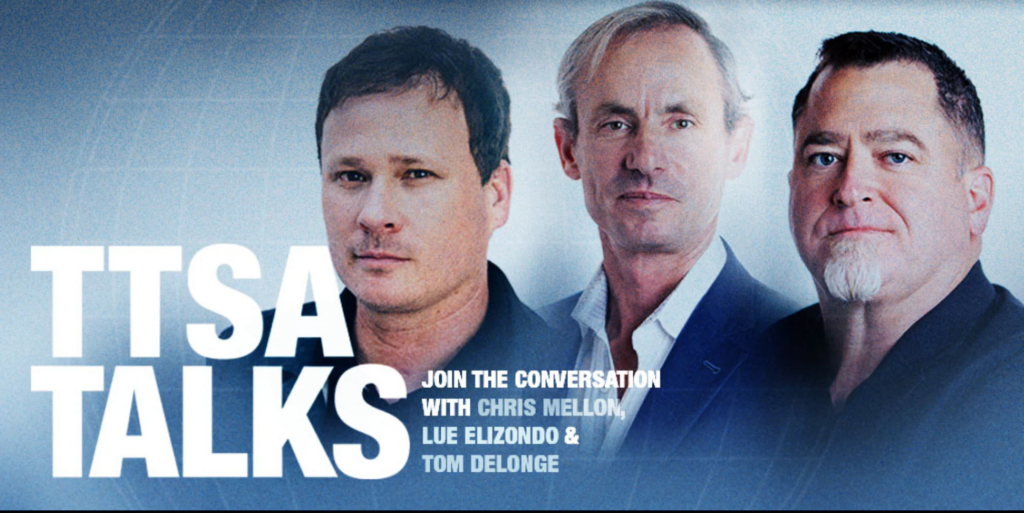
At TTSA, Mellon worked alongside:
- Tom DeLonge, former Blink-182 singer and the company’s founder.
- Luis “Lue” Elizondo, former AATIP program manager.
- Hal Puthoff, long time government contractor in remote viewing and exotic physics.
- Jim Semivan, retired CIA operations officer. (Issues in Science and Technology)
This group leveraged the Navy videos and the Nimitz case to lobby Congress and the media. Military.com’s long feature on the Pentagon’s new UAP office identifies Mellon among the advocates who helped transform fringe “flying saucer” discourse into bipartisan legislation instructing the Pentagon to spend years investigating UAP. (Wayback Machine)
Journalists and authors
Mellon has had recurrent interactions with:
- Leslie Kean and Ralph Blumenthal, freelance journalists whose work for the New York Times and later The Debrief helped break AATIP and David Grusch’s crash retrieval allegations. Several accounts, including MJ Banias’s reporting and Art Levine’s critical Washington Spectator piece, identify Mellon as a key source and behind the scenes strategist for this cohort. (VICE)
- Keith Kloor, who corresponded with Mellon while preparing his skeptical but nuanced “UFOs Won’t Go Away” analysis. (Issues in Science and Technology)
Political and institutional partners
Mellon’s legislative impact is widely noted:
- Politico’s Bryan Bender credits him with having “effectively drafted” the language in the FY2021 National Defense Authorization Act ordering a detailed UAP report from the Director of National Intelligence and the Secretary of Defense. (Wikipedia)
- Multiple sources describe him lobbying for subsequent NDAA provisions that created the Pentagon’s All domain Anomaly Resolution Office (AARO). (Wikipedia)
On the scientific side, Harvard’s Galileo Project named Mellon a research affiliate in 2021, placing him alongside Avi Loeb in efforts to obtain higher quality data on anomalous aerial and space phenomena.
Publications and written record on UAP
Because UAPedia treats first person written material as a key evidentiary stream (subject to source-critical analysis), Mellon’s UAP-related publications are central. Key items include:
- The 2018 Washington Post op-ed arguing that the military “keeps encountering” unknown craft and urging the Pentagon to investigate systematically. (Issues in Science and Technology)
- “A Threat Unmet,” an article for The American Legion magazine, later mirrored on his Substack, which criticizes governmental reluctance to confront UAP despite repeated military encounters and emphasizes the duty to protect service members. (JASON COLAVITO)
- A suite of Substack essays, including:
- “How Government Over-Classification May Hide UAP Videos and Harm Our Security.”
- “Suggestions for Congress on the UAP Issue.”
- “Questions for Congress Regarding the Pending UAP Report.”
- “The UAP Report and the UAP Issue.”
- “Don’t Dismiss the Alien Hypothesis.” (Christopher Mellon Substack)
Taken together, these writings present a coherent worldview: UAP encounters by military personnel are real and sometimes sensor verified; the objects often appear to display capabilities beyond acknowledged human technology; secrecy and stigma have prevented adequate investigation; and Congress must impose oversight and reporting mandates.
The more speculative edge appears in later essays where Mellon entertains the possibility that some fraction of UAP may be of non human origin, while still framing this as a hypothesis that should not be prematurely dismissed. (Christopher Mellon Substack)
Controversies and criticism
TTSA’s balloon and the perils of spectacle
Skeptical and even sympathetic observers have highlighted missteps associated with Mellon’s TTSA period. One emblematic incident involved TTSA promoting an image as a possible UAP that was later identified as a mylar party balloon, leading to considerable embarrassment and quiet removal. This episode is cited in critical discussions of TTSA’s quality control.
Although the error is not directly attributed to Mellon personally, it illustrates the structural tension when former officials, entertainment projects, and serious national security claims share the same brand. It also reinforced UAPedia’s editorial caution that government linked personalities operating through commercial fronts require especially careful source handling. (Wayback Machine)
SEC complaints and TTSA fundraising
Art Levine’s lengthy Washington Spectator investigation, “Spaceship of Fools,” describes whistleblower complaints to the US Securities and Exchange Commission alleging deceptive or unrealistic fundraising claims by TTSA, including references to speculative warp drive research based on alleged alien materials and a proposed “Star Trek style” craft. (Wayback Machine)
Levine reports that Mellon, now separated from TTSA’s entertainment spinoff, has denied any wrongdoing related to these allegations. As of the latest archived version of that article, no SEC enforcement action specific to Mellon personally has been made public. (Wayback Machine)
For UAPedia, the key takeaway is not the unresolved regulatory question but the structural point: Mellon chose to align his disclosure efforts with a for-profit entity whose early materials blended ambitious speculative science and aggressive capital raising. That choice shapes how all of his subsequent advocacy is perceived.
“Believers in the paranormal” and narrative shaping
The Military.com feature “How Believers in the Paranormal Birthed the Pentagon’s New Hunt for UFOs” places Mellon in a broader network that includes DIA official James Lacatski, contractor Colm Kelleher, and billionaire Robert Bigelow, many of whom have expressed interest in paranormal phenomena beyond strictly aerospace anomalies. (Wayback Machine)
While the article does not accuse Mellon of endorsing every paranormal claim in that ecosystem, it suggests that a coalition of officials and contractors with nonstandard interests helped bring about the latest wave of UAP offices and hearings.
Keith Kloor’s analysis similarly treats Mellon as part of a long continuity of well connected advocates who frame persistent unexplained cases as national security concerns, echoing earlier generations from Donald Keyhoe onward. (Issues in Science and Technology)
Crash retrieval claims and internal consistency
Another subtle controversy arises from the evolution of Mellon’s views on alleged crash retrieval programs.
- Mellon has repeatedly said that, during his time overseeing SAPs, he saw no hard evidence of US possession of non-human craft or bodies.
- Yet in recent years he has strongly supported the need to investigate whistleblower claims, such as those of David Grusch and other unnamed intelligence officials, that the US or allied entities have retrieved craft of non-human origin and are engaged in long running reverse engineering efforts.
Mellon’s reconciliatory explanation is that ultra sensitive programs can be compartmented in ways that even high level oversight staff do not access, particularly if they are embedded in private contractors or highly restricted compartments. Critics argue that this creates an unfalsifiable narrative in which absence of evidence inside official channels becomes evidence of deeper secrecy rather than a reason for caution.
From a UAPedia standpoint, this tension is exactly why claims about reverse engineering and non human technology fall into a higher speculation tier and must be tracked carefully within the taxonomy for “Reverse-engineering programs” and “Technologies of unknown origin.”
Implications for UAP research and policy
Whatever one thinks of Mellon’s most ambitious claims, his measurable impact on UAP governance is significant:
- He helped turn a handful of leaked videos and pilot reports into congressional mandates for formal UAP reporting and analysis, culminating in the establishment of the UAP Task Force and later AARO.
- He provided legislative language and strategic advice that enabled sympathetic members such as Marco Rubio and Kirsten Gillibrand to push for detailed DNI reports and expanded oversight.
- He normalized the idea that experienced intelligence professionals can discuss UAP publicly without automatically sacrificing credibility, partly by grounding conversations in Navy sensor data and threat analysis rather than purely experiential accounts. (Issues in Science and Technology)
At the same time, the way this transformation occurred has consequences:
- By routing initial disclosures through TTSA and media narratives that blurred science, entertainment, and investment pitches, Mellon contributed to a landscape where signal and noise are tightly intertwined. (Wayback Machine)
- His willingness to publicly amplify highly speculative crash retrieval narratives while acknowledging he saw no such programs during his own SAP oversight complicates attempts to treat him as a purely dispassionate witness.
From a researcher standpoint, Mellon is best understood as a hybrid figure:
- A credible insider regarding how intelligence and defense bureaucracies actually operate.
- A skilled lobbyist and communicator aligned with a particular disclosure-forward narrative.
- A participant in a broader ecosystem that includes strongly speculative voices, commercial interests, and deeply invested believers as well as cautious academics and policy skeptics. (Issues in Science and Technology)
Understanding his role accurately is therefore essential for any serious history of twenty-first century UAP policy.
References
Banias, M. (2020, October 20). Ex intel official says he was the source of the Pentagon’s UFO videos. Vice. https://www.vice.com/en/article/this-guy-says-he-was-the-source-of-the-pentagons-ufo-videos/?utm_source=https://uapedia.ai (VICE)
Hibberd, J. (2025, January 22). “Age of Disclosure” UFO documentary trailer touts “biggest discovery in human history”. The Hollywood Reporter. https://www.hollywoodreporter.com/movies/movie-news/age-of-disclosure-ufo-documentary-trailer-sxsw-1236114831/?utm_source=https://uapedia.ai (Wayback Machine)
Kloor, K. (2019). UFOs will not go away. Issues in Science and Technology, 35(3). https://issues.org/ufos-wont-go-away/?utm_source=https://uapedia.ai (Issues in Science and Technology)
Levine, A. (2023, July 20). Spaceship of fools. Washington Spectator. https://washingtonspectator.org/spaceship-of-fools/?utm_source=https://uapedia.ai (Wayback Machine)
Mellon, C. (2018, March 9). The military keeps encountering UFOs. Why doesn’t the Pentagon care? The Washington Post. (Archived). https://www.washingtonpost.com/opinions/the-military-keeps-encountering-ufos-why-doesnt-the-pentagon-care/2018/03/09/ [archival URL] ?utm_source=https://uapedia.ai (Wikipedia)
Mellon, C. (n.d.). About. ChristopherMellon.net. https://www.christophermellon.net/?utm_source=https://uapedia.ai (Chrismellon)
Mellon, C. (n.d.). Christopher’s Substack (archive index). https://christopherkmellon.substack.com/?utm_source=https://uapedia.ai (Christopher Mellon Substack)
“Christopher Mellon.” (n.d.). In Wikipedia. Retrieved 2025. https://en.wikipedia.org/wiki/Christopher_Mellon?utm_source=https://uapedia.ai (Wikipedia)
Tritten, T. (2022, March 7). How believers in the paranormal birthed the Pentagon’s new hunt for UFOs. Military.com. https://www.military.com/daily-news/2022/03/07/how-believers-paranormal-birthed-pentagons-new-hunt-ufos.html?utm_source=https://uapedia.ai (Wayback Machine)
UAPedia. (n.d.). How UAPedia treats government sources. https://uapedia.ai/wiki/how-uapedia-treats-government-sources/?utm_source=https://uapedia.ai
SEO keywords
Christopher Mellon UAP, Christopher Mellon biography, Christopher Mellon family, Mellon banking dynasty UAP, Pentagon UAP videos source, Advanced Aerospace Threat Identification Program, AATIP and AAWSAP, To The Stars Academy controversy, Age of Disclosure documentary, USS Nimitz Tic Tac case, congressional UAP hearings, All domain Anomaly Resolution Office AARO, Galileo Project UAP, UAP reverse engineering claims, UAP national security threat narrative