
When people talk about Daniel P. “Danny” Sheehan, two very different images collide.
One is the classic cause lawyer of the 1970s and 80s, pacing a courtroom as he helps the New York Times publish the Pentagon Papers, digs into Watergate, or sues over the nuclear contamination surrounding Karen Silkwood. (Daniel Sheehan)
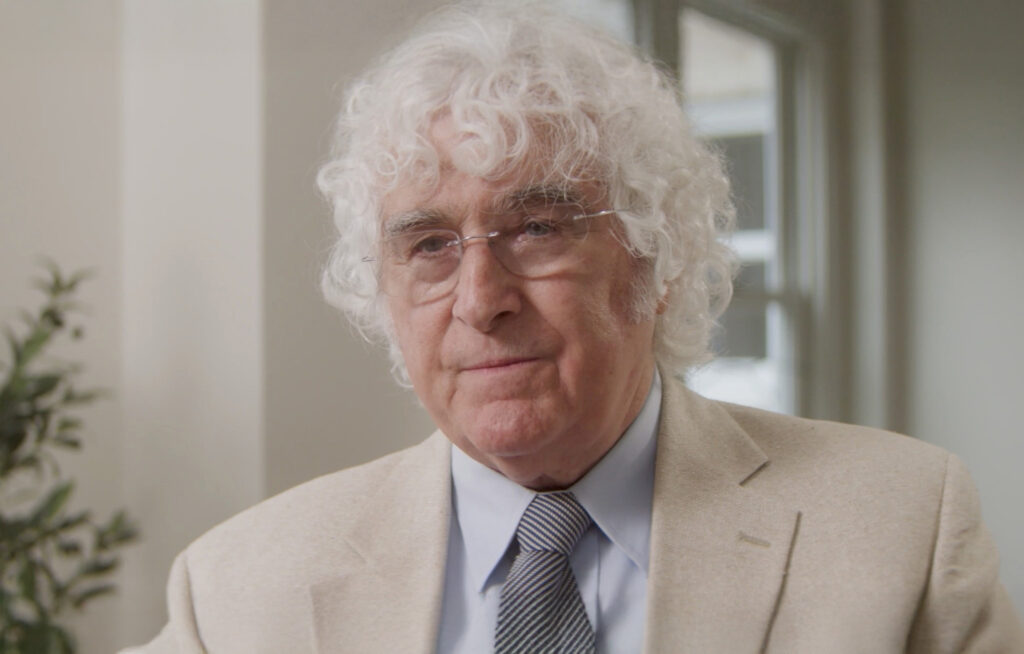
The other is the silver-haired attorney in a Hawaiian shirt on podcast sets and conference stages, calmly telling audiences that the United States has long-running crash-retrieval programs, that non-human intelligences are visiting Earth, and that the public is legally and morally entitled to know.
For UAPedia, Sheehan sits at the junction of two worlds: the history of American constitutional law and the modern battle over UAP secrecy. He is one of a small handful of lawyers whose reputations were forged in headline civil-rights cases and who later turned that skill set toward UAP, arguing that the phenomenon is not just a scientific puzzle but a crisis in democratic accountability.
Early life and a career built around secrets
Daniel Peter Sheehan was born in 1945 in Glens Falls, New York, and grew up in nearby Warrensburg. After starting at Northeastern University, he transferred to Harvard College, graduating in 1967 in Government, then continued straight into Harvard Law School, where he received his J.D. in 1970.
Briefly part of an Army ROTC program, he quit after being told he might have to kill non-combatants in Vietnam, a story he repeats in interviews as an early example of conscience overriding career.
By the early 1970s he was deeply embedded in the emerging “public interest law” movement. His own site and the New Paradigm Institute (NPI) highlight a roster of cases that would be impressive for an entire firm, let alone one lawyer:
- The Pentagon Papers case, helping the New York Times secure the right to publish the classified study of the Vietnam War. (Daniel Sheehan)
- Legal work connected to the Watergate break-in. (New Paradigm Institute)
- The Silkwood v. Kerr-McGee nuclear safety lawsuit, which led to a record civil judgment and helped stall private nuclear plant construction in the United States. (New Paradigm Institute)
- The Greensboro civil-rights case, in which KKK and American Nazi Party members were found liable for the killings of anti-Klan demonstrators. (Daniel Sheehan)
Sheehan co-founded the Christic Institute, then later the Romero Institute, both nonprofit legal centers using high-impact litigation and public education as twin tools.
His memoir The People’s Advocate (2013) aims to knit these battles into a single story about challenging what he calls the “national security state.” In other words, long before he said anything publicly about crash-retrievals or non-human intelligence, Sheehan had already spent decades suing the very institutions that control UAP data.
Avirgan v. Hull and the Christic backlash
No serious biography of Sheehan can skip the Christic Institute’s most controversial case.
In 1986 Christic filed Avirgan v. Hull, a sweeping civil RICO suit alleging that a network of CIA officers, Contra leaders, arms dealers and cartel figures were tied to the La Penca bombing in Costa Rica, as well as broader illegal operations.
Two years later a federal judge dismissed the case, finding no genuine issues of material fact, and levied nearly $1 million in fees and costs against Christic. The IRS subsequently stripped the Institute of its nonprofit status, asserting that the litigation had been politically motivated.
Even allies criticized Sheehan for leaning on “wild allegations” from witnesses who were dead, unavailable or badly inconsistent, rather than on tightly documented evidentiary chains.
For UAP researchers this matters because it previews a pattern: Sheehan is willing to put bold narratives into legal pleadings when he believes they reveal deeper structures. Critics argue that this habit sometimes outruns the available proof.
From Jesuits and Carter to Project Blue Book: Sheehan’s origin story in UAP
Sheehan’s own account of how he entered the UAP arena begins not with Luis Elizondo or David Grusch but with Jimmy Carter and the Jesuits.
During the late 1970s he served as counsel to the U.S. Jesuit national office in Washington, D.C. In podcast interviews and lectures, he says that presidential aides from the Carter transition team approached the Jesuits for help in gaining access to Vatican records on UAP and possible non-human intelligence. (New Paradigm Institute)
According to Sheehan, this role eventually led him to a secure reading room at the Library of Congress, where he claims to have been cleared to review classified Project Blue Book files. In a widely cited retelling summarized by Ken Korczak, Sheehan says he saw photographs of a crashed disc partially embedded in the ground, surrounded by U.S. personnel, with a section cut out to reveal its internal structure. (Medium)
No independent confirmation of this access or the photographs has surfaced in public archives. Project Blue Book’s official files are declassified, and nothing matching Sheehan’s description appears there. His story therefore remains a piece of first-person testimony rather than a verifiable data point.
Still, it frames his later activism: he presents himself as someone who has seen evidence with his own eyes that the United States recovered non-human craft, then spent a career watching the legal system bend around secrecy.
Defending John E. Mack and the reality of the experiencer
In the early 1990s, Sheehan’s UAP trajectory intersected with Harvard psychiatrist John E. Mack, whose book Abduction had brought alleged contact experiences into mainstream debate. When Harvard opened an inquiry into Mack’s research methods, Sheehan served as his attorney.
Contemporaneous press coverage notes that Harvard eventually reaffirmed Mack’s tenure and academic freedom, while quietly asking him to tighten some protocols.
For Sheehan the case became proof that elite institutions could try to marginalize serious research into anomalous encounters, only to back down when forced to defend their standards in public.
Many of his later podcast appearances return to the experiencer theme: that the most important UAP data may not be radar traces but human testimony, especially when patterns of contact, telepathy and altered consciousness recur. (Wave AI Podcast Notes)
The Disclosure Project and the first press-conference wave
By the late 1990s Sheehan had already helped establish the Christic Institute and, later, the Romero Institute in California. He also became involved with Mikhail Gorbachev’s State of the World Forum, where he directed a “New Paradigm Project” on global governance. (New Paradigm Institute)
Parallel to this policy work, Sheehan joined physician Steven Greer’s Disclosure Project as legal counsel. His own site and multiple interviews describe him advising on the 2001 National Press Club event, at which dozens of former military and government personnel gave sworn statements about UAP incidents and alleged crash-retrieval programs.
Sheehan’s presence lent legal gravitas to what was, at the time, one of the largest media pushes around UAP secrecy. Internally, however, tensions eventually grew. In later years he publicly distanced himself from some of Greer’s more expansive claims and from the framing of Greer’s documentary The Cosmic Hoax, preferring to keep the focus on documentable government behavior rather than untestable spiritual narratives. (Reddit)
Counsel for Elizondo and other whistleblowers
The 2017 New York Times revelation of the Pentagon’s Advanced Aerospace Threat Identification Program (AATIP) brought a new generation of witnesses to the forefront. Among them was former intelligence officer Luis Elizondo, who went public about his role in running the program and his concern over unexplained encounters like the Nimitz incident.
By 2021 Politico and other outlets were reporting that Sheehan was representing Elizondo in a complaint to the Department of Defense inspector general, alleging a disinformation campaign to discredit him after he blew the whistle on UAP investigations.
Sheehan framed the case as classic retaliation: a government bureaucracy using classification rules and personnel actions to punish someone for speaking to the public and Congress about UAP. The inspector general opened an investigation, though as of early 2026 the detailed findings remain only partially visible through FOIA releases. (The Black Vault)
Podcast descriptions and YouTube titles often describe Sheehan as an attorney for additional whistleblowers, including David Grusch, though formal documentation of representation has been less clear. (YouTube) UAPedia treats these attributions as unconfirmed unless supported by court filings or direct statements from both client and counsel.
What is well documented is that Sheehan and his team at NPI have positioned themselves as legal and strategic advisers for current and would-be UAP whistleblowers, offering guidance on how to navigate retaliation risk while testifying under new legislative protections. (New Paradigm Institute)
The New Paradigm Institute: UAP as constitutional stress test
In 2023 the Romero Institute spun out the New Paradigm Institute as a dedicated initiative focused on UAP disclosure. NPI describes its mission as compelling “full and responsible UAP disclosure” from governments and private actors, and preparing society for the cultural shifts that verified evidence of non-human intelligence might bring. (Daniel Sheehan)
Sheehan serves as NPI’s founder and public face. The organization combines:
- Legal strategies, including FOIA actions and potential litigation against agencies that withhold UAP-related records. (New Paradigm Institute)
- Grassroots organizing through a network called Citizens for Disclosure, which runs letter-writing campaigns, watch parties for documentaries like The Age of Disclosure, and rallies at congressional offices. (New Paradigm Institute)
- Policy advocacy for measures like the UAP Disclosure Act and for stronger whistleblower protections in national defense authorization bills. (New Paradigm Institute)
- Public education through a growing library of podcasts and explainers on topics from “historic UAP hearings” to alleged disinformation campaigns. (New Paradigm Institute)
NPI’s editorial approach explicitly mirrors UAPedia’s own stance on government records: official reports are treated as one evidentiary stream among several, “reliable for what they say, unreliable for what they omit, and incomplete by legal design.”
Public appearances and known associates
Sheehan is now as much a media presence as a courtroom litigator. Some key venues:
- Full Disclosure with Danny Sheehan, his own podcast, which blends autobiographical material with UAP commentary and interviews. (Apple Podcasts)
- That UFO Podcast special events, including the “National Security State & UFO Disclosure” live show, later re-cut into a highlight reel. (YouTube)
- The Pop Culture Corner episode “Inside the Mind of Attorney Danny Sheehan,” which foregrounded his claim that at least five distinct non-human species are interacting with Earth. (Muck Rack)
- Julian Dorey Podcast and Otherworld, where Sheehan elaborates on Vatican archives, alleged deathbed confessions by insiders, and the philosophical implications of contact. (Apple Podcasts)
- Appearances at events such as Conscious Life Expo, McMinnville UAP Festival, Contact in the Desert, and Sunrise Center’s “Extraterrestrial Beings & Earth’s Survival” with Sara Nelson. (Trip.com)
His core circle across these efforts includes:
- Sara Nelson, co-founder of the Christic and Romero Institutes and executive director at Romero and NPI. (New Paradigm Institute)
- Steven Greer, for whom Sheehan served as Disclosure Project counsel during the 2001–2010 era.
- John E. Mack, the Harvard psychiatrist he defended, situating Sheehan in the early academic conversation on abductions and contact.
- Luis Elizondo, his most high-profile UAP client to date.
What exactly is Sheehan claiming about UAP?
Across books, lectures and podcasts, a set of recurring claims emerges. Here they are stripped of rhetoric and sorted later in a formal claims taxonomy.
- Multiple non-human species are present and interacting with Earth.
Sheehan often references “five different alien species” visiting Earth, some extraterrestrial, some interdimensional, and some based beneath Earth’s oceans. (Muck Rack) - The U.S. has crash-retrieval and reverse-engineering programs.
He points to a combination of his claimed Blue Book file access, unnamed whistleblowers, and deathbed testimony from a former Project Blue Book engineer who allegedly described an underground facility at Area 51 with a hovering craft and non-human bodies. (Scribd) - The Vatican retains archives on non-human contact.
Building on his Jesuit connections, Sheehan recounts efforts to obtain Vatican documents said to concern contacts between Catholic authorities and non-human intelligences. NewsNation and other outlets have amplified this claim, usually framed as a question rather than confirmed fact. (Amazon Music) - Non-human intelligences have engaged with U.S. leaders.
Some of his lectures and event descriptions assert that there has been “direct communication with U.S. officials” since the 1960s, and that a “UFO legacy program” inside the military-industrial complex has withheld this from Congress. (consciouslifeexpo.com) - The national security state is managing disclosure on its own terms.
Sheehan argues that intelligence agencies are executing a phased “UAP campaign plan” running into the 2030s, designed to control the narrative and preserve military dominance rather than fully inform the public. (LinkedIn) - The public has a constitutional right to know.
In NPI materials, Instagram reels, and live events, Sheehan repeats that secrecy around UAP violates both democratic norms and, potentially, the requirement that Congress be informed about major national security programs. (New Paradigm Institute)
Controversies and criticism
Sheehan’s UAP work is polarizing even inside the disclosure community.
- Evidence gap.
Skeptical commentators point out that while his legal career is well documented, many of his most dramatic UAP claims rely on unnamed sources, NDAs, or experiences not accessible to independent verification. A widely circulated Reddit critique argues that fans are committing an “appeal to authority” by accepting extraordinary statements on the basis of his earlier legal success. (Reddit) - Reliance on broad narratives.
Critics connect the dismissal of Avirgan v. Hull to a pattern of Sheehan assembling sweeping theories about covert networks that outrun what can be legally proved. They caution that the same dynamic may be reappearing in his account of a highly coordinated UAP “campaign plan.” - Tension with “threat” framing.
NPI’s response to the documentary The Age of Disclosure illustrates a different controversy. In an official statement, Sheehan and his team urge viewers to “think beyond the fear-based national security state narrative” that frames UAP primarily as a military threat, arguing that this story has rationalized secrecy for decades. (Reddit) Supporters see this as a needed pushback; others worry it underplays legitimate defense questions. - Speculative cosmology.
Event descriptions that present as established “reality” the existence of multiple extraterrestrial species, long-term contact, and a constitutional-violating “legacy program” go far beyond what mainstream evidence yet supports. (consciouslifeexpo.com) For some, this stretches his credibility; for others, it is a rare insider finally saying the quiet part out loud.
Speculation label
UAPedia treats Sheehan as both a historically important legal figure and a high-profile witness offering a mix of verifiable facts, second-hand testimony, and personal interpretation.
Where he describes public litigation, academic cases, or legislative campaigns, his statements are generally Verified or Probable and supported by mainstream sources.
Where he asserts:
- personal viewing of still-classified crash photographs,
- covert Vatican archives on extraterrestrial contact,
- precise counts and taxonomies of visiting species, or
- detailed plans for staged disclosure out to the 2030s.
We flag these as Researcher opinion or Hypothesis. They sit in the same speculative tier as other insider narratives about legacy programs and interspecies diplomacy. Evidence may emerge that shifts these classifications, but as of early 2026 they remain uncorroborated.
Implications for the UAP field
Whether one views Sheehan as prophetic or over-extended, his impact on the UAP discourse is substantial.
- Legal framing of disclosure.
Sheehan normalizes talking about UAP not only as a science or intelligence problem but as a constitutional issue involving separation of powers, the right of Congress to be informed, and the public’s right to know. That framing influences activists, journalists and even lawmakers who cite his work when debating UAP legislation. (The New Thinking Allowed Foundation) - Bridge between generations.
By moving from Pentagon Papers to UAP hearings, he functions as a continuity figure connecting 1970s transparency battles to today’s. That continuity matters symbolically: it frames UAP secrecy as part of a longer pattern rather than a one-off anomaly. - Catalyzing public conversation.
Through podcasts like Full Disclosure, The Good Trouble Show, That UFO Podcast and others, Sheehan has likely introduced hundreds of thousands of listeners to the idea that credible legal professionals take UAP stories seriously. (Apple Podcasts) - Risk of narrative overshoot.
At the same time, his more elaborate claims can blur the line between documented history and speculative cosmology. For skeptics and mainstream scientists, this makes it easier to dismiss the entire disclosure movement as ungrounded. The challenge for UAP research is to extract the signal in his work (legal expertise, whistleblower protection, critique of secrecy) without importing unverified details as established fact.
References
Sheehan, D. P. (2013). The People’s Advocate: The life and legal history of America’s most fearless public interest lawyer. Counterpoint.
Daniel Sheehan. (2026). Daniel P. Sheehan – Federal civil rights attorney and UAP disclosure advocate. Retrieved from (Daniel Sheehan)
New Paradigm Institute. (2025). Daniel Sheehan [Biographical page]. (New Paradigm Institute)
Bender, B. (2021, May 26). Ex-official who revealed UFO project accuses Pentagon of “disinformation” campaign. Politico. (Politico Pro)
Full Disclosure with Danny Sheehan. (2024- ). Podcast series description. Apple Podcasts. (Apple Podcasts)
The Pop Culture Corner. (2024, May 31). Inside the Mind of Attorney Danny Sheehan, UFOs, Cover Ups & Prominent Voice in UFOlogy [Podcast episode]. (New Paradigm Institute)
New Paradigm Institute. (2025). Disinfo and over-classification of UAP [Campaign page]. (New Paradigm Institute)
That UFO Podcast & New Paradigm Institute. (2025). Historic UAP Hearings, The National Security State & UFO Disclosure: In-Depth with Danny Sheehan [Podcast episode]. (New Paradigm Institute)
New Paradigm Institute. (2025). Response from Danny Sheehan and the New Paradigm Institute to the film The Age of Disclosure [Press statement]. (Reddit)
UAPedia Editorial Board. (2025). How UAPedia treats government sources. UAPedia. https://uapedia.ai/wiki/how-uapedia-treats-government-sources/
SEO keywords
Daniel Sheehan biography, Danny Sheehan UAP, Daniel Sheehan UFO lawyer, New Paradigm Institute disclosure, Luis Elizondo attorney, Vatican UFO archives claim, Project Blue Book crashed disc photo, five alien species Daniel Sheehan, UAP campaign plan secrecy, UAP whistleblower legal support, Disclosure Project counsel, John Mack Harvard abduction case, Age of Disclosure response, constitutional law and UAP secrecy, Romero Institute and UAP activism