There are UAP stories that drift through time like folklore, and then there are the ones you can pin down to a morning, a place, an official record, and a paper trail sturdy enough to survive for decades. The Devon Flying Cross Incident belongs in the second category. It is remembered because it was vivid, yes, but also because it became an administrative reality: reported by serving police officers in Devon, significant enough to reach national attention, and formal enough to be discussed in Parliament and preserved in the UK’s archival system.
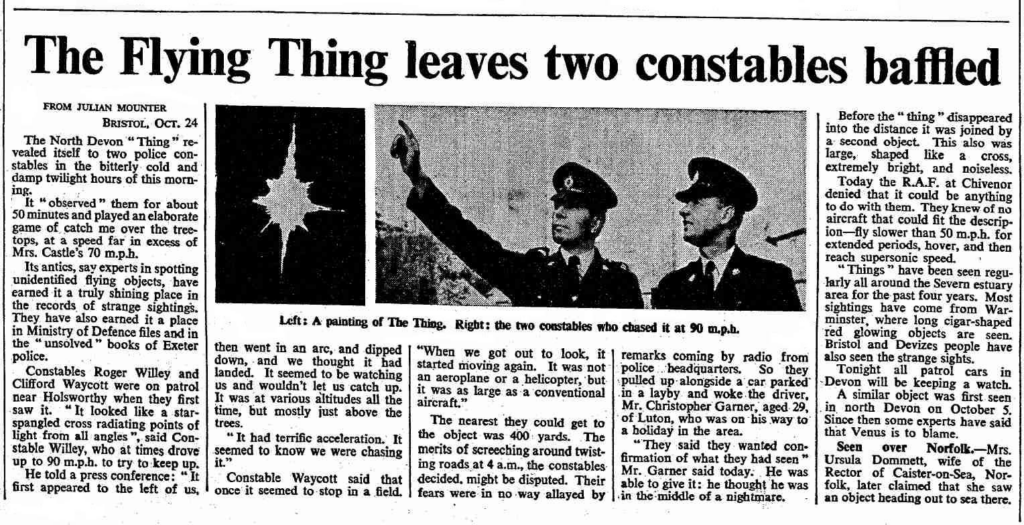
In the early hours of 24 October 1967, two police constables on patrol near Holsworthy in Devon reported seeing an intensely bright object they described as a “flying cross.” The phrase is instantly evocative. It sounds geometric and luminous, but also symbolically loaded, as if the night itself offered a shape the human mind could not ignore. Within weeks, the case was raised in the House of Commons, where Merlyn Rees, the Under-Secretary of State for Defence for the Royal Air Force, gave a carefully calibrated answer: the Ministry of Defence had received multiple reports over North Devon in October; after investigation, some were aircraft and some were lights; most of the lights were the planet Venus; and “the source of a few lights has not been positively identified.” He then added a line that has echoed ever since: “none of these unidentified lights was an alien object.” (Hansard, UK Parliament Official Record, House of Commons Debates, “Unidentified Flying Object (North Devon),” 8 November 1967). (Hansard)
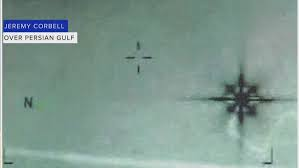
That combination, attribution plus remainder, is the true shape of the 1967 story. The incident is often retold as a neat misidentification, but since then military grade videos released of other unidentified encounters have confirmed the shape and capabilities described in this incident. The official record itself preserves a small pocket of unresolved reports within the wider October wave. The case is therefore best approached not as a single solved puzzle, but as the headline incident inside a short-lived reporting surge, with Venus offering an explanation for the central sighting while leaving room for residual ambiguity across the month’s broader report set.
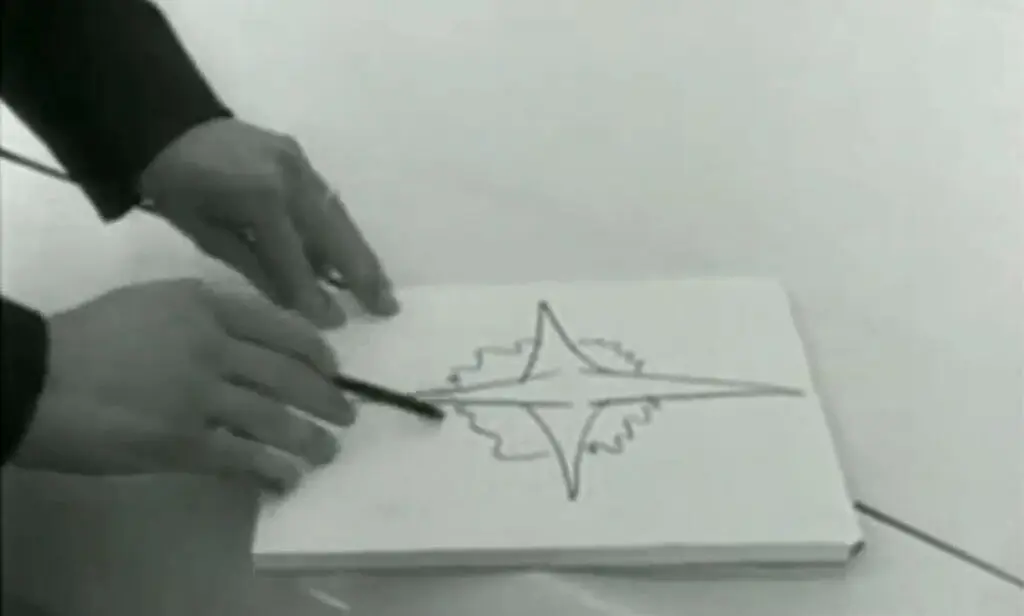
What follows is an engaging, documentary-minded walk through the Devon Flying Cross incident and the contemporaneous UK flap of October 1967. Where the record is firm, we treat it as firm. Where we interpret, we label it as analysis rather than fact.
A Devon road at 4 a.m., and why this report travelled
A night patrol is a strange theatre for perception. The world is quiet, but the mind is alert; the road is familiar, but the sky is not. A bright light in the wrong place, at the wrong time, can feel like an intrusion. That is why the incident description landed with force. “Flying cross” implies more than a distant point. It implies structure, presence, and a sense that the thing had form.
The most reliable public account of how the report entered official discourse comes from the Parliamentary exchange itself. In that Commons debate, an MP pressed the Ministry of Defence not only about the police sighting, but about additional testimony in the region. In particular, he referred to engineers at the North Hessary Tor transmitting station, who he said reported low-flying objects moving in the area for over an hour. The debate is valuable because it demonstrates that the incident was being framed, at the time, as part of a broader cluster rather than a lone night’s misunderstanding. (Hansard, UK Parliament Official Record, House of Commons Debates, 8 November 1967). (Hansard)
That does not automatically elevate every associated report to the same evidential level. It does, however, justify why the Ministry of Defence treated the month as a set of reports requiring investigation, rather than as a single colourful story.
The archive address: AIR 20/11889 and AIR 20/11890
One reason the Devon Flying Cross Incident still matters is that it is not only a narrative; it is an address in the national archive.
The National Archives (UK) produced a briefing document explaining what UAP-related records it holds and where they sit. That briefing document identifies specific files, AIR 20/11889 and AIR 20/11890, as containing papers and reports on a “flying cross” sighted by police officers and other witnesses in Devon, Sussex and elsewhere during October 1967. It also notes that MoD files from 1967–1968 include details of field investigations carried out by the Air Staff secretariat S4 (Air) and Defence Intelligence Staff DI55. (The National Archives, UK, “Briefing document on records regarding unidentified flying objects”). (National Archives)
Even without opening those files page by page, that single archival statement changes the tone of the discussion. It tells you this was not handled as trivia. It was processed through a bureaucracy that had enough structure to create dedicated folders, preserve correspondence, and catalogue it for later retrieval. That is one of the defining qualities of mid-century UAP history in Britain: the phenomenon is not only in witness stories, but in government filing practices.
Venus, and why the central explanation is unusually strong here
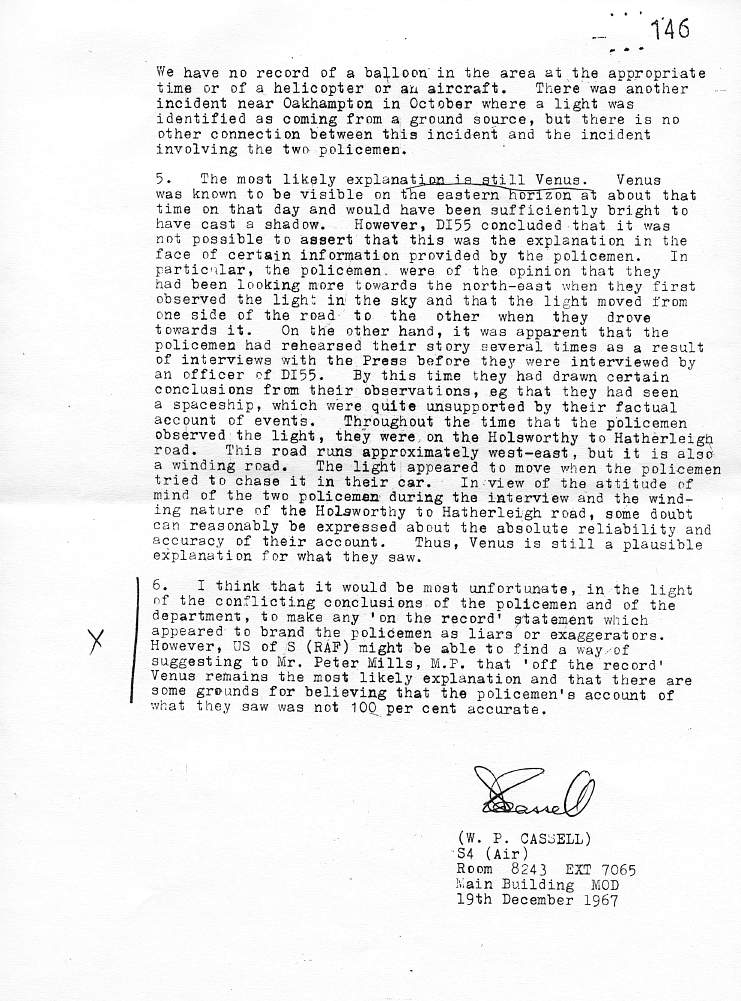
If you want a responsible starting point for the incident, it is the Venus explanation. Not as a wave-of-the-hand dismissal, but as a well-supported identification for the core stimulus that triggered the “flying cross” description in the police sighting.
Two distinct institutional channels support this. The first is the official summary in Parliament: Merlyn Rees told the Commons that most of the reported “lights” were Venus. (Hansard, UK Parliament Official Record, 8 November 1967). (Hansard)
The second is a credible astronomical voice preserved in the British Astronomical Association’s record. The obituary for Howard G. Miles, published by the British Astronomical Association, notes that Miles quickly recognised that the Devon “flying cross” was a classic sighting of Venus and that the explanation was accepted by the policemen. (British Astronomical Association, “Obituary: Howard George Miles (1922–2016)”). (britastro.org)
That is about as strong as historical UAP identifications get: an official attribution, paired with a named specialist’s identification, paired with an account that the original witnesses accepted the explanation.
It is also worth saying plainly why Venus can produce a dramatic experience. Venus near the horizon, especially in the hours before dawn, can be intensely bright. Atmospheric turbulence can make it scintillate and flare. Thin cloud, mist, or the optical imperfections of a windscreen can turn a point source into a structured glare pattern. If the witness is moving in a vehicle, the brain’s distance and motion judgments can be thrown off, and a fixed object can feel like it is pacing a car along bends and rises in the road. None of this requires the witnesses to be gullible. It requires only that human perception behaves the way it normally does under low light and surprise.
So, when we talk about the incident itself, the Venus hypothesis is best treated as the leading explanation for the central police sighting, supported by both official and astronomical sources.
And yet: the official record leaves a remainder
Now the part that keeps the Devon Flying Cross tethered to the wider flap.
Merlyn Rees did not say “all explained.” He said most of the lights were Venus, and “the source of a few lights has not been positively identified.” (Hansard, UK Parliament Official Record, 8 November 1967). (Hansard)
This matters for two reasons.
First, it provides the simplest official foundation for saying that October 1967 was not a single solved event. It was a mixed set of reports, with some attributed and some unresolved.
Second, it shows how easily the public story can become flattened. Over time, “most were Venus” becomes “it was Venus,” and the remainder disappears. But the remainder is in the primary record, and if you care about historical accuracy, you have to keep it there.
What might the “few lights” have been? The honest answer is that the Hansard summary alone does not specify. They could have been mundane events lacking sufficient detail, or aviation-related lights without matching logs, or atmospheric phenomena, or mis-timed reports, or simply too little information to close the loop. The point is not to inflate “unidentified” into “exotic.” The point is to acknowledge that the official handling preserved uncertainty.
The 1967 reporting climate: why flaps behave like weather systems
The Devon Flying Cross incident happened in an era when Britain already had a UAP reporting infrastructure. The National Archives briefing document describes the Ministry of Defence’s use of standard questionnaires and the way reports were stored in monthly sequences and dedicated files. (National Archives)
That procedural backbone matters, because it shows that a flap is not only a cultural phenomenon. It is also an administrative phenomenon. When reports spike, institutions process more data, produce more internal correspondence, and feel more pressure to respond publicly.
There is also the media environment. Even without social media, the 1960s were built for amplification: radio, newspapers, television, and the particular post-war appetite for aerial mystery. Once an object becomes a headline, other ambiguous lights are more likely to be interpreted through the same lens. That is not a claim that witnesses are inventing. It is an observation about how expectation and attention influence reporting. This is analysis, but it is analysis consistent with the known behaviour of reporting waves across many decades.
Hoaxes and pressure: September 1967’s lesson
One reason 1967 became such a pressure cooker is that it contained both sincere reports and deliberate fabrications.
Smithsonian Magazine later recounted a significant September 1967 episode in which engineering students planted mock “UFOs” as part of a prank, and authorities initially took the reports seriously. (Smithsonian Magazine, “How British College Students Convinced Authorities That Flying Saucers Were Invading the U.K.,” 15 November 2024). (Smithsonian Magazine)
This is important context for Devon Flying Cross and the October flap, not because it explains them, but because it helps explain the informational atmosphere. A well-publicised hoax creates noise, shifts expectations, and primes both the public and officials to interpret ambiguous stimuli through a heightened narrative. In analytical terms, it changes the baseline.
Devon’s archival gap: Berry Head and the fragility of records
The Devon Flying Cross case survives in part because it intersected with MoD and Parliament. Not every 1967 Devon report had that luck.
A Freedom of Information response from HM Coastguard (Maritime and Coastguard Agency), issued via WhatDoTheyKnow, explains that earlier Berry Head Coastguard station CG12 records are no longer held, that the newer CG19 log system begins later, and that when MRCC Brixham closed in 2014, documentation was disposed of as no longer useful. The agency also checked Beer Coastguard station records back to 1960 and found no mention of the sighting in question. (Maritime and Coastguard Agency FOI response letter, ID3573, via WhatDoTheyKnow).
That document does not prove the April 1967 Berry Head story true or false. What it does prove is that institutional memory is selective. UAP history is shaped not only by what happened, but by what was preserved.
This has a sobering implication. Some cases look “stronger” than others because they left paper trails. Others look weaker because the records were never designed to survive. Devon Flying Cross’ survival is, in part, a function of administrative gravity.
Crosses in the sky: what the shape might mean, and how to frame it properly
A cross is not a neutral shape. It is geometry, but it is also a symbol. In Britain, it sits in a long lineage of “signs” narratives, from medieval chronicles to modern religious imagery. That symbolic weight can influence how an event is remembered and retold.
Here, however, it is crucial to be careful. The archival label “flying cross” is evidence that the shape descriptor became attached to the case. (The National Archives, UK, briefing document). (National Archives)
Any deeper reading of that shape, whether psychological, cultural, or religious, is interpretation.
So, framed explicitly as analysis: the “cross” descriptor may have persisted not only because it described a visual structure, but because it was an emotionally resonant label that made the experience instantly communicable. A witness under pressure reaches for shapes that are easy to name. A cross is easy to name. It is also memorable. That combination can help a story travel.
Framed as fact: the label exists, the report exists, and the official system preserved it.
Bentilee and the cultural afterlife of 1967
Not all UAP cases are kept alive by government files. Some are kept alive by local memory and later cultural retellings.
In 2024, The Guardian reported on a stage production being developed around the Bentilee 1967 incident in Stoke-on-Trent, drawing on eyewitness memory and local research. (The Guardian, “Sprinkled with stardust”: Stoke-on-Trent’s mythic UFO landing comes to the stage,” 8 August 2024). (Facebook)
It is important not to treat a modern cultural adaptation as primary evidence for the original event. But it is fair to treat it as evidence of persistence: 1967 cases did not simply vanish. They continued to shape local identity and storytelling, and they re-emerged when later generations went looking for meaning in the archive of place.
That persistence is part of what makes 1967 a compelling year to revisit. It sits in a moment when UAP reporting was already bureaucratised, yet still culturally vibrant enough to generate durable local legends.
What the official Parliamentary conclusion does, and does not, settle
Merlyn Rees’ final line in the Commons, “none of these unidentified lights was an alien object,” is often quoted as a definitive debunking. (Hansard, UK Parliament Official Record, 8 November 1967). (Hansard)
It is definitive in one sense: it states the government’s position. But it does not identify the remaining lights. It is a conclusion about origin rather than a disclosure of specific attributions. That difference matters historically, because it reveals a common institutional pattern: governments often aim to reassure beyond what the remaining uncertainty strictly supports.
This is analysis rather than accusation. Public reassurance is one of the normal functions of official communication, especially when newspapers are running stories that could drift into panic or ridicule.
So what was the Devon Flying Cross Incident?
Based on the strongest available sources accessible in the public record, the most responsible reading is layered.
At the centre, the Venus explanation for the police sighting is well-supported by both the Parliamentary summary and the British Astronomical Association account of Howard G. Miles’ identification and the policemen’s acceptance of that explanation. (Hansard)
Around that centre, the broader October 1967 reporting wave in North Devon included additional reports, and the official record explicitly acknowledges that a small number of lights were not positively identified. (Hansard)
And beyond Devon, the National Archives briefing document indicates that “flying cross” reporting in October 1967 extended across multiple regions, including Sussex, and was handled through defined MoD channels whose file references remain available for deeper research. (National Archives)
If you want the Devon Flying Cross case to teach you something lasting, it is this: a strong prosaic explanation for a headline sighting does not automatically dissolve a flap. Flaps are often composites: some reports resolve cleanly, some resolve plausibly, and some remain unresolved because the data is incomplete or contradictory.
That is not mysticism. It is simply what the historical record says.
Claims taxonomy
Verified
- The Ministry of Defence received multiple reports of objects seen in the sky over North Devon in October 1967 and stated in the House of Commons that some reports were aircraft, most lights were Venus, and a few lights were not positively identified. (Hansard, UK Parliament Official Record, 8 November 1967). (Hansard)
- The National Archives (UK) identifies dedicated October 1967 “flying cross” file material in AIR 20/11889 and AIR 20/11890, including reports from police officers and other witnesses across multiple regions. (National Archives)
- Howard G. Miles is documented by the British Astronomical Association as identifying the Devon “flying cross” as Venus, with the account stating that the policemen accepted this explanation. (britastro.org)
Probable
- The Venus explanation is strongly supported for the central Holsworthy police sighting and plausibly accounts for many “light” reports in the wider North Devon cluster described in the Parliamentary record. (Hansard)
- The claim that engineers at North Hessary Tor reported low-flying objects for an extended period is grounded in the Commons exchange as relayed by the questioning MP; it is best treated as probable pending direct review of the underlying witness statements in the AIR 20 files. (Hansard)
- The witness testimony of both policemen points to it being something other than Venus, since they reported driving the car at 90mph and even then watched the object depart a “terrific speed”. Venus was at that time (4:01 AM) and date (Oct. 24, 1967) to the East, and rising in the sky as the night ended. The policemen were patrolling the A3072 from Hatherleigh towards Holsworthy (which is in the East direction). The chase they gave and the disappearance of the object due to great speed would have been improbable under these conditions. So despite the official explanation it is highly probable that the policemen saw something other than Venus that late night of October in West Devon, UK.
Disputed
Whether every report within the broader October 1967 wave can be fully resolved through Venus, aircraft, or other ordinary stimuli remains unsettled in the public summary, because the Parliamentary record itself preserves a remainder category of lights not positively identified. (Hansard)
Hoax
A major UK “saucer invasion” episode in September 1967 is documented in later historical reporting as a deliberate student prank that initially drew serious official attention. (Smithsonian Magazine)
Speculation labels
Hypothesis
October 1967 in the UK represents a mixed reporting wave where a bright astronomical trigger likely generated many sincere misidentifications, while a smaller portion of reports remained unresolved due to limited information, timing uncertainty, or atypical viewing conditions. This is consistent with the official remainder category but does not claim a non-prosaic cause.
Witness interpretation
A fixed celestial object can feel close and responsive when observed from a moving vehicle on rural roads in low light. The more a witness tries to judge distance and movement quickly, the more the brain can “upgrade” a bright stimulus into an apparently structured, behaving object.
Researcher opinion
The strongest path to deeper verification is archival reconstruction: examine AIR 20/11889 and AIR 20/11890 directly, correlate times and locations across witnesses, compare with astronomical and aviation context, and test whether Venus accounts for the full set of described behaviours or primarily the core light source behind the most famous report.
Editor’s note: Besides the apparent strande shape of the object in 1967, in the 2020s several official and leaked videos have surfaced with the same start shaped UAP.
References
British Astronomical Association. (2017). Obituary: Howard George Miles (1922–2016). (britastro.org)
Hansard, UK Parliament Official Record. (1967, November 8). Unidentified Flying Object (North Devon). House of Commons Debates. (Hansard)
The National Archives (UK). (2012). Briefing document on records regarding unidentified flying objects (UFOs). (National Archives)
The National Archives (UK). (n.d.). AIR 20/11890: Unidentified Flying Objects (UFOs). With maps. Discovery catalogue record. (Parliament API)
Smithsonian Magazine. (2024, November 15). How British College Students Convinced Authorities That Flying Saucers Were Invading the U.K. (Smithsonian Magazine)
The Guardian. (2024, August 8). “Sprinkled with stardust”: Stoke-on-Trent’s mythic 1967 UAP “landing” comes to the stage. (Facebook)
SEO keywords
Devon Flying Cross incident, Holsworthy Cross Incident 1967, Holsworthy Flying Cross, Devon UAP 1967, North Devon UAP flap, UK UAP wave October 1967, Holsworthy police UAP sighting, Hansard North Devon UAP 1967, Merlyn Rees statement Venus, Venus explanation Holsworthy, Ministry of Defence UAP files, AIR 20/11889, AIR 20/11890, The National Archives UK UFO files, North Hessary Tor engineers UAP, 1967 British UAP hoax, Bentilee 1967 UAP