
On a weekday morning in May 2001, a soft spoken emergency physician in a navy suit stepped to a podium at the National Press Club and threw down a gauntlet.
Dr. Steven Greer, founder of the Disclosure Project, introduced two dozen former military and government personnel, each prepared to attest that the United States government possessed knowledge of non-human craft and advanced technologies locked inside sealed programs.
Greer called for open hearings and a new energy future. Cameras rolled. Reporters filled the room. By day’s end, his push for public testimony had ricocheted around broadcast and print media. For those who follow the UAP subject, that day was disclosure’s coming out party. (ABC News)
Two decades later, Greer remains one of the most polarizing and persistent figures in UAP history. Admirers credit him with mainstreaming the very idea of disclosure. Critics question his methods and claims. Either way, the physician who once ran an emergency department in North Carolina placed witness testimony, government paper trails, and a provocative energy and consciousness thesis at the center of public debate about UAP. (A M Publishers)
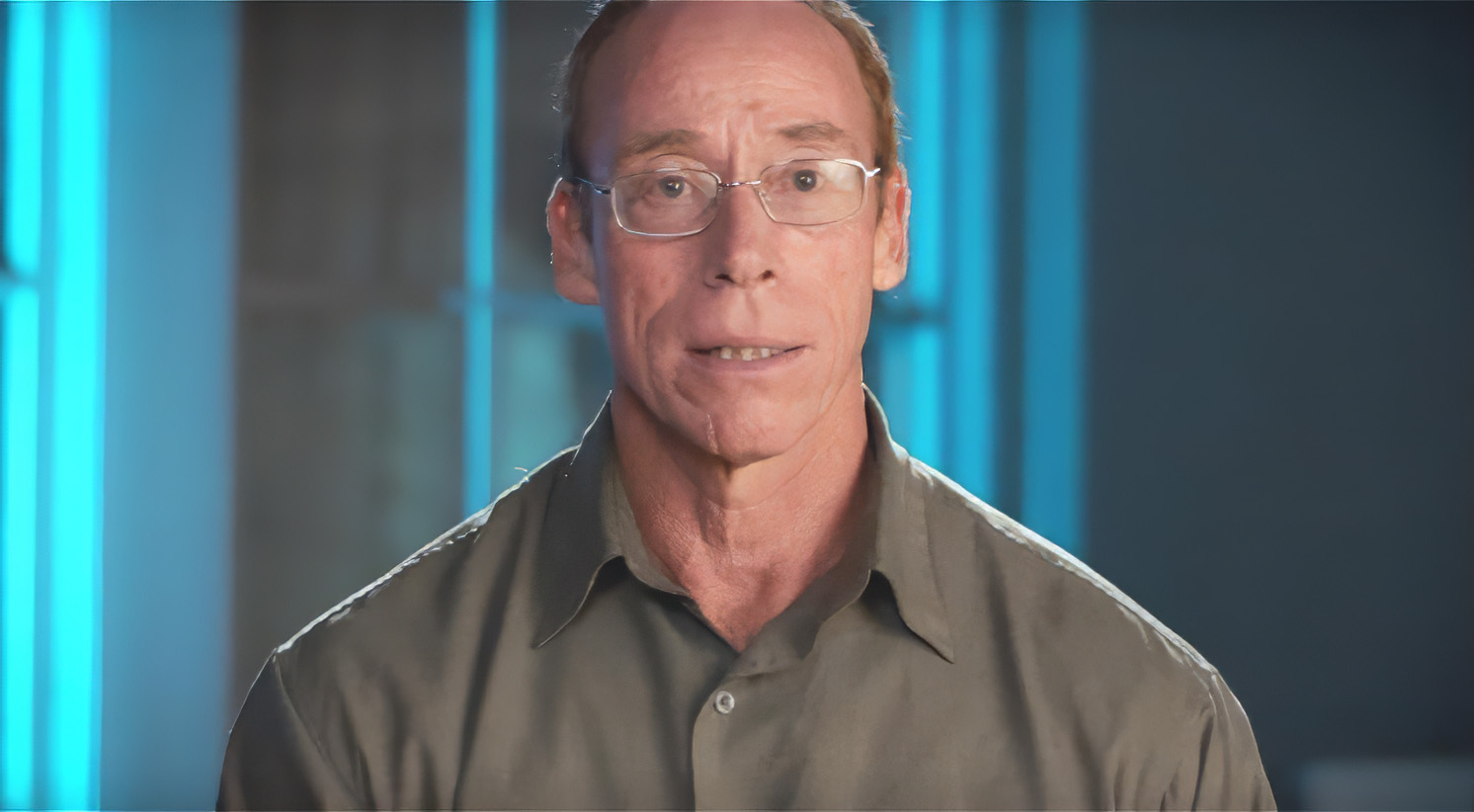
From hospital shifts to night watches
Steven Macon Greer was born in Charlotte, North Carolina, in 1955. He earned a B.S. in biology from Appalachian State University in 1982, then an M.D. from East Tennessee State University’s James H. Quillen College of Medicine in 1987. He practiced as an emergency physician and is commonly described as the former chair of emergency medicine at Caldwell Memorial Hospital in Lenoir, North Carolina. In the late nineteen nineties he left medicine to work full time on UAP research and advocacy.
By 1990 he had founded the Center for the Study of Extraterrestrial Intelligence, or CSETI, with a focus on field investigations and what he called CE5, human initiated contact. The idea was both simple and radical: the right mix of intention, group coherence, and signaling could invite non human intelligences to respond. Field teams headed into the desert and along coastlines to test the hypothesis. A decade later, the Disclosure Project spun out of those efforts to organize testimony and press for open hearings.
Early mainstream profiles captured the flavor of those field nights. An Outside magazine reporter followed Greer and a caravan to a night watch in 1994, a sketch of a physician turning his calm clinical demeanor toward the sky.
That piece, along with a network of talks and briefing documents, helped seed the language and posture Greer would champion for years: contact is possible, disclosure is necessary, and the energy question is inseparable from the UAP problem. (Outside Online)
Predictions from the early years
For Greer, disclosure was never just about acknowledgment. In the nineties and by the 2001 press event he argued that humanity risked tumbling into an avoidable resource and security crisis unless hidden propulsion and energy breakthroughs were made public and weaponization of space was halted.
As reporters noted that week at the press club, he warned of environmental and energy instability if fossil fuel dependence continued and called for a ban on space-based weapons.
Whether or not readers agreed with him, he put a marker down that the UAP question sits beside the climate and technology questions, not after them. (WIRED)
Greer also predicted that any eventual official interest in UAP might come wrapped in a threat narrative. Over the years he cautioned that fear could be used to justify expansion of secret programs and military budgets. That thesis became a major theme of later films and talks, and by 2021 it reemerged in a stand-alone documentary, “The Cosmic Hoax.” (Apple TV)
Government touchpoints
Greer’s government facing work began with what he called Project Starlight. He says that in the mid to late nineties he delivered briefing materials to officials and organized small sessions on Capitol Hill and at the Pentagon.
A Disclosure Project executive summary, circulated in 2001, states that CSETI brought witnesses to Washington in April 1997 for meetings with members of Congress and defense officials, and that when open hearings did not materialize the group resolved to “privatize” the disclosure process by recording and publishing witness testimony. (Dr. Steven Greer)
There is also a paper trail showing Greer’s outreach to the White House during the Clinton years. The Clinton Presidential Library maintains a finding aid for a collection of Greer’s correspondence and position papers sent to the administration. That alone does not validate the content of his claims, but it confirms there was contact at the level of mail and memoranda. (Clinton Digital Library)
The most discussed touchpoint is a dinner on December 13, 1993, at the Arlington home of futurist John Petersen, attended by CIA Director R. James Woolsey and their spouses.
Greer has described that dinner as a covert briefing; Woolsey and the others wrote a letter in 1999 stating that this characterization was inaccurate and that Greer had published a “distorted account” of a dinner party conversation. The letter exists as a one page document and is often cited because it offers a rare official rebuke on the record.
Greer published a detailed response asserting his version of events and quoting Petersen’s contemporaneous notes. Readers can study both documents and draw their own conclusions, but the historical point is clear: a claim of a high level “briefing” met a formal denial from the former CIA director.
All of this set the stage for May 9, 2001. That morning at the National Press Club, Greer presented pilot, radar, intelligence, and maintenance personnel who said they had first-hand knowledge of UAP incidents or of programs that handled the topic.
Media outlets from ABC News to the Washington Post and Wired covered the event, noting both the ambition and the absence of hard artifacts to match the claims.
Regardless of the skepticism, the format worked. It created a template others would recycle in later years: put witnesses under lights, call for immunity and hearings, and aim the story at Congress and the public at the same time. (ABC News)
Greer’s Core Assertion: No Hostile Extraterrestrials
From the early 1990s, in both CSETI field manuals and in public lectures, Dr. Greer has repeatedly emphasized that NHIs visiting Earth are not malevolent. He asserts that if any of these civilizations were hostile, they would have already demonstrated overwhelming force or conquest capability long ago.
In his 2006 book Hidden Truth, Forbidden Knowledge, Greer wrote:
“If they were hostile, we would have known it conclusively since the 1940s. Any civilization capable of interstellar travel could neutralize our entire defense structure in minutes. The fact that we are still here is evidence of their restraint and peaceful intent.”
This line of reasoning, rooted in technological asymmetry, remains the philosophical backbone of Greer’s “benevolence hypothesis.”
Philosophical and Spiritual Foundation
Greer’s worldview links consciousness and cosmic ethics. He teaches that civilizations advanced enough for interstellar contact must have evolved beyond aggression or conquest. His logic is anthropological and metaphysical:
“The ability to travel among the stars presupposes mastery of higher states of consciousness, and therefore of peace.”
In Close Encounters of the Fifth Kind (2020), he expands on this idea, saying that human fear, militarism, and secrecy are the obstacles preventing open and harmonious contact. For him, hostility and secrecy belong entirely to human institutions, the so-called “breakaway military-industrial complex”, not to NHIs.
Contrast with Other Researchers
This stance sharply contrasts with others in the UAP field:
- Jacques Vallée describes NHI interactions as complex, sometimes deceptive, and not easily categorized as good or evil.
- David Jacobs and Bud Hopkins (abduction researchers) concluded that at least some NHIs act with manipulative or exploitative intent.
- Tom DeLonge’s “To The Stars” narrative, later echoed by some Pentagon insiders, frames NHIs as potentially dangerous, or at least a national security concern.
Greer, by contrast, interprets the “threat narrative” as a deliberate human fabrication designed to justify secrecy, militarization of space, and control of advanced energy technologies. His 2021 film The Cosmic Hoax: An Exposé is entirely devoted to this claim.
Greer’s View of Human “False Flags”
Perhaps the most controversial element is Greer’s belief that any future “alien threat” scenario would be orchestrated by humans, not NHIs. He has warned for decades of a “staged extraterrestrial threat” (a “cosmic false flag”) using man-made craft and psychological operations to unite the world under militarized control.
He references Wernher von Braun’s alleged warning to assistant Carol Rosin that a fabricated alien threat would be “the final card” used by global powers. Greer adopted and amplified this claim in multiple talks, including at the 2001 National Press Club event and in Unacknowledged (2017).
In his view, true extraterrestrial civilizations are cooperative and spiritually advanced, while humans project their own fear and militarism onto them.
Criticism of Greer’s Benevolence Thesis
Critics, including many within the UAP research community, argue that Greer’s “all benevolent” stance is philosophically appealing but empirically weak, since it discounts numerous reported abduction or negative encounter cases.
Researchers such as Dr. John E. Mack acknowledged the possibility that the phenomenon may include both transformative and traumatic aspects. Even Mack, who leaned toward an integrative spiritual interpretation, stopped short of declaring all NHIs benevolent.
Skeptics also note that Greer’s position may discourage balanced inquiry, since it presupposes moral purity without conclusive data. For example, it assumes advanced technology equals moral advancement, something history has not always borne out in human civilization.
How Greer Responds to the Counterarguments
Greer’s rebuttal is consistent:
- Negative encounters, he says, are either human psychological misinterpretations or military abductions (“MILABs”) designed to simulate hostile alien behavior.
- He maintains that there are no verified cases of genuine extraterrestrials harming humans.
- He distinguishes between “contact” (voluntary and consciousness-based, CE5) and “abduction” (coercive and usually human-orchestrated).
Thus, for Greer, any violence, fear, or manipulation attributed to NHIs is actually of human origin.
Benevolence as Strategic Messaging
It’s also important to recognize that Greer’s “benevolence doctrine” serves a strategic purpose within his broader mission.
It underpins his call for peaceful disclosure and demilitarization of space. If extraterrestrials are peaceful, secrecy and weaponization make no moral or strategic sense, thus his message becomes both ethical and political.
He often says in conferences: “The Disclosure movement is not just about knowing what’s out there, it’s about who we are and how we respond. Do we meet the cosmos with fear, or with cooperation?”
Summary Table of Greer’s Stance
| Topic | Greer’s View | Contrasting View |
|---|---|---|
| Nature of NHIs | All peaceful, non-hostile | Mixed intentions, some possibly harmful |
| Source of “threat narrative” | Human fabrication / psychological warfare | Genuine unknown risk |
| Abductions | Human-orchestrated (MILABs) | Real NHI involvement |
| Military secrecy | Protects energy technology and maintains fear control | National security concern |
| Path to contact | Consciousness-based CE5 protocols | Scientific or defense-based study |
| Philosophical core | Higher consciousness = moral advancement | Intelligence does not imply morality |
Why This View Matters in Modern UAP Discourse
As of the 2020s, Greer’s position remains a minority view in official circles but continues to influence the language of civilian contact groups and the broader “exo-political” movement.
It has helped shape a “New Human-ET paradigm” emphasizing consciousness, cooperation, and post-scarcity energy systems, ideas that have gained traction among some new-age and disclosure communities.
Even as the U.S. government and scientific institutions approach UAP as potential security or flight safety issues, Greer continues to frame them as an invitation to spiritual evolution, not a threat to manage.
Books that built a worldview
Greer’s books provide a chronological spine for his argument.
“Extraterrestrial Contact: The Evidence and Implications” (1999) gathered cases, documents, and emergency energy appeals in a single volume. Published by Crossing Point, it shows Greer, even then, blending testimony with a roadmap for national policy. (Colorado Mountain College)
“Disclosure: Military and Government Witnesses Reveal the Greatest Secrets in Modern History” (2001) published raw testimony and documents from the witness archive Greer was building. An Internet Archive entry confirms the 2001 publication date and content focus. (Internet Archive)
“Hidden Truth, Forbidden Knowledge” (2006) reads like a memoir of fieldwork, briefings, and claims of contact. Bibliographic listings trace its publication through Crossing Point in 2006. (Better World Books)
“Contact: Countdown to Transformation” (2009) brings CE5 into focus by chronicling CSETI team experiences from 1992 to 2009 and formalizing the group’s “vectoring” protocols. (Internet Archive)
“Unacknowledged: An Exposé of the World’s Greatest Secret” (2017) serves as the companion volume to the film of the same name and reprises Greer’s major themes about secrecy, energy, and a push for amnesty and hearings. (AbeBooks)
Across these titles, certain through lines stand out. Greer frames UAP as a civilizational question, not simply an aerospace mystery. He links testimony to an energy transition narrative. And he writes in the first person from the center of the action, an author who is also a protagonist.
Cinema as megaphone
If the 2001 press conference gave disclosure a format, Greer’s films gave it a cadence.
“Sirius” (2013) premiered in Los Angeles and was based on themes from Hidden Truth, Forbidden Knowledge. It mixed witness interviews with a case that would become the subject of scientific and ethical debate, the so called Atacama skeleton. (Wikipedia)
“Unacknowledged” (2017) rose to the top of digital documentary charts upon release and helped make Greer a familiar name to viewers who had not followed the subject before. Review aggregators and streaming platforms have preserved the capsule description and release data. (Rotten Tomatoes)
“Close Encounters of the Fifth Kind” (2020) put CE5 front and center. Mainstream reviewers in Variety, the Los Angeles Times, and The Hollywood Reporter criticized the film’s argument and structure, while acknowledging Greer’s role as the public face of the movement. That mixed reception underscored an odd cultural moment. UAP had become news, but the question of who would own the public narrative was still being sorted out. (Variety)
“The Cosmic Hoax” (2021) condensed his warning that a fear based story could be used to steer policy, and it circulated widely on streaming outlets. (Google Play)
“Above Top Secret: The Technology Behind Disclosure” (2022) and “The Lost Century: And How to Reclaim It” (2023) continued the energy theme, arguing that breakthrough propulsion and power systems exist inside programs and should be released for planetary benefit. Distribution pages and platform listings confirm the releases and summaries. (Apple TV)
Case study in controversy: the Atacama skeleton
The most debated sequence in Sirius concerned a six-inch mummified skeleton found in Chile’s Atacama Desert in 2003 and featured by the filmmakers as a possible anomaly.
In 2018, teams at Stanford, including Dr. Garry Nolan, and UCSF published a whole genome analysis that concluded the remains were human, a female characterized by several mutations associated with skeletal dysplasia.
Stanford’s news site and Genome Research summarized the genetics and the finding that the DNA profile matched local human ancestry.
Major outlets from The Guardian to Time reported the results. Whatever viewers thought of the film’s presentation, peer reviewed work decisively placed the specimen within human biology. (PMC)
CE5 as practice and as culture
Where many researchers keep the question of contact at arm’s length, Greer turned it into a teachable practice. CE5 teams meditate, signal with tones, lights, and radios, and document whatever follows. In the late two thousands and 2010s, the practice went from small group expeditions to a mass culture template as Greer commercialized training and launched a mobile app.
App store listings describe the CE5 Contact app as a guide with networking functions to connect practitioners. The move drew criticism from skeptics who questioned any paywall on “truth,” but it also drove a measurable cultural ripple. Even pop culture figures have name checked the protocols, further blurring the line between fringe and mainstream. (App Store)
The growth of CE5 also brought allegations.
One criticism, aired in an opinion column and across message boards, argued that a 2015 Florida event showed nothing more exotic than parachute flares. The article used flight tracking data to make its case.
Supporters dismissed that interpretation and countered with their own testimonies. Whatever one thinks about that specific claim, it captures the CE5 dilemma in miniature. A method built around subjective experience and group intention is hard to adjudicate by looking for a single camera shot or radar return. And yet CE5 has undeniably shaped how many newcomers first step into UAP. (Washington Examiner)
Energy activism: AERO, The Orion Project, and the “lost century”
Long before “The Lost Century” became a film title, Greer pushed an energy argument through projects that sat beside his disclosure advocacy. The Advanced Energy Research Organization and The Orion Project published white papers and calls for demonstration funding across the two thousands.
The material kept a steady focus on novel generators, zero point concepts, and a claim that secrecy around UAP and secrecy around energy are two faces of the same problem. Even critics who doubted the specifics recognized that Greer had reframed UAP as an energy policy story. (Scribd)
Greer and official Washington after 2017
In the years after a 2017 news cycle revived mainstream coverage of UAP, the official story of what the Pentagon knows has evolved. Greer, however, argued that the renewed attention was being narrated through a narrow lens that risked hardening a fear frame.
The New Yorker’s long form on how the Pentagon began to take UAP seriously situates his 2001 press conference within that broader arc, and his 2021 film returned to the warning that disclosure without energy transparency would be disclosure without transformation. (The New Yorker)
Contributions, controversies, and unfounded claims
What Greer added
Greer’s largest contribution is architectural. He named and popularized “disclosure” as a civic demand. He created a witness archive, brought dozens of former personnel to a single stage, and pressed for congressional immunity so direct testimony could be taken in public. In effect he built a playbook that others adopted.
He also turned “CE5” into a widely used term for human initiated contact. Even critics of CE5 would agree that the acronym is now part of the UAP lexicon. (WorldCat)
There is also an educational value to his relentless energy argument. By linking UAP to a post fossil fuel transition long before climate edges dominated headlines, he ensured that any serious discussion of UAP must entertain technological and policy counterfactuals.
The Wired account of the 2001 event, complete with arguments about the consequences of staying on a fossil trajectory, reads today like an early draft of a conversation many countries are finally having. (WIRED)
Where the record is thin
Some of Greer’s claims remain assertions without public corroboration. The 1993 dinner with CIA Director Woolsey is the cleanest example. Greer calls it a covert briefing; the participants say it was a dinner and that Greer mischaracterized it. The historical record contains both the denial letter and Greer’s rebuttal, and without independent notes or recordings most outside readers will file the matter as unresolved.
The CE5 corpus presents a similar tension. Thousands of participants report meaningful encounters, but the body of instrumented data that would convince skeptics remains limited in the public domain.
An additional complication is the commercialization of CE5 through expeditions and a mobile app, which gives critics an easy line of attack even as it gives newcomers an easier on ramp. (App Store)
Finally, Sirius leaned on the Atacama skeleton as a tease for extraordinary biology. The 2018 genetics make clear that the remains are human, with multiple mutations.
In hindsight, the case functions best as a reminder that the UAP field pays a reputational price when dramatic imagery outruns careful analysis. (PMC)
Where Greer drew productive fire
The most persistent critiques are about method. Mainstream reviewers objected to Greer’s editorial moves in Close Encounters of the Fifth Kind, and an opinion writer’s flare hypothesis tapped a vein of skepticism about CE5 videos.
Whether one accepts those criticisms or not, they sharpen a point Greer himself invites: if contact is real and teachable, then a maturing CE5 movement should invest more in multi-instrument documentation and transparent data sharing. That is where a culture of testimony meets a culture of measurement. (Variety)
The Greer effect
Whatever one decides about Greer’s strongest claims, his influence on the modern UAP vocabulary is hard to ignore.
Before 2001, a daytime press conference at the National Press Club featuring military and intelligence witnesses would have sounded like science fiction.
After 2001, it became an advocacy template. Before the late nineteen nineties, “close encounters” ended at contact cases. After Greer, CE5 reframed contact as an active human invitation. That is why both admirers and critics keep returning to his story. He is not just a voice in UAP discourse. He helped build the discourse itself. (WorldCat)
In a world where official UAP studies coexist with citizen science and grassroots practice, Greer’s record offers two lessons:
- First, witnesses and paper trails matter. One well curated archive can shift the Overton window;
- Second, energy is not an afterthought.
Whether or not one accepts the claim that breakthrough systems are already in hand, the push for clean and abundant energy is central to any future where contact might reshape civilization.
It is fitting, then, that the physician who once moved quickly from trauma bay to trauma bay now asks society to move with urgency on a different kind of triage. He asks us to connect the sky to our power grid, our ethics, and our politics.
That demand has not always landed well. At times it has overreached. But it forced a larger question onto the table. When we finally decide what disclosure means, will we also decide what kind of world we are disclosing into?
In Summary
- Yes – Dr. Steven Greer unequivocally believes all NHIs engaging Earth are benevolent or non-threatening.
- He sees the “alien threat” narrative as a human psychological projection and a political manipulation.
- His reasoning stems from a blend of metaphysics, strategic analysis, and ethical projection.
- This position has made him one of the most polarizing voices in modern UAP thought: visionary to some, naïve or disinformational to others.
Regardless of where one stands, Greer’s benevolence thesis remains a defining fault line in the philosophy of contact.
References
ABC News, “Group Calls for Disclosure of UFO Info,” coverage of the May 2001 National Press Club event. (ABC News)
The Washington Post, coverage of witness statements from the May 2001 event. (The Washington Post)
Wired, “Ooo WEE ooo Fans Come to D.C.,” report on Greer’s calls for declassification, a ban on space weapons, and the energy imperative. (WIRED)
WorldCat record for the Disclosure Project’s edited recording of the press event. (WorldCat)
Clinton Presidential Library, finding aid summarizing correspondence from Dr. Steven Greer to the administration. (Clinton Digital Library)
“Executive Summary of the Disclosure Project Briefing Document,” detailing April 1997 Washington briefings and the plan to record witness testimony. (Dr. Steven Greer)
Letter from R. James Woolsey, Diane Petersen, John Petersen, and Suzanne Woolsey to Steven M. Greer, September 16, 1999, disputing Greer’s characterization of a 1993 dinner. Greer’s posted copy.
Greer’s published response to the Woolsey letter. (Dr. Steven Greer)
Outside magazine, Alex Heard’s 1994 feature on Greer’s field work. (Outside Online)
Extraterrestrial Contact: The Evidence and Implications (1999), bibliographic entries and library records. (Colorado Mountain College)
Disclosure (2001), Internet Archive bibliographic record. (Internet Archive)
Hidden Truth, Forbidden Knowledge (2006), bibliographic listings. (Better World Books)
Contact: Countdown to Transformation (2009), Internet Archive record. (Internet Archive)
Unacknowledged (2017), book listings and film release notes. (AbeBooks)
Close Encounters of the Fifth Kind (2020), Variety and Hollywood Reporter reviews. (Variety)
The Cosmic Hoax (2021), platform listings and descriptions. (Google Play)
Above Top Secret: The Technology Behind Disclosure (2022), platform listings. (Apple TV)
The Lost Century: And How to Reclaim It (2023), platform listings. (Apple TV)
Atacama skeleton genetics, Genome Research and Stanford Medicine coverage, plus reporting in The Guardian and Time. (PMC)
CE5 Contact app descriptions in the Apple App Store and Google Play. (App Store)
Vanity Fair on celebrity interest in Greer’s CE5 activities. (Vanity Fair)
Tom Rogan, Washington Examiner opinion column on a 2015 CE5 event and alleged flares. (Washington Examiner)
The New Yorker’s history of how the Pentagon began to treat UAP seriously, contextualizing Greer’s 2001 event. (The New Yorker)
Wikipedia entry on CSETI and CE5 to define the group’s stated aims and terminology. (Wikipedia)
Advanced Energy Research Organization and The Orion Project documents and briefing papers. (Scribd)
SEO keywords
Steven Greer biography, Disclosure Project, CSETI, CE5, human initiated contact, National Press Club 2001, government involvement UAP, Unacknowledged, Sirius documentary, Close Encounters of the Fifth Kind, The Cosmic Hoax, Above Top Secret, The Lost Century, Atacama skeleton DNA, UAP witness testimony, free energy suppression, Project Starlight, Woolsey letter, CE5 Contact app, UAP history