
Erich Anton Paul von Däniken (14 April 1935 to 10 January 2026) was the Swiss hotelier-turned-author who almost single-handedly mainstreamed the idea that non-human intelligences might have walked among the ancients.
His 1968 book Chariots of the Gods turbocharged public interest in what later came to be called the ancient astronaut or paleo-contact hypothesis.
Over the next five decades he published more than forty books, sold upwards of seventy million copies in over thirty languages, helped found the Archaeology, Astronautics and SETI Research Association (A.A.S. R.A.), and even built a theme park in Switzerland dedicated to “mysteries” he associated with extraterrestrial visitors. (ThriftBooks)
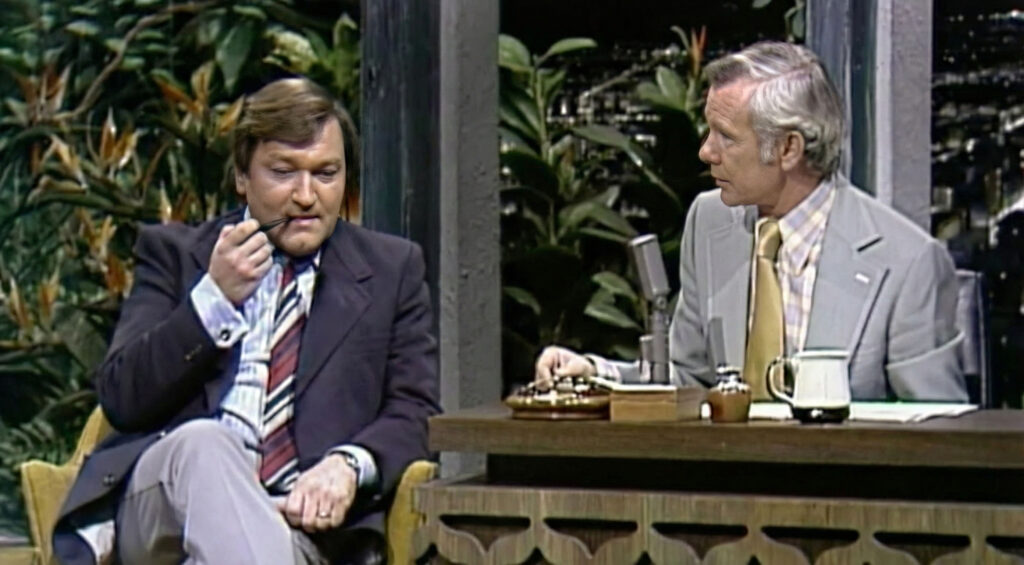
Beloved by fans, denounced by most professional archaeologists and historians, and still cited on late-night talk shows whenever someone says “ancient aliens,” von Däniken became one of the most culturally powerful interpreters of UAP-related ideas in the twentieth century.
When he died in a hospital near Interlaken, Switzerland, in January 2026 at age ninety, major news outlets across the world ran obituaries acknowledging that his work had permanently altered the way the public thinks about other intelligences and humanity’s past. (Reuters)

Early life: Catholic school, telescopes and trouble
Von Däniken was born in the town of Zofingen in the Swiss canton of Aargau and raised in a Roman Catholic family. He attended the Saint-Michel International Catholic School in Fribourg, where he developed a sharp skepticism toward traditional Church explanations of creation and began gravitating toward astronomy and “flying saucer” reports that were beginning to filter into European media during his youth.
The romantic image of him as a restless seeker fits a more complicated reality. As a teenager he received a suspended sentence for theft. After leaving school he turned to the hospitality trade, working as a waiter and barkeeper and later apprenticing with a Swiss hotelier.
His first published foray into what would later be recognized as paleo-contact came in 1964, while he was in Egypt. He wrote an article titled “Were Our Ancestors Visited by Extraterrestrials?” for a German-Canadian periodical, essentially a prototype of Chariots of the Gods that already suggested visitors from space as the hidden key to ancient monuments.
Financially, his early years were chaotic. While managing hotels he became involved in questionable financial deals and was eventually convicted in Switzerland of multiple counts of fraud, embezzlement, and forgery related to falsified hotel records and loans he used for foreign travel. In 1970 he received a prison sentence of three and a half years plus a fine, although he served roughly one year before release.
Von Däniken would later insist that he was unjustly treated and portrayed himself as a kind of maverick outsider persecuted for his ideas rather than his bookkeeping, a self-image that resonated with fans who saw him as a rebel against academic and institutional authority. (Penn Museum)
From hotel manager to global ancient astronaut evangelist
The pivot in his life came while he was managing the Hotel Rosenhügel in Davos. There, working late into the night after guests had gone to bed, he drafted the manuscript that became Chariots of the Gods? Unsolved Mysteries of the Past.
The manuscript went through a dramatic editorial process. Several publishers rejected his draft until Econ Verlag agreed to publish a heavily reworked version, edited by Utz Utermann under a pseudonym. The book finally appeared in 1968 and, against expectations, exploded onto the international scene.
In Chariots, von Däniken argued that many of the world’s great ancient structures and myths are best understood as records of visitations by technologically advanced non-human intelligences traveling in craft that, in today’s language, would be classed with UAP. Egyptian pyramids, the Nazca lines, the moai of Easter Island, Mesoamerican temples, and even certain biblical narratives were all recast as “clues” to this hidden history.
The book caught a cultural wave. It arrived in the late 1960s as the space age, psychedelic counterculture and public fascination with both ancient wisdom and space exploration collided. Academics largely ignored the work or dismissed it, but general audiences devoured it. Within a few years Chariots had sold millions, was adapted into a documentary film, and turned its author from a disgraced hotel manager into a celebrity lecturer and full-time writer. (AP News)
He wrote his second book, Gods from Outer Space, while still in prison. By the time he walked out, the royalties from his first book had wiped out his debts and funded a global speaking career.
Publications and core claims
Over the next half-century von Däniken built a sprawling bibliography. Counting translations, editions, and reissues is tricky, but he is widely credited with more than forty books, including: (ThriftBooks)
- Chariots of the Gods? (1968)
- Gods from Outer Space (early 1970s)
- The Gold of the Gods
- The Eyes of the Sphinx
- The Gods Were Astronauts
- Twilight of the Gods
- History Is Wrong
- The Gods Never Left Us
Although the settings range from Sumerian ziggurats to Andean terraces, the core thesis remains stable. In von Däniken’s view:
- At multiple points in antiquity, advanced non-human intelligences visited Earth in craft that would easily qualify as UAP by modern observational standards.
- These visitors, often interpreted by humans as “gods,” imparted technology, astronomy, and architecture far beyond what terrestrial cultures could supposedly achieve on their own.
- Myths, religious texts, and monumental architecture are encoded records of those encounters, filled with references to “flying chariots,” “heavenly wheels,” vimanas, fiery pillars and shining beings.
- The visitors promised to return, a motif that von Däniken often linked with modern UAP sightings and contemporary expectations of renewed contact. (Reuters)
In purely UAP terms, he tried to push the conversation backward in time. Instead of starting in 1947 with the “flying saucer” era, his corpus insists that humanity has essentially been living in a trans-temporal UAP environment for millennia, we just mislabelled the craft and occupants as gods, angels, or demons.
How his work intersects the UAP question
Von Däniken did not spend his career cataloguing modern radar tracks or cockpit reports. His primary archive was the ancient world. Yet his ideas fed directly into contemporary UAP discourse in several ways:
- Normalization of non prosaic explanations
He treated non-human visitation as a default explanatory framework for high strangeness in ancient contexts. That stance resonated later when credible military witnesses and sensor data began challenging purely prosaic explanations for some modern UAP cases. - Material culture as UAP evidence
Instead of lights in the sky, he pointed to stone and text. For him, Nazca was an “airfield,” the Great Pyramid an energy device or beamed signal, temple bas-reliefs depictions of helmets and craft. - Religions as memory of contact
He suggested that many religious encounters and apparitions could be read as misinterpreted technological events. This overlaps with UAP frameworks that try to read Marian apparitions, Ezekiel’s wheel, or the Miʿraj of Muhammad as potential contact episodes, categories that already exist in UAPedia’s taxonomy under Religious Experiences and Ancient & Mythological Accounts. - Public uptake of the Extraterrestrial Hypothesis (ETH)
Long before AAWSAP, AATIP, or AARO made ETH a respectable topic in congressional hearings, his books taught millions of readers that non human visitors might be the simplest explanation for some long-standing anomalies. (De Gruyter Brill)
Late in life he explicitly cited the 2021 United States government UAP report as vindication that official institutions were finally inching toward the possibility he had been raising since the 1960s, although UAPedia’s editorial stance treats such government reports as partial data points rather than final arbiters of truth. (Reuters)
Public appearances: from lecture halls to cable TV
From the early 1970s onward, von Däniken essentially lived on the lecture circuit. Obituaries note “countless field trips” to Egypt, India, and especially Latin America, whose ancient cultures deeply attracted him. (AP News)
His public presence evolved through several phases:
- 1970s film and lecture tours
The documentary adaptation of Chariots of the Gods? introduced his ideas to audiences who might never read a dense speculative book. He toured Europe and the Americas, giving talks that mixed slides of archaeological sites with the rhetorical question that became his signature: “Is it possible that…?” - Conference and society events
Through the Ancient Astronaut Society and later A.A.S. R.A., he headlined conferences that blended travel-tourism with speculative archaeology, often at the very sites he discussed in his books. - Mystery Park and multimedia shows
In 2003 he opened Mystery Park near Interlaken, a themed complex of pavilions on Nazca, Maya calendrics, megaliths, pyramids, vimanas, and spaceflight. Each pavilion used film, animatronics and panoramas to dramatize his interpretations, effectively turning UAP-related hypotheses into an immersive family attraction. Financial problems and lower-than-expected attendance forced closure in 2006; the site later reopened under new ownership as Jungfrau Park, with some of his original shows still in place. - Cable and streaming era
From the pilot episode onward, von Däniken was a recurring presence on History’s Ancient Aliens series and related specials. He became both subject and narrator, appearing in biographical episodes such as “The Von Däniken Legacy” and “The Alien Phenomena.” - Late-life digital presence
German-language coverage of his death notes that he remained active well into his eighties, recording talks and commentary for YouTube and continuing to appear remotely for conferences until health issues led him to withdraw in 2025. (BILD)
Across all of these formats he cultivated a familiar persona: affable, enthusiastic, always ready with new “mysteries” and seldom discouraged by criticism.
Known associates and networks
Although von Däniken liked to cast himself as a lone questioner of orthodoxy, he functioned within a dense network of collaborators, devotees and media partners. A few of the most relevant from a UAPedia perspective:
- Giorgio A. Tsoukalos
Bodybuilder turned television presenter, Tsoukalos co-founded A.A.S. R.A. with von Däniken and others in the late 1990s and served as director of the Center for Ancient Astronaut Research and later the Ancient Alien Society. He edited Legendary Times, the group’s magazine, and became the meme-famous “ancient aliens guy” on television, effectively inheriting von Däniken’s role for a younger generation. (ancientalienpedia) - David Hatcher Childress, Robert Bauval, William Henry, Linda Moulton Howe
Regular co-panelists on Ancient Aliens, these authors and commentators reinforced and elaborated on themes first popularized by von Däniken, including alignments, “stargates,” and non-human interventions in human evolution. (HISTORY) - A.A.S. R.A. membership and Legendary Times community
Through the research association and its publications, he helped cultivate a global subculture that blends alternative archaeology, New Age spirituality, and UAP fascination. (ancientalienpedia) - Parallel authors like Zecharia Sitchin
Although not a direct collaborator, Sitchin’s Anunnaki-centric theories about Mesopotamia developed in the wake of von Däniken’s popularity and occupy the same region of the intellectual map. (Scribd)
This ecosystem matters for UAPedia because many later contact, NHI and reverse-engineering narratives borrow visual and conceptual language that first reached mass audiences through von Däniken’s books and their descendants.
Work history beyond writing: the A.A.S. R.A. and Mystery Park
Archaeology, Astronautics and SETI Research Association (A.A.S. R.A.)
Originally emerging out of the Ancient Astronaut Society, the A.A.S. R.A. describes itself as an organization dedicated to exploring whether extraterrestrials visited Earth in antiquity. By the late 1990s it had re-branded under its current name, with a research focus that explicitly connected archaeology, astronautics and SETI. (ancientalienpedia)
Von Däniken functioned as both intellectual figurehead and promotional engine for the association. Conferences, site tours and the Legendary Times magazine built an informal network of “citizen investigators” applying his framework to new sites, carvings and texts.
From a UAP data-quality standpoint, A.A.S. R.A. is important less for original discoveries and more as an early example of citizen science and lay research in an era before modern smartphone reporting networks like NUFORC apps or MUFON’s online platforms.
Mystery Park / Jungfrau Park
Mystery Park was perhaps his boldest attempt to transform his hypotheses into infrastructure. Designed by von Däniken and opened in 2003 near Interlaken, the park combined seven themed pavilions on Nazca, Stonehenge, Maya cosmology, the Great Pyramid, vimanas, cargo cults and space exploration, all framed by his interpretation that non human visitors were the missing factor.
Financial expectations of half a million visitors per year proved unrealistic; in 2005 the park drew roughly 225,000 guests. Mounting costs and lack of sustained attendance led to suspension of operations in 2006. The site later reopened seasonally as Jungfrau Park under new ownership, retaining some of his original “mysteries of the world” shows as attractions.
Even in partial failure, Mystery Park illustrates how far the ancient astronaut narrative had penetrated popular culture. Few authors in any UAP-adjacent field can claim that their ideas are physically embodied as rides and domes on a Swiss hillside.
Controversies and critical reception
Erich von Däniken’s career has always been as controversial as it is influential. Major strands of criticism include:
Criminal convictions and credibility
His early convictions for fraud, embezzlement and forgery, tied to misuse of hotel finances, have been cited by critics who question his reliability as a reporter of evidence. He countered that the convictions were unfair and unrelated to the truth of his theories, but mainstream journalists and skeptics regularly bring them up when evaluating his testimony.
Pseudoarchaeology and methodological issues
Academic archaeologists and historians almost unanimously classify his work as pseudoarchaeology and pseudoscience. Common critiques include:
- Heavy reliance on argument from incredulity, summed up as “ancient people could not have done this,” without engaging the full technical literature on ancient engineering.
- Systematic neglect of cultural context in interpreting art, iconography and myth.
- Cherry-picking anomalies while ignoring mundane evidence that contradicts his preferred narrative.
- Reuse of claims that have already been corrected or withdrawn in later editions of his works.
Examples often cited include his early claim that the iron pillar of Delhi required extraterrestrial metallurgy, which he later abandoned when informed that conventional explanations already existed, and his portrayal of parts of the Nazca lines as an “airport” for spacecraft, based on misidentified aerial photos.
Broader cultural critique
Scholars of religion and culture have criticized ancient astronaut narratives, including von Däniken’s, for implicitly downplaying the achievements of non-Western civilizations by attributing their accomplishments to outside intervention. (De Gruyter Brill)
From a UAPedia standpoint it is important to register these critiques clearly. They do not automatically invalidate every question he raised, but they do place his work in a speculative, low-evidential category that should never be confused with peer-reviewed archaeology or sensor-verified modern UAP case files.
Impact on UAP, popular culture, and public imagination
Even his harshest critics generally concede one thing. Erich von Däniken changed the conversation.
- Books as gateways into UAP interest
For generations of readers, Chariots of the Gods? and its sequels were a first exposure to the idea that “we are not alone” in a way that felt concrete and historical. Many later UAP researchers and experiencers have cited his books as initial sparks for their curiosity, even if they later moved toward more data-driven approaches. (AP News) - Influence on film and television
His scenarios influenced everything from The X-Files to big-budget science fiction films and long-running documentary-style series about ancient mysteries. Reporters have noted that his ideas helped set the template for “semi serious” TV documentaries blending spectacular visuals with speculative narration. (AP News) - Shaping the language of UAP folklore
Terms like “ancient astronauts,” “gods as astronauts,” and visual tropes such as space helmets in Maya art or runways in Nazca have become part of global UAP folklore. Many people now instinctively see a megalithic site and wonder, “Could it have been visitors?” That reflex is arguably his single greatest cultural legacy. - Bridging ancient mysteries and modern sensor cases
In contemporary discourse, it is now common to see people link megalithic “mysteries” with radar-visual Navy encounters or trans-medium cases. Although the evidential bases are very different, the conceptual bridge between “old gods in chariots” and “tic tac craft” runs through von Däniken’s popularization of the idea that advanced visitors could have been here for a very long time.
Implications for UAP research and discourse
- He expanded the time horizon of UAP thinking
By insisting that encounters may stretch back thousands of years, he encouraged researchers and enthusiasts alike to look for patterns over archaeology, myth and religion, not only modern airspace incidents. - He blurred lines between data, interpretation, and narrative
His success shows how easily evocative narrative can outpace cautious evidence. For UAP investigators this is both a warning and a lesson in communication. Compelling storytelling matters, but so does disciplined separation between what is observed and what is inferred. - He demonstrated the power of citizen curiosity
Long before declassified Navy videos, millions of people were already comfortable with the idea that non-human visitors might be real, in part because a Swiss hotel manager dared to ask strange questions in a mass-market book. Whatever one thinks of his specific arguments, that change in global mindset is one reason current disclosure debates even have an audience. - He remains a touchstone for skeptics and believers
For critics, von Däniken is the archetype of how not to do science. For fans, he is a visionary who saw what institutions refused to see. For UAPedia, he is both: a historically important popularizer whose work must be handled as speculative and often flawed, yet impossible to ignore in any serious history of the subject.
Key publications (selected list)
Non-fiction works especially relevant to UAP themes include: (ThriftBooks)
- von Däniken, E. (1968). Chariots of the Gods? Unsolved Mysteries of the Past.
- von Däniken, E. (1970s). Gods from Outer Space.
- von Däniken, E. The Gold of the Gods.
- von Däniken, E. The Eyes of the Sphinx: The Newest Evidence of Extraterrestrial Contact in Ancient Egypt.
- von Däniken, E. The Gods Were Astronauts: Evidence of the True Identities of the Old Gods.
- von Däniken, E. Twilight of the Gods.
- von Däniken, E. History Is Wrong.
- von Däniken, E. (2017). The Gods Never Left Us.
References and further reading
Associated Press. (2026, January 11). Erich von Däniken, Swiss writer who spawned alien archaeology, dies at 90. (AP News)
Reuters. (2026, January 11). Erich von Daeniken, Swiss author who popularised ancient-alien theories, dies at 90. (Reuters)
“Erich von Däniken.” (2026). Wikipedia. (Wikipedia)
“Chariots of the Gods? Unsolved Mysteries of the Past.” (2024). Wikipedia. (Wikipedia)
Story, R. D. (1976). The space gods revealed: A close look at the theories of Erich von Däniken. Harper & Row. (Wikipedia)
Ferris, T. (1974). Playboy interview: Erich von Däniken. Playboy, 21(8), 51–64. (Penn Museum)
Grünschloß, A. (2007). “Ancient Astronaut” narrations. A popular discourse on our religious past. Numen, 54(2), 207–246. (De Gruyter Brill)
“Jungfrau Park.” (2025). Wikipedia. (Wikipedia)
SEO keywords
Erich von Däniken, Chariots of the Gods, ancient astronauts, paleo-contact, ancient aliens, UAP, UAP history, Nazca lines aliens, pyramids and aliens, Mystery Park, Jungfrau Park, Archaeology Astronautics and SETI Research Association, A.A.S. R.A., Giorgio Tsoukalos, ancient alien theory, non human intelligence, UAPedia biography, UAP and religion, UAP popular culture, Swiss UAP author