
On a winter morning above Harvard Square, a small team wrestled a hemispherical instrument into place. It looked like the top of a friendly robot. Inside were eight long‑wave infrared cameras that would soon watch the sky in every direction. Nearby sat a weather station, a radio spectrum analyzer, a passive radar, and a fisheye optical camera. Cables fed a ruggedized edge computer, which in turn fed a new software brain trained to do something very old in a radically new way: look up, all the time, and notice what we usually miss.
This is the essence of Harvard University’s Galileo Project. It is not a telescope in the classical, look‑at‑a‑galaxy sense. It is an observatory for our own atmosphere and near space, designed to turn fleeting, controversial reports of Unidentified Anomalous Phenomena into high‑fidelity, multi‑sensor data that any scientist can interrogate. The project’s bet is simple and bold. If UAP are a real physical category and not just a mixed bag of misperceptions, then careful, continuous, well‑calibrated measurements will begin to show that. If they are all mundane, the same approach will show that too. Either outcome is useful. The Galileo Project exists to move the subject from stories to measurements.
A declaration of independence, framed as a beginning
The public announcement came on 26 July 2021. At a virtual press conference, Harvard astrophysicist Avi Loeb and co-founder Frank Laukien said they would build a civilian, transparent, sensor‑rich program aimed at techno signatures near Earth. The launch date is explicit on the project’s site and in contemporaneous coverage, and it matters because it set the clock running on a promise: new data, gathered independently of government systems, and shared with the scientific community through peer‑review. (Galileo)
The Center for Astrophysics at Harvard & Smithsonian frames the motivation crisply. First, interstellar oddities such as ’Oumuamua suggested our solar system occasionally receives things that do not fit easy categories. Second, the ODNI’s 2021 public summary on UAP was a cultural shock that prompted a clear, scientific ask: build instruments that collect better data quickly, then analyze that data without stigma. That, the CfA page says, is the proposition of Galileo. (Center for Astrophysics)
From the start, the project positioned itself as independent of military or intelligence sponsorship and funded by private philanthropy. The site that solicits donations states the team is “unaffiliated with any governmental or military organizations,” while a dedicated page lists a philanthropic advisory board and named benefactors. That arm’s‑length posture is not a branding afterthought. It is the scaffolding for a research culture committed to open methods, open data where possible, and peer‑reviewed publication that invites critique. (Galileo)
What the Galileo Project actually builds
The heart of the project is an evolving “observatory‑class” system that couples hardware and software in a tight loop. The published technical roadmap is not a press handout. It lives in conference papers, arXiv preprints, and a special issue of the Journal of Astronomical Instrumentation.
Three pillars stand out:
- A multispectral, all‑sky camera array nicknamed “Dalek.” The team describes an eight‑camera, long‑wave infrared array using FLIR Boson 640 modules. The cameras are extrinsically calibrated using the real‑time positions of aircraft via ADS‑B, then their outputs are fused to reconstruct trajectories. During commissioning the system reconstructed roughly 500,000 aerial tracks over five months and used a simple outlier search to flag unusual paths for follow‑up. The paper details 8‑ or 16‑bit data modes, black‑body thermal calibration, and a machine‑learning pipeline that combines a YOLO detector with SORT tracking. (arXiv)
- A broader sensor stack and integrated computing platform. Beyond infrared and optical imaging, the observatory combines passive radar cues, radio spectrum monitoring, environmental sensors, a magnetometer, and audio. An edge‑computing unit synchronizes and time‑stamps all modalities, then pushes data to a post‑processing system for quality control, classification, and outlier analysis. In 2025, the team published a system design dubbed the Observatory Class Integrated Computing Platform that formalizes this edge‑to‑cloud workflow and its provenance assurances. (World Scientific)
- An explicit publication and peer‑review path. In 2023, a set of methodology and instrumentation papers appeared in the Journal of Astronomical Instrumentation. One, “The Scientific Investigation of UAP Using Multimodal Ground‑Based Observatories,” sets the philosophy that eyewitness testimony is insufficient on its own and that only multi‑sensor, calibrated data can anchor claims. Another, “Overview of the Galileo Project,” maps the broader agenda, including searches for technosignatures in Earth orbit and among interstellar interlopers. (World Scientific)
A complementary release in 2024 showed commissioning results from “half a million objects” recorded by the first Harvard observatory. The headline result was measured restraint. The team reported acceptance rates, detection efficiencies across weather regimes, and a finite number of ambiguous tracks. They published an upper bound on potential outliers using a likelihood approach. No breathless claim of a breakthrough. Just a baseline. (arXiv)
The ethos here is plain. If UAP is a population, we should be able to describe that population statistically, not romantically. And if there is a rare subset with non‑standard kinematics or signatures, rigorous outlier analysis on a large labeled set will point to it.
A digression with gravity: the IM1 story at sea
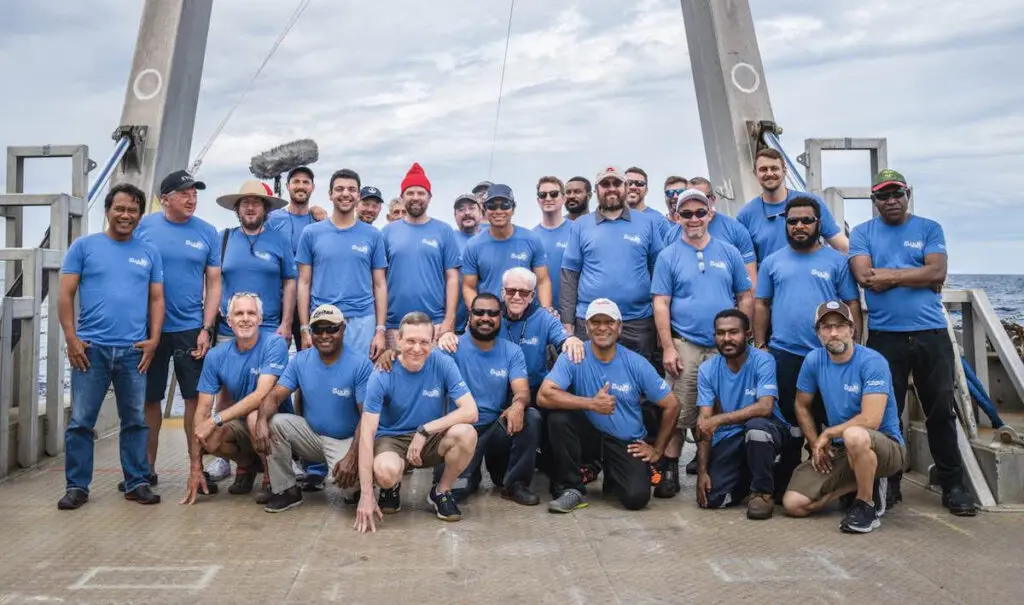
There is a second pillar to the Galileo Project, and it is the one that dominated headlines. In 2019, Loeb and then‑undergraduate Amir Siraj argued that a 2014 fireball over the Pacific, cataloged as CNEOS 2014‑01‑08, was moving so fast that it likely came from outside the solar system. That claim depended on government‑released summary data and was controversial from the outset. The Galileo Project nevertheless treated the event as a testable hypothesis. If the object was interstellar and if it generated ablation droplets that reached the ocean surface, there might be a recoverable signature on the seafloor. In June 2023, a privately funded expedition aboard the M/V Silver Star towed a magnetic sled across the suspected path north of Manus Island, Papua New Guinea, and recovered hundreds of metallic spherules between 0.05 and 1.3 millimeters in diameter. The team reported a small subset with unusual trace element patterns dubbed “BeLaU” for beryllium, lanthanum, and uranium. (arXiv)
The chemistry was advanced to peer‑review in Chemical Geology in 2024. The paper’s abstract states that BeLaU spherules are unlike known coal fly ash, unlike common solar system meteorite classes, and most similar to highly evolved planetary materials, with lunar KREEP cited as the closest analogy in some trace element ratios, although the pattern remains unusual. This interpretation was presented as evidence for an extrasolar origin for at least a fraction of the recovered droplets. (ScienceDirect)
Funding and independence matter here, not because money proves anything in science but because it set the constraints for what could be done. The IM1 expedition was financed by a $1.5 million grant from entrepreneur Charles Hoskinson, as the project and Loeb’s own writeups acknowledge. That sum underwrote a ship, a crew, the sled, and subsequent analytical work at Harvard and elsewhere. (Medium)
It would be irresponsible to tell this story as a one‑sided triumph. The claim of interstellar origin, and the link between the droplets and the 2014 event, have been challenged on multiple fronts. A 2023 paper by Peter Brown and Jiří Borovička argued that the U.S. Government fireball data used to infer interstellar speed carry large uncertainties at high velocities. They suggested a terrestrial bound orbit and a more ordinary meteoroid would fit the light curve once more conservative assumptions are made. (arXiv)
In March 2024, a Johns Hopkins–led analysis of seismic and acoustic data from the region argued that a seismometer signal used by the expedition to refine the search area was likely from a heavy truck on a nearby road, not a meteor, and that a better acoustic triangulation would put the entry point roughly 170 kilometers away. That paper concluded that the recovered droplets were almost certainly unrelated to the 2014 bolide. The debate was covered in detail by Scientific American. (arXiv)
In 2025, Chemical Geology published a follow‑on critique by Rudraswami and colleagues. They argued that most spherules from the site are volcanic or otherwise terrestrial and that the purported “D‑type” class used in the original taxonomy is common and non‑exotic when analyzed with standard micrometeorite protocols. The abstract states plainly that the Loeb et al. classification requires revision. The critique is peer‑reviewed, and it should be read in full alongside the 2024 paper. (ScienceDirect)
This is science as process, including its discomforts. Hypotheses meet data. New data provokes counter‑analysis. Claims are qualified, refined, or rejected. UAPedia accepts credible testimony and data on their merits while noting that a single lab’s conclusions do not end a question. We also flag, per our editorial policy, when government‑origin data play a decisive role. In IM1, they did. That fact strengthens the need for independent replications with independent datasets.
Why name it “Galileo”
The name is not a flourish. It signals a commitment to measurement over dogma. The CfA’s project page says the quiet part out loud: stigma is not a scientific argument. The way to move UAP forward is to build instruments that can answer specific questions, then let the chips fall. It is hard to imagine a message more aligned with Galileo Galilei’s own fight to replace armchair certainty with careful optics. (Center for Astrophysics)
There is also a historical subtext. Anthropology and religious studies teach that encounters with the unknown are processed through a culture’s available stories. The UAP conversation has inherited folklore, modern myth, and Cold War secrecy. The Galileo Project tries to reframe that cultural mashup as a tractable set of measurements. Its approach is heterodox inside astronomy because it points cutting‑edge instrumentation at low‑altitude targets that astronomers usually ignore. That heterodoxy is the point.
What the project promises, and what it does not
From the beginning, the Galileo Project has been careful to separate three related but distinct pursuits.
- Aerial phenomena census. The observatory is designed to build a baseline for what fills our sky, from birds to balloons to drones to aircraft and satellites, under different weather and site conditions. The commissioning paper is explicit about acceptance rates and detection efficiencies, and it quantifies ambiguous tracks that require additional modalities to resolve. If you want to claim an aerial outlier later, you need this groundwork first. (arXiv)
- Searches in Earth orbit. The project’s “overview” and launch‑day coverage describe ambitions to look for non‑human artifacts in Earth orbit, including searches for glints and other signatures in survey data that could betray small, high‑albedo objects. That branch overlaps with ongoing “artifact SETI” work in the literature. It sounds audacious, yet the strategy is neatly conservative: mine archives for signals we might have missed. (ADS)
- Interstellar object studies. The IM1 episode is one example of this pillar. Another is the intent to capitalize on the Rubin Observatory’s LSST to flag interstellar visitors more rapidly, then to develop intercept mission concepts that can sample or image them close‑up. Although that part sits adjacent to UAP proper, it is part of the same technosignature logic. If you want to know whether some fraction of unknowns is technology, you cannot just stare at the sky. You must go meet the unknowns where they are. (Wikipedia)
What the project does not promise is easier to miss. It does not guarantee a spectacular detection on any timetable. It does not promise to prove the extraordinary by rhetorical flourish. It commits to measurements that can be reused and critiqued. That is slower than a sound bite and much less satisfying to cycles of online hype, but it is how you build knowledge that lasts.
How the observatory thinks
Most public writing on UAP focuses on what we might see. The Galileo Project focuses on how an observatory can think. The 2025 computing‑platform paper formalizes a two‑tier architecture: an edge subsystem for synchronized acquisition, time‑stamping, and first‑pass classification, and a post‑processing subsystem for deeper analysis, model retraining, and system effectiveness monitoring. A key emphasis is data provenance, which is often missing in ad hoc UAP evidence. The design tries to ensure that every image, spectrum, or track can be tied to calibration states and environmental metadata. That is not glamorous, but it is the difference between an anecdote and a dataset. (World Scientific)
The infrared array paper adds an elegant calibration trick. Because airplanes broadcast their position by ADS‑B, you can use them as moving references to stitch the sky together in precise ways, and to test detection efficiency as a function of range, size, and weather. This is the kind of practical intelligence that turns a complicated system into a scientific instrument. (arXiv)
Controversy is not a bug
It would be easy to frame the IM1 debate as a cautionary tale and stop there. That would miss the deeper point. UAP research has lived for decades in a culture of either‑or. Either you believe or you debunk. Either you take eyewitnesses at their word or you dismiss them wholesale. The Galileo Project, for all the heat that surrounds its leader’s public profile, is structurally designed to dissolve that dualism. It insists on data that can be shared and on analyses that can be examined. It accepts, even invites, counter‑analyses in the same venues. The 2024 and 2025 peer‑reviewed critiques of the IM1 claims are not signs that science failed. They are the record of science working.
There is another understated signal in the commissioning paper. The team’s upper bound on “outliers” over five months at one site is large in raw count, but those tracks are ambiguous, not exotic by default. They are what a scientist would expect at the start of a new observational program. If anything, the willingness to publish this baseline rather than to spin ambiguity as a discovery is evidence that the project aims to be cumulative rather than sensational. (arXiv)
Money, independence, and scale
Philanthropy at the launch was reported around $1.7 to $1.8 million. Individual donors were named, and a philanthropic advisory board was created. In April 2024, the project announced a $575,000 grant from the Richard King Mellon Foundation to establish and operate a third instrument station in Pennsylvania, a sign that the team intends to scale from one site with “new eyes” to a small network. That scaling is not trivial. Multi‑site operations test the computing platform and invite cross‑site validation, which is how you turn a local curiosity into a population statistic. (Space)
The point here is not to romanticize donors. It is to note that the Galileo Project’s independence from government sources of funding gives it freedom to publish negative or ambiguous results without fear of contract optics, and to respond in real time to peer critique. That aligns with UAPedia’s policy on treating government inputs as useful but not dispositive. In the long view, a healthy ecosystem will have both independent and public programs. Independence just lets you move differently.
Where this fits in the larger UAP landscape
There are other efforts to bring rigor to UAP. NASA convened an independent study panel in 2023 and emphasized data standards and open reporting. University‑affiliated and nonprofit groups have placed calibrated cameras in the field. What distinguishes the Galileo Project is its combination of a research‑grade, multi‑modal instrument; an explicit architecture for data provenance; and a publication pipeline that already includes peer‑reviewed work in an astronomical instrumentation journal. That mixture gives the project a chance to be not just a “search” but a pioneering methodology that others can reuse.
Critics will say that the subject itself does not deserve the stage. In their view, time spent on UAP is time stolen from conventional astrophysics. The enabling reply is a principle from the history of science. New instruments often open new science. Photographic plates made astrophysics. Radar made planetary science. Space telescopes made exoplanets and cosmology. It is not a waste of effort to instrument a neglected domain of the sky, especially when that domain interacts directly with everyday life and airspace safety. The worst plausible outcome is a better census of what moves above our heads. The best plausible outcome is a discovery that rewrites our place in the universe.
The road ahead
Three practical milestones will tell you if the Galileo Project’s bet is paying off.
- Networked observatories. A second and third station, operating continuously and cross‑validating events, will convert site‑specific learnings into a scalable census. The 2024 Pennsylvania grant suggests this is happening. (Galileo)
- Public data products and challenges. The first commissioning paper seeded a baseline. As the pipeline matures, we should expect anonymized, labeled datasets for community challenges. This is how computer vision in other domains progressed quickly, and the project’s architecture explicitly contemplates such workflows. (World Scientific)
- Replicated anomalies, multi‑sensor confirmed. The project will succeed on its own terms when a small fraction of events are captured by multiple calibrated modalities at more than one site, processed through a provenance‑tracked pipeline, and still fail to match known classes. That is a high bar. It is supposed to be.
Anthropology, language, and a secular method
One of the great obstacles in UAP studies is linguistics. The language of belief has crowded out the language of observation. The Galileo Project avoids that trap by speaking like an instrumentation group. Watch the verbs in the papers: calibrate, synchronize, reconstruct, quantify. Anthropologically, that matters. Communities organize around the words they use. The project is trying to midwife a new community in which UAP is a class of data streams, not a synonym for a conclusion.
Religious traditions have long managed encounters with the unknown through rituals of validation. Science is not religion, but it has its own rituals that serve a similar social purpose: calibration logs, method sections, and peer review. The Galileo Project leans into those rituals. Even its most criticized work, the IM1 analysis, exists within the grammar of scientific publication and rebuttal, rather than as a media stunt alone. Whether you agree with its conclusions or not, that pattern is healthier than the alternative.
A note on controversy management
The IM1 chapter shows how quickly a technical debate can become personal in public. The Scientific American coverage quotes competing interpretations and documents the heat in conference rooms when junior researchers faced skeptical questioning. There is a simple way to keep the field constructive. Treat claims like code. Does it run? Can you reproduce the output with your own data and pipeline? If not, where does it fail? If so, what new tests can break it? The Galileo Project, with its emphasis on reproducible instrumentation, is in a good position to host that style of argument. (Scientific American)
Bottom line
The Galileo Project has done two things that matter. It has built a working, multi‑sensor observatory and published its commissioning logic and early statistics. It has also waded into deep water with the IM1 expedition and forced a hard, visible argument about how to connect seafloor grains to a hypothesized interstellar event. The first is foundational and quietly impressive. The second is unresolved and instructive. Together they define the project’s character: unapologetically curious, willing to stake a claim in public, and willing to put designs and data where its mouth is.
Whether you are convinced or not, the field needs this experiment in method. If UAP are rare, the only way to find them is with new eyes that never blink, and with brains that remember everything they see.
Claims taxonomy
Claim: The Galileo Project is an independent, philanthropically funded research effort at Harvard dedicated to building multi‑sensor observatories for UAP and related technosignatures.
Classification: Verified. Evidence includes official CfA framing and Galileo pages that document mission and independence from government sponsors, as well as the existence of advisory boards. (Center for Astrophysics)
Claim: The first Galileo Project observatory at Harvard recorded about half a million aerial tracks during commissioning and established an upper bound on ambiguous outliers.
Classification: Verified. Documented in the 2024 all‑sky infrared array paper and related posts summarizing commissioning statistics. (arXiv)
Claim: Metallic spherules with a distinct BeLaU signature recovered near Manus Island are of extrasolar origin and traceable to the 2014 bolide.
Classification: Disputed. The 2024 Chemical Geology paper argues for extrasolar composition, but peer‑reviewed counter‑analyses and independent datasets dispute both provenance and classification. (ScienceDirect)
Claim: The 2014 fireball’s speed and trajectory indicate interstellar origin with high confidence.
Classification: Disputed. Brown and Borovička 2023 highlight large uncertainties in USG‑reported velocities, and subsequent work questions localization. (arXiv)
Claim: The project plans to search for potential artifacts in Earth orbit using glint searches and survey mining.
Classification: Probable. Described in the project overview and launch‑day coverage. Implementation beyond planning remains to be demonstrated in peer‑reviewed results. (ADS)
Speculation labels
Hypothesis: A small subset of aerial outliers will remain after multimodal classification and may represent non‑human technology.
Researcher opinion: Interstellar objects like ’Oumuamua could include technological artifacts worth instrumenting and intercepting.
Witness interpretation: Not applicable here, since the project emphasizes instruments over eyewitnesses.
References
Loeb, A., & Laukien, F. H. (2023). Overview of the Galileo Project. Journal of Astronomical Instrumentation, 12, 2340003.
https://ui.adsabs.harvard.edu/abs/2023JAI….1240003L/abstract?utm_source=https://uapedia.ai (ADS)
Watters, W. A., Mead, A., Szenher, M., Cloete, R., Randall, S., et al. (2023). The scientific investigation of UAP using multimodal ground‑based observatories. Journal of Astronomical Instrumentation, 12, 2340006.
https://www.worldscientific.com/doi/10.1142/S2251171723400068?utm_source=https://uapedia.ai (World Scientific)
Dominé, L., Biswas, A., Cloete, R., Delacroix, A., Fedorenko, A., et al. (2024). Commissioning an all‑sky infrared camera array for detection of airborne objects. arXiv:2411.07956.
https://arxiv.org/abs/2411.07956?utm_source=https://uapedia.ai (arXiv)
Bridgham, P., Delacroix, A., Dominé, L., Fedorenko, A., Kelderman, E., et al. (2025). Galileo Project Observatory Class System Architecture. arXiv:2506.00125.
https://arxiv.org/abs/2506.00125?utm_source=https://uapedia.ai (arXiv)
Loeb, A., Jacobsen, S. B., et al. (2024). Chemical classification of spherules recovered from the Pacific Ocean site of the CNEOS 2014‑01‑08 (IM1) bolide. Chemical Geology.
https://www.sciencedirect.com/science/article/pii/S0009254124004959?utm_source=https://uapedia.ai (ScienceDirect)
Rudraswami, N. G., Singh, V. P., & Pandey, M. (2025). Re‑evaluation of the spherules’ proposed origin recovered from the Pacific Ocean site of the CNEOS 2014‑01‑08 (IM1) bolide. Chemical Geology.
https://www.sciencedirect.com/science/article/abs/pii/S000925412500018X?utm_source=https://uapedia.ai (ScienceDirect)
Brown, P. G., & Borovička, J. (2023). On the proposed interstellar origin of the USG 20140108 fireball. The Astrophysical Journal.
https://arxiv.org/abs/2306.14267?utm_source=https://uapedia.ai (arXiv)
Fernando, B., Mialle, P., Ekström, G., Charalambous, C., Desch, S., Jackson, A., & Sansom, E. K. (2024). Seismic and acoustic signals from the 2014 “interstellar meteor.” arXiv:2403.03966.
https://arxiv.org/abs/2403.03966?utm_source=https://uapedia.ai (arXiv)
Loeb, A., et al. (2023). Discovery of spherules of likely extrasolar composition in the Pacific Ocean site of the CNEOS 2014‑01‑08 (IM1) bolide. arXiv:2308.15623.
https://arxiv.org/abs/2308.15623?utm_source=https://uapedia.ai (arXiv)
Center for Astrophysics | Harvard & Smithsonian. (n.d.). The Galileo Project.
https://www.cfa.harvard.edu/research/galileo-project?utm_source=https://uapedia.ai (Center for Astrophysics)
The Galileo Project. (2021, July 26). Public announcement.
https://galileo.hsites.harvard.edu/public-announcement?utm_source=https://uapedia.ai (Galileo)
O’Callaghan, J. (2024, March 18). “Interstellar” meteor signal may have been a truck. Scientific American.
https://www.scientificamerican.com/article/interstellar-meteor-signal-may-have-been-a-truck/?utm_source=https://uapedia.ai (Scientific American)
Galileo Project. (2024, Nov. 12). Commissioning data on half a million objects…
https://arxiv.org/html/2411.07956v1?utm_source=https://uapedia.ai (arXiv)
Galileo Project. (2023, May 24). Galileo Project publishes first peer‑reviewed scientific papers in JAI.
https://galileo.hsites.harvard.edu/news/galileo-project-publishes-first-peer-reviewed-scientific-papers-jai?utm_source=https://uapedia.ai (Galileo)
Galileo Project. (2024, Sept. 23). New paper on chemical classification of IM1 spherules.
https://galileo.hsites.harvard.edu/news/new-paper-chemical-classification-im1-spherules-published-chemical-geology?utm_source=https://uapedia.ai (Galileo)
Galileo Project. (2024, Apr. 26). Richard King Mellon Foundation awards $575,000 to the Galileo Project.
https://galileo.hsites.harvard.edu/news/richard-king-mellon-foundation-awards-575000-galileo-project?utm_source=https://uapedia.ai (Galileo)
Space.com staff. (2021, July 26). “Galileo Project” will search for evidence of extraterrestrial life from the technology it leaves behind.
https://www.space.com/galileo-project-search-for-extraterrestrial-artifacts-announcement?utm_source=https://uapedia.ai (Space)
Loeb, A. (2024, Nov. 12). Commissioning data on half a million objects in the sky from the Galileo Project Observatory. Medium.
https://avi-loeb.medium.com/commissioning-data-on-half-a-million-objects-in-the-sky-from-the-galileo-project-observatory-are-a23bd084233a?utm_source=https://uapedia.ai (Medium)
Galileo Project. (n.d.). Support us.
https://galileo.hsites.harvard.edu/fund-us?utm_source=https://uapedia.ai (Galileo)
Galileo Project. (n.d.). Philanthropic advisory board.
https://galileo.hsites.harvard.edu/philanthropic-advisory-board?utm_source=https://uapedia.ai (Galileo)
SEO keywords
Harvard Galileo Project, Avi Loeb, UAP observatory, multisensor UAP detection, all‑sky infrared cameras, FLIR Boson 640, ADS‑B calibration, outlier analysis, interstellar meteor IM1, BeLaU spherules, Chemical Geology 2024, Rudraswami 2025 critique, Journal of Astronomical Instrumentation, Observatory Class Integrated Computing Platform, techno signatures near Earth, artifact SETI, Harvard CfA UAP, modern UAP research, independent UAP funding, Richard King Mellon Foundation.