
Leonard H. Stringfield (1920–1994) is remembered as the civilian researcher who transformed the idea of UAP crash retrievals into an organized research program, rather than leaving it as a series of scattered rumors.
From his postwar fascination – sparked by a dramatic encounter near Iwo Jima – through the 1950s with CRIFO and its newsletter *ORBIT*, and into the 1970s and 1990s with his self-published *Status Reports*, Stringfield collected testimonies about crashed craft and alleged non-human bodies with steady, methodical persistence that deeply shaped how the field understands secrecy, recovery operations, and storage facilities.
He wasn’t a lab scientist, and he never pretended to be. He saw himself instead as a careful collector, a coordinator, and a storyteller – someone who could weave hundreds of human testimonies into patterns the public could grasp.
His influence radiates through MUFON’s investigations, NICAP’s approach to archiving, CUFOS’s methods of managing data, and nearly every modern discussion surrounding crash retrievals.
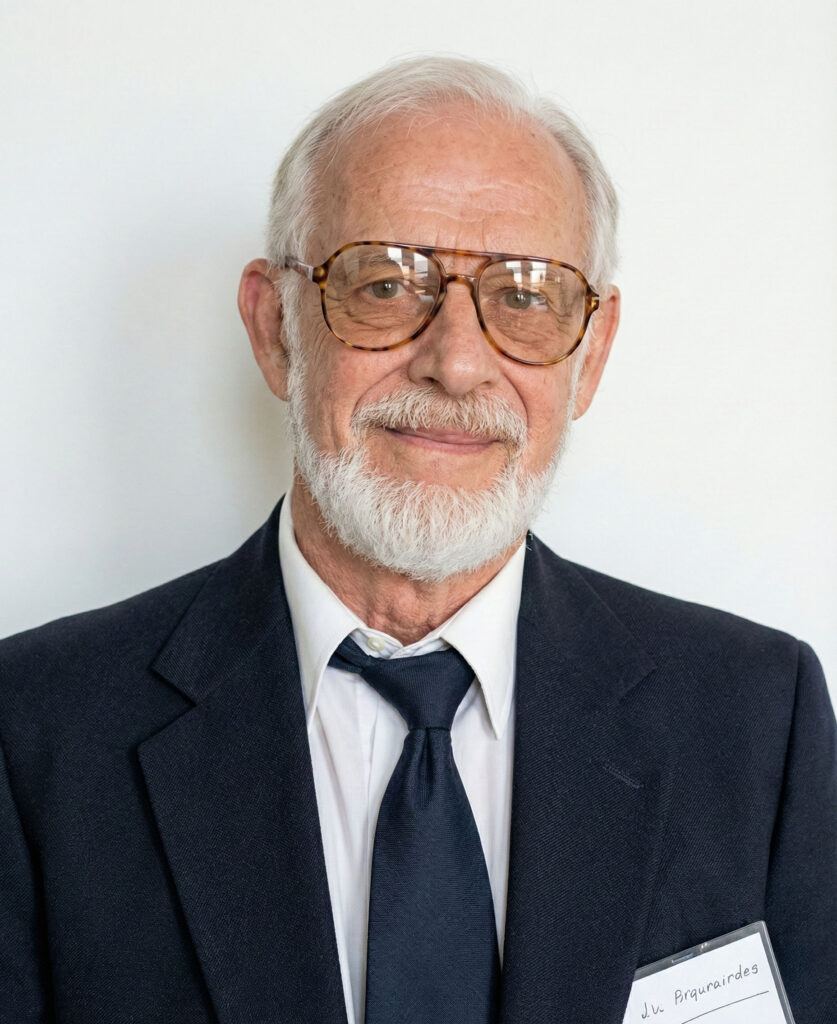
Early years and a formative wartime encounter
Stringfield was born in Cincinnati, Ohio, on December 17, 1920, and died there on December 18, 1994. Basic biographical details, including his Cincinnati roots and death from lung cancer, are recorded in standard reference summaries and obituary notices.
His origin story as a UAP researcher begins in the Pacific Theater.
On August 28, 1945, just days after Japan announced its surrender, Sgt. Leonard Stringfield was traveling as a passenger aboard a Curtiss C-46 en route from Ie Shima to Iwo Jima when the aircraft experienced engine trouble.
At the same time, crew members and passengers saw three brilliant white objects “like burning magnesium.” Stringfield linked this dramatic near-accident to the sudden appearance of the lights.
He later published the account in *Inside Saucer Post… 3-0 Blue*, and the incident is listed in NICAP’s pre-1947 chronology as well as in *The UFO Evidence.* (NICAP)
After the war, Stringfield built a career in public relations and marketing at DuBois Chemicals, a division of Chemed Corporation, from which he retired in 1981.
The corporate record of his professional career is noteworthy because it reinforced his refined public relations style and his ability to earn the confidence of uneasy informants who depended on strict confidentiality. (Amazon)
CRIFO, ORBIT, and an early partnership model
Stringfield’s first organizational initiative was CRIFO – Civilian Research, Interplanetary Flying Objects – established in Cincinnati in 1954.
Through CRIFO, he published the monthly *ORBIT* newsletter, one of the most widely circulated UFO publications of the 1950s, now preserved as a complete collected set. CRIFO’s reporting network maintained cooperative contact with the Air Defense Command.
The FBI’s 1954 internal memorandum files list CRIFO’s address and correspondence, showing that the group had drawn the attention of federal offices at an early stage. (AbeBooks)
In 1957, Stringfield summarized the CRIFO years in his book-length report *Inside Saucer Post… 3-0 Blue: CRIFO Views the Status Quo*, which acted as a bridge from grassroots reporting to a more structured effort in public education. The full text is available in NICAP’s online book series. (NICAP)
That same year, he accepted an invitation from Donald Keyhoe’s NICAP to serve as a public relations advisor. A CIA reading room briefing on NICAP’s public stance identifies Stringfield as the director of CRIFO and highlights NICAP’s reliance on civilian networks to supply material to official investigators.
The connection among CRIFO, NICAP, and the Air Force’s projects helped establish the idea that disciplined civilian researchers could serve as the initial recipients of sensitive reports. (CIA)
The Condon period and a research approach shaped by disappointment
From 1967 to 1969, Stringfield served as an “Early Warning Coordinator” connected with the University of Colorado’s Air Force–funded study, commonly known as the Condon Committee.
The role, as outlined in several biographical sources, reflected the Committee’s request that civilian organizations provide high-quality, real-time reports for analytical review.
The official record notes that even after NICAP encountered difficulties with the Committee, members of its early warning network continued to forward reports. Stringfield drew two lasting lessons from the experience.
First, government studies can be influenced more by institutional objectives than by the actual data. Second, civilian networks play an indispensable role. During the 1970s, he became a highly in-demand lecturer. His mainstream book *Situation Red: The UFO Siege* (Doubleday/Fawcett, 1977) portrayed the phenomenon as an ongoing, worldwide, and occasionally dangerous presence surrounding both people and facilities.
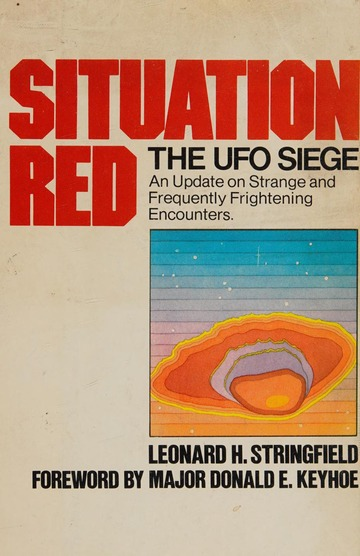
United Nations transcripts from late 1977 reference the book during debates led by Grenada’s Prime Minister, Sir Eric Gairy, about creating an international organization to study UAPs. Sources suggest that Stringfield acted as an adviser to Gairy during this United Nations effort in 1978.
Whatever his exact role may have been, the UN record shows that Stringfield’s work was referenced during official deliberations—a rare occurrence for a civilian investigator. (United Nations Digital Library)
The 1978 Turning Point: “Retrievals of the Third Kind”
The crash-retrieval research program that defines Stringfield’s legacy began publicly with a single lecture.
On July 29, 1978, at MUFON’s Dayton Symposium, he delivered a lecture titled “Retrievals of the Third Kind: A Case Study of Alleged UFOs and Occupants in Military Custody.” He later expanded this talk into a multi-part publication, which readers came to know as *Status Report I.*
It established the model he would follow for the next sixteen years: concise case summaries, carefully maintained anonymity, and a focus on recurring patterns across testimonies rather than a single, conclusive piece of evidence. The original 1978 text and subsequent reprints remain available. (Il Poliedrico)
Across seven *Status Reports* – issued in 1980, 1982, 1985, 1989, 1991, and 1994 – Stringfield cataloged dozens of alleged crash or recovery incidents. He focused particularly on military and mortuary personnel who reported handling unusual wreckage or non-human remains, as well as on the logistical channels said to have transported such materials to facilities like Wright-Patterson AFB.
The volumes remain in active circulation among researchers and continue to be cited in current briefings. (Amazon)
His 1992 article in *Flying Saucer Review*, titled “The Concept of Proof,” lays out his central philosophy: the subject may resist solid evidence for a long time, but recurring patterns in credible witnesses’ testimonies warrant preserving those accounts and comparing them systematically, even in the absence of publicly verifiable physical material. (Scribd)
Known associates and collaborators
Donald E. Keyhoe and NICAP. Keyhoe’s NICAP provided Stringfield with a national platform and an organized system for handling reports. The CIA’s summary on NICAP highlights how the organization made use of civilian networks such as CRIFO to deliver higher-quality reports to official agencies. (CIA)
MUFON. Stringfield’s talks, field reports, and preliminary drafts frequently appeared in MUFON publications, especially around the 1978 Dayton Symposium, where crash-retrieval research took center stage. MUFON later promoted and preserved portions of his private research archive. (www.slideshare.net)
CUFOS and J. Allen Hynek. Several biographical references note that Stringfield worked with the Center for UFO Studies as a regional investigator. While the most direct evidence of an official appointment is secondary,
Hynek’s CUFOS network overlapped significantly with Stringfield’s sources and lines of investigation. Hynek himself endorsed the meticulous collection of cases, with anonymity maintained when necessary. (Audible.com)
Sir Eric Gairy and the UN initiative. Between 1977 and 1978, Gairy sought to establish a United Nations office devoted to the investigation of unidentified aerial phenomena (UAP), relying on a team of advisers that included civilian researchers. The UN’s own records cite *Situation Red*, and multiple summaries credit Stringfield with providing assistance and counsel to Gairy during this initiative. (United Nations Digital Library)
Editors and archivists. Stringfield maintained productive relationships with *Flying Saucer Review* editor Charles Bowen, as well as with archivists at NICAP and MUFON. The preservation of *ORBIT*, *Inside Saucer Post… 3-0 Blue*, and the *Status Reports* owes much to those connections. (NICAP)
Core claims and case clusters
Stringfield’s *Status Reports* do not rely on a single sensational case. Their strength lies in how they organize comparable witness testimonies. Key points include:
- Wright-Patterson AFB as a repository. Numerous sources, often with military or contractor backgrounds, pointed him to Wright-Patterson as a node where hardware and biological remains were stored.
The term “Hangar 18,” which became widely known after 1974, does not appear to refer to any specific, verifiable room number. Still, the Wright-Patterson theme remains consistent across independent testimonies gathered by Stringfield and others. The U.S. Air Force denies the claim. (Wikipedia) - Medical and mortuary channels. Perhaps Stringfield’s most original contribution was to recognize that if bodies were ever recovered, quiet ripples would appear in medical logistics. Status Reports II through VI repeatedly cite individuals in pathology, mortuary affairs, and aeromedical evacuation who described unusual handling protocols and small-statured cadavers under high security. (Amazon)
- Nellis AFB and other base events. In Report II he summarized a source claiming access to a Top Secret brief about a craft lingering near Nellis over multiple days, with smaller craft separating from a parent object. Such entries are representative of how Stringfield handled “insider” narratives. He logged them with context, controls on identity, and cross-checks where possible. (Scribd)
- Fort Dix–McGuire AFB, January 1978. Status Report IV concentrated on this dramatic story of a non-human entity allegedly shot by a military policeman with a body later recovered by a specialized team.
The case became one of the most frequently cited in crash-retrieval research, attracted additional witnesses over time, and ultimately led to detailed skeptical re-examinations. (NICAP) - Pre-Roswell and early Cold War cases. Stringfield gave space to reports predating 1947 and to early 1950s events that suggested a retrieval pattern was already in place before the “flying saucer” press era took hold, which expanded the hypothesized timeline for secret programs. (NICAP)
His catalogs also explored allegations involving interagency programs, special security clearances, and codeword-level compartments. Even when specific details couldn’t be independently verified, the recurring patterns across unrelated testimonies were the signal he wanted readers to notice.
Controversies and critical responses
No part of Stringfield’s program was free of debate, and he welcomed thoughtful skepticism while fiercely protecting the confidentiality his sources required.
Anonymity and the “hearsay” critique. Scholars and journalists contended that the *Status Reports* depended too much on unnamed witnesses. Stringfield’s 1992 essay, “The Concept of Proof,” had already anticipated such criticism. He clearly presented the *Status Reports* as interim work meant to safeguard high-risk testimonies before they were lost.
He argued that patterns recurring across dozens of anonymous or limited-identity testimonies could still serve as meaningful data points for future corroboration. (Scribd)
Fort Dix–McGuire re-evaluated. In 2002, the National Institute for Discovery Science (NIDS) analyzed parts of the McGuire case and concluded that the widely circulated “dead ET” account was a hoax. Skeptics cited it as a cautionary example.
It is important to note that NIDS’s conclusion does not erase all of Stringfield’s material on the case; rather, it highlights the uneven evidential terrain he had to navigate. (Center for Inquiry)
The “Hangar 18” problem. Popular culture transformed Wright-Patterson into a kind of mythical warehouse. Responsible historical accounts, including those that examine how the hangar story developed, demonstrate how the idea was gradually amplified by novelists, filmmakers, and lecturers.
UAPedia’s editorial stance applies here. Government denials are data points. They must be weighed alongside whistleblower testimonies and archival fragments, while avoiding naïve acceptance of either.
Relationship to NICAP, CUFOS, and MUFON “orthodoxy.” Stringfield was unconventional. He managed public relations for NICAP, cooperated with Condon’s team despite his reservations, collaborated with CUFOS, and delivered presentations for MUFON.
He kept his crash-retrieval program running somewhat alongside these organizations, since its strict confidentiality requirements and unusual subject matter didn’t align well with standard case-management procedures. That constant tension helped define his distinctive role in the field. (CIA)
Impact on UAP Research
Stringfield’s influence is felt in at least five ways.
- He gave crash-retrievals a research grammar. Before Stringfield, talk of downed craft and bodies was episodic. After his Status Reports, researchers had a shared set of terms, case abstracts, and typologies.
MUFON’s historical framing of crash retrievals and the continued use of its categories in modern briefings testify to this infrastructure. (MUFON) - He expanded the witness base. By courting medical, mortuary, and logistics personnel, he widened the aperture beyond pilots and radar operators. This mattered because if a program existed, its footprint would pass through doctors, pathologists, crate handlers, and couriers. (Amazon)
- He kept the civilian-government pipeline open. Stringfield’s CRIFO model and his NICAP role demonstrated that well-run civilian groups can gather important data. Even the Condon period, which many saw as a strategic cul-de-sac, reinforced his conviction that civilian early-warning networks were indispensable. (CIA)
- He built an archive. In 2012, MUFON announced receipt of sixty volumes of Stringfield’s private papers for preservation and digitization, and MUFON’s Project Aquarius now highlights the “Leonard Stringfield Collection.” This is more than homage. It is an ongoing data resource whose existence substantiates his lifelong archivist ethic. (UFO Digest)
- He modeled a tone. Stringfield kept a measured voice. He was conversational but precise, and he avoided spectacle. That is why United Nations delegates could quote him without embarrassment and why medical and military voices trusted him with fragile stories. (United Nations Digital Library)
Selected timeline
- 17 Dec 1920: Born in Cincinnati, Ohio. (Wikipedia)
- 28 Aug 1945: As an Army Air Forces passenger in a C-46 near Iwo Jima, witnesses three brilliant objects during an engine-out emergency, later chronicled in Inside Saucer Post… 3-0 Blue and NICAP’s chronology. (NICAP)
- 1954–1957: Directs CRIFO in Cincinnati and publishes ORBIT. FBI memos document CRIFO’s presence. (The Black Vault)
- 1957: Publishes Inside Saucer Post… 3-0 Blue; joins NICAP as public-relations adviser. (NICAP)
- 1967–1969: Serves as an “Early Warning Coordinator” related to the Condon Committee’s field intake. (Wikipedia)
- 1977: Releases Situation Red: The UFO Siege. The UN’s Special Political Committee will quote the book in related proceedings. (United Nations Digital Library)
- 1978: Delivers “Retrievals of the Third Kind” at MUFON’s Dayton symposium, initiating the Status Report series. (Il Poliedrico)
- 1980–1994: Publishes Status Reports II through VII, including the Fort Dix–McGuire case study. (Amazon)
- 1992: Publishes “The Concept of Proof” in Flying Saucer Review. (Scribd)
- 18 Dec 1994: Dies in Cincinnati after a long illness. (Wikipedia)
- 2012: MUFON announces receipt of sixty volumes of Stringfield’s papers for preservation and digitization. (UFO Digest)
- 2023–2025: MUFON integrates the Stringfield collection within Project Aquarius and highlights its private-collections portal. (MUFON)
Assessing Stringfield through UAPedia’s editorial lens
UAPedia’s editorial policy on government sources cautions against treating any single institutional position as final. Stringfield would have agreed. He built his research approach on the understanding that secrecy, professional risk, and compartmentalization produce an evidential landscape dominated by witness testimony and small, fragmented documents. His *Status Reports* should be seen as carefully selected signals drawn from that environment. When government denials surface, they are documented alongside recurring patterns in witness accounts. The analyst’s responsibility is to evaluate all the evidence without automatically prioritizing any one type of source.
In practical terms, this means, for example, examining the Fort Dix–McGuire account together with NIDS’s finding that it was a hoax, and then comparing both against independent witness paths, timelines, base records, and logistical documents that might still come to light. In the case of Wright-Patterson, it means tracking repeated claims of storage and biomedical handling spanning decades, while noting the Air Force’s denial of any “Hangar 18.” Stringfield’s greatest strength was in recognizing recurring patterns; his weakness lay in providing evidence that could stand up to laboratory verification. He knew that, and he openly told his readers so back in 1992. (Center for Inquiry)
Legacy
Stringfield’s legacy lies at the core of contemporary UAP research. He created a living link between uneasy insiders and the public record. He provided MUFON, NICAP, and CUFOS with a common language for discussing crash‑retrieval accounts. He also showed later researchers how to pursue corroboration—not just by searching for a “perfect document,” but by following logistic traces, medical anomalies, and recurring base names across independent testimonies. If long‑standing recovery programs ever come fully into view, historians will recognize that Leonard Stringfield organized the index.
Works by Leonard H. Stringfield (selected)
- Inside Saucer Post… 3-0 Blue: CRIFO Views the Status Quo (1957). (NICAP)
- Situation Red: The UFO Siege (1977).
- “Retrievals of the Third Kind: A Case Study of Alleged UFOs and Occupants in Military Custody” (MUFON Symposium paper, 1978), later expanded as Status Report I. (Il Poliedrico)
- The UFO Crash/Retrieval Syndrome: Status Report II (1980). (Audible.com)
- UFO Crash/Retrievals: Amassing the Evidence: Status Report III (1982). (Amazon)
- The Fatal Encounter at Ft. Dix–McGuire: A Case Study: Status Report IV (1985). (NICAP)
- UFO Crash/Retrievals: Is the Cover-Up Lid Lifting?: Status Report V (1989).
- UFO Crash/Retrievals: The Inner Sanctum: Status Report VI (1991). (Goodreads)
- UFO Crash/Retrievals: Search for Proof in a Hall of Mirrors: Status Report VII (1994). (Amazon)
- “The Concept of Proof,” Flying Saucer Review (1992). (Scribd)
References and further reading (APA style)
The Black Vault. (2022). FBI File: Leonard H. Stringfield [PDF]. https://documents2.theblackvault.com/documents/fbifiles/paranormal/leonardstringfield-fbi1.pdf?utm_source=https://uapedia.ai (The Black Vault)
Center for Inquiry. (2002). *Skeptics UFO Newsletter*, No. 73: NIDS Concludes the McGuire AFB “Dead-ET” Story Is a Hoax [PDF]. https://centerforinquiry.s3.amazonaws.com/wp-content/uploads/sites/29/2022/09/26195537/SUN-73-Fall-2002.pdf?utm_source=https://uapedia.ai (Center for Inquiry)
Condon Committee. (n.d.). University of Colorado UFO Project [encyclopedic overview]. https://en.wikipedia.org/wiki/Condon_Committee?utm_source=https://uapedia.ai (Wikipedia)
MUFON. (2025). Project Aquarius: Leonard Stringfield Collection. https://projectaquarius.mufon.com/private-collections-stringfield-files/?utm_source=https://uapedia.ai (Project Aquarius Library)
MUFON. (n.d.). MUFON Through the Ages [history page]. https://mufon.com/history/?utm_source=https://uapedia.ai (MUFON)
NICAP. (1957). Inside Saucer Post… 3-0 Blue: CRIFO Views the Status Quo [PDF]. https://www.nicap.org/books/3-0Blue/3-0_Blue.pdf?utm_source=https://uapedia.ai (NICAP)
NICAP. (1964). *The UFO Evidence* [PDF]. https://www.nicap.org/ufoe/UFO%20Evidence%201964.pdf?utm_source=https://uapedia.ai (NICAP)
Stringfield, L. H. (1978). *Retrievals of the Third Kind: A Case Study of Alleged UFOs and Occupants in Military Custody* [PDF]. https://ilpoliedrico.com/wp-content/uploads/2017/07/Retrievals-of-the-Third-Kind.pdf?utm_source=https://uapedia.ai (Il Poliedrico)
Stringfield, L. H. (1982). *UFO Crash/Retrievals: Amassing the Evidence: Status Report III* [self-published]. Bibliographic entry and images available on Amazon and Goodreads. https://www.amazon.com/UFO-Crash-Retrievals-Amassing-Evidence/dp/B0006Y99H0?utm_source=https://uapedia.ai; https://www.goodreads.com/book/show/142441703-ufo-crash-retrievals?utm_source=https://uapedia.ai (Amazon)
Stringfield, L. H. (1992). The Concept of Proof [FSR Vol. 37, No. 4]. https://www.scribd.com/document/376767558/Stringfield-UFO-Crash-Retrievals-Proof-FSR92V37N4-pdf?utm_source=https://uapedia.ai (Scribd)
United Nations. (1977). Special Political Committee, Thirty-Second Session, Verbatim Record A/SPC/32/PV.35 [PDF]. https://digitallibrary.un.org/record/676945/files/A_SPC_32_PV.35-EN.pdf?utm_source=https://uapedia.ai (United Nations Digital Library)
Additional sources cited inline: NICAP’s Fort Dix–McGuire case page, MUFON 1978 Symposium proceedings references, and project summaries are linked in the footnotes of the web citations above. (NICAP)
SEO keywords
Leonard Stringfield biography, CRIFO ORBIT, MUFON Dayton 1978, Retrievals of the Third Kind, Wright-Patterson Hangar 18, Fort Dix–McGuire 1978, NICAP, CUFOS, Condon Committee Early Warning Coordinator, UAP crash retrievals, UAP investigator, UAP medical testimony, UAP archives Project Aquarius