
If you were casting a courtroom drama about UAP, NASA astronauts would be your star witnesses. They are elite test pilots and scientists, trained to notice tiny anomalies in complex environments. Their flights are tracked by radar, filmed, recorded on voice loops, and archived down to the second. That combination of expert observers plus rich technical data is exactly what UAP research usually lacks.
Yet when you zoom in on the historical record, astronaut UAP cases fall into three broad buckets:
- Pre-NASA military pilot encounters by future astronauts
- On-orbit anomalies seen from Mercury, Gemini, Apollo, Shuttle, and ISS missions
- Post-mission public statements and advocacy about UAP and alleged cover-ups
At the same time, NASA’s official position has long been that human spaceflight has not produced hard evidence of extraterrestrial craft.
The 2023 NASA UAP Independent Study repeats that theme: most UAP reports are ultimately explainable, and eyewitness testimony alone is not enough to reach firm conclusions.
So what happens when astronauts disagree with that institutional line, or when their words are taken far beyond what the mission data shows? This article walks case by case through the documents, flight logs, UN records, interviews, and debunking attempts, then applies UAPedia’s claims taxonomy and speculation labels at the end.
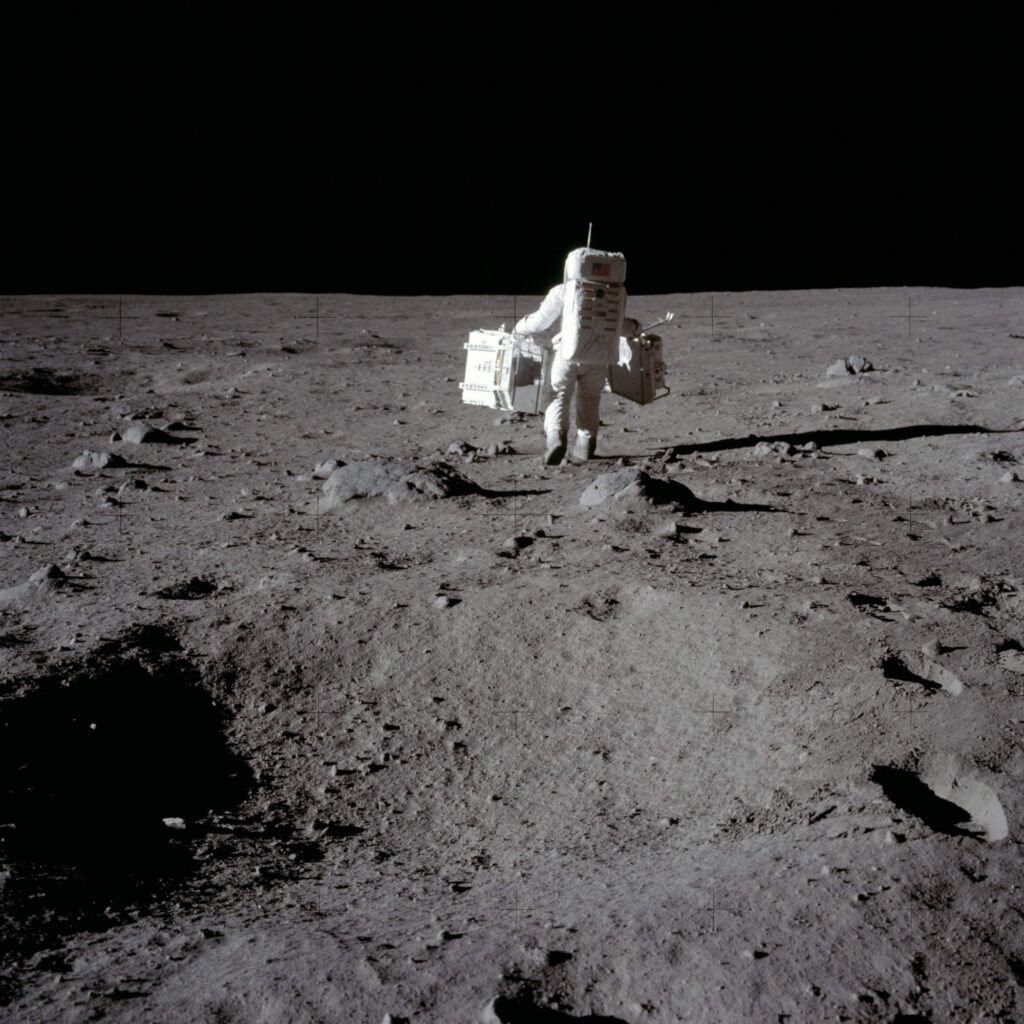
Pre-NASA encounters: pilots who later became astronauts
Donald “Deke” Slayton, Minnesota, 1951
On 12 December 1951, test pilot Donald K. “Deke” Slayton flew an F-51 Mustang on a maintenance test flight near Hastings, Minnesota. In his autobiography Deke! and in a Project Blue Book case file later surfaced by researcher Wendy Connors, Slayton describes seeing what he first thought was a kite, then a balloon, at about ten thousand feet. (NICAP)
Closing in, he realized the object looked like “a disk on edge” that then accelerated away in a forty-five degree climb. An Air Force ground team tracking a balloon the same day reportedly measured a similar unidentified object at roughly four thousand miles per hour using a theodolite. (NICAP)
Data trail:
- Project Blue Book entry (case 1025) lists the sighting, initially written off as a balloon. (NICAP)
- Slayton’s own narrative in Deke! is consistent with that file and predates the UAP disclosure boom by decades. (Mpls.St.Paul Magazine)
No radar plot or photographs have been released publicly.
Witness Interpretation (Slayton)
Slayton never claimed to know what the object was. He explicitly rejected the balloon explanation given to him and left the case unresolved in his own mind. (NICAP)
Researcher Opinion
- UAP-leaning researchers highlight the high closing speed, climb, and independent ground confirmation as evidence of a genuinely anomalous craft. (Dokumen)
- Skeptical analysts such as James Oberg tend to group cases like Slayton’s under “highly uncertain aerial encounters” where insufficient data prevents any firm conclusion, but they do not provide a specific alternate explanation here. (Skeptical Inquirer)
Preliminary claims taxonomy
For Deke Slayton’s 1951 sighting we classify the primary claim (a fast ascending disc-like object) as Probable anomalous, with no clear prosaic solution but also no multi-sensor data.
Gordon Cooper, Germany, 1951
Before NASA, Gordon “Gordo” Cooper flew F-86 Sabres in Europe. In a letter submitted to the United Nations in 1978, read into the record by Grenada’s representative, Cooper describes “two days of observation” of many UAP flying in formation, east to west over Europe, at altitudes beyond what contemporary fighters could reach.
“I believe that these extraterrestrial vehicles and their crews are visiting this planet from other planets… I also had occasion in 1951 to have two days of observation of many flights of them of different sizes flying in fighter formation…”
Data trail
- Verbatim UN Special Political Committee document A/SPC/33/PV.36, 27 November 1978, records Cooper’s letter, including his explicit belief in “extraterrestrial vehicles and their crews” and reference to his 1951 European sighting.
- Cooper’s memoir Leap of Faith: An Astronaut’s Journey into the Unknown expands on his pre-NASA sightings, including the 1951 wave and an incident at Edwards Air Force Base, and links them to his later advocacy at the UN. (Lyon College Online Bookstore)
We do not have radar or photographs from the 1951 European events in the public domain.
Witness Interpretation (Cooper)
Cooper states plainly that he interpreted these objects as extraterrestrial vehicles, and that the pattern and performance went beyond human tech of the era.
Researcher Opinion
- Nuclear physicist Stanton Friedman, who also addressed the UN that day, cited Cooper’s testimony among a wider body of evidence for non-human craft visiting Earth.
- Skeptical commentators, such as the Armagh Planetarium’s “Astronauts, aeroplanes and UFOs” feature, argue that many astronaut UAP stories grew more elaborate over time and that Cooper’s recollections should be treated cautiously without corroborating data. (armaghplanet.com)
Preliminary claims taxonomy
We classify Cooper’s 1951 European wave as Probable anomalous for the sighting itself, but treat his leap to extraterrestrial origin as Researcher Opinion, not evidence.
Gordon Cooper, Edwards Air Force Base, 1957
A second famous Cooper case involves an alleged UAP landing at Edwards AFB seen by a camera crew that Cooper supervised. The story, repeated in Leap of Faith and many documentaries, goes roughly as follows:
- A disc-like craft reportedly landed on or near a dry lakebed.
- A film crew shot footage with a theodolite camera.
- Cooper claims the undeveloped film was sent to a Pentagon office and never returned. (The Seeker Books)
Data trail:
- Cooper’s own retelling is the only source for the alleged landing and film. (Goodreads)
- No film, stills, or official documentation have surfaced in FOIA responses or NASA archives. Analyses of the case by historians of Blue Book and Edwards AFB imaging programs all converge on the point that there is no hard corroboration beyond Cooper’s memory. (New Space Economy)
Witness Interpretation (Cooper)
Cooper consistently stated he believed the craft was non-human, and took the loss of the film as implicit confirmation that authorities knew this and suppressed the evidence. (Goodreads)
Researcher Opinion
- Pro-UAP researchers often treat this as a near smoking-gun event, pointing to the alleged existence of technical footage and to Cooper’s status as a Mercury astronaut. (Goodreads)
- Critical reviewers argue that without even a single still frame or chain-of-custody document, this episode remains anecdotal. They note that Cooper’s later years were filled with ambitious projects, some of which blurred into mythmaking. (New Space Economy)
Preliminary claims taxonomy
The 1957 Edwards landing and missing film are best classified as Disputed, grounded in a single strong witness but lacking archival support.
UAP from orbit: Gemini, Apollo, Shuttle, ISS
From a UAP data perspective, orbital cases are uniquely tempting. In principle we have synchronized voice logs, mission timelines, sometimes photos, and ground radar. In practice, mission data often undermines the more sensational later retellings.
Gemini 4: The McDivitt “tumbler” (1965)
During Gemini 4, commander James McDivitt reported an object he described as a white cylindrical shape with a protruding arm or antenna. He took two photographs. (Wikipedia)
Data trail:
- McDivitt’s comments appear in the mission transcripts and in the Condon Report’s chapter on astronaut visual observations. (Wikipedia)
- Space analyst James Oberg analyzed the trajectory and timing and argued that the object was likely the Titan II second stage. (Wikipedia)
Witness Interpretation (McDivitt)
McDivitt later stated he thought the object was some unknown but probably human-made debris, not an alien craft. (Wikipedia)
Researcher Opinion
- Skeptical side: Oberg and others consider the case a classic misidentification of a known booster stage. (Wikipedia)
- Pro-UAP side: some argue that the apparent structure with a protruding arm and the timing relative to the booster’s separation make the Titan explanation doubtful, but they rarely provide a rigorous alternative trajectory analysis. (Hangar1publishing)
Provisional classification
Given McDivitt’s own stance and the plausible match with the booster orbit, UAPedia would classify this case as Misidentification.
Gemini 7: “Bogey at ten o’clock high” (1965)
The Gemini 7 crew famously mentioned a “bogey” while in orbit, a phrase that ufologists sometimes interpret as secret code for a non-human craft. (Wikipedia)
Data trail:
- The “bogey” appears in mission audio as a casual comment from Frank Borman.
- Borman later clarified that it referred to booster-associated debris, not an unknown craft. (Wikipedia)
- Oberg’s trajectory reconstruction supports the debris explanation. (Wikipedia)
Witness Interpretation (Borman)
Borman has been blunt: it was not a “flying saucer”, and TV programs that wanted him to validate that narrative were uninterested in his mundane explanation. (Wikipedia)
Researcher Opinion
Most serious analysts now accept this as a textbook example of debris being mythologized.
Classification: Misidentification.
Apollo 11: Aldrin’s light and the myth of “UFOs on the Moon” (1969)
Buzz Aldrin has repeatedly described seeing a light or object traveling alongside Apollo 11 on the way to the Moon. In later interviews he explained that it was almost certainly a jettisoned panel or other mission hardware. (Wikipedia)
NASA scientist David Morrison wrote a detailed response debunking claims that Apollo 11 astronauts saw alien craft, noting that the object was consistent with spacecraft hardware and that the crew never claimed otherwise. (Wikipedia)
A widely circulated story that Aldrin “passed a lie detector test” affirming an alien craft has been checked by Reuters, which concluded that the test was conducted by a small private institute using unvalidated techniques and did not show evidence of extraterrestrials. (Reuters)
Witness Interpretation (Aldrin)
Aldrin is open about the experience but emphasizes that “unidentified” does not equal “alien” and endorses the hardware explanation. (Wikipedia)
Researcher Opinion
- Skeptical and NASA-aligned authors treat this as solved. (Wikipedia)
- Some UAP advocates continue to present older audio snippets out of context to suggest clear alien contact, often ignoring Aldrin’s later clarifications. (armaghplanet.com)
Classification: Misidentification.
Edgar Mitchell: No in-flight UAP, strong post-flight claims
Apollo 14 lunar module pilot Edgar Mitchell did not report UAP during his mission. The Condon Report and NASA archives show routine visual observations, not anomalous craft.
After leaving NASA, however, Mitchell became one of the most outspoken high-profile voices insisting that some UAP are non-human craft, that Roswell involved a crash retrieval, and that elements of the US government withheld the truth. (Google Books)
NASA responded repeatedly that it “does not track UFOs” and does not endorse Mitchell’s statements.
Witness Interpretation (Mitchell)
Mitchell framed his views as based on high-level contacts in military and intelligence circles, not on personal direct sightings. He believed there was a clandestine program dealing with recovered craft. (Internet Archive)
Researcher Opinion
- Researchers such as Timothy Good and Steven Greer cite Mitchell’s prestige and insider contacts as powerful circumstantial evidence for crash retrievals. (armaghplanet.com)
- Critics emphasize that Mitchell’s claims are hearsay, with no documents, photographs, or named sources that can be independently checked. (Wikipedia)
Classification
Mitchell’s specific statements about government possession of alien craft are best categorized as Legend / Researcher Opinion, not as directly evidenced events, although his advocacy itself is an important historical fact.
Shuttle and ISS “space dandruff”
Shuttle missions and ISS livestreams have produced a cottage industry of UAP clips: glowing dots, tumbling rods, and “sudden turns” of bright specks.
Former NASA engineer James Oberg spent decades analyzing such footage. His conclusion is that nearly all of these incidents are ice flakes, insulation bits, or other debris, viewed under unfamiliar lighting and camera perspectives. (Skeptical Inquirer)
NASA’s own UAP Independent Study underscores that many apparently anomalous objects dissolve into sensor artifacts once calibration and metadata are applied.
Researcher Opinion
- Pro-UAP writers sometimes point to a small residue of clips where exact identification is uncertain.
- However, even UAP-friendly analysts concede that the bulk of Shuttle and ISS “lights” are non-mystical debris once distance and illumination are understood. (Hangar1publishing)
Classification
Most Shuttle and ISS “fleets of lights” fall under Misidentification.
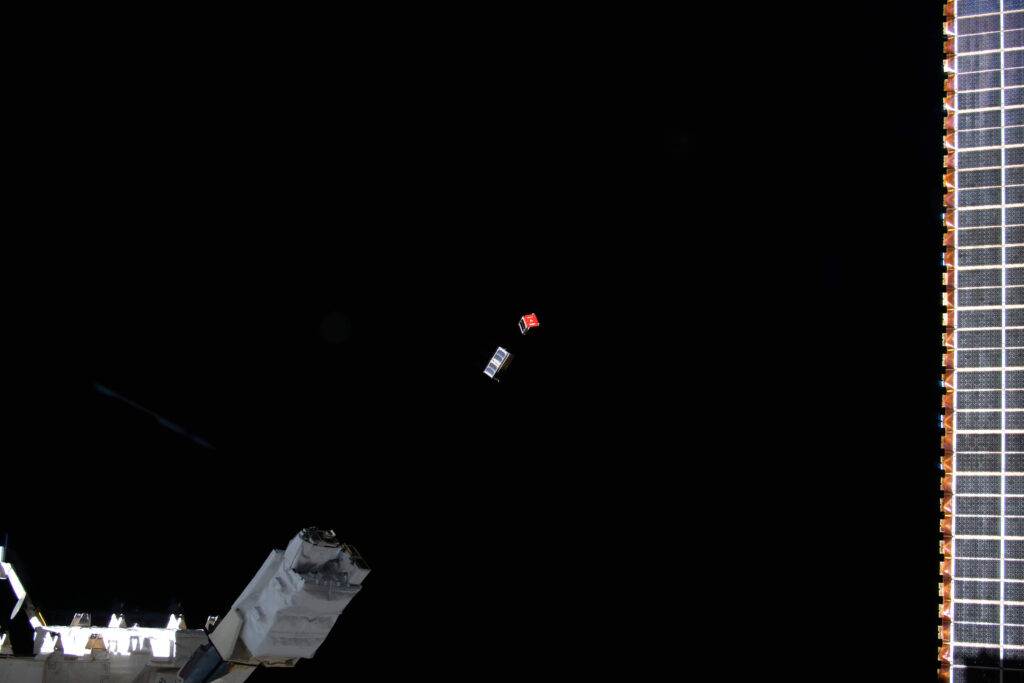
Modern astronaut cases: Leroy Chiao and beyond
Leroy Chiao: lights over the Pacific (ISS, 2005)
During a 2005 spacewalk as commander of ISS Expedition 10, astronaut Leroy Chiao saw a line of lights passing below him, “almost like an upside-down check mark.” (Wikipedia)
The incident later featured on the television show NASA’s Unexplained Files and has been widely shared as a “UAP encounter”.
Data trail:
- The sighting has no associated radar anomaly, nor imagery other than dramatized TV reenactments.
- Subsequent analyses, including Chiao’s own comments, point strongly to bright fishing boat lights far below on the dark ocean. (Wikipedia)
Witness Interpretation (Chiao)
Chiao has been admirably nuanced. He says he cannot absolutely rule out non-human visitors in general, but for this particular event he accepts the fishing-boat explanation as the most likely. (India Today)
Researcher Opinion
Most investigators on all sides accept that this was an initially puzzling but ultimately prosaic visual effect.
Classification: Misidentification.
Leroy Chiao again: metallic spheres over Texas (private flight, 2024)
In 2024, long after leaving NASA, Chiao reported a very different UAP encounter:
- While piloting a private aircraft over Texas in August 2024, he saw multiple metallic spheres that he estimated overtook his plane at high speed.
- In media interviews he speculated they might be advanced military drones. He added that if they were not, “then it gets a little more scary.” (Jerusalem Post)
Data trail:
- Single witness (Chiao) plus any air traffic control recordings that have not been made public.
- No radar plot or imagery has been released so far.
Witness Interpretation (Chiao)
Chiao leans toward secret human technology, not alien craft, but keeps an open mind.
Researcher Opinion
- UAP researchers highlight this as a rare example of a modern astronaut making a fresh UAP report in the era of AARO and NASA’s UAP office.
- Skeptics caution that with no corroborating data, it sits in the same evidentiary bucket as many pilot reports: intriguing but unresolved.
Classification
For now this case is Probable anomalous in the sense of “unknown aircraft” but with strong possibility of classified drones.
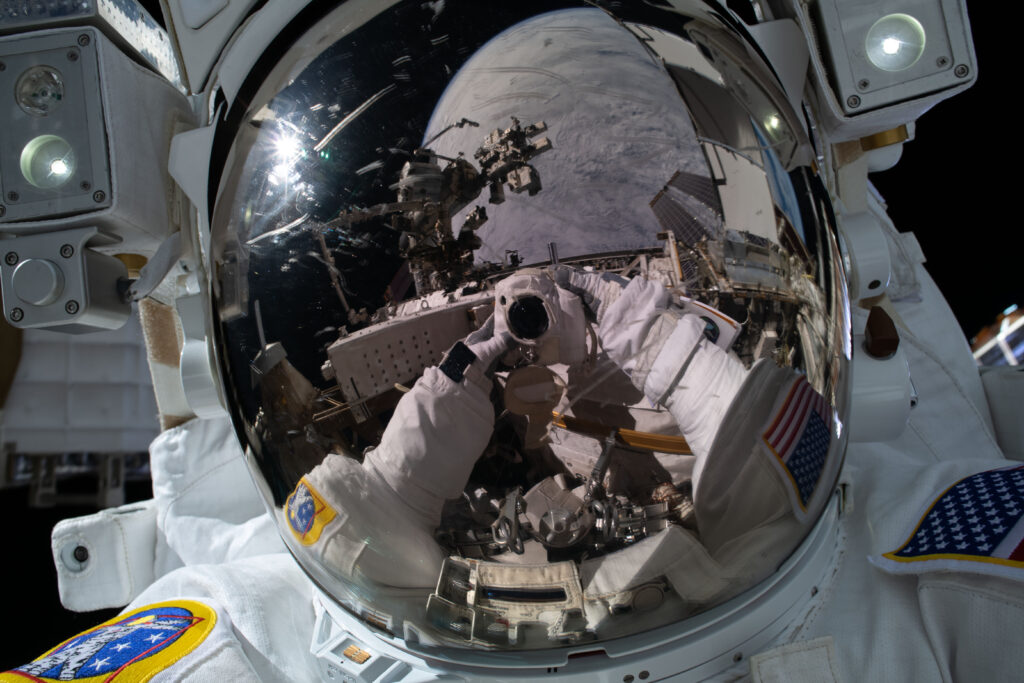
NASA’s official posture vs astronaut voices
NASA’s institutional line on astronaut UAP reports has evolved but retains a consistent backbone:
- Early post-Apollo commentary from NASA-affiliated scientists like Franklin Roach emphasized that astronauts had not brought back “a shred of evidence” of extraterrestrial spacecraft.
- Public communications during the Shuttle and ISS era focused on debris, ice, and sensor artifacts.
- The 2023 NASA UAP Independent Study reiterates that eyewitness accounts, even from highly trained personnel, are “interesting and compelling” but insufficient without calibrated multi-sensor data. It concludes that the majority of UAP can be attributed to known phenomena once data are adequate.
At the same time, NASA’s study acknowledges that:
- A small subset of UAP remain unexplained.
- Stigma has damaged data collection.
- NASA’s involvement can help normalize reporting and enable rigorous, open analysis.
That stands in tension with high-profile astronaut voices like Gordon Cooper and Edgar Mitchell, who argue that the real story is one of profound secrecy and long-running engagement with non-human intelligences.
From a UAPedia perspective this is not just a disagreement on facts, but also on epistemology:
- NASA treats only curated, multi-sensor data as admissible evidence.
- Many UAP researchers, echoing legal practice, argue that converging credible testimony can meet a “beyond reasonable doubt” threshold even without perfect instrumentation. (armaghplanet.com)
Astronaut testimonies sit right on this fault line.
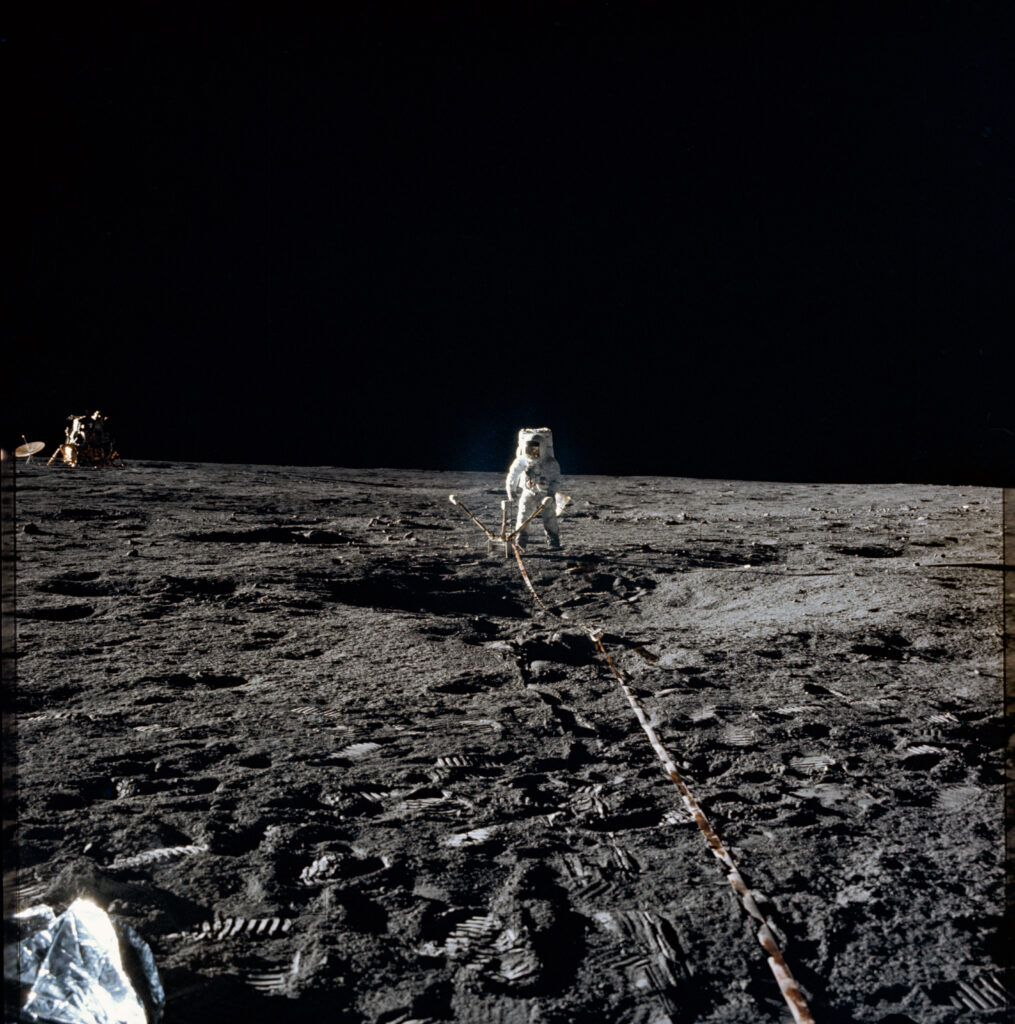
Where are the documents?
For an investigative approach, the key question is not just “what did astronauts say” but “what paper trail exists around those statements?”
Primary documents and archives
- UN document A/SPC/33/PV.36 (1978) records Cooper’s pro-ET letter in full and is a rare example of astronaut UAP advocacy entering an official international record.
- Project Blue Book microfilms contain the 1951 Deke Slayton case file discovered by NICAP researchers. (NICAP)
- NASA mission transcripts and technical debriefs for Gemini and Apollo, as cited in the Condon Report’s “Visual Observations Made by U.S. Astronauts”, show that the on-orbit anomalies were logged in a straightforward way and often associated with known hardware or debris. (Wikipedia)
- NASA UAP Independent Study Team Final Report (2023) provides the agency’s most current methodological and philosophical stance on UAP and data.
Books and long-form testimonies
- Gordon Cooper, Leap of Faith: An Astronaut’s Journey into the Unknown, which devotes multiple chapters to UAP experiences and suspicions about secret programs. (Lyon College Online Bookstore)
- Edgar Mitchell, The Way of the Explorer, which blends his Apollo experience with a broader, consciousness-centered view of extraterrestrial contact. (Google Books)
- Deke Slayton, Deke!, giving a detailed, early account of his 1951 encounter. (NICAP)
- James Oberg, UFOs and Outer Space Mysteries: A Sympathetic Skeptic’s Report, systematically re-examining astronaut UAP stories and proposing mostly prosaic explanations. (AbeBooks)
Media and secondary sources
- Interviews with Edgar Mitchell in mainstream outlets such as Observer where he links nuclear weapons, Cold War events, and alleged ET oversight.
- NASA-hosted Q&A pages responding to claims about Buzz Aldrin and Apollo 11 “UFOs”. (SSERVI)
- Recent reporting on Leroy Chiao’s 2024 metallic spheres over Texas in outlets like The Jerusalem Post. (Jerusalem Post)
Taken together, the hard documents show:
- Several solid pre-NASA pilot encounters by future astronauts, especially Slayton and Cooper.
- Several on-orbit anomalies where the original witnesses did not interpret them as alien craft, even though later storytellers did.
- A sharp difference between what astronauts saw personally and what some later said based on hearsay or research.
Overall assessment and implications
When you strip away decades of TV packaging and online exaggeration, what remains?
- Astronauts have seen genuine unknowns, especially before the space age.
Slayton’s 1951 object and Cooper’s 1951 wave over Europe are classic high-quality pilot cases, with at least some corroboration in Blue Book files and UN testimony.
They join a broader pattern of UAP intersecting with nuclear-era military aviation. (NICAP)
- Much of the “astronauts saw alien craft in space” lore does not match what the astronauts themselves say in technical debriefs.
Gemini 4, Gemini 7, and Apollo 11 all show a strong tendency for later storytellers to upgrade mundane anomalies into dramatic contact narratives. The original witnesses either favored human-made debris or remained cautious. (Wikipedia) - Post-flight advocacy, especially by Cooper and Mitchell, is real and significant but mostly hearsay-based.
Their statements tell us that some astronauts became convinced by a mosaic of testimony, documents, and briefings that the public has never seen. That conviction is important cultural data, but not yet verifiable history. - NASA’s current UAP program is data-hungry but conservative.
The 2023 report’s insistence on multi-sensor, calibrated data reflects a scientific ideal that often clashes with the messy reality of eyewitness-driven UAP incidents, including those by astronauts. - New astronaut testimonies, such as Leroy Chiao’s metallic spheres over Texas, keep the topic alive in the AARO era.
These accounts show that even after decades of “it’s just space junk”, highly trained observers still occasionally encounter aerial objects they cannot comfortably slot into known categories. (Jerusalem Post)
For UAP research, NASA astronaut testimonies are neither a slam-dunk proof of extraterrestrial visitation nor an embarrassing footnote to be explained away. They are a layered dataset that reveals:
- how institutions manage anomalous information
- how personal belief can diverge from mission paperwork
- how our collective narrative about UAP is shaped by which voices get amplified
A serious program of cross-referencing astronaut accounts with declassified radar, telemetry, and foreign archives (Russian, European, and commercial) could still extract new signal from these decades-old stories.
Claims Taxonomy
Event-by-event classification (UAPedia scheme)
- Deke Slayton, Hastings MN UAP (1951)
Claim: Fast ascending disc-like object, visually and via independent balloon-tracking theodolite. (NICAP)
Classification: Probable anomalous (strong aviation witness, some corroboration, no solid prosaic explanation documented). - Gordon Cooper, European UAP wave (1951)
Claim: Multiple high-altitude objects flying in formation over two days.
Classification: Probable anomalous for the basic sightings; Cooper’s “extraterrestrial vehicles” conclusion is Researcher Opinion. - Gordon Cooper, Edwards AFB landing and missing film (1957)
Claim: Disc on or near runway, filmed, film removed to Washington and never returned. (The Seeker Books)
Classification: Disputed (single witness story about lost evidence, no surviving documentation). - Gemini 4 “tumbler” object (1965) (Wikipedia)
Classification: Misidentification (likely Titan second stage or mission debris). - Gemini 7 “bogey at ten o’clock high” (1965) (Wikipedia)
Classification: Misidentification (debris, per crew and trajectory analysis). - Apollo 11 translunar light (1969) (Wikipedia)
Classification: Misidentification (jettisoned hardware, per Aldrin and NASA). - Edgar Mitchell’s crash-retrieval and cover-up narrative (post-1970s) (Internet Archive)
Classification: Legend / Disputed (hearsay from unnamed sources, no primary documents). - Shuttle and ISS “fleets of lights” (1980s–2010s) (Skeptical Inquirer)
Classification: Misidentification in the overwhelming majority of cases. - Leroy Chiao ISS lights (2005) (Wikipedia)
Classification: Misidentification (fishing vessels). - Leroy Chiao metallic spheres over Texas (2024) (Jerusalem Post)
Classification: Probable anomalous (unknown aircraft, plausible secret drones, insufficient data).
No case here meets UAPedia’s “Verified” standard of converging multisensor evidence plus institutional corroboration for a clearly non-prosaic object, but several rise above the threshold of simple anecdote.
Speculation Labels
Hypothesis
- The pattern of pre-NASA pilot encounters by Slayton and Cooper may suggest that future astronaut selection drew from cohorts already intersecting with UAP hotspots, possibly due to their test-flight roles near nuclear and advanced aerospace facilities.
- The rarity of on-orbit UAP reports compared to atmospheric ones could indicate that whatever intelligence or technology underlies some UAP prefers operations within the lower atmosphere or near specific strategic assets, not random encounters in deep space.
Witness Interpretation
- Gordon Cooper’s view that his 1951 and 1957 encounters involved extraterrestrial vehicles with crews.
- Edgar Mitchell’s belief that factions within the US government manage recovered craft and bodies, based on his private conversations. (Internet Archive)
- Leroy Chiao’s leaning toward advanced military drones for his 2024 metallic spheres. (Jerusalem Post)
Researcher Opinion
- James Oberg’s sustained argument that astronaut UAP reports can be understood via orbital mechanics, camera optics, and human perception in unfamiliar environments, with no need to invoke non-human craft. (Skeptical Inquirer)
- Stanton Friedman’s and Steven Greer’s use of astronaut testimonies as high-credibility support that “some UAP are somebody else’s spacecraft” in a long-running, partially hidden contact scenario.
All of these interpretive layers should be clearly distinguished from the underlying data for readers and policy-makers.
References
Barry, B. (2023). NASA’s UAP independent study team report (NASA Science Mission Directorate). Retrieved from NASA Science UAP site: science.nasa.gov/uap/?utm_source=uapedia.ai (NASA Science)
Cooper, G., & Henderson, B. (2000). Leap of faith: An astronaut’s journey into the unknown. New York, NY: HarperCollins. parnassusbooks.net/book/9781504054249?utm_source=uapedia.ai (Parnassus Books)
McDivitt, J. A. (1968). Visual observations during Gemini 4. In F. Roach, “Visual observations made by U.S. astronauts,” in E. U. Condon (Ed.), Scientific study of unidentified flying objects. Boulder, CO: University of Colorado. (Original report archived at NCAS) files.ncas.org/condon/text/s6chap06.htm?utm_source=uapedia.ai (Wikipedia)
Mitchell, E. D., & Williams, D. (1996). The way of the explorer: An Apollo astronaut’s journey through the material and mystical worlds. New York, NY: G. P. Putnam’s Sons. archive.org/details/wayofexplorerapo0000edga?utm_source=uapedia.ai (Google Books)
National Aeronautics and Space Administration. (2023). NASA unidentified anomalous phenomena independent study team final report (NASA/SP-2023-02-1130). science.nasa.gov/wp-content/uploads/2023/09/uap-independent-study-team-final-report.pdf?utm_source=uapedia.ai
National Aeronautics and Space Administration. (n.d.). UFO sightings in outer space context via mission FAQs. See D. Morrison, “Buzz Aldrin’s UFO sighting,” NASA SSERVI. sservi.nasa.gov/?question=apollo-11-ufo-sighting&utm_source=uapedia.ai (SSERVI)
Oberg, J. E. (1982). UFOs and outer space mysteries: A sympathetic skeptic’s report. Norfolk, VA: Donning. Archived at archive.org/details/UFOsOuterSpaceMysteries?utm_source=uapedia.ai (AbeBooks)
Ridge, F. (2000, May 19). Astronaut Deke Slayton’s UFO encounter, 5 mi. SE of Hastings, MN, Dec. 12, 1951. NICAP UFO report. www.nicap.org/reports/511212hastings_report2.htm?utm_source=uapedia.ai (NICAP)
Seemangal, R. (2015, August 25). Edgar Mitchell, Apollo 14 astronaut, speaks out on Roswell and the existence of aliens. Observer. observer.com/2015/08/edgar-mitchell-apollo-14-astronaut-speaks-out-on-roswell-the-existence-of-aliens/?utm_source=uapedia.ai
United Nations. (1979). Official Records of the General Assembly, Thirty-third Session, Special Political Committee, 36th meeting (A/SPC/33/PV.36). New York, NY: United Nations. documents.un.org/doc/undoc/gen/n79/553/03/pdf/n7955303.pdf?utm_source=uapedia.ai
Wikipedia contributors. (2025, July 27). UFO sightings in outer space. In Wikipedia, The Free Encyclopedia. Retrieved from en.wikipedia.org/wiki/UFO_sightings_in_outer_space?utm_source=uapedia.ai (Wikipedia)
(Additional sources include NASA history pages on Gordon Cooper’s Faith 7 mission, Armagh Planetarium’s “Astronauts, aeroplanes and UFOs”, Reuters fact-checks on Buzz Aldrin’s supposed “lie detector” test, and recent reporting on Leroy Chiao’s 2024 metallic sphere sighting.) (armaghplanet.com)
SEO keywords
nasa astronaut testimonies uap, astronaut uap sightings, gordon cooper uap, deke slayton uap encounter, edgar mitchell aliens, buzz aldrin uap explanation, leroy chiao metallic spheres, nasa uap study 2023, astronaut ufo myths debunked, uap pilot cases, nasa uap independent report, uapedia nasa astronauts