
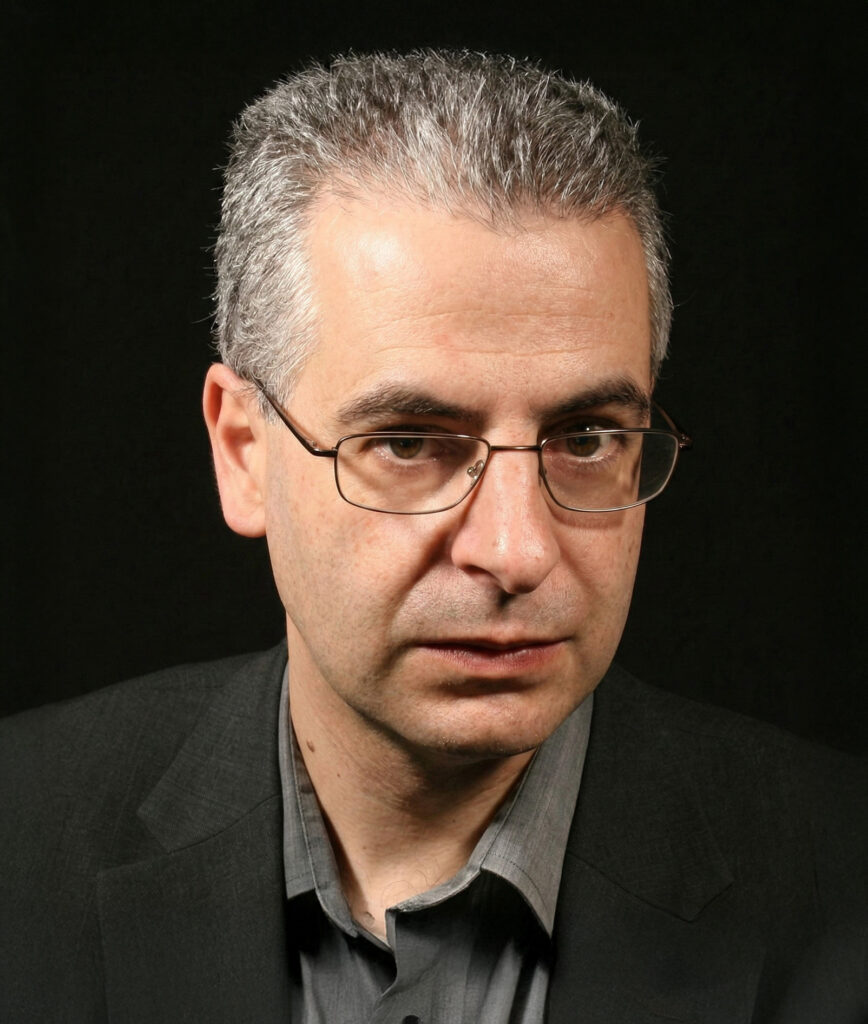
Nick Pope is one of those rare figures who can walk into a studio, a conference hall, or a parliamentary-adjacent conversation and instantly trigger the same reaction from three very different audiences: believers, skeptics, and the quietly curious.
To his supporters, he is the most visible “inside man” the United Kingdom ever produced on UAP. To his critics, he is proof that the UAP story can be as much about media gravity as it is about anomalous data. To everyone else, he is simply the person who keeps showing up whenever the topic refuses to die.
What makes Pope unusually consequential is not that he claims to have solved the UAP mystery. He does not. His cultural power comes from something subtler: he helped translate the bureaucratic language of state handling into a narrative the public could understand, then spent decades stress-testing that narrative across television, radio, podcasts, books, and live events.
On his own biography page, Pope frames his origin story with the blunt credential that has followed him ever since: he “worked for the UK Ministry of Defence for 21 years,” and one of his postings involved “researching and investigating” the phenomenon with an eye on defence, national security, and aviation safety. (Nick Pope)
That single sentence explains both his authority and his permanent controversy. It invites the obvious question: how much did he really see, how much could he really say, and how much did the system itself understand?
UAPedia’s approach is not to worship the credential or dismiss it. It is to map what Pope has documented, what he claims, what others dispute, and how his presence reshaped public discourse around a phenomenon that does not behave like ordinary news.
The desk, the state, and the strange
If you want to understand Pope’s impact, start with a paradox: he became famous for a job that, on paper, looked like routine public-facing administration, but in practice sat on the fault line between “nothing to see here” and “we cannot explain this.”
Pope’s biography describes his Ministry of Defence service as spanning 21 years. (Nick Pope) On his site’s “MoD UFO Files” page, he presents himself as deeply embedded in the documentary trail that later entered public circulation: he says he worked on the files, authored many of the documents, and became the “public face” of the release program through extensive media work. (Nick Pope)
This is an important distinction for UAP research history. Pope is not primarily positioned as a lab scientist or sensor analyst. He is positioned as an interpreter of institutional process. His value, and the reason he keeps getting booked, is that he can explain how a government can simultaneously:
- receive reports that sometimes cluster near military infrastructure,
- assess safety and security implications, and
- still publicly downplay significance.
On the same page, Pope provides a line that functions as both a disclosure and a shield. Discussing what was released, he writes: “there’s no ‘spaceship in a hangar’ smoking gun.” (Nick Pope)
That sentence is doing multiple jobs:
- It warns the public not to expect a cinematic artifact in the declassified material.
- It implies the public record is not the full record.
- It sets expectations so that “absence of definitive proof” is not used to flatten the whole subject into triviality.
In UAPedia terms, this is not proof of anything extraordinary by itself. But it does preserve a critical analytic point: state archives can be historically significant even when they are not ontologically decisive.
What Pope says the files reveal
The most strategically important claim Pope makes is not about craft origin. It is about institutional posture.
He asserts that while the Ministry of Defence told Parliament and the public that the phenomenon was of “no defence significance,” the files show it was taken “more seriously” internally than official messaging suggested. (Nick Pope)
He goes further, describing an internal communications tension that he labels “Orwellian ‘doublethink’” in handling the issue. (Nick Pope)
Researcher opinion: Pope’s “doublethink” framing implies intentional narrative management rather than simple bureaucratic inertia. (Nick Pope)
Implication: Even without resolving what UAP “are,” Pope’s account supports a long-standing pattern in UAP history: institutions often behave as if the topic matters more than they publicly admit.
This is one reason UAPedia rejects blanket dismissal of the subject as mostly trivial. The record contains a persistent residue of cases that repeatedly force institutional attention, even when institutions attempt to minimize the topic’s status.
The release program as a turning point
Pope’s “MoD UFO Files” page is also an unusually detailed narrative of how modern transparency collided with administrative load.
He writes that 228 files and around 60,000 pages were released, with the first batch in May 2008 and the final release in 2019. (Nick Pope) He describes multiple drivers, including precedent from France and, most importantly, the pressure of Freedom of Information requests, which he says were so numerous that the Ministry needed a scalable response. (Nick Pope)
This matters historically because it reframes “disclosure” as something that can happen not only because a state changes its mind about secrecy, but because the cost of refusing becomes higher than the cost of releasing.
Pope also positions himself as part of the release choreography: selecting cases to highlight, recording promotional material, and doing “literally hundreds” of media interviews. (Nick Pope) He lists major outlets and programs, including the BBC, ITV, CNN, and prominent U.S. broadcasts. (Nick Pope)
A public figure built from a paper trail
A key misconception about Pope is that his influence is derived from secret knowledge alone. In practice, much of his influence is derived from narrative stewardship of the partially public record.
UAPedia has a concept embedded in its editorial standard: knowledge graph thinking, which treats relationships, timelines, and influence pathways as first-class data. Pope is a node that connects:
- archival releases,
- high-profile cases,
- media cycles,
- and the emotional reality of witnesses and readers.
The Bentwaters-focused analysis notes that Pope’s 1996 Open Skies, Closed Minds shaped how many readers understood how the Ministry’s desk handled cases in the early 1990s.
In other words: even when Pope is not the primary evidence for a case, he can be primary evidence for how the case was framed in the public mind.
Publications that define the Pope “package”
On his books page, Pope states he has written six books, spanning non-fiction and fiction, and he again links his authority to his Ministry of Defence background. (Nick Pope)
Core non-fiction and case-centric work
- Open Skies Closed Minds
Pope describes it as an overview of the UAP mystery “written by the man who used to run the British Government’s” UAP program (historical wording retained). (Nick Pope) A pull quote on the page attributes to The Sunday Times the claim: “Pope’s is the first book on UFOs from someone with inside knowledge and access to Top Secret material.” (Nick Pope) - The Uninvited
Presented by Pope as his definitive book on the abduction mystery, with attention to folklore, contact narratives, and modern claims. (Nick Pope) - Encounter in Rendlesham Forest (co-authored)
Pope positions this as a major case work, co-written with John Burroughs and Jim Penniston, two witnesses central to Rendlesham’s military narrative. (Nick Pope)
The endorsements Pope features include a strong line from author Whitley Strieber: “Something very, very strange happened in that forest.” (Nick Pope)
Fiction as a controlled outlet
Pope’s site describes fiction as the only lane where certain truths can be expressed without disclosing classified operational details. On the same page, he notes his final Ministry posting as an acting deputy director in the Directorate of Defence Security, a detail that reinforces why security vetting is a recurring theme in his writing career. (Nick Pope)
Implication: This is part of why critics sometimes accuse him of insinuation. Pope’s defenders see it differently: a responsible containment of sensitive detail, paired with a willingness to discuss the broader anomaly problem publicly.
Known associates and recurring collaborators
Pope’s professional ecosystem is visible through co-authorship and media pairings.
Co-authors tied to major UAP cases
- John Burroughs and Jim Penniston: named on Pope’s site as co-authors of Encounter in Rendlesham Forest. (Nick Pope)
Media colleagues and interview networks
- Pope appears in the “Basement Office” orbit through an episode description of Somewhere in the Skies, which explicitly pairs Steven Greenstreet and Nick Pope in discussion of UAP news and contested cases. (Amazon Music)
This matters because “known associates” in the UAP field often function less like formal institutions and more like a moving network of recurring voices that keep the subject alive during news droughts.
Podcasts and modern long-form appearances
Pope’s career aligns perfectly with the post-2017 media landscape: short clips create virality, but long-form interviews build credibility.
Documented examples include:
- That UAP Podcast (Episode 7 featuring Nick Pope) is indexed as a dedicated episode featuring Pope as former Ministry of Defence, author, journalist, and media personality. (Hark)
- Somewhere in the Skies includes an episode explicitly titled “Inside the Basement Office with Steven Greenstreet and Nick Pope,” described as a face-to-face discussion covering UAP news and Pope’s views on a contested case. (Amazon Music)
- Apple Podcasts metadata for Somewhere in the Skies references a message from Pope about his health and reflects on his legacy in bringing UAP discussion into the mainstream. (Apple Podcasts)
Evidence: Pope’s presence in these channels is not incidental. It reflects a strategic reality: podcasts allow him to speak at length, caveat his claims, and maintain his reputation as a controlled but engaged insider voice. (Hark)
Public claims and the Pope pattern
Nick Pope’s public claims tend to fall into several repeatable categories. UAPedia presents them here with claim taxonomy labels, not as final truth, but as a map of what Pope asserts and how it functions in the broader discourse.
1) The declassified record lacks a definitive artifact
- Claim: There is no decisive physical proof in the released files.
- Pope quote: “there’s no ‘spaceship in a hangar’ smoking gun.”
- Taxonomy: Verified as a statement of Pope’s position; Disputed as an inference about the totality of state holdings. (Nick Pope)
- Speculation label: Researcher opinion (about what the files collectively mean), not evidence of absence.
2) The state publicly minimized what it privately treated as serious
- Claim: Official messaging downplayed defence relevance while internal work showed greater seriousness.
- Taxonomy: Probable as an institutional behavior pattern (supported by Pope’s detailed account); Disputed in degree and intent. (Nick Pope)
3) Many reports are explainable, but not all
- Claim: The files include large volumes of mundane misidentifications alongside “genuine mysteries.”
- Taxonomy: Verified as Pope’s description of case mix. (Nick Pope)
- Implication: This framing pushes back against two extremes: “everything is extraordinary” and “everything is trivial.”
4) UAP are relevant to national security contexts including sensitive sites
A more recent, mainstream-facing example appears in reporting about drone incursions over RAF bases. Pope is quoted saying: “I don’t rule out the activity being connected with nuclear weapons.” (theguardian.com)
- Taxonomy: Verified as a quote; Disputed as a causal link without public proof. (theguardian.com)
- Speculation label: Hypothesis (threat linkage), pending evidence.
Controversies and fault lines
Nick Pope’s controversies are less about a single scandal and more about persistent structural tensions:
The “how much authority did he really have” debate
Disputed: Pope’s public framing often uses language like “used to run” the Ministry’s UAP program, and his book marketing emphasizes insider status. (Nick Pope) Critics sometimes argue that the “desk” was a limited administrative function rather than an investigative unit with deep operational reach. (This dispute is common in UAP discourse generally, and it reflects how bureaucracies compartmentalize work.)
UAPedia note: Without full internal staffing charts, tasking orders, and preserved departmental workflows, the precise scope of authority remains contested in the public record. What is verifiable is that Pope was positioned close enough to the system to become one of the principal interpreters of its paper trail. (Nick Pope)
The “still aligned with the state” accusation
Pope himself acknowledges that parts of the UAP community have accused him of remaining aligned with government interests, particularly during the file-release period when he was repeatedly used as an official-facing spokesman. (Nick Pope)
- Taxonomy: Verified that the accusation exists; Disputed as to whether it is fair. (Nick Pope)
- Speculation label: Witness interpretation (public perception of Pope’s role) and researcher opinion (how that perception should be read).
The commercial-media tension
Pope describes writing for outlets across the spectrum, from prestige newspapers to mass-market tabloids, during file-release periods. (Nick Pope) This can amplify reach while also creating reputational risk: sensational framing often travels farther than cautious nuance.
UAPedia does not treat this as disqualifying. It treats it as a known hazard in UAP history: the phenomenon is culturally magnetic, and media systems reward certainty even when reality provides ambiguity.
Impact: why Nick Pope remains a central node
Nick Pope’s influence is not just personal brand. It is structural.
- He normalized “UAP as a security topic” for mainstream audiences.
Even when discussing uncertainty, he consistently returns to defence, safety-of-flight, and institutional process. (Nick Pope) - He helped set expectations for what disclosure looks like.
The archive can be huge and still incomplete; it can contain mundane reports and still preserve rare high-strangeness. (Nick Pope) - He bridged the UK and US conversation.
Through U.S. media appearances and global podcasting, he became one of the most recognizable non-U.S. voices in a field that often becomes U.S.-centric by default. (Nick Pope) - He shaped the narrative around “serious cases” without claiming final answers.
UAPedia’s Bentwaters analysis explicitly notes Pope’s role in framing how the desk handled cases during 1991–1994, which affected how later readers interpreted events like Rendlesham and broader UK reporting clusters.
UAPedia implication: Pope’s role demonstrates a key reality about UAP history. The story is not only written by pilots, radar operators, and witnesses. It is also written by the people who manage, redact, release, and publicly contextualize the record.
Selected direct quotes
All quotes are short excerpts presented for commentary and documentation.
- “there’s no ‘spaceship in a hangar’ smoking gun” (Nick Pope, MoD files Q&A). (Nick Pope)
- “behind the scenes, the subject was obviously taken more seriously than we let on” (Nick Pope, MoD files Q&A). (Nick Pope)
- “having to employ an Orwellian ‘doublethink’” (Nick Pope, MoD files Q&A). (Nick Pope)
- “It was manic!” (Nick Pope, describing file-release days). (Nick Pope)
- “Something very, very strange happened in that forest” (Whitley Strieber endorsement for Encounter in Rendlesham Forest). (Nick Pope)
- “I don’t rule out the activity being connected with nuclear weapons” (Nick Pope, quoted in reporting on RAF base drone incursions). (theguardian.com)
References
Pope, N. (n.d.). Biography. Nick Pope (official website). https://nickpope.net/wpte19/biography/ (Nick Pope)
Pope, N. (n.d.). MoD UFO Files. Nick Pope (official website). https://nickpope.net/wpte19/mod-ufo-files/ (Nick Pope)
Pope, N. (n.d.). Books. Nick Pope (official website). https://nickpope.net/wpte19/books/ (Nick Pope)
UAPedia. (n.d.). RAF Bentwaters and Sensor Verified UAP Activity. https://www.uapedia.ai/wiki/raf-bentwaters-and-sensor-verified-uap-activity/ (UAPedia – Unlocking New Realities)
That UAP Podcast. (n.d.). Episode 7: Nick Pope (audio index page). Hark Audio. https://harkaudio.com/p/that-ufo-podcast-that-ufo-podcast/9-episode-7-nick-pope-that-ufo-podcast (Hark)
Somewhere in the Skies. (n.d.). Inside the Basement Office with Steven Greenstreet and Nick Pope (episode listing). Amazon Music. https://music.amazon.com/es-ar/podcasts/a04a27da-f36f-4e96-a91b-294bd8f6a830/episodes/bd6c5fed-8fb2-4611-a692-156dba00f2b8/somewhere-in-the-skies-inside-the-basement-office-with-steven-greenstreet-and-nick-pope (Amazon Music)
The Guardian. (2024, November 30). UFO expert not ruling out Russia or China links to drones seen at RAF bases. https://www.theguardian.com/world/2024/nov/30/ufo-expert-not-ruling-out-russia-or-china-links-to-drones-seen-at-raf-bases (theguardian.com)
Wikimedia Commons. (2019). File: Nick Pope at Alien Snowfest 2019.jpg (CC BY-SA 4.0). https://commons.wikimedia.org/wiki/File:Nick_Pope_at_Alien_Snowfest_2019.jpg (Wikimedia Commons)


SEO keywords
Nick Pope, Nick Pope UAP, UK Ministry of Defence UAP desk, Ministry of Defence UAP files, UAP file release 2008 2019, Rendlesham Forest UAP, RAF Bentwaters UAP, Calvine incident, Cosford 1993 UAP, Project Condign, UAP disclosure UK, UAP media spokesperson, UAP researcher biography, UAP podcasts Nick Pope