
There’s a particular kind of evening when the ley line idea feels almost unavoidable. The light is low, the horizon is unusually sharp, and you’re holding a map that suddenly looks less like geography and more like circuitry. You draw a line from a hilltop to a church, then to a standing stone, then to a spring, and the pencil keeps finding targets. If you’ve ever done this, you already understand why the notion survived a century of argument. Even if you don’t believe in “earth energies,” the experience of pattern-finding feels intimate, like the landscape is answering back.
But here is the hard truth that a responsible explainer has to keep in view from the first paragraph: “planetary ley lines” are not an established physical feature of the Earth in the way faults, magnetic field lines, or tectonic boundaries are. Ley lines are a human mapping claim. Sometimes they are framed as prehistoric trackways, sometimes as spiritual alignments, sometimes as a global energy grid, and sometimes, in UAP circles, as a navigation system for “windows” between realities. Those are very different propositions, supported by very different kinds of evidence, and they should not be blended into one confident story just because they share a name.
So this article treats planetary ley lines as what they currently are: a family of hypotheses and cultural practices that overlap with the interdimensional and portal conversation, but do not yet anchor it. We will separate three layers that are often mashed together: the history of ley-line belief, the limited body of instrumented work at “sacred sites,” and the portal interpretation that some witnesses and researchers place on top of both.
What people mean by “planetary ley lines”
In everyday speech, “ley lines” can mean one of three things.
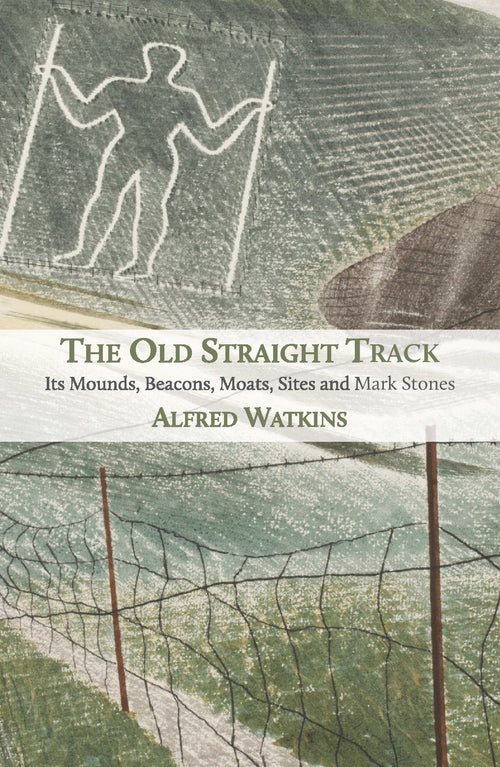
The first is the original idea: straight alignments between prominent features, proposed as practical routes or sight-lines in a premodern landscape. This is the Alfred Watkins version, born in early 20th-century Britain and tied to careful map work.
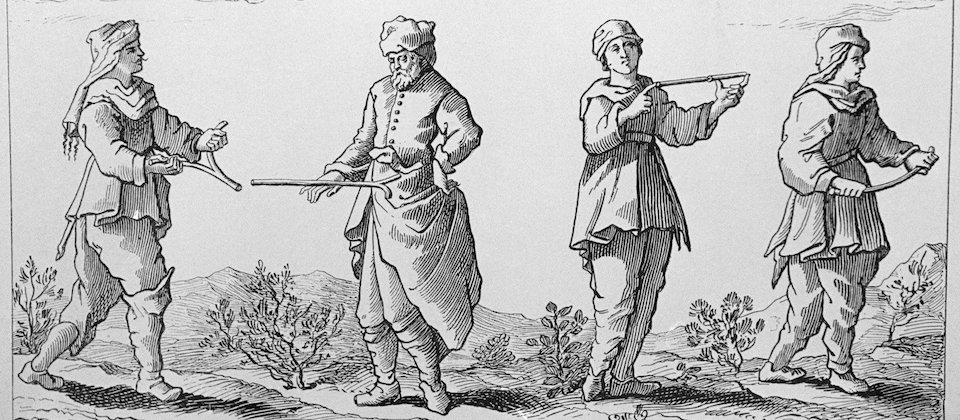
The second is the esoteric expansion: alignments as “energy pathways,” with intersections treated as power nodes. This is the version that tends to drift toward dowsing, chakras, landscape temples, and healing narratives. You will see it around stone circles, pilgrimage routes, and “thin places.”
The third is the planetary grid: the belief that alignments are not merely local coincidences, but surface traces of a global geometric network (sometimes tied to platonic solids, geodesics, or “Earth acupuncture”). This is where “planetary ley lines” becomes a literal phrase.
Only the first layer has a clear, traceable origin in a single author with a stated method. The second and third layers are real cultural movements, but they are not validated physical cartography in the scientific sense. That distinction matters, especially when we bring UAP into the frame.
The origin story is not mystical, even if it feels mystical
Alfred Watkins did not present himself as an occultist. He was a photographer, a businessman, and a careful observer of the Herefordshire landscape. In his 1922 lecture-text, he describes what is effectively a moment of cognitive snap, a sudden reorganization of perception that many later writers would mythologize.
He calls it “the rush of revelations,” and he situates it in a very specific kind of visibility, “the clear smoke-free distances of early summer,” followed by an obsessive period of confirmation: “Once started, I found no halt in the sequence of new facts revealed by active search on the tracks.” (Watkins, 1922). (renevanmaarsseveen.nl)
That line is worth sitting with, because it contains both the romance and the warning. The romance is obvious: a landscape suddenly becomes legible. The warning is quieter: once your mind starts locking onto a pattern, it becomes easy to keep “finding” it.
Watkins also tells you, plainly, how he thinks you should work. He urges the use of Ordnance Survey maps at a specific scale because smaller-scale maps are “quite useless” for the job. (Watkins, 1922). (renevanmaarsseveen.nl) That is not mystical language. It is the voice of someone treating leys as a surveyable proposal.
And crucially, Watkins’s early framing is utilitarian. He imagines straight “leys” as ancient trackways and sighting lines, marked by features that a traveler or “ley-man” could use: mounds, stones, wells, churches, notches in ridges, and so on. (Watkins, 1922). (Internet Archive)
How archaeology pushed back (and why that pushback matters)
Professional archaeology never fully adopted Watkins’s system, and one major reason is statistical: Britain has an extraordinarily dense distribution of historic and prehistoric features. When there are enough points on a map, a line drawn almost anywhere will cross something interesting.
A widely cited critique by archaeologists Tom Williamson and Liz Bellamy argues that the density of sites is high enough that “a line drawn through virtually anywhere will ‘clip’ a number of sites,” and they treat ley hunting as a classic case where pattern detection can outpace demonstration. (Williamson & Bellamy, 1983). (Cambridge Repository)
This critique does not “debunk” the fact that alignments exist. You can always draw a straight line. What it challenges is the inference that alignments are meaningful, intentional, or ancient in the way ley enthusiasts often imply. In other words, archaeology’s objection is not “you didn’t draw a line.” It’s “you haven’t shown that the line carries explanatory weight.”
That objection becomes even more important when the conversation shifts from “do alignments exist?” to “are alignments physically active corridors?” because the evidentiary burden rises sharply. A corridor claim requires more than map geometry. It demands measurable, repeatable correlates.
The second life of leys: from trackways to “power”
By the late 1960s and into the 1970s, ley lines were increasingly reframed as something other than tracks. The language pivoted toward “sacred geometry,” spiritual landscapes, and currents moving through the Earth.
John Michell’s The View Over Atlantis is one of the better-known catalysts in this transition, weaving alignments into a story about sacred hills, saint dedications, and a kind of geomantic infrastructure. In Michell’s treatment, alignments like the St Michael-related lines across parts of southern Britain are not merely interesting map coincidences; they become signs of an older, possibly intentional sacred ordering. (Michell, 1969/various editions). (avalonlibrary.net)
This is where controversy becomes unavoidable, because Michell-style geomancy often mixes multiple layers: archaeological features of different ages, medieval church dedications, folklore motifs, and modern interpretive frameworks. Some readers experience that as synthesis. Critics see it as narrative drift.
Either way, it is historically accurate to say that “ley lines” became a container term. Watkins’s careful, local proposal turned into an umbrella under which many incompatible ideas could shelter.
Where UAP enters the picture: lines, corridors, and repeating places
UAP research has its own version of the “line on the map” temptation. In mid-20th-century France, Aimé Michel argued that some waves of sightings appeared to form straight-line patterns when plotted geographically, an approach associated with “orthoteny.” That work is part of the broader historical record of researchers trying to extract structure from report distributions. (AbeBooks UK)
The overlap with ley lines is psychological and methodological before it is physical: both begin with mapping, both flirt with the idea that recurrence implies structure, and both can slide into overconfidence if the selection criteria are flexible.
Modern hotspot thinking is more cautious: it focuses on places where reports recur for years and where prospective, instrumented monitoring is possible, rather than one-off reconstructions. Hessdalen is often used as the example because it has recurring luminous phenomena and a history of measurements.
The key point for this article is simple: hotspots do not automatically validate ley lines, and ley lines do not automatically explain hotspots. If a site is anomalous, it might be anomalous because of geology, atmosphere, human activity, instrumentation bias, or something genuinely non-prosaic. Ley lines are, at best, one proposed map overlay, not a demonstrated mechanism.
Case study: The Dragon Project and what “instrumented sacred sites” really found
If you want to take ley lines seriously as more than a geometric pastime, you need to look at the small number of efforts that tried to measure anything at all.
The Dragon Project is one of the most frequently cited. It’s also one of the most frequently overstated in casual retellings, so it’s worth describing in plain terms.
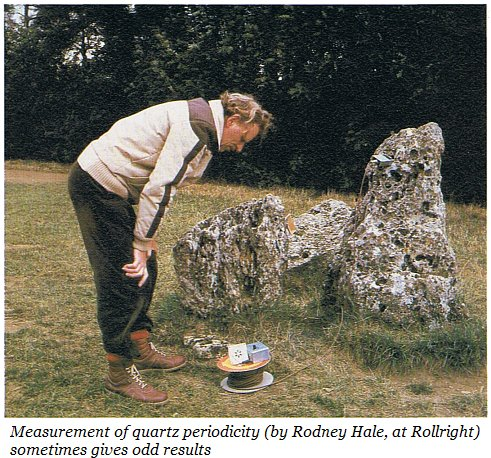
Don Robins, associated with the Dragon Project, reported anomalous recordings from “intermittent and continuous ultrasonic and radioactive monitoring” at stone circle sites in England and Wales. (osti.gov)
That sentence matters because it shows what the Dragon Project actually did measure: not an undiscovered “ley energy,” but ultrasound and radioactivity, both of which are real and measurable. Robins also frames the research as testing whether circles show anomalously high or low levels of known radiations. (Alumni)
At the Rollright Stones, a public-facing site summary describes the overall results as “disappointingly inconclusive,” while still mentioning specific observations such as variable ultrasonic pulsing at the King Stone and seasonal variation, plus a claim that the circle sometimes showed a kind of “shielding” effect against background ultrasound during a solstice observation. (Rollright Stones)
That same Rollright summary notes that radiation varies naturally and that monitoring did not yield a “decipherable pattern” at the Rollrights, even while reporting localized “hot spot” readings and isolated anomalies. (Rollright Stones)
This is the correct tone to take into portal conversations: inconclusive does not mean “nothing happened,” but it also does not mean “a new force was found.”
A broader sacred-sites overview that discusses this era of “earth mysteries” research likewise emphasizes that claims of strange energies were not cleanly confirmed, even as researchers sometimes reported anomalies in known variables such as radioactivity and local geomagnetism. (Sacred Land)
So what can we responsibly take from the Dragon Project material?
We can say that some investigators reported anomalous patterns in ultrasound and radiation measurements at some megalithic sites, and that these claims exist in published form. (osti.gov)
We cannot say that the Dragon Project established a planetary grid, proved ley lines are real energy conduits, or demonstrated portals. The data does not carry that weight, and even sympathetic summaries often highlight the lack of consistent patterning. (Rollright Stones)
Case study: dream and consciousness research at “sacred sites”
There is another kind of first-hand data that matters here because it connects directly to the interdimensional and portal conversation: altered experience.
Stanley Krippner, Paul Devereux, and colleagues conducted studies comparing dream reports after sleeping at sacred sites versus control sites. One paper in Dreaming reports that dream content differed, but also concludes that the results did not support the idea that the sites possessed anomalous properties, given that multiple alternative explanations remained plausible. (Krippner, Devereux, & Fish, 2003). (Springer)
A later paper in Anthropology of Consciousness also explores whether sacred sites influence dream content and experience in measurable ways, again trying to treat “thin place” claims as testable rather than purely poetic. (Devereux et al., 2007). (Lancaster University research directory)
These studies are relevant to the portal hypothesis in a subtle way. They do not prove portals. What they do show is that serious researchers have tried to operationalize site-related altered experience, using methods that sit somewhere between psychology and field anthropology.
If you are building a careful interdimensional model, this is the kind of bridge-work you need: not instant conclusions, but attempts to measure whether subjective shifts cluster at certain locations.
So where do “portals” come from?
In witness culture, “portal” language tends to arrive through experience, not geometry. People describe a place that feels “thinner,” a location where lights recur, where time seems odd, where sound behaves strangely, where dreams intensify, where the body reacts.
Some of this overlaps with what catalogs as “field effects,” meaning physiological or perceptual impacts reported near certain UAP events, sometimes discussed in the context of electromagnetic exposure or other mechanisms.
Some overlaps with hotspot thinking, where a place is treated as a persistent generator or attractor of events, making it suitable for prospective study.
Ley lines then enter as a possible map metaphor: if anomalous events are location-linked, perhaps there is a hidden structure guiding where those locations occur. That is the intuitive leap.
The leap becomes a problem when it hardens into a claim: “ley intersections are portals.” At present, that statement is not established by the instrumented record.
A more responsible way to hold the portal idea is conditional: if there are stable, location-linked anomalies of a kind relevant to UAP, then ley-line-style mapping might help generate testable predictions. Not proofs, predictions. That is where the portal hypothesis can be made scientific-adjacent: by forcing itself to bet on where the next event should happen.
Controversies you have to face if you want this to be testable
The ley-line world has several persistent failure modes. You don’t need cynicism to see them; you just need to be honest.
One is selection flexibility. If you can choose which sites “count,” which map projection to use, how thick the line is, and how close something must be to qualify, you can generate impressive-looking results without discovering anything.
Another is density bias, the archaeology critique again. In feature-rich landscapes, lines will hit targets. (Cambridge Repository)
Another is cultural feedback. Once a site is famous, it attracts visitors who arrive primed with certain expectations, which can shape what they report. This does not mean reports are false. It means the interpretive layer becomes hard to separate from the raw experience.
And finally there is the mechanism problem. Even if you found that some anomalous reports cluster near certain alignments, you still have to explain how a “line” functions physically. Magnetism? Geology? Human travel routes? Something genuinely exotic? Without a mechanism, you risk staying at the level of compelling cartography.
What a modern test would look like
If planetary ley lines are going to matter to the interdimensional and portal hypothesis, they need to graduate from retrospective storytelling to prospective constraint.
A credible study would start by fixing the rules before looking at the outcomes. Which sites qualify, and why. What “alignment” means, mathematically, on a sphere rather than a flat map. How to handle the fact that people live, travel, and report in clusters, which can create false hotspots. How to separate social attention from physical recurrence.
Then it would place sensors at predicted nodes and at matched controls, for long durations, with data made available for reanalysis.
The Dragon Project demonstrates both the promise and the interpretive fragility of site-based anomaly hunting. (osti.gov)
Claims Taxonomy
Verified
Alfred Watkins proposed “leys” as straight alignments/trackways and described his discovery process and map-based method in his own published work. (Internet Archive)
Dragon Project-related publications and summaries report that investigators conducted ultrasonic and radiation monitoring at some megalithic sites and recorded anomalies, while also acknowledging inconsistency and inconclusive patterning. (osti.gov)
Probable
Some “sacred sites” exhibit unusual readings in known variables (local radioactivity, geomagnetic variance, acoustic behavior) driven by geology, topography, and environmental conditions, which can be misread as “new energies” without careful controls. (Rollright Stones)
Disputed
The proposition that ley lines form a physical planetary energy grid with causal effects, and the proposition that ley intersections function as interdimensional “portals,” remain unestablished by the current instrumented record.
Legend
Saint-alignment narratives (for example, “St Michael lines”) and “earth acupuncture” mappings often function as spiritual geography and cultural meaning-making, whether or not they correspond to any physical mechanism. (avalonlibrary.net)
Misidentification
Claims that any given UAP hotspot “proves” ley lines are category errors that confuse hotspot evidence with grid causation. (Geipan)
Speculation labels
Hypothesis
If a subset of UAP events are genuinely location-linked and if those locations show repeatable geophysical or electromagnetic correlates, then “portal” language could evolve from metaphor into operational shorthand: specific environments might be more conducive to certain manifestations, whether because of physics we do not yet model well, or because of an interaction between environment and perception.
Witness Interpretation
For many experiencers, “portal” is the only word that fits what it felt like: an intrusion of the not-quite-local into the local. Ley lines, in that context, can function as an attempt to externalize the experience onto a map so it becomes shareable and searchable.
Researcher Opinion
The most useful role for planetary ley lines today may be as a disciplined provocation: a demand that researchers make falsifiable location bets. If you cannot predict a new hotspot, you probably do not have a working grid. If you can predict one, and instruments agree, then the entire conversation changes.
References
Watkins, A. (1922). Early British trackways, moats, mounds, camps, and sites: A lecture given to the Woolhope Naturalists’ Field Club (September 1921), with added matter. Hereford: The Watkins Meter Co. (Internet Archive)
Williamson, T., & Bellamy, L. (1983). Ley-lines: Sense and nonsense on the fringe. Archaeological Review from Cambridge, 2(1). https://doi.org/10.17863/CAM.25665 (Cambridge Repository)
Robins, D. (1982). Dragon Project and the talking stones. (Bibliographic record). (osti.gov)
Krippner, S., Devereux, P., & Fish, A. (2003). The content of dreams at a sacred site: A pilot study. Dreaming, 13, 95–105. (Springer)
Devereux, P., Krippner, S., Tartz, R., & Fish, A. (2007). A preliminary study on the effect of “sacred sites” on dream content. Anthropology of Consciousness, 18(2), 2–28. (Lancaster University research directory)
Strand, E., et al. (2014). The Hessdalen Phenomena (HP): 30 years of research. Instrumentation, results, witness stories, challenges, and difficulties (Workshop abstract). CNES/GEIPAN. (Geipan)
Teodorani, M. (2004). A long-term scientific survey of the Hessdalen phenomenon. Journal of Scientific Exploration, 18(2), 217–251. (Project Hessdalen)
UK Ministry of Defence / Defence Intelligence Staff. (2000/Released 2006). Unidentified Aerial Phenomena in the UK Air Defence Region: Executive Summary (Project Condign). (Minot AFB UFO Case)
SEO keywords
planetary ley lines, ley lines UAP, UAP portals, interdimensional portal hypothesis, sacred sites anomalies, Dragon Project stone circles, Rollright Stones ultrasound, geomagnetism and UAP, Hessdalen instrumented hotspot, earth lights and UAP, orthoteny UAP mapping, high-strangeness hotspots, UAP field effects, electromagnetic effects UAP, consciousness and UAP locations