
In the popular imagination, “remote viewing” is either a punchline or a superpower. In the real paper trail, it is something rarer and more revealing: a long-running collision between intelligence tradecraft, laboratory statistics, and the stubborn human intuition that mind is not always locked inside skull and skin.
That collision matters to UAP research for a simple reason. If UAP represent an enduring class of anomalies, then the “observer” cannot be treated as a rounding error. Witness cognition, perception, and possibly mind–environment interactions become part of the dataset, not an embarrassment to be quarantined away from it. UAPedia’s consciousness coverage sits here: not to replace sensors with vibes, but to ask whether the full system includes more channels than we are trained to recognize.
This updated investigative article builds around four credibility anchors you can read today: a CIA-commissioned evaluation that helped close the program, a reputable program lineage overview, and two peer-reviewed statistical landmarks that bracket the modern mind–matter debate.
The evidence locker
If you only read four sources on remote viewing and mind–matter claims, start here.
1) AIR Report (1995): the CIA-commissioned evaluation that splits “lab signal” from “operational value”
The American Institutes for Research (AIR) evaluation was commissioned by CIA’s Office of Research and Development as part of a broader 1995 declassification and external review process. (Alice)
Two conclusions coexist in the same report:
- A laboratory anomaly exists at a statistical level: viewers’ descriptions produced “hits” more often than chance would predict. (Alice)
- Operational value was not demonstrated: “Remote viewing… has not been shown to have value in intelligence operations.” (Alice)
The AIR report is one of the cleanest demonstrations of a pattern UAP researchers should recognize: statistically interesting does not necessarily mean operationally actionable. (Alice)
2) Federation of American Scientists: a program lineage map with dates and code names
The Federation of American Scientists (FAS) STAR GATE overview is not a lab paper and not a government report. It is a well-known public documentation hub summarizing how multiple U.S. government efforts exploring remote viewing ran under different code names across CIA, DIA, INSCOM, and Army units. (irp.fas.org)
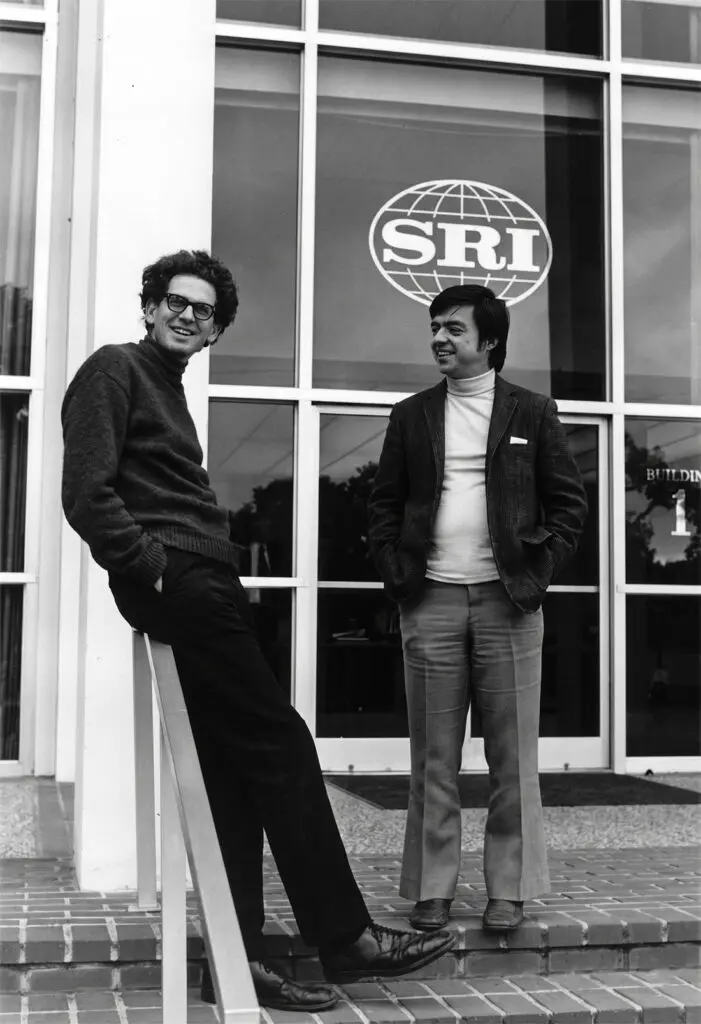
It supports the basic timeline claims that often get muddled in retellings, including that remote viewing research began at Stanford Research Institute (SRI) in 1972 and that program names shifted (SCANATE, GRILL FLAME, SUN STREAK, STAR GATE). (irp.fas.org)
3) Bösch, Steinkamp & Boller (2006): the RNG psychokinesis meta-analysis with the “small effect, big bias question”
The 2006 Psychological Bulletin meta-analysis combined 380 RNG studies and found “a significant but very small overall effect size,” alongside extreme heterogeneity and a simulation result suggesting the pattern “could in principle be a result of publication bias.” (PubMed)
This is exactly the kind of “data-first” source that strengthens a mind–matter section because it frames both the strongest pro-claim point (aggregate deviation) and the strongest caution (bias plausibility) in one place. (PubMed)
4) Maier et al. (2018): a modern, large-scale Bayesian test that lands hard on the null for mean micro-PK
Maier and colleagues ran an online experiment with 12,571 participants and report “strong evidence for H0 (BF01 = 10.07)” in their primary analysis. (PMC)
They also discuss exploratory time-structure patterns, which is important because it shows how the field continues even after a strong mean-effect null: proponents often pivot from “average shifts” to “dynamic patterns.” That pivot may be testable, but it is not automatically evidence. (PMC)
First principles: what counts as “remote viewing” in the record
Remote viewing, in its best-documented form, is not daydreaming. It is a protocol: a target is chosen and concealed, a viewer produces free-response impressions, and a judge later matches transcripts to targets using a scoring method. This is why debates about cueing, judging, and target pools are not side quests. They are the core. (Alice)
The early public-facing scientific landmark is the 1974 Nature paper by Russell Targ and Harold Puthoff, “Information transmission under conditions of sensory shielding.” Whatever one thinks of its conclusions, it represents a moment when anomalous cognition claims were argued in a premier scientific venue. (PubMed)
Remote viewing’s credibility problem is also definitional: many people use “remote viewing” to mean any psychic impression. But the scientific and government record is about specific protocol attempts to reduce sensory leakage and quantify outcomes.
Government involvement: what can be said
A reliable investigative approach begins with what the sources actually support.
From the FAS overview:
- CIA funding for an initial research program called SCANATE is described as beginning in 1970. (irp.fas.org)
- Remote viewing research is described as beginning in 1972 at SRI in Menlo Park, California, with Russell Targ and Harold Puthoff. (irp.fas.org)
- Over time, multiple code names are described across agencies and units, including GRILL FLAME (Army/INSCOM), SUN STREAK, and STAR GATE (DIA-era naming). (irp.fas.org)
From the AIR evaluation:
- CIA declassified past parapsychology program efforts in 1995 in order to facilitate an external review, and AIR was contracted in June 1995 to do it. (Alice)
- The CIA explicitly asked AIR to treat scientific validity and operational utility separately, acknowledging that a phenomenon could be statistically significant yet operationally limited. (Alice)
This separation is one of the most important lessons for UAP research governance. A program can be “scientifically unresolved” and “operationally unhelpful” at the same time.
What AIR actually evaluated
The AIR team reviewed:
- Laboratory research claims and methods
- Operational applications, including end-user interviews and assessments of utility (Alice)
The report is unusually candid about the operational disappointment. In its early summary language, it notes that information provided was “inconsistent” and “required substantial subjective interpretation,” and that remote viewing “failed to produce actionable intelligence.” (Alice)
That last phrase is crucial, because “actionable” is the real test in intelligence. A narrative that feels accurate after the fact is not the same as a product that can guide decisions before confirmation exists.
AIR’s most quoted conclusion is also the simplest:
- “Remote viewing… has not been shown to have value in intelligence operations.” (Alice)
Simultaneously, AIR reports agreement between its two principal external reviewers on the presence of a statistical anomaly in laboratory studies, while highlighting their disagreement over what causes it and whether it demonstrates a genuine paranormal mechanism. (Alice)
The AIR report does not say “remote viewing is proven.” It says a statistical effect appears in laboratory data, and it is not yet pinned to a specific causal mechanism in a way that would satisfy mainstream scientific standards. (Alice)
Case files
Here are case files that are grounded in publishable sources, including controversies that shaped the field.
Case file A: The 1974 Nature moment
In 1974, Targ and Puthoff’s sensory-shielding paper landed in Nature. It is difficult to overstate how much this shaped the long-term cultural narrative: it implied that psi claims were not merely parlor stories, but something that could be argued with experimental framing and statistics in mainstream literature. (PubMed)
Data-first note: publication in a top journal is not proof. It is a historical marker of scientific attention, and a major driver of subsequent replication attempts and critiques.
Case file B: The 1981 Nature dispute, cueing and the judge problem
The remote viewing controversy is not a vague “people disagree.” It is specific.
In 1981, David Marks published “Sensory cues invalidate remote viewing experiments” in Nature, arguing that methodological weaknesses and cueing could explain apparent hits. (PubMed)
Two weeks later, Puthoff and Targ published “Rebuttal of criticisms of remote viewing experiments,” defending their procedures and disputing the critique’s implications. (PubMed)
This exchange matters today because it maps directly onto modern UAP disputes about data custody, analysis leakage, and interpretive freedom: once humans interpret ambiguous inputs, the system can accidentally manufacture certainty.
Case file C: AIR’s operational dead end
The AIR report’s operational component is, in effect, a multi-year “real world test.” It concludes remote viewing outputs did not provide an adequate basis for actionable operations. (Alice)
That is not a small criticism. It means that even if a weak laboratory anomaly exists, it did not translate into dependable decision advantage inside the evaluated program environment.
Mind–matter research: the RNG battlefield
Mind–matter research asks a different question than remote viewing: can intention or attention measurably perturb random physical systems?
The most studied modern platform is the true random number generator (tRNG), often quantum-based.
The meta-analytic claim: tiny but significant deviations
Bösch, Steinkamp & Boller (2006) remains a cornerstone because it is both supportive and skeptical in the same abstract:
- Across 380 studies, a significant but very small overall effect size is reported.
- Effect sizes were inversely related to sample size and “extremely heterogeneous.”
- A Monte Carlo simulation suggests the pattern could be explained by publication bias in principle. (PubMed)
This is the exact kind of citation that enhances credibility: it prevents you from overselling. It also prevents critics from claiming you hid the strongest counterargument.
The PEAR proposition: not a meta-analysis, but a long-run program perspective
One of the most common citation errors in this field is confusing the Bösch meta-analysis with PEAR-related reviews.
PubMed ID 17560342 is “The PEAR proposition” by Jahn and Dunne (2007), a review describing decades of consciousness-related anomalies research at Princeton Engineering Anomalies Research (PEAR). (PubMed)
This is valuable, but it is a different type of source than Bösch et al. It is a program-perspective review, rich in claims about patterns and context, but not the 380-study meta-analysis in Psychological Bulletin. (PubMed)
The modern stress test: Maier et al. 2018 and the “Bayesian no”
Maier et al. (2018) explicitly frames itself as a decisive test and finds strong evidence favoring the null in its primary outcome:
- 12,571 participants
- strong evidence for H0 (BF01 = 10.07) (PMC)
This strengthens the article’s credibility because it proves you are not cherry-picking only confirmatory studies. It also gives readers a reality check: the strongest modern designs often do not replicate mean micro-PK effects.
At the same time, the paper’s discussion of temporal oscillations shows why the debate continues: a field can lose the “mean effect” argument and still claim structure in the noise. That structure might be real, but it needs preregistered, independently replicated testing. (PMC)
Where this intersects UAP research without pretending it “proves UAP”
Remote viewing and mind–matter research do not automatically validate UAP claims. What they do provide is an institutional mirror.
The institutional mirror: how governments handle anomalies
The AIR report shows a government pathway that looks familiar to UAP watchers:
- Fund research.
- Build operational trials.
- Generate internal controversy.
- Commission external review.
- Shut down operational use while leaving the scientific question rhetorically open. (Alice)
That is extremely close to today’s pattern in UAP policy: “We need better data,” paired with “We cannot use this operationally yet.”
The controversies
A credible investigative article does not pretend controversy is just emotional. It is methodological.
Controversy 1: cueing and information leakage
Marks’ 1981 critique became a shorthand for the claim that sensory cues can invalidate free-response matching. (PubMed)
Puthoff and Targ’s rebuttal illustrates the perennial problem: once critics argue “leakage,” the burden shifts to designs with stronger blinding and better audit trails. (PubMed)
Controversy 2: statistics versus mechanism
AIR agrees a statistically significant anomaly exists in laboratory studies, but stresses that significance alone does not identify cause. (Alice)
This is where the UAP analogy is sharpest: “unexplained” is not the same as “explained as X.”
Controversy 3: operational utility
AIR’s operational conclusion is a credibility anchor because it is a disappointing result that believers cannot easily spin: outputs were not shown to be actionable in intelligence operations. (Alice)
Controversy 4: publication bias and the micro-effect trap
Bösch et al. show the mind–matter debate’s most uncomfortable reality: effects can be statistically significant, tiny, and plausibly explained by bias mechanisms. (PubMed)
Maier et al. shows modern high-powered testing can land on “no mean effect,” without necessarily eliminating every alternative hypothesis proposed by the field. (PMC)
Implications
Remote viewing may be “statistically nontrivial” yet strategically unusable
This is the AIR lesson. A weak signal that cannot be translated into reliable, specific, time-sensitive intelligence is a dead end operationally. (Alice)
Mind–matter research forces UAP researchers to get serious about null results
Maier et al. is a reminder that a modern dataset can be large enough to meaningfully support the null. UAP research, too, must be willing to accept “no effect” outcomes when the best methods find none, rather than endlessly moving goalposts. (PMC)
The next frontier is adversarial protocol design
The best way out of the endless remote viewing argument is not louder belief or louder dismissal. It is preregistered, multi-lab, adversarial collaboration: proponents and critics agree on protocols and success criteria before data exists.
That recommendation is implied by the AIR emphasis on causality, alternative explanations, and boundary conditions. (Alice)
Claims taxonomy
Claim: Laboratory remote viewing studies show above-chance matching more often than random expectation.
Classification: Probable (a statistically significant anomaly is reported; causality and generalization remain disputed). (Alice)
Claim: Remote viewing provided actionable intelligence that guided operations.
Classification: Disputed (AIR concludes it was not shown to have value in intelligence operations and did not produce actionable intelligence). (Alice)
Claim: Human intention measurably biases RNG output as a stable mean effect.
Classification: Disputed (Bösch et al. finds a small significant effect with bias concerns; Maier et al. finds strong evidence for the null in a large-scale design). (PubMed)
Claim: PEAR’s body of work demonstrates a robust, scalable mind–matter mechanism.
Classification: Disputed (PEAR proposition is a program-perspective review with reported patterns, but the broader literature includes strong bias critiques and null results). (PubMed)
Speculation labels
Hypothesis
- Some remote viewing laboratory anomalies represent a real, context-sensitive information channel that is degraded by operational constraints (poor feedback, ambiguity costs, time pressure). (Alice)
- If mind–matter effects exist, they may not appear as stable mean shifts, but as time-structured patterns that demand preregistered time-series hypotheses. (PMC)
Witness Interpretation
- Some practitioners interpret remote viewing sessions as accessing non-human technology or UAP-related targets. These interpretations are narrative overlays unless independently verified by blind ground truth.
Researcher Opinion
- The single largest credibility upgrade available to both remote viewing and mind–matter research is transparent preregistration, automated scoring where possible, and open data for reanalysis.
Relevant active links
AIR Report (1995) – An Evaluation of Remote Viewing: Research and Applications (PDF)
CIA Reading Room – AN EVALUATION OF THE REMOTE VIEWING PROGRAM (PDF)
Federation of American Scientists – STAR GATE Program Overview
Bösch, Steinkamp & Boller (2006) – RNG Psychokinesis Meta-analysis (PubMed 16822162)
Maier et al. (2018) – Large-Scale Micro-PK Test (PMC full text)
“The PEAR proposition” (Jahn & Dunne, 2007) (PubMed 17560342)
Targ & Puthoff (1974) – Nature sensory shielding paper (PubMed 4423858)
Marks (1981) – Nature critique (PubMed 7242682)
Puthoff & Targ (1981) – Nature rebuttal (PubMed 7254336)
References
Bösch, H., Steinkamp, F., & Boller, E. (2006). Examining psychokinesis: The interaction of human intention with random number generators: A meta-analysis. Psychological Bulletin, 132(4), 497–523. https://doi.org/10.1037/0033-2909.132.4.497 (PubMed)
Jahn, R. G., & Dunne, B. J. (2007). The PEAR proposition. Explore, 3(3), 205–226. https://doi.org/10.1016/j.explore.2007.03.005 (PubMed)
Maier, M. A., et al. (2018). Intentional observer effects on quantum randomness: A Bayesian analysis reveals evidence against micro-psychokinesis. Frontiers in Psychology. (Open access via PMC). (PMC)
Marks, D. (1981). Sensory cues invalidate remote viewing experiments. Nature, 292(5819), 177. https://doi.org/10.1038/292177a0 (PubMed)
Mumford, M. D., Rose, A. M., & Goslin, D. A. (1995). An evaluation of remote viewing: Research and applications. American Institutes for Research (CIA-commissioned external review). (Alice)
Puthoff, H., & Targ, R. (1981). Rebuttal of criticisms of remote viewing experiments. Nature, 292(5821), 388. https://doi.org/10.1038/292388a0 (PubMed)
Targ, R., & Puthoff, H. (1974). Information transmission under conditions of sensory shielding. Nature, 251(5476), 602–607. https://doi.org/10.1038/251602a0 (PubMed)
Internal crosslinks
Remote Viewing and Mind-matter Research (category hub) (UAPedia – Unlocking New Realities)
Dr. Harold “Hal” Puthoff and the Arc of UAP Inquiry (UAPedia – Unlocking New Realities)
Dr. Christopher “Kit” Green: A Forensic Neurologist at the Edge of the UAP Problem (UAPedia – Unlocking New Realities)
UAP as an Entry Point to High Consciousness (UAPedia – Unlocking New Realities)
Mind-UAP Interaction (category hub) (UAPedia – Unlocking New Realities)
SEO keywords
remote viewing, mind-matter research, anomalous cognition, STAR GATE program, SCANATE, GRILL FLAME, SUN STREAK, CIA remote viewing evaluation, AIR 1995 remote viewing report, SRI remote viewing, Russell Targ Harold Puthoff, sensory cue critique David Marks 1981, RNG psychokinesis meta-analysis 2006, Bösch Steinkamp Boller 16822162, micro-psychokinesis 12,571 participants, Maier 2018 BF01 10.07, PEAR proposition Jahn Dunne 17560342, UAP consciousness research, mind-UAP interaction