
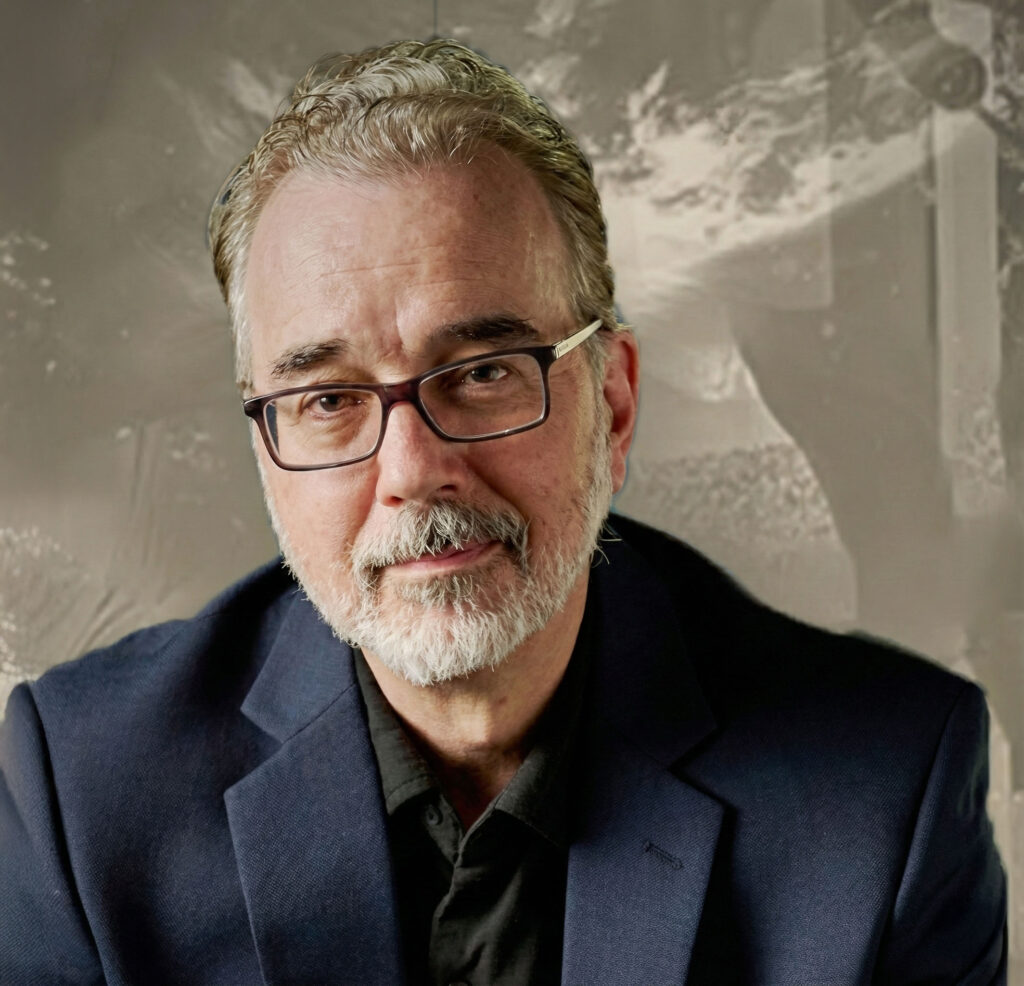
On a chilly evening in Rochester, New York, the historian calmly closes his laptop and turns to face his audience. The stage lights pick out the silver of his glasses and a look of earnest intensity. This is Richard M. Dolan, author, lecturer, podcast host, who for more than two decades has woven history, government secrecy, and the mystery of unidentified anomalous phenomena (UAP) into a narrative that insists the story is far larger than flying saucers or sensational headlines.
He opens: “If you accept that something real is happening, then the question becomes: Why have we been kept in the dark?”
It is in that fundamental question that Dolan carved his niche. What distinguishes him from many others in the UAP domain is not simply belief in the phenomenon, but an insistence on historical method, national-security framing, and a broad cultural sweep that places UAPs within a tapestry of Cold-Warism, covert operations, and the modern digital era.
Early Life & Academic Grounding
Richard Michael Dolan was born July 1, 1962, in Brooklyn, New York, and raised in Brentwood on Long Island. (HandWiki) After completing his undergraduate studies in English and history at Alfred University in 1984, he went on to earn an M.A. in history from the University of Rochester in 1995. (HandWiki) He also studied political ideologies at Exeter College, Oxford, and was a Rhodes Scholarship finalist. (Gaia)
From the beginning, Dolan’s academic orientation set him apart in the UAP field: he approached the topic not as a fringe enthusiast but as a historian of state power, intelligence, and covert operations. The Cold War, he would argue, provided the template for how the U.S. government might approach an “alien” or advanced aerospace phenomenon: as a national security issue first, a scientific one second.
The Historian Turns to UAPs
Dolan’s turn toward UAP research is often framed as organic: his interest in Cold War strategy and intelligence operations naturally extended into questions about secret aerospace projects and unexplained phenomena. In one interview he reflects: “I didn’t start as a UFO researcher; I started as a historian. When the documents, the archives, the memos pointed me toward something odd, I followed.”
His first major work, UFOs and the National Security State: Chronology of a Coverup, 1941-1973 (2000), marked a turning point. The book traced, in detailed chronological form, the early decades of the modern UAP era, from the ghost rockets of Scandinavia to the Roswell fall-out and beyond. (oceanwriter) Rather than framing every sighting as extraterrestrial visitation, Dolan placed them in the context of the U.S. military, aerospace research, and national security, suggesting that the phenomenon may be as much human-designed as other-worldly.
In a 2014 book, UFOs for the 21st Century Mind: A Fresh Guide to an Ancient Mystery, he broadened the lens further, incorporating consciousness, culture and the “post-disclosure” world we might be entering. (Sag Harbor Books)
These books together established Dolan as one of the leading voices in what might be called “serious ufology” the strand of the field that insists on archival lines of inquiry, government policy framing, and implications for civilization, rather than only anecdote or spectacle.
Books, Media & Influence
Richard Dolan’s bibliography is substantial and serves as the backbone of his influence:
- UFOs and the National Security State: Chronology of a Cover-up, 1941-1973 (2000)
- UFOs and the National Security State: The Cover-Up Exposed, 1973-1991 (2009) (Wikipedia)
- A.D. After Disclosure: The People’s Guide to Life After Contact (with Bryce Zabel, 2010) (Skeptiko)
- UFOs for the 21st Century Mind (2014)
- The Alien Agendas: A Speculative Analysis of Those Visiting Earth (2020) (Goodreads)
His media presence expands beyond books. Dolan has appeared on television programs such as Sci Fi Investigates (2006) , the series Hangar 1: The UFO Files, and documentaries exploring covert aerospace history. (IMDb)
He hosts his own podcast, The Richard Dolan Show, and publishes through his imprint, Richard Dolan Press. His speaking schedule is global; his role at major conferences like the International UFO Congress is frequently listed, with workshops, panels and lectures. (Contact in the Desert)
In short: Dolan built an intellectual brand around the idea that UAPs are not just weird sightings but a military-intelligence, historical, cultural and possibly transformational phenomenon.
Claims & Contributions
What outside his writing sets Dolan apart? Several major contributions stand out:
1. Institutionalizing the “Cover-Up” Narrative
Dolan’s first volumes framed UAPs as a national security issue and argued that the historical record shows consistent patterns of secrecy, obfuscation and intelligence involvement. By aligning the UAP phenomenon with statecraft and cold war covert operations, he gave it a more serious footing. The claim: the world’s major powers have long treated UAPs as a matter of strategic concern. (Dolan wrote: “It is an interesting sociological reality that so many people are unwilling to discuss the most, and at times traumatic, experience of their lives.” (Goodreads))
2. Disclosure and Post-Disclosure Scenarios
In A.D. After Disclosure, Dolan and Zabel considered what happens when the government formally acknowledges non-human intelligences, advanced technologies, or secret programs. He argued that disclosure would trigger societal shifts in politics, energy systems and religion. In doing so, he moved from pure history into futurism.
3. Broadening the Discussion
With UFOs for the 21st Century Mind, Dolan brought in the mentality of the digital age: YouTube footage, global connectivity, social media, YouTube channels and memes. He argued the phenomenon cannot be understood only by aircraft or radar prints but must be seen in its cultural, conscious and symbolic dimensions. He wrote that the cover-up is ending, but the challenge is “how to understand what comes next.” (Sag Harbor Books)
4. Public Engagement and Scholarly Rigor
Unlike many UAP writers, Dolan emphasizes citation, archival research, documentation. He insists on insisting on the standard of “what intelligence agencies, military technicians and historical records might reveal.” This has won him respect among those who feel other UAP commentary is too speculative.
A Snippet from the Field
At a 2019 lecture in California, Dolan paused and asked the audience:
“We’ve accepted satellites, internet, GPS, the space age, what happens if we accept advanced aerial systems whose origin is hidden? The question is not if, but how.”
Later, in a podcast interview he reflected:
“When I first started this, I was uncomfortable even saying ‘alien’. I would say ‘anomalous aerial phenomena’. Because I knew my background was history, not speculation. But the archive kept growing.”
These quotes underscore his dual posture: historian and believer, cautious and bold.
Recent Work & the Horizon
In recent years Dolan has turned his attention to submerged objects (USOs) and the sea as another frontier of anomalous craft, a natural extension of his aerial work. His publisher lists a forthcoming three-volume study on that topic. (Contact in the Desert)
He is also active in public commentary around the 2020s surge in UAP interest: Pentagon briefings, credentialed pilots testifying, new terminology like UAP replacing UFO, and the emergence of official reports.
In these contexts Dolan positions himself as a bridge: “between the old era of sightings and the new era of government transparency.” He warned in a 2024 interview:
“Disclosure will not be neat. It will be messy. It will challenge the structure of our institutions.” (YouTube)
The Legacy Question
What will Richard Dolan’s legacy look like in the years to come? On one hand, he helped legitimate the UAP subject in serious historical and security terms. He elevated the debate from fringe hearsay to layered narratives of state secrecy, intelligence, and social transformation. He offered a vocabulary and a historical scaffold for what many now call the “disclosure era.”
On the other hand, time may test the gap between his claims and the physical or archival proof yet to emerge. The ambition of his thesis, that hidden aerospace programs, advanced propulsion, conscious observers and national-security protocols all intersect in the UAP phenomenon, poses a high bar for validation.
Dolan’s question Why has society been kept ignorant? may prove more enduring than any singular case he chronicles.
In Summary
Richard M. Dolan stands at the intersection of university-style history, media entrepreneurship, and the enigmatic terrain of UAP research. He offers a narrative in which sightings, black-budget aerospace, intelligence agencies and cultural evolution co-exist.
In a field where the unknown remains stubbornly unknown, Dolan insists on placing the phenomenon in a larger story: not just flying discs, but power, secrecy and what we choose not to see. That may be his most enduring contribution.
References
Richard M. Dolan biography, HandWiki. (HandWiki)
Interview profile, Skeptiko. (Skeptiko)
Southampton Sag Harbor Books description of UFOs for the 21st Century Mind. (Sag Harbor Books)
Book reviews of UFOs and the National Security State. (oceanwriter)
Contact in the Desert speaker bio. (Contact in the Desert)
Goodreads author page for Richard M. Dolan. (Goodreads)
Amazon author store. (Amazon)
YouTube interview “Richard Dolan: Disclosure, Encounters, God, Totalitarianism, History”. (YouTube)
Sci Fi Investigates episode information. (Wikipedia)
SEO keywords
Richard Dolan biography, UFOs and the National Security State, UAP historian Richard Dolan, Richard Dolan books, Richard Dolan criticisms, Richard Dolan disclosure, Richard Dolan secret space program, Richard Dolan podcast.