
Tom DeLonge’s path from Southern California punk icon to a central figure in UAP disclosure is one of the most unusual career arcs in contemporary culture. In music he helped define late-1990s pop-punk.
In letters, interviews, and an ever-expanding body of books, television, and film, he turned a lifelong preoccupation with anomalous phenomena into a full-scale attempt to alter how the government, the press, and the public think about UAP.
This biography traces the full arc of his UAP-focused life and work, from formative experiences and early artistic clues, to the founding of To The Stars, to high-impact events like the publication of Navy UAP videos, a U.S. Army research partnership, controversial “metamaterials,” and a slate of novels and films that seed the culture with new ways to think about the phenomenon. It also examines known associates, claims and predictions, controversies, and DeLonge’s imprint on the UAP community.
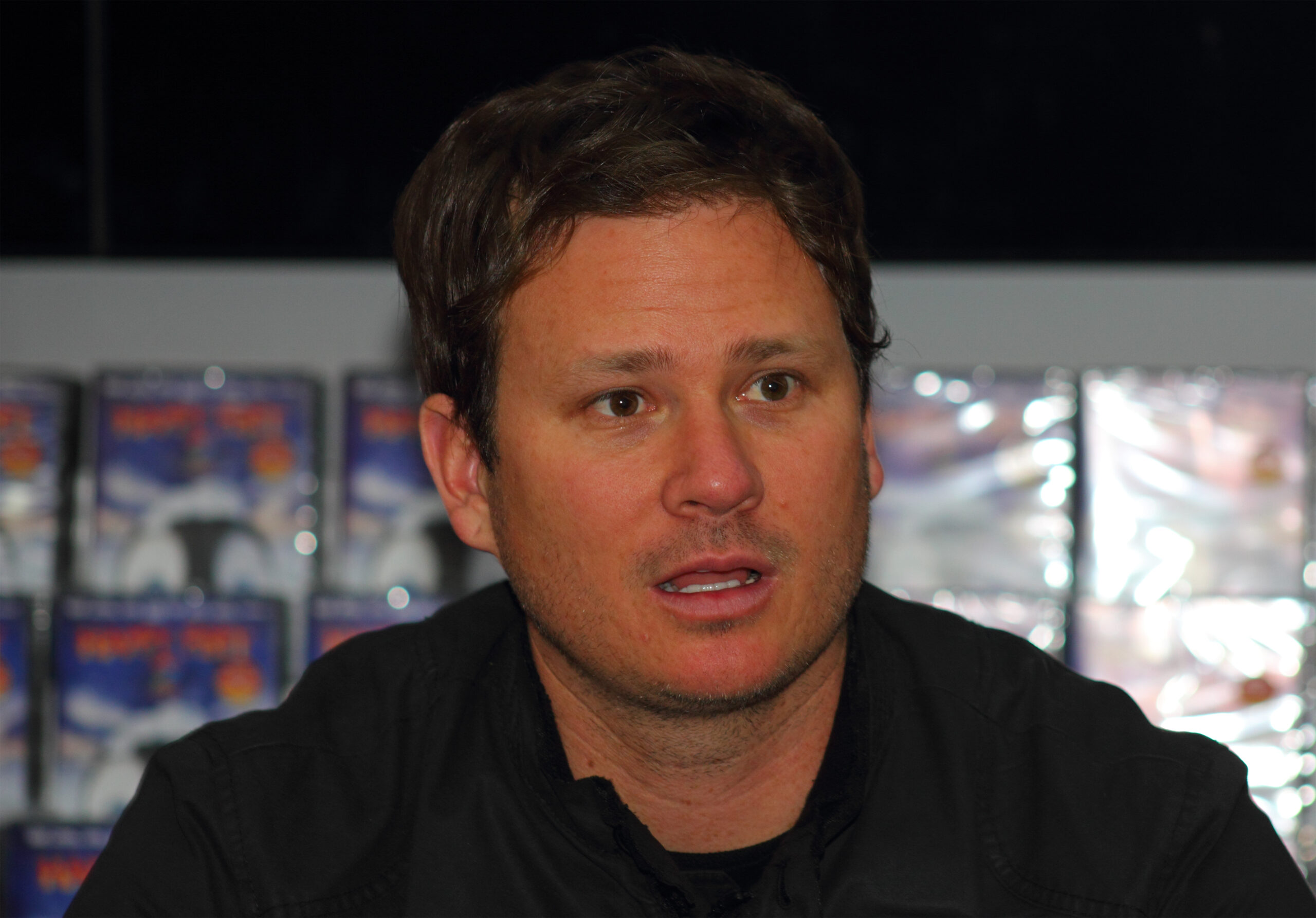
Early currents: a youth wired for the anomalous
DeLonge’s interest in anomalous aerospace phenomena long predated his public pivot from music.
Listeners first glimpsed that obsession on Blink-182’s 1999 album Enema of the State in the song “Aliens Exist,” which name-checks the CIA and Majestic-12 and telegraphs a worldview that would later define his public mission. The song is widely described as grounded in DeLonge’s longstanding fascination with the subject. (Wikipedia)
By the mid-2010s, as Blink-182 wound down and Angels & Airwaves carried his creative energy,
DeLonge’s offstage calendar filled with meetings, research trips, and interviews aimed at systematizing what he had gleaned from government, aerospace, and intelligence contacts.
A 2016 leak of emails from political operative John Podesta showed DeLonge in sustained contact about UAP and historical crash-retrieval lore, including the role of retired Air Force Maj. Gen. William McCasland and Wright-Patterson Air Force Base.
Whatever one thinks of specific claims, the emails documented DeLonge’s direct outreach into national-security circles. (Rolling Stone)
In February 2017, he accepted OpenMinds’ “UFO Researcher of the Year” award at the International UFO Congress. His acceptance video hinted that a larger announcement was imminent, something he framed as a coordinated effort with high-level advisers.
Mainstream music and culture outlets covered the award, ensuring that UAP discourse reached audiences rarely engaged by the topic at the time. (Billboard)
TTSA – To The Stars Academy: planning a public-private pivot
On October 11, 2017, DeLonge publicly launched To The Stars Academy of Arts & Science, a company designed to fuse entertainment, science, and aerospace programs under one umbrella.
The launch event introduced a team whose résumés recalibrated the public conversation: former DoD official Luis Elizondo, former Deputy Assistant Secretary of Defense for Intelligence Christopher Mellon, former head of Lockheed Skunk Works Advanced Systems Steve Justice, CIA veteran Jim Semivan, and physicist Hal Puthoff, among others.
The optics mattered. For a public trained to associate UAP with fringe circles, seeing that line-up on stage with a rock musician at the center signaled a new coalition. Contemporary reporting and analyses documented the team’s composition and objectives. (Smithsonian Magazine)
From the outset, To The Stars carried two signatures. First, a media strategy that included books, TV, and later film, engineered to normalize and humanize UAP reporting and analysis.
Second, a science and aerospace arm that sought to collect and test materials, as well as to cultivate partnerships with government labs interested in novel technologies related to propulsion, signature management, and sensor exploitation.
The hybrid model was unusual in the UAP space and invited both excitement and skepticism.
The 2017 New York Times article and the Navy videos
Two months after the TTSA launch, The New York Times broke the story of the Pentagon’s Advanced Aerospace Threat Identification Program (AATIP), anchored by first-hand accounts from military aviators and the now-familiar infrared videos popularly known as “FLIR1” or “Tic Tac,” “Gimbal,” and “GoFast.”
The piece put a respectable paper of record behind the assertion that the U.S. government had studied UAP in a formal program. Its publication marked a pivot point in modern UAP history. (lesliekean.com)
Over the next two years, the narrative around those videos matured.
In September 2019 the U.S. Navy publicly confirmed that the objects captured on those tapes were “unidentified aerial phenomena,” a significant semantic and procedural step because it normalized “UAP” within military reporting channels and acknowledged that officially recorded incidents remained unexplained. (Business Insider)
In April 2020, the Department of Defense officially released the three Navy videos to “clear up any misconceptions” about whether they were authentic and whether more lay behind them.
The release recognized their prior unauthorized circulation while affirming their status as genuine Navy imagery of unidentified events. Media coverage by mainstream defense outlets documented the release and its rationale. (Military Times)
Although the Pentagon’s careful language did not endorse any specific origin hypothesis, the effect was profound.
It cemented UAP as a legitimate defense and aviation safety topic, validated years of advocacy by pilots and analysts, and vindicated DeLonge’s strategy of fusing credible insiders with an aggressive public-facing plan.
“Unidentified” on History and mainstreaming pilot testimony
Cultural normalization accelerated in 2019, when the History Channel aired Unidentified: Inside America’s UFO Investigation.
The series featured Elizondo, Mellon, and other members of the TTSA orbit, placed famed Navy cases in context, and foregrounded pilot testimony. It also showed DeLonge’s role as a producer and catalyst.
Smithsonian’s Air & Space magazine took the show seriously as part of a broader “Year of UFOs,” noting that each episode reached roughly a million viewers.
Pitchfork likewise covered the project as DeLonge’s second alien-themed series of the year.
Together these signals marked UAP as a topic that respectable outlets and primetime cable were willing to entertain on its merits. (Smithsonian Magazine)
The ADAM project and the “metamaterials” problem
One of To The Stars’ most debated initiatives has been the Acquisition and Data Analysis of Materials project, or ADAM.
TTSA announced in 2019 that it had acquired and would study “potentially exotic” layered metal samples sometimes associated in UAP lore with the so-called “Arts Parts.”
SEC filings reflected that the company paid $35,000 for several items, including bismuth-magnesium-zinc pieces and a piece of aluminum, and described plans to evaluate composition and properties.
Skeptics argued that the samples could be slag from industrial processes, not aerospace artifacts.
The company’s own statements emphasized empirical testing rather than assumptions about provenance.
A thorough summary of the ADAM project’s claims, counter-claims, and context appears in independent reference material that also cites the underlying SEC disclosures. (Wikipedia)
For many in the community, the ADAM saga crystallized a tension.
DeLonge’s narrative invites the public to imagine that surprising technologies might be hiding in plain sight, while scientific critics insist that extraordinary claims require extraordinary evidence, especially when materials can be analyzed with modern instrumentation.
Even so, TTSA’s willingness to bring samples to labs and to subject them to outside scrutiny marked a step toward resolving that tension in the right direction, through method rather than mythology.
A U.S. Army CRADA: when the lab coats call
In October 2019, TTSA announced a Cooperative Research and Development Agreement with the U.S. Army Combat Capabilities Development Command, Ground Vehicle Systems Center, to evaluate certain TTSA-held materials and associated technology concepts in defense-relevant contexts such as vehicle protection, signature management, and novel sensor applications.
The CRADA text, filed with the SEC, outlines objectives, work plans, milestones, and intellectual property terms.
Press coverage documented the agreement and its potential to test claims under controlled conditions.
The War Zone published an in-depth explainer on what the Army hoped to verify about TTSA’s “mystery material” claims. (PR Newswire)
For DeLonge’s broader mission, the CRADA mattered for two reasons.
First, it showed that at least some parts of the defense science enterprise regarded the questions TTSA posed as testable and worth instrumented investigation.
Second, it reframed the “metamaterials” controversy as a set of tractable engineering questions that could be answered with standard methods.
Books that build a framework: Sekret Machines, Poet Anderson, and Strange Times
Where many researchers publish white papers, DeLonge built a transmedia library to seed the culture with frameworks and facts. The flagship is Sekret Machines, which spans both fiction and non-fiction.
On the non-fiction side, Sekret Machines: Gods by DeLonge and Peter Levenda appeared in 2017 with a foreword by Jacques Vallée and argued that religious and cultural traditions preserve distorted memories of contact with a nonhuman intelligence.
Sekret Machines: Man, the second non-fiction volume co-authored with Levenda, was published in 2024 and extends the thesis into questions of genetics, consciousness, and human-machine symbiosis.
A third volume, Sekret Machines: War, followed in 2024 in some catalogs, completing the non-fiction triptych “Gods, Man, and War.” (Wikipedia)
On the fiction side, DeLonge and A. J. Hartley released Sekret Machines: Chasing Shadows in 2016 and Sekret Machines: A Fire Within in 2018, with later paperback editions.
The novels weave documented episodes and rumored programs into a thriller architecture, designed to acclimate readers to a world where compartmented projects and strange encounters intersect. (Simon & Schuster)
DeLonge’s Poet Anderson franchise began with the award-winning 2014 animated short Poet Anderson: The Dream Walker, followed by the 2015 young adult novel Poet Anderson… of Nightmares with Suzanne Young and additional media.
The mythos explores lucid dreaming and consciousness, themes that echo across DeLonge’s UAP writing as he emphasizes the human experience as part of the phenomenon’s theater. (Wikipedia)
Strange Times captures DeLonge’s skateboard-culture DNA and curiosity for the weird.
The book series evolved into a TV development deal at TBS, with trade outlets reporting the project in late 2018.
Even if that particular show did not broadcast, the push exemplified DeLonge’s strategy of using entertainment pipelines to normalize serious anomalous topics. (Variety)
Film and the “fiction that teaches” approach
DeLonge’s feature directorial debut, Monsters of California (2023), channels a teen adventure through a web of government secrecy, high strangeness, and California lore.
Posters, trailers, and coverage announced the theatrical and digital rollouts in October 2023, with physical media arriving in December. The film fictionalizes themes that recur throughout DeLonge’s nonfiction work: hidden technology, overlapping agencies, and how curiosity can drag ordinary people into extraordinary realities.
The movie details the link between other supernatural events, ghosts, cryptids, and UAP. It also demonstrates that witnesses can see different things when experiencing an UAP. In other words, one person can see a craft, another an orb and another an angel when witnessing the same event.
Known associates and collaborators
The TTSA launch team shaped the first phase of DeLonge’s disclosure effort.
- Luis Elizondo, former DoD official associated with AATIP, became Director of Global Security and Special Programs at TTSA and was a public face of Unidentified. He departed the company in late 2020. (Wikipedia)
- Christopher Mellon, former Deputy Assistant Secretary of Defense for Intelligence and former Senate staff director, joined TTSA as an adviser and also left in late 2020. (Wikipedia)
- Steve Justice, former head of Advanced Systems at Lockheed Martin’s Skunk Works, brought aerospace credibility to TTSA’s proposed technology roadmap. His departure in the 2020 reshuffle was reported alongside Elizondo and Mellon’s departures. (UFO Timeline)
- Jim Semivan and Hal Puthoff anchored TTSA’s board and science advisory presence, with Puthoff in particular linked to DIA-funded studies into exotic propulsion and materials. The Smithsonian profile and TTSA’s own materials documented their roles. (Smithsonian Magazine)
On the publishing side, DeLonge’s co-authors Peter Levenda and A. J. Hartley provided non-fiction and fiction expertise respectively, while Suzanne Young co-created the Poet Anderson YA universe. (Simon & Schuster)
Controversies and critiques
No serious biography of DeLonge’s UAP work can omit the financial and methodological controversies.
In October 2018, VICE and Ars Technica analyzed TTSA’s SEC filings and reported an accumulated $37.4 million stockholders’ deficit, of which TTSA said a substantial portion reflected non-cash stock-based compensation rather than operational debt.
The filings themselves, available on the SEC’s website, outlined going-concern risks in standard language that accompanies early-stage ventures. The story crystallized concerns about whether an entertainment-science hybrid could sustainably fund long-horizon research. (VICE)
Skeptics also targeted TTSA’s materials program.
Critics suggested that layered metals acquired for study might be industrial byproducts rather than novel aerospace materials, and urged open testing and independent replication.
Coverage in The War Zone laid out what the Army hoped to learn through the CRADA about any unusual properties and whether those properties could be relevant to ground vehicles. (The War Zone)
DeLonge’s public communications style also drew fire. His October 2017 appearance on The Joe Rogan Experience became a lightning rod, in part because he alluded to sources and experiences while declining to provide specifics.
Regardless of one’s verdict on the interview, it raised the stakes of his subsequent claims and amplified scrutiny of TTSA’s deliverables. (Podchaser)
Finally, journalists and analysts continue to debate aspects of AATIP’s scope and the precise chain of custody of the Navy videos before their public release.
Yet even critical pieces generally acknowledge that DeLonge’s movement helped pry open official channels, sharpened military reporting, and accelerated a bipartisan policy conversation from 2017 onward. (Federation of American Scientists)
Claims and predictions
Across interviews, acceptance speeches, and his books, DeLonge has consistently articulated several claims and near-term predictions:
1. Imminent public acknowledgement of UAP reality.
In early 2017 he told the UAP community to expect an announcement that would change the conversation. Within months the NYT article and the 2017 release of Navy videos set off the modern wave. His acceptance speech and later interviews captured that anticipatory tone. (Consequence)
2. Historical programs and crash-retrieval lore.
DeLonge has pointed to historical episodes like Roswell and Wright-Patterson as nodes in a larger story about reverse-engineering and secrecy. The Podesta emails place those beliefs on the record and document his outreach to figures like Maj. Gen. McCasland. (VICE)
3. A phenomenon that shapes culture and belief.
In Sekret Machines: Gods and Man he suggests that contact events and long-term engagement with nonhuman intelligence have seeded myths and perhaps influenced human development. The thrust of the series is to assemble a cross-disciplinary framework for that proposition. (Wikipedia)
4. Technology that can be tested.
Through the ADAM project and the Army CRADA, he predicted that unusual material properties would be measurable and potentially usable in defense contexts. The CRADA’s existence confirms that government labs considered the questions testable and worth a structured program. (PR Newswire)
Some of these claims remain unproven.
Others have effectively been validated at the level of process rather than ontology, for example the fact that U.S. services now treat UAP incursions as aviation hazards and national-security issues, and that Congress holds hearings with combat aviators and intelligence officials.
That shift, by itself, matches DeLonge’s earliest prediction that the conversation would move from the cultural margins to official venues.
Impact on the UAP community and policy
DeLonge’s impact is best measured in three domains.
1. Media normalization.
By marrying entertainment pipelines to credible insider participation, DeLonge helped normalize UAP as a topic that mainstream outlets could cover without fear of ridicule. The History series, best-selling books, and now film projects widened the audience for serious UAP content. (Smithsonian Magazine)
2. Institutional change.
The Navy’s public adoption of “UAP,” the official release of three Navy videos, and the emergence of standardized reporting processes reflected a post-2017 environment in which dismissive attitudes were no longer acceptable. While causality is hard to isolate, the TTSA era clearly coincided with and arguably accelerated these changes. (Business Insider)
3. Community bridge-building.
DeLonge’s network connected musicians and moviegoers with fighter pilots and program managers.
That bridge mattered when pilots like David Fravor and others went on record and later testified in public forums, and when members of Congress moved UAP from a taboo to a permitted subject.
Coverage in mainstream culture outlets made space for that shift. (Pitchfork)
Phases of TTSA and personnel changes
By late 2020 TTSA’s most visible national-security figures, including Elizondo and Mellon, had left the company to focus on policy advocacy and other projects.
Reporting and biographies of those figures document the departures, and observers noted that TTSA subsequently emphasized entertainment and publishing more heavily as its science and aerospace ambitions regrouped. The company later streamlined its branding to “To The Stars.”
Where the artist meets the advocate
DeLonge’s cultural imprint is easier to see after Blink-182 reunited.
In 2023, amid congressional hearings on UAP, Entertainment Weekly reported DeLonge’s public celebration of a moment he viewed as vindication for years of work.
On tour, he and Mark Hoppus leaned into “Aliens Exist” as more than a novelty track.
A pop-punk crowd, a House subcommittee, and a Pentagon press desk were suddenly parts of the same national conversation. (EW.com)
A balanced reading of Tom DeLonge’s UAP legacy
DeLonge is a heterodox figure.
That is precisely why he has had an impact. He insisted that the phenomenon is real, consequential, and interacts with human institutions and beliefs.
He built a unique vehicle to press that case.
He recruited credible national-security veterans to put their names and reputations on a stage in front of a skeptical world.
He pushed the Pentagon and Navy into official confirmations and releases.
He courted controversy around materials and business models because he was willing to experiment in public.
He also made mistakes in tone and expectation management, especially when alluding to advisors and experiences that he could not fully name.
From a strict analytic viewpoint, not every claim has been substantiated, and some may never be.
From a community and policy viewpoint, it is difficult to imagine the last eight years of UAP normalization without DeLonge’s catalytic role.
A musician, author, and filmmaker became one of the most effective agenda-setters in the subject’s modern history.
Timeline highlights
- 1999: “Aliens Exist” released on Enema of the State, signaling a life-long preoccupation with anomalous aerospace phenomena. (Wikipedia)
- 2014–2015: Poet Anderson: The Dream Walker short wins festival honors; YA novel Poet Anderson… of Nightmares published. (Wikipedia)
- 2016: Sekret Machines: Chasing Shadows launches the fiction series; DeLonge’s UAP outreach to John Podesta becomes public through leaked emails. (Simon & Schuster)
- 2017: Receives OpenMinds’ “UFO Researcher of the Year” award; announces To The Stars Academy with a team of ex-government and aerospace leaders; NYT publishes AATIP story with Navy videos. (Billboard)
- 2018–2019: Unidentified airs on History; U.S. Navy confirms the videos depict “unidentified aerial phenomena.” (Smithsonian Magazine)
- 2019: TTSA announces a CRADA with the U.S. Army CCDC to evaluate materials and concepts. (PR Newswire)
- 2020: DoD officially releases three Navy UAP videos. (Military Times)
- Late 2020: Elizondo, Mellon, and Justice depart TTSA; the company increasingly emphasizes media production. (Wikipedia)
- 2023–2024: DeLonge releases Monsters of California and publishes Sekret Machines: Man, keeping his “teach through story” model in motion. (Simon & Schuster)
References
Business Insider. (2019, September 18). US Navy confirms videos show unidentified aerial phenomena. https://www.businessinsider.com/navy-confirms-videos-show-unidentified-aerial-phenomena-not-aliens-2019-9 (Business Insider)
Entertainment Weekly. (2023, July). Blink-182’s Tom DeLonge celebrates being right about aliens. https://ew.com/celebrity/blink-182-tom-delonge-celebrates-being-right-about-aliens/ (EW.com)
Flickering Myth. (2023, September 16). Tom DeLonge-directed sci-fi Monsters of California gets a trailer and poster. https://www.flickeringmyth.com/tom-delonge-directed-sci-fi-monsters-of-california-gets-a-trailer-and-poster/
Kean, L., Blumenthal, R., & Cooper, H. (2017, December 16). Glowing Auras and “Black Money”: The Pentagon’s Mysterious U.F.O. Program. The New York Times. Reposted summary at LeslieKean.com: https://www.lesliekean.com/2017/12/16/new-york-times-glowing-auras-and-black-money-the-pentagons-mysterious-u-f-o-program-by-helene-cooper-ralph-blumenthal-and-leslie-kean/ (lesliekean.com)
Military Times. (2020, April 27). Pentagon releases videos of encounters between UFOs and Navy pilots. https://www.militarytimes.com/off-duty/military-culture/2020/04/27/pentagon-releases-videos-of-encounters-between-ufos-and-navy-pilots/ (Military Times)
Pitchfork. (2019, March 12). Blink-182’s Tom DeLonge has a new History Channel show about aliens. https://pitchfork.com/news/blink-182s-tom-delonge-has-a-new-history-channel-show-about-aliens/ (Pitchfork)
Rolling Stone. (2016, October 11). Read Tom DeLonge’s leaked email to Hillary Clinton campaign about UFOs. https://www.rollingstone.com/music/music-news/read-tom-delonges-leaked-email-to-hillary-clinton-campaign-about-ufos-103832/ (Rolling Stone)
Simon & Schuster. (2024). Sekret Machines: Man [Official publisher page]. https://www.simonandschuster.com/books/Sekret-Machines-Man/Tom-DeLonge/Sekret-Machines/9781943272426 (Simon & Schuster)
Simon & Schuster. (2016). Sekret Machines Book 1: Chasing Shadows [Official publisher page]. https://www.simonandschuster.com/books/Sekret-Machines-Book-1-Chasing-Shadows/Peter-Levenda/NONE/9781943272297 (Simon & Schuster)
Simon & Schuster. (2022). Sekret Machines Book 2: A Fire Within [Trade paperback edition]. https://www.simonandschuster.com/books/Sekret-Machines-Book-2-A-Fire-Within/Tom-DeLonge/Sekret-Machines/9781943272419 (Simon & Schuster)
Smithsonian Air & Space. (2019). The Year of UFOs. https://www.smithsonianmag.com/air-space-magazine/year-ufos-180973965/ (Smithsonian Magazine)
The Guardian. (2020, April 27). Pentagon releases three UFO videos taken by US navy pilots. https://www.theguardian.com/world/2020/apr/27/pentagon-releases-three-ufo-videos-taken-by-us-navy-pilots (The Guardian)
The War Zone. (2019, October 20). The Army wants to verify To The Stars Academy’s fantastic UFO “mystery material” claims. https://www.thewz.com/30498/the-army-wants-to-verify-to-the-stars-academys-fantastic-ufo-mystery-material-claims (The War Zone)
To The Stars Academy. (2019, October 17). TTSA announces CRADA with U.S. Army CCDC [Press release]. https://tothestars.media/blogs/press-and-news/ttsa-announces-crada-with-u-s-army-ccdc (PR Newswire)
U.S. SEC EDGAR. (2020). CRADA #19-15 Between To The Stars Academy and CCDC GVSC [Filed exhibit]. https://www.sec.gov/Archives/edgar/data/1710274/000110465920089220/tm2023098d2_ex6-28.htm (SEC)
U.S. Navy confirmation coverage. CBS News. (2019, September 18). U.S. Navy official confirms “unidentified aerial phenomena” videos. https://www.cbsnews.com/news/united-states-navy-confirms-unidentified-flying-objects-videos-were-not-to-be-released-to-public/ (CBS News)
VICE. (2018, October 15). Tom DeLonge’s UFO organization has a $37.4 million deficit. https://www.vice.com/en/article/tom-delonges-ufo-organization-is-37-million-in-debt/ (VICE)
Wikipedia. (n.d.). Aliens Exist. https://en.wikipedia.org/wiki/Aliens_Exist (Wikipedia)
Wikipedia. (n.d.). To The Stars Inc. https://en.wikipedia.org/wiki/To_The_Stars_Inc. (Wikipedia)
YouTube. (2017, October 26). The Joe Rogan Experience #1029 – Tom DeLonge [Episode listing referenced]. https://www.podchaser.com/podcasts/the-joe-rogan-experience-10829/episodes/1029-tom-delonge-22419200 (Podchaser)
Billboard. (2017, February 28). Tom DeLonge receives UFO Researcher of the Year award. https://www.billboard.com/music/rock/tom-delonge-blink-182-ufo-researcher-award-7709072/ (Billboard)
SEO keywords
Tom DeLonge UAP, To The Stars Academy, TTSA Army CRADA, Navy UAP videos, AATIP New York Times, Sekret Machines Tom DeLonge, Monsters of California film, Luis Elizondo Christopher Mellon, Hal Puthoff Jim Semivan, UAP disclosure history