
Across decades and continents, sensitive nuclear sites have generated an outsized share of credible UAP reporting. Some of these episodes are tied to military nuclear weapons storage and missile fields.Others involve civilian nuclear power plants.
The public record now includes National Military Command Center memoranda from the nineteen seventies, a large Air Force case file from a B-52 intercept near Minot, recent files and news on unknown drones swarming the largest nuclear plant in the United States and multiple stations in France and Belgium.
Historians such as Richard M. Dolan and Robert L. Hastings have long argued that nuclear infrastructure sits at the center of the UAP story. Official bodies today emphasize that most incidents resolve to conventional explanations when better data arrives. Both threads matter.
What follows is an investigative map of the facts, the best primary sources, and the security implications, with speculation clearly labeled.
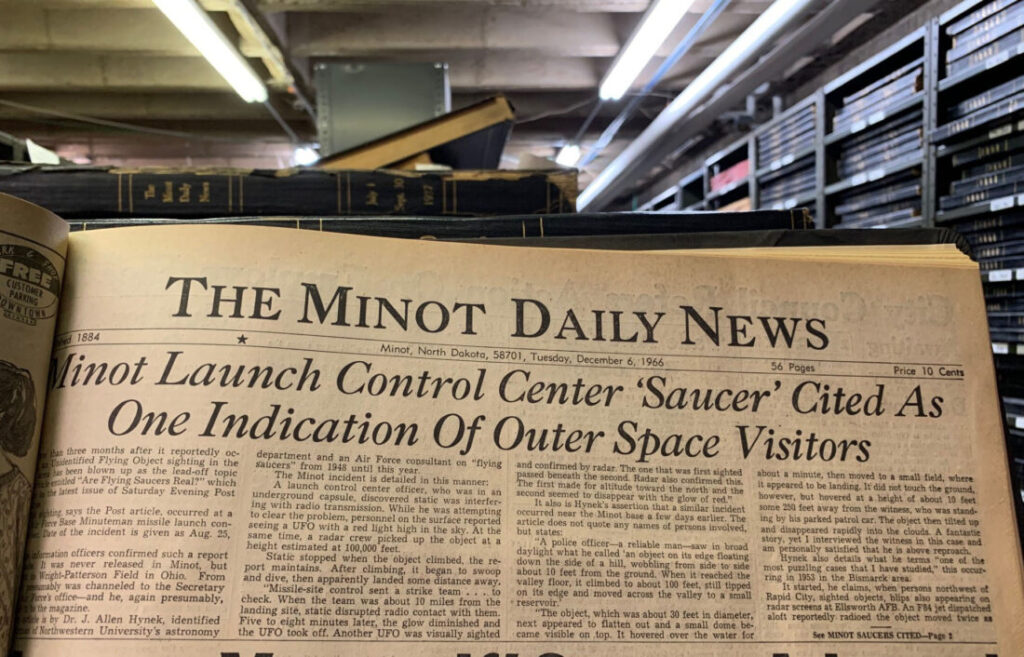
Why nuclear facilities should be ground zero for a serious UAP inquiry
Nuclear sites concentrate on three ingredients that reliably attract intelligence collection and public anxiety: strategic value, complex infrastructure, and thick sensor coverage.
During the Cold War, UAP reports clustered around air defense and nuclear forces. A growing body of declassified records shows senior attention inside the Pentagon’s command hub in late 1975 after multiple intrusions over Strategic Air Command bases that stored nuclear weapons. In the twenty-first century the pattern revived in the form of unknown drones over nuclear power stations from Arizona to Tihange and Doel in Belgium and a dozen plants across France.
Regardless of origin, the overlap between UAP and the nuclear enterprise is no longer a rumor. It lives in memos, logs, and regulatory files. (Defense Security Service)
The documentary backbone, case by case
United States, Minot Air Force Base, October 24, 1968
The Minot case stands out for evidence volume.
A returning B-52 crew tracked an unknown target on the onboard radar while base personnel reported close visuals across the missile field. The case file includes radar scope film references, transcriptions, and a formal Project Blue Book final report.
Independent scholars have collated hundreds of primary pages for open review. Whatever the origin, this is a deep dataset tied to a base with nuclear missions. (minotb52ufo.com)
Active links
United States, Northern Tier overflights, October–November 1975
Declassified memoranda from the National Military Command Center record senior attention to repeated UAP reports over Strategic Air Command installations, including Loring in Maine and Wurtsmith in Michigan.
One NMCC memo explicitly notes that the Chairman of the Joint Chiefs wanted atmospheric data collected when UAPs were reported and questioned the advisability of scrambles in response.
Independent investigators and journalists have connected these logs to base security reports during the same window. This set of documents is one of the clearest official acknowledgments that nuclear bases were the focus of anomalous reporting and command level tasking in that period. (Defense Security Service)
Active links
United States, Malmstrom Air Force Base, March 1967
Malmstrom’s missile shutdowns figure centrally in nuclear themed UAP debates.
FOIA records confirm a simultaneous loss of strategic alert status in Echo Flight and the absence of unusual radar returns. More recently AARO’s 2024 historical report assessed the case and concluded there is no evidence of UAP causation.
Multiple former officers, including Robert Salas, have made consistent public claims of UAP involvement for decades.
This is a classic example where the official analysis and veteran testimony diverge. We classify it below as disputed. (The Black Vault Documents)
Active links
United States, Palo Verde Nuclear Generating Station, September 2019
America’s largest nuclear plant reported multiple incursions by unknown drones over several evenings, with site security and federal agencies unable to attribute or intercept the aircraft.
Portions of the correspondence made it into the Nuclear Regulatory Commission’s document system and additional details were pried loose by FOIA reporters.
No adversary, hobbyist group, or contractor has been identified. Whatever these platforms were, the event exposed detection gaps and legal constraints around counter drone mitigation at civilian plants. (The War Zone)
Active links
International encounters that matter
France, wave of nuclear plant overflights, autumn 2014
Over the span of weeks, unidentified small aircraft overflew at least a dozen French nuclear sites. The state utility EDF filed complaints and government authorities opened an investigation.
Press and parliamentary attention was intense. Arrests near one plant did not explain the broader pattern.
To this day, there is no public attribution for the full series. Even if some sorties were hobby drones, the scope and persistence suggested organized probing of critical infrastructure. (The Guardian)
Active links
Belgium, Doel or Tihange nuclear stations, 2020
Belgian public broadcaster VRT reported a mystery drone over the Doel nuclear power station. Authorities launched an investigation. Belgium has since hardened policy and invested more in counter drone measures around critical sites. The 2020 episode marked a European echo of the French 2014 pattern.
Active link
United Kingdom, Rendlesham and the nuclear question
The Rendlesham Forest events of December 1980 occurred adjacent to RAF Bentwaters and RAF Woodbridge, then used by the United States. The United Kingdom has released extensive files on the case. Whether nuclear weapons were present at the time remains a matter of competing claims by former personnel and careful wording by authorities. The events themselves did not occur at a power plant, but at a base with a nuclear mission footprint according to several researchers and veterans. We include it as international context and classify the nuclear dimension as disputed.
Active links
Former USSR, claims from a 1982 missile base
At a 2010 National Press Club event organized by researcher Robert Hastings, former officers asserted that an anomalous object appeared over a Soviet site and that a launch sequence was briefly initiated without human command.
Western media covered the claims at the time. Soviet era documentary corroboration is not in open sources. We list the case as testimony based and disputed, with significance for patterns rather than as a settled fact. (ABC News)
Active link
What the historians argue, and what the documents say
No one has written more about nuclear linked UAP than Robert L. Hastings, whose book UFOs and Nukes and related documentary work compiles more than a hundred interviews with American veterans, plus selected declassified records.
Hastings is explicit in his thesis that an intelligence with unknown origin monitors and sometimes tampers with strategic nuclear systems. Whether one agrees, the factual contribution is the preservation of testimony and the indexing of records that might otherwise remain scattered. (IAEA INIS)
Active links
Historian Richard M. Dolan has focused on the intersection of national security policy and UAP, emphasizing violations of restricted airspace and the response by the security state.
His two volume UFOs and the National Security State does not exclusively focus on nuclear facilities, but nuclear incidents recur because of their strategic weight in the archives he mined.
Dolan’s core argument is that many agencies took UAP seriously and that documentary evidence shows repeated incursions over sensitive bases, including those with nuclear roles. (Google Books)
Active links
Data centric nonprofits have added broader pattern work. The Scientific Coalition for UAP Studies published a pattern recognition study that mapped 590 incidents from 1945 to 1975 and found clustering around the American atomic warfare complex, including materials production, weapons assembly, stockpiles, and deployment bases.
The methods and the final word will continue to be debated, but the trend line aligns with what the older archival narratives imply. (Zenodo)
Active link
The modern wrinkle: unknown drones are now part of the picture
Incursions at nuclear plants today are often small, multi rotor aircraft with unclear attribution.
That complicates the UAP conversation because drones can be adversary probes, criminal tools, hobbyists in violation, or misidentified conventional traffic. It also raises risk regardless of origin.
The US Nuclear Regulatory Commission now requires licensees to report drone sightings and has issued public facing briefings as the pace of reports increased.
Independent reporters using FOIA have documented large spikes in plant reports in late 2024, and a broader wave of mystery drones over US military sites that triggered federal tasking.
These episodes demonstrate how quickly a modern UAP narrative can merge with real world counter drone policy. (Nuclear Regulatory Commission)
Active links
- NRC fact sheet on drones and nuclear plant security
- War Zone story on rising nuclear plant drone reports
Europe faces the same challenge. France’s 2014 wave remains unresolved in public. Belgium’s 2020 case and later episodes at sensitive military bases reinforce the point that attribution can remain murky for years. In wartime, the danger is obvious.
The IAEA has repeatedly warned about drones detonating near nuclear plants in Ukraine. This is not evidence of exotic craft. It is evidence that any unidentified aircraft near a nuclear site carries disproportionate risk.
Distinguishing the rare anomalous case from the many prosaic ones is now a mission essential task. (The Guardian)
Evidence ledger
Below is a compact ledger that separates what is on the record from what is claimed. It also identifies the document type behind each entry.
| Year | Site | Country | Evidence type | What is established | Key source |
|---|---|---|---|---|---|
| 1968 | Minot AFB missile field and airspace | United States | Blue Book case file, radar and witness logs | B-52 crew tracked an unknown return, multiple ground witnesses, extensive documentation | Blue Book Minot file (minotb52ufo.com) |
| 1975 | Loring, Wurtsmith, others | United States | NMCC memoranda and base reporting | Command level concern and tasking during cluster of UAP reports over nuclear bases | NMCC logs excerpt (Defense Security Service) |
| 1967 | Malmstrom Echo Flight | United States | FOIA documents and AARO review | Simultaneous missile shutdown; official analysis finds no UAP causation | Black Vault compendium, AARO HRR (The Black Vault Documents) |
| 2019 | Palo Verde nuclear plant | United States | NRC correspondence and FOIA reporting | Multi night drone incursions with unknown operator | NRC file (Nuclear Regulatory Commission) |
| 2014 | Multiple nuclear plants | France | Government and utility statements, press | Dozens of unidentified drone overflights; no public attribution | Guardian coverage (The Guardian) |
| 2020 | Doel station | Belgium | National broadcaster report | Mystery drone sighting under investigation | VRT NWS |
Security implications that follow from the data
- Nuclear plants are now a contested low altitude environment
Civilian licensees face growing numbers of unknown small aircraft. They have limited legal authority to detect and mitigate compared with military bases. The NRC has updated reporting rules and continues to evaluate technology and policy options, while independent analyses document surges in sightings within short windows that suggest organized probing. A coherent national framework for counter small UAS at critical infrastructure remains a moving target. (Nuclear Regulatory Commission) - Attribution is hard without synchronized multi sensor
Confusion between anomalous phenomena and conventional drones is guaranteed when only single channel sensors or human observation are available. NASA’s panel and AARO’s review point repeatedly to sensor calibration, metadata, and synchronized time bases. For nuclear sites this means integrating optical tracks, radar, radiofrequency intercepts, and thermal signatures under a shared clock. This is the only path to separating unusual kinematics from ordinary platforms and to making any resulting data defensible in regulatory or judicial settings. (NASA Science) - Wartime lessons matter even in peace
The IAEA has warned about drones detonating near Ukrainian plants. Some incidents occurred within a kilometer of reactors. The security community must assume that unknowns near any plant are potentially hostile. The onus is on detection and rapid attribution, not on speculative narratives. (Reuters) - Historical patterns justify focused tasking
The documented attention at Minot, Loring, Wurtsmith, and others in the nineteen sixties and seventies, combined with modern intrusions, supports a standing requirement to prioritize nuclear sites for advanced UAP collection campaigns. This is independent of any hypothesis about origin. It is simply where the risk and the historical signals overlap. (Defense Security Service)

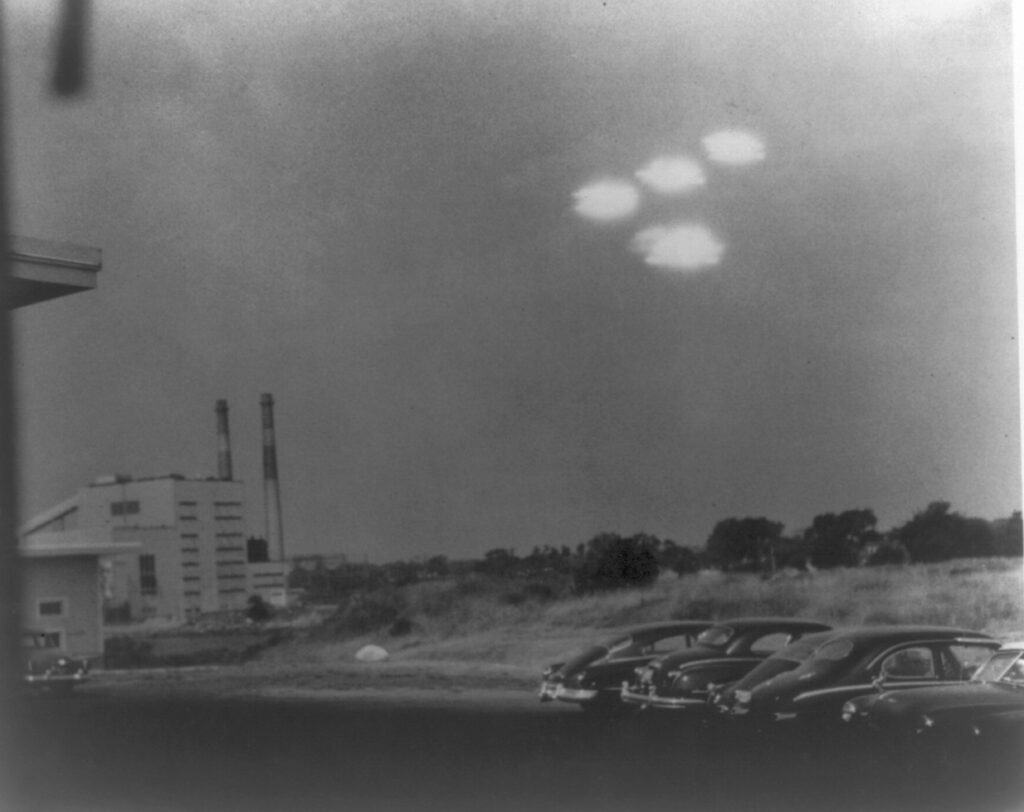
How to investigate this properly, site by site
Data architecture
Every civilian plant and military nuclear site should field a baseline kit that records synchronized optical, radar, and RF data with time stamps at the millisecond level. Thermal cameras should log to the same clock.
All channels should generate standard metadata needed for reproducibility. This is straight from NASA and AARO’s playbooks and adapted to a higher threat context. (NASA Science)
Playbooks for rapid attribution
Unknown drones are not the same as UAP with unusual kinematics. A best practice is a two lane triage: Lane one is attribution of known platforms using RF fingerprinting, ADS-B correlation, and short baseline passive radar.
Lane two is escalation to high cadence multi sensor when any track exceeds established performance envelopes or exhibits emission control patterns consistent with deliberate obfuscation.
Open but protected reporting
Plants should continue to push anonymized incident summaries into NRC channels and public dashboards where feasible. Public confidence is part of security. The more that communities see a credible, consistent process, the less room remains for rumor that can paralyze operators.
What Dolan, Hastings, and other historians add
Richard M. Dolan maps how UAP reports repeatedly intersect with restricted defense airspace.
He builds his case using declassified records and agency actions to argue that the phenomenon was taken seriously at high levels, particularly when strategic assets were involved.
Dolan’s work gives readers the bureaucratic context that shows why nuclear incidents were, and are, different from lights over a pasture. (Google Books)
Robert L. Hastings contributes the deep oral history of nuclear weapons veterans, some of whom include names and dates that can be cross checked in official files. Even where official analyses disagree with witness interpretations, the testimonies identify where to look for logs, rosters, and archival crumbs. That function is invaluable. (IAEA INIS)
Other researchers and groups now extend those efforts with structured analyses. The Scientific Coalition for UAP Studies has put numbers and geographies to the nuclear correlation across 1945–1975, which is exactly the kind of falsifiable claim that can be pressure tested by independent teams. (Zenodo)
Implications for policy and operations
- Harden detection and the legal lane for mitigation
Plants need clear authority to use detection and defeat tools against unknown aircraft that enter prohibited airspace. Federal authorities should close gaps where operators can see but not act. The law is evolving in this space, and guidance from the NRC and CISA should be harmonized with state and local enforcement so that response time matches the threat. (Nuclear Regulatory Commission) - Two tier investigative doctrine
Treat any unknown at a nuclear site first as a plausible conventional platform until proven otherwise. In parallel, preserve every frame and packet for later physics analysis. This approach honors both the drone risk and the possibility of an anomalous residual. - International information sharing
The 2014 French wave and the 2020 Belgian case show that coordinated probing can cross borders. Nuclear regulators and operators should share incident metadata through IAEA channels and peer networks in near real time. In wartime, the IAEA’s warnings about drones near plants should trigger immediate elevation across NATO and partner grids. (Reuters) - Public transparency without compromising security
After action summaries that scrub sensitive details but disclose timing, duration, and resolution status build trust. They also make life harder for repeat intruders who count on secrecy to mask what they are testing.
Bottom line
The nuclear enterprise has been entangled with UAP reporting for as long as there have been missiles in silos and reactors on the grid.
The documentary record confirms that senior officials were concerned about unusual intrusions in the nineteen seventies and that modern operators confront a persistent wave of unknown drones.
The central question is not whether nuclear sites attract unknowns. They do.
The question is how many of those unknowns reflect ordinary platforms behaving suspiciously and how many remain, after rigorous collection and analysis, genuinely anomalous.
The only responsible answer is to instrument the problem, share the data where possible, and harden the sites regardless.
Claims taxonomy
Verified
- National Military Command Center memoranda from November 1975 note repeated UAP reports over Strategic Air Command bases and discuss collection and response. (Defense Security Service)
- The Minot Air Force Base incident of October 24, 1968 generated a substantial Project Blue Book file with radar and witness materials. (minotb52ufo.com)
- The NRC acknowledges and tracks drone reports over civilian nuclear power stations and updated reporting expectations. (Nuclear Regulatory Commission)
Probable
- The rise in unknown drone incursions at or near nuclear plants represents a growing security challenge that exceeds hobbyist noise and will persist without stronger detection and mitigation authorities. (The War Zone)
Disputed
- The 1967 Malmstrom missile shutdowns were caused by UAP. AARO’s official review disputes a UAP link while veteran testimony asserts it. (AARO)
- Rendlesham’s proximity to nuclear weapons storage in 1980 is supported by some personnel statements but is not formally acknowledged in released MoD files.
Legend
- Claims that luminous UAP shielded reactors from accidents or displayed benevolent intent around nuclear sites are cultural narratives not supported by primary documents.
Misidentification
- Many recent nuclear plant intrusions are attributable to conventional drones, and some historical cases likely reflect aviation or astronomical sources. NASA and AARO emphasize this while calling for better data to separate the remainder. (NASA Science)
Speculation labels
Hypothesis
Some fraction of unresolved nuclear site encounters may reflect a foreign or non-state intelligence collection campaign meant to probe defenses and electromagnetic signatures of reactors and storage sites. The pattern of multi-night drone incursions is compatible with this.
Some fractions may also reflect genuinely anomalous phenomena, as suggested by multi-channel datasets like Minot that resist easy reduction. Distinguishing the two demands strict instrumentation and data sharing.
Witness interpretation
Veterans who recall unusual lights and simultaneous equipment anomalies understandably link the two. In some periods, such as Malmstrom in 1967, official records cite technical causes and deny a link. Memory and inference can drift over decades. The answer will come from documents and hard data, not intent.
Researcher opinion
A sustained, funded program to collect calibrated, multi sensor data around nuclear sites will reduce the noise floor and likely diminish the number of unresolved anomalies. It will also harden plants against deliberate probes by conventional drones. The cost is modest compared with the risk.
References and active links
US primary sources and official studies
- NMCC log excerpts on 1975 UAP reports over northern tier bases. (Defense Security Service)
- Minot AFB 24 Oct 1968, Blue Book final case report and document archive. (minotb52ufo.com)
- Malmstrom Echo Flight FOIA compilation and AARO Historical Record Report, 2024. (The Black Vault Documents)
- NASA UAP Independent Study Team final report, 2023. (NASA Science)
- NRC fact sheet on drones and nuclear plant security. (Nuclear Regulatory Commission)
Civilian nuclear incidents and drone swarms
- NRC record associated with Palo Verde 2019 drone incursions and investigative feature. (Nuclear Regulatory Commission)
- Guardian coverage of French nuclear plant drones, 2014. (The Guardian)
- Belgium Doel mystery drone report, VRT NWS.
- IAEA warnings on drones near Ukrainian nuclear plants, Reuters and Guardian summaries. (Reuters)
Historians and research organizations
- Richard M. Dolan, UFOs and the National Security State overview: Google Books and Archive entry. (Google Books)
- Robert L. Hastings, UFOs and Nukes resources: ufohastings.com and IAEA entry. (UFO Hastings)
- SCU pattern analysis: Zenodo abstract and link. (Zenodo)
SEO keywords
UAP nuclear facilities, UAP at missile bases, Loring AFB UAP, Minot B 52 UAP case file, Malmstrom Echo Flight analysis, nuclear plant drone incursions, France 2014 nuclear drones, Belgium Doel drone, NRC drone reporting, AARO historical report, NASA UAP study, Robert Hastings UFOs and Nukes, Richard Dolan National Security State, SCU pattern recognition UAP, nuclear security UAP implications, multi sensor UAP collection, critical infrastructure airspace unknowns.