
The quietest contact experiment imaginable
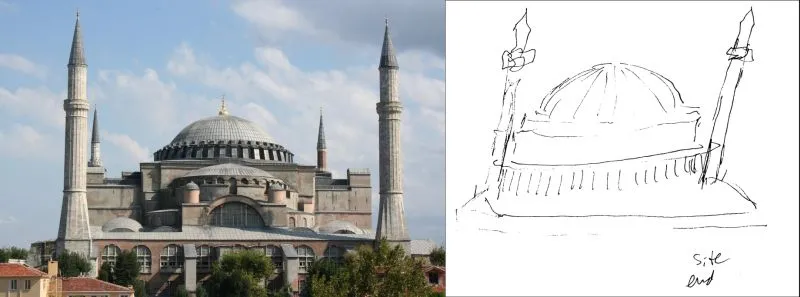
A remote-viewing session does not look much like contact.
There is no desert rendezvous, pulsing object or unexplained light hanging over the horizon. The room is usually ordinary. The viewer may receive nothing more than a random number, geographical coordinates or a sealed envelope that remains unopened until the session ends.
With a pen and paper, the viewer records fragmentary impressions: Cold. Metallic. Vertical. Hollow. Moving. Bright. Enclosed.
The discipline begins by discouraging conclusions. “Metallic” is treated as a sensory impression. “Spacecraft” is an interpretation. “Tall structure” is an impression. “Launch tower” is an interpretation.
Remote-viewing training literature describes the premature leap from raw sensory impressions to a familiar explanation as analytical overlay, usually abbreviated to AOL. A United States Army Intelligence and Security Command training document states that analytical overlay occurs when the analytical mind attempts to identify or interpret the signal before sufficient descriptive information has been collected. (United States Army Intelligence and Security Command, Special Orientation Techniques: Stages V and VI, CIA-RDP96-00788R001800280001-3)
That distinction becomes especially important when a target is connected to UAP. A circle can quickly become a disc-shaped craft. A dark triangular form can become an advanced vehicle. A sense of presence can become non-human intelligence. The more emotionally charged the target, the easier it is for expectation, memory and familiar cultural imagery to enter the report.
Remote viewing, in its modern experimental sense, is not automatically the same as clairvoyance, astral travel, channeling or guided imagination. It is an attempt to acquire and describe information about a concealed target under conditions intended to prevent ordinary sensory access.
Historical sessions varied considerably in their controls. In rigorous contemporary designs, the viewer, and preferably any monitor interacting with the viewer, remains blind to the target. Descriptions are recorded before feedback and later compared with the actual target and decoys under a predefined judging system. The American Institutes for Research described both the early “beacon” model and later double-blind experiments involving concealed photographic targets in its 1995 evaluation of the United States government-sponsored programme. (Mumford, Rose, & Goslin, 1995, pp. 1-2–1-3)
UAP interaction introduces an additional and much larger claim. It suggests that the target is not merely being perceived, but may notice, influence or answer the viewer.
That possibility marks the boundary between remote observation and a contact modality.
Remote viewing is not automatically contact
Several different activities are commonly grouped together under “remote viewing and UAP,” although they do not make the same evidential claim.
In the simplest form, the concealed target happens to be related to a UAP event. It might be a photograph, an encounter location, a suspected recovery site or a physical object associated with a witness report.
A second type involves an unverifiable, or only partially verifiable, target. Examples might include a suspected non-human installation, an alleged historical encounter or a distant planetary location for which adequate feedback does not exist.
A third type involves attempted reciprocal interaction. A viewer or meditation group directs attention towards a suspected intelligence and interprets subsequent imagery, emotions, dreams, bodily sensations, lights or aerial events as responses.
Only the third category constitutes a direct interaction claim. The first two concern attempted information acquisition.
Keeping these categories separate prevents an intriguing remote-viewing transcript from being casually transformed into evidence of communication.
A viewer can sincerely experience imagery or a sense of contact without the resulting interpretation being correct. Sincerity, however, should not be confused with irrelevance. First-person testimony can preserve details that deserve investigation, particularly when a witness has relevant training, makes a contemporaneous record and describes specific information before feedback.
Testimony becomes stronger when independent viewers, physical sensors, documents or later discoveries converge on the same unusual details. The central questions are therefore not simply whether the viewer experienced something, but what was known beforehand, what was documented before feedback, how specific the description was and what independent evidence confirms it.
From SRI to the intelligence world
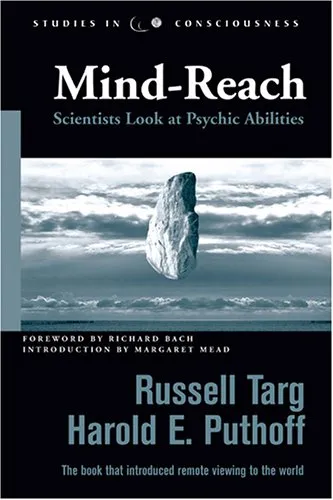
The modern history of remote viewing took shape during the early 1970s at Stanford Research Institute, now SRI International. Physicists Harold Puthoff and Russell Targ worked with participants including artist and anomalous-perception researcher Ingo Swann.
The research developed during the Cold War, when intelligence agencies were interested in whether unconventional forms of perception could provide information about distant or protected targets. Concern that rival states might be exploring similar methods increased the institutional willingness to investigate unusual claims.
In 1974, Nature published Targ and Puthoff’s paper, “Information Transmission Under Conditions of Sensory Shielding.” The authors presented experiments that they believed suggested the existence of one or more perceptual modalities through which individuals could obtain information without using the known senses.
Publication in Nature gave the work extraordinary visibility, but did not establish scientific acceptance. It moved the research into a major scientific forum while also provoking a methodological controversy that has continued for decades. (Targ & Puthoff, 1974)
Government-supported activity subsequently passed through several programmes and organizational structures. Declassified documents contain names including SCANATE, GRILL FLAME, CENTER LANE, SUN STREAK and STAR GATE.
These programmes should not be imagined as one uninterrupted laboratory operating under a single command. They included changing combinations of experimental research, foreign-programme assessment, training and operational intelligence tasking.
According to the 1995 American Institutes for Research evaluation, the Central Intelligence Agency’s programme began in 1972 and ended in 1977, while the Defense Intelligence Agency became directly involved during the 1980s. STAR GATE became the later DIA designation for work involving research, operations and foreign assessment. (Mumford et al., 1995, pp. 1-4–1-5)
Thousands of related pages are publicly accessible through the CIA STAR GATE collection.
The archive verifies that government organizations funded, discussed and applied remote viewing. It does not verify every proposition contained within the records.
Government archives preserve successful and unsuccessful experiments, incomplete leads, internal disagreements, raw testimony and speculative interpretation. An authenticated document may prove that a session occurred on a particular date while offering no independent confirmation that the viewer accurately perceived the assigned target.
In remote-viewing research, documentary authenticity and perceptual accuracy are separate questions.
What the 1995 review actually concluded
Remote viewing is often presented through two simplified narratives. One says the United States government proved that psychic perception works. The other says the government conclusively disproved remote viewing.
The 1995 review conducted by the American Institutes for Research supports neither extreme.
Psychologist Michael Mumford, sociologist Andrew Rose and education researcher David Goslin led the evaluation. Statistician Jessica Utts and psychologist Ray Hyman were commissioned to examine the experimental literature from sharply different perspectives.
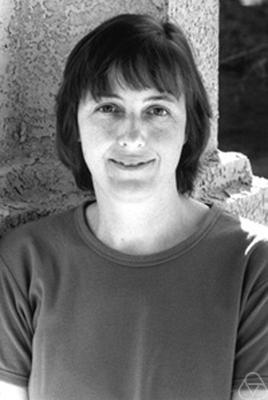
Utts and Hyman agreed that the reviewed laboratory studies produced statistically significant effects, but disagreed strongly over whether methodological alternatives had been adequately excluded and whether the findings justified a paranormal interpretation. The AIR report concluded that target “hits” had occurred more frequently than chance expectations, while also stating that the source of those results remained unclear. (Mumford et al., 1995, Executive Summary, pp. E-2–E-3)
The review identified a central problem. Some experiments repeatedly relied on the same viewers, judges, photographs and scoring procedures. This made it difficult to separate a possible viewer effect from characteristics of the judge, target pool or methodology.
AIR stated that the evidence did not clearly demonstrate that the observed hits were caused by paranormal ability. It also concluded that the experiments had not established the origins or nature of the effect, assuming such an effect existed. (Mumford et al., 1995, p. E-3)
The operational findings were more negative. Within the operational evidence and intelligence-user feedback reviewed by AIR, remote-viewing reports sometimes captured broad background characteristics. They were nevertheless described as inconsistent, inaccurate in their specifics and dependent on substantial subjective interpretation.
AIR reported that none of the information examined had been used to guide an intelligence operation and concluded that the programme had not produced actionable intelligence. (Mumford et al., 1995, pp. E-4–E-5)
This qualification matters. AIR’s conclusion concerned the program records, users and operational material available to its reviewers. It should not be expanded into a universal statement about every task conducted by every agency.
The central distinction remains sound: a statistically unusual laboratory outcome is not the same as dependable operational information. That distinction becomes even more important in UAP research. An intelligence target may eventually produce conventional feedback through photographs, maps, intercepted communications or physical access. Many UAP targets provide no comparable answer key.
A viewer describing an alleged non-human installation may never receive independent evidence showing what was actually present. Without reliable feedback, investigators cannot confidently separate accurate perception from imagination, symbolism, coincidence or analytical overlay.
Case study: Ingo Swann’s two evidentiary lives
Ingo Swann occupies an unusual position in the history of remote viewing. One part of his career appears in experimental reports and intelligence records. Another comes from autobiographical testimony concerning UAP, covert organizations and telepathic non-human intelligences.
Swann’s participation in early SRI research is well documented. His historical importance does not depend on accepting every extraordinary event he later described.
The second evidentiary layer appears most dramatically in his 1998 book, Penetration: The Question of Extraterrestrial and Human Telepathy. Swann wrote that a secretive figure he called “Mr. Axelrod” recruited him for concealed work involving perceptions of lunar locations. He also described alleged non-human surveillance, telepathic influence and a large triangular aerial object encountered during a journey to a remote northern location.
Penetration is a first-person autobiographical source. It is relevant as evidence of what Swann reported and how he interpreted his experiences. It is not independent corroboration of those experiences. (Swann, 1998)
No publicly identified project file cited here independently confirms the lunar operation in the form Swann described. The absence of such a record does not demonstrate that the account is false, particularly when clandestine activity is alleged. It does, however, prevent the story from being classified as verified.
Swann’s writing remains important for another reason. He repeatedly discussed the problem of analytical overlay, a concept also defined in structured remote-viewing training documents.
According to this model, the mind confronted with unfamiliar information substitutes a recognisable object or concept. An unknown energy system might be interpreted as a furnace. A complex mechanism might become a machine room. A non-human structure might become a temple, bunker or laboratory.
Consider how a person from the Middle Ages might describe a magnetic resonance imaging scanner. The device might appear as a ritual chamber, a humming coffin, a healing wheel or a place where invisible forces inspect the body. The description might contain partial correspondences while radically misidentifying the object.
The same difficulty would apply to an unfamiliar UAP technology or intelligence. Even assuming a viewer obtained anomalous information, the human mind would still have to translate it through existing language, memory and expectation.
Swann should therefore be read on two levels. His participation in remote-viewing research is documented. His claims of covert lunar tasking and non-human telepathic interaction remain disputed testimony.
Describing the second level as unverified does not imply that the witness was dishonest. It means the account has not acquired sufficient independent corroboration to establish the reported external events.
Case study: The 1973 Jupiter probe
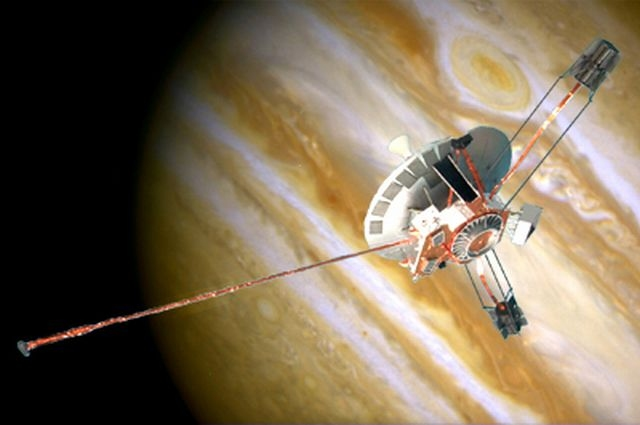
One of the most frequently discussed early sessions involved Jupiter rather than UAP. It nevertheless offers an excellent lesson in how remote-viewing claims should be evaluated. On 27 April 1973, Ingo Swann and author Harold Sherman separately attempted to perceive Jupiter while NASA’s Pioneer 10 spacecraft was travelling towards the planet.
The archival record is titled An Experimental Psychic Probe of the Planet Jupiter. It is currently available through the CIA Reading Room under the archival identifier NSA-RDP96X00790R000100040010-3. The identifier and repository should not be treated as proof that the National Security Agency authored the original report.
The document explicitly states that the participants were not then claiming that their results were valid. Verification was expected to depend on information later returned by Pioneer 10. (An Experimental Psychic Probe of the Planet Jupiter, 1973)
Pioneer 10 had been launched in March 1972 and made its closest approach to Jupiter in December 1973, placing the spacecraft en route to the planet at the time of the April session. (NASA, “Pioneer 10”)
The report compared impressions that appeared similar. These included extensive cloud cover, atmospheric colour, extreme winds and crystalline or crystal-like imagery. Later discussions have highlighted statements that can be associated with Jupiter’s atmosphere or the faint ring system detected by Voyager 1 in 1979.
The complete transcript is less straightforward.
Swann also described what appeared to be a flat horizon, a surface and a mountain range approximately 31,000 feet high. NASA’s planetary summary explains that Jupiter is a gas giant without a true solid surface on which such a mountain range could stand. (NASA, “Jupiter Facts”)
The session therefore cannot be assessed fairly by repeating only apparent correspondences. The incorrect, ambiguous and unsurprising statements must be included in the evaluation.
This is the problem of retrospective matching. A long, image-rich transcript generates numerous opportunities for a later discovery to resemble something recorded in the session. When only the most impressive correspondences survive in retellings, the performance can appear more precise than the complete record warrants.
The Jupiter session does not prove that nothing anomalous occurred. It demonstrates why researchers must publish the full transcript, define scoring rules in advance and count misses as well as hits.
For UAP research, its lesson is simple: preserve everything and score the whole record.
Case study: The 1984 Mars session
A second document, now preserved in the CIA’s STAR GATE collection, is considerably stranger.
The transcript titled Mars Exploration, May 22, 1984 records a session in which the viewer was given a sealed envelope immediately before the interview. The envelope was opened after the session. Its target statement identified Mars at approximately one million years BCE.
During the session, the monitor supplied a series of geographic coordinates. The viewer described pyramid-like forms, severe cloud or dust conditions, large smooth structures, immense interior spaces and impressions of tall, thin beings. The viewer also questioned whether some pyramid imagery might be analytical overlay. (Mars Exploration, May 22, 1984, CIA-RDP96-00788R001900760001-9)
The transcript is an authentic archived record. That is the verified fact.
It does not establish that an ancient civilization existed on Mars. The session contains no archaeological samples, contemporaneous photographs, independent sensor results or sufficiently specific external feedback capable of confirming the account.
The target is also located in the remote past, therefor it cannot presently be inspected directly. There is no accessible answer key against which the session can be reliably judged.
The transcript further illustrates how monitor questions can influence a developing narrative without explicitly revealing the target. Questions concerning activity, structures, interiors and inhabitants encourage elaboration in particular directions. This does not prove that the material was consciously invented. It means the interaction between monitor and viewer forms part of the evidential analysis.
The Mars session is therefore best understood as a verified historical document containing disputed perceptual claims. It proves that the session occurred and that the statements were recorded. It does not constitute physical evidence of ancient Martian inhabitants.
If future exploration discovered highly specific features matching a securely timestamped blind transcript, the original document could acquire greater evidential significance. Its value would arise from precise correspondence and independent confirmation, not merely from its presence in a government archive.
From remote perception to attempted UAP interaction
Traditional remote viewing is generally framed as passive. The viewer attempts to describe a concealed target but does not necessarily ask it to respond.
Contemporary UAP contact practices sometimes reverse that relationship. Participants meditate, visualise a location, project an invitation or concentrate on a region of the sky. Some report that lights subsequently appear, change direction, pulse or recur after particular mental imagery.
These methods overlap with initiated-contact protocols, telepathic contact claims and practices now described by some groups as psionics.
“Psionics” is a descriptive term rather than an established explanation. It groups reports in which information or influence appears to pass through a consciousness-related channel. The label does not demonstrate telepathy, psychokinesis or another proposed mechanism. See UAPedia’s discussion of Psionics and the Consciousness Interface.
One public example is Skywatcher, which describes experimental approaches called “machine calling” and “psionic calling.” The organization states that it is attempting to document UAP through electromechanical signalling and neuromeditative interaction. These are the organization’s public claims and research aims. They should not be treated as independently replicated scientific findings. (Skywatcher, “Media”)
The distinction between a public demonstration and a controlled experiment is crucial.
A demonstration begins when the cameras arrive and usually presents the most interesting event. An experiment specifies in advance when observation begins, how many attempts will be conducted, what counts as success, how satellites and aircraft will be excluded, what instruments will operate and how unsuccessful sessions will be reported.
Without those controls, a light appearing after meditation can be personally meaningful but evidentially ambiguous. The source could be an aircraft, satellite, balloon, drone, meteor, atmospheric event or genuinely unresolved object. The participant’s internal experience may deserve respectful documentation. The aerial event still requires an independent attribution process.
Why UAP is the hardest possible remote-viewing target
Remote viewing is most testable when the target is concrete and reliable feedback is available. A distinctive bridge, waterfall, laboratory or monument can be photographed and compared with the session.
UAP-related targets create a more difficult situation.
The target may be poorly defined. “The intelligence behind UAP” is not a discrete location or object with clear boundaries. Different viewers could be addressing entirely different phenomena while believing they share a target. Feedback may never arrive. Without reliable target information, there is no objective basis for distinguishing accuracy from a compelling narrative.
The viewer may also know the cultural history surrounding a case. A person tasked with Roswell, Mars, the Moon or an alleged underground installation brings existing imagery and expectations into the experiment, even when the immediate cue is concealed. Some UAP witness and experiencer accounts include altered-time experiences, telepathic impressions, unusual dreams or a sense of being watched. In a remote-viewing context, these experiences may be interpreted as target data when they could also arise from expectation, emotional arousal or ordinary internal processes.
The most challenging possibility is that a purported intelligence might not behave as a passive target. Some researchers and experiencers propose that the phenomenon detects observation, alters its presentation or provides misleading information. That possibility should not be rejected automatically, but it creates a serious problem of falsifiability.
If an accurate session is said to prove contact while an inaccurate session is attributed to deliberate deception by the target, no possible outcome can count against the hypothesis. A useful research model must identify not only what would support it, but what evidence would weaken it.
The controversy is methodological
The most substantial criticisms of remote viewing concern experimental design rather than simple disbelief.
David Marks and Richard Kammann argued that sensory cues present in some transcripts could assist judges in matching reports to targets. Targ, Puthoff and Charles Tart disputed this interpretation. Marks later argued more directly that sensory cues invalidated some remote-viewing experiments, and Marks and Christopher Scott continued the dispute in 1986.
The central issue was whether apparently successful matching survived the removal of transcript cues, stronger blinding and improved judging procedures. (Marks & Kammann, 1978; Tart, Puthoff, & Targ, 1980; Marks, 1981; Marks & Scott, 1986)
Supporters argue that later experiments used stronger randomisation, blinding and scoring systems.
A 2023 systematic review and meta-analysis by Patrizio Tressoldi and Debra Lynne Katz examined 36 studies and 40 effect sizes. The authors reported an average effect size of 0.34 after excluding an identified outlier and stated that their analyses did not reveal clear publication bias. (Tressoldi & Katz, 2023)
The result is noteworthy but not definitive.
Interpretation is complicated by extremely high between-study heterogeneity, reported as I² = 100 per cent. This indicates that the effect sizes varied greatly across the included studies and should not be treated as if they all measured one stable, uniform effect. Fourteen of the 40 effect sizes were also classified in the review’s study table as conference papers or other non-peer-reviewed material.
These factors do not erase the reported average, but they reduce the confidence that can be placed in a single combined estimate.
Meta-analysis also cannot automatically repair methodological weaknesses shared across the underlying studies. Conclusions can be affected by study selection, scoring methods, dataset dependence, treatment of outliers and the availability of unpublished negative results.
A separate 2023 study published in Brain and Behavior involved 347 participants using location-coordinate targets and examined emotional intelligence and intuitive information processing as possible correlates. The study shows that remote viewing remains open to experimental investigation. It does not establish a mechanism or demonstrate interaction with UAP. (Escolà-Gascón et al., 2023)
The most defensible conclusion is limited. Multiple published datasets report above-chance outcomes. Whether those results reflect anomalous cognition, judging effects, methodological structure, analytical flexibility or other causes remains disputed.
Even a genuine remote-viewing effect would not automatically validate claims of communication with non-human intelligence.
What a credible UAP experiment would require
A serious investigation should separate remote perception from attempted interaction.
For perception trials, an independent target custodian could create a large pool containing conventional locations, manufactured objects, known aerospace targets and carefully defined UAP-related materials. Targets should be randomly assigned through a secure procedure that prevents the viewer and monitor from learning the identity of the target.
Sessions should be timestamped and registered before feedback. Raw notes, sketches, recordings and abandoned interpretations should be retained. Nothing should be rewritten after the target is disclosed.
Independent judges should compare each session with the target and multiple decoys using a scoring method selected before data collection. More than one judge should be used so that agreement between judges can be measured. Misses, ambiguous outcomes and null sessions should be published alongside apparent successes.
Interaction trials would require additional field instrumentation. Useful channels could include optical and infrared cameras, radio-frequency monitoring, acoustic instruments, magnetometers and calibrated environmental sensors. Aircraft movements, satellite passes, astronomical objects, launch activity and weather conditions should be logged.
These recommendations are consistent with published proposals for multimodal ground-based UAP observatories, which emphasise synchronised optical, infrared, acoustic, radio and environmental measurements rather than dependence on a single image or witness. (Watters et al., 2023)
Contact periods and control periods could be randomly interspersed. Some periods would involve directed meditation or intention, while others would use matched control conditions. Sensor analysts should remain blind to the condition.
The central question would be whether unusual events occur more often, or display measurably different behaviour, during the intended contact periods.
Sky-directed lasers should not be used. Contact research must not create aviation hazards. Initiated-contact protocols are most informative when they employ safe methods, calibrated instruments, transparent data and independent adjudication.
The strongest design would involve adversarial collaboration. Researchers sympathetic to anomalous cognition and specialists focused on methodological error could agree on the protocol before data collection. An unaffiliated team could then attempt replication.
What would successful interaction imply?
If remote viewing were shown to retrieve specific information from inaccessible UAP targets, consciousness would have to be considered as a possible information-acquisition system, although not necessarily one resembling the known biological senses.
Distance and shielding might no longer be treated as absolute barriers to information. Scientific organisations, intelligence agencies and private institutions would immediately confront questions involving security, privacy and consent.
If a UAP intelligence could detect remote attention and respond, the implications would be deeper. Contact might not require radio transmission, physical proximity or spoken language. Consciousness itself could form part of the communication channel.
The observer would no longer be entirely separate from the observed phenomenon. Attention might become an action rather than a passive state.
There would also be significant ethical risks. A successful contact method could expose participants to psychological distress, manipulation or deception. Researchers could not safely assume that an apparently responsive intelligence was truthful, benevolent or even external.
Experiences of communication should therefore be recorded without allowing a perceived source to acquire unquestioned authority over medical, financial or personal decisions.
Repeated failure under well-controlled conditions would also be informative if the study were sufficiently powered and transparently reported. It could reveal which features of informal contact practices create an impression of reciprocity and help investigators understand how expectation, group attention and ambiguous stimuli interact.

Conclusion
Remote viewing occupies an uncomfortable but important position in UAP research.
It is too extensively documented to be dismissed as mere folklore, yet too inconsistent and methodologically contested to be treated as a dependable information source.
Its history includes peer-reviewed publications, sustained intelligence interest, authentic government files, methodological criticism and firsthand testimony that reaches directly into claims of UAP and non-human intelligence.
For investigators, remote viewing is most responsibly treated as a hypothesis-generating method rather than a verdict machine.
A session might suggest a location, material property, shape or sequence of events that can be examined through conventional investigation. It should not, by itself, establish the existence of a hidden installation, identify an intelligence, accuse an individual or determine public policy.
The most persuasive future case would not be the most dramatic transcript. It would be a blind, timestamped and independently judged session containing specific information that was unknown when recorded, followed by physical or multi-sensor confirmation.
Until that standard is met, remote viewing and UAP interaction remain an open frontier: historically real as a research enterprise, experientially real to many participants, statistically provocative in parts of the literature and unresolved as a method of contact.
Claims Taxonomy
Verified
The United States funded and evaluated remote-viewing research through intelligence and defence programmes beginning in the 1970s.
Russell Targ and Harold Puthoff published remote-viewing research in Nature in 1974.
Ingo Swann participated in early SRI remote-viewing research.
The Jupiter report, the 1984 Mars transcript and the 1995 AIR evaluation are authentic archival records.
The AIR review reported statistically significant laboratory outcomes while also concluding that their cause was unresolved and that the operational material it examined had not produced actionable intelligence.
Probable
Analytical overlay, expectation, retrospective matching and subjective judging probably affect at least some remote-viewing reports and later assessments. This is supported by the structure of the task, documented methodological disputes and the interpretive flexibility of many transcripts.
No paranormal cause is included in this classification.
Disputed
Whether remote viewing demonstrates information transfer through an anomalous mental channel remains disputed.
Swann’s accounts of covert lunar tasking, non-human telepathy and UAP interaction remain disputed because publicly available corroboration is incomplete.
The external reality of the structures and beings described in the 1984 Mars session remains disputed.
Claims that meditation, intention or psionic calling can summon or communicate with UAP remain disputed pending preregistered, sensor-supported and independently replicated evidence.
Legend
Claims that ancient seers, shamans, oracles or religious visionaries were practising the same method now called remote viewing belong to the Legend category unless direct historical continuity can be demonstrated.
Cross-cultural similarities may be informative, but resemblance alone does not establish a single underlying practice or mechanism.
Misidentification
Individual remote-viewing “hits” may be misidentified when broad or symbolic statements are retrospectively matched to later discoveries while contradictory details are omitted.
Lights observed during attempted contact may also be aircraft, satellites, drones, balloons, meteors or astronomical objects unless these possibilities are systematically excluded.
Speculation Labels
Hypothesis
Some UAP may possess, generate or exploit a consciousness-linked information channel. Under this hypothesis, remote viewing would not merely involve a human observer addressing a passive target. A UAP-associated intelligence might detect attention and respond through imagery, emotion, symbolic content or observable aerial behaviour.
This remains a useful hypothesis only when researchers specify in advance what response is predicted and what outcome would count against the model.
Potential impact: Confirmation would expand UAP research into neuroscience, consciousness studies, information theory and contact ethics. Human intention could become a controlled variable in observation and sensor deployment.
Witness Interpretation
Ingo Swann interpreted elements of his reported covert work, lunar impressions and telepathic experiences as evidence of non-human intelligence. Participants in contemporary initiated-contact practices sometimes interpret lights, dreams, bodily sensations or sudden imagery as UAP responses.
These interpretations form part of the witness record. They are not equivalent to independent confirmation.
Potential impact: Recurring interpretations across unrelated witnesses may reveal consistent features of UAP-associated experience, including perceived telepathy, observer awareness and symbolic communication. External corroboration is still required before those interpretations can be treated as established external events.
Researcher Opinion
Targ, Puthoff, Utts and several later researchers have argued that experimental results support a genuine anomalous-information effect. Hyman, Marks, Kammann and Scott have maintained that methodological weaknesses, cueing, judging effects and insufficient independent replication prevent that conclusion.
The disagreement concerns what the reported statistical effects mean, how well they survive stronger controls and whether they can produce specific, useful information outside structured laboratory target pools.
Potential impact: Better experiments could isolate a replicable anomaly or identify the methodological structures that generate apparent success. Either outcome could be informative when the study is sufficiently powered, transparently reported and able to distinguish among competing explanations.
References
An experimental psychic probe of the planet Jupiter. (1973, April 27). CIA Reading Room. Archival identifier NSA-RDP96X00790R000100040010-3. https://www.cia.gov/readingroom/docs/NSA-RDP96X00790R000100040010-3.pdf
Central Intelligence Agency. (n.d.). STAR GATE collection. https://www.cia.gov/readingroom/collection/stargate
Escolà-Gascón, Á., Houran, J., Dagnall, N., Drinkwater, K., & Denovan, A. (2023). Follow-up on the U.S. Central Intelligence Agency’s remote viewing experiments. Brain and Behavior, 13(6), Article e3026. https://doi.org/10.1002/brb3.3026
Marks, D. (1981). Sensory cues invalidate remote viewing experiments. Nature, 292, 177. https://doi.org/10.1038/292177a0
Marks, D., & Kammann, R. (1978). Information transmission in remote viewing experiments. Nature, 274, 680–681. https://doi.org/10.1038/274680a0
Marks, D., & Scott, C. (1986). Remote viewing exposed. Nature, 319, 444. https://doi.org/10.1038/319444a0
Mars exploration, May 22, 1984. (1984, May 22). CIA Reading Room. Document CIA-RDP96-00788R001900760001-9. https://www.cia.gov/readingroom/document/cia-rdp96-00788r001900760001-9
Mumford, M. D., Rose, A. M., & Goslin, D. A. (1995). An evaluation of remote viewing: Research and applications. American Institutes for Research. https://nsarchive2.gwu.edu/NSAEBB/NSAEBB438/docs/doc_57.pdf
National Aeronautics and Space Administration. (n.d.-a). Jupiter facts. https://science.nasa.gov/jupiter/jupiter-facts/
National Aeronautics and Space Administration. (n.d.-b). Pioneer 10. https://science.nasa.gov/mission/pioneer-10/
Skywatcher. (n.d.). Media. https://skywatcher.ai/media
Swann, I. (1998). Penetration: The question of extraterrestrial and human telepathy. Ingo Swann Books. First-person autobiographical account cited as evidence of Swann’s testimony, not as independent corroboration. https://ingoswann.com/ufos%2Fuaps
Targ, R., & Puthoff, H. E. (1974). Information transmission under conditions of sensory shielding. Nature, 251, 602–607. https://doi.org/10.1038/251602a0
Tart, C. T., Puthoff, H. E., & Targ, R. (1980). Information transmission in remote viewing experiments. Nature, 284, 191. https://doi.org/10.1038/284191a0
Tressoldi, P., & Katz, D. L. (2023). Remote viewing: A 1974–2022 systematic review and meta-analysis. Journal of Scientific Exploration, 37(3), 467–489. https://doi.org/10.31275/20232931
United States Army Intelligence and Security Command. (n.d.). Special orientation techniques: Stages V and VI. Document CIA-RDP96-00788R001800280001-3. CIA Reading Room. https://www.cia.gov/readingroom/docs/CIA-RDP96-00788R001800280001-3.pdf
Watters, W. A., Loeb, A., Laukien, F., Cloete, R., Delacroix, A., Dobroshinsky, S., Horvath, B., Kelderman, E., Little, S., Masson, E., Mead, A., Randall, M., Schultz, F., Szenher, M., Vervelidou, F., White, A., Ahlström, A., Cleland, C., Dockal, S., . . . Zorzano, M.-P. (2023). The scientific investigation of unidentified aerial phenomena using multimodal ground-based observatories. Journal of Astronomical Instrumentation, 12(4), Article 2340006. https://doi.org/10.1142/S2251171723400068
SEO keywords
remote viewing and UAP, UAP interaction, UAP contact modalities, consciousness and UAP, Ingo Swann UAP, STAR GATE remote viewing, SRI remote viewing, Mars remote viewing 1984, Jupiter remote viewing, psionic calling, telepathic UAP contact, initiated contact protocols, non-human intelligence communication, analytical overlay, remote viewing evidence, UAP consciousness research, multimodal UAP observatories