
The PURSUE archive is most useful when treated as a release of government-held source material rather than as a ready-made catalogue of solved UAP cases. UAPedia’s editorial standard for PURSUE is to treat official records as essential but incomplete inputs: they verify that a report, route, memo, image, or case file existed, but they do not automatically verify every interpretation inside the record. (UAPedia)
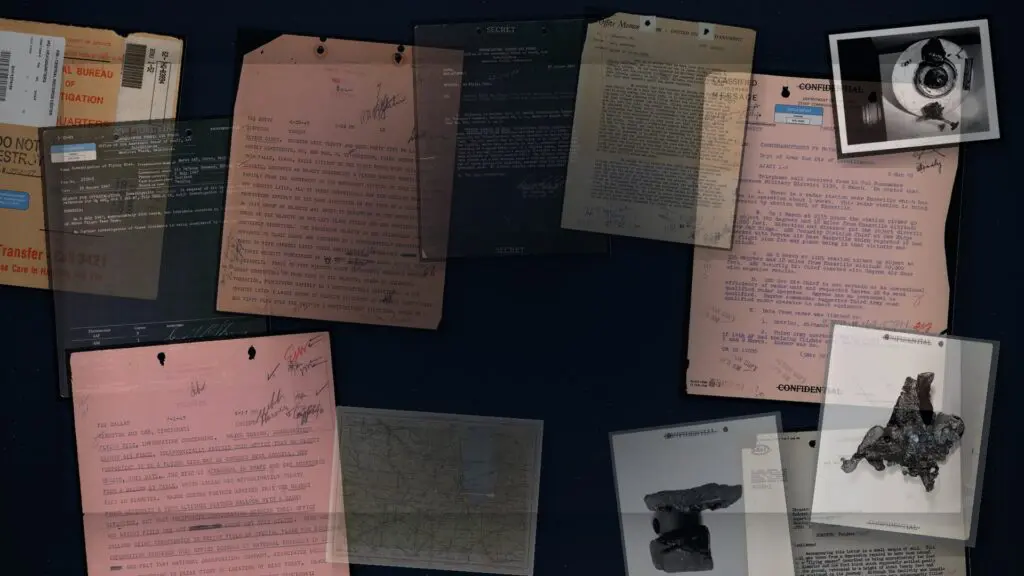
The three incident-summary files from the National Archives (NARA) covered here are among the most important historical records in PURSUE Release 1. They appear to preserve a Project SIGN / early USAF-style “Check-List – Unidentified Flying Objects” packet covering reports from 1946–1949, with the strongest concentration in the first American flying-disc wave of 1947 and the operational reporting period of 1948. At the document level, the files should be treated as verified archival USAF / Project SIGN-era incident-summary files. At the phenomenon level, they are mixed: some entries are strong trained-observer or multi-witness reports, many remain disputed, and many are plausible or probable misidentifications.
The article’s central finding is simple: these files are not proof of extraterrestrial or non-human craft. They are proof that the early Air Force built a structured UAP reporting ledger that mixed strong cases, weak cases, aviation reports, radar reports, photographs, meteors, balloons, aircraft, folklore, and scientific triage in the same archive.
Highest-priority findings
1. These files are a Project SIGN-era incident ledger, not a single case file
The first packet, 38_143685_box7_incident_summaries_1-100, is described as a Project SIGN / early USAF “Check-List — Unidentified Flying Objects” packet. It emphasizes the 1947 flying-disc wave and the January 7, 1948 Mantell / Godman Field / Lockbourne / Clinton County cluster. The file’s biggest value is that it preserves early Air Force case taxonomy: witness reliability notes, incident numbers, corroboration notes, object descriptions, sketches, photographs, and evaluations.
The second and third packets continue the same incident-summary format into 1948 and early 1949. The middle file is especially useful for Norcatur / Green River fireball material, the Philippines P-47 pilot report, North Atlantic radar, Greenville AFB, Holloman AFB, Selfridge Field, and other underused cases. The final file is strongest for New Mexico green fireballs, early radar entries, Andrews AFB, Crescent City, Fairfield-Suisun, Jackson, Mississippi, and a blank “Guide to Investigation” form.
UAPedia handling: Verified archival source set; mixed phenomenon-level classifications.
2. The files preserve the early Air Force’s first structured case method
The first packet shows the Air Force collecting case-level fields such as date, time, observer, occupation, location, number of objects, altitude, speed, color, shape, sound, exhaust, weather, sketches or photos, disappearance, remarks, and reliability. That makes the file valuable beyond any one incident: it is a window into how the Air Force was trying to convert witness reports into comparable case data.
The final packet also includes a blank restricted “Guide to Investigation” form. That guide is procedurally important because it shows what investigators were expected to collect: observation details, location, size, color, shape, altitude or elevation, direction, speed, sound, trail, luminosity, projections, maneuvers, disappearance, weather, radar data, flight schedules, possible test-device releases, soil samples, photographs, signed statements, and fragments or physical evidence.
UAPedia handling: Verified procedural record.
Recommended page use: Add to Project SIGN methodology and early U.S. Air Force UAP reporting standards.
3. Muroc and Portland should be treated as clusters, not isolated anecdotes
The first packet identifies the Muroc Army Air Field sightings of July 7–8, 1947 as one of its strongest sections. It includes multiple reports by military personnel and base staff describing silver, disc-like or spherical objects near a major flight-test environment. The entries include incidents #1, #1a, #1c, #2, #3, and #4, and the recommended handling is “Verified as official reports,” “Probable that multiple witnesses saw something,” and “Disputed as to identity.”
The same file shows that the Portland / Vancouver July 4, 1947 reports should also be handled as a cluster. Witnesses included police, harbor personnel, pilots, and civilians, with separate but overlapping reports by Kenneth McDowell, Earl Patterson, Sgt. Glenn Cross, W. A. Levy, D. W. Ellis, K. A. Prehn, and related Vancouver/Washington witnesses.
UAPedia handling: Probable multi-witness clusters; disputed identity and performance.
Recommended page use: Create or strengthen separate cluster pages for “Muroc July 1947 sightings” and “Portland / Vancouver July 4, 1947 sightings.”
4. The files strengthen several famous 1947–1948 cases, but do not solve them
The first packet contains compact official summaries for several foundational cases: United Airlines Captain E. J. Smith near Boise, Kenneth Arnold near Mount Rainier, Richard Rankin near Portland, the Mantell / Godman Field case, Lockbourne / Clinton County / Wilmington same-day reports, and the William Rhodes Phoenix photographs.
These records help anchor famous cases against later folklore. For Kenneth Arnold, the file’s value is that it preserves an official checklist version and sketch of the case, useful for separating the original report from later amplified retellings. For Mantell, the file is especially valuable because it separates tower witnesses, officers, police and civilian reports, flight-leader radio summaries, and same-day Ohio reports. For Rhodes, the file confirms the official checklist version of the photo claim but does not settle the image interpretation.
UAPedia handling: Verified official reports; probable observations in several cases; object identities disputed; high legend risk for later retellings.
5. The middle packet is a misidentification laboratory
The second packet shows why UAPedia should not treat every official “UFO” checklist entry as an unresolved craft case. Norcatur, Kansas and Green River, Utah are best handled as a meteor/fireball cluster, with the speculative “mooncraft” material preserved as historical speculation rather than case evidence.
The same packet includes several useful misidentification examples: Montgomery, Alabama appears parachute/canister-like; Greenville AFB combines trained witnesses with a plausible balloon lead; Anacostia Naval Air Station near Washington, D.C. strongly resembles a balloon case; Knoxville, Tennessee is likely meteor/fireball-like; and several other entries point toward birds, aircraft, optical effects, or weak source quality.
UAPedia handling: Verified reports, but many entries should be classified as Misidentification or Misidentification Candidate.
Editorial value: This file is a very good taxonomy stress-test.
6. Several underused 1948 cases deserve standalone stubs
The second file flags Incident #111 — the Philippines P-47 pilot case of April 1, 1948 — as one of the strongest underdeveloped reports. A P-47 pilot, 1st Lt. Robert W. Meyers of the 67th Fighter Squadron / 18th Fighter Group, reportedly saw a silver half-moon or flying-wing-like object with a dorsal-fin-like feature, making a sharp 90-degree turn and accelerating out of sight.
The North Atlantic radar contact, Incident #124, is also a high-priority early radar case. It involved an air-search radar contact at roughly 62°N, 33°W, first contacted at about 6,500 yards and tracked out to about 18,000 yards, without visual or surface-radar confirmation.
Other update-worthy cases include Holloman AFB Incident #122, Plevna–Miles City Incident #130, Belleville Incident #131, Selfridge / Mt. Clemens Incidents #134–134a, and Rapid City / Weaver AFB Incident #135.
UAPedia handling: Verified official reports; Probable or Disputed depending case; no verified exotic origin.
7. The New Mexico green-fireball material is the strongest cluster in the final packet
The final packet’s standout section is the New Mexico / Southwest green-fireball material: Incidents #223, #223a, #224, #225, #226, and #227, with related entries #230 and #231. These reports involve green, green-white, or blue-green fireballs around Las Vegas, Albuquerque, Sandia Base, Vaughn, Bernal, Los Alamos / Kirtland contexts, Oregon, and the Abilene / White Sands direction.
The key item is Incident #227, involving Dr. Lincoln LaPaz, Director of the Institute of Meteoritics at the University of New Mexico. The file summary says LaPaz distinguished the December green fireballs from ordinary meteors based on reported low height, horizontal paths, unusual color, short duration, lack of noise, and approach direction. The file does not solve the cluster as ordinary meteors.
This is especially important because UAPedia’s FBI-file article already identifies Project Twinkle and New Mexico green fireballs as one of the strongest archival clusters, while noting that the records establish organized concern, not a final origin. (UAPedia – Unlocking New Realities)
UAPedia handling: Verified archived reports and LaPaz commentary; Probable unusual luminous phenomena; Disputed cause.
8. The final packet adds early radar and military-base chronology value
The final packet contains several radar or radar-adjacent entries: Incident #183 near Fukuoka, Japan; Incident #188 at Goose Bay, Labrador; Incident #196 at Meadows, Newfoundland; and Incident #198 at a radar site in Japan. These should be added to an early radar-UAP chronology, but with strict separation between radar return, operator interpretation, and physical-object claim.
It also contains a strong Andrews AFB / Camp Springs cluster from November 18, 1948, involving multiple personnel who reported a dull-glowing or metallic-looking object with unusual movement and, in one account, a jet-like or roaring sound.
UAPedia handling: Probable radar reports or military-base reports; disputed target identity; possible radar artifacts, aircraft, weather, birds, flare, meteor, searchlight/cloud effect, or visual/aural conflation.
9. The Jackson, Mississippi Stinson aircraft case should be reconciled, not duplicated
Incident #233 concerns Mr. and Mrs. Tom Rush, flying in a Stinson aircraft near Jackson, Mississippi on January 1, 1949. They reportedly saw a dark blue/black cigar-shaped or tow-target-like object, about 60 feet long, crossing near their aircraft, turning, accelerating, and showing no clear wings. The file summary says this appears to duplicate or expand an earlier Jackson case and should be reconciled rather than split into duplicate pages.
UAPedia handling: Probable aviation-witness report; disputed identity and performance; misidentification candidate for tow target, sleeve target, aircraft, or military training object.
Document-by-document synthesis
1. 38_143685_box7_incident_summaries_1-100
Recommended archive classification: Verified archival USAF / early UFO-investigation incident-summary file
Best UAPedia role: Foundational 1947 flying-disc wave case ledger
Phenomenon-level status: Mixed — Probable for several clusters, Disputed for object identity, Misidentification Candidate for many entries
This file is the most historically famous of the three. It contains major early cases and clusters from the 1947 flying-disc wave and the January 7, 1948 Mantell-day reporting environment. The strongest sections are Muroc July 1947, Portland / Vancouver July 4, Captain E. J. Smith’s United Airlines report, Kenneth Arnold’s Mount Rainier report, Richard Rankin’s pre-Arnold Portland report, the Lockbourne / Clinton County / Wilmington same-day cluster, Mantell / Godman Field, and William Rhodes’s Phoenix photographs.
The file should not be treated as a list of confirmed anomalies. Its value is that it shows how the early Air Force recorded and sorted reports. Some incidents involve trained witnesses or multiple observers; others are weak, newspaper-driven, likely meteor-like, likely balloon-like, or otherwise ambiguous. The file also shows why “official report” and “verified object identity” must remain separate fields.
Disposition:
Use this file as the source anchor for a “Project SIGN Incident Summaries / Check-List” article and as a launchpad for case-specific pages on Muroc, Portland, E. J. Smith, Kenneth Arnold, Mantell, Rhodes, and the January 7, 1948 Ohio/Kentucky regional cluster.
2. 38_143685_box7_incident_summaries_101-172
Recommended archive classification: Verified archival USAF / early UFO-investigation incident-summary file
Best UAPedia role: 1948 case triage file, including fireball, radar, pilot, base, and misidentification examples
Phenomenon-level status: Mixed — several Probable reports, many Disputed identities, many Misidentification Candidates
One provenance note matters: the uploaded analysis says the rendered middle file runs from Incident #101 through the beginning of Incident #137, with Incident #137 incomplete, even though the filename says 101-172. UAPedia should preserve that as a document-handling note and avoid assuming that #138–172 are present in this packet unless another continuation file is found.
The file’s strongest scientific-process example is Norcatur / Green River. Incidents #101–103 are best treated as a meteor/fireball cluster, with Norman Garrett Markham’s mooncraft speculation preserved as historical speculation and Dr. Lincoln LaPaz’s response treated as scientific triage.
The strongest underused case is Incident #111, the Philippines P-47 pilot report by 1st Lt. Robert W. Meyers. Other high-value items include Montgomery #113 as a parachute/canister-like misidentification example, Greenville AFB #115 with trained witnesses plus a balloon-release lead, Holloman AFB #122 as a cautious base case, North Atlantic radar #124 as an early radar chronology item, Plevna–Miles City #130 as a detailed civilian witness letter, Belleville #131 as a compact trained-observer report, and Selfridge / Mt. Clemens #134–134a as military-base-area sightings.
Disposition:
Use this file for two purposes: first, to add high-value underused cases to the early Air Force chronology; second, to show how many official UFO entries are best classified as misidentifications or source-caution cases rather than unresolved craft reports.
3. 38_143685_box7_incident_summaries_173-233
Recommended archive classification: Verified archival USAF / Project SIGN-era incident-summary file
Best UAPedia role: Late-1948 cluster file, especially New Mexico green fireballs, radar entries, Andrews AFB, and investigation procedure
Phenomenon-level status: Mixed — strong Probable/Disputed clusters, several misidentification candidates, procedural records
This file’s most important contribution is the New Mexico / Southwest green-fireball cluster. Incidents #223–#227, plus related #230 and #231, should be treated as a major UAPedia update target. The LaPaz item, Incident #227, is the key analytic source because it reportedly distinguishes these green fireballs from ordinary meteors without resolving them.
The file also adds early radar value through Fukuoka, Goose Bay, Meadows, and Japan radar-site entries, and it strengthens military-base chronology through Andrews AFB / Camp Springs and Fairfield-Suisun AFB. Fairfield-Suisun #215 is especially useful because the report includes a serious internal balloon-release lead, which should be kept visible in any case summary.
Finally, the blank “Guide to Investigation” form is a major methodology source. It should be attached to Project SIGN / early Air Force investigation-procedure coverage because it shows the breadth of information investigators were expected to collect.
Disposition:
Use this file to expand New Mexico green-fireball coverage, early radar chronology, Andrews AFB, Crescent City, Jackson, Mississippi, and Project SIGN investigation-methodology pages.
PURSUE ledger entries
| PURSUE file | Apparent incident range | Best archive category | UAP case? | Initial disposition |
|---|---|---|---|---|
| 38_143685_box7_incident_summaries_1-100 | #1–#48 / #48a, with some continuation context | Project SIGN / early USAF incident-summary checklist | Not a single case; source ledger | Verified archive. Strongest clusters: Muroc, Portland, E. J. Smith, Kenneth Arnold, Mantell/Godman Field, Lockbourne/Clinton County, Rhodes. |
| 38_143685_box7_incident_summaries_101-172 | #101–beginning of #137 in reviewed rendering | 1948 incident triage file | Contains case leads | Verified archive. Strongest items: Norcatur/Green River fireballs, Philippines P-47, Greenville AFB, Holloman AFB, North Atlantic radar, Selfridge / Mt. Clemens. |
| 38_143685_box7_incident_summaries_173-233 | #173–#233 plus Guide to Investigation | Late-1948 Project SIGN cluster and procedure file | Contains case leads | Verified archive. Strongest items: New Mexico green fireballs, LaPaz analysis, early radar reports, Andrews AFB, Fairfield-Suisun, Jackson Stinson aircraft, Guide to Investigation. |
High-priority case and cluster ledger
| Case / cluster | Incident numbers / pages | Recommended UAPedia taxonomy | Recommended action |
|---|---|---|---|
| Muroc AAF July 1947 | #1, #1a, #1c, #2, #3, #4 | Verified reports; Probable cluster; Disputed identity | Create or strengthen dedicated cluster page. |
| Portland / Vancouver July 4, 1947 | #5–#16 range | Verified reports; Probable multi-witness cluster; Disputed identity | Rework into separate witness table. |
| United Airlines Capt. E. J. Smith | #10 | Verified report; Probable aviation-witness case; Disputed identity | Create or update pilot-witness case page. |
| Frank Ryman / Seattle-Lake City photo lead | #11 | Verified report; Disputed photo evidence | Track missing photograph before treating as photo-confirmed. |
| Kenneth Arnold / Mount Rainier | #17 | Verified report; Probable sighting; Disputed identity/performance; Legend risk | Use checklist and sketch to anchor original report. |
| Richard Rankin / Portland June 14, 1947 | #29 | Verified report; Probable/Disputed | Cross-link to pre-Arnold sightings. |
| Mantell / Godman Field | #33–#33f | Verified case reporting; Probable sky stimulus; Disputed identity; Misidentification Candidate | Build multi-witness timeline, not one-paragraph summary. |
| Lockbourne / Clinton County / Wilmington | #30–#32, #48–#48a | Verified reports; Probable same-day reporting cluster; Disputed identity | Treat as January 7, 1948 regional cluster, not proof of one object. |
| William Rhodes / Phoenix photographs | #40 | Verified report and photo claim; Disputed interpretation | Separate witness report, photos, image analysis, and later handling claims. |
| Norcatur / Green River fireball cluster | #101–#103 | Verified reports; Probable meteor/fireball; Legend for mooncraft speculation | Use as scientific-triage and misidentification example. |
| Philippines P-47 pilot | #111 | Verified report; Probable military-pilot observation; Disputed identity | High-priority standalone stub. |
| Montgomery parachute/canister object | #113 | Verified report; Probable physical object; Misidentification Candidate | Add as taxonomy example. |
| Greenville AFB | #115 | Verified military report; Probable sighting; Disputed; balloon candidate | Include balloon-release note prominently. |
| Holloman AFB | #122 | Verified report; Probable unusual observation; Disputed | Add cautious early base-case stub. |
| North Atlantic radar | #124 | Verified radar report; Probable radar contact; Disputed identity | Add to early radar-UAP chronology. |
| Selfridge / Mt. Clemens | #134–#134a | Verified military reports; Probable; Disputed | Add to military-base sighting chronology. |
| Andrews AFB / Camp Springs | #207–#207b | Verified reports; Probable military-base cluster; Disputed | Create cluster page or table entry. |
| New Mexico / Southwest green fireballs | #223–#227, #230–#231 | Verified reports; Probable unusual luminous phenomena; Disputed cause | Build or expand major green-fireball page. |
| Jackson, Mississippi Stinson aircraft | #233 | Verified report; Probable aviation case; Disputed; tow-target/aircraft candidate | Reconcile with earlier Jackson version; avoid duplicate pages. |
| Guide to Investigation | pp. 140–143 of final packet | Verified procedural record | Add to Project SIGN methodology. |
What these files change
These files change the PURSUE record in five ways.
First, they show that the early Air Force was not merely collecting anecdotes. It was building a case ledger with standardized fields, reliability notes, incident numbers, sketches, photo references, weather context, and evaluation comments.
Second, they give UAPedia a way to separate famous cases from later mythology. Arnold, Mantell, Rhodes, Muroc, and the United Airlines sighting remain important, but the checklist versions should be used to anchor what was actually reported before later retellings expanded the claims.
Third, they prove that “official UFO record” is not the same as “unexplained object.” The same archive that preserves serious aviation and military-base cases also preserves meteors, probable balloons, possible parachute payloads, birds, weak newspaper reports, speculative letters, radar artifacts, and incomplete investigations.
Fourth, they elevate the New Mexico green-fireball problem. UAPedia already treats Project Twinkle / New Mexico green fireballs as a major archival cluster; these incident summaries add early case-level support and LaPaz commentary, especially around Incidents #223–#227. (UAPedia – Unlocking New Realities)
Fifth, they provide a procedural bridge between Project SIGN’s formation and later Project Blue Book-style reporting. The blank Guide to Investigation shows what early investigators were expected to collect, including radar, physical evidence, test-device releases, photos, signed statements, and fragments.
Priority investigation queue
| Priority | Topic | Recommended next step | Initial classification |
|---|---|---|---|
| 1 | Project SIGN Incident Summaries source page | Create a source-file page explaining the checklist format and taxonomy. | Verified archival source |
| 1 | Muroc July 1947 cluster | Build a multi-entry page separating incidents #1, #1a, #1c, #2, #3, and #4. | Probable / Disputed |
| 1 | Portland / Vancouver July 4 cluster | Build a witness-by-witness table: McDowell, Patterson, Cross, Levy, Ellis, Prehn, Vancouver/Sullivan, and related entries. | Probable / Disputed |
| 1 | Kenneth Arnold | Update with official checklist wording, sketch, and legend-risk caveat. | Verified report; Probable / Disputed |
| 1 | Mantell / Godman Field | Expand into a timeline: tower observations, State Police reports, P-51 scramble, Mantell radio reports, crash, and same-day Ohio cluster. | Probable / Disputed |
| 1 | New Mexico green fireballs | Build around #223–#227, #230, #231, and LaPaz’s #227 analysis. | Probable / Disputed |
| 1 | Early radar-UAP chronology | Add #124, #183, #188, #196, and #198, with radar-artifact caveats. | Probable radar contact / Disputed |
| 2 | United Airlines Capt. E. J. Smith | Create or update standalone pilot-witness case page. | Probable / Disputed |
| 2 | William Rhodes photographs | Separate report, photos, interpretation, and official handling. | Verified photo claim; Disputed image interpretation |
| 2 | Philippines P-47 pilot #111 | Create underused military-pilot case stub. | Probable / Disputed |
| 2 | Selfridge / Mt. Clemens #134–#134a | Add to military-base chronology. | Probable / Disputed |
| 2 | Andrews AFB / Camp Springs #207–#207b | Create cluster entry with possible aircraft/flare/meteor/searchlight caveats. | Probable / Disputed |
| 2 | Jackson, Mississippi Stinson case #233 | Reconcile with earlier Jackson case; avoid duplicate page. | Probable / Disputed |
| 3 | Norcatur / Green River | Treat as meteor/fireball and scientific-triage example. | Misidentification / Legend for speculation |
| 3 | Montgomery #113 | Add as parachute/canister-like misidentification example. | Misidentification Candidate |
| 3 | Greenville AFB #115 | Preserve balloon-release note. | Probable / Disputed / balloon candidate |
| 3 | Chapel Hill #137 | Hold until continuation file is found. | Incomplete / Disputed |
Claims taxonomy
| Claim category | Claim | Status |
|---|---|---|
| Verified | The three uploaded files summarize official archived UFO / flying-disc incident summaries from the Project SIGN / early USAF period. | Supported by file-level review. |
| Verified | The files contain multiple trained-observer reports involving pilots, police, tower operators, military officers, CAA personnel, radar operators, and base personnel. | Supported by the incident summaries. |
| Verified | The first packet includes major 1947–1948 cases and clusters including Muroc, Portland, E. J. Smith, Kenneth Arnold, Mantell, Lockbourne/Clinton County, and Rhodes. | Supported by the first file summary. |
| Verified | The middle packet includes Norcatur/Green River, Philippines P-47, Greenville AFB, Holloman AFB, North Atlantic radar, Selfridge/Mt. Clemens, and other 1948 entries. | Supported by the second file summary. |
| Verified | The final packet includes New Mexico green-fireball entries, early radar reports, Andrews AFB, Fairfield-Suisun, Jackson, Mississippi, and a Guide to Investigation form. | Supported by the third file summary. |
| Probable | Several cases involved real sky stimuli or observations by credible witnesses. | Best candidates include Muroc, Portland, E. J. Smith, Arnold, Mantell/Godman, Rhodes, Philippines P-47, Selfridge, Andrews, and New Mexico green fireballs. |
| Probable | Several entries are likely meteors or fireballs. | Norcatur/Green River, Knoxville, and several other fireball-like cases are strong examples. |
| Disputed | The object identities, performance estimates, and origins remain unresolved for many entries. | The files verify reports, not final explanations. |
| Misidentification | Some cases likely involve balloons, meteors, aircraft, birds, parachute/canister payloads, celestial objects, radar artifacts, clouds, or optical effects. | Supported by multiple file notes and recommended classifications. |
| Legend | Later folklore around famous cases and speculative theories should be separated from the archived reports. | Arnold/Mantell/Rhodes retellings and Markham’s mooncraft speculation are key examples. |
Speculation labels
Evidence
Official archived USAF / Project SIGN-style incident summaries, checklist forms, witness summaries, sketches, photo references, radar entries, case-routing notes, and the Guide to Investigation form.
Witness Interpretation
Terms such as “disc,” “saucer,” “metallic,” “tremendous size,” “terrific speed,” “controlled,” “not a balloon,” “green fireball,” “cigar-shaped,” “flying wing,” and “jet-like” should remain attributed to witnesses, checklist summaries, or officials unless independently corroborated.
Official Institutional Opinion
Checklist reliability marks, “probably true” comments, object-classification notes, and Air Force evaluations are historically important but are not final proof of object identity.
Researcher Opinion
The most important contribution of this batch is methodological. It shows the early Air Force building a structured case ledger that mixed strong reports, weak reports, misidentifications, scientific correspondence, radar leads, and public rumor.
References
Department of War / U.S. Air Force archival file. 38_143685_box7_incident_summaries_1-100. PURSUE Release 01.
Department of War / U.S. Air Force archival file. 38_143685_box7_incident_summaries_101-172. PURSUE Release 01.
Department of War / U.S. Air Force archival file. 38_143685_box7_incident_summaries_173-233. PURSUE Release 01.
UAPedia. PURSUE Release 1: Images and Videos Research Briefing. (UAPedia)
UAPedia. PURSUE Release 1: What the First 10 FBI Files Reveal. (UAPedia)
Additional crosslinks
- PURSUE Release 1
- Project SIGN
- Project Grudge
- Project Blue Book
- 1947 Flying Disc Wave
- Muroc AAF July 1947 Sightings
- Portland / Vancouver July 4 1947 Sightings
- Kenneth Arnold and the Modern UAP Era
- United Airlines Captain E. J. Smith Sighting
- Mantell Incident
- Godman Field
- January 7 1948 Ohio / Kentucky UAP Cluster
- William Rhodes Phoenix Photographs
- New Mexico Green Fireballs
- Project Twinkle
- Lincoln LaPaz
- Early Radar-UAP Cases
- Selfridge Field / Mt. Clemens 1948
- Andrews AFB / Camp Springs 1948
- Jackson Mississippi Stinson Aircraft Case
- Common UAP Misidentifications
SEO keywords
PURSUE Release 1, US Government Disclosure Archives, Project SIGN incident summaries, Air Force UFO checklist, 1947 flying disc wave, Muroc AAF UFO 1947, Portland flying discs 1947, Kenneth Arnold official report, Mantell incident, Godman Field UFO, William Rhodes Phoenix photographs, United Airlines Captain E. J. Smith UFO, New Mexico green fireballs, Lincoln LaPaz UFO, Project Twinkle, early radar UFO cases, North Atlantic radar UFO 1948, Selfridge Field UFO 1948, Andrews AFB UFO 1948, Project Blue Book origins, UAPedia.