
On a warm evening in early August 1968, a summer camp on Lake Champlain thinned out the way camps often do. A trip. A swim meet. Most of the noise and motion gone, leaving the shoreline to its quieter actors: water, insects, distant lights, and the occasional canoe nudging at a dock.
Two young counselors, later known publicly only by pseudonyms, stayed behind at Buff Ledge Camp near Burlington, Vermont. They sat on the camp dock as daylight fell toward the lake’s wide black mirror. What they reported seeing next, and what they later reported remembering, would become one of the most-discussed abduction narratives in New England. It is also a case that rewards careful reading, because it comes with a built-in tension: the most grounded layer is the part they said they consciously saw, while the most elaborate layer is the part that emerged later, especially under hypnosis.
That tension is not a flaw. It is the story.
Buff Ledge is best treated as a historically significant, well-documented reported abduction case rather than as a verified abduction event. The strongest evidentiary layer is the reported conscious sighting, the “missing time” style gap, and at least some level of additional witnessing of unusual lights as others returned to camp. The weakest layer is the detailed onboard sequence, because the richest elements were recovered later and are closely tied to hypnosis, a method mainstream clinical sources warn can increase suggestibility and confidence without guaranteeing accuracy. (Journal of Scientific Exploration)
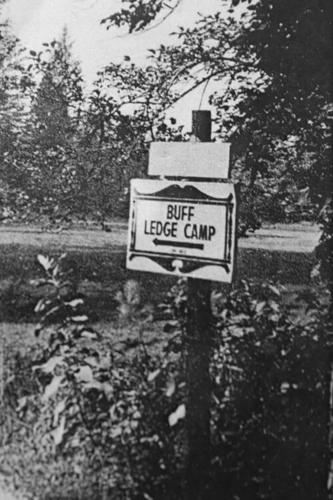
The scene that anchors the case
The first reason Buff Ledge persists is simple: it begins like a classic “close encounter” rather than like a dream. Don Donderi’s review in the Journal of Scientific Exploration summarizes the core report this way: two camp counselors, identified by the pseudonyms Michael Lapp and Janet Cornell, were left behind at Buff Ledge while the rest of the camp went to a swim meet in nearby Burlington. Around 8 p.m., they saw a distant UAP over the lake. Then it became more complicated. (Journal of Scientific Exploration)
In Donderi’s account (drawing on Walter Webb’s longer investigation), the distant object “disgorged” two smaller objects. One of those smaller objects maneuvered near them, plunged briefly into the lake, then reappeared and approached the dock. (Journal of Scientific Exploration)
That “plunge into the water” detail is one of the most provocative elements of Buff Ledge because it places the report squarely in the trans-medium motif: an object moving between air and water without obvious transition difficulty. Whether one calls that a USO-adjacent feature or simply a trans-medium UAP behavior, it is a detail that later investigators and readers tend to circle.
What did the witnesses say they perceived clearly in the moment?
Donderi reports that Lapp consciously remembered a transparent dome atop the object, and consciously remembered telepathic communication with two humanoids visible inside the dome. Cornell consciously remembered the UAP approaching the dock. The object hovered over them, shone a beam of light downward, and that beam is described as the last thing either remembered until the camp group returned about 9 p.m., with doors slamming and voices cutting through the night. (Journal of Scientific Exploration)
Even in that short summary, you can see why Buff Ledge became “sticky” in the literature. It contains multiple high-signal motifs in a tight sequence: proximity, structured craft-like behavior, a dome with occupants, telepathic interaction (at least for one witness), a directed beam, and then an abrupt memory discontinuity.
It is also worth noticing what is not emphasized in the core retelling. There is no claim of a prolonged chase on a road, no car stopping, no obvious external authority arriving. This is a liminal setting: a dock, water, darkness, and two people briefly separated from the social “witness net” of the group.
That kind of setting shows up again and again in abduction claims across decades. It is not proof of anything by itself, but it is a meaningful pattern when you study how encounters present.
Missing time as the hinge, not the headline
A lot of abduction cases are popularly summarized as “someone was taken.” Buff Ledge is better summarized as “something happened, then time broke.”
The reported gap is not just a clock discrepancy. It is a cognitive discontinuity. The last shared memory is the beam. The next shared memory is the return of ordinary life, audible and unmistakable.
In Donderi’s summary, the time window is roughly an hour: from about 8 p.m. to about 9 p.m. (Journal of Scientific Exploration) That may not sound like much until you compare it with how memory normally works in emotionally intense moments. High-arousal experiences are typically remembered as fragments, yes, but not as cleanly erased blocks that restart on a dime with an external cue like car doors.
This is one reason “missing time” became such an important concept in abduction research. It is a structural feature. It behaves like a hinge between two kinds of narrative: the part a witness claims to remember without assistance, and the part that often requires a tool, an interview technique, a trigger, or a therapy context to access at all.
Buff Ledge is often used as a case study for that hinge. You can discuss it without agreeing on what caused it.
The case’s paper trail: how it became “Buff Ledge”
Buff Ledge did not become famous because it was loud in 1968. It became famous because it worked.
According to Donderi, Michael Lapp eventually contacted the Center for UFO Studies (CUFOS), seeking help understanding the close encounter and missing time. CUFOS referred him to Walter Webb in the Boston area. Webb interviewed Lapp, then, with Lapp’s help, located Janet Cornell, who had moved away but agreed to travel to Boston for an interview. (Journal of Scientific Exploration)
This matters because it places the case inside a specific ecosystem: civilian investigation networks that had formed around J. Allen Hynek’s post-Blue Book work. Webb’s role becomes central not merely as an author but as the bridge between a private memory problem and a published case history.
Webb’s book, Encounter at Buff Ledge: A UFO Case History, was published in 1994 by the J. Allen Hynek Center for UFO Studies, runs to 306 pages, and includes bibliographic references and an index. (Internet Archive)
Even if you never read beyond summaries, that publication profile signals an intention: to treat the case as a sustained investigation rather than as a campfire story.
A separate reference work, Jerome Clark’s Extraordinary Encounters: An Encyclopedia of Extraterrestrials and Otherworldly Beings, also treats Buff Ledge as a notable abduction report and notes that “Michael Lapp” and “Janet Cornell” are pseudonyms used by Webb, with the real identities not publicly disclosed. Clark dates the incident to August 7, 1968, and situates it at a “since-closed girls’ camp.” (ia802901.us.archive.org)
So, historically, Buff Ledge exists in at least three layers of documentation:
The witnesses’ accounts (largely private, filtered through investigators), Webb’s long-form case history, and later analytic or encyclopedic summaries by writers like Donderi and Clark. (Journal of Scientific Exploration)
The encounter, as described across sources
When you line up the published summaries, a fairly stable “conscious layer” emerges.
There is a larger object at distance, with smaller objects emerging. One smaller object approaches. It comes close enough for at least one witness to report a dome and occupants. There is a beam. There is a gap. (Journal of Scientific Exploration)
Clark adds extra sensory texture that often appears in retellings: the smaller objects’ maneuvers, a sound likened to “thousands of tuning forks,” and the dramatic moment of a craft plunging into the lake and then rising again to skim toward the witnesses. (ia802901.us.archive.org)
Donderi emphasizes the claimed telepathic interaction and the abrupt transition to missing time, then notes that Lapp, as well as several returning campers and counselors, consciously recalled seeing the departing UAP. (Journal of Scientific Exploration)
Clark, however, introduces a point that becomes important later when we address controversy: he states that Webb devoted years trying to substantiate what could be substantiated and “found no one” from the camp who could corroborate the UAP sighting. (ia802901.us.archive.org)
Those two statements can be reconciled in more than one way. “Corroborate the sighting” can mean corroborate the entire close encounter at the dock, not merely notice lights during the return bustle. It can also reflect differences in what each author considered corroboration-worthy, or differences in what sources each author emphasized. But the tension is real, and a careful article should not flatten it.
The hypnosis chapter: where Buff Ledge becomes contested terrain
If Buff Ledge were only the sighting plus the missing time, it would be a strong close-encounter report with a troubling memory gap. It becomes an abduction case in the classic sense because of what came next.
Donderi reports that, at Webb’s suggestion, both witnesses volunteered for hypnosis sessions arranged with Boston-area hypnotherapists. Under hypnosis, they narrated that they were levitated in a beam of light from the dock into the hovering craft, communicated telepathically with occupants, and that Cornell underwent an examination. They also described being transported to a larger craft at what seemed like great distance from Earth, with Earth visible through a dome as the smaller craft approached the larger one. (Journal of Scientific Exploration)
Donderi further notes that Lapp’s hypnotic narrative was more specific, including mention of other humans aboard the larger craft, and a return sequence that ended back at the dock with the smaller craft departing and the camp group returning. (Journal of Scientific Exploration)
Clark’s encyclopedia entry aligns with the broad shape of that hypnotic narrative but includes additional imagery: Cornell on a table during an examination, the smaller craft entering a hangar-like space inside a larger craft, and surreal elements such as moving through “screens” before returning to the dock. (ia802901.us.archive.org)
These are the passages that readers remember, the ones that feel like cinema. They are also the passages that create the methodological problem: how should hypnosis-derived content be weighed?
Here is the sober answer: with caution, even when the witnesses are sincere.
Donderi himself explicitly states that hypnosis is controversial and can be used to plant false memories as well as retrieve memories, depending on circumstances and the hypnotist. (Journal of Scientific Exploration)
Mainstream medical sources echo the caution from a different angle. The Mayo Clinic notes that hypnosis typically makes people more open to suggestions. (Mayo Clinic) The Royal College of Psychiatrists warns that if suggestions are used incorrectly, they can create memories that may not be accurate. (www.rcpsych.ac.uk) Johns Hopkins Medicine, in a section specifically on “Hypnosis and memory retrieval,” states that using hypnosis to extract hidden or vague memories may not be reliable, and that hypnotized people can feel confident their memories are accurate, contributing to persistent false memories. (hopkinsmedicine.org)
This does not mean hypnosis always produces fiction. It means hypnosis does not automatically turn memory into a recording. It can increase narrative fluency and confidence, which can be psychologically powerful and personally meaningful, but not necessarily evidential.
So, if Buff Ledge has a “fault line,” it runs here: the case’s most detailed abduction content is also its least secure evidentially.
A case study in “touchstones”: why Donderi still takes it seriously
Donderi’s 2014 review is valuable because it does not simply repeat a story. It attempts a framework for judging whether narratives might represent something external as well as something psychological.
He borrows the idea of “touchstones” from intelligence analysis: details that can be treated as reliable anchors, giving some confidence that additional information may be meaningful. For Buff Ledge, he treats as touchstones the consciously recalled UAP memories before the abduction sequence, the conscious experience of missing time, and eyewitness testimony that at least some others saw the UAP leave as the campers returned. (Journal of Scientific Exploration)
You do not have to accept every hypnotic image to see why that framework appeals to investigators. It tries to avoid two common failures:
One failure is the reflexive dismissal of the entire case because hypnosis appears at all. Another failure is swallowing the hypnosis transcript whole as if it were an external logbook.
Buff Ledge forces a third way. It asks you to separate layers.
The controversy, without theatrics
A serious discussion of Buff Ledge’s controversies does not need ridicule, and it does not need credulity. It needs clarity about what is claimed, when it was claimed, and how it was obtained.
The most central controversy is the role of hypnosis. The clinical cautions above are not minor footnotes; they change how we responsibly summarize the case. (www.rcpsych.ac.uk)
A second controversy is corroboration. Donderi’s summary suggests that “several” returning campers and counselors consciously recalled seeing the departing UAP. (Journal of Scientific Exploration) Clark’s summary suggests Webb could not find corroboration for the sighting from those at the camp that August. (ia802901.us.archive.org)
Both can be true depending on what is meant by “corroborate.” People might recall lights in the commotion without confirming the close-proximity dome-and-occupants encounter. Or later recollections might be too vague to count as corroboration for a researcher with strict standards. A reader deserves to know that reputable secondary sources describe the corroboration differently.
A third controversy is the time gap between the event and the most elaborate recall. Clark notes Lapp discussed his experience with Webb in 1978, a decade after the incident, and that Cornell’s memory was more limited before hypnosis. (ia802901.us.archive.org) Donderi similarly emphasizes that Cornell’s experience occupied a “troubling fringe” of memory before hypnosis. (Journal of Scientific Exploration)
Time does not automatically invalidate testimony, but it increases the chance that memory becomes reconstructed around later interpretations, dreams, conversations, and cultural imagery. In abduction research, this is not a moral judgment on witnesses. It is a methodological reality.
Why Lake Champlain matters here
Buff Ledge is sometimes treated as a “Vermont case,” but the lake is not just geography. It is part of the phenomenon of logic.
A report that includes a craft plunging into water and returning to air compresses two categories that are often studied separately: aerial UAP and underwater UAP reports. In modern terms, it is a trans-medium claim. (Journal of Scientific Exploration)
This is where language should be careful. It is better to say that Buff Ledge can be read as relevant to trans-medium UAP motifs than to imply it proves anything about underwater bases or oceanic origins. The reported sequence is simply a data point, one that matches a broader motif in the record, and which also happens to unfold over a body of water large enough to swallow ambiguity.
If Buff Ledge were only about “aliens on a dock,” the lake would be scenery. Because the story includes water-entry behavior, the lake becomes part of the claim.
The human cost: what “classic cases” do to witnesses
It is easy to treat a famous case as public property. Buff Ledge resists that because the witnesses remained publicly unnamed. Clark notes their identities have never been publicly identified, and that Webb used pseudonyms. (ia802901.us.archive.org)
That anonymity is sometimes criticized. It is also, in many cases, a rational shield.
Abduction claims have a unique stigma profile. They are intimate. They imply violation. They can affect family relationships, careers, and mental health. Even if an experiencer wants to tell the truth as they understand it, the social cost can be crushing. In that light, anonymity can be viewed as a compromise: a case can be investigated and documented without turning the witness into a permanent public spectacle.
This is not an evidentiary advantage, but it is a human one. And any responsible retelling should keep the people, not just the motifs, in frame.
Buff Ledge’s impact on abduction literature
Buff Ledge sits in an interesting historical pocket.
It comes after the Hill case (1961) established the modern template of missing time plus later hypnotic recovery, and before later multi-witness wilderness narratives like Allagash (1976) became cultural reference points. Donderi explicitly places Buff Ledge alongside those New England narratives, treating them as part of a fifteen-year span that shaped what “abduction” came to mean in modern UAP studies. (Journal of Scientific Exploration)
It also produced something many cases do not: a book-length investigation. Webb’s 1994 case history is not just a retelling. Its existence signals that the case was considered substantial enough, within that research community, to merit deep documentation. (Internet Archive)
Finally, Buff Ledge helped keep Lake Champlain on the mental map of UAP watchers. Even people who have never heard of the camp often know the lake as a place where “strange lights” are reported. The case contributes to that cultural layer, whether one thinks culture reflects reality, shapes it, or both.
Implications: what the case suggests, and what it does not
Buff Ledge does not hand us an easy conclusion. What it offers is a structured puzzle with separable pieces.
If you treat the conscious sighting plus missing time as the core, Buff Ledge suggests that some UAP encounters include not only visual anomalies but also cognition anomalies: memory discontinuity, temporal confusion, and a sudden return to normal awareness. (Journal of Scientific Exploration)
If you treat the trans-medium element as meaningful, Buff Ledge suggests that at least some reports place UAP behavior at the boundary between air and water. That has implications for where researchers look, what sensor environments matter, and why lakes and coastlines appear so often in the broader dataset. (Journal of Scientific Exploration)
If you treat the telepathy claim as meaningful, Buff Ledge suggests that interaction is not only mechanical. At least one witness claimed mind-to-mind exchange while consciously observing occupants. (Journal of Scientific Exploration)
And if you treat the hypnosis-derived material with skepticism, Buff Ledge suggests something equally important: our tools for recovering hidden experience can shape the experience we think we are recovering. That is not only a methodological warning, it is a reminder that the phenomenon, whatever it is, appears in the interface between perception, memory, and meaning. (www.rcpsych.ac.uk)
The case does not prove an abduction occurred. It does not prove the opposite either. It does demonstrate why “classic abduction cases” remain hard: the witness experience can be coherent, emotionally consistent, and investigated in good faith, while still being evidentially layered and partly unstable.
Speculation labels
Hypothesis
A cautious hypothesis consistent with the strongest layer of the case is that Lapp and Cornell experienced an anomalous aerial event at close range, followed by a period of altered awareness or memory discontinuity (whether caused by the phenomenon, by stress and neurobiology, or by some interaction between the two). (Journal of Scientific Exploration)
A second hypothesis, more specific and more speculative, is that the reported beam and missing time reflect an interaction effect rather than a simple observation. This is the hypothesis people reach for when they see the beam-to-amnesia transition in the narrative, but it remains interpretive because the critical interval is not consciously recalled. (Journal of Scientific Exploration)
Witness interpretation
Telepathic communication and the perception of occupants behind a transparent dome are reported as conscious memories attributed primarily to Lapp. Whether that should be understood as literal communication, as an altered-state perception during an intense event, or as a later framing of what was felt, depends on interpretive stance. The sources present it as part of the witness report, not as independently verified data. (Journal of Scientific Exploration)
Researcher opinion
Donderi’s approach treats consciously recalled elements, missing time, and supplementary witnessing as “touchstones” that can justify taking the broader narrative seriously as potentially reflecting external reality. That is an analytic posture, not a laboratory conclusion, but it explains why Buff Ledge remains prominent in comparative abduction discussions. (Journal of Scientific Exploration)
Claims taxonomy
Verified
The existence of key publications is verifiable: Walter N. Webb’s Encounter at Buff Ledge: A UFO Case History (1994) was published by the J. Allen Hynek Center for UFO Studies and is a 306-page work with bibliography and index. (Internet Archive)
Probable
It is probable, in the sense of “strong but incomplete evidence,” that two camp counselors reported an anomalous light or object over Lake Champlain in August 1968, that they experienced an apparent missing-time interval, and that the case later entered the CUFOS investigative channel leading to Webb’s interviews and write-up. (Journal of Scientific Exploration)
Disputed
The detailed onboard narrative is disputed because its most elaborate components derive from hypnosis sessions, and mainstream clinical sources caution that hypnosis can increase suggestibility and confidence without guaranteeing memory accuracy. (www.rcpsych.ac.uk)
The extent and quality of third-party corroboration is also disputed in the secondary literature: Donderi describes returning campers/counselors who consciously recalled seeing the departing UAP, while Clark describes Webb’s inability to find corroboration from those at camp in August 1968. (Journal of Scientific Exploration)
Legend
Not applicable. The case is treated in the literature as a modern reported experience with an investigative trail, not as folklore presented as folklore. (ia802901.us.archive.org)
Misidentification
Not demonstrated. Prosaic explanations are not conclusively excluded, especially for distant lights, but the close-range structured narrative and the reported missing time prevent a simple “solved” attribution in the published summaries. (Journal of Scientific Exploration)
References
Clark, J. (2000). Extraordinary Encounters: An Encyclopedia of Extraterrestrials and Otherworldly Beings. Santa Barbara, CA: ABC-CLIO.
Donderi, D. C. (2014). Three New England Abduction Stories and One New Reality. Journal of Scientific Exploration, 28(2), 361–372.
Johns Hopkins Medicine. (n.d.). Hypnosis. Retrieved 2026-06-11, from https://www.hopkinsmedicine.org/health/wellness-and-prevention/hypnosis
Mayo Clinic. (n.d.). Hypnosis. Retrieved 2026-06-11, from https://www.mayoclinic.org/tests-procedures/hypnosis/about/pac-20394405
Royal College of Psychiatrists. (n.d.). Hypnosis and hypnotherapy. Retrieved 2026-06-11, from https://www.rcpsych.ac.uk/mental-health/treatments-and-wellbeing/hypnosis-and-hypnotherapy
Webb, W. N. (1994). Encounter at Buff Ledge: A UFO Case History. Chicago, IL: J. Allen Hynek Center for UFO Studies.
SEO keywords
Buff Ledge Camp abduction, Buff Ledge 1968, Lake Champlain UAP, Vermont abduction case, Michael Lapp Janet Cornell pseudonyms, Walter Webb Encounter at Buff Ledge, CUFOS abduction investigation, missing time UAP, trans-medium UAP lake, UAP beam of light, hypnosis and abduction memories, classic abduction cases USA, New England abduction history, Jerome Clark Buff Ledge, Don Donderi Journal of Scientific Exploration Buff Ledge