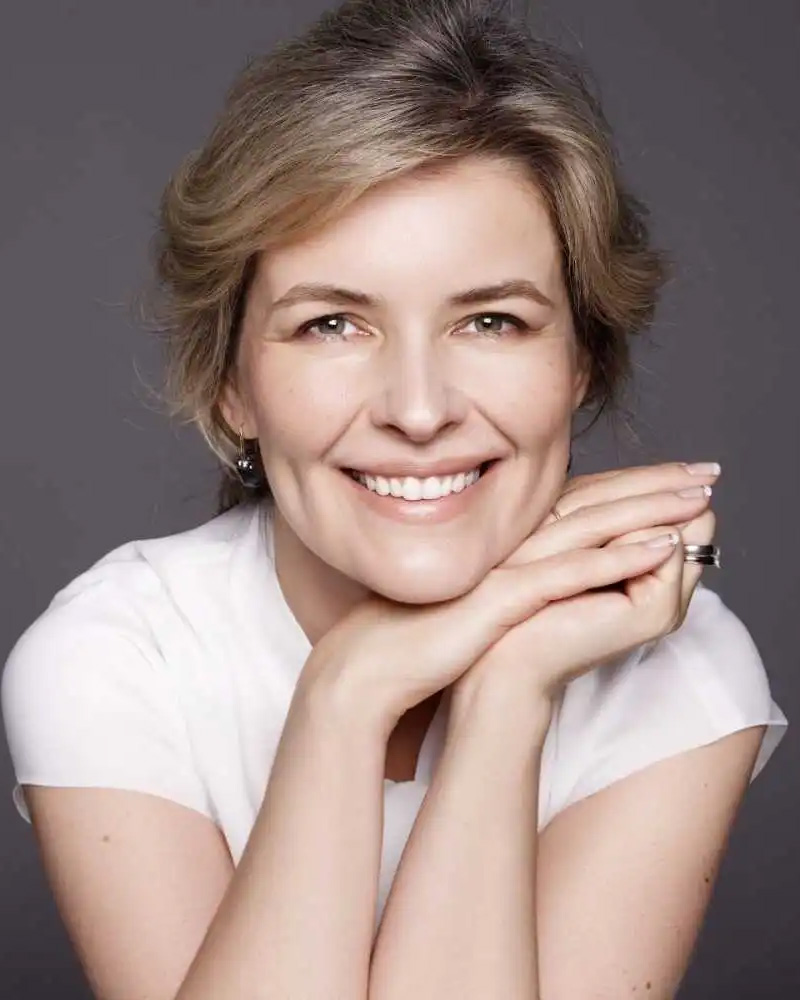
Dr. Iya Whiteley is a space and aviation psychologist, cognitive engineer and former Director of University College London’s Centre for Space Medicine whose career has centred on a deceptively difficult question: how do highly trained people perceive, decide and communicate when circumstances are unfamiliar, dangerous and moving faster than conscious explanation?
That question has taken her from cockpit-interface research to astronaut psychological support, fatigue monitoring, surgical expertise transfer and, more recently, the reporting of Unidentified Anomalous Phenomena. Her importance to UAP research does not depend on identifying the origin of anomalous objects. It lies instead in the human-factors problem that precedes interpretation: whether an experienced pilot can accurately register an unexpected event, report it without professional penalty, reconstruct what happened, and preserve enough information for later analysis.
In that respect, Whiteley has brought methods developed in conventional aerospace research into an area where stigma, incomplete reporting and the limitations of recollection can determine whether potentially valuable observations ever become usable data. Her career also provides an unusual example of how established research into expertise and decision-making can migrate towards questions at the boundaries of conventional scientific inquiry.
Learning to study the person inside the system
Whiteley has described an early fascination with movement, flight and the limits of human capability. In a retrospective interview, she recalled high diving, trampoline and acrobatics, as well as puzzles and origami. More importantly for understanding her later career, she stated that she learned to fly, skydive and scuba dive in order to understand how the mind operates under time pressure. These details are autobiographical recollections rather than independently documented childhood records, but the motivation is explicitly hers rather than a later biographical inference.
Professional records identify postgraduate training in clinical psychology at the University of Indianapolis. Public sources disagree over the exact designation of the qualification. Bibliographic indexing describes her 1999 thesis, Panic Disorder with Agoraphobia, as an M.A. thesis, while Whiteley’s professional publication record lists it as an unpublished M.Clin.Psych. thesis. The most defensible description is therefore that she completed a master’s degree in clinical psychology at the University of Indianapolis.
Her doctoral work is much more firmly documented. In November 2005 the University of Bath awarded Whiteley, publishing under the name Iya Solodilova-Whiteley, a PhD in the Department of Computer Science for A Design Strategy for Human-System Integration in Aerospace: Where to Start and How to Design Information Integration for Dynamic, Time and Safety Critical Systems.
The thesis addressed a fundamental problem of increasingly automated cockpits: more information does not necessarily produce greater understanding. Poorly structured information can instead leave pilots searching for the right cue, misunderstanding automation or recognising a dangerous system state too late.
Whiteley developed a framework intended to structure information around the cognitive requirements and existing expertise of operators. The thesis reported two applications of the design framework, one of which produced significantly improved pilot speed and accuracy compared with conventional alphanumeric displays. The significance was not simply a different cockpit interface. It established an intellectual theme that would recur throughout her career: expert performance cannot be understood by examining technology or psychology in isolation. The meaningful unit of study is the interaction between person, information, environment and task.
Recovering what experts know but cannot easily say
Whiteley and Peter Johnson developed that approach further in their 2006 paper Uncovering the Information Needs in Complex Aerospace Systems. The research examined the difficulty of accessing pilots’ cognitive processes while they were engaged in demanding activities. Their solution involved a “cue-recall debrief method” in which participants revisited recorded aspects of an activity so that contextual cues could reactivate thoughts and decisions that ordinary retrospective questioning might fail to recover (Solodilova-Whiteley & Johnson, 2006).
This distinction matters because expertise frequently becomes automatic. A highly experienced pilot or surgeon may act correctly without being able to reconstruct every visual cue, expectation or intermediate judgement that contributed to the decision. Conventional interviews conducted after an event can therefore produce a coherent explanation of what happened while missing important elements of what the person actually noticed and prioritised in the moment.
Whiteley’s work later extended into medicine. The iViewExpert programme adapted video-cued recall methods to surgical training, using head-mounted cameras to record procedures from the practitioner’s perspective. A systematic review co-authored by Whiteley reported that head-camera-cued recall could produce between two and four times as many recollections as free recall and could expose aspects of expert cognition that would otherwise remain difficult to articulate (Blackhall et al., 2019).
The review also acknowledged significant limitations. The underlying research literature was relatively small, methodologies varied, and detailed debriefing could be time-consuming. Later work nevertheless demonstrated how the technique might support surgical expertise transfer by making tacit decision-making more visible to trainees.
This movement from aviation into medicine is central to Whiteley’s intellectual profile. Her concern was never merely whether experts reached the correct answer. She wanted to understand the hidden information architecture that enabled them to reach it.
Building psychological support for deep space
Whiteley became closely associated with University College London’s Centre for Space Medicine at the Mullard Space Science Laboratory, which she formerly directed. UCL was describing her as Director in 2023, while contemporary 2026 biographical material from the British Interplanetary Society describes the position historically.
Her work expanded the human-factors problems of aviation into the more extreme circumstances of long-duration spaceflight, where crews may face isolation, disrupted sleep, confinement, delayed communications, interpersonal tension, limited resources and the need to make consequential decisions without immediate assistance from Earth.
A 2012 review co-authored by Whiteley examined future priorities in space psychology across psychosocial and neurobehavioural domains. The paper considered decision-making, situational awareness, autonomy, communication delay, mental health, well-being and methods for studying human performance in spaceflight (De La Torre et al., 2012).
The breadth of that agenda reflected an emerging problem for exploration beyond low Earth orbit. Psychological support cannot depend indefinitely on continuous real-time guidance from mission control. The farther crews travel from Earth, the more decision-making, problem-solving and psychological support must become embedded within the crew and spacecraft.
Whiteley contributed to European Space Agency work addressing precisely this problem. One project, the Crew Expert Tool, was designed to support autonomous crew problem-solving during long-duration exploration missions in which reliance on mission control must be substantially reduced. The ESA technical report identified Whiteley and Anne Bruseberg as authors of the work and documented the development of requirements and a proof-of-concept system for autonomous problem-solving.
Another programme, EPSILON, examined psychological support for long-duration exploration. This work eventually contributed to Whiteley and Olga Bogatyreva’s 2018 book, Toolkit for a Space Psychologist: To Support Astronauts in Exploration Missions to the Moon and Mars.
The programme drew lessons not only from astronauts but from people working in other isolated or high-risk environments. Later research described the resulting Psy-Matrix as containing more than 2,000 detailed situations distributed across 36 categories of psychological and social challenge. Its purpose was prospective rather than merely diagnostic. Mission planners could anticipate categories of difficulty before a multi-year mission and consider what routines, resources, environmental features or psychological tools a crew might require.
Whiteley also completed astronaut-instructor training at the European Astronaut Centre. Historically, she chaired the Space Environment Working Group advising the UK Space Agency and represented that group on the Space Exploration Advisory Committee. The UK Space Agency’s current committee record, updated in September 2026, lists Whiteley among former SEAC members.
Her public role widened through broadcasting, particularly as a space-psychology expert on the BBC series Astronauts: Do You Have What It Takes? The programme translated specialist questions into an accessible form: what distinguishes technically capable people who remain effective when tired, frightened, isolated or uncertain?
Voice, fatigue and unobtrusive monitoring
Whiteley’s interest in identifying hidden human states produced another strand of research: whether fatigue could be detected through ordinary speech.
In a 2015 study conducted with researchers at UCL and the Gagarin Cosmonaut Training Centre, seven aerospace personnel remained awake for 60 hours while investigators collected speech samples and psychophysiological measurements. Models using characteristics of the participants’ voices predicted sleep latency with a mean absolute error of approximately 17.5 per cent and psychophysiological test performance with errors of roughly 5 to 12 per cent (Baykaner et al., 2015).
Speech features performed better for aspects of prediction than simple measures based only on time awake or time of day. This work contributed to the development of iVOICE, an ESA-supported concept intended to infer fatigue from speech already produced during normal operations. UCL subsequently reported that Whiteley and colleagues patented the technology in 2015.
Its potential application to astronauts, pilots and other safety-critical workers was straightforward. Assessment might occur without attaching additional monitoring equipment or requiring an already fatigued operator to stop working and complete another test.
The evidential limitations were equally clear. Seven participants constitute an exploratory sample, not population-level validation across languages, professions and operational environments. Whiteley has also cautioned that the system should not be understood as a direct measure of overall performance. Its intended value lies in identifying aspects of functioning that may be becoming vulnerable.
That concern with realistic operational conditions continued into later work. In 2025 Whiteley co-authored a Frontiers in Space Technologies paper proposing a classification system for analogue environments used in behavioural-health and human-factors research. The authors argued that environments such as polar expeditions, caves, technical diving and aviation can sometimes reproduce psychologically meaningful aspects of spaceflight more faithfully than artificial simulations, particularly when participants are genuinely responsible for managing real hazards (Schlosser et al., 2025).
The route from aviation psychology to UAP
Whiteley’s entry into UAP research was therefore less abrupt than it might initially appear. Her previous work had already centred on expert observation, ambiguous information, cognitive bias, incomplete recollection and institutional systems for reporting safety-critical events.
At the inaugural Sol Foundation symposium in 2023, she presented Trusting and Learning from Pilots. Her argument was not that pilots are incapable of error, nor that an aviator’s interpretation of an anomalous object should automatically be accepted. The more fundamental point was that trained observers must be able to describe unexpected events without fearing ridicule or professional consequences.
Suppressing unusual reports creates a methodological problem. Investigators cannot distinguish perceptual error, conventional hazards and genuinely unresolved events if the events are never documented adequately in the first place.
This reasoning parallels mature aviation-safety practice. Investigators routinely record near misses and ambiguous hazards before the complete causal chain is known. An event does not need to be fully explained before it becomes operationally relevant. Conversely, recording something as unidentified does not establish an extraordinary origin.
Whiteley carried this principle into formal aerospace work. At the 2024 AIAA Aviation Forum and ASCEND conference, she co-authored Occupational Safety and Reporting Guidance: Reviewing UAP Safety Events with David Burstein, Shawn Pruchnicki and Jessie M. Jaeger. The work was published as AIAA-2024-3736. A subsequent formal correction established the four-author version of the paper.
The paper and associated AIAA reporting guidance reposition UAP encounters as an occupational-safety and human-factors issue. Relevant concerns include recognising hazards without requiring immediate identification, designing useful reporting systems, reducing workplace stigma, protecting psychological safety and correlating subjective aircrew testimony with objective aerospace and ground-based sensor information.
The guidance also acknowledges that UAP reports can arise from conventional sources such as balloons, birds, sensor errors and perceptual mistakes. That acknowledgement does not imply that all unresolved UAP fall into those categories. Its methodological purpose is to ensure that investigation remains open to multiple explanations while preserving genuinely unresolved cases for further study.
This is arguably Whiteley’s most important contribution to UAP research so far. It separates two questions that are often collapsed into one: what did the witness experience, and what ultimately caused it? A reporting system can take the first question seriously without prematurely answering the second.
Stigma as a data-quality problem
Whiteley’s particular contribution to this discussion concerns what happens before investigators ever receive a report.
A pilot who believes that reporting an anomalous encounter could cause ridicule or professional consequences may be less likely to report it promptly or fully. The strongest documented point is broader: stigma can deter reporting, inhibit real-time communication and hinder post-event review. AIAA’s reporting guidance therefore treats psychological safety and professional reporting culture as integral to aviation safety rather than as peripheral concerns.
This transforms stigma from a purely social concern into a data-quality problem.
Whiteley’s earlier cue-recall research is directly relevant. Memory is not a passive recording system, and expertise does not make recollection perfect. Structured debriefing, contextual cues and rapid documentation can improve access to information while allowing investigators to distinguish direct perception, inference and later interpretation.
That does not confer automatic accuracy on the witness. It improves the conditions under which testimony can be evaluated.
Her position therefore occupies an important space between credulity and premature dismissal. Pilot expertise is evidentially relevant because training changes what observers are likely to notice and how they understand aircraft behaviour. It does not create infallibility. Sensor correlation, independent witnesses, environmental information and careful event reconstruction remain essential.
From professional intuition to consciousness
Whiteley’s more recent public work has moved beyond conventional aerospace human factors into wider questions concerning intuition, embodied perception and consciousness.
At the 2025 Sol Foundation symposium she presented Breath as Bridge: Integration for UAP Experiencers and Supporting Professionals. The emphasis had shifted from reporting systems alone towards the way individuals integrate anomalous experiences and how professionals might support people confronted with events that challenge their previous understanding of reality.
Her 2026 writing develops the concept of professional intuition further. Whiteley describes pilots, surgeons and astronauts whose expertise allows them to respond to combinations of subtle cues faster than deliberate reasoning can explain the response. She characterises aspects of this process as pre-verbal, linking it to her longstanding work on tacit expertise and expert decision-making.
Her recent work also extends into broader questions about consciousness and purported extrasensory capacities. Here the evidential footing changes.
Whiteley’s research on cockpit cognition, fatigue modelling, cue-recall debriefing and behavioural health has been documented through doctoral research, peer-reviewed publications and institutional programmes. Propositions involving extrasensory perception, consciousness-mediated phenomena or other latent human capacities remain exploratory interpretations unless supported independently through appropriate experimental evidence.
The distinction does not prevent these subjects from being investigated. It identifies the point at which Whiteley’s work moves from established human-factors research into hypotheses that require a different level of evidential support.
What Whiteley has, and has not, established about UAP
The documented record does not show Whiteley producing a large peer-reviewed database of UAP cases, demonstrating a particular UAP propulsion mechanism or establishing a specific origin for the phenomenon.
Her principal formal contribution has instead concerned the human infrastructure needed to produce better evidence.
That contribution is consequential. UAP research depends not only on better cameras, radar and multisensor systems but also on the behaviour of the people operating them. A sensor anomaly that is never reported, an observation suppressed by fear of ridicule or an interview conducted in a manner that contaminates recollection can all degrade the resulting dataset.
Whiteley’s career offers practical methods for this layer of the problem. Her aerospace work asks how information should be presented to experts. Her debriefing research asks how tacit information can be recovered from them. Her space-psychology work asks how trained crews function autonomously under uncertainty. Her UAP work applies those questions to encounters that may be technically difficult to classify and socially difficult to discuss.
The continuity between these areas is stronger than the shift in subject matter might initially suggest.
Legacy: designing conditions for better evidence
Whiteley’s most durable contribution may ultimately be her treatment of expertise as something that exists between human beings, machines, environments and organisational cultures.
Across aviation, medicine and spaceflight, she has repeatedly examined situations in which conventional reporting captures less than the person actually knew at the moment of action. That perspective is particularly valuable for UAP research because the field faces a persistent paradox. Witness testimony is indispensable, yet testimony alone is rarely sufficient to resolve an event.
The answer is neither to elevate expert witnesses beyond error nor to discard subjective observation because it is imperfect. It is to design stronger systems around witnesses: rapid reporting, psychologically safe disclosure, structured debriefing, preservation of uncertainty and correlation with independent evidence.
Whiteley’s movement into consciousness research is likely to remain the most debated part of her intellectual development. Some of its propositions extend beyond the empirical footing of her earlier aerospace work. The appropriate assessment is therefore neither to merge these domains nor to use one to invalidate the other.
Her established contribution is narrower and more defensible. She has spent much of her career investigating what highly trained people perceive before they can fully explain it, and how institutions can capture that information without unnecessarily degrading it in the process.
Applied to UAP, that may be less dramatic than proposing an origin for the phenomenon. It nevertheless addresses one of the field’s deepest practical problems: how an anomalous experience becomes reliable evidence at all.
References
- Baykaner, K. R., Huckvale, M., Whiteley, I., Andreeva, S., & Ryumin, O. (2015). Predicting fatigue and psychophysiological test performance from speech for safety-critical environments. Frontiers in Bioengineering and Biotechnology, 3, 124. https://doi.org/10.3389/fbioe.2015.00124.
- Blackhall, V. I., Walker, K. G., Whiteley, I., & Wilson, P. (2019). Use of head camera-cued recall and debrief to externalise expertise: A systematic review of literature from multiple fields of practice. BMJ Simulation & Technology Enhanced Learning, 5(3), 121–129. https://doi.org/10.1136/bmjstel-2018-000341.
- Blackhall, V. I., Walker, K. G., Whiteley, I., Wilson, P., & Cleland, J. (2021). iViewExpert: A tool to uncover expertise and support surgical skills training. Medical Education, 55(5), 658. https://doi.org/10.1111/medu.14505.
- British Interplanetary Society. (2026). Dr Iya Whiteley joins Women in Space panel. Contemporary biographical notice describing Whiteley’s Centre for Space Medicine directorship in the past tense. Retrieved October 17, 2026. British Interplanetary Society biographical notice
- Burstein, D., Pruchnicki, S., Jaeger, J. M., & Whiteley, I. (2024). Occupational safety and reporting guidance: Reviewing UAP safety events. AIAA Aviation Forum and ASCEND, AIAA-2024-3736. https://doi.org/10.2514/6.2024-3736. Formal authorship correction: https://doi.org/10.2514/6.2024-3736.c1.
- De La Torre, G. G., van Baarsen, B., Ferlazzo, F., Kanas, N., Weiss, K., Schneider, S., & Whiteley, I. (2012). Future perspectives on space psychology: Recommendations on psychosocial and neurobehavioural aspects of human spaceflight. Acta Astronautica, 81(2), 587–599. https://doi.org/10.1016/j.actaastro.2012.08.013.
- Discovery Diaries. (n.d.). 5 minutes with Iya Whiteley. Retrieved October 17, 2026. Discovery Diaries interview
- European Space Agency. (2009). CET IO: Expert Tool to Support Crew Autonomous Operations in Complex Human Spacecraft: Final report (ESA Contract No. 21584/08/NL/HE). Whiteley, I., & Bruseberg, A. ESA Crew Expert Tool report
- Schlosser, K. K., Cinelli, I., Waelde, T., Luque Álvarez, L., Pokorádi, G., Pósch, K., & Whiteley, I. (2025). Optimise behavioural health and human factors research for deep space missions by classifying analogue scenarios and fidelity. Frontiers in Space Technologies, 6, 1391331. https://doi.org/10.3389/frspt.2025.1391331.
- Sol Foundation. (2025). The 2025 Sol Foundation Symposium. Programme listing Whiteley’s presentation Breath as Bridge: Integration for UAP Experiencers and Supporting Professionals. Retrieved October 17, 2026. Sol Foundation symposium programme
- Solodilova-Whiteley, I. (2005). A design strategy for human-system integration in aerospace: Where to start and how to design information integration for dynamic, time and safety critical systems [Doctoral thesis, University of Bath].
- Solodilova-Whiteley, I., & Johnson, P. (2006). Uncovering the information needs in complex aerospace systems. Reliability Engineering & System Safety, 91(12), 1566–1575. https://doi.org/10.1016/j.ress.2006.01.017.
- UK Space Agency. (2026). The Space Exploration Advisory Committee. Originally published March 24, 2025; updated September 14, 2026. Whiteley is listed among former members. Retrieved October 17, 2026. UK Space Agency SEAC record
- University College London. (2023, January 25). Space travel is a lonely business. How can space psychologists make it better? UCL News. UCL profile
- Whiteley, I. (n.d.). Professional publications by Dr Iya Whiteley. Professional bibliography listing the 1999 Panic Disorder with Agoraphobia thesis as M.Clin.Psych. Retrieved October 17, 2026. Whiteley professional publications
- Whiteley, I., & Bogatyreva, O. (2018). Toolkit for a Space Psychologist: To Support Astronauts in Exploration Missions to the Moon and Mars. Cosmic Baby Books.
- Whiteley, I. (2026). You have more than five senses. Here’s proof. SPICE OF LIFE: A Space Psychologist’s Earth Log. Used as a primary source for Whiteley’s current interpretation of professional intuition and perception, not as independent validation of broader perceptual claims. Whiteley’s 2026 article
- AIAA UAP Integration and Outreach Committee. (n.d.). UAP reporting guidance. Retrieved October 17, 2026. The guidance addresses hazard recognition, reporting, stigma, psychological safety and correlation of aircrew testimony with objective sensor data. AIAA reporting guidance
SEO keywords
Dr Iya Whiteley biography, Iya Whiteley space psychologist, Iya Whiteley UAP, UAP pilot reporting, UAP aviation safety, AIAA UAP reporting, Centre for Space Medicine UCL, aerospace human factors, cognitive engineering, cue-recall debriefing, pilot witness reliability, UAP stigma, astronaut psychology, iVOICE fatigue detection, professional intuition, UAP experiencer support, Toolkit for a Space Psychologist