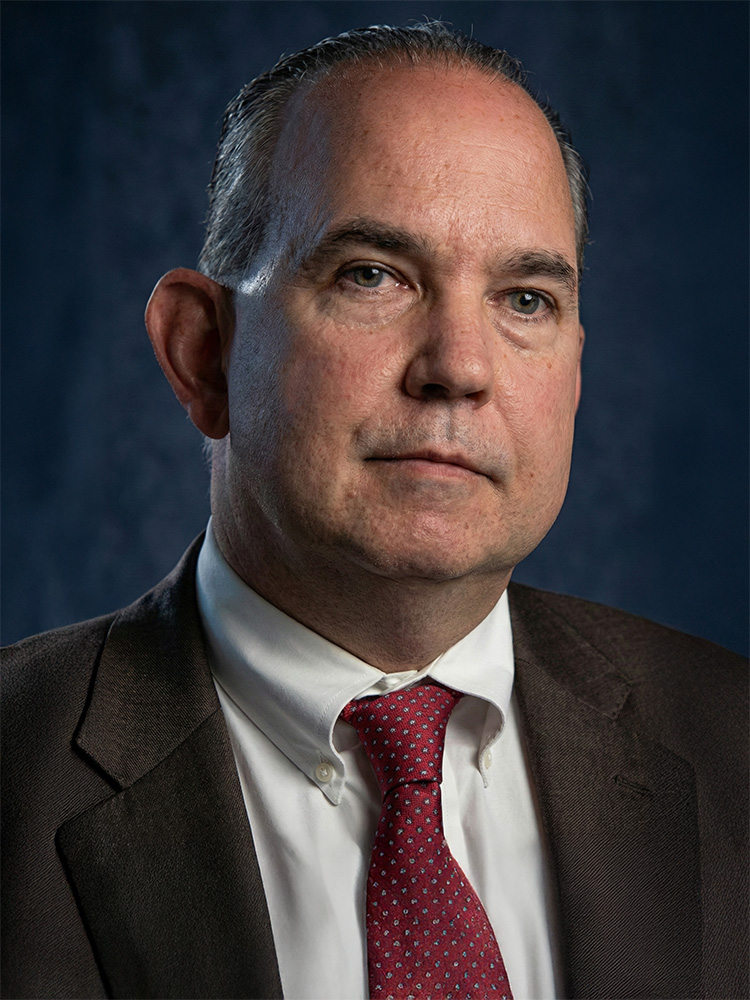
Thomas G. Brophy is a physicist, author, consciousness researcher and academic leader whose career has moved from computational planetary science into consciousness studies, integral education, archaeoastronomy and the scientific investigation of consciousness-associated UAP. Since March 2024 he has served as president of the Institute of Noetic Sciences, or IONS, an organisation founded by Apollo 14 astronaut Edgar Mitchell to investigate consciousness and human experience using scientific methods.
Brophy matters to UAP research primarily because he is helping move one of the subject’s most difficult propositions, a possible relationship between UAP and consciousness, towards prospective empirical testing. During his presidency, IONS announced the 2026 Linda G. O’Bryant Noetic Sciences Research Prize, offering $100,000 for an implementation-ready study of consciousness-associated UAP. The programme requires a defined research question, instrumentation, prospective data collection, analytical procedures and empirical deliverables rather than relying principally on retrospective testimony (Institute of Noetic Sciences [IONS], 2026a).
As of 18 October 2026, IONS states that the winning proposal is scheduled to be announced on 30 October 2026. The initiative does not establish that human consciousness causes, attracts or communicates with UAP. Instead, it asks whether reported relationships between attention, intention, altered states, anomalous cognition and unusual physical events can be investigated under conditions designed to separate genuine correlations from expectation, coincidence, perceptual error and environmental confounds.
That distinction is central to understanding Brophy’s significance. He is not primarily known as the witness to a celebrated UAP encounter or as the investigator of a single historic case. His influence is institutional and methodological. He is helping create a research environment in which claims previously confined largely to testimony can be translated into experiments capable of succeeding, failing or producing ambiguous results.
From physics to planetary science
The public sources reviewed for this profile provide little independently verifiable information about Brophy’s childhood or family background. His documented professional history begins with physics.
Brophy received a Bachelor of Arts in physics, with honours, from Colorado College in 1982. He subsequently earned an MS in physics from the University of Colorado Boulder in 1985 and a PhD in physics there in 1989 (California Institute for Human Science [CIHS], n.d.).
His early scientific career centred on planetary dynamics and space science. Institutional biographies published by IONS and CIHS state that he worked on projects associated with NASA’s Voyager and Cassini programmes and served as a National Science Foundation exchange scientist in Japan. According to IONS, his Japanese work involved the University of Tokyo’s Department of Earth and Planetary Physics and the Institute of Space and Astronautical Science robotic space programme. The Cassini connection is currently most readily documented through those institutional biographies, while his participation in Voyager-related science receives additional corroboration through the peer-reviewed literature.
Brophy’s conventional scientific credentials are clearly visible in planetary-science publications. In 1989 he and Larry W. Esposito published “Simulation of Collisional Transport Processes and the Stability of Planetary Rings” in Icarus. The study used numerical modelling to investigate how interactions among ring particles could produce transport, structural evolution and sharp ring boundaries (Brophy & Esposito, 1989).
He followed this work with Glen R. Stewart and Esposito in a study of a two-component narrow planetary ring. Their model investigated particle-size segregation, edge formation and radial spreading, continuing Brophy’s interest in the emergence of large-scale structure from interacting particulate systems (Brophy, Stewart, & Esposito, 1990).
Brophy was also among the authors of the 1989 Science paper “Photometry from Voyager 2: Initial Results from the Neptunian Atmosphere, Satellites, and Rings”. The work reported photopolarimeter observations obtained during Voyager 2’s encounter with Neptune and contributed to the early scientific interpretation of the planet, its satellites and its rings (Lane et al., 1989).
These publications matter when evaluating his later work. Brophy did not adopt the title of physicist through honorary usage or popular media. He received graduate training in the discipline and participated in peer-reviewed planetary research. At the same time, competence in planetary physics does not automatically establish the validity of conclusions in consciousness science, archaeology or metaphysics. Those later propositions require evidence appropriate to their own domains.
When mechanism became insufficient
During the 1990s, Brophy’s attention increasingly moved from the mathematical behaviour of physical systems towards a larger philosophical question: whether mechanistic accounts of nature can adequately explain consciousness, experience, meaning and agency.
That transition became explicit in The Mechanism Demands a Mysticism: An Exploration of Spirit, Matter and Physics. Bibliographic records support a Medicine Bear Publishing edition issued in April 1999, ISBN 9781891850127, followed by an iUniverse edition published in March 2001 (Brophy, 1999, 2001).
The book brings together classical mechanics, probability, chaos, quantum theory, consciousness and spiritual traditions. Its importance within Brophy’s intellectual development does not lie in establishing a new experimentally confirmed physical theory. Rather, it shows his growing dissatisfaction with the assumption that successful mechanistic description necessarily amounts to a complete description of reality.
Brophy has subsequently discussed philosophical positions including hylozoism, broadly the idea that life-like, experiential or mind-like qualities may be fundamental aspects of nature rather than accidental products of otherwise inert matter. These ideas belong to philosophy of nature and consciousness studies. They are not conclusions demonstrated by his planetary-ring calculations.
That distinction is particularly important when assessing a researcher whose work crosses disciplines. Brophy’s earlier physics demonstrated how mathematically modelled interactions can generate emergent structures. It did not demonstrate that matter is conscious or that consciousness exists independently of biological systems.
There is nonetheless a recognisable intellectual continuity. His planetary research concerned large-scale order emerging from complex interactions among components. His later work repeatedly asks whether reducing systems to isolated parts can leave important properties of the whole unexplained. The continuity helps explain the direction of his interests, but it does not collapse the evidential distinction between physics and metaphysics.
Hiroshi Motoyama and a decisive transition
A major turning point came through Brophy’s association with the California Institute for Human Science and its founder, Hiroshi Motoyama.
CIHS records that Brophy first became formally involved with the institution in 1995 through a one-month Motoyama-Bentov Scholarship, named for Motoyama and physicist-author Itzhak Bentov. According to the institution, Brophy studied Motoyama’s work concerning subtle energies and meditation while exploring whether a photoelectric model connected with his planetary work could be applied to questions involving biophoton production in the human body (CIHS, n.d.).
The episode illustrates Brophy’s growing interest in carrying conceptual tools across disciplinary boundaries. It also shows why careful attribution is necessary. CIHS documents that Brophy investigated the possibility. That does not independently establish the proposed relationship as a verified biological mechanism.
Motoyama invited Brophy to become CIHS Dean of Administration in 1997. Brophy left that administrative position in 2000 but continued his relationship with the institution through consulting and teaching. He returned to senior administration in February 2016 as executive dean and became associate accreditation liaison officer in January 2018. On 1 July 2019, he was appointed president of CIHS (CIHS, n.d.).
The accreditation period became one of the most demonstrable institutional achievements associated with this stage of his career. CIHS describes Brophy as a significant participant in strategic and organisational work connected with the process. Independent WASC Senior College and University Commission records confirm that CIHS received candidacy status in 2018 and initial accreditation in 2021 (WSCUC, n.d.).
The evidence therefore supports describing Brophy as an important participant in the accreditation effort, rather than attributing the outcome solely to him.
CIHS now identifies Timothy Laporte as its president and Brophy as president emeritus and consultant.
Building an academic language for consciousness
Brophy’s CIHS work developed alongside a broader interest in what the institution describes as integral education. This approach seeks to combine conventional intellectual development with attention to embodied, psychological, contemplative and psychospiritual dimensions of human experience.
His article “The Foundations of Hiroshi Motoyama’s Integral Education” appeared in volume 3, issue 4 of the Beijing International Review of Education, pages 548 to 563. The journal is published by Brill. The volume is designated 2021, while Brill records the article’s online publication date as 31 January 2022. Its DOI is 10.1163/25902539-03040004 (Brophy, 2021).
In the paper, Brophy places Motoyama within a wider lineage of integral thought involving figures including Sri Aurobindo and other advocates of educational approaches that include inner development alongside conceptual learning. His argument is that education need not confine itself to the transmission of information but can also examine human transformation and first-person experience.
This orientation helps explain Brophy’s later movement to IONS. Both CIHS and IONS investigate questions that conventional institutional structures frequently separate: physical measurement, consciousness, contemplative experience and anomalous human phenomena.
Brophy also became president of the Society for Consciousness Studies in 2019. The organisation’s current board continues to identify Thomas Brophy, PhD, as president.
Nabta Playa and the limits of interpretation
Brophy’s best-known work outside consciousness studies concerns Nabta Playa, a prehistoric ceremonial and megalithic complex in Egypt’s Western Desert.
His 2002 book The Origin Map proposed that arrangements at Nabta Playa preserve sophisticated astronomical information. In 2005, Brophy and Paul A. Rosen attempted to examine part of that argument more technically in “Satellite Imagery Measures of the Astronomically Aligned Megaliths at Nabta Playa”, published in Mediterranean Archaeology and Archaeometry.
The study used georectified satellite imagery with approximately 60-centimetre resolution to refine measurements of the megaliths. Brophy and Rosen reconsidered an earlier proposed relationship with Sirius and examined possible associations involving Orion’s Belt, Vega and seasonal astronomical markers (Brophy & Rosen, 2005).
Importantly, their paper recognised that identifying a geometric correspondence does not by itself establish the builders’ intention. They also recommended further excavation and subsurface investigation. This makes the published study more cautious than simplified accounts that portray Brophy as claiming every apparent alignment proved an ancient astronomical code.
His broader chronology and interpretation nonetheless generated substantial criticism.
Astronomer J. McKim Malville and archaeologists Romuald Schild, Fred Wendorf and Robert Brenmer addressed these questions in the 2007 paper “Astronomy of Nabta Playa”, published in African Skies/Cieux Africains. They accepted that astronomy was important at the site but argued that dates proposed by Brophy and Rosen for some alignments were approximately 1,500 years earlier than their preferred archaeological chronology (Malville et al., 2007).
The discussion was subsequently developed in the 2008 volume African Cultural Astronomy. Malville and colleagues also criticised much earlier astronomical dates associated with interpretations in The Origin Map, including proposed Milky Way and Orion relationships extending many thousands of years earlier than the archaeological chronology they considered supportable. Their treatment rejected more expansive contact interpretations as inconsistent with the archaeological evidence available to them (Malville et al., 2008).
The disagreement is consequently more interesting than a simple division between people who recognise astronomy at Nabta Playa and those who do not. Malville and colleagues themselves regarded celestial orientation as important. The dispute centres on which celestial targets were intended, when particular structures were constructed, how chance alignments should be excluded and how far astronomical resemblance can support claims about prehistoric knowledge.
Brophy’s strongest contribution in this area lies in improved positional analysis and the formulation of astronomical relationships that can be debated against archaeological chronology. His more expansive interpretations require additional evidence beyond geometry alone.
Together with Robert Bauval, Brophy later developed related ideas in Black Genesis: The Prehistoric Origins of Ancient Egypt and Imhotep the African: Architect of the Cosmos. These books extended his interest in the possible relationships between African prehistory, cosmology, monumental construction and the development of ancient Egyptian culture.
From CIHS to the Institute of Noetic Sciences
IONS announced Brophy’s appointment as incoming president on 17 November 2023 and stated that he would assume the position in March 2024. Current IONS materials identify him as president (IONS, 2023).
The appointment brought together several long-running strands of his career: training in physical science, experience with space-related research, academic administration, consciousness studies and a willingness to investigate phenomena that sit outside established disciplinary boundaries.
IONS itself emerged from a comparable crossing of scientific and experiential concerns. Apollo 14 astronaut Edgar Mitchell founded the organisation in 1973 after reporting an intense experience of interconnectedness while returning from the Moon. Mitchell became convinced that prevailing scientific approaches did not adequately encompass consciousness and certain aspects of human experience.
Brophy’s trajectory is not identical to Mitchell’s, but there is a clear structural similarity. Both entered consciousness research from backgrounds connected with physical science and space exploration. Both became interested in whether the relationship between consciousness and physical reality deserved more direct scientific investigation.
Under Brophy’s presidency, that question has become explicitly connected with UAP.
Consciousness-associated UAP as a scientific problem
The clearest expression of Brophy’s current significance to UAP research is the fourth annual Linda G. O’Bryant Noetic Sciences Research Prize.
The 2026 competition provides $100,000 for a prospective empirical investigation of consciousness-associated UAP. IONS requires proposals to be sufficiently developed for implementation and asks researchers to specify their questions, instrumentation, data-collection procedures, analytical methods and expected empirical deliverables (IONS, 2026a).
The programme also emphasises pre-registration, transparency, data quality and reproducibility. Those requirements are important because much of the historical discussion concerning consciousness and UAP has depended on retrospective reports made after an event occurred.
IONS cites encounter narratives involving reported telepathy, responsiveness to attention or intention, altered states and other unusual cognitive effects as phenomena warranting prospective investigation. It also explicitly cautions that such reports do not establish the mechanism responsible for them (IONS, 2026a).
This distinction sets up a difficult but potentially productive scientific problem. If a witness forms an intention and an anomalous light subsequently appears, several explanations remain possible. The event could involve an external phenomenon responding to the witness. It could be a coincidence. It could be an ordinary aerial or astronomical object that attracted increased attention because the observer was actively searching. Errors in timing, memory or classification could also produce the appearance of interaction.
A credible prospective study therefore has to record more than the witness’s interpretation. It needs synchronized observation, accurate timing, independent identification of aircraft and satellites, meteorological and astronomical controls, predefined success criteria and a record of occasions when an expected event does not occur.
IONS’s current prize criteria move in that direction. The organisation calls for empirical studies capable of generating interpretable results without presupposing a particular explanation.
Brophy has placed this research within a wider disclosure context. In IONS’s July 2026 announcement he described the goal as helping bring the UAP disclosure process into the open domain of public science (IONS, 2026b). The significance of that statement lies less in its rhetoric than in the proposed method. A prospective experiment can fail. It can generate null results. It can identify conventional explanations. Those possibilities are essential if consciousness-associated UAP is to develop as a serious field of inquiry rather than an interpretive belief system.
Why prospective research changes the problem
The consciousness dimension of UAP has historically been difficult to investigate because many of its strongest claims arise retrospectively.
A witness may report knowing that something was about to happen, receiving a message without ordinary speech, experiencing missing or altered time, or feeling that an observed phenomenon reacted to thought. Such testimony can be important evidence of human experience, but it cannot by itself determine whether the cause was an external intelligence, an unusual cognitive process, environmental circumstances or some combination of factors.
Prospective study changes the evidential structure.
Researchers can establish in advance what will count as an anomalous event, continuously document the surrounding environment, monitor known air and space traffic, record unsuccessful attempts, synchronize physiological measurements and calculate how improbable an apparent correlation would need to be before chance becomes an inadequate explanation.
This is especially important for experiments involving intentional contact. Without advanced criteria, an investigator can unconsciously redefine almost any unusual light as a successful response. With a pre-registered protocol, the research question becomes much more demanding.
A null result would therefore not represent failure in the scientific sense. If carefully controlled experiments repeatedly find no relationship between intentional mental activity and anomalous observations, they would place meaningful constraints on strong versions of the consciousness-UAP hypothesis.
Brophy’s potentially important contribution is consequently institutional rather than dependent upon any predetermined result. IONS is attempting to create a structure in which subjective experience can be investigated alongside physical observation without treating either as sufficient on its own.
An intellectual style built around boundary questions
Across Brophy’s career, one theme appears repeatedly: an attraction to questions located between established disciplines.
In planetary science he studied the emergence of collective structure from interacting physical components. In The Mechanism Demands a Mysticism he questioned whether mechanical description exhausts the nature of reality. At CIHS he participated in an educational programme where consciousness and human development could be treated as legitimate subjects of academic inquiry. At Nabta Playa he applied astronomical analysis to archaeological interpretation. At IONS he is now supporting research into whether consciousness belongs inside the scientific description of at least some UAP encounters.
Boundary work has obvious intellectual advantages. Important discoveries can arise when phenomena dismissed by one discipline become visible from the perspective of another.
It also carries risks. Connections can be proposed more quickly than they can be demonstrated. Mathematical correspondence can be mistaken for historical intention. Philosophical possibility can be described as though it were physical evidence. Repeated testimony can create the appearance of a confirmed mechanism where only a recurring pattern of reported experience has been established.
Brophy’s career contains examples of both the productive and hazardous aspects of such inquiry.
His planetary papers belong securely to conventional peer-reviewed physical science. His role in CIHS’s institutional development can be checked against accreditation records. His Nabta Playa measurements produced technical claims that could be compared with archaeological chronology, while some broader interpretations were challenged by specialists. His philosophy of consciousness offers questions and conceptual frameworks rather than experimental proof. His current UAP programme has established a research agenda, not yet a scientific conclusion.
Understanding those differences is essential to understanding Brophy himself.
Assessing Brophy’s legacy
Thomas G. Brophy is best understood as a boundary-crossing physicist and institution-builder whose career has progressively widened the questions he is prepared to consider.
He began within computational planetary science and contributed to peer-reviewed work on planetary rings and Voyager observations. He then moved towards foundational questions about consciousness and the philosophical limits of mechanism. His relationship with Hiroshi Motoyama and CIHS gave those interests an educational and institutional setting. His work at Nabta Playa applied astronomical measurement to prehistoric archaeology while also exposing the methodological difficulty of moving from geometric correlation to historical intention.
His presidency of IONS brings these strands together.
The 2026 consciousness-associated UAP research initiative may ultimately become the most consequential UAP-related element of his career. Its significance will depend not on whether it produces a dramatic positive finding, but on whether the resulting research is prospectively designed, transparent, reproducible and capable of distinguishing observation from interpretation.
If strong correlations between consciousness variables and anomalous physical events survive careful controls and independent replication, the implications would extend beyond UAP studies into consciousness research and possibly fundamental questions about the relationship between mind and physical reality.
If controlled studies consistently fail to reproduce the reported association, that result would also be important. It would help identify which parts of the consciousness-UAP narrative arise from retrospective interpretation, selection effects or uncontrolled observation.
Brophy’s more enduring contribution may therefore prove to be methodological and institutional. He has increasingly argued that unusual questions should be made testable rather than excluded solely because existing theories provide no comfortable place for them.
That openness requires a corresponding discipline. Evidence obtained in planetary science cannot be used as automatic authority for archaeology. Archaeological alignments cannot establish contact without independent evidence. Philosophical dissatisfaction with materialism cannot demonstrate non-local consciousness. Repeated anomalous testimony does not by itself identify a mechanism.
Brophy’s career is most informative when these domains remain distinct.
For UAP research, his current work represents an attempt to create exactly that kind of distinction while still asking an unconventional question. Consciousness-related reports have long occupied an uncomfortable position in the UAP record, too recurrent to disappear entirely yet difficult to isolate from perception, psychology and interpretation. IONS’s present programme asks whether that problem can be converted into a scientific one.
Whether consciousness ultimately proves central, peripheral or unrelated to the underlying UAP phenomenon remains unresolved.
What can already be documented is that, under Brophy’s leadership, IONS has committed substantial scientific attention and funding to finding out.
References
Brophy, T. G. (1999). The mechanism demands a mysticism: An exploration of spirit, matter and physics. Medicine Bear Publishing.
Brophy, T. G. (2001). The mechanism demands a mysticism: An exploration of spirit, matter and physics. iUniverse.
Brophy, T. G. (2021). The foundations of Hiroshi Motoyama’s integral education. Beijing International Review of Education, 3(4), 548–563. Brill. https://doi.org/10.1163/25902539-03040004. Online publication recorded by Brill as 31 January 2022. Brill article record
Brophy, T. G., & Esposito, L. W. (1989). Simulation of collisional transport processes and the stability of planetary rings. Icarus, 78, 181–205. NASA Technical Reports Server record
Brophy, T. G., & Rosen, P. A. (2005). Satellite imagery measures of the astronomically aligned megaliths at Nabta Playa. Mediterranean Archaeology and Archaeometry, 5(1), 15–24. Journal article record
Brophy, T. G., Stewart, G. R., & Esposito, L. W. (1990). A phase-space fluid simulation of a two-component narrow planetary ring: Particle size segregation, edge formation, and spreading rates. Icarus, 83, 133–155. ScienceDirect record
California Institute for Human Science. (n.d.). Thomas G. Brophy, Ph.D.: President emeritus and consultant. CIHS biography
Institute of Noetic Sciences. (2023, November 17). Announcing IONS incoming president. IONS appointment announcement
Institute of Noetic Sciences. (2026a). Linda G. O’Bryant Noetic Sciences Research Prize: Building a scientific research program for the study of consciousness-associated UAP phenomena. IONS 2026 Research Prize
Institute of Noetic Sciences. (2026b). Fourth annual Noetic Sciences Research Prize to explore UAP and consciousness. IONS research-prize announcement
Lane, A. L., West, R. A., Hord, C. W., Nelson, R. M., Simmons, K. E., Pryor, W. R., Esposito, L. W., Horn, L. J., Wallis, B. D., Buratti, B. J., Brophy, T. G., Yanamandra-Fisher, P., Colwell, J. E., Bliss, D. A., Mayo, M. J., & Smythe, W. D. (1989). Photometry from Voyager 2: Initial results from the Neptunian atmosphere, satellites, and rings. Science, 246(4936), 1450–1454. https://doi.org/10.1126/science.246.4936.1450. PubMed record
Malville, J. McK., Schild, R., Wendorf, F., & Brenmer, R. (2007). Astronomy of Nabta Playa. African Skies/Cieux Africains, 11, 2–7.
Malville, J. M., Schild, R., Wendorf, F., & Brenmer, R. (2008). Astronomy of Nabta Playa. In J. C. Holbrook, J. O. Urama, & R. T. Medupe (Eds.), African Cultural Astronomy (pp. 131–143). Springer. https://doi.org/10.1007/978-1-4020-6639-9_11. Springer chapter record
Society for Consciousness Studies. (n.d.). Board of directors. Society for Consciousness Studies board
WASC Senior College and University Commission. (n.d.). California Institute for Human Science. WSCUC accreditation recordSEO keywords
Thomas G. Brophy, Thomas Brophy PhD, Thomas Brophy biography, Institute of Noetic Sciences, IONS president, consciousness-associated UAP, UAP consciousness research, noetic sciences, California Institute for Human Science, CIHS, Hiroshi Motoyama, Nabta Playa, archaeoastronomy, The Origin Map, The Mechanism Demands a Mysticism, Edgar Mitchell, mind-UAP interaction, consciousness and UAP, Linda G. O’Bryant Noetic Sciences Research Prize, UAP scientific research