
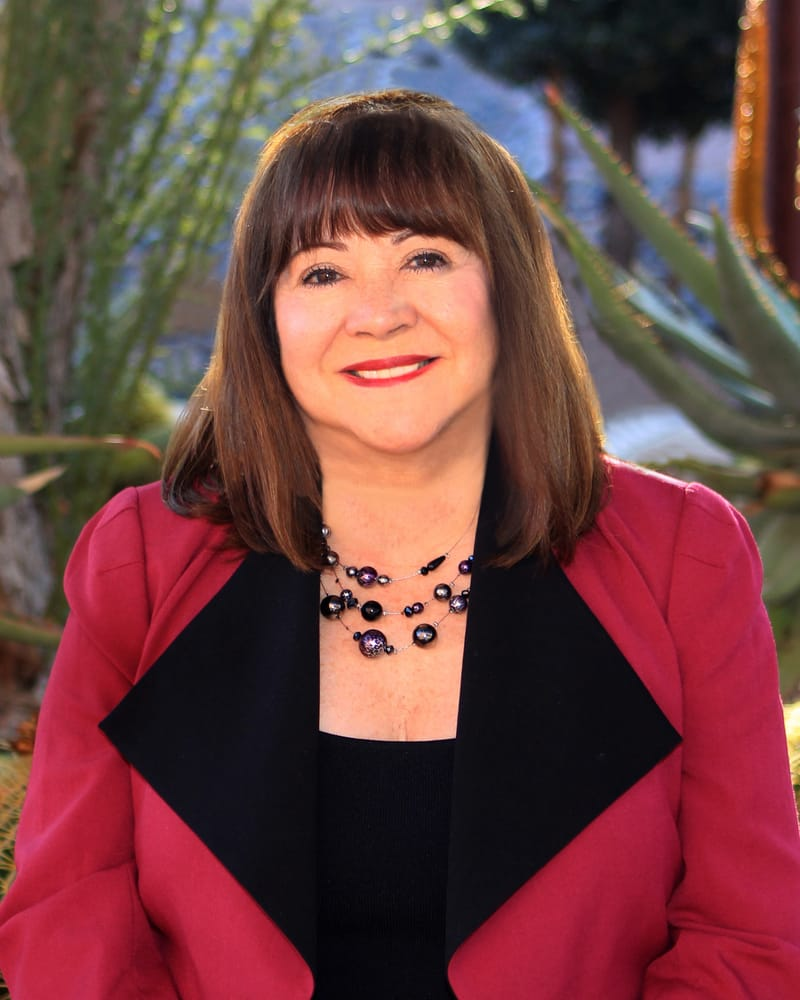
For more than three decades, Yvonne Smith has worked at one of the most difficult boundaries in UAP research: the point where extraordinary testimony, psychological distress and the reconstructive nature of human memory meet.
Her clients have described missing time, unexplained lights, apparent medical examinations, recurring dreams, gray entities, mantis-like beings and encounters interpreted as part of a continuing non-human contact program. Some came to her after consciously remembering an unusual event. Others arrived with only fragments, nightmares or a persistent feeling that something important had happened beyond ordinary recall.
Smith’s work has offered many of those people a place to speak without ridicule. It has also generated a large body of hypnosis-derived testimony that raises difficult evidentiary questions. Can regression uncover details that were inaccessible to ordinary memory? Can a person sincerely experience a vivid recovered scene that does not correspond precisely to an external event? Can emotional healing occur even when the historical accuracy of the recovered narrative remains uncertain?
These are not peripheral questions in the study of contact experiences. They sit at its center.
Smith’s career is therefore best understood neither as proof of a physical abduction program nor as a collection of accounts that can be dismissed because hypnosis was involved. Her work is more valuable, and more complicated, than either conclusion suggests. It represents a long-running attempt to listen to experiencers, identify patterns across testimony and give structure to encounters that conventional institutions have often declined to investigate.
From the courtroom to the contact frontier
Before becoming known for her work with experiencers, Smith reportedly spent approximately ten years as a jury supervisor for the Los Angeles Superior Court. That background placed her in an environment where testimony, credibility, interpretation and competing accounts were part of everyday institutional life. (LA Weekly)
Her interest in anomalous encounters developed during the late 1980s. Smith attended a lecture by Budd Hopkins, one of the most influential early investigators of reported UAP abductions and missing-time experiences. Hopkins became an important influence on her developing approach.
Smith subsequently trained at the Hypnosis Motivation Institute in California. The American Hypnosis Association identifies her as an HMI graduate and states that she began researching the UAP phenomenon in 1988. (American Hypnosis Association)
This professional description requires an important qualification. Smith is publicly identified as a certified hypnotherapist. She is not generally presented in available biographies as a psychiatrist, clinical psychologist or physician. The distinction matters because hypnotherapy training, professional regulation and authority to diagnose mental-health conditions differ from the qualifications associated with licensed medical and psychological practice.
Smith initially used hypnosis in more conventional therapeutic contexts. According to profiles of her career, her work included anxiety, weight concerns, memory exercises and trauma-related distress. Her first client presenting a suspected UAP-abduction history reportedly arrived in 1991. The client was described as an engineer whose session produced memories interpreted as a childhood encounter. More referrals followed, and experiencer work gradually became the defining focus of Smith’s practice. (LA Weekly)
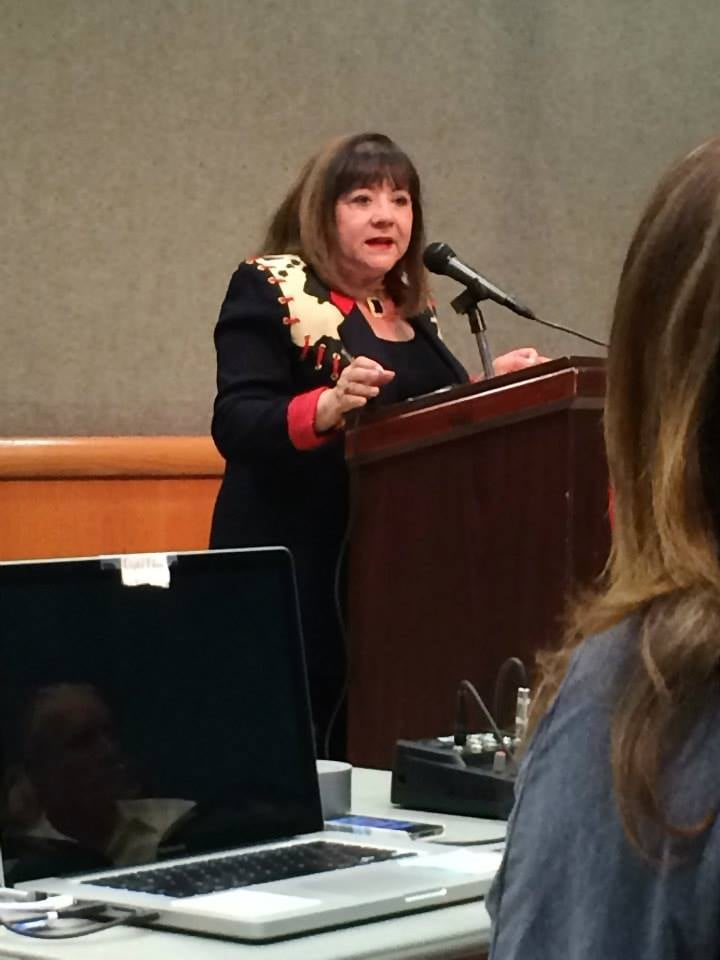
Her work developed within a wider circle of abduction researchers that included Hopkins, historian David M. Jacobs, psychiatrist John E. Mack, hypnotherapist John Carpenter and other investigators attempting to understand recurring contact narratives. Smith lectured publicly, appeared in media interviews and began organizing private meetings for people who felt unable to discuss their experiences elsewhere.
CERO and the changing meaning of its name
Smith’s support organization became known by the acronym CERO. Historical sources do not always expand that acronym in exactly the same way.
LA Weekly referred to it as the Close Encounter Research Organization. The Los Angeles Times used the plural form Close Encounters Research Organization. Smith-associated and later biographical material commonly calls it the Close Encounter Resource Organization. (LA Weekly; Los Angeles Times; Hollywood Disclosure Alliance)
The variation appears to reflect historical differences in usage rather than evidence of several unrelated organizations. Some sources describe the group as the Close Encounter Research Organization, with later Smith-associated material favoring Close Encounter Resource Organization.
The second name may better express what CERO became. Although research remained part of its identity, the organization’s most distinctive function was providing a confidential social and emotional resource for experiencers.
Accounts differ slightly on whether CERO began in 1991 or 1992. Smith-associated publication material generally identifies 1992, while some profiles place its formation around 1991. The most cautious chronology is that the group emerged across that period, beginning with small meetings in Smith’s home before developing into recurring gatherings in Southern California. (Los Angeles Times)
By 2014, Smith estimated that she had seen more than 700 clients during approximately 23 years in practice. Later biographies and presentations have referred more broadly to hundreds of clients. No publicly accessible audited registry establishes an exact total, but independent profiles support the conclusion that her work involved a substantial long-term experiencer caseload. (Los Angeles Times)
CERO addressed a genuine social problem. People reporting UAP contact often fear ridicule, professional damage, rejection by family members or an assumption that the experience automatically indicates mental illness. A private group can reduce that isolation. It allows experiencers to speak, hear comparable accounts and discover that they are not the only people struggling with missing time, unusual dreams or memories of apparent entities.
That supportive function can be meaningful regardless of the event’s ultimate explanation.
It also introduces a methodological complication. Members of a close support community may exchange imagery, language and interpretive frameworks. A person who originally remembers only paralysis and a light may later encounter detailed accounts of examination rooms, hybrid children or gray entities. Shared motifs may reflect a common external phenomenon, cultural transmission within the group or a combination of both.
CERO’s value as a support network and its limitations as an environment for producing independent testimony must therefore be considered together.
How Smith approaches regression
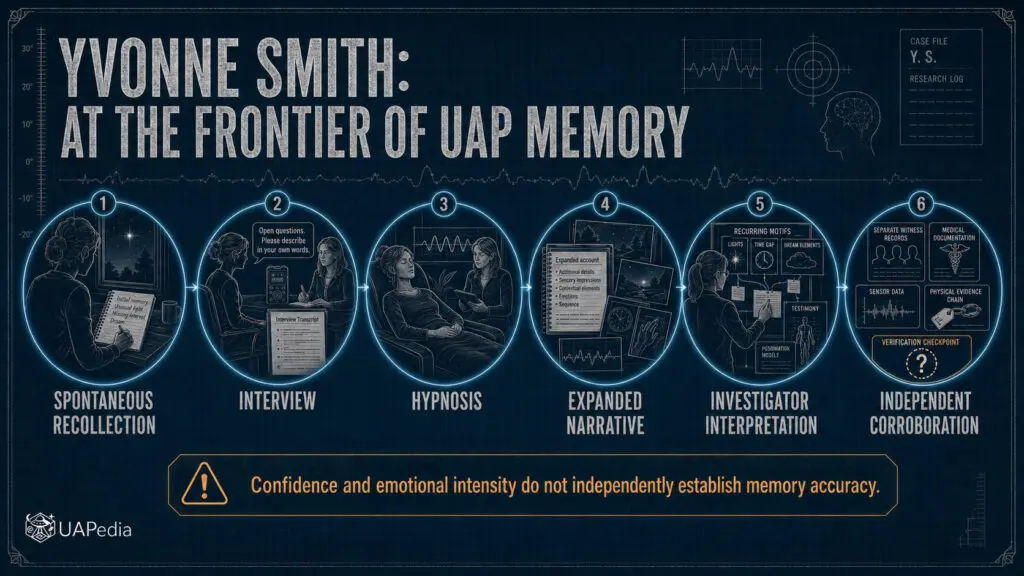
Smith has described a process that begins with interviews rather than immediate hypnosis. She gathers personal history, discusses unusual memories and asks about missing time, dreams, childhood incidents, bodily effects and emotional responses. Where appropriate, she has said that she may communicate with an existing therapist.
During regression, a client is guided into a deeply relaxed and focused state and asked to return mentally to a specific event, image or period of missing time. The client may then describe a scene, sensation or sequence that was not available in ordinary waking recall.
Smith has frequently argued that patterns across different clients are significant. Her cases include recurring descriptions of gray entities, reproductive procedures, telepathic messages, medical environments, unusual children and apparent intergenerational contact. She interprets this convergence as possible evidence of an organized phenomenon rather than a series of unrelated psychological events.
Pattern recognition is a legitimate investigative activity. Many important discoveries begin when researchers notice similarities among reports that were initially treated as isolated.
The problem is not that patterns exist. The problem is determining why they exist.
For convergence to have strong evidentiary value, investigators must establish that the accounts developed independently. That means documenting what witnesses knew before hypnosis, what media they had consumed, which support meetings they attended, what questions they were asked and whether they had access to other case narratives.
The more a person has been exposed to established abduction imagery, the harder it becomes to know whether a recurring detail represents an independent observation, a culturally available template or a mixture of memory and expectation.
A transcript can still be useful. It records what the person said, how the narrative developed and which emotions accompanied it. It may preserve details for future comparison. What it does not provide by itself is an objective recording of the original event.
A hypnosis transcript is a record of a present interaction about the past.
The Ventura Freeway missing-time case
One of Smith’s best documented early cases involved two women traveling on California’s Ventura Freeway on November 20, 1992.
The women reported seeing an intense light descending in front of them. They initially feared that an aircraft might be crashing. Their next clear memory was of being farther along the freeway, with approximately two and a half hours apparently unaccounted for. Both women experienced continuing distress after the incident. (Los Angeles Times)
These consciously recalled elements are the evidentiary foundation of the case: an unusual light, a discontinuity in memory and two witnesses who reported being together.
After they were referred to Smith, separate regression sessions produced a much more elaborate narrative. The women described an enormous craft, small gray entities, examinations and a mantis-like being. One account included a communication suggesting that the entities would return.
The emotional responses during the sessions were reportedly intense. People observing the investigation considered the witnesses sincere. Sincerity is relevant, particularly when assessing whether an account was deliberately fabricated. It does not establish that every recalled detail corresponds precisely to an external physical sequence.
The investigation found limited corroboration for the aerial component. A computer programmer named Lance Lorien reported seeing an unusual white light in the same general region that night. He did not report an abduction and could not establish that his observation involved the same object. His testimony supports the possibility that an unusual light was visible in the area. It does not independently verify what the women described under hypnosis. (Los Angeles Times)
A suspected physical clue did not survive examination. One woman experienced discomfort in her ear, prompting consideration of an implanted object. An X-ray did not confirm the presence of such an object.
The negative finding does not explain the light or missing time. It does eliminate one proposed piece of physical evidence.
The women were also returning from their first MUFON meeting. That fact does not invalidate their experience, but it establishes recent exposure to UAP concepts before the incident. It becomes especially relevant when evaluating details that appeared only later during regression.
The most responsible assessment is therefore layered.
The women’s report of a light and missing time is first-hand testimony. The additional light witness offers limited corroboration for an aerial anomaly. The onboard narrative is hypnosis-derived testimony. The proposed ear implant was not supported by imaging. The complete physical-abduction interpretation remains unresolved.
The case is stronger than a single unsupported dream report, but weaker than a case with independently recorded contemporaneous testimony, medical evidence and sensor confirmation.
Dawn Cussins and the value of being heard
Dawn Cussins provides one of the clearest first-hand descriptions of Smith’s therapeutic impact.
Cussins reported that, as a child, she and a babysitter saw what appeared to be a structured object outside her family’s Malibu home. Her conscious memory included seeing something among the trees, screaming and leaving the room. She later experienced recurring dreams involving intelligent spider-like figures with pale heads and large dark eyes. (Los Angeles Times)
Years later, the cover of Whitley Strieber’s book Communion provided a visual reference that Cussins associated with her recurring imagery.
That recognition can be interpreted in more than one way. The image may have helped her identify a form she had previously encountered. It may also have supplied a culturally recognizable template through which uncertain memories and dreams were reorganized.
Both possibilities should remain open.
Cussins worked with Smith during the 1990s. She later described the experience as helping her discuss material she had kept hidden and reducing the pressure surrounding it. She felt more able to live with what had happened. (Los Angeles Times)
This is evidence of a reported therapeutic benefit. It is not independent proof that every regression image represents a physical event.
The distinction is essential because therapeutic usefulness and historical accuracy are not the same measurement. A narrative may help someone integrate fear, uncertainty and fragmented memory even when parts of that narrative remain unverified. Conversely, a physically real event can be remembered incompletely or inaccurately.
Human memory does not operate like a continuous video recording. It is reconstructed when recalled, influenced by emotion, expectation, later information and the context in which questions are asked.
Smith’s achievement in cases such as Cussins’s was not necessarily proving what occurred. It was offering a setting in which a person could describe an experience without immediate humiliation.
That outcome should not be minimized. Neither should it be mistaken for forensic confirmation.
Coronado and the claim of a group abduction
Smith’s most ambitious case concerns a UAP conference held at the Hotel del Coronado near San Diego on March 26 and 27, 1994.
A contemporaneous announcement in the MUFON UFO Journal confirms that a conference titled “Is There Hard Evidence for Extraterrestrial Visitations?” was scheduled at the hotel on those dates. Advertised speakers included Budd Hopkins, John E. Mack, John Carpenter, George Knapp and Colin Andrews.
Smith and members of CERO attended the conference. In the years that followed, some participants reportedly approached her with disturbing dreams, partial memories and impressions associated with the weekend. Smith conducted interviews and regressions, eventually concluding that the group had experienced a coordinated mass abduction.

The recovered narratives included unusual lights, altered awareness, apparent entities, medical procedures and confused or missing intervals. Smith assembled the accounts into a book-length investigation.
The original volume was published in 2014 under the title Coronado: The President, the Secret Service and Alien Abductions. A later edition, Coronado: The 1994 Mass Abduction, was published in 2025 and is listed on Smith’s official bookshop. (Yvonne Smith official bookshop)
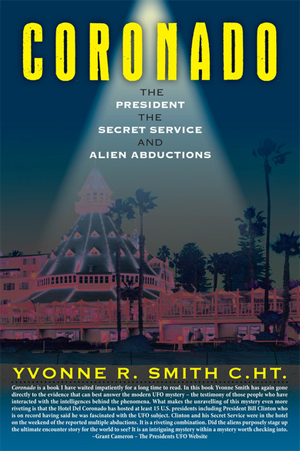
The change in title is noteworthy. The later title places the emphasis on the alleged group event rather than the suggested presidential and Secret Service association. It should not automatically be interpreted as a retraction or evidentiary concession, since no explicit statement explaining the title change has been identified.
The presidential connection has always required caution.
Official records show that President Bill Clinton traveled from Dallas to San Diego during the evening of March 27, 1994, the second day of the conference. The public chronology confirms his presence in San Diego but does not place him at the UAP conference, connect him to the attendees or indicate that the Secret Service knew of an anomalous event at the hotel. (GovInfo)
Geographic and temporal proximity is not the same as involvement.
Without hotel records, security logs, testimony from protective personnel or official documentation linking the presidential visit to the conference, the Clinton and Secret Service association cannot be used as corroboration for the alleged abduction.
Coronado also faces the problem of witness independence. Participants belonged to the same support network, attended the same UAP conference and shared a specialized interpretive vocabulary. Some accounts developed after nightmares or fragmentary impressions rather than through contemporaneous documentation on the night in question.
Agreement among group members is still relevant, but it carries less weight than separately recorded accounts from witnesses who had not communicated and were unfamiliar with established abduction motifs.
No publicly available hotel surveillance recording, medical chain of custody, sensor record, police report or official document has verified a non-human intrusion during the conference. Smith’s regression transcripts remain the central evidence for the mass-abduction conclusion.
The participants may have experienced an external event. They may have undergone sleep-related or psychological episodes that were later interpreted through a shared contact framework. They may have experienced a combination of an unusual external stimulus and subsequent memory reconstruction.
The available evidence does not justify identifying the participants as deceptive. It also does not establish the mass-abduction interpretation as verified history.
Coronado remains disputed.
Smith’s publications and their evidentiary role
Smith’s books transformed private sessions into a public archive of experiencer testimony.
Chosen: Recollections of UFO Abductions Through Hypnotherapy presented accounts drawn from regression work and emphasized recurring features across different clients. Later editions expanded both the material and Smith’s interpretation of it.
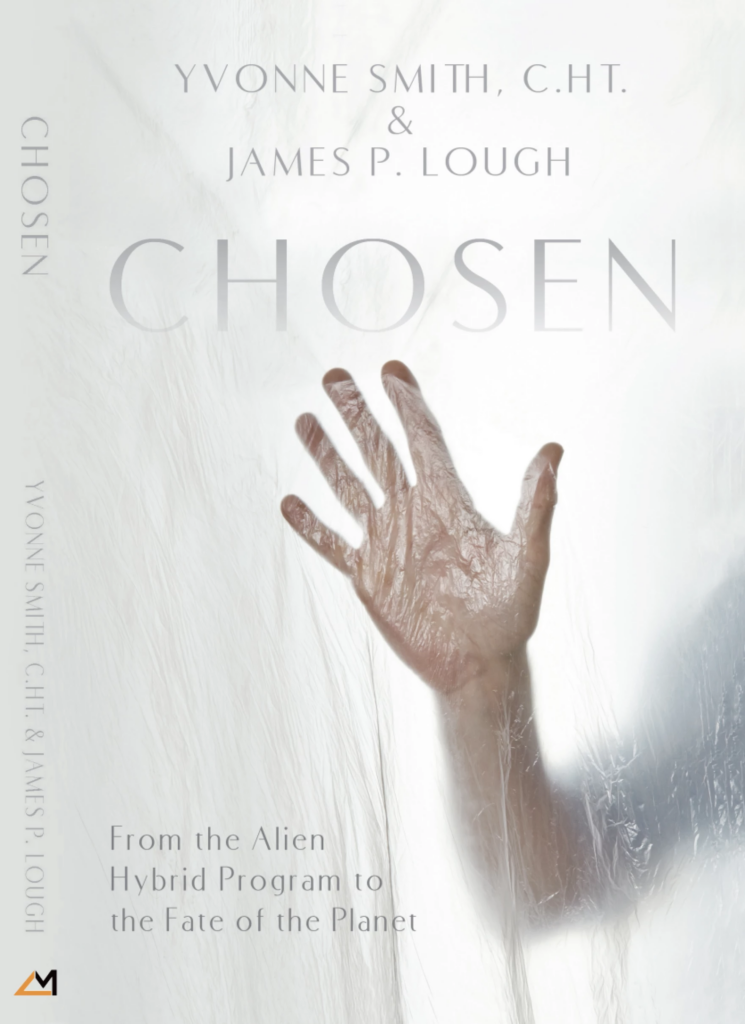
The third edition, co-authored with James P. Lough, was published by Ledge Media in 2023 as Chosen: From the Alien Hybrid Program to the Fate of the Planet. The book is described as containing transcripts and discussion of what Smith interprets as reproductive, hybridization and planetary-warning themes. (Yvonne Smith official bookshop)
Her Coronado volumes similarly rely on extensive hypnosis transcripts. The books allow readers to see what participants said and how the narrative developed over repeated sessions.
They should be understood as primary sources for Smith’s research model and for the testimony generated during her sessions. They are not controlled clinical studies. They do not employ blinded interviewers, randomized comparison groups or independent replication.
Their importance is archival and phenomenological.
They show how a prominent experiencer investigator came to interpret recurring narratives as evidence of a coordinated contact program. They preserve a vocabulary of gray beings, examination rooms, reproductive interventions, hybrid children, family-line involvement and messages concerning humanity’s future.
The books also demonstrate the feedback challenge at the heart of abduction research. Once a motif is published and widely discussed, its recurrence in later testimony becomes more difficult to evaluate. The later witness may be describing an independently encountered feature. The witness may also have absorbed the motif consciously or unconsciously.
This does not make later accounts worthless. It means investigators must document exposure history and distinguish genuinely independent convergence from convergence that developed within a shared cultural environment.
What scientific research says about hypnosis and memory
Hypnosis has legitimate therapeutic and medical applications. The National Center for Complementary and Integrative Health notes that hypnosis has been studied for conditions including pain, anxiety and certain behavioral concerns. It is generally described as a state of focused attention and increased responsiveness to suggestion rather than sleep or unconsciousness. (NCCIH)
Using hypnosis to reduce distress is different from using it to establish the factual history of an unknown event.
In 1985, the American Medical Association’s Council on Scientific Affairs reviewed hypnosis as a method of refreshing memory. It warned that hypnotically produced recollections may contain confabulations and pseudomemories and may increase a person’s confidence without producing a corresponding increase in accuracy. (JAMA)
This is particularly important in contact research because confidence and emotion are often treated as signs of truth. A client may cry, tremble or display intense fear while recounting a recovered scene. Those responses demonstrate that the experience is psychologically real and emotionally consequential. They do not independently identify what caused it.
A 2025 review in Frontiers in Psychology examined the relationship between hypnosis, memory recall and false-memory formation. It concluded that hypnotic regression and guided imagery should be approached cautiously because suggestive procedures can facilitate false recall. (Frontiers in Psychology)
This does not mean that every memory produced under hypnosis is false. It means the method cannot reliably distinguish accurate recall from memory reconstruction without external corroboration.
Research specifically involving people reporting abduction experiences has produced similarly nuanced findings.
Susan Clancy and colleagues found that participants reporting recovered or repressed abduction memories demonstrated greater susceptibility to false recall and recognition in a laboratory word-association task than comparison participants. The experiment did not prove that any individual autobiographical account was false. It suggested that memory characteristics may differ at a group level and should be considered when evaluating recovered narratives. (PubMed)
Richard McNally and colleagues measured physiological responses while experiencers listened to scripts constructed from their reported encounters. Participants showed increased heart rate, skin conductance and facial-muscle responses. Their bodies responded as if the narratives were deeply threatening. (PubMed)
The study confirmed the intensity of the distress. It did not determine whether the original cause was physical contact, sleep paralysis, altered consciousness, memory reconstruction or another process.
The scientific literature therefore supports a careful middle position.
Hypnosis may help clients explore emotions, associations and personal meaning. It may allow forgotten or neglected details to surface. It can also increase suggestibility, imagery and confidence in reconstructed material. Details obtained under hypnosis should consequently be treated as leads or testimony, not as verified event history unless corroborated independently.
That limitation concerns the method. It does not settle the broader question of whether anomalous contact occurs.
Critics, controverters and competing interpretations
The most significant controversy surrounding Smith is not whether her clients experienced distress. The evidence that many did is substantial.
The controversy concerns how the cause of that distress should be interpreted.
Smith’s model increasingly favors externally organized contact. Repeated descriptions of entities, examinations and reproductive themes are interpreted as evidence of a structured program involving selected individuals and family lines.
Memory researchers offer a different account. They emphasize suggestion, reconstructive recall, source confusion, cultural priming and the risk that a facilitator’s expectations will influence what a client reports.
Sleep researchers point to sleep paralysis, hypnagogic imagery and dream intrusion as possible explanations for bedroom encounters, sensed presences, paralysis and entity figures. These mechanisms can explain some experiences but do not automatically account for cases involving independently witnessed aerial objects, environmental effects or events occurring while witnesses are active and mobile.
Sociocultural researchers examine how popular imagery, support communities and published case narratives shape the language used to describe ambiguous experiences. That approach can explain the historical evolution of motifs but does not demonstrate that every underlying event is culturally generated.
Some UAP researchers accept that hypnosis is unreliable as a forensic tool while maintaining that a real external phenomenon may sit beneath portions of the testimony. In this model, hypnosis does not invent the entire event. It may reorganize, expand or distort memories of something genuinely anomalous.
These explanations need not be mutually exclusive. Different cases may have different causes. A single case may contain an externally observed light, an ordinary memory gap, a sleep-related episode and a later hypnosis-derived interpretation.
Smith’s work is most useful when it is examined at that level of detail rather than accepted or rejected as one indivisible package.
Smith’s lasting impact
Smith’s most defensible contribution is the social space she created for people reporting extraordinary experiences.
Before UAP testimony became a regular subject of congressional hearings and mainstream journalism, people describing abduction encounters risked being treated as objects of ridicule. Smith approached them as individuals worthy of attention. She listened, documented their accounts and introduced them to others with comparable experiences.
That work helped establish the experiencer as a legitimate subject of UAP research.
The term does not presume an explanation. A person can be an experiencer of missing time, paralysis, an apparent entity, a structured craft or an altered state without the researcher deciding in advance whether the cause was non-human, neurological, psychological or environmental.
Smith also preserved narratives that conventional UAP investigations often ignored. Government programs tend to concentrate on airspace, sensors, platforms and potential threats. Medical institutions generally address symptoms without investigating whether an anomalous external event occurred. Smith’s archive occupies the space between them.
Her work nevertheless demonstrates why support and verification should not be performed as though they were the same activity.
A practitioner who comforts the witness, conducts the regression, interprets the result and publishes the theory occupies several influential roles at once. Even without deliberate suggestion, expectations may shape the direction of questioning and the meaning assigned to ambiguous material.
Future experiencer research can preserve Smith’s compassionate approach while using stronger safeguards.
The witness’s first uninterrupted account should be recorded before hypnosis or group discussion. Investigators should identify which details were consciously remembered, which appeared in dreams and which emerged only under regression. Co-witnesses should be interviewed separately. Questions should remain neutral. Medical findings should be evaluated through ordinary clinical channels. Physical samples should have a documented chain of custody.
Regression material should be labeled clearly as hypnosis-derived testimony. Independent analysts should compare transcripts without being told the preferred interpretation. Researchers should also measure therapeutic outcomes, including whether the client’s anxiety, sleep and daily functioning improve or deteriorate.
Such procedures do not exclude the possibility of non-human contact. They make that possibility more testable.
Implications
Smith’s career has implications beyond the history of abduction research.
If even a minority of experiencer accounts represent externally organized and non-consensual contact, the subject would involve medicine, aviation, human rights, intelligence assessment and the ethics of interaction with non-human intelligence.
If most reports arise from sleep, trauma, dissociation, memory reconstruction or other human processes, experiencers still require informed and compassionate care.
A mixed model may be more realistic than either extreme. Some witnesses may observe genuine aerial anomalies and later reconstruct uncertain intervals through ordinary psychological processes. Others may experience vivid internally generated events that feel physically real. Some cases may involve causes not yet understood.
The correct response is not to abandon testimony. It is to record testimony with enough precision that its different layers remain visible.
Smith’s legacy lies in refusing to abandon the witness. The next step is to combine that commitment with a method capable of distinguishing emotional truth, remembered experience and independently verified event history.
Claims taxonomy
Verified
Smith is publicly documented as an HMI-trained certified hypnotherapist who began researching UAP-related experiences in the late 1980s. She established CERO around 1991–1992, worked with experiencers for several decades, lectured publicly and published books containing hypnosis-session material.
It is verified that the Hotel del Coronado conference was scheduled for March 26–27, 1994. It is also verified that President Clinton traveled to San Diego during the evening of March 27. These facts establish temporal and geographic proximity only. They do not establish presidential or Secret Service involvement in an anomalous event.
Named and anonymous witnesses reported distressing experiences to Smith. Dawn Cussins publicly reported that working with Smith helped her cope more effectively. This verifies the testimony and reported therapeutic effect, not the proposed non-human cause.
Probable
It is probable that Smith worked with hundreds of experiencers. Independent profiles and professional biographies consistently describe an extensive caseload, although no publicly available audited registry confirms a precise lifetime total.
It is also probable that CERO reduced isolation for some participants by providing a confidential place to discuss stigmatized experiences. Formal controlled research has not measured the group’s overall benefits or possible adverse effects.
Disputed
The claim that hypnotic regression reliably recovered accurate memories of physical UAP abduction is disputed. Scientific literature documents risks of suggestion, confabulation, false recall and increased confidence in inaccurate material.
The physical-abduction interpretation of the Ventura Freeway case remains disputed. The light and missing-time testimony are documented, but the onboard narrative emerged under hypnosis and lacks decisive physical corroboration.
The Coronado mass-abduction interpretation is disputed. Witness narratives exist, but the accounts arose within a shared support and conference environment, and no decisive independent record has verified a non-human event.
Claims involving hybrid children, reproductive programs, selected family lines and government awareness are also disputed.
Legend
Narratives concerning selected bloodlines, hidden intelligences intervening in reproduction and children existing between human and non-human worlds have become part of modern contact lore with little to no evidence.
Comparable themes can be found in older religious and folkloric traditions, but thematic resemblance does not establish an unbroken literal history. Within Smith’s work, these motifs remain experiential narratives and researcher interpretations unless independently substantiated.
Misidentification
The suspected ear implant in the Ventura Freeway investigation was not supported by X-ray examination. That particular physical-evidence interpretation was therefore unsupported.
The negative result does not classify the entire incident as a misidentification because the reported light and memory gap were not explained by the imaging examination.
Speculation labels
Hypothesis
Recurring motifs in Smith’s case archive may arise from a shared external contact phenomenon, common features of human neuropsychology, cultural transmission within experiencer communities or an interaction among all three.
Cases involving contemporaneous records, independent co-witnesses, sensor observations or documented physical effects should receive greater evidentiary weight than cases whose central details emerged only through hypnotic regression.
Witness Interpretation
Experiencers working with Smith have interpreted missing time, recurring dreams, paralysis, bodily marks, examination imagery, telepathic communication and encounters with gray or mantis-like entities as evidence of abduction or contact.
These interpretations are valid records of how witnesses understand their experiences. They are not automatically independent verification of non-human agencies.
Researcher Opinion
Smith’s conclusions concerning a coordinated hybridization program, intergenerational selection, repeated physical abduction and possible official awareness represent her research model.
Those conclusions derive primarily from recurring patterns in client testimony and hypnosis transcripts. They have not been established through controlled studies, authenticated biological evidence or publicly available official documentation.
References
American Hypnosis Association. (n.d.). UFO abduction researcher with Yvonne Smith.
Clancy, S. A., McNally, R. J., Schacter, D. L., Lenzenweger, M. F., & Pitman, R. K. (2002). Memory distortion in people reporting abduction by aliens. Journal of Abnormal Psychology, 111(3), 455–461. https://pubmed.ncbi.nlm.nih.gov/12150421/
Council on Scientific Affairs, American Medical Association. (1985). Scientific status of refreshing recollection by the use of hypnosis. JAMA, 253(13), 1918–1923. https://jamanetwork.com/journals/jama/fullarticle/397702
Hulse, J. (1994, January 6). Close encounters: UFO believers and abductees say it can happen here. Los Angeles Times.
Leo, D. G., Bruno, D., & Proietti, R. (2025). Remembering what did not happen: The role of hypnosis in memory recall and false memories formation. Frontiers in Psychology, 16, Article 1433762. https://doi.org/10.3389/fpsyg.2025.1433762
McNally, R. J., Lasko, N. B., Clancy, S. A., Macklin, M. L., Pitman, R. K., & Orr, S. P. (2004). Psychophysiological responding during script-driven imagery in people reporting abduction by space aliens. Psychological Science, 15(7), 493–497. https://pubmed.ncbi.nlm.nih.gov/15200635/
National Center for Complementary and Integrative Health. (n.d.). Hypnosis.
Smith, Y. R. (2008). Chosen: Recollections of UFO abductions through hypnotherapy. Backstage Entertainment.
Smith, Y. R. (2014). Coronado: The president, the Secret Service and alien abductions. CreateSpace Independent Publishing Platform.
Smith, Y. R. (2025). Coronado: The 1994 mass abduction. Ledge Media.
Smith, Y. R., & Lough, J. P. (2023). Chosen: From the alien hybrid program to the fate of the planet (3rd ed.). Ledge Media.
U.S. Government Publishing Office. (1994). Public papers of the presidents of the United States: William J. Clinton, 1994, Book I.
Vankin, D. (2013, December 5). A hypnotherapist built a career on alien abductions, and her experiences may unnerve you. LA Weekly.
Valley Sun. (2014, May 15). Alien encounters tell a human story. Los Angeles Times.
SEO keywords
Yvonne Smith, UAP abduction hypnotherapist, Yvonne Smith CERO, Close Encounter Research Organization, Close Encounter Resource Organization, UAP experiencer research, regression hypnosis, hypnosis and memory, missing time, Ventura Freeway UAP case, Coronado 1994 mass abduction, Hotel del Coronado UAP conference, UAP contact experiences, experiencer support, Chosen Yvonne Smith, alien hybrid program claims, UAP investigators, trauma and UAP, false memory research, non-human intelligence contact