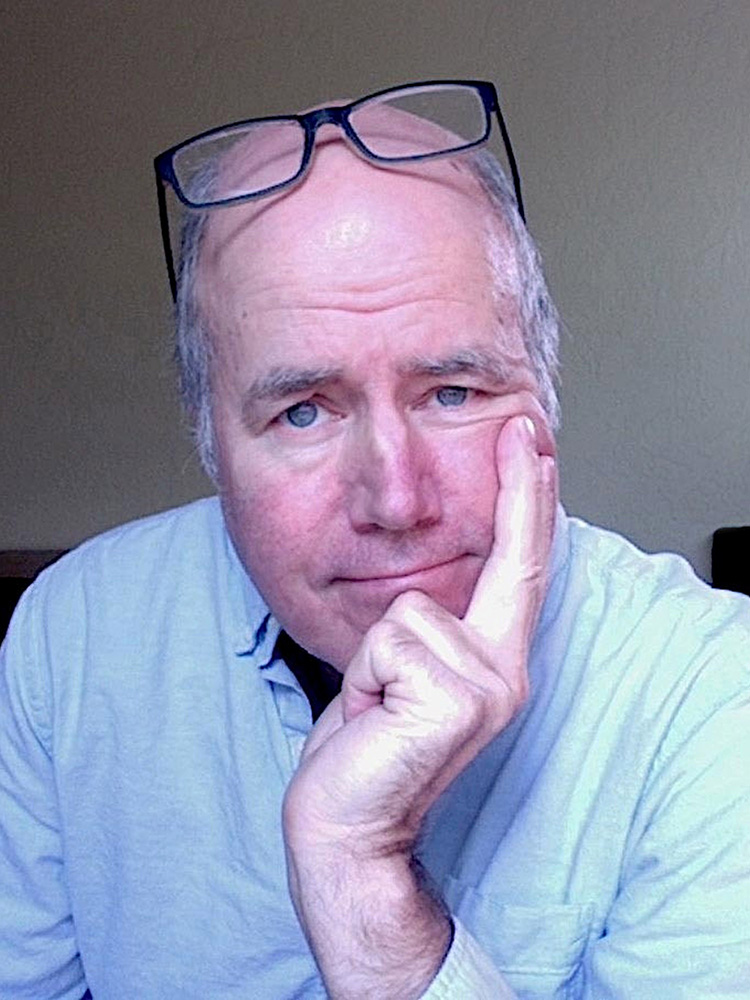
Mike Clelland occupies an unusual place in contemporary UAP literature. His defining subject is not a military encounter, a radar return, an alleged recovery programme or a government investigation. It is the owl, an ordinary animal that repeatedly appears in accounts he has gathered involving reported contact, missing time, dreams, synchronicities, altered states and personal transformation.
Clelland’s contribution has been to make this recurring imagery the sustained organising focus of an extensive collection of experiencer narratives. He says he has received thousands of owl stories, many involving UAP or other anomalous experiences. That is not the same as thousands of unique correspondents, and the resulting corpus has not been independently audited or statistically sampled. It is nonetheless a substantial body of first-person testimony whose recurrence has become the foundation of his work. Beyond the Illusion Podcast
His books and interviews sit at the intersection of memoir, folklore, contact research, Jungian ideas about symbolism and synchronicity, and oral history. They do not constitute a conventional scientific research programme. Clelland himself has been explicit on this point, describing himself as neither objective nor primarily scientific and comparing his role to that of a folklorist collecting stories and examining the patterns that emerge from them. Mike Clelland Owls
That admission is central to understanding both the value and the limitations of his work.
From Detroit to the mountains
According to Clelland’s published autobiographical account, he was born in 1962 in the suburbs of Detroit, Michigan. Drawing was important from early childhood, and he later identified MAD magazine artists Mort Drucker, Sergio Aragonés and Jack Davis, together with Robert Crumb, as major influences on his style. Hidden Experience
In 1981 he moved to New York City and attended New York University’s film school for one year. He subsequently left the programme and worked as a freelance illustrator and art director for advertising agencies. These details derive principally from Clelland’s own retrospective biography rather than independently obtained academic or civil records, so they are best presented as his published autobiographical chronology. Hidden Experience
A winter spent skiing in Jackson Hole, Wyoming, in 1986–87 altered the direction of his life. Clelland later wrote that returning to his urban career became increasingly difficult after that experience. He records moving permanently west in 1991, while communications technology allowed him to continue working with distant illustration clients. Hidden Experience
The transition eventually produced a second professional identity. Clelland became associated with wilderness instruction, lightweight backpacking and illustrated outdoor manuals, long before his name became closely linked with UAP contact narratives.
Illustrator and wilderness instructor
Clelland’s outdoor career is among the most independently documented parts of his biography. In 2007 the National Outdoor Leadership School identified him as a NOLS instructor and lightweight-backpacking specialist involved in a Light and Fast Seminar in Wyoming’s Red Desert. The course was intended to help instructors travel more efficiently and teach lightweight wilderness techniques. NOLS
He also illustrated a series of practical outdoor books. Falcon Guides lists him as illustrator of Allen O’Bannon’s Allen & Mike’s Really Cool Backpackin’ Book. The publisher describes O’Bannon and Clelland as NOLS instructors drawing on extensive backcountry experience. Simon & Schuster
Clelland later became a co-author. Allen & Mike’s Avalanche Book, written with O’Bannon and published by Falcon Guides on 4 December 2012, condensed subjects such as snow science, route selection, decision-making and rescue into accessible prose and illustrations. Simon & Schuster
His visual work continued to receive recognition. NOLS Cookery, edited by Claudia Pearson and illustrated by Clelland, won the Outdoor Classic category of the 2018 National Outdoor Book Awards. Noba Web
This background matters because Clelland entered UAP research as a communicator rather than as a laboratory scientist or government investigator. His professional instincts were already oriented towards visual explanation, narrative, wilderness observation and the translation of difficult material into an accessible form.
Late 2006 and a change in direction
Clelland has given slightly different retrospective dates for the period when anomalous experiences began to dominate his attention. His older autobiographical material places the shift approximately in the mid-2000s, but in a more precise 2013 statement he wrote that he began seriously examining his life experiences in late 2006, coinciding with what he called his first “flurry” of owl experiences. The more specific later statement provides the clearest chronology. Hidden Experience
He did not claim that an entirely new set of memories appeared at that moment. Rather, he began reconsidering events he says had remained in his memory for years but whose implications he had resisted.
One such event was a childhood episode that Clelland dates to 1974. In a 2026 interview he recalled walking home from a football game, seeing the sky illuminate orange and later discovering that the time was roughly two hours later than he had believed. He eventually interpreted this retrospectively as a missing-time episode. The passage of time is part of his testimony; what happened during the interval, if anything anomalous did happen, has not been independently established. rmmclaren.substack.com
Another childhood memory is unusually important because Clelland says it produced a contemporaneous drawing. In a 2009 account he described being at his friend Kenny’s house around 1974 and watching an object through an upstairs window. He compared its shape to a coffee can with a pencil protruding from it, recalled that it moved slowly near the horizon and said it disappeared abruptly after a smaller blinking light approached it. Clelland wrote that he and Kenny immediately went downstairs and independently drew what they had seen, with Kenny’s mother present at the table. Hidden Experience
The surviving drawing documents what Clelland says he remembered seeing as a child. It does not, by itself, establish the nature or origin of the object.
Clelland has also described an adult episode in which he awoke and perceived five thin, large-eyed figures approaching outside a window. In later discussion he has acknowledged that the event might have been dream-related while maintaining that it felt unlike his ordinary dreams. This willingness to preserve the ambiguity is significant because his own experiences form part of the evidence base from which his later ideas developed. rmmclaren.substack.com
The importance of synchronicity
Not every event that pushed Clelland towards public writing was visually dramatic. One of the most revealing was his account of searching for a particular Neutrogena SPF 45 sunscreen.
Clelland wrote in March 2009 that he had unsuccessfully searched local shops for the product. Later, while collecting rubbish beside a road, he reached the stop sign he had chosen as his turnaround point and found a full bottle of exactly that sunscreen lying at the base of the pole. The bottle was old and unusable. What mattered was not the object itself but the extraordinary significance Clelland assigned to its timing and placement. Hidden Experience
He explicitly linked this apparently mundane coincidence to his broader UAP experiences. In his interpretation, it functioned as a personally meaningful synchronicity.
This distinction between an event and the meaning assigned to it runs throughout Clelland’s work. A discarded bottle is independently ordinary. The proposition that its discovery was somehow connected to a larger anomalous process is an additional interpretive step. Clelland’s writing is often most revealing precisely where he allows both levels to remain visible.
The creation of Hidden Experience
Clelland launched the Hidden Experience blog in March 2009, following encouragement from contact experiencer and author Miriam Delicado. He described the site as a public attempt to organise memories and experiences that resisted a neat chronological narrative. Hidden Experience
The blog became part memoir, part interview archive and part collection point for correspondence. Clelland wrote about missing time, unusual observations, contact experiences, dreams, synchronicity and the difficulty of deciding what any of it meant. Readers who recognised similar elements in their own lives began contacting him.
By 2013, his position had changed noticeably. After years of resisting the implications he perceived in his experiences, he wrote publicly that he regarded the UAP phenomenon as a reality in his own life. This was a biographical declaration rather than independent confirmation of its cause, but it marked his transition from reluctant observer to self-identified experiencer. Hidden Experience
The owl increasingly became the organising symbol of that transition.
How the owl became central
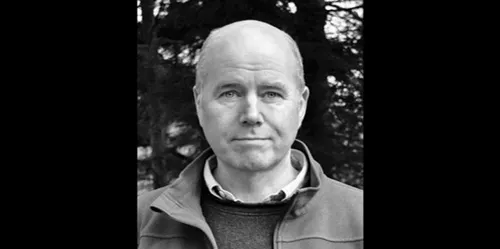
Owls possessed rich symbolic associations long before Clelland began investigating them, and links between owl imagery and unusual experiences were not invented by him. His distinctive contribution was to consolidate the motif within contemporary contact narratives and make it the central subject of a sustained collecting effort.
In the stories sent to Clelland, owls occupy markedly different evidentiary categories. Some witnesses report seeing physical birds near an anomalous event. Others describe recurring owl imagery in dreams or artwork. Some experience unusual coincidences involving owls. Another group retrospectively wonders whether an owl image concealed, substituted for or became associated with something else remembered during a contact experience.
Clelland says the volume of correspondence grew rapidly because people searching for combinations of owls and anomalous experiences repeatedly encountered his work online. In a 2024 interview he said he had accumulated “thousands” of owl stories and continued receiving new accounts. He also acknowledged that the subject had expanded beyond UAP to include meditation, psychedelics, shamanic initiation, death and other transformative experiences. Beyond the Illusion Podcast
The scale of the correspondence is noteworthy, but the number of stories cannot be converted directly into a prevalence estimate. Contributors are self-selected, individuals may contribute more than one story, and people who already know Clelland’s work may interpret later experiences through its conceptual framework.
Those limitations do not erase the pattern. They define what can legitimately be inferred from it.
The Messengers
Clelland’s principal work, The Messengers: Owls, Synchronicity and the UFO Abductee, was first published by Richard Dolan Press in 2015, with a foreword by Richard Dolan. A revised and updated edition followed in 2020. Open Library
The book combines Clelland’s autobiography, accounts from correspondents, owl mythology, synchronicity and reflection on the meaning of contact experiences. Its lasting contribution is not proof that owls are controlled by, generated by or intrinsically connected to a non-human intelligence. It is the consolidation and popularisation of owl-linked contact narratives as a distinct comparative motif within contemporary UAP discourse.
That distinction is historically important. Owl associations existed before Clelland. The Messengers gave them a sustained framework and an identifiable body of testimony.
The book moves deliberately between literal and symbolic possibilities. In some accounts the owl is simply present. Elsewhere it appears as an archetype, a signpost, a synchronistic marker or a possible element of perceptual mediation. At his most speculative, Clelland considers whether an intelligence could interact with human consciousness through imagery that is culturally and psychologically meaningful.
The collected testimony does not establish that mechanism. It establishes the recurrence of the imagery within the population that reached Clelland.
Folklore rather than laboratory science
Clelland has repeatedly said that he does not regard his work as conventional science. In “The Experience Is Important”, an essay originally written for Robbie Graham’s UFOs: Reframing the Debate, he states directly that he is not an objective researcher. He describes his preferred role as closer to that of a folklorist collecting stories and allowing the narratives to speak. Mike Clelland Owls
This admission is both a limitation and a strength.
It is a limitation because his correspondence does not use representative sampling, control groups or predetermined variables. It is difficult to calculate how often owl experiences occur among contact experiencers compared with the general population, or to establish whether apparently similar reports developed independently.
It is a strength because Clelland records material that object-centred UAP investigations can overlook. His interviews preserve how witnesses describe fear, ambiguity, dreams, personal transformation and long-term changes in worldview. Whatever their ultimate cause, those consequences are part of the phenomenology of the experience.
The key editorial distinction is between documenting a recurring narrative and proving the external agency responsible for it.
Stories from the Messengers and memoir
Clelland followed his first book with Stories from the Messengers: Owls, UFOs and a Deeper Reality in 2018. The book’s own publication material identifies Richard Dolan Press as the publisher and Whitley Strieber as the author of the foreword. A revised edition appeared in 2020. Scribd
The book shifts the emphasis from argument towards individual narratives. Each chapter develops an experiencer account in a literary form that preserves emotional and symbolic detail. That makes the material accessible, but it also creates the mediation typical of oral history. A published narrative is not identical to the raw original testimony from which it was constructed.
In 2019, Clelland published Hidden Experience: A Memoir of Owls, Synchronicity, and UFO Contact. The book reorganised material from roughly a decade of blogging into a more coherent autobiographical account. Bibliographic records list the print edition as published in 2019. AbeBooks
Its value is partly chronological. Much of the underlying material was written while Clelland was still wrestling with his interpretation, so the memoir preserves changes in belief rather than presenting only a settled retrospective position.
Podcasting and oral history
Audio interviewing became another substantial branch of Clelland’s work. The Hidden Experience podcast focuses on the personal impact of contact and related anomalous experiences through extended conversations with experiencers, researchers and writers.
As of October 2026, Apple Podcasts lists hidden experience audio as active from 2010 to 2026 with 171 episodes and distribution through SpectreVision Radio. Because podcast catalogues are dynamic, the episode total should be understood as a dated count rather than a permanent figure. Apple Podcasts
Clelland’s own website states that his archive contains more than 300 hours of audio interviews. Mike Clelland
The programme is best understood as an oral-history archive rather than a collection of verified case files. Long-form conversation preserves hesitation, uncertainty and narrative context that can disappear in formal summaries, while the evidentiary quality of individual claims still varies from episode to episode.
From May 2019 until July 2021, Clelland also hosted The Unseen for Whitley Strieber’s Unknown Country. The programme explored contact experiences alongside consciousness, folklore, out-of-body experiences and other anomalous subjects. Unknown Country itself records the May 2019 to July 2021 run. Unknown Country
Hypnosis, memory and caution
Hypnosis appears within Clelland’s personal history, but he has not treated it as an unquestionable route to factual memory.
In a 2026 interview he said he had undergone several hypnosis sessions and remained sceptical about what emerged, summarising his attitude as essentially “might be true, might not be true”. That caution is important given the prominent historical role hypnosis has played in contact and abduction research. rmmclaren.substack.com
One significant session took place with hypnotherapist Yvonne Smith in August 2018. In 2021, an episode of The Unseen discussed the session and included its audio recording. Unknown Country’s own description confirms the date and the later release. Unknown Country
The evidentiary problem is well established. A 2025 review by Elisa Krackow, Jihan Rashed and Islay Thompson examined Steven Jay Lynn’s empirical research on hypnosis and memory and reported that hypnosis did not improve accurate recall in the studies reviewed and could increase erroneous recollection. That finding does not prove any specific Clelland memory false. It means material emerging under hypnosis cannot independently confirm the historical event being remembered. Unknown Country
This distinction between subjective conviction and independent corroboration remains essential throughout contact research.
Fiction and The Unseen
Clelland published the novel The Unseen in 2023. His website describes it as a paranormal thriller, and Clelland himself refers to it as his 2023 novel. Mike Clelland
Fiction allowed him to explore themes familiar from his research without requiring the reader to treat each narrative element as testimony. Wilderness, psychic experience, synchronistic imagery and altered reality could become literary devices rather than evidentiary propositions.
In this respect, the novel reconnects Clelland’s UAP work with his earliest professional identity. He began as a visual storyteller, and his later fiction applies the same interest in mood, symbol and narrative compression to material that had previously appeared in memoir and testimony.
The methodological problem of self-selection
Any serious assessment of Clelland’s owl archive must account for the way it was assembled.
He actively asks people to send owl stories. His name is strongly associated online with the owl-contact connection. People who have an unusual owl experience and search for a UAP association are therefore particularly likely to encounter Clelland and submit a report.
That creates a self-selection effect. The archive can demonstrate that many people interpret owl encounters within a wider anomalous framework. The submission count alone cannot establish how common that association is among all UAP experiencers or among the general population.
Cultural priming creates another problem. Someone who has already read The Messengers may assign greater significance to a later owl encounter. Older memories may also acquire new meaning after exposure to a framework that links owls with contact.
None of this requires assuming dishonesty. Memory, expectation and interpretation are normal features of human cognition.
Clelland himself has acknowledged that he is looking at a narrow section of the overall experiencer population. In his 2026 interview he observed that people who contact him because of owls may produce a dataset that differs from the wider field. rmmclaren.substack.com
A future formal study could improve on this by defining categories in advance, preserving original submissions with dates, tracking repeat contributors, distinguishing physical owl sightings from dreams and symbolic experiences, and comparing experiencers with suitable control groups.
Revising his own archive
Clelland has also demonstrated a willingness to reassess material he previously published.
In January 2022 he added warnings to older posts involving writer Dan Mitchell. Clelland stated that he had become suspicious of the material, could no longer vouch for Mitchell’s sincerity and had removed related audio content. Hidden Experience
The episode is significant because extraordinary-claimed archives inevitably face source-integrity problems. A witness or contributor may appear credible at one stage and become doubtful later.
Clelland’s correction does not validate the remainder of his collection. It does show that inclusion in his archive has not always been treated as permanent endorsement.
Rice University and the Archives of the Impossible
Clelland’s work has increasingly entered scholarly discussion as material relevant to folklore, religion, anomalous experience and contemporary culture.
He took part in activities connected with the March 2022 opening of Rice University’s Archives of the Impossible. Anomaly Archives later hosted a discussion with Clelland and other attendees about the event. Anomaly Archives
In April 2025, Rice University’s own programme for its third Archives of the Impossible conference listed Michael Clelland as a participant in the session “The Ethics of Contact”. Center for the Impossible
This institutional association must not be confused with scientific endorsement of his hypotheses. Universities and archives preserve unusual testimony because it may be historically, anthropologically, religiously or culturally important even when the ontology of the reported events remains unresolved.
Academic preservation gives future researchers better access to the material. It does not decide what caused it.
Influence on contemporary UAP discourse
Clelland’s most demonstrable influence is the visibility he has given to owl imagery within experiencer culture.
VICE described him in 2021 as the self-described “owl guy” of the UAP world and noted the decade he had spent cataloguing accounts involving owls and anomalous experiences. VICE
The importance of The Messengers therefore lies in consolidation rather than invention. The book gathered a dispersed motif into a recognisable comparative framework and gave experiencers a vocabulary through which apparently isolated owl encounters could be considered alongside one another.
Clelland’s broader contribution has been to insist that the aftermath of a UAP encounter may deserve attention alongside the initial observation. Dreams, symbolic recurrence, synchronicity and changes in worldview become part of his record of what happened to the witness.
This approach intersects with older folkloric, Jungian and high-strangeness traditions. Clelland did not originate those traditions. His contribution is the distinctive synthesis he built around owl imagery and the large volume of correspondence that followed.
The investigator inside the investigation
Perhaps the defining feature of Clelland’s work is that he does not claim to stand outside his subject.
In a 2025 essay he again stated that he is not an objective researcher and cannot separate his own experiences from the work. He recalled being asked what he was researching and answering, after reflection, “Myself.” Mike Clelland Owls
That position gives him unusual rapport with experiencers. People discussing highly personal events may disclose material to a researcher who does not begin by assuming that subjective or high-strangeness elements are irrelevant.
The same position also increases the risk of confirmation effects. A researcher who regards his own biography as part of the pattern under investigation may be more likely to interpret ambiguous material as fitting that pattern.
Acknowledging subjectivity is valuable. It does not remove subjectivity.
Clelland’s work is therefore best understood neither as detached laboratory science nor as simple autobiography. It is participatory anomalous folklore produced by someone who simultaneously occupies the roles of collector, witness, author and interpreter.
Legacy
Mike Clelland has produced a sustained examination of symbolic animal imagery within contemporary UAP contact literature. He took a motif that appeared scattered across personal narratives and made it visible enough to become a subject of comparative discussion.
His archive is strongest as evidence that owl imagery has become meaningful to a substantial number of people reporting anomalous experiences. It is also valuable as a record of how those witnesses understand fear, synchronicity, transformation and the continuing effects of contact.
It is weaker as evidence for a single external mechanism. The collected accounts do not establish that owls are disguises for NHI, that coincidences are deliberately engineered, or that intelligence manipulates human perception through archetypal imagery.
Those possibilities remain hypotheses.
The unresolved nature of the material is not incidental to Clelland’s importance. It is the reason his work continues to provoke discussion. An ordinary bird becomes, within these narratives, a meeting point for physical observation, memory, mythology, psychology and the possibility of something genuinely anomalous.
Clelland has not solved that relationship. What he has done is document it extensively enough that the motif can no longer be treated merely as an isolated curiosity within contemporary contact literature.
His biography consequently traces an unusual path: illustrator to wilderness instructor, wilderness instructor to experiencer-writer, and experiencer-writer to the curator of a distinctive archive of owl-related anomalous testimony. The result is unconventional, personally entangled and methodologically limited, but also valuable for precisely the questions it leaves unresolved.
References
Apple Podcasts. (2026). hidden experience audio. SpectreVision Radio. Episode total and active years accessed October 2026. Apple Podcasts listing
Clelland, M. (2009, March 4). Neutrogena sun block. Hidden Experience. Source
Clelland, M. (2009, March 7). Out Kenny’s window. Hidden Experience. Source
Clelland, M. (n.d.). About Mike C. Hidden Experience. Source
Clelland, M. (n.d.). Where to start? Hidden Experience. Source
Clelland, M. (2013). I now know. Hidden Experience. Source
Clelland, M. (2015). The messengers: Owls, synchronicity and the UFO abductee. Richard Dolan Press. Revised edition published 2020. 2015 bibliographic record 2020 revised edition record
Clelland, M. (2018). Stories from the messengers: Owls, UFOs and a deeper reality. Richard Dolan Press. Foreword by Whitley Strieber. Revised edition published 2020. Publication details
Clelland, M. (2019). Hidden experience: A memoir of owls, synchronicity, and UFO contact. Mike Clelland. Bibliographic record
Clelland, M. (2023). The unseen. Independently published. Author’s books page
Clelland, M. (2025, September 10). Disclosure without a spark. Author’s essay
Clelland, M. (2026). The experience is important. Author’s essay
Clelland, M., & O’Bannon, A. (2012). Allen & Mike’s avalanche book. Falcon Guides. Publisher record
Krackow, E., Rashed, J., & Thompson, I. (2025). Does hypnosis aid memory retrieval? A review of Steven Jay Lynn’s research. International Journal of Clinical and Experimental Hypnosis, 73(3), 381–390. PubMed record
McLaren, R. M. (2026, September 9). Interview w/ Mike Clelland: Owls, UFOs and the doorway to consciousness. Interview
National Outdoor Book Awards. (2018). 2018 winners. Award record
National Outdoor Leadership School. (2007, May 1). Light and fast backpacking. NOLS article
O’Bannon, A. (2001). Allen & Mike’s really cool backpackin’ book. Falcon Guides. Illustrated by Mike Clelland. Publisher record
Rice University, Archives of the Impossible. (2025). The UFO and the Impossible: Archives of the Impossible 2025 conference. Conference programme
Roser, T. (Host). (2024, February 16). Owls, synchronicities and UFOs with Mike Clelland [Podcast episode]. Beyond the Illusion. Episode and transcript
Unknown Country. (2021, June 9). Yvonne Smith explores hypnosis and healing. Episode page
Unknown Country. (2024). Why do the Grays appear as owls? Mike Clelland has some theories. Programme history and interview
Anomaly Archives. (2022, April 30). Anomalous Archives / Rice University’s Opening of the Archives of the Impossible. Event discussion
Magee, T. (2021, May 10). For UFO hunters, the owls really aren’t what they seem. VICE. Article
UAPedia. (2026). UAPedia editorial standards: Navigating the mystery (Version 1.3). Editorial standard
SEO keywords
Mike Clelland biography, Mike Clelland owls, Mike Clelland UAP researcher, The Messengers Mike Clelland, Hidden Experience, Hidden Experience podcast, owls and UAP contact, owl synchronicity, UAP experiencer research, missing time, contact experiences, anomalous owl encounters, Stories from the Messengers, The Unseen Mike Clelland, experiencer testimony, synchronicity and UAP, archetypal imagery, UAP folklore, Archives of the Impossible, Rice University UAP, high-strangeness research