
Hoia-Baciu is a real forest on the edge of Cluj-Napoca, and it has a long-running reputation for things that feel “off.” That much is not controversial. What is controversial is how quickly the conversation tends to slide from “many people report odd experiences here” into “therefore this place is a portal,” or from “there are famous photographs” into “there is settled proof.”
A good explainer keeps wonder and discipline in the same room. It gives witnesses their dignity, because testimony is how most UAP history begins. It also respects the difference between a story you heard, an experience you had, and a document you can point to. Hoia-Baciu, more than most places, demands that separation, because it has an unusually efficient folklore engine and an unusually uneven archive.
The best single institutional framing I’ve found is refreshingly blunt and useful. The Cluj County Library’s local-knowledge entry says that stories about the “Fenomenele de la Pădurea Hoia-Baciu,” largely surreal or fantastic, “constitute a modern form of folklore,” and it notes that the legend was fed by snapshots showing objects or silhouettes that weren’t noticed at the moment the photo was taken. (bjc.ro) That is not an attempt to humiliate witnesses. It is a map of how the phenomenon propagates.
At the same time, the same library entry anchors the forest’s international UAP reputation to a specific historical pathway: it states that on 18 September 1968, AGERPRES reported that, one month earlier, a UAP had been observed and photographed near Cluj in the Baciu forest, and that the news was rapidly picked up by major press agencies. (bjc.ro)
So the Hoia-Baciu record is not “only folklore,” and it is not “only evidence.” It is both layered. This piece explains those layers in a modern magazine voice, and it makes the citation chain harder, not softer: when something is a cultural retelling, we will say so. When something is a documented historical statement, we will cite the document itself, not a platform that happens to host a copy.
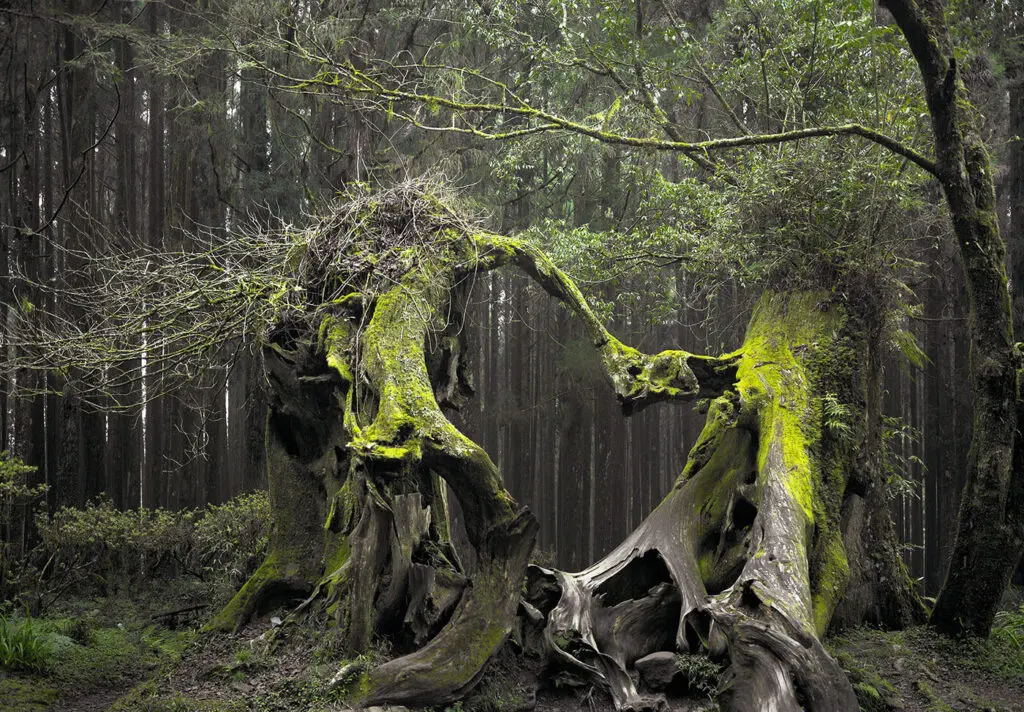
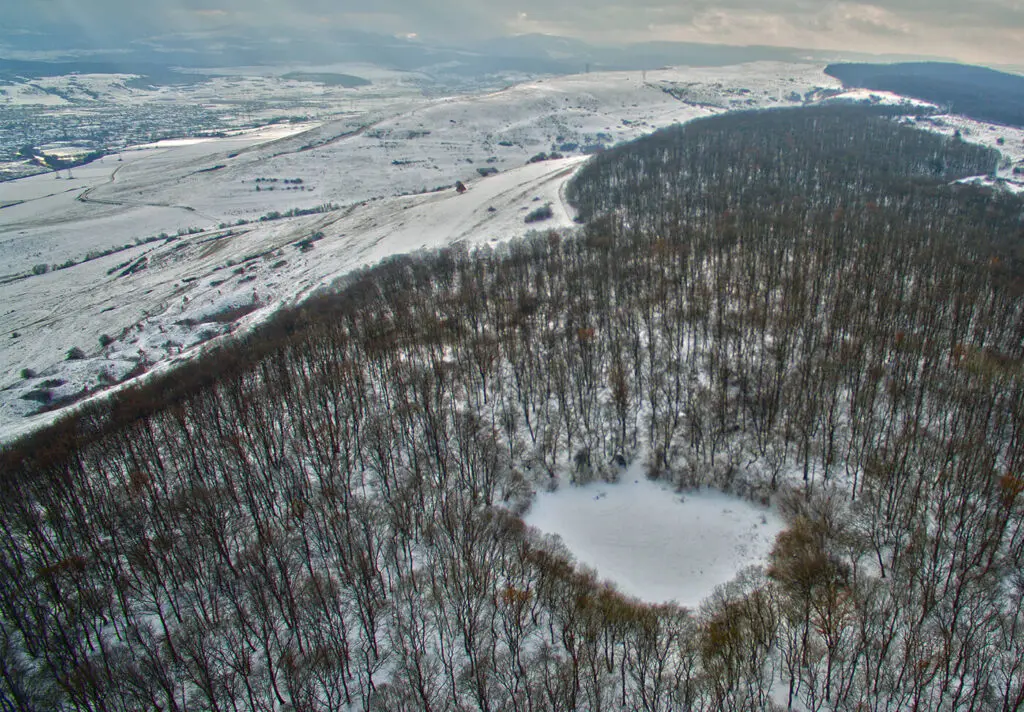
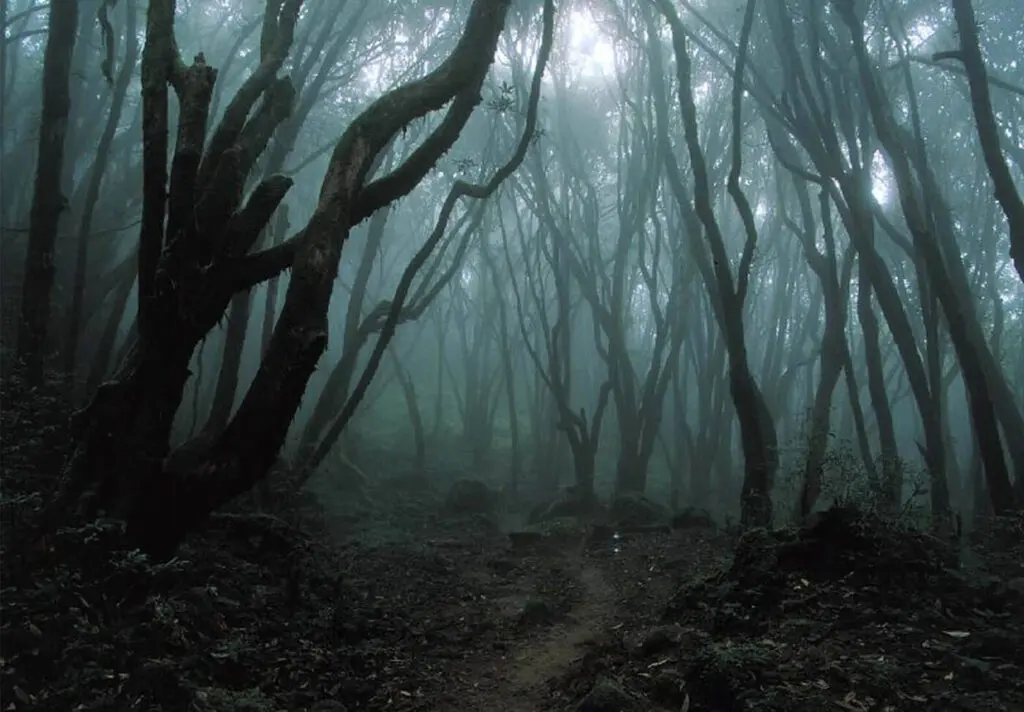
The place, and why it functions like a hotspot
Our hotspot framework is straightforward: places that generate recurring reports across years are worth tracking because they allow repeat observation, prospective protocols, and the possibility of multi-sensor monitoring rather than endless reconstruction of one-night mysteries. Hoia-Baciu fits the “recurrence” profile in the cultural record, and it also fits it in tourism behavior: people keep going there specifically because the reputation persists.
There is a peer-reviewed tourism/identity angle on that, too. In Territorial Identity and Development (Vol. 1, No. 1, Autumn 2016), Marius-George Oprea and coauthors discuss Hoia-Baciu as a niche destination for dark and paranormal tourism, and they explicitly note the mismatch between tourists, who often arrive seeking the mysterious, and many locals, for whom the forest can function as an ordinary recreational space. (territorial-identity.ro) That difference matters. It tells you the forest does not impose a single uniform experience on all humans. The “effect,” whatever it is, may be conditional, or interpretive, or both.
Hotspots also tend to have a “stage,” a micro-location that concentrates attention. Hoia-Baciu’s stage is the circular clearing that shows up constantly in guided narratives and in the most famous photographic story. A mainstream travel piece in The Guardian (October 30, 2025) describes the forest’s notoriety and links the 1968 episode to this clearing, while also capturing the lived-tour layer: people come on night walks, they anticipate strange sensations, they report whispers and touches, and the forest’s mythology intensifies in the telling. (The Guardian)
That description is journalism, not a lab report. It does, however, document something that is evidentiary in its own right: the forest’s contemporary cultural function and how modern witness streams are shaped by guides, expectation, and the feedback loop of reputation.
Folklore: shepherds, missing time, and why the library’s wording matters
Most people encounter Hoia-Baciu first as a bundle of vivid stories. The shepherd who vanished with a flock. A child who disappears and returns later unchanged. A “dead zone” where nothing grows. These motifs appear widely in popular retellings, and they’re often repeated on tours. (The Guardian)
The Cluj library entry’s insistence on “modern folklore” is important precisely because it allows you to keep these motifs without pretending they are proven. It’s a way of saying: these narratives are culturally real, socially transmitted, and psychologically potent, but they are not automatically document-backed events. (bjc.ro)
There is also a second key sentence in that entry that gets overlooked: the legend was nourished by photos that revealed something only after development. (bjc.ro) That detail doesn’t tell you what the phenomenon is. It tells you how belief stabilizes. A person can doubt their own night-time fear, but a photograph feels like an external witness. This is one reason Hoia-Baciu has such a durable internet afterlife. Even when a photo anomaly is mundane, the experience of discovery feels like evidence.
In a hotspot context, that matters because it explains why witness testimony in Hoia-Baciu tends to come bundled with artifacts, even when those artifacts are ambiguous. The forest is not just a place where people claim to see things. It’s a place where people go looking for something to bring back.
The archive problem: Alexandru Sift and an evidentiary gap that shapes everything
Hoia-Baciu’s modern story is often told as if it flows smoothly from early investigators to modern researchers to tours. The reality is lumpier.
The Cluj library entry names Alexandru Sift (1936–1993) as a biologist who dedicated much of his life to researching unusual events in the forest, and then it delivers the kind of sentence that makes any serious archivist wince: after his death, his documentary archive was destroyed in a strange manner. (bjc.ro)
Here’s the disciplined take. A destroyed archive is not proof of suppression. It is also not irrelevant. It is a limitation that permanently constrains what can be verified today. It means later writers can cite Sift as a figure, but readers cannot easily access the raw materials that would allow modern forensic review. In UAP history, those breaks are common, and they are one reason hotspots become “enduring mysteries” rather than resolved cases.
So we treat Sift as part of the record, because the library entry treats him as part of the record. (bjc.ro) We also treat the missing archive as a hard boundary: it is a reason to lower certainty, not to raise it.
The 1968 pivot: what is stable, what needs caution, and what the sources actually say
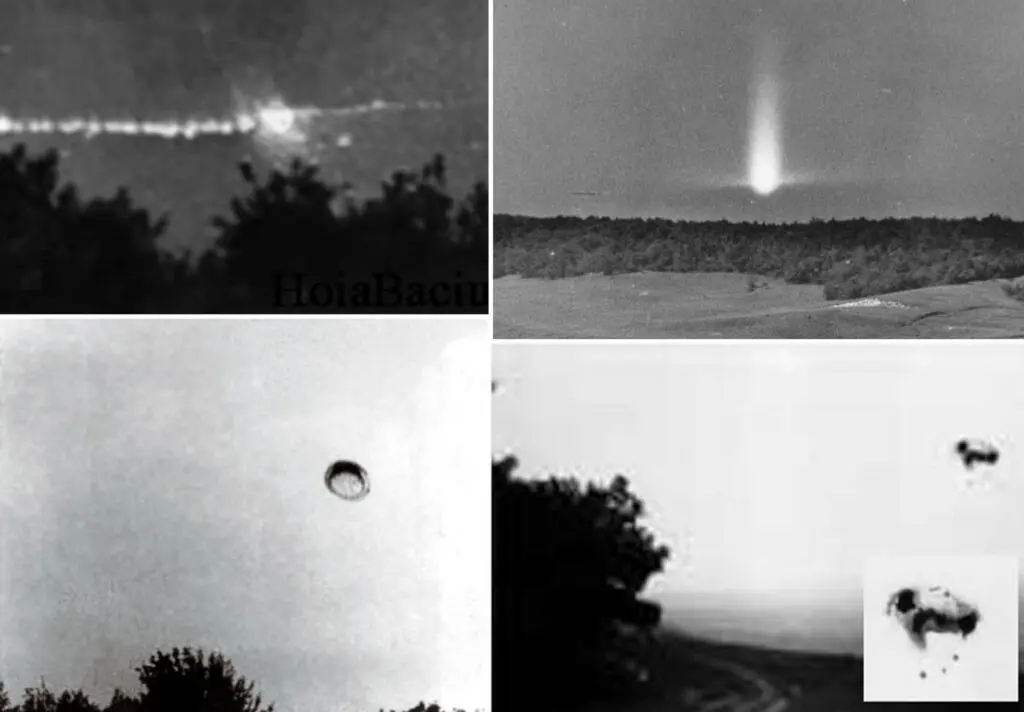
If Hoia-Baciu has an anchor case, it is the August 1968 sighting and photographs associated with Emil Barnea.
Two things are very stable across sources:
First, the episode is repeatedly described as the moment the forest gained wider attention beyond Romania. The Cluj library entry says AGERPRES announced on 18 September 1968 that an object had been observed and photographed a month earlier, and that the news was rapidly taken up by major press agencies. (bjc.ro) A modern newspaper feature also frames 1968 as the inflection point that exported Hoia-Baciu’s reputation to the world. (The Guardian)
Second, multiple accounts agree that Barnea was not alone. Patrick Gross’s case compilation, which focuses directly on the photographs, describes Barnea walking with his girlfriend and two additional companions who remained anonymous. (ufologie.patrickgross.org)
Now the part that required tightening, and your fact checks were right to flag it: Barnea’s occupation is frequently simplified as “military technician” in popular retellings, including mainstream coverage. (The Guardian) Gross’s compilation instead describes him as a 45-year-old construction technician who had previously been an officer in the army. (ufologie.patrickgross.org) That is the safer formulation, and it prevents credential drift. It also avoids a common trap in UAP writing: polishing a witness’s status until it becomes a rhetorical weapon.
There is also a striking additional claim in the Cluj library entry: it says the photographic images were analyzed and interpreted by engineer Florin Gheorghiță, and that this helped transform the case into a classic of world ufology. (bjc.ro) That is an important detail because it points to a named analytical intermediary and suggests there may be a trail of publications in Romanian ufology literature.
We should be careful, though. “Analyzed and interpreted” can mean anything from serious technical examination to editorial discussion. The library entry does not provide methodology, and it does not attach an accessible technical report. (bjc.ro) It tells us a historical narrative about how the case moved through media channels and interpretive communities.
To triangulate the “AGERPRES plus Romanian ufology” lane, a Romanian popular-science outlet (Descoperă, 2010) also claims the photographs passed through an “authority filter,” were taken up by AGERPRES, and were made public abroad, and it names Florin Gheorghiță and Ion Hobana as ufology figures connected to the validation narrative. (Descopera) This is still secondary journalism, and it should be read as reporting rather than primary case documentation, but it reinforces the historical claim that the case traveled through Romanian institutional and media structures rather than only through late internet folklore.
So what does a clean evidentiary summary look like?
Hoia-Baciu’s 1968 episode is a historically significant UAP-photo case because it is tied to a specific date window (August 1968), a named photographer (Emil Barnea), companion witnesses, photographic artifacts, and contemporaneous media pickup described by a local institutional entry as well as later journalism. (ufologie.patrickgross.org)
What we cannot responsibly do from the publicly accessible sources above is treat the case as a complete forensic package. The chain-of-custody for negatives, camera details, full-resolution originals, and independent technical measurements are not presented in these sources in a way that allows readers to replicate analysis. That doesn’t make the photographs meaningless. It means the photographs should be handled like much of UAP history: as strong historical artifacts that justify careful curiosity, not as a final endpoint.
“Field effects” and why Hoia-Baciu attracts that kind of talk
In hotspot lore, “field effects” is a shorthand for the witness-reported bodily and perceptual changes that cluster around certain places: dread, pressure, disorientation, sudden nausea, the feeling of presence, and sometimes what witnesses interpret as missing time.
Hoia-Baciu is a magnet for those accounts. Modern tour narratives and visitor reports often include the idea that electronics behave oddly or that people feel touched, grabbed, or shoved. (The Guardian) The tricky part is that these are exactly the kinds of experiences most sensitive to expectation and environment, even when nothing paranormal is happening.
So here is the interpretive model, clearly labeled as a model: you can think of Hoia-Baciu as a “story engine” because the forest reliably produces experiences that people can narrate, and those narratives then prime the next visitor. That doesn’t mean the engine is only psychological. It means that any real anomaly signal would be riding inside a powerful cultural amplifier.
Because those bodily effects are so common in “haunted” settings, writers often reach for environmental hypotheses. Infrasound is the best-known bridge hypothesis in that family.
Vic Tandy and Tony Lawrence’s 1998 paper “The Ghost in the Machine,” published in the Journal of the Society for Psychical Research, argues that a low-frequency standing wave around 19 Hz may, under certain conditions, contribute to sensory phenomena suggestive of haunting. (richardwiseman.com) This paper is widely circulated and often used as a mechanism for why some people feel dread or perceive odd movement in peripheral vision in particular built environments.
Here’s the compliance point, stated plainly: this is not a Hoia-Baciu study. It is an analogy and a hypothesis tool. (richardwiseman.com) It cannot be used to claim “Hoia-Baciu is explained by infrasound” unless Hoia-Baciu is actually measured and a relevant infrasonic profile is documented there.
But it does give us a disciplined way to speak about witness sensations without insulting witnesses and without turning sensations into proof. Some subset of “felt effects” in a forest at night could plausibly be influenced by acoustics, wind patterns, temperature inversions, fatigue, and fear. Other reports, like daylight structured-object photography, sit in a different category and remain harder to fold into purely environmental explanations.
The honest position is mixed: some Hoia-Baciu experiences may be explainable through ordinary mechanisms, some may remain genuinely anomalous, and the public record is not yet strong enough to quantify the ratio.
Publications, institutions, and why “platform citations” are not enough
One of your remaining fact-check blockers was citation hygiene. The easiest way to fix it is to stop citing platforms and cite origins.
For the folklore framing and for key historical claims about AGERPRES, the origin is the Cluj county library’s page itself, not a repost. (bjc.ro) For tourism scholarship, the origin is the journal PDF hosted by the journal’s site. (territorial-identity.ro) For the infrasound hypothesis, the origin is the actual PDF, not an “it’s on ResearchGate” hand wave. (richardwiseman.com)
The Hoia-Baciu story also includes Romanian ufology publishing, and here we have to be transparent about what is and is not accessible. The library entry provides a bibliographic reference to Adrian Pătruț’s 1995 monograph, including the publisher (Editura Dacia), place (Cluj-Napoca), and ISBN. (bjc.ro) That is a legitimate bibliographic anchor, even if we do not have a complete primary scan from the publisher. It also quotes Pătruț’s own conclusions in a way that is valuable historically, including his view that the phenomena are difficult to conclude upon and his judgment that only a small fraction of reported cases merit investigation while many are optical illusions from those who “want to see something.” (bjc.ro)
Separately, Florin Gheorghiță’s 1997 book OZN eterice is available via Polirom’s own publisher page and downloadable PDF, which makes it unusually accessible compared to many regional ufology works. (Editura Polirom) While that book is not a technical report on Hoia-Baciu per se, it matters in the Hoia-Baciu ecosystem because the library entry names Gheorghiță as an interpreter of the 1968 images, and Polirom’s framing shows the interpretive style he is associated with. (bjc.ro)
This gives us a cleaner evidentiary ladder than “some sources online say.” We have an institutional local entry with explicit claims; we have a journal article about tourism development; we have a dedicated case compilation about the photographs; and we have directly accessible Romanian ufology publishing that helps contextualize the interpretive environment.
Implications: what Hoia-Baciu suggests if you care about UAP research
Hoia-Baciu is often treated as a haunted attraction, but if you look at it through the hotspot lens, the implications shift from thrill to method.
First, archiving is everything. The Sift archive loss is a cautionary example of how quickly potential primary materials can vanish, leaving only paraphrase. (bjc.ro) If Hoia-Baciu is producing genuine anomalies, then the forest’s story is not the main asset. The primary artifacts are.
Second, a hotspot demands prospective study. Hoia-Baciu’s accessibility makes it a practical candidate for repeated observation across seasons and conditions. That matters because some environmental hypotheses, including acoustics, depend on weather and topography. You cannot test them with one spooky night.
Third, the forest shows why UAP research must treat culture as part of the field. Even if a genuine anomaly exists, it is now embedded in a living narrative system. The modern witness stream is shaped by guided tours, online expectations, and the desire to capture a “proof photo.” (The Guardian) If you ignore that, you will misread testimony.
Fourth, Hoia-Baciu highlights a recurring UAP problem: the strongest cases are often historically significant but technically incomplete by modern standards. The Barnea photographs may be a real anomaly capture, but the publicly accessible forensic chain is not presented in a way that closes the debate. (ufologie.patrickgross.org) That is not a failure of the witness. It is a failure of the historical record we inherited.
Finally, the forest has conservation implications. As The Guardian notes, development pressures and the absence of comprehensive protection have become part of the contemporary story, and some tour operators argue that recognition and tourism value could function as a preservation lever. (The Guardian) Even if you are agnostic about anomalies, the forest’s cultural value is measurable. Oprea and colleagues document Hoia-Baciu’s role in niche tourism demand and identity economics. (territorial-identity.ro)
In other words, Hoia-Baciu matters even if you never see a light. It is a living interface between folklore, testimony, media, and place.
Claims taxonomy
Verified
Hoia-Baciu exists near Cluj-Napoca and has a durable reputation for unusual stories. A major institutional local source explicitly frames much of the narrative as modern folklore and notes the role of photography in feeding the legend. (bjc.ro)
Probable
A UAP-photo episode associated with August 1968 occurred as a reported event with named witness Emil Barnea, companion witnesses, photographic artifacts, and contemporaneous media pickup described by the local institutional entry as an AGERPRES report on 18 September 1968. Barnea’s occupation is best described cautiously as a construction technician with prior military officer background in at least one detailed case compilation, rather than reduced to a single “military technician” label. (ufologie.patrickgross.org)
Disputed
Claims of consistent portal behavior, repeat disappearances with missing years, or reliably repeatable non-human entities linked to the clearing. These narratives are central to popular Hoia-Baciu identity, but they are not currently supported by publicly accessible primary documentation sufficient for strong adjudication. (The Guardian)
Legend
The shepherd disappearance motif and similar “missing time” stories function as foundational folklore that shapes expectation and storytelling, regardless of whether any single instance can be documented as a historical event. (The Guardian)
Misidentification
Hoia-Baciu’s online image ecosystem almost certainly includes misattributions and decontextualized photos, a common pattern in high-reputation sites where images travel faster than provenance. This category is included as a warning about record contamination; specific images should be adjudicated case by case with chain-of-custody. (bjc.ro)
Hoax
No dominant anchor case is established here as a deliberate hoax. However, given tourism incentives and the ease of modern fabrication, any new “definitive” Hoia-Baciu evidence should be treated as unproven until provenance and independent analysis are provided.
Speculation labels
Hypothesis
Hoia-Baciu may be a mixed-causality hotspot. The 1968 photographic episode suggests at least one historically significant UAP-style claim anchored to artifacts and contemporaneous media pickup, while many other experiences may be intensified by expectation, environmental conditions, and the feedback loop of tourism and retelling. (ufologie.patrickgross.org)
Witness Interpretation
Visitors often interpret dread, presence sensations, odd sounds, and perceived time distortion, especially near the clearing, as evidence of an intelligent agency or portal-like dynamics. This interpretation is coherent within the forest’s modern narrative ecology, but it remains interpretive rather than document-backed. (The Guardian)
Researcher Opinion
Hoia-Baciu’s long-term value will rise sharply if the community shifts from “retelling” to “record keeping”: provenance-first handling of photographs, systematic witness interviewing, mapping reports by date and location, and controlled baseline environmental measurement. Without that, the forest will remain culturally powerful but evidentially under-resolved. (UAPedia – Unlocking New Realities)
References
Biblioteca Județeană “Octavian Goga” Cluj. (n.d.). Fenomenele de la Pădurea Hoia – Baciu (Memorie și cunoaștere locală). Retrieved March 30, 2026. (bjc.ro)
Gross, P. (2005, May 31). Emil Barnea’s photographs, Cluj, Romania, 1968. Retrieved March 30, 2026. (ufologie.patrickgross.org)
Oprea, M.-G., Lazin, M.-C., & Martiuc, E.-C. (2016). The niche tourism development of one of the most mysterious forests in Romania: The Hoia-Baciu Forest. Territorial Identity and Development, 1(1). (territorial-identity.ro)
Stables, D. (2025, October 30). ‘The world’s most haunted forest’: twisted trees, UFOs and spooky stories in Transylvania. The Guardian. (The Guardian)
Tandy, V., & Lawrence, T. R. (1998). The Ghost in the Machine. Journal of the Society for Psychical Research, 62(851). (PDF copy hosted by Richard Wiseman). Retrieved March 30, 2026. (richardwiseman.com)
Gheorghiță, F. (1997). OZN eterice. Iași, Romania: Polirom. (Publisher page and authorized PDF). Retrieved March 30, 2026. (Editura Polirom)
UAPedia. (n.d.). Global High-Strangeness Hotspots. Retrieved March 30, 2026. (UAPedia – Unlocking New Realities)
UAPedia. (n.d.). 34. High-strangeness Hotspots. Retrieved March 30, 2026. (UAPedia – Unlocking New Realities)
Descoperă. (2010, November 18). Fenomenul OZN în România – o realitate mai aproape decât ne-am închipui (includes reporting on Barnea photos’ media pathway and Romanian ufology figures). Retrieved March 30, 2026. (Descopera)
SEO keywords
Hoia-Baciu, Hoia Baciu Forest, Hoia Baciu Romania, Cluj-Napoca UAP, Transylvania UAP sightings, Emil Barnea 1968 photographs, AGERPRES 18 September 1968 Hoia-Baciu, Florin Gheorghiță image interpretation, Ion Hobana Romanian ufology, Hoia-Baciu clearing, Poiana Rotundă, Alexandru Sift archive destroyed, Adrian Pătruț Fenomenele de la Pădurea Hoia-Baciu, Territorial Identity and Development Hoia-Baciu tourism, dark tourism Romania, high-strangeness hotspot Europe, field effects witness reports, infrasound haunting hypothesis, The Ghost in the Machine Tandy Lawrence