
“Non-human intelligence” is a phrase that can sound like science fiction until you notice where it now quietly lives: inside the machinery of record-keeping and policy. The U.S. National Archives describes a congressionally mandated UAP records collection that explicitly includes records relating to UAP, “technologies of unknown origin,” and “non-human intelligence (or equivalent subjects by any other name).” (National Archives)
That sentence does not confirm NHI. What it confirms is that the NHI hypothesis has become operational, serious enough to be named in the same breath as archival mandates, classification debates, and the long afterlife of government paperwork. If you care about definitions and intent, that’s the first point worth sitting with: even without “answers,” institutions are building shelves for the possibility.
This article is about the kinds of encounters that tend to push people toward that shelf. Not sightings in the broad sense, but encounters, meaning events in which witnesses describe something that feels less like a mystery in the sky and more like an interaction: responsiveness, apparent boundary-setting, communication, interference with systems, or bodily effects.
To keep the discussion clean, the article separates four things as consistently as possible: Evidence (what sources say), Witness Interpretation (what witnesses believed it meant), Researcher Opinion (pattern-level analysis), and Hypothesis (explicit modeling beyond evidence).
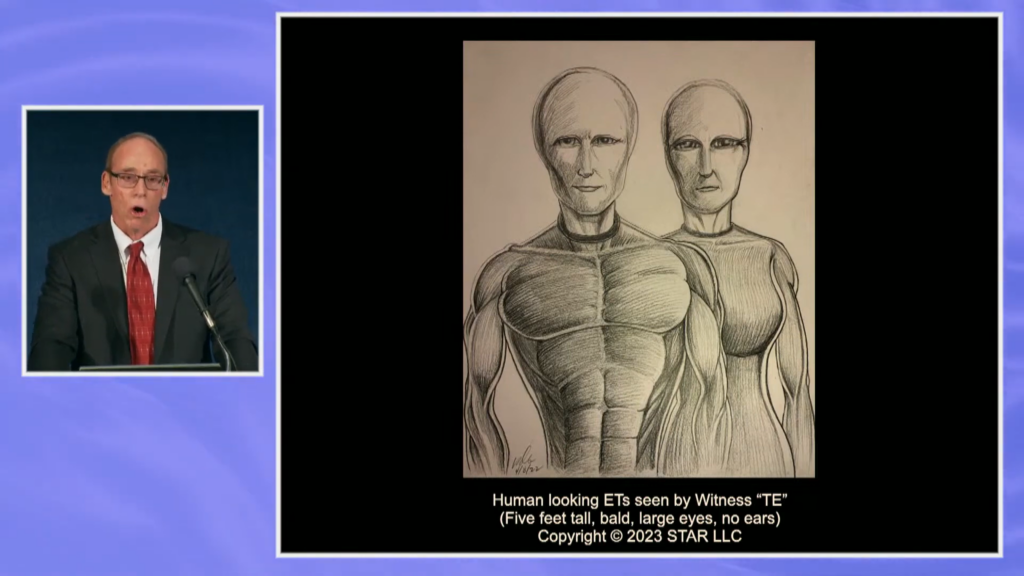
Why “encounter” matters more than “sighting”
A single “strange light” report is often one channel of information: human perception under uncertain conditions. Encounters, at their strongest, become multi-channel: multiple witnesses, multiple sensors, logs, reporting chains, and sometimes physical or medical traces.
That’s why modern official reporting is dominated by aviation and military contexts. Those environments generate documentation that can later be audited. The U.S. Department of Defense FY2024 consolidated annual report on UAP states that AARO received 757 UAP reports in the covered period and resolved 118 cases to prosaic categories such as balloons, birds, and unmanned aerial systems. It also states that “to date, AARO has discovered no evidence of extraterrestrial beings, activity, or technology.” (DoD FY2024 UAP Report)
Those lines matter in two directions at once. First, they validate something skeptics have always said: many reports do resolve everyday causes. Second, they validate something experiencers have always felt: “unresolved” is not the same as “nonexistent,” and the residue problem persists when data are insufficient or ambiguous. The DoD report explicitly discusses unresolved cases and data limitations as reasons cases remain unadjudicated. (DoD FY2024 UAP Report)
NASA’s 2023 independent UAP study team report helps explain why this is hard. It frames UAP as a legitimate subject for scientific inquiry but emphasizes that progress depends on better data quality, better reporting pipelines, and careful analysis. It is fundamentally a “measurement and methodology” document, not a verdict about NHI. (NASA UAP Independent Study Team Report)
So “encounters suggestive of NHI” is best treated as an inference category, not a conclusion. It is a way of saying: given what is described and how it is described, the event resembles agency more than randomness, while still remaining open to advanced human technology, misperception, or other competing explanations depending on the case.
The patterns that make people suspect agency
Across decades of casework, “NHI talk” tends to flare when one or more patterns show up together.
Evidence: apparent responsiveness (an object seems to react to a witness or aircraft), targeted interference (systems fail in a way linked to proximity or pursuit), structured close-range interaction (a sequence that resembles a managed engagement), and documented physiological effects that cluster around proximity claims.
Witness interpretation: “It knew we were there,” “It was pacing us,” “It was warning us,” “It sent a message,” “It was examining us.”
Researcher opinion: when these patterns repeat across different eras and contexts, it becomes rational to analyze them as potential indicators of agency, even while acknowledging that each pattern has mundane look-alikes.
That’s the tightrope: acknowledging the look-alikes without letting them become a universal eraser.
Case study: USS Nimitz 2004 and responsive motion
The Nimitz “Tic Tac” encounter remains a modern touchstone because it involves trained military witnesses and a publicly described sensor context, with portions of the story entering congressional record.
Evidence: In a written statement for the U.S. House Oversight Committee (July 2023), Commander David Fravor describes objects tracked for days, including descents from above 80,000 feet to around 20,000 feet, and an intercept in which he visually observed a white “Tic Tac” shaped object exhibiting unusual behavior. (Fravor House Statement PDF) UAPedia’s profile of Fravor synthesizes his account and places it within the broader Nimitz story arc. (UAPedia: David Fravor)
Evidence: What matters most, for an NHI-intent discussion, is not the most dramatic claimed performance characteristic. It’s the encounter structure: a credible witness describing an intercept of an unknown object during military operations, paired with a sensor narrative that is described publicly but not fully available for independent public review. (Fravor House Statement PDF)
Witness interpretation: in Fravor’s public retellings and related witness discussions, the object’s movements are often framed as beyond known capabilities and, crucially, as responsive during the intercept. The sense of “intelligence” arises from that perceived responsiveness, not from any explicit message. (UAPedia: David Fravor)
Researcher opinion: responsive motion is one of the strongest reasons cases like this are discussed as NHI-suggestive. When a UAP appears to pace a witness or “manage” distance during an engagement, the encounter reads less like a passive observation and more like an interaction. This is an analytical framing, not a declaration about what the object was. It remains constrained by the fact that the full underlying sensor package is not publicly independently verifiable.
Case study: Tehran 1976 and interference that tracks pursuit geometry
Some of the most NHI-suggestive encounters are not about what was seen, but about what happened to systems as the pursuit unfolded.
Evidence: A declassified U.S. government message hosted by the U.S. National Security Agency describes a 19 September 1976 incident in Iran involving multiple civilian reports, an F-4 scramble, and a loss of instrumentation and communications as the aircraft approached within roughly 25 nautical miles. The message states the systems returned after the pilot broke away. (NSA Iran Case PDF)
Evidence: The same document includes cautionary context about misperception and aircraft lighting, which matters because it shows the reporting channel was not simply endorsing sensational interpretations. (NSA Iran Case PDF)
Witness interpretation: the most natural interpretation of “fails on approach, returns on withdrawal” is that something about the encounter environment or the object influenced systems in a way that constrained the intercept.
Researcher opinion: it is reasonable to treat this incident as a classic “interference pattern” case because the timing of failures correlates with pursuit geometry. It is also reasonable to treat it as unresolved because the public record does not contain the instrumentation detail needed to conclusively test competing explanations. The event feels interactive in its structure, but “interactive” is not the same thing as “NHI.”
Case study: Ariel School 1994 and the problem of meaning
Another category of NHI-suggestive encounter is the meaning event, where the encounter is experienced as communication, not merely observation.
Evidence: UAPedia’s Ariel School dossier describes the 16 September 1994 event in Ruwa, Zimbabwe, in which many schoolchildren reported seeing an unusual object and, in some accounts, beings. The dossier also notes contextual complications such as regional attention to unusual sky events and the potential for suggestion to shape narratives. (UAPedia: Ariel School Dossier)
Evidence: External coverage has also documented the basic framing of the event and the claimed witness count, including the description that children reported a craft and “strange beings.” One example is reporting by the Mail & Guardian reflecting on the incident’s twentieth anniversary and the “62 pupils” figure. (Mail & Guardian, 2014) A John E. Mack Institute PDF (“The Witness” newsletter) similarly summarizes that 62 children reported a UAP and “strange beings,” reflecting the case’s circulation in the John Mack research tradition. (John E. Mack Institute PDF)
Witness interpretation: in many witness retellings, the encounter includes a sense of message, sometimes described as telepathic and often framed around concern about humanity’s technology and the environment. By its nature, this is interpretation, because it involves subjective reception rather than a recording that can be replayed.
Researcher opinion: Ariel is exactly why “NHI intent” cannot be treated only as a propulsion puzzle. If any part of the encounter involves content, then the contact surface may include cognition as much as optics. This does not authenticate the content as “true,” and it does not remove psychological or sociological competing explanations. It does explain why the case persists: for many witnesses, the lasting impact is not what was seen, but what it seemed to mean.
Case study: Rendlesham 1980 and institutional friction
Rendlesham Forest is enduring partly because it involves U.S. Air Force personnel stationed at RAF Woodbridge and because the archival paper trail became a long-running public object.
Evidence: The UK National Archives’ material on UAP files includes discussion of Rendlesham, describing that USAF personnel reported lights in the forest and claimed traces including markings and radiation. (UK National Archives transcript PDF) The UK National Archives also maintains an overview page for UAP reports that includes the relevant file context. (UK National Archives: UAP reports)
Evidence: UAPedia’s Rendlesham-related coverage via Nick Pope foregrounds a dimension that often gets erased in argument culture: the long-term psychological and reputational impact on witnesses, and how institutional ambiguity can deepen harm rather than resolve it. (UAPedia: Nick Pope on Rendlesham)
Witness interpretation: many witnesses and commentators interpret the encounter as involving a structured presence near a sensitive installation, which naturally invites intent language.
Researcher opinion: Rendlesham persists because it sits between worlds. It is not cleanly sensor-verified in public, but it is also not easily dismissed as a casual misidentification given the context and durability of testimony. “Suggestive” fits better than “proven” precisely because the case remains interpretively contested in accessible sources.
Abduction-era encounters and the contested terrain of intent
If intercept cases force intent into the language of tactics and systems, abduction-era narratives force intent into the language of bodies, memory, and vulnerability. These cases are among the most debated in the field, and they require especially careful boundaries.
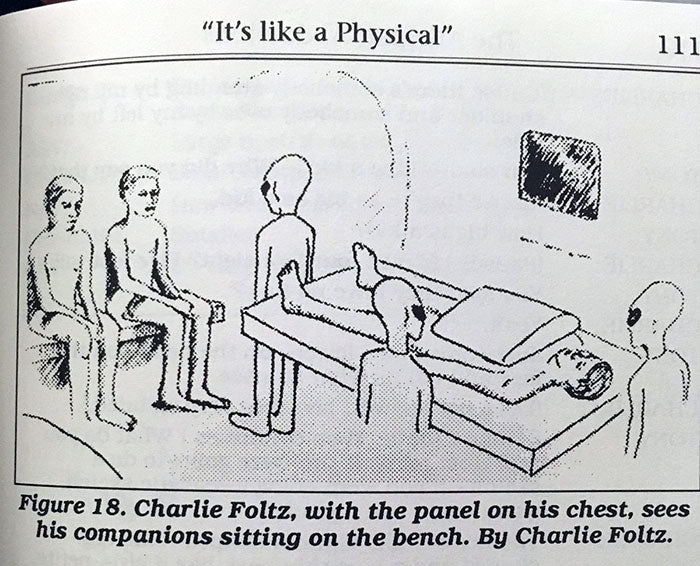
Evidence: UAPedia’s coverage of the Antônio Villas-Boas case (Brazil, 1957) presents an early abduction-era narrative involving close contact, onboard experience claims, and medical motifs. (UAPedia: Villas-Boas)
Evidence:In the Allagash Abductions synthesis, Maine, 1976, frames the case as a multi-witness wilderness encounter involving four men on a canoe trip, a luminous object reportedly observed over Eagle Lake, a beam-like interaction, a missing-time claim associated with the state of a burned-down campfire, and later hypnosis-derived narratives of onboard examination. The case is notable because the consciously recalled UAP sighting and the later abduction material can be evaluated separately, rather than treated as one undifferentiated claim.
Evidence: The Allagash case also illustrates why abduction material remains evidentially fragile. The strongest portion is the reported multi-witness sighting; the onboard examination narrative depends heavily on hypnotic regression years after the event. Later reporting also records Chuck Rak’s rejection of the abduction component, while the other principal witnesses continued to defend the core account. This internal split does not erase the case, but it makes the abduction claim disputed rather than settled. (The County, 2016)
Witness interpretation: abduction-era witnesses often interpret the experience as examination, sampling, instruction, or manipulation. These interpretations are intent-heavy because the narrative structure includes procedure-like sequences.
Researcher opinion: it is possible to accept that many experiencers are sincere while also acknowledging that sincerity does not automatically resolve literal causation. These accounts remain relevant to NHI intent definitions because they are explicit claims about “what it wanted,” even when filtered through trauma, memory, and culture. Any intent model that ignores experiencer testimony is incomplete, but any intent model that treats experiencer testimony as automatically literal is stepping beyond what the evidence can reliably carry.
Academic scholarship on encounter narratives also matters here because it documents how prominent cases become widely disseminated and can shape later storytelling, complicating but not automatically negating witness testimony. (Princeton University Press chapter excerpt)
COMETA and the defense-adjacent tradition
The 1999 COMETA report is often mischaracterized as an official French government report. It was not.
Evidence: The English translation describes it as an independent report written by the French association COMETA and notes its publication context. (COMETA report PDF)
Researcher opinion: COMETA matters because it shows a defense-literate worldview arguing that a residue of cases may involve technology beyond known platforms and considering extraordinary hypotheses as plausible, while still remaining a private, independent effort rather than a state verdict.
The body as a sensor: physiology and the hazard question
One of the most consequential shifts in UAP discourse is the move from “what was it?” to “did it harm anyone?”
Evidence: The DoD FY2024 report states that none of the reports AARO received during the covered period indicated observers suffered adverse health effects. (DoD FY2024 UAP Report)
Evidence: Separately, the Defense Intelligence Agency released an AAWSAP-era report titled “Anomalous Acute and Subacute Field Effects on Human Biological Tissues,” discussing possible mechanisms and referencing prior literature and case materials. The document supports the claim that bioeffects were treated as a legitimate analytical topic in a defense-linked context, but it does not establish causation by UAP in any specific case. (DIA bioeffects report)
Witness interpretation: individuals who report burns, nausea, neurological symptoms, or device failures often interpret these effects as exposure to “fields,” radiation, or deliberate influence.
Researcher opinion: physiological claims should be treated as high-priority where records and timelines exist, and as high-risk for misattribution because stress, environmental exposures, and ordinary medical conditions can mimic “exotic” signatures. The ethical reason the topic persists is straightforward: if the phenomenon is real and sometimes harmful, intent becomes more than philosophy.
What “intent” can mean without pretending we know it
Intent is easy to project, especially under fear or awe. That makes intent claims both natural and risky.
Evidence: intent is rarely directly recorded. What is recorded are patterns: pacing, evasion, approach, withdrawal, interference windows, and reported message-like experiences.
Witness interpretation: when witnesses say “it reacted,” “it followed,” “it warned,” or “it examined,” they are translating pattern into motive.
Researcher opinion: it is more defensible to speak in terms of behavioral patterns than motives. Some encounters, if accurately described, suggest an intelligence capable of choosing when to be seen, choosing the geometry of engagement, and sometimes shaping witness experience beyond simple visual observation. This is a rational analytical stance in the limited sense that it treats “agency” as one explanatory model among others for certain structured cases, not as a settled fact.
Hypothesis: if NHI is involved in a subset of encounters, “intent” may be better modeled as a portfolio of strategies rather than a single motive, including surveillance-like behavior in military contexts, meaning-driven experiences in civilian contexts, and occasional constraint-like effects in interference cases. This is a pattern-fit hypothesis, not an evidence claim.
Claims taxonomy
USS Nimitz / “Tic Tac” (2004)
Claim taxonomy: Probable. Supported by first-hand military testimony and a publicly described sensor context, but not fully independently verifiable from public data, especially regarding exact performance characteristics or attribution. (Fravor House Statement PDF; UAPedia: David Fravor)
Tehran, Iran (1976)
Claim taxonomy: Probable. A declassified official message supports core elements including the scramble, systems loss correlated with approach, and recovery after withdrawal, while leaving room for competing explanations. (NSA Iran Case PDF)
Ariel School, Zimbabwe (1994)
Claim taxonomy: Disputed. Many witnesses and consistent motifs support seriousness, but absence of instrumentation and plausible sociopsychological confounds keep it unresolved. (UAPedia: Ariel School Dossier; Mail & Guardian, 2014; John E. Mack Institute PDF)
Rendlesham Forest, UK (1980)
Claim taxonomy: Disputed. Archival material supports the existence of reports and claims of traces, while interpretation remains contested in public sources. (UK National Archives transcript PDF; UAPedia: Nick Pope on Rendlesham)
Villas-Boas (1957) and Allagash Abductons (1976)
Claim taxonomy: Disputed. Influential cases with sincere testimony in UAP literature, yet contested by critics and uneven in independently verifiable corroboration. (UAPedia: Villas-Boas; UAPedia: Travis Walton; Shermer, 2012)
Bioeffects documentation
Claim taxonomy: Verified (document existence), Disputed (causal linkage). The DIA report exists and discusses mechanisms and literature, but does not establish UAP causation for specific injuries. (DIA bioeffects report)
Speculation labels
Witness interpretation
Many high-strangeness witnesses interpret pacing, silence, accelerations, and “message-like” impressions as intentional communication. This may reflect external agency, internal cognition under stress, or a complex interaction of both depending on the case.
Researcher opinion
The most productive way to discuss “encounters suggestive of NHI” is to build typologies that separate sensor-context intercepts, interference cases, meaning/communication cases, and physiology-linked claims, then apply appropriate forensic standards to each. NASA’s emphasis on data pipelines supports this approach. (NASA UAP Independent Study Team Report)
Hypothesis
A subset of UAP encounters represent managed interactions where the phenomenon controls visibility, distance, and sometimes witness experience in a way that resembles an intelligence optimizing for observation and ambiguity rather than disclosure or attack.
References
All-domain Anomaly Resolution Office. (2024). AARO historical record report: Volume 1. U.S. Department of Defense. https://www.aaro.mil/Portals/136/PDFs/AARO_Historical_Record_Report_Vol_1_2024.pdf
COMETA. (1999). UAPs and defense: What should we prepare for? (English translation). https://ia600304.us.archive.org/34/items/pdfy-NRIQie2ooVehep7K/The%20Cometa%20Report%20%5BUFO%27s%20And%20Defense%20-%20What%20Should%20We%20Prepare%20For%5D.pdf
Defense Intelligence Agency. (2010). Anomalous acute and subacute field effects on human biological tissues. https://www.dia.mil/FOIA/FOIA-Electronic-Reading-Room/FileId/170026/
Department of Defense. (2024, November 14). Fiscal Year 2024 consolidated annual report on unidentified anomalous phenomena. https://media.defense.gov/2024/Nov/14/2003583603/-1/-1/0/FY24-CONSOLIDATED-ANNUAL-REPORT-ON-UAP-508.PDF
Fravor, D. (2023, July 25). Statement for the U.S. House Committee on Oversight and Accountability. https://oversight.house.gov/wp-content/uploads/2023/07/David-Fravor-Statement-for-House-Oversight-Committee.pdf
Mail & Guardian. (2014, September 4). Remembering Zimbabwe’s great alien invasion. https://mg.co.za/article/2014-09-04-remembering-zimbabwes-great-alien-invasion/
National Aeronautics and Space Administration. (2023). Unidentified anomalous phenomena: Independent Study Team report. https://science.nasa.gov/wp-content/uploads/2023/09/uap-independent-study-team-final-report.pdf
National Archives and Records Administration. (n.d.). Unidentified anomalous phenomena records collection: Frequently asked questions. https://www.archives.gov/research/topics/uaps/faqs
National Security Agency. (1976). U.S. government message regarding the Iran UAP case (September 19, 1976). https://www.nsa.gov/portals/75/documents/news-features/declassified-documents/ufo/us_gov_iran_case.pdf
Shermer, M. (2012). Travis Walton’s alien abduction lie detection test. https://michaelshermer.com/articles/travis-waltons-alien-abduction-lie-detection-test/
Sturrock panel coverage. (1998). Scientific panel concludes some UAP evidence worthy of study. ScienceDaily. https://www.sciencedaily.com/releases/1998/07/980701082300.htm
UK National Archives. (2009). UFO files transcript (August 2009). https://cdn.nationalarchives.gov.uk/documents/ufo-transcript-aug-09.pdf
UK National Archives. (n.d.). UFO reports. https://www.nationalarchives.gov.uk/explore-the-collection/explore-by-time-period/postwar/ufo-reports/
UAPedia. (n.d.). Ariel School encounter, Zimbabwe 1994: A dossier. https://uapedia.ai/wiki/ariel-school-encounter-zimbabwe-1994-a-dossier/
UAPedia. (n.d.). Commander David Fravor: The Top Gun pilot who chased the Tic Tac. https://uapedia.ai/wiki/commander-david-fravor-the-top-gun-pilot-who-chased-the-tic-tac/
UAPedia. (n.d.). Nick Pope on the Rendlesham Forest incident. https://uapedia.ai/wiki/nick-pope-on-the-rendlesham-forest-incident-from-the-former-ministry-of-defense-investigator/
UAPedia. (n.d.). Antônio Villas-Boas case (1957). https://www.uapedia.ai/wiki/antonio-villas-boas-case-1957-the-night-brazil-first-met-the-abduction-era/
The John E. Mack Institute. (2008, April 16). The Witness: Ariel School (newsletter PDF). https://www.johnemackinstitute.org/images/2008_0416_TheWitness_Ariel_School.pdf
SEO keywords
encounters suggestive of NHI, non-human intelligence UAP, NHI definitions and intent, UAP witness testimony, UAP intent analysis, UAP interference cases, Tehran 1976 UAP, USS Nimitz Tic Tac encounter, David Fravor statement, Ariel School Zimbabwe 1994, John Mack Ariel School, Rendlesham Forest incident, abduction-era contact claims, Travis Walton analysis, Antonio Villas-Boas 1957, UAP bioeffects DIA, NASA UAP report 2023, DoD FY2024 UAP report, AARO no evidence extraterrestrial statement, UAP records collection National Archives