Researcher, Experiencer & Community Builder
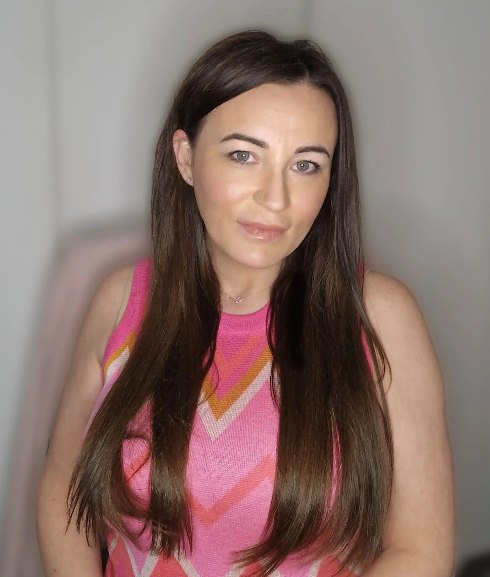
Holly Anne Wood, widely known online as “That UAP Girl”, is a British independent UAP researcher, writer, experiencer, event organiser and community builder based in northern England. Her place in the contemporary UAP field rests less on proposing a single explanation for anomalous phenomena than on asking what happens to the people who experience them. Through Human-Initiated Contact Events (HICE), online communities, public discussions, conferences and writing, Wood has increasingly argued that the human aftermath of anomalous encounters deserves serious attention alongside questions of physical evidence and causation. UAPCon describes her as a British UAP researcher and writer whose work engages witnesses, consciousness, psychology and spirituality (UAPCon).
This makes Wood an unusual figure in a field often divided among researchers, witnesses, advocates and media personalities. She occupies aspects of several of these roles. She interprets her own reported anomalous experiences, facilitates conversations among other experiencers and draws upon a professional background in communications and event management to build spaces in which those accounts can be discussed.
Her developing position is not that testimony should automatically establish what caused an experience. Rather, her recent work increasingly separates three questions that UAP discussions can easily collapse into one: what a person experienced, what consequences followed from it and what ultimately caused it. That distinction has become one of the most significant features of her public work.
Communications and event management
Wood’s documented professional career before her public prominence in UAP circles was rooted in communications. In July 2017, Tyrepress reported her appointment as PR and Media Manager at Davanti Tyres, based at the company’s north-west England headquarters. The contemporary report described previous professional experience in hospitality, construction and sports management and said her responsibilities included increasing media exposure, developing social-media activity and supporting international communications (Tyrepress).
That background is relevant to her later UAP work. Public relations and event management depend upon translating specialist subjects for broad audiences, coordinating people with different priorities, maintaining networks and creating environments in which conversations can develop. Wood would later apply those abilities to a subject in which scientific uncertainty, personal testimony, spirituality, advocacy and media attention frequently overlap.
As of October 2026, the Geoscience Energy Society of Great Britain identifies Wood as Senior Events Manager and states that she leads the planning and delivery of its events (GESGB). This is a professional events position rather than a scientific research appointment, an important distinction when describing the basis of her UAP work. Her documented professional expertise lies in communications and event production. Her UAP research is independent and primarily qualitative.
The childhood experience behind the researcher
Wood’s public account of becoming an experiencer begins when she was eight years old. During a UAPCon discussion subsequently distributed through New Realities with Alan Steinfeld, Wood recounted seeing three orange orbs near an ancient white horse carved into the chalk hills of Wiltshire. She remembered the encounter not simply as unusual lights in the sky, but as something that felt present, aware and interactive (BBS Radio).
Those elements belong to different evidential categories. The observation of three orange lights is Wood’s recollection of what she saw. The impression that the event possessed awareness or interacted with her is her interpretation of how the encounter felt. The publicly available material reviewed for this biography does not provide contemporaneous records, instrumental measurements or independently documented witness evidence capable of establishing the cause of the childhood event.
A 2024 Awakening Expo speaker biography expanded this autobiographical account, describing recurring experiences involving orange orbs and an upbringing in which esoteric and anomalous subjects were familiar. Because these details originate in promotional biographical material, they are best understood as Wood’s reported personal history rather than independently verified evidence. The same source describes her later work organising experiencer groups and HICE discussions (Awakening Expo).
The distinction between an observation and the meaning attributed to it would later become central to Wood’s writing. Her interest is not confined to identifying objects in the sky. She is concerned with why some encounters feel relational to the people reporting them and why a brief event can continue influencing a witness long after the observation has ended.
From private experience to public discussion
Wood was publicly discussing HICE by 2022. A November 2022 appearance on the Total Disclosure Podcast introduced her as “That UAP Girl”, associated her with The Wyrde Sister Show and centred the conversation on consciousness, spirituality and human-initiated contact (Total Disclosure Podcast).
Her public media activity expanded during 2023. On 26 June, episode 29 of Up The Vibe identified Wood as the host of Into The Wyrde and featured a discussion of contemporary developments in the UAP field and the prospect of disclosure (Up The Vibe).
A separate September 2023 episode of Tales of the Unexplained described Wood as an experiencer and HICE coordinator in north-west England (Tales of the Unexplained). Keeping these appearances separately sourced matters because they document different aspects of her developing public role.
HICE occupies a difficult evidential territory. Participants commonly employ meditation, focused intention, group observation or related practices while watching for anomalous events that may appear responsive. A light appearing after a verbal or mental request can be subjectively compelling, particularly when the timing seems meaningful, but temporal proximity does not by itself demonstrate causation.
Testing such claims requires greater control than ordinary skywatching. Aircraft and satellite tracking, astronomical checks, synchronised clocks, environmental measurements, complete observation logs, predefined criteria for what constitutes a response and preservation of unsuccessful sessions would all strengthen the evidential value of a contact experiment. UAPedia’s methodological treatment of contact similarly distinguishes the existence of a reported experience from evidence demonstrating the mechanism responsible for it (UAPedia, Contact Modalities: What Science Can Test).
The public record reviewed for this biography does not show Wood demonstrating a repeatable HICE effect through independently replicated controlled experiments. Her documented contribution is better characterised as participation, facilitation and community engagement around initiated-contact practices rather than scientific validation of a contact mechanism.
Putting witness welfare near the centre
By 2024, Wood’s public profile was increasingly associated with experiencer communities rather than contact practice alone. The Awakening Expo listed her as its official master of ceremonies and described her as organising groups for experiencers and leading discussions around HICE. The same promotional biography stated that she had collaborated with uNHIdden and served as its community engagement lead. Independent documentation of that precise title has not been identified here, so the claim is appropriately attributed to the conference biography rather than presented as independently verified employment history (Awakening Expo).
This perspective places witness welfare near the centre of Wood’s approach to UAP research. The event itself may last seconds or minutes, while the consequences can persist through changes in identity, relationships, spiritual beliefs, anxiety, curiosity or the witness’s assumptions about reality.
At UAPCon 2 in May 2026, Wood joined Meredith Spearman and Richard Monck for a panel titled The Experiencer Dimension: Meaning and Conclusions. The session addressed how unusual encounters can affect perception, identity, meaning and worldview. UAPCon’s presentation of Wood at the conference further identified her with experiencer-centred research and writing (UAPCon).
This approach does not require researchers to decide that every reported encounter has an extraordinary external cause. An unresolved event can still have social and psychological consequences worth documenting. UAPedia’s treatment of social stigma likewise emphasises how fear of ridicule, rejection or professional damage can shape whether witnesses disclose what they believe they experienced (UAPedia, Social Stigma & Impact on Experiencers).
The ethical boundary is important. Peer support and community facilitation are not substitutes for clinical care. Responsible spaces for experiencers need clear limits, confidentiality, informed consent and routes to qualified professional support when distress becomes significant. They also need to avoid the opposite failures of immediate dismissal and premature certainty.
Investigate the Unknown and Project Nanu
Wood’s organisational activity also extended into Investigate the Unknown Ltd and the associated Project Nanu initiative. Companies House filings record her appointment as a director on 28 January 2023. Researcher Keith Basterfield also documented her involvement while examining the development and public presentation of the Nanu project (Companies House; Basterfield, 2023).
Nanu was presented as a platform designed to combine the discovery, discussion and reporting of unknown phenomena. The project reflected a broader development within contemporary UAP culture: attempts to bring reporting systems, social interaction, education and experiencer communities into the same digital environment.
A platform built around anomalous testimony also creates significant methodological and ethical challenges. Raw witness reports can be influenced by later discussion, and community interpretation can become entangled with the original observation. Privacy, consent, data provenance and the preservation of unedited testimony become especially important when reports concern unusual experiences, mental states or personally identifying information.
The corporate record requires careful limits. Companies House filings record dormant-company accounts through the accounting period ending 30 September 2025 and the termination of Wood’s directorship on 6 August 2026. These filings establish the formal corporate record, but they do not establish everything that may have occurred through associated platform development or community activity, nor do they establish Wood’s personal reasons for leaving the directorship (Companies House).
No broader causal conclusions should therefore be drawn from the corporate filings alone.
UAP culture and mainstream communications
Wood’s communications expertise also brought her into an unusual commercial project. In late 2023, MoonPie and advertising agency Tombras developed the “Alien Acquisition” campaign and consulted Wood alongside former US Navy Chief Sean Cahill and writer Daniel Oberhaus.
Industry coverage identified Wood as a UAP researcher and communications director at Investigate the Unknown. The campaign placed outdoor advertising in several international locations and culminated in a drone display above the Pyramid of the Sun at Teotihuacan, Mexico (Little Black Book).
This was advertising rather than UAP research. Its significance to Wood’s biography is therefore not evidential. It demonstrates her visibility as an intermediary capable of translating UAP culture into mainstream communications and commercial media.
Endorsing the Durham Declaration
In April 2025, Wood appeared among the endorsers of the Declaration on SETI and UAP Research associated with a symposium at Durham Law School. The declaration calls for SETI and UAP research to be regarded as legitimate areas of academic inquiry, stresses academic rigour and methodological transparency and advocates interdisciplinary research across the sciences, humanities and social sciences. Wood appears on the endorsement list as “Ms Holly Wood, UK” (Durham University).
Her endorsement should not be interpreted as institutional recognition or academic appointment by Durham University. Durham states that the declaration was open to endorsement by members of the public, while the declaration explains that it is not an official document of Durham University and that endorsements were made in a personal capacity.
Its relevance is therefore more precise. Wood publicly associated herself with a call for academically rigorous UAP inquiry while continuing to approach the subject primarily through witness experience, consciousness and community engagement.
We Have Company and disclosure from below
Wood’s intellectual position became considerably clearer through her writing project We Have Company. Her 26 September 2026 essay, The Experiencers Are Already Here, draws upon what she describes as years of running events, hosting contact gatherings, administering online experiencer communities and speaking with people reporting unusual experiences (Wood, 2026a).
The essay moves away from spectacle and towards what Wood calls the human aftermath. She argues that the UAP ecosystem contains researchers, journalists, scientists, campaigners, conference organisers and media personalities, yet the experiencer can become primarily material for somebody else’s theory, programme or content. In her formulation, a person may need recognition that an experience occurred without requiring other people to accept a particular interpretation of its cause.
Wood summarises that position with the observation that there is “an enormous space between ridicule and unquestioning belief”. Psychology, neuroscience, trauma, sleep and memory can be relevant to anomalous experiences, she argues, but none should be imposed automatically as the explanation for every case. Equally, an extraordinary interpretation should not become an established fact merely because a witness experiences it intensely.
The same essay develops the idea of disclosure “from below”. Conventional disclosure narratives imagine information moving vertically from governments or institutions towards the public. Wood asks whether another process may already be operating horizontally as experiencers speak to one another, share testimony and establish communities in which previously private events become discussable.
This is primarily a sociological proposition. The spread of testimony cannot by itself establish what caused the reported experiences, but it can alter the cultural conditions under which those experiences are disclosed, recorded and investigated.
What is an experiencer?
Wood developed the argument further in her 10 October 2026 essay, What Is an Experiencer? Her central formulation is concise: “The experience comes first. Interpretation follows” (Wood, 2026b).
She distinguishes among witnesses, contactees, abductees and experiencers and argues that the final category need not require adherence to a particular explanation. A person may believe that something occurred which challenged their existing understanding of reality while remaining uncertain whether its source was extraterrestrial, spiritual, psychological, interdimensional or otherwise unknown.
Wood also considers historical narratives involving folklore, Spiritualism and reports of unusual beings. She is careful not to claim that similarities prove that older stories and modern UAP encounters share a single cause. Instead, she asks whether cultural vocabulary influences how anomalous experiences are described and interpreted.
Her writing nevertheless remains open to stronger possibilities. She is particularly interested in repeated experiences, apparent communication, recognition and reports that seem to extend across long periods of a witness’s life. From those patterns she raises the possibility that some anomalous encounters could represent continuing interaction rather than isolated observation.
Wood explicitly acknowledges the evidential boundary. Repetition or a sense of relationship does not establish an external intelligence, nor does it demonstrate that different experiences share a common cause. Her recent writing increasingly resists claims of certainty about a mechanism that has not been established.
That tension defines her current position. She remains receptive to the possibility that some experiencer testimony concerns phenomena not adequately explained by routine misidentification alone, while remaining increasingly explicit about the difference between that possibility and demonstrated causation.
Method, strengths and limitations
Wood’s research method is best characterised as qualitative, participatory and community-centred. It consists principally of listening to testimony, facilitating groups and discussions, participating in contact practices, organising public events and considering recurring themes within experiencer narratives. Her own anomalous experiences also form part of the perspective through which she approaches the field.
This method can reveal questions that purely sensor-centred investigations may miss. Fear of stigma, changes in worldview, family silence, altered religious beliefs, identity disruption and the process of integrating an anomalous event are all legitimate subjects of investigation independent of the final explanation for the event.
The limitations are equally important. The public record reviewed for this biography does not document peer-reviewed experimental UAP studies authored by Wood, a controlled HICE trial led by her or a published instrumented case catalogue meeting conventional scientific standards. Her UAP research identity should therefore be distinguished from laboratory or academic scientific research.
Testimony can document what a person reports, how confident they are and what consequences followed. It cannot by itself determine whether the originating cause was an unknown external object, a non-human intelligence, a conventional stimulus, a perceptual event, a neurological process or a combination of factors.
The strongest future research would preserve both sides of the problem. Witness testimony should be recorded carefully and early, while environmental and instrument data should be collected independently. The resulting records can then be compared without allowing either the witness’s interpretation or a preferred conventional explanation to determine the result in advance. UAPedia’s contact methodology describes the research problem as involving the witness, environment, instruments, timing and context (UAPedia, Contact Modalities: What Science Can Test).
Initiated contact raises additional ethical considerations. UAPedia’s treatment of such practices emphasises informed consent, psychological safeguards, privacy, preservation of metadata and transparent reporting of unsuccessful sessions. It also cautions facilitators against turning ambiguity, silence or distress into automatic confirmation of contact (UAPedia, Calling the Unknown: The Ethics of Initiated Contact).
An influence centred on community rather than proof
Wood’s demonstrable influence is best described through public activity, visibility and community infrastructure. Her record includes conferences, podcasts, intentional-contact discussions, platform development, commercial communications work, experiencer advocacy and a growing body of personal essays.
There is not presently sufficient evidence to argue that she has transformed academic UAP research or established a scientifically validated theory of anomalous contact. Her contribution is more defensibly located in the culture and ethics of experiencer research.
At its strongest, Wood’s work challenges two habits that can distort investigations of unusual testimony. The first is to dismiss witnesses because the reported experience sounds extraordinary. The second is to accept a witness’s interpretation simply because the experience was powerful or sincere.
Between those positions lies a more demanding approach. A witness can be treated respectfully without every causal claim being accepted. A life can be transformed by an experience whose origin remains unresolved. Consciousness and psychology can be examined without being used as universal explanations, just as external-intelligence hypotheses can be explored without being treated as established fact.
An unfinished legacy
Wood is a living figure whose work is still developing, so any judgement of legacy must remain provisional. Her directorship of Investigate the Unknown ended in August 2026, while her subsequent writing through We Have Company indicates a more individually authored phase focused increasingly on experiencer identity, epistemic uncertainty and the ethics of interpretation (Companies House).
Her most durable contribution may ultimately be less a theory about UAP than a method of approaching the people who report them. The experiencer can be heard without being assigned an explanation. Testimony can be preserved without interpretation becoming fact. Human consequences can be investigated even while physical causation remains uncertain.
That approach does not solve the UAP mystery. What it offers is a framework for maintaining openness without abandoning evidential discipline.
For a field dependent upon witnesses yet often divided over how much weight to give them, that middle ground may be consequential. Wood’s work asks whether better UAP research begins not by deciding what an experiencer encountered, but by recording carefully what happened, how it was experienced and what evidence might distinguish among the competing possibilities.
References
Awakening Expo. (2024). Holly-Anne Wood: Speaker biography. Zohar Global Group.
https://awakeningexpo.fredmantel.com/
Basterfield, K. (2023, August 20). Project Nanu. Unidentified Anomalous Phenomena: Scientific Research.
https://ufos-scientificresearch.blogspot.com/2023/08/project-nanu.html
BBS Radio. (2026, May 16). New Realities, May 16, 2026 [Audio programme].
https://bbsradio.com/podcast/new-realities-may-16-2026
Companies House. (2026). Investigate the Unknown Ltd: Filing history. UK Government.
https://find-and-update.company-information.service.gov.uk/company/12906585/filing-history
Durham University. (2025, April 24). Declaration on SETI and UAP Research. Durham Law School.
https://dur.ac.uk/departments/academic/law/news-and-events/news/2025/04/declaration–on-seti-and-uap-research/
Faragher, S. (Host). (2023, September 26). CE5 communcating with other worlds: Episode 20 September 2023 [Podcast episode]. Tales of the Unexplained. Spreaker.
https://www.spreaker.com/episode/ce5-communcating-with-other-worlds-episode-20-september-2023–56945522
Geoscience Energy Society of Great Britain. (2026). GESGB Team.
https://www.ges-gb.org.uk/about/team/
Hodgson, J. (Host). (2023, June 26). #29 Swapcast with Into The Wyrde | Holly Wood [Podcast episode]. Up The Vibe.
https://metacast.app/podcast/up-the-vibe/cwzVxA5O/29-swapcast-with-into-the-wyrde-holly-wood/SvPpQRnZ
Little Black Book. (2023, December 12). MoonPie becomes the first brand to advertise to aliens in global campaign from Tombras.
https://lbbonline.com/news/moonpie-becomes-the-first-brand-to-advertise-to-aliens-in-global-campaign-from-tombras
Total Disclosure Podcast. (2022, November 28). What does consciousness really mean? with Holly Anne Wood [Podcast episode]. Spreaker.
https://www.spreaker.com/episode/what-does-consciousness-really-mean-w-holly-anne-wood-tdp-ufotwitter-hice-ep-24–57185938
Tyrepress Editors. (2017, July 13). Davanti appoints Holly Wood as PR and media manager. Tyrepress.
https://www.tyrepress.com/2017/07/davanti-appoints-holly-wood-as-pr-and-media-manager/
UAPCon. (2026). Holly Anne Wood: That UAP Girl; The Experiencer Dimension: Meaning and Conclusions. UAPCon 2 May 2026.
https://uapcon.com/
UAPedia. (2025). Social Stigma & Impact on Experiencers.
https://uapedia.ai/wiki/social-stigma-impact-on-experiencers/
UAPedia. (2026a). Calling the Unknown: The Ethics of Initiated Contact.
https://www.uapedia.ai/wiki/calling-the-unknown-the-ethics-of-initiated-contact/
UAPedia. (2026b). Contact Modalities: What Science Can Test.
https://uapedia.ai/wiki/contact-modalities-what-science-can-test/
Wood, H. A. (2026a, September 26). The Experiencers Are Already Here. We Have Company.
https://wehavecompany.substack.com/p/the-experiencers-are-already-here
Wood, H. A. (2026b, October 10). What Is an Experiencer? We Have Company.
https://wehavecompany.substack.com/p/what-is-an-experiencer
SEO keywords
Holly Anne Wood, That UAP Girl, Holly Wood UAP, UAP researcher, UAP experiencer, UAP community builder, Human-Initiated Contact Events, HICE, UAP consciousness, experiencer research, experiencer support, UAP witness testimony, Project Nanu, Investigate the Unknown, We Have Company, UAP contact research, intentional contact, UAP disclosure, Into The Wyrde, UAP stigma, ontological shock, anomalous experience, consciousness and UAP, UAP community research