A nursing perspective on the UAP experiencer
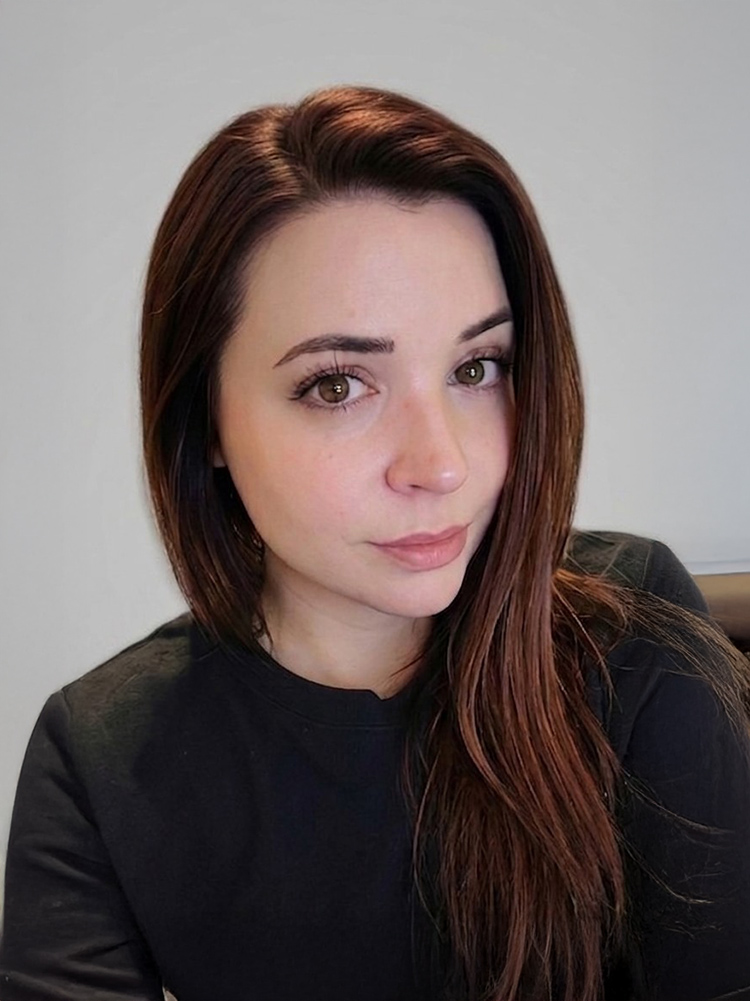
Meredith Spearman is a U.S.-based nursing educator, health informatics professional, writer and self-described anomalous-contact experiencer whose emerging work occupies an unusual position in contemporary UAP inquiry. Rather than concentrating primarily on sensor records, government programmes, propulsion or the physical origin of unidentified phenomena, Spearman asks what happens to the person whose experience destabilises a previously workable understanding of reality.
That emphasis places the witness rather than the object at the centre of her work. Her publication, The Maze to Metanoia, examines anomalous experience through phenomenology, consciousness research, traditions of initiation and the embodied and psychological consequences reported by experiencers. Spearman describes her method in clinical terms, approaching unusual testimony as she would an unfamiliar patient presentation: seriously and carefully, without immediately converting the account into either a diagnosis or an extraordinary explanation. (The Maze to Metanoia)
Two developing ideas have become particularly associated with her writing. The first is her 2026 formulation of “ontological health”, in which she applies healthcare and informatics thinking to people whose relationship with reality has been disrupted by experiences that do not fit accepted categories. The second is the Coupled Intelligence Hypothesis, a considerably more speculative attempt to explain UAP and other anomalous encounters as relational interactions between consciousness and an adaptive intelligence. (The Maze to Metanoia)
These are not equivalent kinds of contributions. Ontological health is primarily a proposed framework for care, documentation and research. The Coupled Intelligence Hypothesis is a theory about what anomalous phenomena may be. The healthcare proposal can therefore be assessed independently of whether Spearman’s wider cosmological interpretation ultimately proves correct.
Professional background and education
The strongest independently documented elements of Spearman’s professional biography come from the University of Phoenix. A June 2026 College of Nursing faculty record lists Meredith Spearman with a first teaching date of 19 November 2024 and identifies her highest degree as a Master of Science in Nursing from Chamberlain College of Nursing. The document defines those listed as current College of Nursing faculty who had taught at least one credit-bearing course during the preceding twelve months as of 1 June 2026. It therefore establishes her faculty status at that date, but does not by itself prove uninterrupted employment throughout every period after November 2024. (University of Phoenix)
Spearman describes herself more specifically as a public-health nurse informaticist and graduate nursing professor. Her essays commonly appear under the byline “Meredith Spearman MSN, RN”, while public professional materials have also listed informatics and medical-surgical nursing credentials. These more specific role descriptions should be understood partly as self-reported professional information rather than all being independently confirmed by the University of Phoenix record. (The Maze to Metanoia)
There is also a small but important verification issue around current RN status. ANOMACON publicly described Spearman in September 2026 as a “Professor, Writer & Registered Nurse”, and Spearman continued using the RN credential in her 2026 writing. Her public LinkedIn professional profile lists an Illinois registered-nurse licence issued in August 2012 with a displayed expiry date of May 2026. (LinkedIn) That displayed date does not establish that the licence was not subsequently renewed, and the accessible official records reviewed for this biography did not independently confirm post-May 2026 licensure. This article therefore treats “registered nurse” as a credential used by Spearman and repeated by contemporary organisations, rather than asserting independently verified current Illinois licensure as of October 2026. (ANOMACON)
Spearman has provided relatively little conventional autobiography concerning her early education, birthplace or family chronology. On 21 July 2026, however, she wrote that her ontological-health essay was being published on her thirty-ninth birthday, which implies a birth date of 21 July 1987 if the statement is taken literally. This remains an inference from her own account rather than an independently located civil record. (The Maze to Metanoia)
Nursing, classification and the limits of the chart
Spearman’s nursing background is central to understanding why her UAP writing differs from much of the field. Her starting problem is not simply whether an anomalous event occurred. It is what a clinician should do when someone reports an experience that has altered their life but does not fit comfortably within existing clinical categories.
In “Ontological Health: A Proposal”, Spearman recalls caring for a dying woman who reported seeing her deceased sister at the foot of the bed. The significance of the episode for Spearman was not that a paranormal interpretation had been established. It was that something meaningful was occurring for the patient while the available documentation system offered no obvious way of recording the experience without translating it into a category that might distort its meaning. (The Maze to Metanoia)
Health informatics sharpened that problem. Clinical systems turn lived experience into notes, categories, codes and retrievable data. If an experience has no accepted category, it can disappear into free text, be recorded under a misleading label or never be disclosed. Spearman argues that healthcare cannot build an evidence base around a phenomenon it does not know how to document. (The Maze to Metanoia)
This gives her work a systems perspective unusual in UAP discourse. She is interested in how institutions decide what counts as information, how those decisions influence care, and how the absence of suitable categories can shape what later appears to be absent from the evidence base.
The childhood experience
Spearman’s identity as an experiencer rests principally on an event she says occurred when she was approximately eight years old. In an August 2026 interview on Gods, Ghosts & UFOs, she described speaking to the universe from her bedroom window while living in a troubled home. According to the programme description, she recalled a rectangular phenomenon seeming to cut itself out of the sky and associated the episode with disaster dreams that continued for approximately three decades. (Apple Podcasts)
The evidential boundary is important. The childhood encounter is retrospective personal testimony. No contemporaneous report, independent witness record, photograph, sensor data or physical trace from the event has been identified in the public sources reviewed for this biography. Its later interpretation as anomalous contact, and particularly as a form of initiation, is Spearman’s interpretation rather than an independently demonstrated conclusion.
That distinction does not make the experience biographically unimportant. It eventually became one of the organising experiences through which Spearman approached questions of contact, silence and transformation. Her work repeatedly returns to what happens after an encounter, when the experiencer must incorporate something extraordinary into ordinary family, professional and social life.
This is where her professional and personal histories converge. The nursing professional asks what responsible care requires when a patient communicates something outside ordinary explanatory categories. The experiencer asks why people often decide that such experiences are safer left unspoken.
The Maze to Metanoia
Spearman’s public writing on anomalous phenomena developed rapidly from late 2025. Her Substack publication, The Maze to Metanoia, identifies itself as a phenomenological investigation of high strangeness concerned with what unusual encounters do to identity, the body and a person’s relationship with reality. (The Maze to Metanoia)
Her 16 December 2025 essay responding to the trailer for Steven Spielberg’s Disclosure Day set out an argument that would become central to the project: discussions of UAP disclosure tend to focus on governments, evidence and institutions while giving less attention to the healthcare consequences of radical worldview disruption. If information concerning non-human intelligence were ever established on a socially transformative scale, she argued, health systems would eventually encounter people struggling to integrate its implications. (The Maze to Metanoia)
By 20 January 2026, Spearman reported that The Maze to Metanoia had exceeded 1,000 subscribers within 39 days. That figure is self-reported rather than independently audited, but it demonstrates the audience size she said the project had reached during its opening weeks. (The Maze to Metanoia)
The word “metanoia” supplies the publication’s organising metaphor. In Spearman’s usage, it signifies a fundamental transformation of orientation rather than the simple adoption of a new belief. A person may emerge from an extraordinary encounter with altered assumptions about reality, identity, consciousness and meaning. The event itself can therefore be only the beginning of the story.
Her work during early 2026 also expanded into psychedelic experience, near-death experience, mystical encounter and other states that can provoke similar questions of integration. She explicitly described one early series as a proof of concept for a larger book-length project then in development. (The Maze to Metanoia)
Ontological health: an application, not an invented term
Spearman’s most practically oriented contribution is her 2026 application of “ontological health” to anomalous experience and worldview disruption. Care is necessary here because the term and broader nursing concept predate her work.
In 2001, Terese Bondas and Finnish nursing theorist Katie Eriksson published a study explicitly referring to “Eriksson’s ontological health model”. The article examined pregnancy through a caring-science framework and shows that ontological health terminology was already present in nursing scholarship more than two decades before Spearman’s proposal. (PubMed)
Later scholarship by Ingegerd Bergbom, Dagfinn Nåden and Lisbet Nyström reviewed Eriksson’s caring theories and described an ontological dimension of health involving wholeness and the inseparability of body, soul and spirit. The article was published in the Scandinavian Journal of Caring Sciences in 2022, following online publication in 2021. (PubMed)
Spearman therefore should not be credited with originating either the phrase “ontological health” or the broader idea that health can possess an ontological dimension. Her distinctive contribution is a 2026 formulation that applies the concept to experiences that destabilise a person’s assumptions about reality, including anomalous encounters. The available public record does not establish whether her formulation was directly derived from Eriksson’s model, so intellectual continuity should not be assumed without further documentation.
In her July 2026 proposal, Spearman describes ontological health as a domain concerning what happens when a person’s relationship with reality is wounded, destabilised, expanded or remade. She explicitly calls the article “the shape of an idea rather than the evidence for it” and says a more fully researched treatment involving lineage, measurement and literature was intended for later publication. (The Maze to Metanoia)
Her formulation extends beyond UAP. She includes near-death experiences, grief, serious diagnosis, religious transition, artificial intelligence, mystical states and other experiences capable of altering a person’s fundamental map of reality. These events need not share a cause. The proposed commonality lies in their capacity to unsettle the framework through which someone interprets the world.
Care before certainty
The practical strength of Spearman’s ontological-health argument lies in separating care from ontological agreement.
A clinician does not need to establish that a patient encountered non-human intelligence before assessing sleeplessness, fear, isolation, physiological symptoms, disrupted relationships, impairment, self-harm risk or access to social support. Nor does respectful listening require the clinician to endorse every interpretation the experiencer assigns to the event.
Spearman accordingly argues for what amounts to care under uncertainty. Conventional medical and psychiatric causes still require assessment. Psychosis, delirium, intoxication, neurological disease, sleep disturbance, medication effects and mania should not be ignored merely because an anomalous interpretation has been proposed. At the same time, ruling out those conditions does not require humiliating the person or reducing the entire account to pathology. (The Maze to Metanoia)
Her informatics proposal follows from that principle. She calls for shared terminology, case definitions, screening questions, careful documentation, measurement of distress and functioning, stronger referral pathways and participation by experiencers themselves in designing systems intended to serve them. (The Maze to Metanoia)
This is one of the more empirically approachable dimensions of her work. Researchers could study disclosure rates, clinical responses, documentation practices, stigma, health outcomes and whether different forms of support improve integration. None of those studies would require researchers to settle the ultimate origin of the experiences first.
As of 22 October 2026, the sources reviewed for this biography do not establish a peer-reviewed validation study of Spearman’s specific ontological-health formulation. It is therefore best understood as a developing proposal, clinical posture and research agenda rather than an established speciality or recognised diagnostic construct.
The Threshold and the Coupled Intelligence Hypothesis
Alongside her healthcare writing, Spearman developed a much broader theoretical framework through an eleven-part series titled The Threshold. By June 2026, five instalments had appeared, and she described the argument as cumulative, drawing on UAP cases, consciousness research and historical traditions of extraordinary encounter. Subsequent publication of Part XI completed the eleven-part sequence. (The Maze to Metanoia)
The series developed into what Spearman calls the Coupled Intelligence Hypothesis. In Part X, published on 30 August 2026, she proposed that the UAP and anomalous-contact phenomenon is not fundamentally an external object waiting to be detected, but an intelligence participating in a relationship with human consciousness. In her model, the phenomenon operates through a deeper informational level of reality and communicates primarily through symbols and transformative encounter rather than straightforward information transfer. (The Maze to Metanoia)
A recurring concept is what she calls the “dual signature”, the apparent coexistence of physical or environmental effects with symbolic, visionary or psychologically transformative material. Instead of forcing these two classes of report into either an exclusively physical or exclusively subjective explanation, she asks whether they could be products of the same interaction.
Spearman’s framework has clear intellectual predecessors. Jacques Vallée has long argued against reducing all UAP to extraterrestrial spacecraft and explored the possibility of an adaptive phenomenon interacting with human belief, culture and consciousness. Carl Jung considered the psychological and symbolic dimensions of aerial phenomena, while a variety of religious-studies and consciousness researchers have examined the transformative structure of extraordinary experience.
Spearman’s originality therefore lies chiefly in synthesis. She combines relational UAP models, symbolism, initiation, altered states, experiencer testimony and healthcare concerns into a single developing argument.
Adaptive intelligence and cultural form
One of the most ambitious components of the Coupled Intelligence Hypothesis concerns cultural variation.
The entities and symbols reported in extraordinary encounters do not remain constant. Medieval visionary beings, religious apparitions, modern contact entities and contemporary UAP accounts can look radically different. Spearman interprets this not as evidence against a common source, but as a possible characteristic of the source itself.
In The Threshold Part IX, she argues that an adaptive intelligence might update its symbolic vocabulary as human culture changes. In her view, a symbol loses transformative force when it becomes culturally domesticated, requiring the phenomenon to appear in new forms at the edge of what a culture can readily classify. (The Maze to Metanoia)
This is an imaginative attempt to account for one of the enduring problems in UAP and anomalous-experience research, but it is also methodologically vulnerable. A theory capable of treating almost any change in imagery as evidence of adaptation risks becoming difficult to falsify.
Similarity poses another problem. Dreams, psychedelic experiences, religious visions, folkloric encounters and UAP reports may share narrative structures without necessarily having a common external source. Comparable experiences could arise from shared human neurobiology, recurring cultural patterns, transmission between traditions, unrelated external causes or some mixture of these factors.
The Coupled Intelligence Hypothesis should therefore be regarded as hypothesis-generating rather than demonstrative. It organises a wide range of material into a common model, but the organisation itself does not prove that a single intelligence lies behind the material.
From private experience to public advocacy
Spearman’s visibility within the UAP community increased markedly during 2026.
At UAPCon 2 on 3 May, she appeared with Holly Anne Wood and Richard Monck on the panel “The Experiencer Dimension – Meaning and Conclusions”. The official programme describes the session as examining how extraordinary encounters affect perception, identity, meaning and worldview. No separate Spearman presentation title is established by the official programme reviewed for this biography. (UAPCon)
On 18 June 2026, Spearman was among those quoted in a Washington Post feature about UAP disclosure culture. The newspaper described her as a 38-year-old nurse and Substack writer near Chicago. The article placed her within a wider group of experiencers and disclosure advocates rather than presenting a dedicated profile of Spearman herself. (The Washington Post)
Her argument in that context concerned social legitimacy. For Spearman, meaningful disclosure would not consist solely of authorities acknowledging information. It would also require a culture in which people reporting extraordinary experiences could speak without automatically risking ridicule, professional damage or relational loss.
On 14 August 2026, she appeared on the podcast Gods, Ghosts & UFOs in the episode “Contact as Initiation with Meredith Spearman”. The programme provides one of the clearest public sources for her childhood account and for her interpretation of anomalous contact as an initiatory process. (Apple Podcasts)
In September, ANOMACON presented her talk “The Threshold: Making Room for the Extraordinary”. The conference description said the presentation drew on physics, anthropology, neuroscience and first-hand testimony to reconsider contact and consciousness while asking how people might integrate experiences that fall outside culturally accepted models of reality. (ANOMACON)
Strengths of the approach
Spearman’s strongest contribution to UAP studies is not yet an explanation of UAP. It is the identification of a problem that remains largely unresolved even if every ontological question is bracketed.
People report extraordinary experiences. Some are distressed by them. Some alter relationships, careers, religious beliefs or personal identity because of them. Some hesitate to disclose them to clinicians. None of those consequences depends upon researchers first determining whether the initiating event involved non-human intelligence.
Her nursing perspective helps separate the question “What happened?” from the question “What care does this person need now?” The distinction is ethically important because the second question can often be addressed while the first remains unresolved.
Informatics adds another valuable element. A medical record can document reported experience as reported experience. This permits information to accumulate without automatically turning testimony into either established external fact or psychiatric diagnosis.
If developed carefully, that approach could make anomalous-experience research more systematic while protecting the epistemic distinction between an event, the witness’s interpretation and an investigator’s hypothesis.
Methodological limitations
The largest limitations appear when Spearman moves from clinical uncertainty into ontological synthesis.
The Coupled Intelligence Hypothesis brings together evidence of dramatically different kinds and quality. Historical narratives, contemporary UAP cases, religious traditions, dreams, psychedelic experiences, symbolic interpretation and witness testimony cannot automatically be assigned equal evidential weight.
Cross-cultural resemblance is potentially significant, but resemblance does not establish common causation. A theory proposing a single adaptive intelligence must eventually specify observations that distinguish it from competing explanations and identify circumstances under which the hypothesis would be considered wrong.
There is also a visible tension within Spearman’s writing. Her clinical framework warns against premature certainty, yet portions of The Threshold make very strong claims about a single intelligence, an informational substrate and a recurrent initiatory purpose. Spearman herself signals uncertainty around the hypothesis, stating in Part X that she does not claim certainty that it is correct. (The Maze to Metanoia)
That distinction matters. The argument that people deserve care during unresolved extraordinary experiences requires no commitment to a single explanation. The claim that UAP, religious visions, psychedelic encounters and related phenomena are manifestations of one intelligence requires a much more demanding evidential case.
An emerging legacy
It is too early to describe Spearman’s legacy as settled. Her public body of UAP writing dates principally from late 2025 onwards. Her ontological-health proposal remains under development, the Coupled Intelligence Hypothesis has not undergone broad scholarly testing, and her book-length project remains described as work in progress. (The Maze to Metanoia)
Her influence should therefore be assessed proportionately. There is not yet a mature scholarly citation record, a validated clinical instrument or an established research programme built around her work.
What is already identifiable is a distinctive intervention in UAP discourse. Spearman has brought nursing, clinical documentation, health informatics and experiencer integration into sustained conversation with questions more commonly approached through aerospace, intelligence, physics, psychology or religious studies.
Her most durable contribution may ultimately prove to be less spectacular than her broader hypothesis. It is the insistence that unresolved extraordinary experiences can still be approached as legitimate human events requiring careful documentation, discernment and humane care.
That principle remains valuable regardless of the final explanation for UAP. If some encounters ultimately prove external and anomalous, the experiencer still requires care. If others prove neurological, psychological, environmental or culturally mediated, the person still requires care. If multiple mechanisms are involved, as the diversity of reports may suggest, the same principle survives.
Spearman’s developing work therefore stands at two thresholds. One asks what kind of phenomenon might generate experiences in which physical, psychological and symbolic elements appear intertwined. The other asks what institutions owe the people living through those experiences while the first question remains unanswered.
Her most defensible answer is to the second question: uncertainty should not require abandonment.
References
Bergbom, I., Nåden, D., & Nyström, L. (2022). Katie Eriksson’s caring theories. Part 1. The caritative caring theory, the multidimensional health theory and the theory of human suffering. Scandinavian Journal of Caring Sciences, 36(3), 782–790. https://doi.org/10.1111/scs.13036
Bondas, T., & Eriksson, K. (2001). Women’s lived experiences of pregnancy: A tapestry of joy and suffering. Qualitative Health Research, 11(6), 824–840. https://doi.org/10.1177/104973201129119415
Gods, Ghosts & UFOs. (2026, August 14). Contact as initiation with Meredith Spearman [Podcast episode]. SpectreVision Radio. (Apple Podcasts)
Park, G. (2026, June 18). Hungry for a real ‘disclosure day,’ some UFO watchers are miffed at Trump. The Washington Post. (The Washington Post)
Spearman, M. (n.d.). Professional profile. LinkedIn. Accessed 22 October 2026. (LinkedIn)
Spearman, M. (2025, December 16). Steven Spielberg’s Disclosure Day trailer just dropped. We’re not ready. The Maze to Metanoia. (The Maze to Metanoia)
Spearman, M. (2026, January 20). Before the next turn. The Maze to Metanoia. (The Maze to Metanoia)
Spearman, M. (2026, June 14). The Threshold series: The story so far. The Maze to Metanoia. (The Maze to Metanoia)
Spearman, M. (2026, July 21). Ontological health: A proposal. The Maze to Metanoia. (The Maze to Metanoia)
Spearman, M. (2026, August 16). The Threshold [pt. IX]: The trickster and the adaptive intelligence. The Maze to Metanoia. (The Maze to Metanoia)
Spearman, M. (2026, August 30). The Threshold [pt. X]: The argument, stated in full. The Maze to Metanoia. (The Maze to Metanoia)
University of Phoenix. (2026, June 1). Faculty credentials: College of Nursing. (University of Phoenix)
UAPCon. (2026, May 3). UAPCon 2 programme: The Experiencer Dimension – Meaning and Conclusions. (UAPCon)
ANOMACON. (2026). ANOMACON 2026: Meredith Spearman, “The Threshold: Making Room for the Extraordinary.” (ANOMACON)
SEO keywords
Meredith Spearman biography, Meredith Spearman UAP, Meredith Spearman experiencer, Meredith Spearman nursing educator, Meredith Spearman health informatics, The Maze to Metanoia, ontological health, Katie Eriksson ontological health, Coupled Intelligence Hypothesis, UAP experiencer care, anomalous experience healthcare, nursing informatics UAP, contact as initiation, UAP consciousness, ontological shock, experiencer testimony, anomalous phenomena nursing, UAP witness support, Meredith Spearman Threshold, UAPedia Meredith Spearman