On January 7, 1948, the sky over central Kentucky did something rare. It turned a vague cultural fascination into an immediate, practical emergency.
The postwar United States was already primed for aerial mystery. The “flying saucer” wave of 1947 had made the public attentive to odd lights and shapes in the atmosphere, and it had made military desks attentive to the public’s attention. But the Mantell incident was not the sort of story you could keep safely contained in a clipped headline. This one had a bright daytime object seen by multiple witnesses, a redirected flight of military aircraft, radio calls that would be quoted for decades, and a fatal crash. It became one of the earliest UAP cases where the consequences were undeniable, even if the identity of the object remained debated.
If you’ve only encountered Mantell through simplified retellings, it can sound like a morality play: a pilot chases a “UFO,” climbs too high, and dies, and then the government tries to cover it up with a flimsy explanation. The real record is more complicated and, in a way, more interesting. It contains credible first-hand observation, institutional uncertainty, documentation gaps, and the very human tendency to reach for a clean answer before the evidence is ready to support one.
The best way to read Mantell, and the most honest way to write it, is to keep two questions separate. What caused the crash? And what was the object? The first question has a strong probabilistic answer. The second has a best-fit hypothesis that remains probable rather than conclusively proven.
A sky full of phone calls
The earliest chain begins with civilian reports. Calls reached the Fort Knox area via the Kentucky State Highway Patrol and other channels, with observers describing an unusual bright object visible in daylight. What makes this portion of the incident matter is not a single dramatic description, but the fact that the reporting was persistent enough to filter into military channels, and then quickly become something personnel at Godman Army Airfield were watching themselves.
Witnesses at Godman Field included individuals whose jobs involved looking at the sky for a living. Colonel Guy F. Hix, commanding officer at the field, is the anchor witness in many later summaries and analyses. He watched the object with binoculars and described a bright white form, compared in some accounts to an umbrella or parachute, with red visible at times along an edge. Other observers used slightly different metaphors: teardrop, cone, “ice cream cone,” or a rounded shape with a taper. The language varies, as you would expect when people are describing a distant object with uncertain range, but the descriptions repeatedly imply a discernible form rather than a star-like point of light.
The object also seemed to linger. Many accounts describe it as appearing nearly stationary for long stretches, or moving so slowly that observers interpreted it as hovering. That is an evidentiary detail and a perceptual trap at the same time. A distant object drifting with high-altitude winds can look stationary against a broad blue sky, especially when the viewer lacks range cues. Yet the fact that observers had time to use binoculars, compare impressions, and keep watching is part of why the sighting felt so compelling to them.
It is easy, decades later, to forget how few people in 1948 had any familiarity with very large high-altitude research balloons. Today, we live in a world of weather balloons, satellites, and ubiquitous aerospace imagery. In 1948, much of that was either new, rare, or not widely discussed. That matters for what comes next.
The intercept that became a pursuit
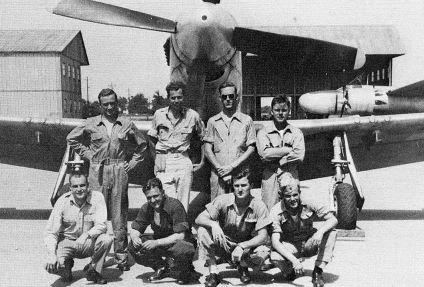
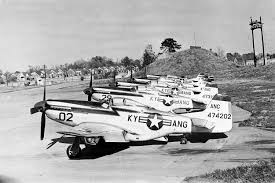
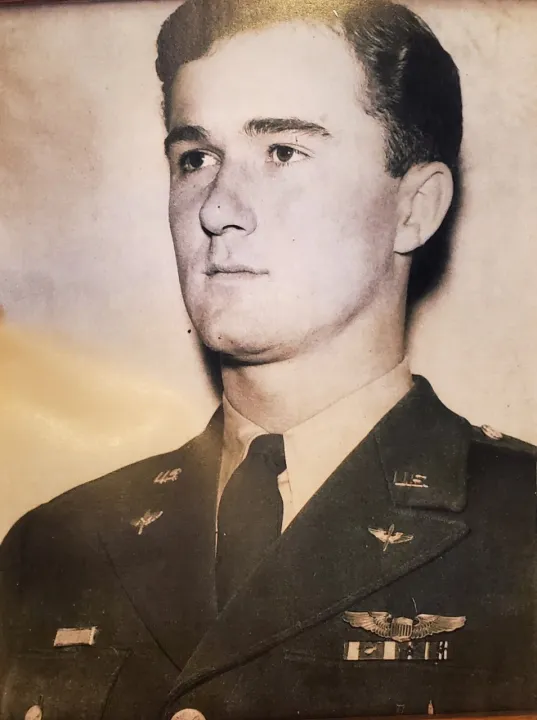
Four F-51 Mustangs were in the region on a flight movement associated with the Kentucky Air National Guard. Godman Field requested an intercept to identify the object. According to the case analysis in the NICAP-hosted Kevin Randle report, one aircraft continued onward due to fuel considerations, while Captain Thomas F. Mantell Jr. and at least two others diverted toward the object and began climbing. The wingmen eventually broke off, and Mantell continued alone.
The core “pilot voice” in this case is what Mantell radioed during the climb. The most frequently quoted summary is that he described the object as metallic and of tremendous size, ahead and above him. The DVIDS Fort Knox retrospective repeats that phrasing and attributes it to the radio traffic as remembered and summarized in case materials. Treat this kind of quote with the respect it deserves, and also with the caution it requires: we are largely dealing with transmitted summaries rather than a pristine, universally available recording. Still, the broad content is consistent across multiple treatments of the case: Mantell believed he was observing a real, structured, sunlit object at altitude.
This moment is where many UAP narratives either inflate or collapse. If you want the story to be extraordinary, you treat Mantell’s “metallic” impression as decisive. If you want the story to be mundane, you treat it as a classic misperception. A more careful stance is that Mantell’s impression is meaningful evidence of what it looked like to a trained aviator in that specific sky, at that specific moment, from that specific geometry. It is not an automatic identification.
What is much harder to argue against is that Mantell continued climbing beyond the safe envelope of his flight configuration.
The silent hazard at 25,000 feet
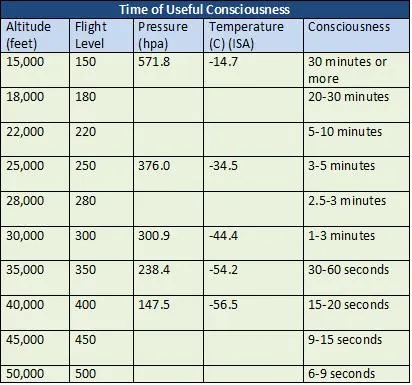
At around 25,000 feet, a pilot without adequate oxygen support is living on borrowed minutes. Modern aerospace physiology guidance often notes that time of useful consciousness at that altitude can be extremely short, commonly described as only a few minutes. Hypoxia can present as confidence, calm, and degraded judgment rather than obvious panic, which is precisely why it is so dangerous in aviation.
The Mantell incident’s documentation contains inconsistencies about oxygen equipment and exactly how the intercept was configured. Some accounts suggest the aircraft on that profile were not equipped with oxygen, while others imply limited or variable oxygen availability among the pilots. Randle’s analysis emphasizes contradictions and confusion in portions of the record, and cautions against treating any single simplified narrative as complete. That uncertainty about configuration does not weaken the overall conclusion that Mantell climbed to a physiologically hazardous altitude and likely became incapacitated. It simply reminds us that incident reporting, even inside military systems, can be messy and reconstructive.
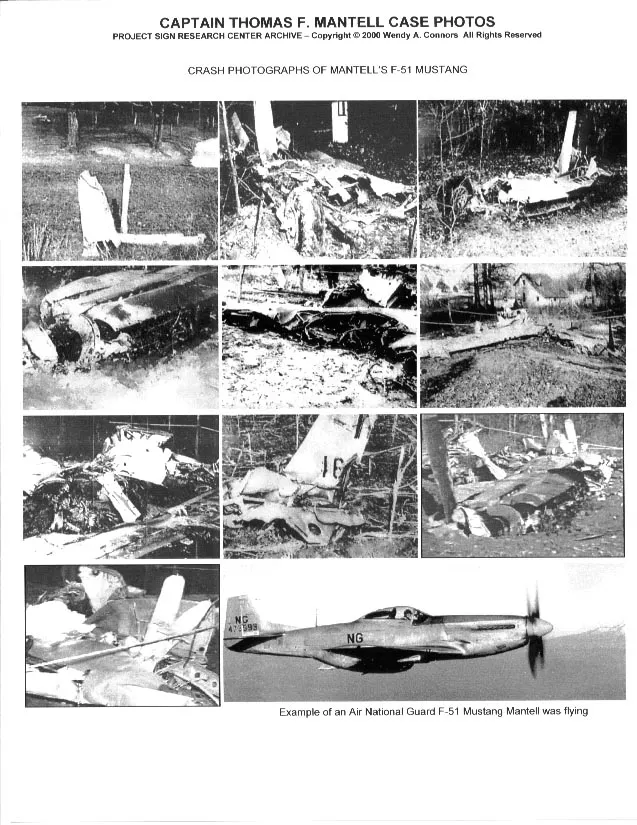
Communications eventually degraded and ceased. Mantell’s aircraft later crashed near Franklin, Kentucky. Several accounts add a vivid detail, that his wristwatch stopped at 3:18 p.m. That time marker is widely repeated, but it is best treated as reported in several accounts rather than a universally verified primary-record fact. It is useful as a narrative anchor, but it should not be used as the backbone of the chronology.
The crash mechanism has a strong leading explanation: hypoxia-induced incapacitation followed by loss of aircraft control. The tragedy, in that sense, is not mysterious. What remains debated is what, exactly, was in the sky.
And because the case became public quickly, the pressure to identify the object began almost immediately.
Venus: the fast answer that would not hold
The earliest public explanation attached to the Mantell incident was Venus.
If you’ve spent time in UAP history, you’ve seen this pattern before. A bright object is reported. It became a headline. Officials are asked for a quick statement. A familiar astronomical body is offered as a stabilizing answer. Venus is a tempting candidate because it can be strikingly bright, it has been mistaken for unusual aerial phenomena, and it provides instant reassurance.
But the Venus explanation clashed with the case’s own texture. Witnesses at Godman described a form with apparent structure, sometimes with color detail. Those are not the usual characteristics of Venus in daylight. Edward J. Ruppelt’s account of the era, written later with the benefit of having seen investigative culture up close, describes the Venus explanation as an early answer that was later dropped, with balloons offered as more reasonable though not conclusively proven. That phrasing captures the institutional reality: Venus was a quick public posture that did not fit comfortably, and the narrative evolved.
This matters for more than historical trivia. Once an institution gives an explanation that key witnesses find implausible, the public learns to distrust official messaging in future cases. Mantell is one of the earliest moments where you can watch that distrust harden, not because of a single cover story, but because of a mismatch between observation and explanation under pressure.
So if not Venus, what is the strongest available hypothesis?
The balloon explanation, strong but not fully closed
The leading best-fit hypothesis in the open record is that the object was a high-altitude research balloon, often discussed in the orbit of early Skyhook-era ballooning.
This is not a hand-wave. It is a model that fits multiple details at once.
Start with the witness metaphors: parachute, teardrop, cone, umbrella. That is classic balloon language from observers who do not know they are looking at a balloon envelope at altitude. A large balloon, sunlit, can appear brilliantly white. Depending on material and glare, it can look “metallic” or reflective, especially to someone at altitude seeing a bright object against a blue background. Slow drift in high winds can appear stationary from the ground. And binoculars, while helpful, can intensify confidence without providing distance.
Then add a second evidentiary hook that researchers return to again and again. The NICAP-hosted materials, as discussed in Randle’s analysis, include claims that later that day, observers farther along the object’s apparent path used telescopic observation and concluded it was a balloon. This does not prove what Mantell saw at every moment of the pursuit, and it does not guarantee that every report in the wider region referred to the same object. But it is meaningful supporting evidence in favor of the balloon hypothesis for the core Fort Knox sighting.
Finally, consider the ballooning context. StratoCat, a specialized historical balloon database, discusses stratospheric balloon activity around that period and has proposed a plausible candidate balloon within the late-1947 to early-1948 campaign history as potentially relevant background for the Fort Knox incident. That is not a definitive match, and it should not be framed as one. Its value is contextual support: balloon operations in that window were real, and some could plausibly intersect the geography and timing in a way that makes the balloon hypothesis stronger as a broad explanation class.
So why isn’t the case “solved”?
Because the balloon hypothesis, while strong, is vulnerable in exactly the way many historical UAP cases are vulnerable: documentation certainty. Randle’s analysis emphasizes that the balloon is a best fit but not conclusively proven in the open record, and earlier investigators also struggled to locate or reconcile specific launch documentation that would lock the identification beyond reasonable dispute.
That’s why careful language matters. The balloon is the strongest available hypothesis, and likely the correct one for the core sighting, but the paper trail does not fully close the loop in a way that makes absolute certainty responsible.
The distance trap, and why “tremendous size” is not a measurement
The phrase “tremendous size” is seductive. It sounds like a ruler. It isn’t.
If you don’t know how far away an object is, you cannot reliably infer its size. If you don’t know its size, you cannot reliably infer its distance. This circular ambiguity is why sky observations can produce confident estimates that later prove wildly wrong. That is not a flaw of character. It is a feature of human perception interacting with a context that lacks reference points.
A high-altitude balloon can be unusually good at triggering the distance trap. It can gleam in sunlight. It can look solid. It can appear to hover. It can change apparent shape as it rotates, as lighting shifts, or as it climbs and expands. It can look nearer than it is, and bigger than it is, and “metallic” even if it is simply bright. None of that trivializes Mantell’s report. It contextualizes it.
It also helps explain why a case can contain sincere, multi-witness observations and still point toward a conventional object class.
Official studies, files, and the paperwork life of the case
Mantell sits at the edge of modern U.S. military UAP investigative history, in the period of Project Sign’s early posture and the later evolution into Project Grudge and Project Blue Book. Ruppelt’s writing, even though it is a retrospective narrative, is valuable as a window into how early investigative culture behaved, including the impulse to provide quick explanations and the later need to revise them.
The Project Blue Book documentation compiled and hosted by The Black Vault is a different kind of source. It is not a storytelling layer, it is a document layer. Reading those files, you see an institution attempting to turn a messy event into a categorizable report: summaries, correspondence, evolving conclusions, and the bureaucratic struggle to reconcile witness impressions with available explanations. It is the kind of archive that teaches you not only what the case was, but how cases were processed.
You also see why the case remained sticky. If you can’t produce a clean launch record, a weather record, or an unambiguous track, you end up with a “probable” conclusion that never quite becomes a closed book. That “probable” status is not failure. It is honesty about what the record can and cannot support.
CUFOS, NICAP, and the debate about institutional pressure
Serious civilian research organizations have treated Mantell as a classic for decades, and they do not all emphasize the same aspects.
NICAP’s archival approach, including hosting Randle’s analysis, tends to foreground the witness record and the evidentiary reasoning that leads to a best-fit balloon hypothesis while acknowledging gaps and contradictions.
CUFOS, which grew from the Hynek tradition of case study seriousness, has also treated Mantell as a key historical file and has criticized early explanations, including Venus, as poorly supported and likely influenced by institutional pressure to calm the situation quickly. That critique is not the same thing as alleging a grand hidden plan. It is a historically plausible observation about how institutions behave when public attention and uncertainty collide.
In other words, the debate isn’t only about what the object was. It’s about how explanations were produced, and whether those explanations were shaped more by evidence or by urgency.
The folklore layer, and why it forms around fatal cases
Whenever a UAP case involves death, folklore grows faster.
In Mantell’s wake, stories accumulated: that he was shot down, that he got too close to something hostile, that recordings exist revealing astonishing final transmissions, that there were occupants visible. These claims persist because they match the emotional shape of the tragedy. They turn accidents into intention. They make the universe feel more narratively coherent.
But the accessible core record does not support those claims as established fact. They belong to the cultural afterlife of the incident, not the evidentiary spine. A responsible historical approach keeps them categorized as legend unless and until documentary support appears.
There is also a subtler “folklore” risk: conflation. Regional reports can be stitched into a single track even if they involve more than one stimulus. A balloon might be the core stimulus at Fort Knox, while other towns’ reports might include misidentified aircraft, atmospheric effects, or unrelated objects reported under the same headline. Randle’s analysis repeatedly emphasizes the need to treat the record critically because contradictions can arise from reporting errors and reconstruction rather than from exotic flight behavior.
Why Mantell still feels contemporary
Mantell matters because it is an early demonstration of something that modern UAP policy discussions still struggle to say plainly: uncertainty is itself a safety hazard.
If the object was a balloon, it was not a threatening balloon. Yet uncertainty turned it into an operational hazard. It drew a pilot upward into a physiological trap. It created a press storm. It produced a rapid, shifting official narrative. It hardened public distrust of quick answers. That combination is not confined to 1948. It is the same pattern that repeats whenever there is an anomalous object in airspace, incomplete shared awareness between organizations, and a media environment demanding instant clarity.
Mantell also carries a quieter implication for the modern UAP reporting ecosystem. If you want pilots to report anomalies, you need to offer them something better than ridicule or bureaucratic fog. You need fast, accurate cross-agency identification pathways for unconventional but non-threatening objects. You need a language of probability that can be communicated without sounding evasive. And you need the humility to say “we do not know yet” without filling the gap with an answer that does not fit the evidence.
That is the deeper legacy of Mantell. It shows why UAP history is not only about objects. It is about institutions, risk, and the public’s relationship with uncertainty.
Claims taxonomy
Verified
A real aerial object was observed by multiple witnesses near Fort Knox on January 7, 1948; a military intercept attempt occurred; Mantell pursued the object, climbed to dangerous altitude, and died in a crash.
Probable
Mantell’s crash mechanism was hypoxia-related incapacitation at altitude. The object most likely corresponds to a high-altitude balloon class based on witness descriptions and later identification claims, while remaining short of definitive proof in the open record.
Disputed
The Venus explanation as a satisfactory identification. The exact balloon launch source and documentation chain that would conclusively tie a specific balloon to the Fort Knox sighting. Whether some regional reports were inadvertently merged into a single narrative track.
Legend
Claims that Mantell was shot down, or that decisive suppressed recordings prove extraordinary contact, without support in accessible core records.
Misidentification
Some associated regional reports may reflect misidentifications or conflations, given inconsistencies in time and location reporting highlighted in later analysis.
Speculation labels
Evidence
Multiple witnesses, including personnel at Godman Army Airfield, observed a bright aerial object on January 7, 1948 and described a discernible form using consistent shape metaphors. Mantell and other pilots were redirected to attempt identification; Mantell reported the object ahead and above and described it as metallic or reflective and very large. Mantell continued climbing until communications ceased, and his aircraft later crashed. The leading crash mechanism remains hypoxia-related incapacitation at altitude.
Witness Interpretation
Witnesses interpreted the object’s appearance through familiar shapes such as parachute, teardrop, and cone. Mantell’s “metallic” impression likely reflects strong sunlight glint, which can occur on bright balloon envelopes or reflective surfaces depending on material and viewing angle.
Hypothesis
The strongest available identification hypothesis is that the core Godman Field object was a high-altitude research balloon consistent with late-1940s stratospheric ballooning. This hypothesis aligns with the reported shape metaphors and later claims of telescopic identification, but open-record launch documentation that would make the identification indisputable remains disputed or incomplete.
Researcher Opinion
Ruppelt describes the early Venus posture as later abandoned, with balloons treated as more reasonable though not proven conclusively. Randle’s analysis reinforces ballooning as the best fit while highlighting record contradictions and documentation gaps. StratoCat has proposed a plausible candidate balloon within the era’s campaign history as contextual support, without providing definitive proof of a one-to-one match.
References
Randle, K. (n.d.). An Analysis of the Thomas Mantell UAP Case (PDF). National Investigations Committee on Aerial Phenomena (NICAP). https://www.nicap.org/docs/mantell/analysis_mantell_randle.pdf
Ruppelt, E. J. (1956). The Report on Unidentified Flying Objects (Chapter 3). https://sacred-texts.com/ufo/rufo/rufo05.htm
The Black Vault. (n.d.). Project Blue Book: Thomas Mantell case files (compiled PDF). https://documents2.theblackvault.com/documents/projectbluebook/projectbluebook-thomasmantell-allfiles.pdf
U.S. Army / DVIDS. (2023, January 7). Questions remain 75 years after mysterious Fort Knox UAP incident, downed pilot. https://www.dvidshub.net/news/436733/questions-remain-75-years-after-mysterious-fort-knox-ufo-incident-downed-pilot
Air Combat Command. (2021, October 22). Aerospace physiology: Training the early warning system. https://www.acc.af.mil/News/Article/2822603/aerospace-physiology-training-the-early-warning-system/
Center for UFO Studies (CUFOS). (n.d.). Classic cases resources. https://cufos.org/resources/classic-ufo-cases/
StratoCat. (n.d.). Camp Ripley balloon campaign notes (1947–1948). https://stratocat.com.ar/bases/16e.htm
SEO keywords
Mantell incident, Thomas Mantell, 1948 UAP, Fort Knox UAP, Godman Field sighting, Kentucky Air National Guard, F-51 Mustang crash, Project Sign, Project Grudge, Project Blue Book Mantell files, high-altitude balloon hypothesis, Skyhook era balloons, Venus misidentification, hypoxia aviation accident, classic UAP cases, daylight UAP encounter