
The Plateau de Valensole is the sort of Provence that looks designed to calm you down. In early July, lavender turns the fields into long purple corridors, the air smells clean and sharp, and a farmer’s morning has a rhythm you can almost hear. Walk the rows. Check the plants. Keep moving before the sun makes everything heavier.
That’s why the Valensole encounter, dated to Thursday 1 July 1965, still holds attention. Not because it offers an easy conclusion, and not because it arrives with the kind of modern sensor package that would settle arguments in an afternoon, but because it sits at a rare intersection for a historic case: a named witness, formal Gendarmerie documentation, and a reported trace on the ground, all preserved in France’s official UAP archive.
GEIPAN, the UAP study group under the French space agency CNES, lists the case as an observation of an unknown craft and a close encounter with ground traces, and classifies it “D.” GEIPAN records the local time as 05:45 and notes environmental effects including traces on the ground. (GEIPAN)
At the same time, GEIPAN’s synthesis document adds an essential caveat that keeps the discussion honest. It states that the case is classified “D” par défaut, “by default,” in part because of its strangeness and emblematic status, and because the publicly accessible archive is built around the most reliable documents available for research, specifically three procès-verbaux from the Gendarmerie. (GEIPAN)
That combination is Valensole’s real signature. Officially archived, officially unresolved, and officially bounded by what survives and what can be responsibly published.
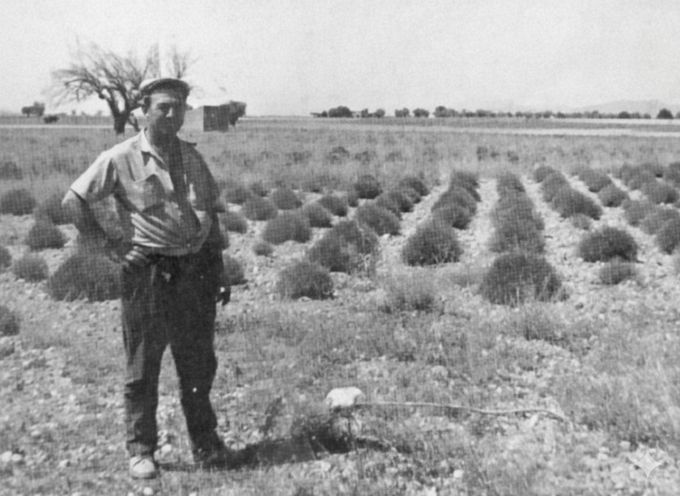
Maurice Masse and the details that drift
The witness is Maurice Masse, a farmer in Valensole. GEIPAN’s witness record lists his age as 50. (GEIPAN) Older ufology summaries and later retellings sometimes give a different age. That discrepancy is worth acknowledging because it’s typical of long-lived cases: the spine stays stable while smaller facts can wobble as they pass through decades of narration.
What matters most for readers is not whether Masse was in his early forties or about fifty. It’s that he was a working local who knew the land and knew the ordinary sounds and movements of aircraft that pass over rural France. That familiarity becomes relevant because one of the earliest conventional explanations offered in the press was “helicopter.” And the witness himself, in contemporary press reporting, insisted he knew what a helicopter looked and sounded like. (Ufologie)
Valensole is also unusually well anchored in time for a case of its era. GEIPAN lists 05:45 local time, 1 July 1965. (GEIPAN) That does not mean every retelling agrees on exact minutes, but it does mean the official archive is not vague about the basic timeline.
The morning changes with a sound
Valensole begins with sound. In GEIPAN’s summary, Masse hears a whistling noise that he associates with aircraft and moves to see what is causing it. (GEIPAN) In the French press coverage compiled in Patrick Gross’s archive, that “whistling like helicopters” phrasing appears early and repeatedly. (Ufologie)
He expects something ordinary, something that fits the era. Military maneuvers were a familiar backdrop in 1960s France, and helicopters were increasingly visible symbols of modern motion. A whistling sound in a field could be nothing more than that.
Then, according to his testimony as summarized across the archive material, he sees an object on the ground.
From here the case moves into the category that tends to produce the most durable UAP files: “object on the ground,” close range, trace reported. In these cases, witnesses stop describing “lights” and start describing “things.” Surfaces. Supports. Openings. Apparent parts.
In the more detailed narrative summarized by GEIPAN, the object is described as dark and matte, ovoid, with multiple supports including a central “foot,” and accompanied by a mechanical whistling sound. (GEIPAN)
That device-like framing is persuasive, but it has to be handled carefully. It does not prove a non-human machine. It simply reflects that the witness experienced the object as physically present and structured.
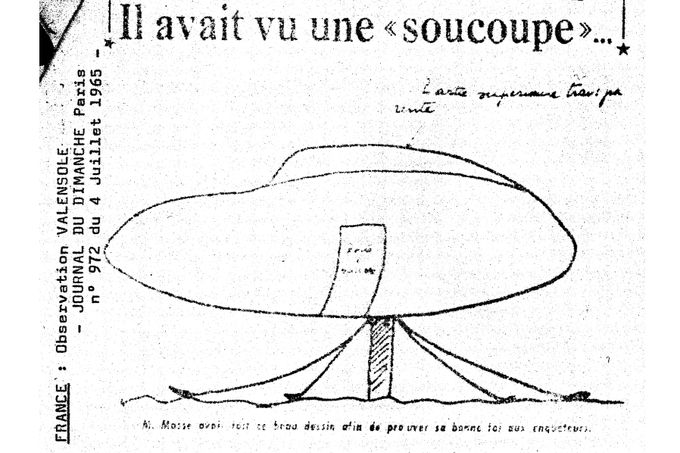
The figures beside it
Valensole is not only a trace case. It is also an entity case, at least in reported content.
GEIPAN’s case coding includes “êtres biologiques,” and the summary describes the presence of two small beings observed for several minutes. (GEIPAN) That element is also prominent in contemporary investigative-era publications, including the compiled NICAP document packet that reproduces period material discussing the case. (NICAP)
Descriptions vary across sources, which is normal. Some accounts emphasize clothing and head shape. Others emphasize a posture, a way of moving, a brief glance that the witness found unsettling mainly because it was unfamiliar rather than because it was overtly threatening. The most stable feature is simple: two small humanoid figures were reported near the object.
A detail that has become famous, and that appears in several retellings, is that the figures seemed to be near the lavender plants, as if inspecting them. That “as if” is doing important work. It keeps us from turning observation into certainty. A witness can report posture and location. Intent is interpretation.
Valensole is at its best when it is written with that distinction intact.
The immobilization claim
Most classic summaries of Valensole include a moment where one figure points a small device toward Masse, and he reports being immobilized. This appears in investigative-era accounts and is included in modern summaries of the narrative. (NICAP)
This is also where the case becomes easiest to caricature. A “paralysis ray” sounds like fiction. But responsible analysis doesn’t delete testimony because it resembles a trope. It asks what the record can actually support.
Here is what the public record supports with reasonable confidence: the immobilization claim is a recurring part of the witness narrative, preserved across multiple secondary and investigative-era sources, and compatible with GEIPAN’s coding of the case as involving effects on witnesses and environment. (GEIPAN)
Here is what the public record does not provide in a way a modern reader can independently verify: a clinical report documenting paralysis, an instrumented physiological mechanism, or medical testing done in a controlled way. The absence of that material does not prove the effect did not occur. It simply defines the evidentiary ceiling.
So the clean way to hold this is: immobilization is a reported effect in testimony, not a measured medical fact in the publicly accessible archive.
Departure and disappearance
GEIPAN’s narrative states that the beings re-entered the object, which then departed at an angle and disappeared rapidly. (GEIPAN) The press archive material preserves how quickly this “departure and sudden loss of sight” became part of the public telling. (Ufologie)
This aspect matters because it intersects with the helicopter hypothesis. A helicopter can depart quickly. It can rise at an angle. It can also be lost behind terrain. The part that tends to challenge conventional explanations is not “it went up,” but the combination of proximity, object shape as described, absence of visible rotor features according to the witness, and the ground trace that follows.
This is why Valensole doesn’t collapse into a single easy prosaic answer even for many skeptical readers. Too many elements have to be explained at once.
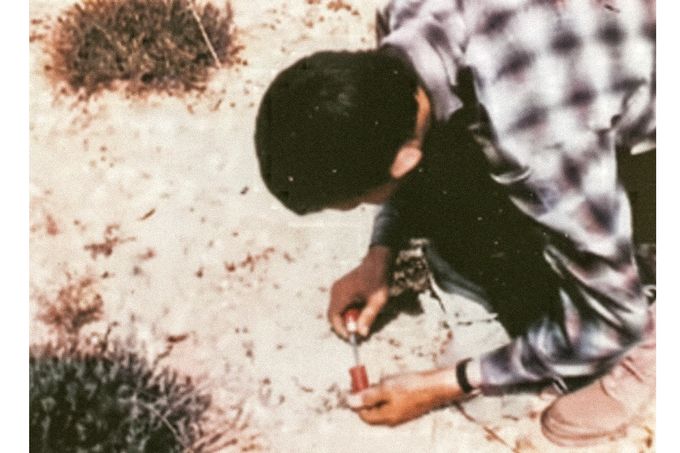
The trace on the ground
If you strip Valensole down to the one thing that makes it more than a strange story, it is the trace.
GEIPAN’s summary states that around ten minutes after departure, the witness found traces on the ground at the place where the object had been. It describes a star-like mark with a central cylindrical hole, formed in waterlogged soil. (GEIPAN)
This is not merely “he claims there were marks.” It is “the official case summary records a specific geometry.” That matters.
A common description in secondary accounts is cross-like or X-shaped marks radiating from a central point. The press coverage compiled by Patrick Gross includes early reporting that Gendarmes found strange traces at the location. (Ufologie)
GEIPAN’s longer narrative also captures the procedural problem that afflicts many trace cases. The site was visited by many curious people quickly, and the traces were trampled. (GEIPAN) In other words, the scene did not remain an intact outdoor laboratory. It became a public event before it could become a controlled investigation.
That does not invalidate the traces. It complicates them. It also makes the Gendarmerie documentation more valuable, because early documentation often preserves the best chance of fidelity in a disturbed scene.
“Cement-like” soil and how to phrase it properly
One of the most repeated details in Valensole literature is that when Masse returned later that day, the earth at the trace site had hardened “like cement.” GEIPAN’s summary includes this claim as part of the narrative. (GEIPAN)
This is exactly the sort of sentence that can become too heavy if written carelessly. “Hardened like cement” can drift, in the reader’s mind, from “a reported observation” into “a proven exotic effect.”
The correct weighting is simpler and more sober.
Soil hardening is reported in the witness narrative and appears in GEIPAN’s published summary. (GEIPAN) However, the publicly accessible archive does not provide a complete modern primary analysis of the soil’s physical or chemical transformation that would allow independent verification of mechanism, magnitude, or duration. Readers should therefore treat the hardening as a documented report, not a measured conclusion.
That phrasing protects the case and the reader at the same time.
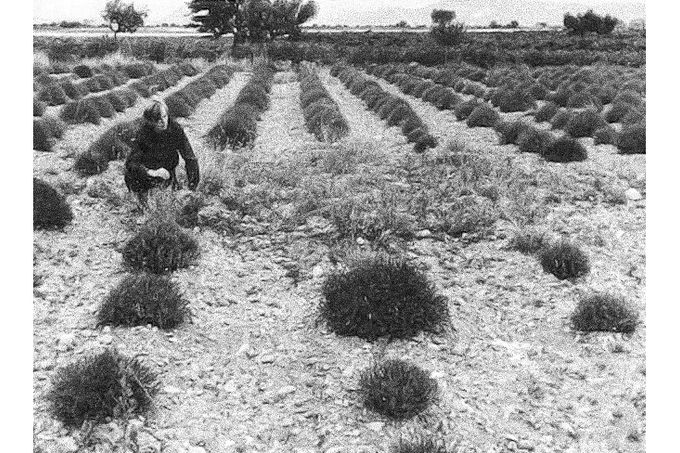
has not recovered (Sverige UFO)
Plant effects and biological claims
Plant effects, including claims of lavender degeneration and later recovery patterns, are part of the wider Valensole story and are frequently mentioned in investigative-era literature and secondary compilations. (NICAP) GEIPAN’s coding for the case includes “effets sur l’environnement,” and the record indicates that environmental effects were a notable feature. (GEIPAN)
But again, weighting matters.
In the publicly accessible record, the most defensible statement is that plant and soil anomalies are frequently reported in secondary and investigative-era sources and are consistent with the case’s environmental-effects coding, but they are not fully documented in publicly available primary analytical reports in a way that allows end-to-end independent verification of sampling, custody, and results.
This does not diminish Valensole. It restores the correct relationship between claim and proof.
The official timeline, in plain language
GEIPAN’s narrative provides a practical timeline that helps readers separate what was recorded early from what may have been elaborated later.
According to GEIPAN’s summary, the Gendarmerie learned of the event via public rumor on 2 July in the evening; a first procès-verbal was taken the same night; site observation followed; and additional documentation, including another procès-verbal and later a detailed supplement from the witness, was created in the weeks following. (GEIPAN)
GEIPAN’s synthesis emphasizes that three procès-verbaux exist and that these are among the most reliable documents made accessible for research. (GEIPAN)
This is the core institutional scaffold under Valensole. It is one reason the case is not only a legend. It is also why it remains a matter of record.
“D by default” and what it actually signals
Valensole’s classification as “D” is often used as a rhetorical weapon by both believers and skeptics. The synthesis document makes that harder.
It explains that the event occurred before GEPAN was created in 1977, that various heads of the office had collected documents without necessarily producing a full published study comparable to later cases, and that a delayed investigation decades afterward would likely have limited value given elapsed time. It also states that, given the case’s strangeness, it is classified “D” by default to facilitate research access. (GEIPAN)
If you want a sober translation: the archive is acknowledging both the case’s importance and its limitations. It is not called Valensole solved. It is not claiming Valensole proves a particular origin. It is saying, “This remains non-identified in the file we can publish, and here is what we can responsibly provide.”
That is a mature institutional stance, and it deserves to be represented accurately.
Contemporary skepticism: helicopters and maneuvers
The helicopter hypothesis is not a modern retrofit. It was present in contemporary press discussion. Le Monde, for example, reported that military circles indicated helicopters participating in maneuvers had certainly had the opportunity to fly over Valensole and perhaps land nearby. (Le Monde.fr)
Patrick Gross’s press archive preserves the broader press ecology around the event, including French regional newspapers reporting on the traces and the early framing of the event as either extraordinary or explainable. (Ufologie)
This is a useful corrective to the way people sometimes talk about “debunking” as if it arrived later. In Valensole, prosaic explanations were part of the conversation from the beginning.
Still, “helicopters were nearby” does not automatically map to “a helicopter did this.” To accept the helicopter explanation fully, you have to account for the reported close-range object shape, the occupant claim, the reported immobilization, and the trace geometry. (GEIPAN) That is not impossible, but it requires a more specific model than a general gesture toward military aircraft.
A fair statement is that the helicopter hypothesis is contemporaneous and plausible, and that it remains incomplete against the full set of reported elements preserved in the public record.
Investigative-era publications, used in the right lane
A lot of what the world “knows” about Valensole came through investigative-era publications and cross-border ufology networks. These sources are historically important because they preserve early narratives, sometimes with quotations and sketches. The NICAP packet for Valensole, for example, compiles period materials and later reproductions that have shaped English-language understanding of the case. (NICAP)
But they are not official reports, and they are not peer-reviewed science.
The correct way to use them is as supporting historical context, not as primary authority over the official case archive. When investigative-era accounts match the official narrative on core points, that convergence is interesting. When they extend beyond the official narrative into detailed claims about biology, soil chemistry, or medical effects without accessible primary documentation, those details should be presented as reported, not established.
This is how you keep Valensole vivid without making it brittle.
Why Valensole still matters
Valensole is one of the clearest archival examples of how a close-range UAP story becomes a long-term case file rather than a short-term rumor.
It matters because it sits in an evidence class that is relatively rare: close encounter plus reported trace, with an official documentary trail. (GEIPAN)
It matters because it shows how quickly physical evidence can be compromised in the real world. GEIPAN notes that crowds arrived and the traces were trampled. (GEIPAN) That is not just a sad detail. It is a methodological lesson about how fragile “outdoor evidence” is when the public gets there before procedure.
It matters because it illustrates how institutions handle historic mysteries. GEIPAN does not pretend it can reconstruct everything. It publishes what it can, states what it cannot, and uses classification language that signals non-resolution within an accessible archive. (GEIPAN)
And it matters because it demonstrates the tension at the heart of UAP research: a case can be strong in structure and still incomplete in proof. Valensole is a good reminder that “unidentified” can mean “possibly anomalous,” but it can also mean “evidence is insufficient to decide.”
Claims taxonomy
Probable
The core event probably happened and is anchored by a named witness, a specific date and time in GEIPAN’s public case file, and an official record trail referencing multiple Gendarmerie procès-verbaux including site observations and photographs. Ground traces and later soil hardening are recorded as reported observations in the published summary. However, the publicly accessible archive does not provide full modern primary analytical documentation for soil, plant, or medical claims, and the case lacks multi-sensor data and independent close-range corroboration. For these reasons, the most defensible classification on the publicly accessible evidence is Probable. (GEIPAN)
Speculation labels
Hypothesis
The trace geometry described in GEIPAN’s narrative, including a central cylindrical hole and radiating markings, is consistent with a central contact point plus distributed support. If the witness’s description of a central “foot” reflects a real physical interface, the pattern could represent stabilization rather than incidental disturbance. This remains a hypothesis because the publicly accessible archive does not provide enough measurement and materials detail to model the interaction confidently. (GEIPAN)
Witness Interpretation
The idea that the figures were “inspecting” lavender is a translation of observed posture and attention into agricultural language. The perceived intent is interpretive, while the reported presence of two small figures near plants is the observational core repeated across accounts. (NICAP)
Researcher Opinion
Valensole’s endurance is tied to its converging strands, testimony, trace reporting, and an official documentary trail. GEIPAN’s “D by default” explanation also signals that readers should not overstate what the archive can demonstrate with modern rigor. The case is historically strong and methodologically instructive, but bounded by documentation access and time. (GEIPAN)
References
Centre National d’Études Spatiales, GEIPAN. (n.d.). VALENSOLE (04) 01.07.1965 (Case file, ID 1965-07-00050). https://www.cnes-geipan.fr/fr/cas/1965-07-00050 (GEIPAN)
Centre National d’Études Spatiales, GEIPAN. (n.d.). VALENSOLE (04) 01.07.1965 (Witness record, témoignage/230). https://www.cnes-geipan.fr/fr/temoignage/230 (GEIPAN)
Centre National d’Études Spatiales, GEIPAN. (n.d.). Synthèse: L’observation de Valensole 1965 [PDF]. https://www.cnes-geipan.fr/sites/default/files/Synthese.pdf (GEIPAN)
Le Monde. (1965, July 5). La soucoupe volante était sans doute un hélicoptère [Archive page]. https://www.lemonde.fr/archives/article/1965/07/05/la-soucoupe-volante-etait-sans-doute-un-helicoptere_2180002_1819218.html (Le Monde.fr)
Gross, P. (Compiler). (n.d.). UFOs at close sight: Valensole, France, 1965 (Press and source compilation). https://ufologie.patrickgross.org/htm/valensole1965.htm (Ufologie)
Gross, P. (Compiler). (n.d.). The gendarmes found strange traces… (Le Dauphiné Libéré, July 4, 1965; archived). https://ufologie.patrickgross.org/press/dauphinelibere4jul1965b.htm (Ufologie)
National Investigations Committee on Aerial Phenomena. (n.d.). 1 July 1965 Valensole, France [Document packet PDF]. https://www.nicap.org/docs/650701valensole_docs.pdf (NICAP)
SEO keywords
Valensole 1965, Valensole UAP, Maurice Masse, Provence UAP case, lavender field encounter, GEIPAN Valensole 1965-07-00050, Gendarmerie procès-verbal Valensole, UAP ground traces France, Valensole soil hardening reported, Valensole plant effects reported, Valensole humanoid encounter, Valensole immobilization claim, helicopter hypothesis Valensole, CNES GEIPAN archives