
The investigator who refused the easy answer
When people describe a contact or abduction experience, the conversation often rushes toward one of two conclusions. Either the witness encountered a non-human intelligence, or the experience can be dismissed as a dream, disorder or cultural fantasy.
Michael D. Swords spent much of his career working in the difficult territory between those positions.
He accepted that witnesses could be sincere, psychologically functional and deeply affected by what they reported. He also understood that sincerity does not identify the cause of an experience. A person can honestly describe something that remains neurologically, culturally or physically ambiguous. Conversely, identifying one familiar feature, such as sleep paralysis, does not necessarily explain every element of a complex case.
Swords’ importance lies partly in his insistence that contact research contains several different questions disguised as one.
Did the witness have an experience? Was the account documented before extensive questioning? How much of the narrative came from ordinary waking memory? Were hypnosis, dreams or repeated interviews involved? Did independent witnesses observe anything? Was physical evidence collected under controlled conditions? What does the witness believe happened? What can the available evidence actually establish?
These questions sound basic. Yet many of the most celebrated and most aggressively dismissed contact cases were never investigated with such distinctions intact.
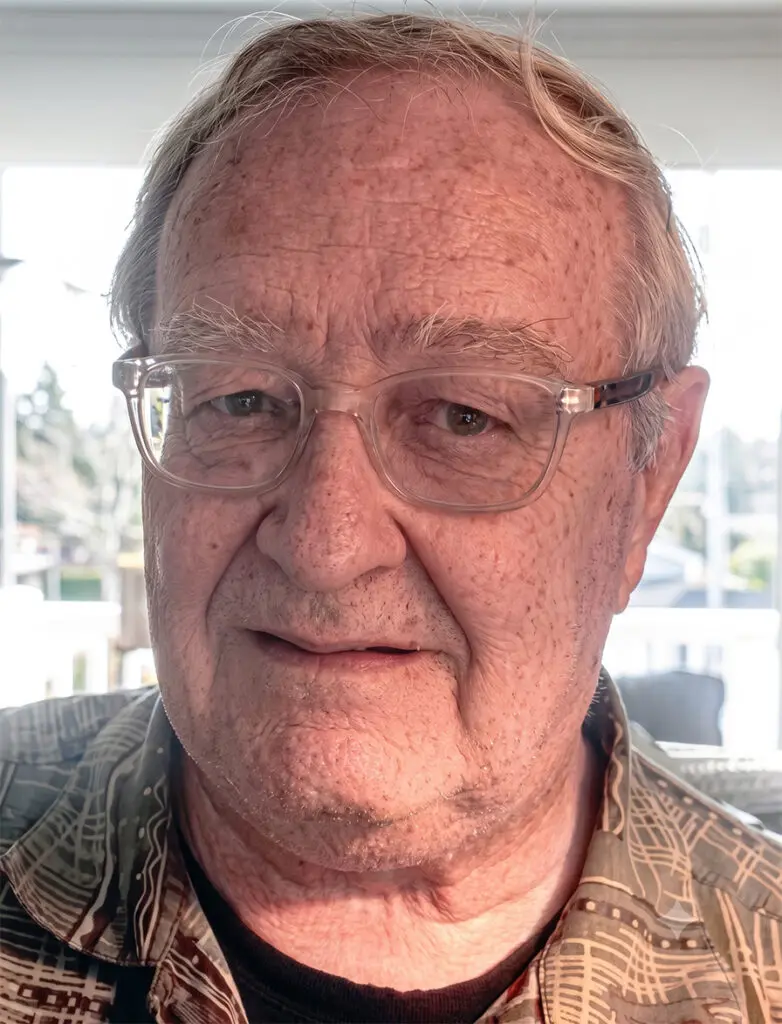
Swords approached the subject as a scientist trained in chemistry and biochemistry, a professor of natural science, a historian of scientific institutions and an editor concerned with the quality of evidence. The institutional records reviewed for this article identify him as a professor of natural science and environmental studies, not specifically as a biophysicist. He is therefore more accurately described as a biochemist by training, a natural-science professor and a scientifically trained researcher associated with the Center for UFO Studies, or CUFOS (Center for UFO Studies, n.d.).
That combination made him unusually suited to examine not only strange reports but also the ways institutions process them.
A scientific career before UAP research
Swords earned a bachelor’s degree in chemistry from the University of Notre Dame in 1962, a master’s degree in biochemistry from Iowa State University in 1965 and a doctorate from Case Western Reserve University in 1972. He later taught at Western Michigan University, where his work encompassed natural science, environmental studies, scientific methodology and the history and philosophy of science. Western Michigan University awarded him its Teaching Excellence Award in 1978 (Center for UFO Studies, n.d.).
His early scientific work was conventional and laboratory-based. In 1966, Swords and Carl L. Tipton published research on the biosynthesis of phosphatidylcholine in Euglena gracilis. The study examined biochemical pathways in a single-celled organism and emerged from Iowa State University’s Department of Biochemistry and Biophysics (Tipton & Swords, 1966).
That publication did not make Swords an authority on contact experiences. It did, however, expose him to a form of scientific practice in which claims are expected to arise from controlled procedures, defined measurements and comparison conditions.
The contrast with experiencer research could hardly be greater. Contact cases usually arrive after the central event has ended. The investigator cannot replay the encounter, reposition a witness or recalibrate a missing instrument. Memories may already have been discussed with relatives, reporters, therapists or other investigators. Physical traces may have been touched, cleaned, moved or lost. The event may have happened during sleep, shock or altered awareness.
For Swords, this did not mean that the cases should be discarded. It meant that researchers had to become more disciplined about what each form of evidence could support.
His later interest in the history of science added another layer. Scientific institutions do not merely gather facts. They select research questions, allocate credibility and decide which anomalies deserve attention. An investigation can fail through bad measurement, but it can also fail because a promising comparison is never completed or preserved.
That distinction became central to Swords’ analysis of the University of Colorado UAP project.
CUFOS and the attempt to build a research culture
Swords became closely associated with CUFOS, the organization founded by astronomer J. Allen Hynek. He served as editor of the Journal of UFO Studies and helped shape a publication that attempted to bring academic procedures into a field dominated by newsletters, popular books and polarized argument.
The journal’s 1989 editorial described an aspiration to operate as an ordinary academic journal. Research articles were to be reviewed by at least two outside referees, with a double-blind, two-referee process intended to reduce favoritism and ideological gatekeeping (Swords, 1989a, pp. 1–2).
An important distinction applies. The journal’s issues forums were not peer-reviewed as research articles. They were reviewed for language and professionalism and were designed as exchanges of informed opinion. Swords stated this explicitly in the inaugural editorial. The forums were meant to clarify disputed questions by placing competing interpretations beside one another, not to disguise opinion as experimentally established knowledge (Swords, 1989a, pp. 1–2).
That distinction reveals much about his approach. Contact research was already fractured among literal physical interpretations, psychological explanations, folkloric comparisons and models involving altered states or consciousness. Instead of pretending that one school had conclusively defeated the others, the journal tried to expose their assumptions.
This was not neutrality for its own sake. Swords was often openly critical. He could be severe when he believed investigators had ignored evidence or allowed a preferred conclusion to replace inquiry. Yet the structure he promoted demanded that criticism be attached to records, methods and identifiable failures.
His work extended beyond editing. He wrote on the extraterrestrial hypothesis, the history of government UAP investigations, physical-trace cases, disputed materials and the development of early Air Force policy. He also helped preserve archival collections connected with major figures in UAP history. CUFOS identifies him as a custodian and interpreter of records linked to Edward Ruppelt, John Timmerman, Ivan T. Sanderson and other researchers (Center for UFO Studies, n.d.).
The significance of that archival work is best treated as a researcher assessment rather than an uncontested historical fact. Its value lies in what archives make possible. They allow later investigators to compare original reports with later retellings, identify abandoned lines of inquiry and recover disagreement hidden by final summaries.
Testimony is evidence, but evidence of what?
Swords’ approach becomes clearest when testimony is separated into layers.
A witness’s statement is direct evidence that the person made a report. A dated letter may establish what the witness was saying at that time. Medical records may confirm symptoms. An independent observer may corroborate part of the event. A physical sample may establish that an unusual material or environmental change was present.
None of these findings automatically identifies the cause.
This does not reduce testimony to something trivial. Courts, historians, journalists and accident investigators routinely rely on human recollection. The relevant question is not whether testimony should be accepted or rejected as a class. The question is how its reliability changes with timing, independence, interview conditions and corroboration.
An account written immediately after an event is generally more valuable than one reconstructed decades later. A detail volunteered before publicity has a different evidentiary status from one first described after reading similar stories. A witness can accurately report paralysis, terror and a perceived presence while remaining uncertain about whether the initiating cause was neurological or external.
Swords’ handling of hypnosis followed this logic. He did not argue that every hypnotically produced statement was false. He argued that hypnosis introduced new uncertainties into cases that were already difficult to verify.
The National Institute of Justice’s review of forensic hypnosis reached a comparable conclusion. Hypnotized witnesses had not been shown to be more accurate than unhypnotized witnesses. Hypnosis could increase confidence, generate additional material and produce pseudomemories that felt indistinguishable from original recollections. The review recommended strict controls and treated hypnotically elicited material primarily as investigative leads rather than self-verifying testimony (Orne, Dinges, & Orne, 1984).
For contact research, the implication is fundamental. Investigators should preserve the complete pre-hypnosis narrative. Details first appearing under hypnosis should be clearly marked. Interviewers should avoid communicating expected imagery. Sessions should be recorded in full, and independent corroboration should be sought before hypnotically produced details are treated as evidence of an external event.
This methodological issue links directly to the Herbert Schirmer case.
Herbert Schirmer: the missing comparison
Herbert Schirmer was a police sergeant in Ashland, Nebraska, when he reported an unusual roadside encounter during the early hours of December 3, 1967. The University of Colorado project, financed by the U.S. Air Force and commonly associated with physicist Edward Condon, investigated the incident shortly afterward.
Schirmer initially described seeing an object resembling a truck blocking the road. His account later expanded to include occupants and a contact sequence, with hypnosis becoming part of the investigation.
According to Swords’ review of the surviving Colorado-project records, investigators considered Schirmer sincere in presenting his report. An early polygraph was described as showing no indication that his answers were untruthful, although a polygraph cannot establish the physical reality of an extraordinary event. Colleagues reportedly described him as dependable, and project personnel recorded both favorable and unfavorable impressions of his personality (Swords, 2003, pp. 3–4).
Swords’ criticism focused on the way psychological interpretation appeared to overtake physical investigation.
The Colorado records, as he presented them, contained severe personality judgments alongside observations that Schirmer could be cooperative, conscientious and capable of good reality testing. Swords argued that the most negative labels were disproportionate to the project’s own mixed observations. That is his archival interpretation, not a neutral diagnosis of the witness or an independently established finding about the motives of every project member (Swords, 2003, pp. 3–4).
The most concrete issue involved Schirmer’s police car.
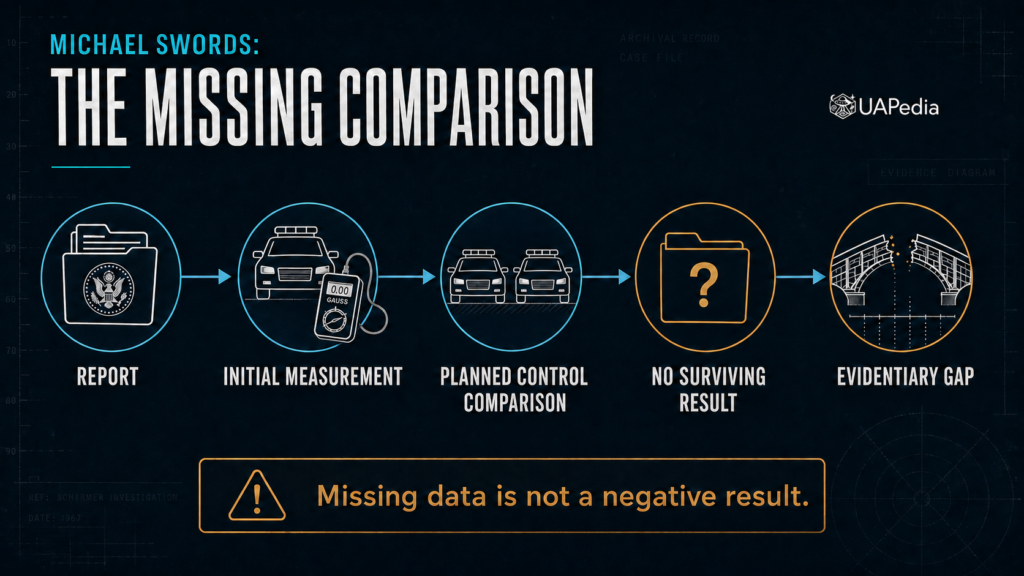
According to the record quoted by Swords, the car’s magnetic signature had been determined and was supposed to be compared with other vehicles of the same manufacture. Swords found no documented result of that controlled comparison in the surviving file. A pencilled note reportedly asked where the test result was (Swords, 2003, pp. 3–4).
The careful conclusion is not that the vehicle was never examined. Nor is it that a positive magnetic anomaly was found and suppressed. The source indicates that an initial magnetic measurement was reportedly taken, while the planned comparison with similar vehicles was not documented as completed.
That distinction matters.
The Schirmer case is sometimes presented as evidence of physical abduction and sometimes as evidence of psychological disturbance. Swords highlighted a third problem: the case was not investigated or preserved well enough to justify confidence in either totalizing conclusion.
The National Academy of Sciences later reviewed the Colorado study. Its panel regarded the overall effort to apply scientific methods as credible, judged the study’s scope adequate and agreed that the federal government had no demonstrated need to establish a major new UAP agency. It also acknowledged that some reports remained difficult to explain (National Academy of Sciences, 1969).
That broad institutional endorsement does not answer the narrower Schirmer question. A project may be considered adequate in general while still handling an individual case poorly. Conversely, identifying a missing comparison in one case does not invalidate every conclusion in the larger report.
This is one of Swords’ most useful lessons. Institutional reputation and case-level quality are not the same thing.
The Texas letter: an experience filtered through history
In March 1968, the Colorado project received a letter from a woman in Texas describing an event she said had occurred in 1930. She wrote after reading John Fuller’s account of Betty and Barney Hill, stating that the book had prompted her to disclose an experience she had carried for decades.
According to the first-person account reproduced by Swords, she had been driving through an isolated, hilly area during daylight when she encountered a large metallic object beside the road. She described a normal-sized man and a group of smaller adultlike figures. She believed communication occurred even though she did not see the taller figure’s lips move. She then recalled being directed away from the road before experiencing a long break in continuous memory.
Her next clear recollection was awakening on the porch of her home around midnight, approximately fifteen miles from the location. She said neighbors had later told her family that they had seen her car parked during the day and that her father had begun organizing a search (Swords, 2003, pp. 4–5).
These reported neighbors were potentially important corroborating witnesses. The surviving published account does not contain interviews with them.
Swords stated that he corrected spelling and punctuation and removed repetition when reproducing the woman’s narrative. The published version is therefore not a photographic reproduction of the original letter. It is a first-person account presented through later editorial handling (Swords, 2003, pp. 4–5).
According to Swords’ review, the Colorado project placed the letter in a psychological category and did not pursue the offered hypnosis or other follow-up. He characterized that decision as another missed opportunity (Swords, 2003, pp. 4–5).
The case cannot be treated as a culturally uncontaminated 1930 abduction narrative. Although the alleged event was early, the documented disclosure followed exposure to the Hill story. That exposure may have influenced how the woman organized, remembered or described the experience.
Yet cultural exposure does not prove invention.
A later narrative can provide a template that alters memory, but it can also provide a vocabulary for an older experience that the witness had never known how to communicate. The available record does not allow those possibilities to be cleanly separated.
The evidentiary failure is therefore not that the woman’s interpretation was accepted. It is that the named corroboration was apparently not tested.
This case connects the history of contact research to cultural priming, delayed disclosure and the influence of the Betty and Barney Hill narrative. It also demonstrates why the date of an alleged event must never be confused with the date of its first surviving documentation.
The bedroom engineer: sleep paralysis and incomplete explanation
Another account discussed by Swords involved an engineer and business owner who reported a bedroom encounter said to have occurred in 1957.
The witness described awakening while unable to move, accompanied by a familiar prickling sensation. He then perceived five uniformed figures. His narrative developed into an examination sequence, unfamiliar speech, bright lights, movement into a vehicle and a sensation of extreme acceleration before he found himself back in bed (Swords, 2003, pp. 5–6).
According to Swords’ summary of the Colorado material, project psychologists found the man coherent and socially capable when discussing ordinary subjects but anxious, rambling and difficult to follow when speaking about his UAP experiences. They treated that contrast as evidence of a circumscribed psychological problem and saw little reason for further UAP investigation (Swords, 2003, pp. 5–6).
Swords disputed the inference. He argued that a witness might become disorganized when recounting what he understood as a disturbing or traumatic event. Anxiety could therefore be evidence of distress without identifying the origin of the memory.
A strong conventional model exists for the opening portion of the account. Sleep paralysis can involve waking awareness, inability to move, pressure sensations, perceived intruders, auditory experiences and vivid figures in the bedroom. Research by Richard McNally and Susan Clancy connected a number of reported abduction experiences to apparent episodes of sleep paralysis. Their work makes sleep physiology a serious explanatory candidate in bedroom cases (McNally & Clancy, 2005).
It does not prove that every detail of this witness’s narrative arose from sleep paralysis.
A responsible investigation would ask whether the witness had recurrent episodes, whether paralysis preceded the figures, whether the account was recorded before hypnosis, whether he experienced false awakenings, whether medications or neurological conditions were present and whether anyone else in the household noticed anything unusual.
This is the distinction Swords repeatedly defended. A plausible mechanism is not the same as a demonstrated case solution. Sleep paralysis may explain the onset of an experience while leaving later narrative development to memory reconstruction, dreams, cultural interpretation or an unknown combination of factors.
The bedroom engineer’s case therefore links directly to UAPedia topics on sleep paralysis, false awakening, regression hypnosis, memory distortion and witness trauma.
The Georgia light tunnel: when anomalous experience becomes religion
The most culturally revealing case in Swords’ 2003 article involved a conservative Christian man from Georgia.
The witness reportedly described an event from 1949. While sleeping beside his wife and child, he awoke as a beam entered the bedroom. A funnel or tunnel of light surrounded him, and he felt himself being pulled upward. Inside the light he perceived bright and dark points in conflict, which he interpreted as angels and devils. At the end of the passage he encountered beings that appeared humanlike but physically unfamiliar.
He understood the experience through a Christian apocalyptic framework. The Colorado project filed the account under religious and psychological categories (Swords, 2003, p. 6).
This case illustrates a central problem in contact research: witnesses do not experience raw data. They experience events through language, expectation, memory and worldview.
A Christian witness may describe angels, demons or ascension. A technologically oriented witness may describe a beam and craft. A sleep researcher may emphasize a hypnopompic episode. A folklorist may compare spirit-flight traditions. A consciousness researcher may focus on altered awareness.
These descriptions are not necessarily interchangeable, but they may overlap at the level of experience.
The witness’s religious interpretation should be preserved as testimony, not converted into a scientific finding. At the same time, classifying the account as religious does not explain why the experience occurred. “Religious” identifies the interpretive framework. It does not establish a neurological, external or supernatural cause.
Swords regarded such early reports as potentially valuable because they might reveal contact motifs before later abduction imagery became standardized. This remains a researcher opinion. The usefulness of an early account depends on when it was documented, what cultural material the witness had encountered and how extensively the story was edited or retold.
The Georgia case connects contact research to religious experience, visionary ascent traditions, sleep phenomena and the anthropology of anomalous encounters. It also warns against treating modern technological vocabulary as the only possible language for perceived contact.
The CUFOS Abduction Project
The questions Swords raised about psychological profiling and experiencer testimony were later explored through a structured CUFOS study.
In 1991, Mark Rodeghier, Jeff Goodpaster and Sandra Blatterbauer published “Psychosocial Characteristics of Abductees: Results from the CUFOS Abduction Project” in the Journal of UFO Studies. The project examined psychological and demographic information from 27 people who met its criteria for an abduction experience. Comparable data were available for 19 participants in portions of the analysis (Rodeghier, Goodpaster, & Blatterbauer, 1991).
The researchers used instruments addressing personality, childhood imagination and hypnotic or creative-imagination characteristics. They did not find evidence that the group as a whole could be reduced to severe psychopathology, exceptional hypnotic susceptibility or a uniform fantasy-prone personality. At the same time, variation within the sample indicated that experiencers should not be treated as a psychologically identical population.
This result is easy to misuse.
It does not verify physical abduction. Psychological normality cannot identify whether an experience arose from an external event, sleep disturbance, memory reconstruction or another mechanism. Ordinary, functional people can have accurate perceptions, mistaken perceptions, altered-state experiences and culturally shaped memories.
The study’s value is narrower. It challenged the idea that a psychiatric label could explain the entire category before individual cases were investigated.
The project also had limitations. The sample was small, selected and not representative of the general population. It could not determine how common particular psychological traits were among all experiencers. Nor could it resolve the origin of any participant’s experience.
Its implications nevertheless remain important. Psychological testing should answer defined questions. It should not function as a ceremonial gate through which a witness is declared either credible or unreal.
Publications, history and a broader research program
Swords’ work cannot be reduced to abduction cases. His larger project concerned the history of scientific and governmental responses to UAP.
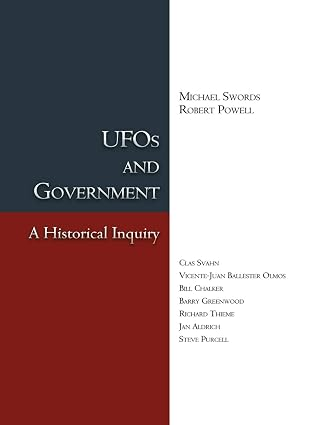
His major book, UFOs and Government: A Historical Inquiry, written with Robert Powell, examined how governments in the United States and other countries responded to UAP reports. The book relied heavily on records, correspondence and institutional history rather than public statements alone.
For experiencer research, this history matters because witnesses operate inside systems. Government secrecy, official ridicule, inconsistent reporting procedures and scientific stigma influence which experiences are disclosed, how they are recorded and whether supporting evidence survives.
Swords also edited Grass Roots UFOs, a collection emphasizing case reports from CUFOS files. That focus on local and less celebrated witnesses reflected an important research instinct. Famous cases attract repeated interpretation, but obscure cases may preserve details that have not yet been standardized by publicity.
His articles ranged from early Air Force investigations and the extraterrestrial hypothesis to physical traces and the Condon project. The subjects varied, but the underlying question remained consistent: how does a claim move from observation to institutional judgment?
In 2025, Swords was one of 34 authors of “The New Science of Unidentified Aerospace-Undersea Phenomena,” published in Progress in Aerospace Sciences. The paper reviewed approximately 20 historical government studies alongside private and contemporary scientific projects. Its CRediT authorship statement credits Swords with writing an original draft and with review and editing (Knuth et al., 2025).
His participation connects his earlier historical work with a contemporary review of archival and instrument-based UAP research.
The connection is intellectually appropriate. Modern UAP research increasingly emphasizes calibrated cameras, radar, multispectral observation and data fusion. Swords’ historical work shows why such projects must also preserve records, document unsuccessful tests and distinguish missing data from negative results.
The controverters
Swords’ work attracted disagreement from several directions.
Supporters of the Colorado project could point to the National Academy review, which considered the study credible in overall scientific intent and adequate in scope. From that perspective, the project’s conclusion that no major federal investigation was justified was reasonable for the available evidence.
Swords’ counterargument was case-specific. A favorable assessment of the total project does not complete a missing vehicle comparison, interview an overlooked witness or correct an unsupported psychological inference.
Psychological researchers developed another line of criticism. Susan Clancy and colleagues found that people reporting recovered or repressed memories of abduction showed higher false recall and false recognition on a laboratory task than control participants. This supports caution where narratives emerge after presumed repression, hypnosis or repeated reconstruction (Clancy et al., 2002).
McNally and colleagues also found that participants displayed strong physiological reactions when listening to scripts describing their claimed encounters. Such findings demonstrate that remembered or believed experiences can produce measurable distress. They do not identify the initiating cause (McNally et al., 2004).
Literal physical-abduction researchers could find Swords equally frustrating. He did not accept recurring motifs, hypnotic detail or witness conviction as sufficient proof of an organized non-human program. A repeated feature becomes persuasive only when the reports are genuinely independent and the information was not spread through investigators, books, conferences or media.
Swords’ position was not a compromise between belief and disbelief. It was a demand that each conclusion remain attached to the evidence that supports it.
Implications for modern experiencer research
A research protocol influenced by Swords would begin by protecting both the witness and the evidentiary record.
The earliest account would be recorded in the witness’s own words. Investigators would document what was remembered while awake, what emerged in dreams and what first appeared during hypnosis or guided imagery. Interview questions would be open and non-leading. Witnesses would not be shown entity drawings or supplied with expected sequences.
Independent witnesses would be interviewed separately. Medical findings would be documented through qualified clinicians. Physical samples would require controls, chain of custody and comparison materials. Environmental measurements would be preserved even when they produced ordinary results.
Psychological support would be offered without requiring the experiencer to accept a predetermined explanation. A person should not have to declare that an event was extraterrestrial, spiritual or pathological in order to receive respectful care.
Modern researchers should also record investigative failure. A missing comparison is not a negative comparison. An unavailable radar record is not evidence that radar showed nothing. A witness who was never interviewed cannot be counted as uncorroborated in the same sense as one who was interviewed and contradicted the claim.
These distinctions have policy implications. Agencies collecting UAP reports need procedures for handling events that combine aerial observations, physiological effects and unusual subjective experiences. Privacy protections are essential, particularly when medical or psychological information is involved. Witness stigma can suppress reporting and damage data quality.
Swords’ work suggests that experiencer testimony belongs neither outside science nor above it. It belongs inside a careful hierarchy of evidence.
Claims taxonomy
Verified
Michael Swords was trained in chemistry and biochemistry, taught natural science, edited the Journal of UFO Studies and worked extensively with CUFOS.
The Schirmer investigation and the other highlighted reports are documented in Swords’ published review of surviving Colorado-project materials.
The CUFOS Abduction Project, forensic-hypnosis review, memory studies and sleep-related studies cited in this article were published.
Probable
The incomplete or undocumented follow-up described by Swords reduced the evidentiary value of the highlighted Colorado cases.
Swords’ combined scientific, historical and editorial background gave him an unusually broad perspective on how experiencer evidence should be collected and interpreted.
Disputed
Claims of physical removal, non-human medical procedures, telepathic communication, engineered missing time, craft interiors and organized contact programs remain disputed.
The available records do not provide a complete chain of independent physical corroboration for the highlighted cases.
Legend
The Georgia witness’s angelic, demonic and apocalyptic interpretations are categorized as religious narrative elements. This classification concerns cultural framing and does not judge the witness’s sincerity.
Misidentification
None of the sources reviewed for this article conclusively reattributes a highlighted case to one conventional cause.
Sleep paralysis is a plausible explanation for part of the bedroom account, but the surviving record is insufficient to classify the entire narrative as a demonstrated misidentification.
Speculation labels
Evidence
Swords’ education, university career, laboratory publication, CUFOS role, journal editorship and major publications are documented. The Schirmer investigation and the other highlighted reports are documented in Swords’ published review of surviving Colorado-project materials. Psychological and forensic studies document limitations in hypnosis, memory reconstruction and sleep-related interpretation.
These facts establish that reports were made and studied. They do not establish the identity or physical reality of the alleged agents.
Witness Interpretation
Schirmer’s identification of occupants, the Texas witness’s belief that she was taken aboard an object, the engineer’s interpretation of a medical examination and flight, and the Georgia witness’s understanding of luminous forms as angels and devils are witness interpretations.
They should be preserved accurately and respectfully but should not be restated as independently verified events.
Researcher Opinion
Swords’ judgment that the Colorado project prematurely closed potentially valuable cases is a researcher opinion grounded in his reading of surviving files. His view that early contact reports may reveal less culturally standardized patterns is also interpretive.
The assessment that his editorial and archival work influenced later research practice belongs in this category. The record documents what he published and preserved. The scale of his influence remains an analytical judgment.
Hypothesis
Some contact experiences may involve sleep paralysis, false awakening, dissociation, trauma-related memory, cultural framing or false-memory processes. Some may begin with an external physical event. Different cases may arise through different mechanisms.
Hypotheses involving non-human intelligence, interdimensional agency or an interaction between external stimuli and consciousness remain unverified until they generate independently testable evidence.
References
Center for UFO Studies. (n.d.). Michael D. Swords. https://cufos.org/about-us/cufos-board-consultants-and-friends/michael-d-swords/
Clancy, S. A., McNally, R. J., Schacter, D. L., Lenzenweger, M. F., & Pitman, R. K. (2002). Memory distortion in people reporting abduction by aliens. Journal of Abnormal Psychology, 111(3), 455–461. https://doi.org/10.1037/0021-843X.111.3.455
Knuth, K. H., Ailleris, P., Agrama, H. A., Aguadilla Research Team, Akers, D., Alexander, A., Allen, B., Alvarez, J., Ansbro, E., Arnold, L., Baccaglini, L., Bäcker, A., Bandurski, J., Baroni, A., Baxter, D., Beaty, J., Belcher, C., Benedetti, G., Bernat, P., Bhowmik, D., . . . Swords, M. (2025). The new science of unidentified aerospace-undersea phenomena. Progress in Aerospace Sciences, 156, 101097. https://doi.org/10.1016/j.paerosci.2025.101097
McNally, R. J., & Clancy, S. A. (2005). Sleep paralysis, sexual abuse, and space alien abduction. Transcultural Psychiatry, 42(1), 113–122. https://doi.org/10.1177/1363461505050715
McNally, R. J., Lasko, N. B., Clancy, S. A., Macklin, M. L., Pitman, R. K., & Orr, S. P. (2004). Psychophysiological responding during script-driven imagery in people reporting abduction by space aliens. Psychological Science, 15(7), 493–497. https://doi.org/10.1111/j.0956-7976.2004.00707.x
National Academy of Sciences. (1969). Review of the University of Colorado report on unidentified flying objects. https://www.esd.whs.mil/Portals/54/Documents/FOID/Reading%20Room/UFOsandUAPs/nas_re1.pdf
Orne, M. T., Dinges, D. F., & Orne, E. C. (1984). The forensic use of hypnosis. National Institute of Justice. https://nij.ojp.gov/library/publications/forensic-use-hypnosis
Rodeghier, M., Goodpaster, J., & Blatterbauer, S. (1991). Psychosocial characteristics of abductees: Results from the CUFOS abduction project. Journal of UFO Studies, New Series, 3, 59–90. https://cufos.org/PDFs/JUFOS/1991_NS_vol3_JUFOS.pdf
Swords, M. D. (1989a). Editorial. Journal of UFO Studies, New Series, 1, 1–2. https://cufos.org/PDFs/JUFOS/1989_NS_vol1_JUFOS.pdf
Swords, M. D. (1989b). Science and the extraterrestrial hypothesis in ufology. Journal of UFO Studies, New Series, 1, 67–102. https://cufos.org/PDFs/JUFOS/1989_NS_vol1_JUFOS.pdf
Swords, M. D. (1989c). Abductions: Questions in the data. Journal of UFO Studies, New Series, 1, 137–139. https://cufos.org/PDFs/JUFOS/1989_NS_vol1_JUFOS.pdf
Swords, M. D. (2003). Too close for Condon: Close encounters of the 4th kind. International UFO Reporter, 28(3), 3–6. https://cufos.org/PDFs/pdfs/swords.pdf
Swords, M. D. (Ed.). (2005). Grass roots UFOs: Case reports from the Center for UFO Studies. Anomalist Books.
Swords, M. D., & Powell, R. (2012). UFOs and government: A historical inquiry. Anomalist Books. https://scholarworks.wmich.edu/books/24/
Tipton, C. L., & Swords, M. D. (1966). Biosynthesis of phosphatidylcholine in Euglena gracilis. The Journal of Protozoology, 13(3), 469–472. https://doi.org/10.1111/j.1550-7408.1966.tb01941.x
SEO keywords
Michael Swords, scientifically trained CUFOS investigator, Michael D. Swords biography, CUFOS, Center for UFO Studies, contact experience research, UAP abduction research, Herbert Schirmer case, Condon Committee, CUFOS Abduction Project, hypnosis and memory, regression hypnosis, missing time, sleep paralysis, experiencer testimony, Journal of UFO Studies, UAP investigators, anomalous experience research, witness reliability, religious contact experiences, UAP archives, scientific UAP investigation