There is a difficult moment in the life of any investigator when a case stops being safely external. The evidence turns back toward the researcher, loyalty collides with verification, and someone who has spent years defending a witness must decide whether to protect the relationship or reconsider the record.
For Peter Robbins, that moment arrived after decades of work on the Rendlesham Forest incident, one of the most intensively discussed military UAP cases in modern British history.
Robbins had become a prominent and persistent public defender of Larry Warren, the principal witness and co-author around whom much of Left at East Gate was constructed. The book presented Warren’s account alongside a much broader investigation of events near RAF Bentwaters and RAF Woodbridge in Suffolk during December 1980.
In 2017, Robbins publicly withdrew confidence from important elements of Warren’s testimony. He acknowledged that his investigative efforts had fallen seriously short and accepted responsibility for promoting claims he could no longer support. Robbins published a lengthy two-part statement documenting his break with Warren and explaining the evidence that changed his position. (A Different Perspective – Part One) (Part Two)
That reversal did not invalidate the independently documented core of the Rendlesham incident. It did not erase the original military statements, Lieutenant Colonel Charles Halt’s memorandum, the Halt audio recording, or the testimony of other participants.
What it did was expose one of the hardest problems in experiencer research: how can an investigator listen compassionately without becoming the guardian of a witness’s interpretation?
Robbins’s career provides no simple answer. It offers something more useful. It shows how empathy can uncover testimony that would otherwise remain hidden, how loyalty can complicate verification, and how a public correction can become part of an investigator’s legacy rather than merely its destruction.
An artist enters the UAP world
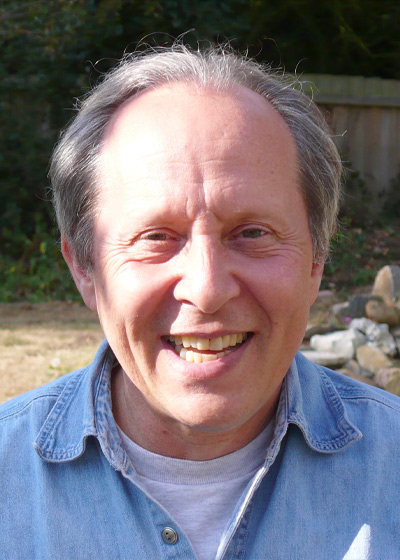
According to Robbins’s published professional biography, he was born in Queens, New York, studied art, design and theatre at the University of Bridgeport, and later earned a Bachelor of Fine Arts degree from the School of Visual Arts in New York. His biography also states that he taught painting at the School of Visual Arts for approximately twelve years and served as a volunteer and shift supervisor with the Samaritans of New York, a crisis-intervention organisation, between 1987 and 1996.
These details are principally supported by Robbins’s own professional biography rather than independently published institutional records. They should therefore be treated as self-reported biographical information. Even with that qualification, they help explain his unusual path into UAP investigation.
Robbins did not arrive through aerospace engineering, military intelligence or academic astronomy. He came from visual art, storytelling and sustained contact with people in emotional distress.
An artist learns to pay attention to visual relationships. A crisis-intervention worker learns that fear, hesitation and fragmented speech do not automatically indicate dishonesty. Both habits became central to Robbins’s approach.
He has generally begun with the assumption that an extraordinary witness deserves to be heard before being judged. That position was particularly important during the late twentieth century, when reporting an abduction, missing-time episode or close encounter could carry serious social and professional consequences.
Robbins has also publicly described himself as a UAP witness. In Episode 48: UFOs & Eyewitnesses with Peter Robbins, published on April 18, 2025, host Captain Ron interviewed Robbins about seeing five unidentified objects with his sister during the 1960s. The programme description specifically identifies the five-object encounter as a subject of the interview. (Coast-to-Coast)
The account remains personal testimony. No publicly available contemporaneous records, sensor measurements or additional independent witnesses have established what the objects were.
The experience nevertheless provides relevant context. Robbins did not enter the subject as an observer who regarded anomalous encounters as merely theoretical. He believed that he had personally seen something that resisted ordinary identification.
That starting point may have strengthened his willingness to listen to other witnesses. It may also have made him more receptive to interpretations involving an external anomalous intelligence. The second possibility is an editorial inference, not a demonstrated psychological conclusion.
Working with Budd Hopkins
Robbins met artist and abduction researcher Budd Hopkins in 1976. According to Robbins’s professional biographies and conference profiles, he later worked as Hopkins’s research and studio assistant and became involved with the Intruders Foundation, an organisation Hopkins established to investigate and support people reporting abduction experiences.
Promotional biographies sometimes state that Robbins participated in hundreds of reported cases. That figure has not been independently audited through a public case archive, so it is best understood as a biographical claim rather than a verified case count.
Hopkins was one of the most influential figures in modern abduction research. His books helped popularise a connected framework involving missing time, bedroom encounters, medical procedures, bodily marks and recurring entity descriptions.
The work was controversial, but the social need it addressed was real. Many people reporting disturbing encounters believed they had nowhere to speak openly. Police, medical professionals, employers and family members could respond with ridicule, disbelief or alarm.
Hopkins and Robbins offered a different setting. The report would be heard as a potentially meaningful experience, and the possibility of an external anomalous cause would remain open.
Robbins’s role appears to have combined investigation, administration, witness support and public communication. Hopkins became the principal author and theoretical authority, while Robbins often worked behind the scenes as an interviewer, organiser, researcher and defender of the project.
This witness-centred approach helped reduce stigma. It also created methodological risks.
A witness may be completely sincere and still misinterpret the cause of an experience. Memory can be altered by fear, sleep disruption, repeated questioning, cultural expectations and the passage of time. Investigators can unintentionally shape an account through suggestive questions or by signalling which details they consider significant.
The central challenge is therefore to distinguish among three different things: the reality of the person’s distress, the reliability of the remembered sequence, and the physical explanation for what occurred.
Robbins’s career is strongest when it protects the first. It becomes more vulnerable when sincerity is allowed to carry the burden of proving the third.
The Linda Napolitano case
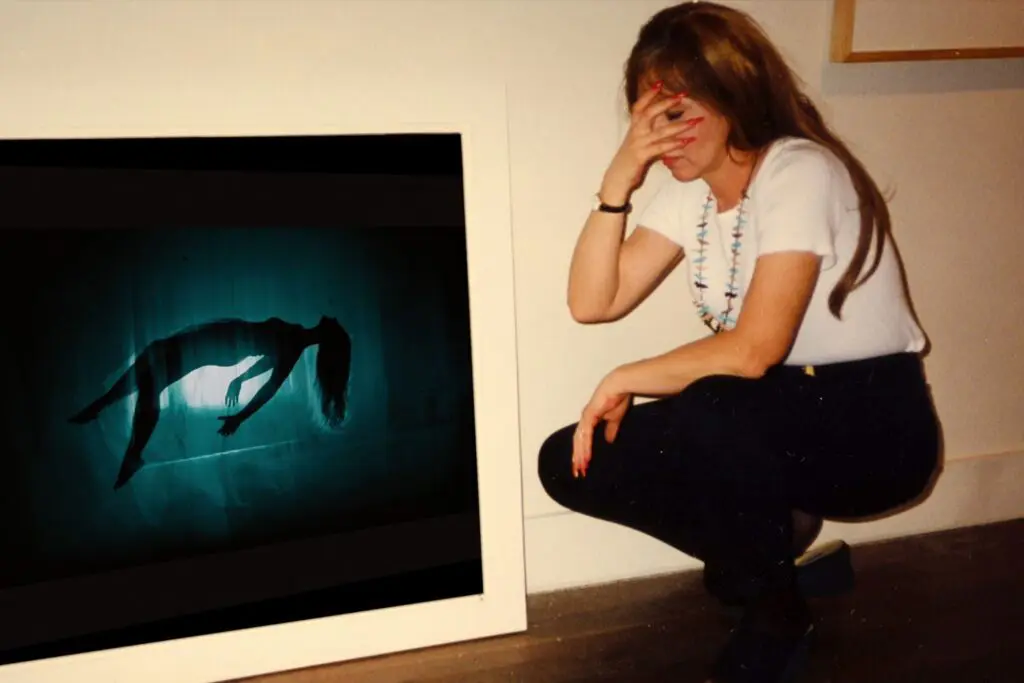
One of the most dramatic cases associated with the Hopkins research circle concerned Linda Napolitano, who was publicly identified for many years by the pseudonym Linda Cortile.
Napolitano said that during the early hours of November 30, 1989, she was removed from her twelfth-floor apartment in Manhattan and transported toward an illuminated craft. Hopkins later made the case the subject of his book Witnessed: The True Story of the Brooklyn Bridge UFO Abductions.
According to Hopkins, numerous people observed parts of the event, including two men portrayed as security personnel. Hopkins eventually connected the account to Javier Pérez de Cuéllar, who was then Secretary-General of the United Nations.
Pérez de Cuéllar rejected the alleged association. A statement attributed to him and supplied to PBS described the allegations as completely false. Later reporting repeated that denial while noting that the identities and independence of the wider witness network had not been publicly authenticated. (Blackwood, 2024)
The case therefore contains several evidentiary layers.
At the centre is Napolitano’s first-person testimony. Around it are Hopkins’s interpretations and his claims concerning supporting witnesses. Beyond those are disputed identities, anonymous correspondence, alleged surveillance and assertions that some witnesses could not be publicly identified.
Robbins did not originate the investigation, and Hopkins was the principal author responsible for presenting it. Robbins nevertheless belonged to the close research circle that supported Hopkins’s interpretation and later defended his integrity during disputes over investigative methods.
What can safely be concluded?
Napolitano reported an extraordinary experience that she regarded as physically real. Hopkins investigated and publicised the case. Robbins worked within the community surrounding that investigation. Hopkins claimed multiple witnesses, while Pérez de Cuéllar denied being one of them.
The publicly available evidence does not establish the complete independence, identity and reliability of the claimed witness network. Nor does the case include calibrated sensor data, authenticated imagery or publicly examinable physical evidence sufficient to demonstrate that a person was removed from a Manhattan apartment by a non-human craft.
That limitation does not make the case meaningless.
Napolitano’s account is valuable as an experiencer narrative and as a case study in how extraordinary testimony develops. It reveals recurring problems involving witness privacy, anonymous corroboration, investigator authority and the difficulty of independently testing claims whose strongest evidence remains inaccessible.
It also demonstrates why experiencer research needs more than two possible conclusions. A case should not have to be declared either physically proven or worthless. Testimony can be historically and psychologically significant while the physical cause remains unresolved.
The broader case can be explored through UAPedia’s article on Linda Cortile and the Brooklyn Bridge Abduction.
Hypnosis, memory and confidence
Hypnotic regression played a major role in the Hopkins-era approach to missing time and abduction testimony. Because Robbins worked closely within that environment, the scientific status of hypnotically recovered material is essential to evaluating the research.
Hypnosis can help a person relax, concentrate and describe imagery in greater detail. It cannot independently determine whether the material is historically accurate.
A review by the American Medical Association’s Council on Scientific Affairs warned that hypnotically refreshed recollection can include confabulations and pseudomemories. It can also increase a subject’s confidence in recalled material without producing a corresponding improvement in accuracy.
That does not mean every statement made under hypnosis is false. It means hypnosis is not a truth-detection instrument.
Susan Clancy and colleagues examined memory performance among people reporting recovered or repressed memories of alien abduction. Their laboratory study found higher rates of false recall and false recognition in the recovered-memory group studied than in control participants under specific word-association conditions.
The result should not be generalised to every person reporting a UAP encounter, contact experience or anomalous memory. The study concerned a particular participant group and a particular experimental task. It did not establish that every reported abduction was imaginary.
It identified a measurable vulnerability to one form of memory error among the people studied.
Richard McNally and colleagues investigated physiological responses among people reporting abduction experiences. Participants listened to scripts describing their reported encounters and displayed significant emotional and physiological reactions. The study demonstrated that the distress associated with such memories can be genuine and intense, regardless of whether researchers can verify the external interpretation.
Together, these findings support a careful middle position.
A person can experience severe fear without consciously fabricating a story. A memory can feel vivid and personally certain while containing inaccuracies. A sincere experience can have several possible causes, including an external anomaly, sleep-related phenomena, trauma, neurological processes or a combination of factors.
For investigators, the practical rule is simple. Material emerging during hypnosis may be documented as subjective testimony or as a possible lead. It should not be entered into the verified chronology of a case unless it is independently corroborated.
Rendlesham Forest and the making of Left at East Gate
The Rendlesham Forest incident occurred near RAF Bentwaters and RAF Woodbridge in Suffolk during late December 1980. Both bases were being used by the United States Air Force.
The incident is unusually important because its core is supported by contemporaneous documentation rather than solely by later recollection.
American security personnel reported unusual lights outside the Woodbridge gate. Early statements record that personnel entered the forest after considering the possibility that an aircraft had crashed or come down nearby. Lieutenant Colonel Charles Halt later led another group into the area, carried a portable recorder and documented portions of the investigation in real time.
Halt subsequently submitted a memorandum titled “Unexplained Lights,” dated January 13, 1981. The memorandum described reports from the early-morning hours of December 27 and a later investigation during the night of December 29 and 30.
The dates recorded in Halt’s memorandum do not align perfectly with every later reconstruction of the chronology. Some researchers and witnesses have placed parts of the sequence on slightly different dates. The memorandum should therefore be read as a primary document reflecting Halt’s official account, not as proof that every later chronological dispute has been resolved.
These elements are supported by contemporaneous records rather than solely by later recollections. Britain’s National Archives preserves Ministry of Defence files concerning the incident and identifies Rendlesham as one of the country’s best-known reported UAP events.
The Halt memorandum, the original security statements and the audio recording should nevertheless be treated as distinct pieces of evidence. They were produced by different people, at different times, and under different circumstances.
The early statements describe lights and movement in the forest. Some later accounts include more elaborate details, such as a landed triangular object, symbols, physical contact, telepathic communication and binary information. Those later elements should not automatically be projected backward into the earliest record.
Several conventional explanations have been proposed. Police officers who attended the area referred to a flashing light that appeared consistent with the Orford Ness lighthouse. Bright stars, a meteor or fireball, aircraft and misperceived lights have also been offered as explanations for portions of the sequence.
The British Ministry of Defence concluded that the reports appeared to have no defence significance. That phrase described an institutional security assessment. It did not constitute a complete scientific explanation of every observation.
The core Rendlesham case therefore occupies a complicated evidentiary position. It includes multiple military witnesses, original statements, an official memorandum and a contemporaneous audio recording. It also includes discrepancies, later additions and plausible conventional explanations for some observed lights.
The event is stronger than a single unsupported anecdote. It is less conclusive than an encounter documented through calibrated radar, optical, infrared and environmental instruments.
Robbins entered the case through Larry Warren, a former United States airman who said he had witnessed a major phase of the incident. Robbins began investigating Warren’s claims during the late 1980s.
Their collaboration became Left at East Gate: A First-Hand Account of the Bentwaters/Woodbridge UFO Incident, Its Cover-Up and Investigation. Library and publishing records identify Larry Warren and Peter Robbins as the authors. The 1997 Da Capo Press edition ran to 490 pages. (Google Books)
The book became a lengthy and prominent popular treatment of Rendlesham. It combined Warren’s account with military context, correspondence, witness interviews, historical reconstruction and allegations of official suppression.
Its prominence also created a problem. Warren was not merely one source among many. Much of the book’s narrative structure and later controversy depended on his credibility.
Robbins’s public reversal
By 2017, Robbins had concluded that important portions of the Warren material he had defended could no longer be supported.
He publicly alleged that he had encountered falsehoods, altered or misrepresented materials and claims that failed under renewed examination. He also acknowledged that his own verification had been inadequate and accepted responsibility for helping the disputed account reach a large audience.
Robbins’s allegation is verified as his stated position. The conduct he alleged requires separate evidentiary assessment.
This distinction matters because an investigator’s accusation does not automatically become a proven finding. Robbins’s reversal establishes that he no longer regarded major portions of his co-author’s narrative as reliable. It does not establish through itself that every disputed statement was intentionally invented.
It also does not erase the broader Rendlesham event.
John Burroughs, Jim Penniston, Ed Cabansag, Charles Halt and other personnel produced accounts independent of Warren. The original statements, Halt memorandum and audio record existed regardless of what Robbins later concluded about his co-author.
The reversal should therefore be understood as a correction to an influential interpretation of Rendlesham, not as a complete resolution of the case.
Robbins’s conduct can reasonably be assessed in two directions.
His earlier advocacy represents an investigative failure. He publicly defended a witness before adequately testing important claims. His reputation helped give those claims authority, and their later cultural impact could not simply be withdrawn.
His eventual correction represents an important act of accountability. Rather than silently distancing himself from the material, he publicly accepted responsibility and withdrew support from claims connected to his former position.
These are editorial assessments based on the documented course of his career. They should not be mistaken for neutral biographical facts.
The methodological lesson is more important than any judgment of character. Investigators who develop close relationships with witnesses need external review precisely because compassion and loyalty can affect evidentiary decisions.
UAPedia’s fuller examination of the independently documented event is available in Rendlesham Forest: Britain’s Best-Known UAP Case.
Publications and evolving positions
Robbins’s best-known publication remains Left at East Gate: A First-Hand Account of the Bentwaters/Woodbridge UFO Incident, Its Cover-Up and Investigation.
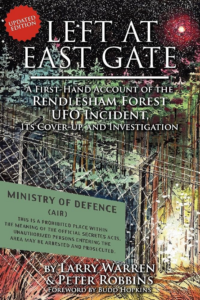
Even after his withdrawal of confidence from important Warren-related claims, the book retains historical value as a record of how Rendlesham was interpreted and debated during the late twentieth century.
Historical value is not the same as factual reliability. Contemporary readers should consult the book alongside Robbins’s later correction, the original witness statements, the Halt memorandum, the audio recording and competing analyses.
Robbins also published Deliberate Deception: A Case of Disinformation in the UFO Research Community. The work challenged competing interpretations of Rendlesham and strongly defended Warren’s credibility.
Because that defence was central to the publication, Robbins’s later reversal significantly altered its evidentiary standing. The work remains useful for studying conflict within the Rendlesham research community, but it should not be presented as Robbins’s current conclusion.
He subsequently published Halt in Woodbridge: An Air Force Colonel’s Thirty-Year Fight to Silence an Authentic UFO Whistle-Blower, a response to statements made by Charles Halt during a public appearance in Woodbridge. That work also belongs to the period in which Robbins defended Warren and criticised rival interpretations of the case.
Robbins’s interests extended beyond abduction research and Rendlesham. In 1990 and 1991, the Journal of Orgonomy published his two-part study, “Wilhelm Reich and UFOs” and “Wilhelm Reich and UFOs, Part II: Examining Evidence and Allegations.”
Reich, a psychoanalyst whose later work concerned a proposed universal energy he called orgone, believed that some anomalous lights represented hostile or energy-draining objects. He modified his cloudbuster apparatus in an attempt to interact with them.
Robbins examined Reich’s writings, reported observations and allegations of official interest. This was a legitimate historical subject. Reich undeniably developed these ideas and included UAP reports in his later worldview.
The scientific implications are much less certain. Robbins’s articles did not establish orgone energy as a recognised physical force, nor did they demonstrate that the lights Reich observed were non-human craft. The papers are best understood as historical research into an unconventional UAP hypothesis.
Together, Robbins’s publications reveal a consistent attraction to disputed witnesses, marginalised interpretations and claims that prevailing institutions may have overlooked important evidence.
That instinct can be valuable. It can uncover neglected documents and preserve testimony at risk of being lost.
It can also create a permanent oppositional posture. When every disagreement is interpreted as suppression, contrary evidence becomes difficult to recognise as evidence.
Robbins, the United Nations and Parliament
Professional biographies have credited Robbins with research assistance related to Grenadian Prime Minister Sir Eric Gairy’s efforts to place UAP study before the United Nations. They have also credited him with editorial assistance on a document associated with Lord Clancarty and parliamentary discussion in Britain.
The official record confirms the political events, although it does not independently verify every detail of Robbins’s personal role.
On December 18, 1978, the United Nations General Assembly adopted Decision 33/426 concerning international coordination of research into unidentified aerial phenomena and related matters.
The final decision did not establish a permanent United Nations UAP agency. It invited interested member states to undertake appropriate research and communicate their observations and findings to the Secretary-General. The operative text appears in Resolutions and Decisions Adopted by the General Assembly during its Thirty-Third Session, document A/33/45, page 237.
The official House of Lords record dates its major debate on unidentified flying objects to January 18, 1979. The Earl of Clancarty introduced the discussion and argued that the subject deserved continued governmental attention.
Some biographies have placed the debate in 1980. The parliamentary record confirms that 1979 is the correct date.
This is a minor correction with a larger lesson. In UAP history, dates and quotations are often copied repeatedly from secondary accounts. Repetition can make an error appear established. Primary documents remain essential even when a claim seems uncontroversial.
The controversies around Robbins
The central criticism of Robbins is not that he listened too closely to witnesses. It is that he sometimes moved from listening into public advocacy before the supporting evidence had been independently secured.
Within the Hopkins research model, repeating motifs were often interpreted as signs of an external abduction programme. Critics argued that hypnotic regression, investigator expectation, media exposure and communication among experiencers could produce similarities without requiring a common physical cause.
Defenders responded that recurring details, intense physiological reactions, missing-time reports and occasional physical effects deserved more than a purely dismissive explanation.
Both sides identify real investigative issues.
Memory is reconstructive. Witnesses can influence one another. Interviewers can unintentionally introduce details. At the same time, general statements about memory fallibility cannot explain every case without examining its specific evidence.
The Napolitano case raises questions about anonymous corroboration and the authority placed in an investigator who alone can access key witnesses.
The Rendlesham dispute raises questions about loyalty, source verification and whether an investigator can remain sufficiently independent from a witness whose public credibility has become linked to the investigator’s own reputation.
The Reich research raises another question. How should investigators approach ideas outside accepted science?
Unconventional hypotheses should not be rejected merely because they are unconventional. Scientific progress sometimes begins with observations that do not fit existing models. But an unconventional proposal must eventually produce measurable predictions, replicable effects and evidence accessible to independent researchers.
Historical interest is not experimental confirmation.
Why Robbins remains important
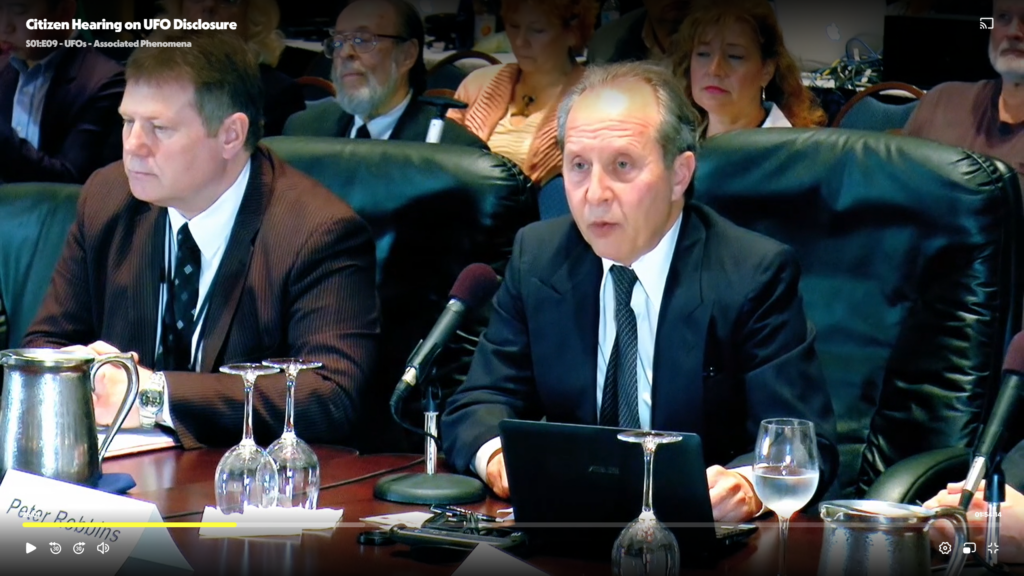
Robbins has published books, monographs and articles concerning UAP cases and has worked publicly as a lecturer, broadcaster and investigator. His influence is not limited to the conclusions he reached.
It is also found in the way he approached witnesses.
Many experiencers have reported that the most damaging part of an encounter was not only the event itself, but the social reaction that followed. Ridicule, disbelief and professional stigma can deepen distress and discourage reporting.
Robbins helped create settings in which such witnesses could speak without immediate dismissal. That contribution should not be confused with proof that every reported experience had an external non-human cause. It concerns the ethical treatment of testimony.
The Un-X Network identifies Robbins as host of Meanwhile, Here on Earth, a programme featuring discussions with researchers, authors and experiencers. Because the source is Robbins’s broadcaster, it is appropriate for confirming the programme but not for resolving disputed historical claims.
His wider legacy may be methodological.
NASA’s 2023 independent UAP study concluded that analysis is limited by poor sensor calibration, missing metadata, inconsistent reporting and a lack of simultaneous measurements. It also recognised that stigma can prevent useful reports from reaching investigators.
Robbins’s career illustrates both sides of that problem.
Without empathy, witnesses may remain silent.
Without verification, a sincere narrative may be transformed into a claim stronger than the evidence allows.
Future experiencer research must combine humane listening with disciplined documentation.
Implications for modern experiencer research
The first implication is that witness support and factual adjudication should be separated whenever possible.
The person helping an experiencer process fear should not be the only person deciding whether the event occurred exactly as described. A support specialist can protect the witness’s dignity while an independent investigative team examines chronology, records, environmental conditions and alternative explanations.
The second implication concerns hypnosis.
Regression should never be treated as a method of proving an event. It may generate subjective imagery, emotional material or possible investigative leads. Any factual detail emerging during hypnosis should be corroborated through evidence obtained independently of the session.
The third implication is the importance of preserving the first account.
A witness’s earliest statement should be recorded in their own words before repeated interviews, media exposure or group discussion. Later additions should be dated and clearly distinguished from the original narrative.
The fourth implication concerns hidden corroboration.
Witnesses may have legitimate reasons for anonymity. Military employment, health concerns and family privacy can make public identification harmful. Even so, an independent reviewer can authenticate identities, compare accounts and determine whether witnesses communicated before their statements were recorded.
The fifth implication is that corrections should remain permanently attached to disputed publications.
Robbins’s reversal should accompany contemporary references to Left at East Gate, Deliberate Deception and Halt in Woodbridge. The books need not be erased from historical study, but readers should not encounter their claims without knowing that Robbins later withdrew support from important parts of the underlying narrative.
Finally, UAP researchers must become comfortable with mixed conclusions.
A witness may be sincere while mistaken about the cause.
A case may contain a genuine anomaly alongside misidentified lights.
An investigator may preserve valuable testimony while making serious verification errors.
Rendlesham may remain an important military UAP case even if a specific participant’s account is rejected.
Peter Robbins’s career is neither a simple success story nor a simple cautionary tale. It is an explanation of what happens when empathy, belief and verification collide.
His work leaves experiencer research with a demanding but necessary principle: listen as though the witness matters, and verify as though the case matters just as much.
Claims Taxonomy
Verified
Peter Robbins has published books, monographs and articles concerning UAP cases and has worked publicly as a lecturer, broadcaster and investigator.
His collaboration with Larry Warren on Left at East Gate: A First-Hand Account of the Bentwaters/Woodbridge UFO Incident, Its Cover-Up and Investigation is documented through library and publishing records.
His articles “Wilhelm Reich and UFOs” and “Wilhelm Reich and UFOs, Part II: Examining Evidence and Allegations” appeared in the Journal of Orgonomy.
Robbins publicly withdrew confidence from important portions of Warren’s account in 2017 and alleged that he had encountered deception or misrepresentation. His withdrawal and allegations are verified as his stated position.
The core Rendlesham security response is supported by contemporaneous witness statements, the Halt memorandum, the Halt audio recording and Ministry of Defence archival records. These documents establish that military personnel reported and investigated unusual lights. They do not establish the origin of the reported phenomena.
Probable
Robbins probably had a substantial influence on public interpretations of Rendlesham and on witness-centred experiencer research. His books, lectures and long association with Hopkins support this assessment, although cultural influence cannot be measured precisely.
His artistic background and reported crisis-intervention work probably contributed to his empathetic interviewing style. This is a biographical inference rather than a formally tested finding.
Disputed
Larry Warren’s precise role in the Rendlesham incident and several later elements of his narrative remain disputed. Robbins eventually rejected important claims he had previously defended, but his reversal does not independently adjudicate every statement Warren made.
Linda Napolitano’s reported Manhattan abduction, the independence and identities of the alleged supporting witnesses, and the proposed involvement of Javier Pérez de Cuéllar remain disputed.
Robbins’s criticisms of other Rendlesham researchers and his interpretations of Wilhelm Reich’s UAP experiences remain researcher positions rather than settled findings.
Misidentification
The Orford Ness lighthouse, bright astronomical objects, aircraft and a fireball have been proposed as explanations for portions of the Rendlesham observations.
These possibilities may explain particular lights or phases of the incident. The available evidence does not justify classifying the entire Rendlesham sequence as a demonstrated misidentification.
Robbins’s reported childhood sighting lacks sufficient public data for a reliable attribution.
Hoax
Robbins publicly alleged intentional deception or alteration in relation to some Warren-associated claims and materials. The allegation is verified as Robbins’s stated position, while the alleged conduct itself requires separate evidence.
Speculation Labels
Hypothesis
Some reported contact and abduction experiences may involve an external anomalous agency, including non-human intelligence, an unknown physical phenomenon, or an interaction between external stimuli and human consciousness.
A second hypothesis is that some experiencer accounts represent mixed events. An unusual external stimulus may combine with sleep disruption, trauma, altered perception, memory reconstruction and cultural expectations.
Neither hypothesis has been established by the Robbins-associated cases discussed here.
Witness Interpretation
Robbins interprets his childhood sighting as an encounter with genuinely anomalous aerial objects.
Napolitano interpreted her Manhattan experience as a physical abduction.
Warren interpreted his reported memories as participation in a major phase of the Rendlesham incident.
These interpretations belong in the evidentiary record, but they are not equivalent to independently verified conclusions.
Researcher Opinion
Robbins’s former defence and later rejection of major Warren-related claims are researcher judgments.
His support for Hopkins, criticisms of competing Rendlesham interpretations and sympathetic study of Wilhelm Reich are also researcher positions.
The assessment that Robbins’s public correction represents an important contribution to research accountability is an editorial interpretation based on the documented history of his work.
References
Blackwood, E. (2024, November 5). The Manhattan alien abduction: Where is Linda Napolitano now after alleged extraterrestrial encounter, and why is she suing Netflix over the docuseries? People. https://people.com/the-manhattan-alien-abduction-where-is-linda-napolitano-now-8739603
Captain Ron. (Host). (2025, April 18). Episode 48: UFOs & eyewitnesses with Peter Robbins [Audio podcast episode]. In Beyond Contact. iHeartRadio and Coast to Coast AM. https://news.iheart.com/featured/coast-to-coast-am/content/2025-04-18-1100-the-best-of-coast-to-coas-episode-48-ufos-eyewitnesses-with-peter-robb/
Clancy, S. A., McNally, R. J., Schacter, D. L., Lenzenweger, M. F., & Pitman, R. K. (2002). Memory distortion in people reporting abduction by aliens. Journal of Abnormal Psychology, 111(3), 455–461. https://doi.org/10.1037/0021-843X.111.3.455
Council on Scientific Affairs. (1985). Scientific status of refreshing recollection by the use of hypnosis. JAMA, 253(13), 1918–1923. https://pubmed.ncbi.nlm.nih.gov/3974082/
Hopkins, B. (1996). Witnessed: The true story of the Brooklyn Bridge UFO abductions. Pocket Books. https://archive.org/details/isbn_9780671569150
McNally, R. J., Lasko, N. B., Clancy, S. A., Macklin, M. L., Pitman, R. K., & Orr, S. P. (2004). Psychophysiological responding during script-driven imagery in people reporting alien abduction. Psychological Science, 15(7), 493–497. https://doi.org/10.1111/j.0956-7976.2004.00759.x
National Aeronautics and Space Administration. (2023). Unidentified anomalous phenomena independent study team report. https://science.nasa.gov/wp-content/uploads/2023/09/uap-independent-study-team-final-report.pdf
Robbins, P. (1990). Wilhelm Reich and UFOs. The Journal of Orgonomy, 24(2), 166–180.
Robbins, P. (1991). Wilhelm Reich and UFOs, Part II: Examining evidence and allegations. The Journal of Orgonomy, 25(1).
Robbins, P. (2014). Deliberate deception: A case of disinformation in the UFO research community. Self-published monograph.
Robbins, P. (2015). Halt in Woodbridge: An Air Force colonel’s thirty-year fight to silence an authentic UFO whistle-blower. CreateSpace Independent Publishing Platform.
Robbins, P. (2017, August 10). Peter Robbins explains his take on Left at East Gate (Part One). A Different Perspective. https://kevinrandle.blogspot.com/2017/08/peter-robbins-explains-his-take-on-left_10.html
Robbins, P. (2017, August 10). Peter Robbins explains his take on Left at East Gate (Part Two). A Different Perspective. https://kevinrandle.blogspot.com/2017/08/peter-robbins-explains-his-take-on-left.html
The National Archives. (2009). Unidentified flying objects research guide. https://cdn.nationalarchives.gov.uk/documents/aug-2009-research-guide.pdf
The Un-X Network. (n.d.). Meanwhile, Here on Earth with Peter Robbins. https://www.unxnetwork.com/meanwhilehereonearth
United Kingdom Parliament. (1979, January 18). Unidentified flying objects: House of Lords debate. https://api.parliament.uk/historic-hansard/lords/1979/jan/18/unidentified-flying-objects
United Nations General Assembly. (1978). Decision 33/426. In Resolutions and decisions adopted by the General Assembly during its thirty-third session (A/33/45, p. 237). United Nations. https://digitallibrary.un.org/record/527441
Warren, L. P., & Robbins, P. (1997). Left at East Gate: A first-hand account of the Bentwaters/Woodbridge UFO incident, its cover-up and investigation. Da Capo Press. https://books.google.com/books/about/Left_at_East_Gate.html?id=NxOzAAAAIAAJ
SEO keywords
Peter Robbins UAP researcher, Peter Robbins biography, experiencer research, UAP investigator, Budd Hopkins, Intruders Foundation, Linda Napolitano case, Linda Cortile abduction, Manhattan abduction case, Rendlesham Forest incident, Left at East Gate, Larry Warren controversy, Peter Robbins 2017 statement, experiencer testimony, hypnotic regression, missing time research, memory distortion, witness reliability, UAP research ethics, UAP case investigation, Wilhelm Reich and UFOs, Rendlesham witnesses, Charles Halt memorandum, UAP testimony, contact experiences, abduction research