
Two documents offer an unusually direct way into Russell Targ’s life. The first is a compact 1964 paper in Applied Physics Letters, coauthored with electrical engineer Stephen E. Harris. It reports the operation of a helium-neon laser whose modes oscillated with frequency-modulated phases and amplitudes approximating the Bessel-function pattern expected from theory. The experiment depended on controlling light, separating signals from noise and converting an invisible phase relation into a measurable output (Harris & Targ, 1964). The second document is a drawing made during a remote-viewing experiment. It was intended to represent a distant airport that the viewer had not been told was the target. Unlike the laser paper, the drawing could not be assessed by a photodetector or spectrum analyser. It had to be compared with photographs, transcripts, alternative targets and the conditions under which information might have leaked. Targ was the viewer, and he later treated the resemblance as one of the experiences that convinced him anomalous perception was real (Puthoff & Targ, 1976; Targ, 2008, p. 149).
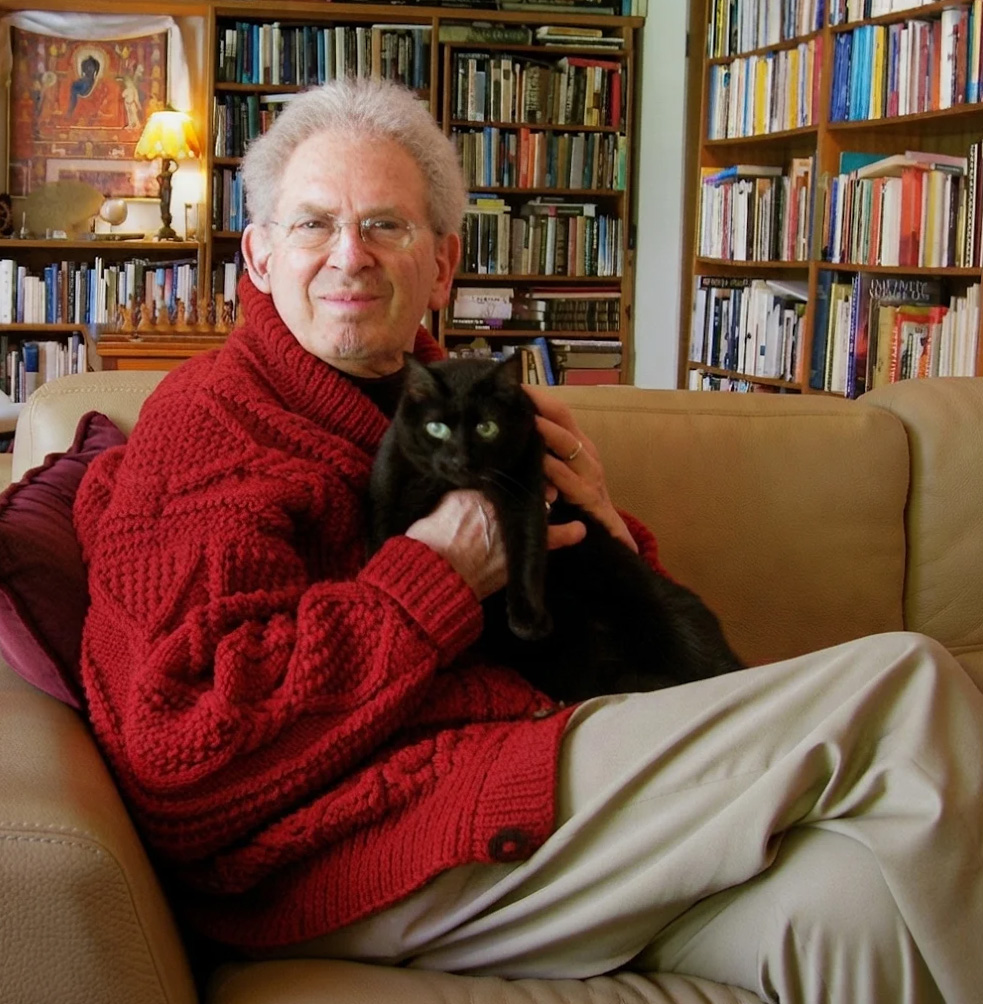
The contrast captures the central problem of his biography. Targ spent much of his working life making instruments that measured the physical world, yet he also argued that human consciousness could obtain information without ordinary sensory access. He was an American physicist, optical engineer, author and cofounder, with Harold Puthoff, of the parapsychology programme established at Stanford Research Institute, now SRI International, in the early 1970s. He helped move remote viewing from the language of clairvoyance into laboratories, intelligence contracts, technical journals, books and public workshops. He also continued a substantial career in laser engineering and airborne wind sensing. These strands were not side interests that merely happened to share a name. They were joined by his continuing preoccupation with perception: what carries information, what blocks it, how noise is recognised and what should count as evidence that something has been seen.
Remote viewing, in the usage associated with the SRI programme, is an attempt to describe a concealed or distant target under conditions intended to prevent ordinary sensory access. The definition identifies a procedure. It does not establish the cause of a correct description, nor does it prove that every striking resemblance arose paranormally. That distinction is essential to understanding Targ. Funding shows that institutions considered the subject worth investigating. Publication shows that researchers contributed claims and methods to a literature. Neither alone decides whether anomalous information transfer occurred (Targ, 2008, p. 125).
Targ’s importance therefore has several evidential levels. His technical publications and engineering collaborations are documented contributions to optics. The existence of government-supported remote-viewing research is documented history. The reported statistical results are publication claims that can be examined. The interpretation of those results as evidence of a nonlocal capacity of mind remains disputed. His Buddhist and nondual philosophy belongs to the history of his ideas, not to established physics. His influence on readers, practitioners and UAP researchers is culturally real even where the mechanism he proposed remains unresolved.
Targ also described living with severe visual impairment, including extreme nearsightedness and difficulty recognising faces. That experience belongs in his portrait because he wrote about it, not because disability should be turned into a metaphor for mystical insight. His life was remarkable enough without that simplification. The more useful question is how a man trained to distrust noisy measurements came to trust certain inner images, and why he continued to regard them as evidence after decades of criticism.
Childhood, family and education
Russell Targ was born in Chicago on 11 April 1934. A curriculum vitae preserved in a 1979 SRI proposal records that he attended public schools in Chicago, Cleveland and New York City, then earned a bachelor of science degree in physics from Queens College in 1954, at the age of twenty. From 1954 to 1956 he held a research assistantship and undertook graduate study in the physics department at Columbia University, working in the laboratory of the experimental physicist Chien-Shiung Wu (SRI International, 1979). The reviewed record does not establish that he earned a doctorate. Russell Targ or physicist is therefore the accurate form of reference.
The geographical sequence reflected the career of his father, William Targ, a bookman whose life moved through bookselling, editing and publishing. William began as an office boy at Macmillan, ran a Chicago bookshop, became an editor in Cleveland and later moved to New York. At G. P. Putnam’s Sons he became widely known for acquiring Mario Puzo’s The Godfather sight unseen, on the strength of an oral presentation at a pitch meeting, while also editing authors whose work ranged from popular humour to philosophy and social criticism (Publishers Weekly, 1999; Thurber, 1999). Russell grew up, then, in a household connected to books as objects, arguments and public events. It would be too easy to claim that this environment caused his later literary career, but it clearly made intellectual production and publication part of ordinary family life.
In his memoir, Targ described a childhood shaped by both curiosity and visual limitation. He recalled extreme nearsightedness from birth, difficulty recognising faces and the practical adaptations required to move through school and city life. He also recalled an early attraction to magic. Stage performance offered a young person with restricted vision a disciplined way to control attention, timing and expectation. The contemporary SRI curriculum vitae confirms that he partly supported himself as a stage magician during college and graduate school and became familiar with professional misdirection (SRI International, 1979; Targ, 2008, Introduction).
Magic gave Targ a double education. It showed him that perception is selective and that confidence can be manufactured. It also taught him that an observer’s failure to see the method does not establish an impossible event. That background later made his commitment to psychic research more provocative, not less. Admirers sometimes treated his knowledge of conjuring as evidence that he could not be deceived. Critics replied that no individual expertise makes a protocol immune to information leakage, cueing or fraud. The reasonable conclusion is narrower. Targ knew from direct experience that appearances could be constructed, and he nevertheless came to believe that some experimental correspondences survived ordinary explanations.
At Queens College, his interests in physics and unusual perception developed together. His memoir recalls informal card tests and reading in psychical research (Targ, 2008, p. 32). At Columbia, where laboratory work demanded precision, he also encountered religious and philosophical traditions that would later become central to his interpretation of consciousness. His later accounts mention Buddhism, Vedanta and the question of whether the self is bounded by the body. Those ideas did not suddenly appear after his SRI years or after bereavement. They accompanied his scientific training, though they did not yet form the public philosophy of his later books (Society for Psychical Research, 2026; Targ, 2008, p. 32).
In 1958, Targ married Joan Fischer. Joan had been born in Moscow and grew up in New York. She was the older sister of chess champion Bobby Fischer, whom she taught to play, but reducing her to that relationship obscures her own life. She studied education and nursing, worked with pre-Columbian collections, taught in Palo Alto schools and developed peer-tutoring and computer-assisted learning projects. Russell and Joan had three children, Alexander, Nicholas and Elisabeth. The family moved to Palo Alto in 1962, a decision that placed Targ inside the expanding scientific and technological world around Stanford while giving Joan room to build an educational and community life of her own (The Almanac, 1998).
Targ’s autobiographical voice often connected episodes through chance meetings, improbable timing and a sense that events formed meaningful patterns. Such storytelling was part of his appeal. It also requires editorial discipline. A remembered encounter can reveal what an event meant to him without proving the interpretation he later attached to it. For the early life, the secure anchors remain his birth, education, employment documents, marriage and move to California. Around those anchors, the memoir supplies atmosphere: motorcycles, magic, books, spiritual reading, visual impairment and a confidence that reality was larger than conventional categories allowed.
Building a career in the physics of light
Targ left graduate study in 1956 to enter a field that was changing rapidly. At Sperry Gyroscope on Long Island, he worked on gas plasma research and the generation of high-power microwaves from electron-beam plasmas. In 1958 he joined the Polytechnic Institute of Brooklyn as a research associate in its microwave research laboratory, where he used microwave diagnostics to measure plasma density. In 1959 he moved to the newly formed Technical Research Group and became involved in experiments on gaseous laser media, spectroscopy and optical detection. The sequence is documented in the SRI curriculum vitae, which was written close enough to the events to be more reliable for chronology than later promotional summaries (SRI International, 1979).
The laser had only just become an operating technology. Researchers had to learn how to generate coherent light, stabilise it, modulate it and recover information carried in changes of phase or frequency. Targ’s 1962 paper with P. J. Rabinowitz, Stephen F. Jacobs and Gordon Gould addressed homodyne detection of phase-modulated light. In a homodyne system, a signal is mixed with a local optical reference derived at the same nominal frequency. The interference between the two can convert phase information into an intensity variation that a detector can measure. The paper was brief, but it belongs to the early history of optical communications and coherent detection. It also illustrates a theme that would recur in Targ’s language: a weak signal can be recovered if the reference, phase relation and noise are properly controlled (Rabinowitz et al., 1962).
His 1964 collaboration with Harris explored frequency-modulated operation of a helium-neon laser. The authors reported that the laser modes could be driven with FM phases and approximately Bessel-function amplitudes, sweeping the oscillation frequency across the Doppler-broadened line. They supported the interpretation through beat-note suppression, interferometric observation and direct demodulation (Harris & Targ, 1964). For a general reader, the significance is not that Targ invented the laser. He did not. It is that he participated in the experimental work through which lasers became controllable sources rather than laboratory novelties.
After moving to California, Targ worked at GTE Sylvania from 1962 to 1972. His research included helium-neon, argon and carbon-dioxide lasers, frequency stabilisation and high-power gas systems. A 1969 paper with William B. Tiffany and Jack D. Foster described a self-contained, closed-cycle carbon-dioxide gas-transport laser with a one-metre active length and kilowatt output. The gas mixture was recirculated through a heat exchanger, a practical response to the problem of carrying heat away from a continuous high-power discharge (Tiffany et al., 1969). A related German patent publication named Tiffany, Foster and Targ as co-inventors (Tiffany et al., 1971). These records support a specific account of collaborative invention. They do not support inflated claims that Targ invented the laser or held an undefined number of decisive patents.
This technical career matters for more than credentialing. Targ worked in environments where a claim became useful only after it could be reproduced, quantified and engineered. Lasers were often counterintuitive, but their outputs could be measured. Their theory generated numerical expectations. A detector could be calibrated. The path from a subtle effect to an instrument was difficult but visible.
Remote viewing would pose a different problem. A verbal report might contain a mixture of relevant form, irrelevant association and later interpretation. A person could be deeply impressed by one drawing while another evaluator focused on omissions. The target itself might be complex enough to allow many partial matches. In optics, signal and noise could often be separated by hardware and equations. In anomalous perception research, the division depended on blinding, target pools, transcripts, judges and statistical choices. Targ would spend much of his later career arguing that these methods were sufficient to reveal a real signal.
The conventional engineering strand did not end when he entered parapsychology. After leaving SRI, he returned to applied laser research at Lockheed. His work on coherent Doppler lidar sought to detect dangerous wind shear ahead of an aircraft. The physical principle was straightforward in outline: transmit laser light into the air, receive light scattered by aerosols and infer wind velocity from the Doppler shift. The engineering challenge was to extract a reliable warning through atmospheric attenuation, precipitation, aircraft motion and limited time. A 1991 performance analysis by Targ, Michael J. Kavaya, R. Milton Huffaker and Roland L. Bowles compared systems and projected warning over a region two to four kilometres ahead of an aircraft, corresponding to about twenty to forty seconds under the stated conditions. The CLASS system was then developed for flight evaluation (Targ et al., 1991). A later team paper reported flight tests of two coherent lidar systems and wind-measurement accuracy better than one metre per second (Targ et al., 1996).
The lidar programme is a useful counterweight to any biography that presents Targ only as a psychic researcher. It involved a specific hazard, a measurable atmospheric signal and a multidisciplinary team. The papers document design, simulation and flight testing. They do not by themselves establish how widely the systems were deployed or how many accidents they prevented. What they do establish is continuity. Targ never ceased to be an optical engineer simply because remote viewing became the most controversial part of his public identity.
Stage magic and the early interest in psi
Targ’s interest in anomalous perception did not begin at SRI. It developed beside his physics career, fed by magic, psychical-research literature and experiments that treated immediate feedback as a possible route to learning. His familiarity with conjuring sharpened his interest in attention and misdirection, yet it also created a lifelong tension. He knew that a remarkable effect could be produced by hidden ordinary means. He came to believe that some effects remained after those means were controlled.
One bridge between the two worlds was the attempt to build testing apparatus. Targ and psychologist Charles Tart shared an interest in immediate-feedback ESP testing. Separately, Targ and David B. Hurt developed and published a four-choice ESP teaching machine in 1971. The device randomly selected one of four targets and immediately told the participant whether the response was correct. The rationale challenged the repetitive card-guessing tradition. If anomalous perception was a weak human skill rather than a fixed gift, then withholding feedback might extinguish performance, while immediate feedback might permit learning. This idea entered Targ’s later approach to remote viewing, where descriptive freedom and feedback were treated as more promising than monotonous forced-choice guessing (Targ & Hurt, 1971; Puthoff & Targ, 1976).
A 1974 NASA contractor report by Targ, Phyllis Cole and Puthoff documents this apparatus strand. It described a four-state random stimulus generator, volunteer testing and preliminary physiological work. Cole’s coauthorship is important. Later retellings often reduce the history to Targ and Puthoff, but the equipment, data collection and analysis were collaborative. The report also shows that the programme’s interests were broader than the now-famous geographical sessions. The researchers hoped to develop techniques for human-machine communication and to explore whether physiological responses might register a remote stimulus even when conscious guesses did not (Targ et al., 1974).
The scientific question was not simply whether a participant occasionally guessed correctly. A random-stimulus machine had to be demonstrably random, the target sequence had to be protected, the response had to be registered before feedback and the analysis had to account for the number of trials and decisions made. Physiological experiments added further risks, including electrical pickup, artefacts and flexible selection of time windows. The early apparatus work is best understood as exploratory. It helped define Targ’s conviction that feedback, trust and a nonthreatening setting mattered, but it did not settle the existence or mechanism of psi.
His spiritual interests developed in parallel. Targ later described the scientific and contemplative paths as converging on the same insight: ordinary awareness presents a narrow model of a reality that may be more interconnected than it appears. During the early years this was still an intuition rather than a developed public doctrine. He could speak as an engineer about noise and as a seeker about stillness, then move between the vocabularies with little hesitation. That fluency attracted readers who felt excluded by both dogmatic religion and strict materialism. It also exposed him to the charge that he moved too easily from experimental anomalies to metaphysical conclusions.
The stage magician, apparatus builder and spiritual reader were therefore not separate versions of Targ. Together they formed the researcher who arrived at SRI in 1972. He was technically trained, comfortable with publicity, alert to the instability of attention and already convinced that unusual human capacities deserved a laboratory. The opportunity that followed would make those interests part of Cold War history.
Establishing the SRI research programme
The SRI programme began within a Cold War environment in which scientific curiosity, technological competition and intelligence anxiety reinforced one another. Reports of Soviet interest in parapsychology encouraged some American officials to ask whether an unconventional capability might exist, and whether ignoring it could create a strategic disadvantage. This context explains why agencies were willing to investigate. It does not establish that the proposed capability was real.
Targ joined Stanford Research Institute in 1972 as a senior research physicist. Puthoff, already at SRI, became his principal collaborator. Their skills and temperaments were complementary. Both were physicists with interests outside the conventional boundaries of their profession. Targ became the more visible narrator and public advocate, while Puthoff had an institutional position from which the work could be organised. The programme’s formation was not the achievement of two men alone. It depended on participants, technicians, administrators, sponsors and independent judges, each of whom affected what could be claimed.
Kenneth Kress, a CIA project officer who later wrote a personal review of the agency’s involvement, recorded that Targ met intelligence officials in April 1972 and presented the possibility of a research programme. The agency initially paid for a small demonstration, followed by modest exploratory funding and then a larger contract. Kress’s account is valuable because he was involved and wrote from the sponsor’s side. It is not a neutral final judgement. He described institutional hesitation, fear of ridicule, pressure for practical results and a persistent inability to decide whether striking episodes outweighed methodological and operational problems (Kress, 1977).
Early participants brought distinct backgrounds. Ingo Swann was a New York artist who had already taken part in psychical experiments and developed a vocabulary for reporting impressions without immediately naming the object. Pat Price was a former police commissioner and city councillor who believed he had long used anomalous perception in daily life. Hella Hammid was a photographer with no comparable public identity as a psychic when she began the SRI tests. Uri Geller arrived with international celebrity, drawing attention to the laboratory but also intensifying questions about deception, publicity and control. Targ sometimes served as an interviewer and occasionally as a viewer. Treating these people as interchangeable obscures the programme’s real history.
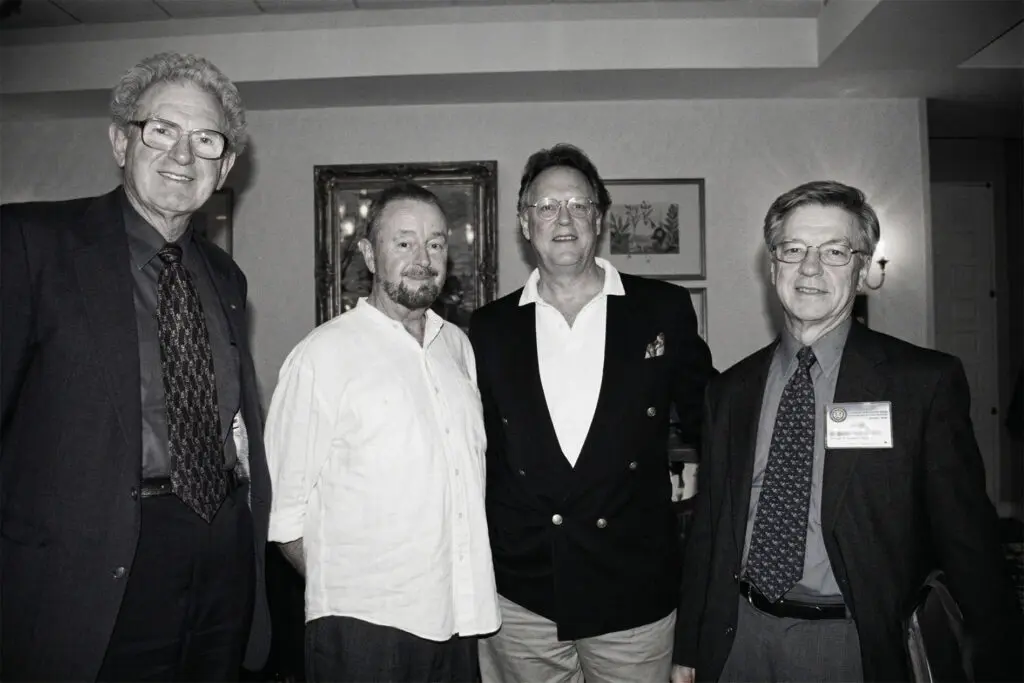
The term remote viewing helped make the work sound procedural rather than occult. It referred to the attempt to describe a target hidden by distance, shielding or time. The SRI group did not invent every technique later associated with remote viewing, and Targ did not single-handedly originate the field. What he and his colleagues did was create a recognisable experimental and institutional form: target pools, outbound teams, recorded descriptions, drawings, feedback, judging and statistical comparison. Their papers helped turn a loosely defined claim into something that other laboratories could attempt to replicate or criticise.
The programme operated on several levels that later accounts often blur. Laboratory research asked whether target-response correspondences exceeded chance under controlled conditions. Participant development asked whether feedback and practice improved performance. Intelligence tasking asked whether a viewer could provide useful information about a real site whose answer might be only partly known. Public communication translated the work into books, lectures and media. A positive result in one level did not guarantee success in another. A statistical anomaly with photographs did not automatically produce usable intelligence about an unknown installation. A memorable operational session did not replace a controlled series.
Secrecy complicated the programme’s scientific position. Intelligence sponsorship provided money, targets and institutional seriousness, but it restricted peer scrutiny and sometimes encouraged dramatic tasking before methods had stabilised. Publicity created the opposite pressure. Targ and Puthoff wanted scientific recognition and believed that publication would protect the work from being buried. Sponsors worried that media attention would expose classified interests or embarrass the agencies. Targ’s confidence helped the programme survive scepticism, but it could also make provisional findings sound settled.
The historical label Star Gate requires special care. The research that Targ helped establish at SRI in 1972 later passed through changing sponsors, names, locations and personnel. Targ’s SRI period lasted until 1982. The government effort commonly grouped under the Star Gate label continued after his departure and eventually included work at Science Applications International Corporation under Edwin May. Later Fort Meade operations, SAIC experiments and the 1995 review were not all Targ’s projects. He belongs near the beginning of that institutional lineage, not to every episode later attached to its best-known code name (International Remote Viewing Association, n.d.; Mumford et al., 1995).
The distinction matters because Targ’s reputation often expands by association. Puthoff’s later UAP work, Swann’s autobiographical claims, military viewer training and subsequent programmes are sometimes folded into a single story. A biography should instead ask what Targ personally designed, observed, published or said. His established role was substantial: cofounder of the SRI programme, coauthor of its most influential early papers, interviewer and occasional viewer, recruiter, theorist and public advocate. That is enough without assigning him the achievements or claims of every colleague.
What happened inside the experiments
To understand why Targ found remote viewing persuasive, it is necessary to understand what a representative experiment attempted to do. In the local geographical protocol described in the 1976 Proceedings of the IEEE paper, an SRI manager who was not conducting the session maintained a pool of more than one hundred possible sites within driving distance. Target names were sealed in envelopes and held in a safe. At the agreed time, an outbound team obtained a randomly selected target and travelled to it. The viewer and an interviewer remained at SRI, without being told where the team had gone. The viewer spoke and drew while the session was recorded. After the response had been completed, the viewer was taken to the target for feedback. Later, an independent judge received the transcripts and drawings, visited the candidate locations and ranked how well each response matched each site (Puthoff & Targ, 1976).
The logic was stronger than a casual comparison of one sketch with one photograph. If a judge had to match a complete set of responses against a complete set of targets without knowing the correct pairings, then a few generic words such as “trees,” “building” or “water” should not automatically produce a high score. A series could be evaluated by the ranks assigned to the correct target-response pairs. The researchers reported that Pat Price’s nine local sessions produced a sum of ranks corresponding to a probability of 2.9 times 10 to the minus 5 under their stated model. Hella Hammid’s nine-session series produced an even lower stated probability, 1.8 times 10 to the minus 6. Backup panels also matched more transcripts correctly than the researchers said would be expected by chance (Puthoff & Targ, 1976).
Those numbers were central to Targ’s conviction, but they require context. A p value estimates the probability of data at least as extreme under a specified null model. It does not measure the probability that remote viewing is real. It can be distorted if trials are not independent, if exclusions are decided after outcomes are known, if judges receive unintended cues, if the target pool contains distinctive regularities or if multiple analyses are tried and only the strongest reported. A low p value is therefore the beginning of an explanatory question, not its end.
The published papers also contained vivid examples. Hammid described a pedestrian overpass as a diagonal trough in the air and drew nested forms that resembled the structure from a particular viewpoint. In another session she described a barn-like building with a pitched roof and slatted sides, features the authors compared with a bicycle shed. Price produced drawings and descriptions associated with Hoover Tower, a radio telescope, a marina and a swimming-pool complex. These examples mattered because free-response data are difficult to appreciate through a single statistic. They also created a risk. A compelling image can dominate memory while vague, incorrect or unscorable material disappears from later retellings.
Targ’s own airport session shows how personal experience entered his scientific judgement. During a long-distance experiment in which Puthoff was travelling in Central America, the designated viewer was unavailable. Targ volunteered a drawing. The target proved to be an airport on San Andres Island, an unexpected side trip. The published account described correspondences involving the runway, an airport structure and ocean beyond it, alongside a discrepancy in the building’s form (Puthoff & Targ, 1976; Targ, 2008, p. 149). Targ returned to the episode for the rest of his life. For him, it was not an abstract probability. He had made the drawing before seeing the target photographs and believed he knew what his own information state had been.
Personal participation can be scientifically valuable because it reveals what the task feels like and may expose procedural weaknesses. It can also increase commitment. Once a researcher has had an experience that seems inexplicable, later ambiguous results may be interpreted through that conviction. Targ’s airport drawing did not prove a mechanism, but it helps explain why criticism of remote viewing did not feel to him like neutral methodological housekeeping. Critics were questioning an event he believed he had directly experienced.
The 1974 Nature paper combined several experimental strands. It reported sensory-shielded drawing tasks with Geller, remote viewing of geographical targets and preliminary physiological experiments. The paper’s appearance in a leading scientific journal gave the work visibility, not a guarantee of acceptance. It is also more cautious in places than later popular retellings. Targ and Puthoff wrote that although they had observed apparent metal bending by Geller, they had not obtained adequately controlled data sufficient to support a paranormal explanation. That sentence is important because it shows the difference between witnessing an event, designing a controlled test and making a defensible claim (Targ & Puthoff, 1974).
The Geller drawing experiments used shielded rooms, target pictures and, in some sessions, computer selection. The authors published pairs that they considered close, including simple forms such as grapes, a bridge and a bird. The complete record also included sessions in which Geller submitted no drawing or produced material of uncertain correspondence. His celebrity and skill as a performer made controls especially important. The question is not whether he seemed impressive in a room, but whether the target generation, confinement, recording, judging and complete response set excluded ordinary routes to the result. Targ and Puthoff believed their procedures did. Many critics did not.
The physiological work illustrates another difficulty. The researchers explored whether a person’s brain activity might change when a distant light flashed, even if the person could not consciously identify the stimulus. Such experiments could potentially reduce the subjectivity of verbal reports by using an instrumented response. Yet they introduced new sources of artefact, including electromagnetic pickup, trial selection and complex signal processing. The 1976 paper acknowledged extensive control work and negative outcomes in some related tests while interpreting one pattern as evidence of noncognitive awareness. The claim was ambitious, but this strand never became the public centre of Targ’s legacy.
Three distinctions keep the experimental record intelligible. First, a resemblance is not the same as a statistically evaluated series. A single drawing can be striking and still occur by chance, cueing or selective presentation. Second, a significant series is not the same as a reliably useful method. Intelligence customers require specific information at the right time, not merely an above-chance ranking across many sessions. Third, evidence that an anomaly occurred is not yet an explanation. Even if ordinary leakage and judging artefacts are excluded, one must still ask whether the result reflects telepathy, clairvoyance, precognition, an unknown cognitive bias or another process.
Targ often described remote viewing as easier when the viewer reported shapes, textures, colours and movement before trying to identify the target. In his teaching, premature analysis could become a source of cognitive noise. A viewer who sensed a curved metallic form might prematurely name it a dome, dish or vehicle, narrowing a more accurate raw impression into a wrong object. This distinction between description and interpretation had practical value as a reporting discipline. It did not itself verify paranormal access. It did, however, help create a method that practitioners could learn and repeat.
Feedback was equally central. After a session, the viewer might visit the location or see the target photograph. Targ believed this reinforced accurate perceptual habits. From an experimental standpoint, feedback must occur only after the response is fixed, because premature information can contaminate the record. It can also create memory effects in retrospective storytelling. Viewers may remember the details that matched and forget the rest. The full transcript, time stamps and predetermined judging procedure are therefore more informative than a later summary.
The SRI experiments were neither casual parlour demonstrations nor a finished proof. They were serious attempts to make a difficult claim testable, and they generated data that some researchers found compelling. They also depended on human judgement at several stages, and their archival records later became the centre of a methodological dispute. Targ’s achievement was to help make the claim examinable. Whether the examination established anomalous information transfer remained contested.
Pat Price and the problem of a successful result
The Semipalatinsk episode involving Pat Price became one of the most famous stories in the history of government-supported remote viewing. It is also the best case for understanding why a result could impress analysts and still fail as proof or intelligence.
The target was a Soviet research and development facility identified in the records as URDF-3 near Semipalatinsk. Price was initially given geographical coordinates, an atlas location and the information that the site was a Soviet research and development installation. Targ and Puthoff were briefed by the sponsor, then worked with Price. Kress later explained that analysts had selected two visible features as tests: a tall gantry crane and four derrick-like structures. If Price described both, the sponsor would consider that evidence that the channel might be working and would proceed to more detailed tasking (Kress, 1977).
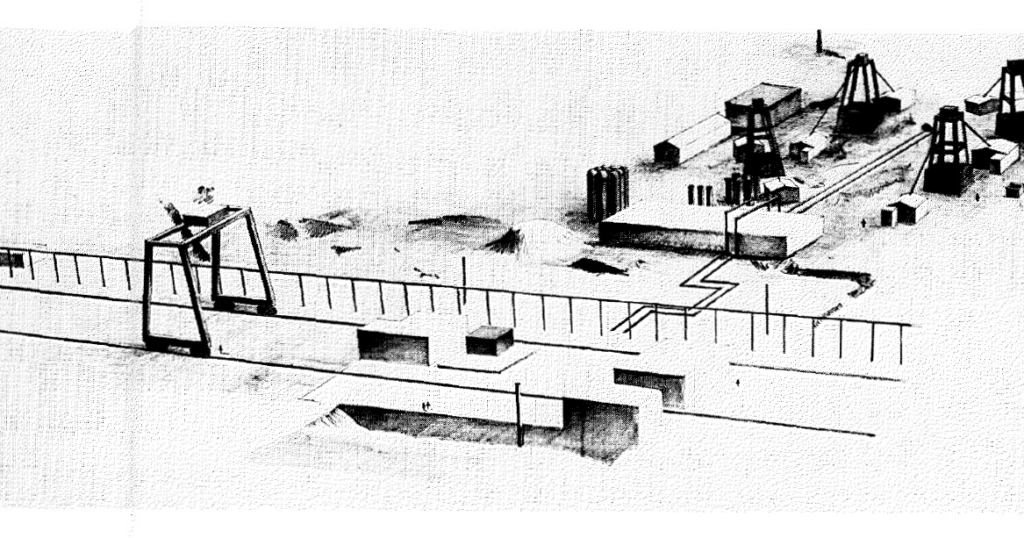
Price drew and described a large crane. The correspondence with the known structure impressed Kress and other analysts. According to Kress, the crane was sufficiently striking that the sponsor relaxed the requirement that Price also identify the four derricks. That decision is revealing. A prearranged criterion was changed after one compelling feature appeared. It is understandable as an operational reaction, but it weakens a clean experimental interpretation.
Price did not report the derricks. When later asked why, he replied that they were no longer present. Updated reconnaissance showed that two were partly dismantled but that all four remained visible. Kress also reported that Price produced some impressive descriptions of construction and spherical tank sections. Yet much of the output was wrong or could not be evaluated. Analysts faced the basic signal-to-noise problem that remote viewing repeatedly presented: if a report contains many statements, some specific and some broad, how should an evaluator weigh one extraordinary correspondence against omissions, errors and material that cannot be checked?
Kress’s conclusion was not that nothing unusual had happened. He called some of Price’s descriptions amazing and recorded that analysts considered the crane accurate. His overall judgement was that the result was not useful and that, as proof of remote viewing, it was at best inconclusive (Kress, 1977). That conclusion has more evidential value than either extreme retelling. It preserves the feature that persuaded participants without allowing the crane image to stand for the entire session.
Targ’s later accounts emphasised the crane and additional features he believed were subsequently confirmed. In his narrative, the episode demonstrated access to a guarded installation and helped validate the programme (Targ, 2008, pp. 142–143). The sponsor’s record supports the fact that the crane correspondence attracted serious attention. It does not support the stronger claim that the complete output constituted dependable intelligence. The difference is not semantic. Intelligence is useful only when analysts can identify the accurate material before later confirmation and act on it without being overwhelmed by error.
The Price case also shows why images have disproportionate power. A drawing of a gantry crane can be placed beside an image of a gantry crane, creating an immediate impression of identity. Incorrect verbal statements have no comparable visual monument. Unevaluable descriptions remain invisible. Later audiences encounter a curated pair rather than the temporal sequence in which analysts had to decide what, if anything, to trust.
For Targ, the episode remained an emblem of success. For Kress, it remained tantalising but incomplete. Both perspectives belong in the biography. The disagreement did not arise because one side saw a crane and the other did not. It arose because they were answering different questions. Targ asked whether the correspondence was difficult to explain by chance or ordinary access. The sponsor asked whether the total report could be trusted enough to guide decisions. A successful result in the first sense could fail in the second.
Publication, criticism and scientific disagreement
The 1974 Nature paper and the 1976 Proceedings of the IEEE paper carried the SRI work into venues read by scientists and engineers. Mind-Reach, published by Targ and Puthoff in 1977, brought the same history to a general audience. Publication expanded scrutiny and made Targ a public representative of research that many scientists regarded as methodologically weak or conceptually implausible. It also gave remote viewing a durable documentary record. The central dispute can therefore be reconstructed from papers rather than reduced to attitudes.
In 1978, psychologists David Marks and Richard Kammann reported unsuccessful replication efforts and raised a specific objection to the judging of SRI transcripts. They argued that the records contained cues that could reveal the chronological order of sessions or identify targets indirectly. A transcript might refer to the previous target, mention feedback, preserve a date or contain an editorial detail linked to a known sequence. A judge who reconstructed the order could match a response to its target without using any paranormal information in the response itself (Marks & Kammann, 1978).
A hypothetical example makes the concern clear. Imagine five sessions whose targets include a bridge, a church, a marina, a tower and a park. The current transcript says, “Unlike yesterday, I do not feel water.” That sentence may say little about the present target. If the judge knows which session followed the marina, however, it can reveal the transcript’s place in the sequence. Once order is reconstructed, the matching task is no longer blind. The cue need not describe the target to contaminate the judgement.
Targ and Puthoff did not ignore the criticism. In 1980, with Charles Tart, they reported a rejudging exercise using edited transcripts from which they said potential cues had been removed. The new judging again produced a statistically significant result, and they argued that the original findings could not be explained by the identified transcript clues (Tart et al., 1980). This response matters because it shows a genuine methodological engagement rather than a simple refusal to consider error.
The exchange did not end there. Marks argued in 1981 that sensory cues still invalidated the experiments. Puthoff and Targ replied that the critical analysis misrepresented procedures and failed to account for results obtained under revised judging. Marks and Christopher Scott returned to the issue in 1986, contending that residual cues remained and that the rejudging had not achieved the blindness claimed for it (Marks, 1981; Puthoff & Targ, 1981; Marks & Scott, 1986). The debate became technical because it had to. Whether a transcript was truly blind could not be settled by citing the journal’s prestige or the participants’ sincerity.
The cue dispute illustrates a wider problem with retrospective correction. Once a researcher knows which passages critics consider informative, those passages can be removed. Yet the editing itself can alter the texture or length of transcripts, and other unnoticed cues may remain. A stronger answer is prospective: design future studies so that no one handling the response before judgement knows the target, preserve complete records, specify scoring in advance and use independent judges unfamiliar with the viewers and target set. Replication by other laboratories matters because an effect tied to one research group may reflect an unrecognised local practice.
Targ’s supporters could reasonably point out that transcript cues cannot explain every experiment ever reported under the name remote viewing. Protocols changed, some used photographs rather than visited sites and later studies employed automated randomisation and different scoring. Critics could reasonably answer that a flaw in a foundational data set reduces confidence in the claims built from it and that later positive results require their own independent assessment. The correct historical conclusion is neither that one cue invalidated an entire field nor that an edited rejudging permanently resolved the issue.
Celebrity participants added another layer. Geller’s public performances encouraged close attention to deception. Targ and Puthoff described shielded conditions and experiments intended to prevent access. Critics argued that the controls were insufficient and that the researchers’ confidence made them vulnerable. A biography should not infer dishonesty merely because results were disputed, nor infer validity from the researchers’ sincerity. The relevant questions remain procedural: who generated the target, who knew it, how the participant was observed, whether every response was preserved and how the match was scored.
Targ’s public style affected reception. He spoke with confidence, humour and a willingness to translate technical claims into memorable images. That made remote viewing intelligible to audiences who would never read a rank-sum table. It also compressed uncertainty. A sentence such as “the viewer described the target” can conceal a long transcript containing both relevant and irrelevant material. An account of “CIA confirmation” can conceal the difference between a project officer’s interest, an analyst’s partial match and an operational endorsement.
Secrecy further complicated the exchange. Researchers could invoke classified successes that independent scientists could not inspect. Critics sometimes treated absence of accessible evidence as evidence that nothing had occurred. Declassification later made more records available, but a released document proves first that a claim, task or assessment was recorded. It does not authenticate the extraordinary event described in the record. The same rule applies to memoirs, interviews and films.
The scientific disagreement was therefore not a side note to Targ’s life. It shaped his reputation and his later teaching. He came to view scepticism less as a neutral default than as a social and philosophical resistance to evidence. Critics viewed his certainty as an example of why striking cases require unusually careful controls. Each side saw the other as neglecting the decisive fact. Targ saw repeated positive series and personal experience. Critics saw flexible procedures, subjective judging and incomplete replication.
The strongest assessment holds both. Targ and his colleagues made anomalous perception available for experimental argument. They published procedures and results that could be challenged. Their work was not accepted merely because it appeared in prestigious journals, and the published criticism identified substantive vulnerabilities. The resulting literature remains valuable precisely because the disagreement can be traced at the level of transcripts, judges and protocols rather than caricatured as belief against disbelief.
Life after SRI and the return to optical engineering
Targ left SRI in 1982. His later public accounts presented the departure as a move toward publication, teaching and freer exploration of applications. A 1995 letter by Edwin May preserves a different institutional memory, stating that a government representative asked for Targ and Keith Harary to be removed from the project. The reasons are not fully visible in the surviving document, and the two accounts should not be forced into a single simple explanation. What is clear is that Targ’s departure ended his direct role in the SRI programme while leaving him committed to remote viewing as both a research subject and a public cause (May, 1995; Targ, 2008, ch. 10).
One early post-SRI venture was Delphi Associates, formed with psychologist and remote viewer Keith Harary and businessman Anthony White. The group explored associative remote viewing, or ARV, as a way to forecast binary outcomes. Instead of asking a viewer to perceive a number directly, the experimenter associated each possible outcome with a different future feedback object or image. The viewer described the object that would later be shown. A judge then compared the description with the two possible targets and inferred which market outcome the session indicated.
The approach tried to convert a descriptive capacity into a decision. It also multiplied the points at which error could enter: target assignment, judging, feedback timing, trial cancellation and the temptation to continue until a favourable sequence appeared. Targ later described a successful run involving silver futures in 1982. The following year’s efforts did not reproduce the result, a failure acknowledged in his later paper (Targ et al., 1995).
Harary eventually disputed influential retellings of the Delphi episode. In a detailed 1992 critique and a 1994 letter, he described the early trials as informal, with optional stopping and changing probabilities, and argued that later descriptions did not match the original record. He regarded the project as well intentioned but sensationalised and opposed the use of his name in subsequent public forecasting promotions (Harary, 1992, 1994). This disagreement is biographically important because it shows that a former collaborator challenged not merely the interpretation of the data but the reconstruction of what trials had occurred.
A separate 1995 pilot by Targ, Jane Katra, Dean Brown and Wenden Wiegand should not be confused with the 1982 Delphi story. The team reported eighteen viewings organised into nine weekly ARV trials. Two trials were passed under the protocol, leaving seven hypothetical market forecasts, six of which were recorded as correct. No actual purchases were made. The authors presented the design as an error-detecting protocol and invited replication (Targ et al., 1995). The result was interesting as a pilot, but the small number of retained forecasts, the pass rules and the absence of an independent replication make it unsuitable as financial guidance.
Targ’s life after SRI was not an uninterrupted pursuit of market prediction. By the late 1980s he was working at Lockheed on airborne laser systems. The 1988 NASA record lists him at Lockheed Missiles and Space Company and describes a comparison of radar, infrared and coherent lidar approaches to wind-shear detection (Targ & Bowles, 1988). The later CLASS papers moved from simulation to flight testing. In this work, Targ returned to a domain where performance could be measured in metres per second, range and warning time.
His own author biography dates his retirement from Lockheed Martin to 1998 and identifies his final position as senior staff scientist (Targ, n.d.). Employment dates in retrospective accounts are not completely consistent, but the technical publications establish the substance of the work. They also complicate the stereotype that commitment to psi displaced his engineering. For much of his adult life, he moved between controversial consciousness research and conventional optical systems, sometimes in the same decade.
What the 1995 review concluded
By 1995, the government-sponsored programme had moved far beyond the SRI work Targ personally conducted. The American Institutes for Research, or AIR, was asked to evaluate the laboratory research and the operational use of remote viewing. Its review included ten later experiments conducted at SAIC under Edwin May. Targ had left SRI thirteen years earlier and should not be described as the experimenter responsible for those studies (Mumford et al., 1995).
Statistician Jessica Utts concluded that psychic functioning had been established by the standards normally applied in science. She emphasised repeated departures from chance, methodological improvement and what she regarded as replication across experiments. In her view, research should move from asking whether an effect existed to asking how it worked (Utts, 1995).
Psychologist Ray Hyman reached a more guarded conclusion. He agreed that the reported SAIC effects were too large and consistent to dismiss as simple statistical fluctuation. He also judged the later work methodologically better than the earlier SRI studies. Yet he argued that a statistically significant departure from a null model did not identify its cause. The same viewers, target materials and principal judge were used repeatedly, and the programme had not been exposed to enough independent replication and public scrutiny. Hyman therefore accepted that something other than ordinary chance fluctuation had occurred while declining to conclude that anomalous cognition had been demonstrated (Hyman, 1995).
AIR’s synthesis preserved that disagreement. The report concluded that the laboratory programme had produced statistically significant hits more often than chance, but that the source of the effect could not be attributed unambiguously to paranormal ability. It highlighted the absence of evidence that independent judges would agree and the difficulty of separating viewer performance from judge, target-set and procedural effects (Mumford et al., 1995).
The operational assessment was more adverse. Interviews with intelligence users indicated that some reports contained accurate broad characteristics, but the information was inconsistent, inaccurate in specifics and dependent on subjective interpretation. The reviewers found no case in which a remote-viewing report had provided an adequate basis for actionable intelligence. They recommended against continuing the programme within the intelligence community (Mumford et al., 1995).
These were separate conclusions. One concerned statistical anomalies in controlled experiments. The other concerned practical reliability in intelligence work. A method can produce a small above-chance effect and still be useless when a decision requires specificity. Conversely, poor operational performance does not by itself show that every laboratory anomaly was illusory. The AIR report’s importance lies partly in making that distinction explicit.
Targ’s later public response emphasised the favourable side of the record. In a 2004 television interview, when confronted with AIR’s finding that the information was vague and insufficiently actionable, he pointed to the programme’s long duration and continued funding as evidence that agencies had found value. He also characterised the analysis as the work of a committed sceptic (CNN, 2004). That response expressed his enduring confidence, but it simplified the actual review. AIR used both Utts and Hyman, recorded their agreement about a statistical anomaly and then issued its own operational judgement.
Targ’s interpretation remains part of the biography because it shows what he believed the 1995 review meant. It should not replace the report. Institutional longevity establishes sustained interest, not effectiveness. Utts’s conclusion supports a strong affirmative scientific interpretation, but Hyman’s reservations and AIR’s operational findings remain independently visible. The 1995 record did not close the scientific question. AIR recommended against continued intelligence use, and the programme was not continued after the review.
Family loss and the question of healing
The later Targ cannot be understood only through laboratories and arguments. Family relationships, bereavement and the search for a way to live with suffering shaped the subjects of his books. These experiences should not be used to diagnose his beliefs or retroactively explain why he accepted remote viewing. They do, however, illuminate why consciousness became for him an ethical and existential question rather than only an experimental one.
Joan Fischer Targ died suddenly of a cerebral haemorrhage on 2 June 1998, aged sixty. Her obituary records a life of educational and community work: peer tutoring, computer-assisted learning, nursing, gardening and a long local dispute over her effort to establish an organic farm. Her family described the farm as a project in community as much as agriculture. She was also the person who had first taught her younger brother Bobby Fischer to play chess. In Russell’s biography, Joan should be remembered as a collaborator in family life and an accomplished educator, not merely as the sister of a famous man or the wife of a controversial researcher (The Almanac, 1998).
Their daughter Elisabeth Targ became a psychiatrist and researcher. She graduated from Stanford, worked in emergency psychiatry and became director of the Complementary Medicine Research Institute at California Pacific Medical Center. She investigated prayer, meditation and distant healing while maintaining a clinical identity distinct from her father’s work. Elisabeth died of glioblastoma on 18 July 2002, aged forty (Stanford Magazine, 2002; Squatriglia, 2002).
Russell Targ explicitly connected Elisabeth’s death with his later inquiry into suffering. In the preface to The End of Suffering, written with J. J. Hurtak, he described grief as an impetus to investigate Buddhist and nondual approaches to fear, identity and attachment (Targ, 2006). That is a documented account of his motivation. It does not mean that bereavement created his earlier belief in psi. His interest in consciousness preceded both deaths by decades.
The healing research associated with Elisabeth requires careful attribution. She was a coauthor of a small randomised, double-blind study involving forty people with advanced AIDS. The paper reported fewer new illnesses, physician visits and hospitalisations in the distant-healing group, while finding no significant difference in CD4 counts. Russell Targ was not an author (Sicher et al., 1998). A larger randomised trial involving 156 participants was published in 2006. It found no significant effects on the primary or secondary outcomes and concluded that distant healing did not improve the selected clinical measures. Elisabeth was a coauthor; Russell again was not (Astin et al., 2006).
These studies do not support a general claim that distant healing is an established treatment. The small study raised a question, and the larger trial did not establish the proposed benefit. An individual’s illness or death is not an experiment, and no biography should convert private loss into a verdict for or against a medical claim. Targ’s later spiritual writing belongs to the history of meaning he made from grief, not to health advice.
In later life, Targ married artist Patricia Kathleen Phillips. Publisher and interview materials identify Patricia as his wife and companion during the period of his memoir, teaching and later media work (Targ, 2008, Acknowledgments). Her presence is relevant because the autobiographical Targ was not a solitary sage. His later life continued to include partnership, family, travel, argument and creative work.
Loss altered the emotional register of Targ’s writing. Earlier books often carried the excitement of discovery and institutional adventure. Later works asked what a nonlocal view of mind might mean when the body fails, a loved person dies and control becomes impossible. He did not abandon evidence as a concern, but his standard of significance widened. An experiment could now matter not only because it challenged sensory limits, but because it seemed to imply that personal identity was larger than the individual organism.
Buddhism, nonlocality and the meaning of consciousness
Targ increasingly presented remote viewing as evidence about what a person is. His mature argument was not merely that the mind receives an occasional hidden image. It was that awareness is not fully contained by ordinary boundaries of space, time and individual identity. Buddhism, Vedanta and nondual teaching supplied a language for that claim, while parapsychology supplied the experiments he believed made it more than a spiritual intuition.
In interviews and books, Targ described the everyday self as a useful but limited construction. Quieting memory, expectation and analytic naming was, in his account, both a remote-viewing method and a contemplative practice. The viewer waited for an unexpected sensory impression rather than manufacturing an answer. The meditator observed thoughts without mistaking them for the whole of awareness. Targ treated these as related disciplines of reducing noise (Steinfeld, 2012; Targ, 2012).
This synthesis gave his work unusual reach. A reader interested in laboratory evidence could encounter Buddhist philosophy. A reader drawn to meditation could be introduced to target pools and blind judging. The risk was that a metaphor could slide into a mechanism. The word nonlocal has a precise use in quantum physics, where entangled systems display correlations that cannot be modelled by local hidden variables. It does not automatically mean that a human mind can acquire descriptive information about a distant object.
The 2022 Nobel Prize in Physics recognised experiments with entangled photons, violations of Bell inequalities and the development of quantum information science. Those achievements strengthened the empirical foundations of quantum nonlocality. They did not establish remote viewing, survival after death or a quantum channel for consciousness (Royal Swedish Academy of Sciences, 2022). Any extension from entangled particles to anomalous perception requires its own theory, testable predictions and evidence.
Targ often used physics less as a complete model than as permission to reject common-sense limits. If nature at the quantum level is not locally separable in the classical way, he argued, the assumption that mind must be entirely local should not be treated as self-evident. That is a philosophical opening, not a demonstrated explanation. It can motivate research without carrying the burden of proof.
His views on survival after death developed through personal experience, reports from others and a nondual understanding of identity. He wrote that consciousness was fundamental and that the individual personality participated in a larger awareness. In some passages he offered this as philosophy. In others he treated apparent after-death communications and psi experiments as evidence. Those categories should remain distinct. A meaningful experience can transform a life without identifying its external cause.
The ethical centre of Targ’s later thought was compassion. If separateness is incomplete, then another person’s suffering is not wholly external. The End of Suffering argued for freedom from fear through a change in identification rather than through control of events. This orientation softened the competitive frame sometimes associated with intelligence applications and market forecasting. Remote viewing became, in his telling, a human capacity that could teach humility, interconnectedness and responsibility.
There was a tension in that vision. Targ’s scientific rhetoric sometimes promised proof, while his contemplative rhetoric invited direct inquiry and release from attachment to certainty. The first asked readers to accept that experiments had established a fact. The second asked them to notice how tightly they held any conceptual identity. That unresolved tension was characteristic of him. He wanted anomalous perception to be both publicly demonstrable and personally liberating.
His philosophy should therefore be read generously but with category discipline. It is documented that he held and taught these views. It is reasonable to examine how they arose from his research and losses. It is not established that quantum entanglement explains remote viewing or that remote viewing proves a universal nonlocal consciousness. Targ’s contribution was to make that larger possibility vivid enough that many readers considered it worth exploring.
Books, teaching, film and community
Targ’s influence travelled farther through books, workshops and media than through journal articles alone. The publications trace a clear evolution. Mind-Reach, written with Puthoff and published in 1977, presented the early SRI programme to a broad audience. Mind at Large, edited with Tart and Puthoff in 1979, placed anomalous perception within a wider intellectual setting. The Mind Race, written with Harary in 1984, reflected the hope that psychic abilities could be understood, developed and applied. These works belonged to the period when Targ still wrote primarily as a researcher reporting a new capability.
The books with Jane Katra shifted the centre toward consciousness and healing. Miracles of Mind in 1998 and The Heart of the Mind in 1999 joined remote viewing to spiritual practice and accounts of distant intention. Limitless Mind in 2004 presented anomalous perception as an accessible human capacity rather than a rare talent. The End of Suffering in 2006, with Hurtak, addressed identity, grief and Buddhist thought. Do You See What I See? in 2008 supplied the autobiographical frame: the visually impaired motorcyclist, magician, laser researcher, family man and participant in classified work. The Reality of ESP in 2012 offered his mature case for the evidence. Third Eye Spies in 2023 returned to the history as a teaching text, with an introduction by remote viewer Paul H. Smith (Targ & Puthoff, 1977; Targ & Harary, 1984; Targ & Katra, 1998, 1999; Targ, 2004, 2008, 2012, 2023; Targ & Hurtak, 2006).
The shift was not a retreat from science in Targ’s own understanding. He believed the experimental record justified asking what remote viewing meant for human identity. His critics saw a different movement, from disputed laboratory findings to increasingly expansive metaphysical claims. Both readings identify a real change. The early question was whether information could be obtained. The later question was what such access would mean for suffering, death and the self.
Teaching amplified this change. Targ’s workshops encouraged participants to record basic sensory impressions, delay naming the target and use feedback to distinguish signal from imagination. The method was accessible and participatory. A person did not need a security clearance, advanced mathematics or a reputation as a psychic. This democratisation helped create an enduring community of practitioners.
Participation is not validation. A workshop can be meaningful, an app can be engaging and a testimonial can be sincere without establishing that anomalous transfer occurred. Yet influence should not be measured only by whether the strongest scientific claim is accepted. Targ gave people a structured language for attending to imagery and uncertainty. Some treated it as experimental practice, some as intuition training and some as spiritual exploration.
He also helped establish institutional continuity. Targ was a founding figure in the International Remote Viewing Association and served as its president from 1999 to 2002. IRVA records identify him as president emeritus and connect the Bay Research Institute to the organisation’s early history. A November 2026 archival account states that Targ announced a gift of the Bay Research Institute to IRVA at the 1999 inaugural meeting, while later legal documents appear to record stages of formal transfer around 2003 and 2004. Until the underlying records are fully reviewed, the safest conclusion is that he provided an important organisational inheritance rather than that one uncontested legal transfer date has been established (International Remote Viewing Association, n.d.; Thompson Smith, 2026).
The documentary Third Eye Spies, directed by Lance Mungia and released in 2019, made Targ both participant and producer in the preservation of his own history. The film contains interviews, archival material and reconstructions of the SRI programme. It is valuable as participant testimony and as a record of how insiders wanted the history remembered. It is not independent adjudication. Its dramatic form naturally emphasises extraordinary successes and the secrecy of intelligence involvement (Mungia, 2019).
Targ’s public community extended beyond formal remote-viewing organisations. He spoke to parapsychologists, meditators, UAP audiences, spiritual seekers and people interested in the history of intelligence. His manner was direct and often playful. He preferred a concrete anecdote to an abstract defence, a drawing to a long statistical qualification. That gift made him a compelling teacher. It also placed a heavy burden on editors and historians to restore the material that a good story leaves out.
By the 2020s, Targ had become a living link to the SRI programme’s beginnings. Interviews allowed younger researchers to hear the cadence of his confidence and the personal meanings that documents cannot capture. His 2023 book consolidated the instructional legacy. The Society for Psychical Research’s report of his death in November 2026 therefore marked not only the passing of an individual but the end of a first-person era in the public history of remote viewing.
Targ in UAP culture
Targ’s relevance to UAP history is real but indirect. He was not primarily a field investigator of aerial incidents, a military witness or a materials researcher. His importance lies in the way remote viewing entered some UAP frameworks as a method of inquiry and as evidence that consciousness might participate in anomalous encounters.
The connection travelled through people and ideas. Puthoff later became prominent in UAP research and advocacy. Swann wrote autobiographical accounts involving anomalous objects and alleged nonhuman activity. Remote viewers were tasked with locations or times connected to UAP narratives. Researchers interested in contact began to ask whether intention, telepathy or nonlocal awareness could be part of the phenomenon. Targ’s experimental language gave these discussions a vocabulary of targets, shielding, feedback and judging.
Those later developments should not be attributed to him merely by association. Targ did not direct AAWSAP, did not belong to To The Stars Academy’s later programme and was not responsible for every session conducted by Swann or military viewers. The 1984 Mars session, later UAP-related tasking and Swann’s personal claims require their own evidence and authorship. Targ’s documented contribution was the earlier experimental framework and his later willingness to discuss how it might apply to anomalous subjects.
A specific late example is his 13 July 2023 appearance on Coast to Coast AM. The broadcaster’s programme summary attributes to Targ a retelling of Pat Price’s claimed perceptions of several purported UAP bases and of intelligence interest in those locations. The original audio should be checked before any extended quotation. The summary documents that Targ repeated the story in public. It does not verify that such installations existed, that their occupants were nonhuman or that intelligence agencies confirmed the interpretation (Coast to Coast AM, 2023).
The evidential problem is more severe for UAP targets than for a concealed photograph. A photograph has a fixed answer that can be revealed after the response. A distant installation may be partly known through reconnaissance. A purported nonhuman base may have no independently established target state at all. Without a checkable answer, a detailed narrative cannot be scored in the ordinary sense. It may be internally coherent and still remain unverified.
Even a successful remote-viewing result on a controlled target would not establish the identity or intentions of a nonhuman intelligence. The logic requires several separate steps. One must first show that information was acquired without ordinary access. Then one must show that the target itself has been correctly identified. Only then can claims about agency, origin or purpose be assessed. Targ’s public storytelling sometimes moved quickly across these steps, while his best experimental work depended on keeping them separate.
His UAP influence is therefore methodological and philosophical. Methodologically, he helped create procedures for testing claims of distant perception. Philosophically, he argued that consciousness might not be confined to the ordinary sensory organism. These ideas made him important to researchers who suspect that UAP events include psychic or high-strangeness components.
UAPedia should preserve that relevance without manufacturing a personal contact history. No documented record reviewed for this biography establishes that Targ had a UAP sighting or direct encounter with nonhuman intelligence. His place in UAP culture arises from remote viewing, his collaborations and his public interpretation of consciousness. That is a substantial connection, but it is not the same as witness testimony.
A differentiated legacy
Russell Targ’s legacy is strongest when its parts are separated rather than forced into one verdict. His technical legacy rests on documented publications and collaborative inventions in plasma physics, laser modulation, coherent detection, high-power gas lasers and airborne lidar. These contributions can be evaluated within established engineering disciplines. They show a working scientist who helped develop ways to generate, control and measure light.
His institutional legacy rests on the creation of a research programme that brought anomalous perception into SRI, government contracts and major scientific journals. The programme’s existence, funding and influence are historical facts. Targ helped define remote viewing as a repeatable task rather than an undefined marvel. He recruited participants, designed experiments, coauthored papers and made the work publicly intelligible.
His experimental legacy is more contested. The early papers reported significant results and memorable correspondences. Critics identified transcript cues, judging problems, replication issues and the danger of selective presentation. The 1995 review found a statistical anomaly in later work but did not reach a common explanation, and it rejected remote viewing as dependable intelligence. Targ remained convinced that the total record established psychic functioning. The scientific community did not reach that consensus.
Research continued after the programme closed. A 2023 systematic review and meta-analysis by Patrizio Tressoldi and Debra Katz examined thirty-six remote-viewing studies published from 1974 through 2022 and reported a positive aggregate effect. The authors found no evidence of publication bias under their analyses and argued that the literature supported continued research. The studies, however, varied greatly in protocol, participants and judging, and the reported heterogeneity was extreme. A positive average across diverse studies does not by itself establish a single mechanism, operational reliability or freedom from selective practices. Targ was not an author of the review (Tressoldi & Katz, 2023).
His cultural legacy may prove the most durable. Targ taught generations of readers that anomalous perception could be approached with a notebook, a target and a judging procedure rather than with unquestioned authority. He encouraged people to report impressions before interpretation. He also invited them to connect those experiments with meditation, compassion and a less bounded idea of self. For some, that was liberating. For others, it carried uncertain data into claims too large for the evidence.
The same confidence that made Targ effective also created vulnerabilities. He could turn institutional interest into an implication of success and a striking episode into a representative proof. He sometimes treated scepticism as resistance rather than as a demand for stronger design. Yet his critics could also underestimate why the work persisted. Participants were not persuaded only by publicity. They encountered sessions, drawings and statistical series that they considered genuinely difficult to explain. A fair history must account for that persistence without assuming the conclusion.
Targ’s life resists the usual division between respectable science and anomalous inquiry. He did not abandon optics for mysticism. He carried engineering metaphors into consciousness research and spiritual questions back into the interpretation of experiments. The result was productive, controversial and sometimes unstable. It generated instruments, papers, institutions, arguments, workshops, films and a community.
The Society for Psychical Research’s report that he died on 16 November 2026 closes the chronology provisionally, pending a separate family or organisational notice. It does not close the questions he helped make public. Remote viewing remains investigated by a small research community and practised by a larger informal one. The strongest claims remain disputed. The archive continues to grow.
Targ began as a physicist studying how signals travel through plasma and light. He became known for asking whether information might also reach a mind without a recognised channel. His enduring importance lies less in a final answer than in the exact shape he gave the question. What is perceived, what is inferred, what is measured and what is remembered are not the same. His career repeatedly crossed those boundaries, sometimes illuminating them and sometimes blurring them.
A differentiated judgement is therefore more accurate than either canonisation or dismissal. Targ made documented contributions to optical engineering. He helped establish a consequential research programme. He reported results that deserve to be understood in their full procedural context. He advanced interpretations that remain unproven. He gave personal and spiritual meaning to a contested body of evidence. Taken together, those achievements make him a central figure in the modern history of anomalous perception and an important, carefully bounded figure in UAP culture.
Compact chronology
The dates below are editorial anchors. The death entry remains attributed to the Society for Psychical Research pending a separate family or direct organisational notice.
| Date | Biographical anchor |
|---|---|
| 11 April 1934 | Born in Chicago. |
| 1954 | Earned a B.S. in physics from Queens College. |
| 1954-1956 | Undertook graduate study at Columbia University in C. S. Wu’s laboratory. |
| 1956 | Joined Sperry Gyroscope for gas-plasma and microwave research. |
| 1958 | Joined the Polytechnic Institute of Brooklyn and married Joan Fischer. |
| 1959-1962 | Worked at Technical Research Group on gaseous laser media, spectroscopy and optical detection. |
| 1962-1972 | Conducted laser research at GTE Sylvania; the family moved to Palo Alto in 1962. |
| 1972 | Joined Stanford Research Institute and began the remote-viewing collaboration with Harold Puthoff. |
| 1974 | Published the Nature paper on sensory-shielded information transfer; coauthored the NASA report on human-machine testing techniques. |
| 1976 | Coauthored the expanded Proceedings of the IEEE paper on remote viewing. |
| 1977 | Published Mind-Reach with Puthoff. |
| 1982 | Left SRI and entered the Delphi Associates period of applied remote-viewing work. |
| Late 1980s-1998 | Worked at Lockheed on airborne coherent lidar and wind-shear sensing, including simulation and flight-test publications. Targ’s current author biography dates retirement to 1998; retrospective accounts differ. |
| 1995 | AIR completed its independent programme review; Targ and colleagues published a separate associative remote-viewing pilot. |
| 2 June 1998 | Joan Fischer Targ died; Targ’s author biography dates his retirement from Lockheed to 1998. |
| 1999-2002 | Served as president of the International Remote Viewing Association. |
| 18 July 2002 | Elisabeth Targ died. |
| 2008 | Published his memoir, Do You See What I See? |
| 2012 | Published The Reality of ESP and gave the New Realities interview later archived by UAPedia. |
| 2019 | Third Eye Spies, directed by Lance Mungia, was released. |
| 2023 | Published the book Third Eye Spies and discussed Pat Price’s purported UAP-base perceptions in a public broadcast. |
| 16 November 2026 | Death reported by the Society for Psychical Research, later confirmed by close associates. |
Internal crosslinks
Existing pages are presented as live destinations. Other names should be checked against UAPedia’s catalogue and treated as editorial proposals when no developed page exists.
| UAPedia destination | Editorial use |
|---|---|
| Russell Targ on Remote Viewing, Non-Locality and Consciousness beyond Space-Time | Existing UAPedia transcript. Use for Targ’s voice, mature philosophy and public claims. |
| Dr. Harold “Hal” Puthoff and the Arc of UAP Inquiry | Existing UAPedia biography. Separates Puthoff’s later career from Targ’s own record. |
| Remote Viewing and UAP Interaction: Mind Meets Mystery | Existing UAPedia topic article. Provides the wider methodological and UAP context without duplicating it here. |
| UAPedia Editorial Standard: Navigating the Mystery | Existing editorial reference. Supports the article’s distinction between documents, experiences and interpretations. |
| 92. Investigators and Researchers | Existing category page. Primary navigational home for the biography. |
References
Selected primary research, participant testimony, independent assessments, institutional records and UAPedia editorial sources used in the biography.
Astin, J. A., Stone, J., Abrams, D. I., Moore, D. H., Couey, P., Buscemi, R., & Targ, E. (2006). The efficacy of distant healing for human immunodeficiency virus: Results of a randomized trial. Alternative Therapies in Health and Medicine, 12(6), 36-41.
CNN. (2004, June 3). Anderson Cooper 360 Degrees: Interview with Russell Targ [Television transcript].
Coast to Coast AM. (2023, July 13). Remote viewing history / Aliens in the afterlife [Radio programme summary].
Harary, K. (1992). The goose that laid the silver eggs: A retrospective on the Delphi Associates remote viewing project. Journal of the American Society for Psychical Research, 86(4), 375-409.
Harary, K. (1994). Confusion over Delphi silver-futures trials? Skeptical Inquirer, 18(4), 423-424.
Harris, S. E., & Targ, R. (1964). FM oscillation of the He-Ne laser. Applied Physics Letters, 5(10), 202-204. https://doi.org/10.1063/1.1723588
Hyman, R. (1995, September 11). Evaluation of program on anomalous mental phenomena. In M. D. Mumford, A. M. Rose, and D. A. Goslin, An evaluation of remote viewing: Research and applications. American Institutes for Research.
International Remote Viewing Association. (n.d.). The IRVA team and past presidents. https://www.irva.org/
Kress, K. A. (1977). Parapsychology in intelligence: A personal review and conclusions. Studies in Intelligence, 21(4), 7-17.
Marks, D. (1981). Sensory cues invalidate remote viewing experiments. Nature, 292, 177. https://doi.org/10.1038/292177a0
Marks, D., & Kammann, R. (1978). Information transmission in remote viewing experiments. Nature, 274, 680-681. https://doi.org/10.1038/274680a0
Marks, D., & Scott, C. (1986). Remote viewing exposed. Nature, 319, 444.
May, E. C. (1995, May 13). Letter concerning remote-viewing publicity and the 1982 personnel changes (CIA-RDP96-00791R000200190060-1) [Declassified correspondence].
Mumford, M. D., Rose, A. M., & Goslin, D. A. (1995, September 29). An evaluation of remote viewing: Research and applications. American Institutes for Research.
Mungia, L. (Director). (2019). Third Eye Spies [Film]. Conscious Universe Films.
Publishers Weekly. (1999, August 2). Targ dies at 92. Publishers Weekly. https://www.publishersweekly.com/pw/print/19990802/35187-targ-dies-at-92.html
Thurber, J. (1999, July 27). William Targ; Book editor paid $5,000 for ‘Godfather’. Los Angeles Times. https://www.latimes.com/archives/la-xpm-1999-jul-27-mn-60046-story.html
Puthoff, H. E., & Targ, R. (1976). A perceptual channel for information transfer over kilometer distances: Historical perspective and recent research. Proceedings of the IEEE, 64(3), 329-354. https://doi.org/10.1109/PROC.1976.10113
Puthoff, H. E., & Targ, R. (1981). Rebuttal of criticisms of remote viewing experiments. Nature, 292, 388. https://doi.org/10.1038/292388a0
Rabinowitz, P. J., Jacobs, S. F., Targ, R., & Gould, G. (1962). Homodyne detection of phase-modulated light. Proceedings of the IRE, 50(11), 2365. https://doi.org/10.1109/JRPROC.1962.287964
Royal Swedish Academy of Sciences. (2022, October 4). The Nobel Prize in Physics 2022. https://www.nobelprize.org/prizes/physics/2022/press-release/
Sicher, F., Targ, E., Moore, D. H., II, & Smith, H. S. (1998). A randomized double-blind study of the effect of distant healing in a population with advanced AIDS: Report of a small scale study. Western Journal of Medicine, 169(6), 356-363.
Society for Psychical Research. (2026 update). Russell Targ. Psi Encyclopedia. https://psi-encyclopedia.spr.ac.uk/articles/russell-targ/
SRI International. (1979, March 23). Proposed GRILL FLAME protocol (CIA-RDP96-00788R001300070003-9, Tab C) [Declassified proposal; curriculum vitae on pp. 50-51].
Squatriglia, C. (2002, August 13). Dr. Elisabeth Targ: Physician, researcher. San Francisco Chronicle.
Stanford Magazine. (2002, November/December). Elisabeth F. Targ. Obituaries.
Steinfeld, A. (Interviewer). (2012, May 15). Russell Targ on remote viewing, non-locality and consciousness beyond space-time [Interview transcript]. New Realities. UAPedia. https://uapedia.ai/wiki/russell-targ-on-remote-viewing-non-locality-and-consciousness-beyond-space-time/
Targ, R. (n.d.). About. ESP Research. https://espresearch.com/
Targ, R. (2004). Limitless mind: A guide to remote viewing and transformation of consciousness. New World Library.
Targ, R. (2006). Preface. In R. Targ and J. J. Hurtak, The end of suffering: Fearless living in troubled times. Hampton Roads.
Targ, R. (2008). Do you see what I see? Memoirs of a blind biker. Hampton Roads.
Targ, R. (2012). The reality of ESP: A physicist’s proof of psychic abilities. Quest Books.
Targ, R. (2023). Third eye spies: Learn remote viewing from the masters. New Page Books.
Targ, R., & Bowles, R. L. (1988). Investigation of airborne lidar for avoidance of windshear hazards (AIAA-88-4658). American Institute of Aeronautics and Astronautics.
Targ, R., Cole, P., & Puthoff, H. E. (1974). Development of techniques to enhance man/machine communication (NASA CR-157886). Stanford Research Institute.
Targ, R., & Harary, K. (1984). The mind race: Understanding and using psychic abilities. Villard Books.
Targ, R., & Hurt, D. B. (1971, September). Learning clairvoyance and precognition with an extra sensory perception teaching machine [Paper presentation]. Parapsychological Association meeting, Durham, NC.
Targ, R., Katra, J., Brown, D., & Wiegand, W. (1995). Viewing the future: A pilot study with an error-detecting protocol. Journal of Scientific Exploration, 9(3), 367-380.
Targ, R., & Katra, J. (1998). Miracles of mind: Exploring nonlocal consciousness and spiritual healing. New World Library.
Targ, R., & Katra, J. (1999). The heart of the mind: How to experience God without belief. New World Library.
Targ, R., Kavaya, M. J., Huffaker, R. M., & Bowles, R. L. (1991). Coherent lidar airborne windshear sensor: Performance evaluation. Applied Optics, 30(15), 2013-2026. https://doi.org/10.1364/AO.30.002013
Targ, R., & Puthoff, H. E. (1974). Information transmission under conditions of sensory shielding. Nature, 251, 602-607. https://doi.org/10.1038/251602a0
Targ, R., & Puthoff, H. E. (1977). Mind-reach: Scientists look at psychic ability. Delacorte Press/E. Friede.
Targ, R., Steakley, B. C., Hawley, J. G., Ames, L. L., Forney, P., Swanson, D., Stone, R., Otto, R. G., Zarifis, V., Brockman, P., Calloway, R. S., Klein, S. H., & Robinson, P. A. (1996). Coherent lidar airborne wind sensor II: Flight-test results at 2 and 10 micrometers. Applied Optics, 35(36), 7117-7127. https://doi.org/10.1364/AO.35.007117
Targ, R., & Hurtak, J. J. (2006). The end of suffering: Fearless living in troubled times. Hampton Roads.
Tart, C. T., Puthoff, H. E., & Targ, R. (1980). Information transmission in remote viewing experiments. Nature, 284, 191. https://doi.org/10.1038/284191a0
The Almanac. (1998, June 10). Joan Fischer Targ. Obituaries.
Thompson Smith, A. (2026, November 9). The earliest recovered archives. International Remote Viewing Association November newsletter.
Tiffany, W. B., Foster, J. D., & Targ, R. (1971). Hochleistungsgaslaser (German patent publication DE2039442A1).
Tiffany, W. B., Targ, R., & Foster, J. D. (1969). Kilowatt CO2 gas-transport laser. Applied Physics Letters, 15(3), 91-93. https://doi.org/10.1063/1.1652920
Tressoldi, P. E., & Katz, D. (2023). Remote viewing: A 1974-2022 systematic review and meta-analysis. Journal of Scientific Exploration, 37(3), 467-489. https://doi.org/10.31275/20232931
UAPedia. (2026, August 12). UAPedia editorial standard: Navigating the mystery (Version 1.3). https://uapedia.ai/wiki/uapedia-editorial-standard-navigating-the-mystery/
Utts, J. (1995). An assessment of the evidence for psychic functioning. In M. D. Mumford, A. M. Rose, and D. A. Goslin, An evaluation of remote viewing: Research and applications. American Institutes for Research.
SEO keywords
Russell Targ biography, Russell Targ remote viewing, SRI remote viewing, Stanford Research Institute, Harold Puthoff, Pat Price, Hella Hammid, Ingo Swann, CIA remote viewing, Star Gate programme, anomalous perception, psi research, parapsychology history, laser physicist, optical engineer, coherent lidar, wind shear detection, nonlocal consciousness, Buddhism and consciousness, Third Eye Spies, International Remote Viewing Association, UAP consciousness, remote viewing and UAP